CONCORD, N.C. (AP) — NASCAR driver Kyle Busch died Thursday at 41, three days before he was set to run the Coca-Cola 600 at Charlotte Motor Speedway.
Here is what to know:
At this point, the cause of death has not been released and details remain limited.
What is known is that Busch was testing in the Chevrolet racing simulator in Concord on Wednesday when he became unresponsive and was transported to a hospital in Charlotte, several people familiar with the situation told The Associated Press on condition of anonymity because details have not been disclosed by Busch’s team or family.
Busch was thought to have had a sinus cold While racing May 10 at Watkins Glen, Busch radioed his team requesting a “shot” from a doctor after he finished. Per the TV broadcast, Busch had been struggling with a sinus cold that was exacerbated by the intense G-forces and elevation changes at the New York road course.
It's unclear if that issue had something to do with his death.
Busch did race last weekend and won the Trucks Series race at Dover and finished 17th in the NASCAR All-Star race. That would be his final race.
Busch won 234 races across NASCAR's three national series — more than any driver in history. He won Cup season championships in 2015 and 2019 for Joe Gibbs Racing.
His first championship was particularly impressive. Busch missed the first 11 Cup races of the 2015 season after injuring his foot following a crash in the O'Reilly Auto Parts series opener in Daytona, but came back to win five races to qualify for the playoffs before capturing the title at Homestead.
No. NASCAR officials confirmed that the 400-lap race will continue on as planned Sunday night at the 1 1/2-mile track at Charlotte Motor Speedway.
Earlier in the day, RCR had announced that Austin Hill would replace Busch in the No. 8 Chevrolet Camaro ZL1.
Yes, CMS officials said they plan to honor Busch “in some way” this weekend at the Coca-Cola 600, but details were still being ironed out.
AP freelance writer and former AP auto racing writer Jenna Fryer in Indianapolis contributed to this report.
AP auto racing: https://apnews.com/hub/auto-racing

FILE - Kyle Busch drinks champagne after winning the Nationwide series championship and the NASCAR Ford 300 Nationwide series auto race at the Homestead-Miami Speedway in Homestead, Fla., Saturday, Nov. 21, 2009. (AP Photo/Terry Renna, File)

FILE - Kyle Busch celebrates his win in the NASCAR Sprint Cup Series' Autism Speaks 400 auto race, Sunday, May 16, 2010, in Dover, Del. (AP Photo/Nick Wass, File)

FILE - Kyle Busch waits for the start of a NASCAR Xfinity Series auto race Saturday, June 19, 2021, in Lebanon, Tenn. (AP Photo/Mark Humphrey, File)
A developing El Nino that is forecast to get quite strong will likely dampen the upcoming Atlantic hurricane season, but it won't make the potentially deadly storms disappear, federal and outside meteorologists predict.
The National Oceanic and Atmospheric Administration on Thursday issued its seasonal outlook for the Atlantic, giving a 55% chance of a below-average season. The agency forecasts eight to 14 named storms, with three to six of them becoming strong enough to hit hurricane status and one to three of those intensifying to major hurricanes.
A normal hurricane season has 14 named storms, seven of them becoming hurricanes and three of them reaching major hurricane level, which is more than 110 mph (177 kph).
Eighteen other groups, private and academic, have also forecast what they think the season will be like and most of them also call for a below average summer and fall. Those other forecasts average a dozen named storms, only five becoming hurricanes and two of those being major ones. Those forecasts also call for the Accumulated Cyclone Energy index, which takes into account strength and duration of storms, to be 80% of normal.
Colorado State University, which pioneered the science of hurricane seasonal forecasting in 1984, is predicting the lowest overall activity since 2015, which was the strongest El Nino in the last 75 years. And that forecast is likely to be revised to even lower numbers in June, said Colorado State's hurricane expert Phil Klotzbach.
This is after nine of the last 10 Atlantic hurricane seasons have been above normal or even hyperactive, Klotzbach said. Last year started slow, but then had a burst, producing a near-record total of three Category 5 hurricanes, including Melissa which devastated Jamaica and Cuba, said Suzana Camargo, a climate scientist and tropical weather expert at Columbia University.
Inflation-adjusted damage across the globe from tropical cyclones has increased from an average of $11.4 billion a year in the 1980s to $109.7 billion a year over the past 10 years, with three-quarters of the damage done in the Atlantic, Gulf of Mexico and Caribbean, according to insurance giant Munich Re.
Hurricanes, typhoons and cyclones are the same weather event, with the different names being used in different parts of the world.
“We should expect a less active year than certainly what we’ve seen recently, and perhaps significantly so below average,” said University at Albany atmospheric scientist Kristen Corbosiero. “But again, it only takes one to cause real devastation and destruction in the mainland U.S. or even in Hawaii.”
It's mostly because of “the elephant in the room” which is an El Nino, Camargo said.
An El Nino is the natural and cyclic warming of parts of the central Pacific that warps weather patterns around the globe, especially during winter. Scientists for decades have found a correlation between an El Nino and below average Atlantic hurricane activity and stronger and more storms in the central and eastern Pacific. This year many forecasts are calling for a strong, superstrong or even record setting intense El Nino. During a La Nina, the cool flip side of El Nino, the Atlantic is generally busier with stronger storms.
There's a 98% chance that there will be an El Nino this summer and an 80% chance it will be moderate or strong, NOAA Administrator Neil Jacobs said Thursday.
Atlantic hurricane seasons when an El Nino reaches strong or very strong status have two-thirds the named storms and half the hurricanes of the 1991-2020 average, according to an Associated Press analysis of storm and El Nino statistics.
El Ninos fight Atlantic storm formation in several ways, especially with cross winds about 1 mile to 7 miles (1.5 to 11 kilometers) above the surface “which can basically blow apart the thunderstorms that make up” a hurricane, Corbosiero said.
“A stronger than normal wind shear tends to tilt storms as they try to develop,” said University at Albany atmospheric scientist Brian Tang. “It pushes dry air into storms. And prevents storms from developing in the first place. And if they do develop, it also prevents them from intensifying.”
El Nino reduces the number and intensity of weaker storms, but once a storm hits hurricane status with 74 mph winds, “they can be kind of like a self-feeding entity” and are less prone to being dampened by El Nino's wind shear, said Matthew Rosencrans, lead hurricane season forecaster with NOAA’s National Weather Service.
Forecasts for peak hurricane season show strong wind shear from the west in the main development region for the largest and long-lasting hurricanes that come off of Africa and develop as they head west over the Atlantic, Klotzbach said. Fewer of these type storms happen during El Ninos.
In the 15 strongest El Nino years since 1950, 37 named storms, 11 hurricanes and three major hurricanes made landfall on the continental United States, but in the 15 coldest La Nina years 61 named storms, 31 hurricanes and 10 major hurricanes hit America's Gulf and Atlantic coasts, according to Klotzbach. He said El Nino shrinks the number of hits on the Atlantic coast, but has less of an influence on the number of Gulf coast landfalls.
In addition to El Nino, dry conditions in Africa and water in the Atlantic being only slightly warmer than normal contribute to the forecast of a weaker season, Rosencrans said.
El Ninos and La Ninas have the opposite effect on storms in the central and eastern Pacific as they do in the Atlantic, so experts are expecting a busier season in those regions. Jacobs said there's a 70% chance that the eastern Pacific will have an above normal season.
NOAA forecasts 15 to 22 named storms in the Pacific with nine to 14 becoming hurricanes and five to nine of those being major hurricanes. Average is 15 named storms, eight hurricanes and four major hurricanes. Rosencrans said the main area of central Pacific storm development shifts closer to Hawaii during El Ninos.
Eastern Pacific storms near Baja Mexico tend to “go west, affect the fishies and little else,” Corbosiero said. But at times they can turn east or north and cause massive damage as in Hurricane Otis in 2023 that smashed into Mexico, or 1992's Hurricane Lester, which caused heavy rains in the U.S. Southwest, she said.
Hawaii is a small island chain in a big ocean that can be threatened. In 1992, an El Nino year when there were few Atlantic storms (though Miami was devastated by Hurricane Andrew ), Hawaii was hit by Hurricane Iniki.
Further west toward Asia and India, “your odds of any storm forming becoming a super typhoon go up significantly in El Nino,” Klotzbach said.
The eastern Pacific hurricane season started May 15 and the Atlantic season begins June 1 and both end November 30.
El Ninos can also make hurricane season longer, said John Bravender, a weather service meteorologist in Honolulu. “With the warmer waters across the area, not only can hurricanes maintain their strength at higher latitudes, but also longer through the year,” he said.
The state is preparing for hurricanes just as parts of Hawaii are still reeling from recent back-to-back storms that caused catastrophic flooding, Gov. Josh Green said.
Associated Press writer Jennifer Sinco Kelleher in Honolulu contributed to this report.
The Associated Press’ climate and environmental coverage receives financial support from multiple private foundations. AP is solely responsible for all content. Find AP’s standards for working with philanthropies, a list of supporters and funded coverage areas at AP.org.
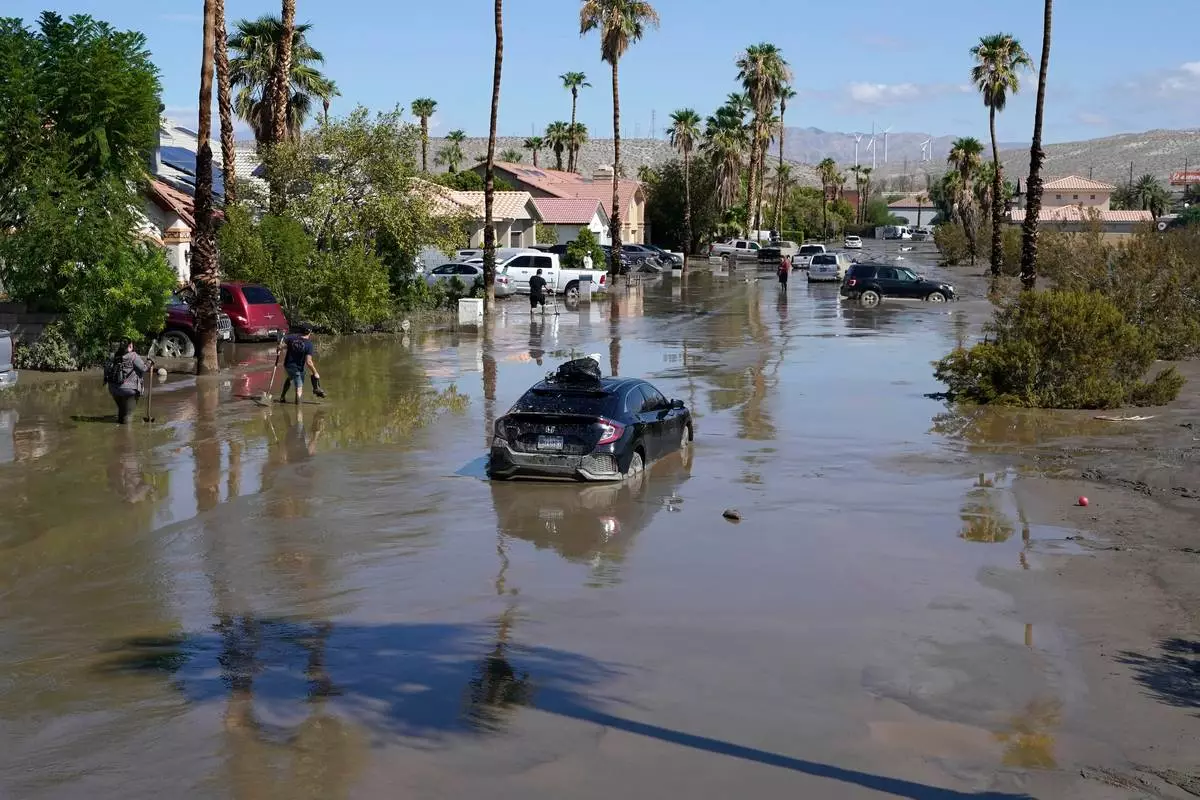
FILE - Cars are seen stuck in the mud following Tropical Storm Hilary on a street Aug. 21, 2023, in Cathedral City, Calif. (AP Photo/Mark J. Terrill, File)
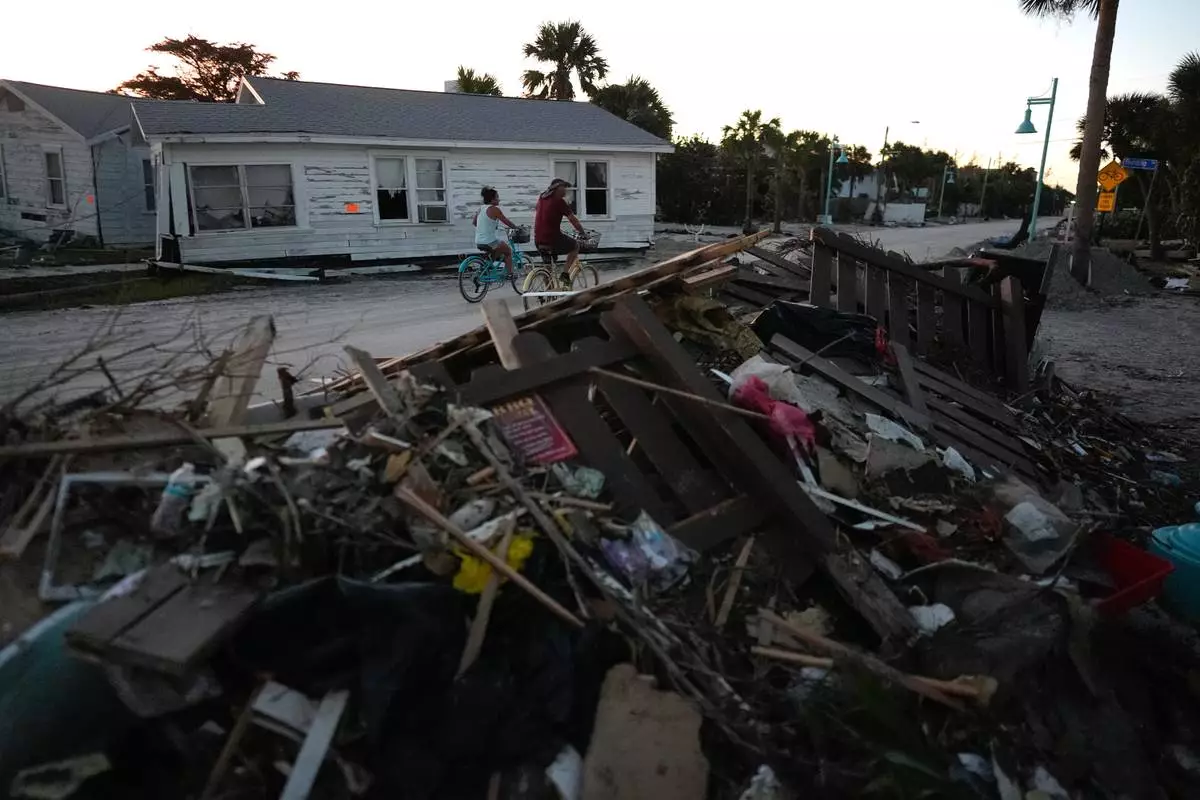
FILE - People bike past damaged homes and debris left by Hurricane Milton, on the sand-coated main road of southern Manasota Key, already cleared of feet of sand, in Englewood, Fla., Oct. 13, 2024. (AP Photo/Rebecca Blackwell, File)

FILE - Residents walk through Santa Cruz, Jamaica, Oct. 29, 2025, after Hurricane Melissa passed. (AP Photo/Matias Delacroix, File)
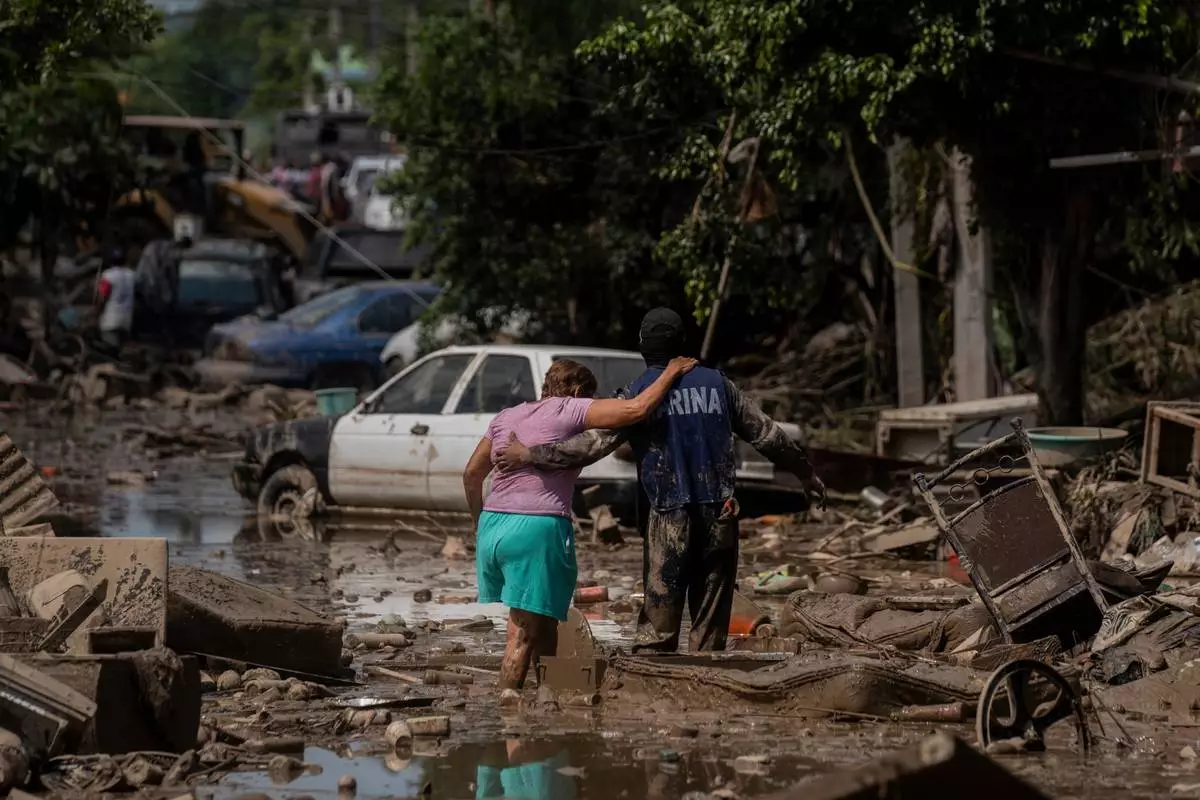
FILE - A Navy officer helps a woman cross a flooded street after heavy rain in Poza Rica, Veracruz state, Mexico, Oct. 12, 2025. (AP Photo/Felix Marquez, File)
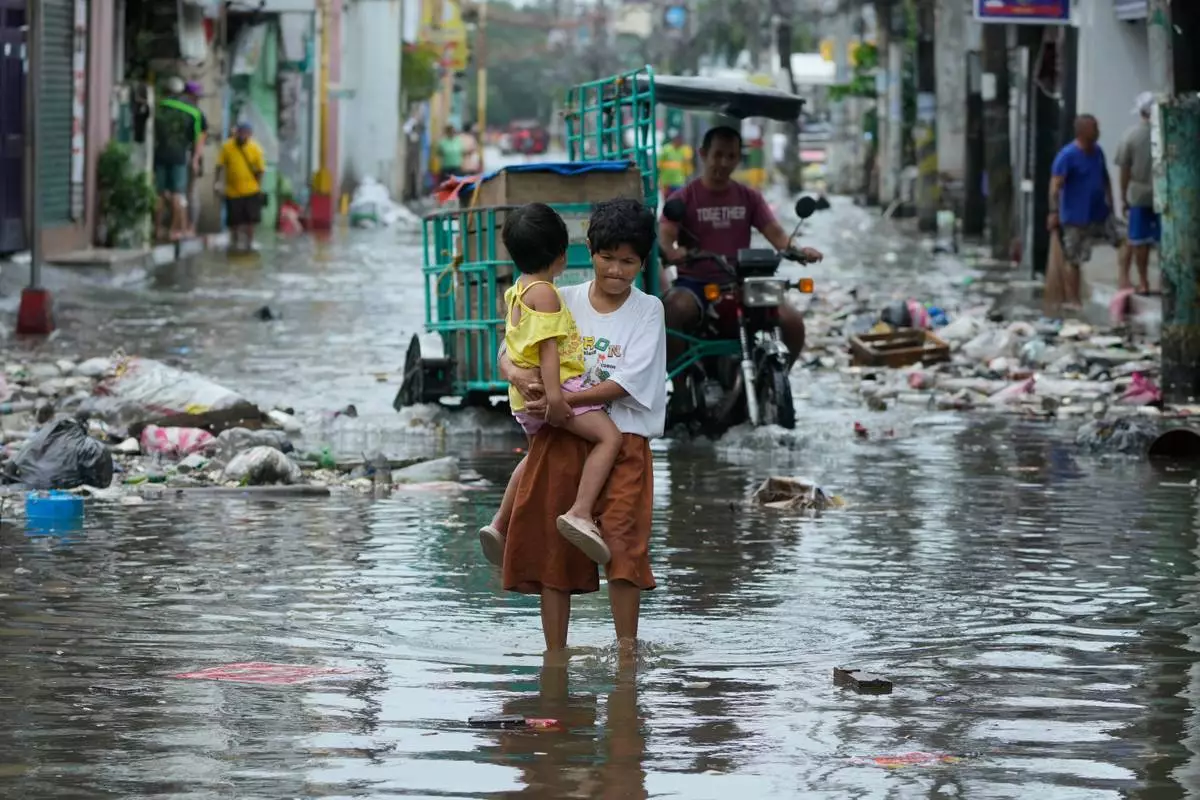
FILE - A woman and child crosses a flooded street due to Typhoon Fung-wong and high tide on Nov. 10, 2025, in Navotas, Philippines. (AP Photo/Aaron Favila, File)