Skip to Content Facebook Feature Image

Atlantic hurricane season forecast to be milder than normal thanks to El Nino

News

Atlantic hurricane season forecast to be milder than normal thanks to El Nino
News

News

Atlantic hurricane season forecast to be milder than normal thanks to El Nino

2026-05-22 03:09 Last Updated At:03:20

A developing El Nino that is forecast to get quite strong will likely dampen the upcoming Atlantic hurricane season, but it won't make the potentially deadly storms disappear, federal and outside meteorologists predict.

The National Oceanic and Atmospheric Administration on Thursday issued its seasonal outlook for the Atlantic, giving a 55% chance of a below-average season. The agency forecasts eight to 14 named storms, with three to six of them becoming strong enough to hit hurricane status and one to three of those intensifying to major hurricanes.

More Images
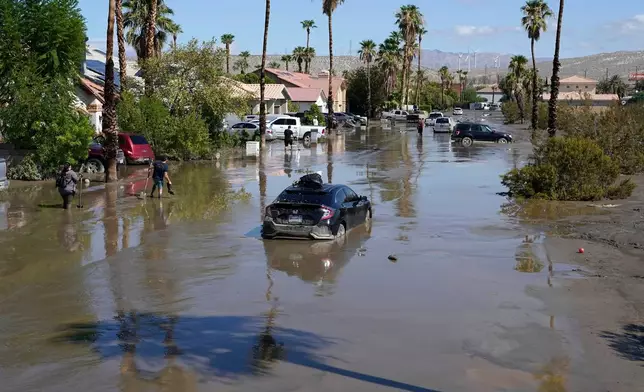
FILE - Cars are seen stuck in the mud following Tropical Storm Hilary on a street Aug. 21, 2023, in Cathedral City, Calif. (AP Photo/Mark J. Terrill, File)
FILE - Cars are seen stuck in the mud following Tropical Storm Hilary on a street Aug. 21, 2023, in Cathedral City, Calif. (AP Photo/Mark J. Terrill, File)

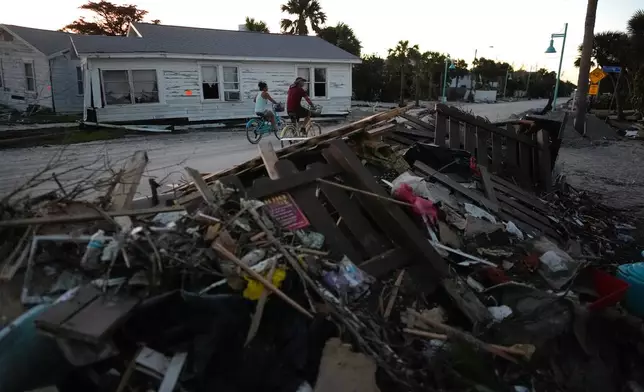
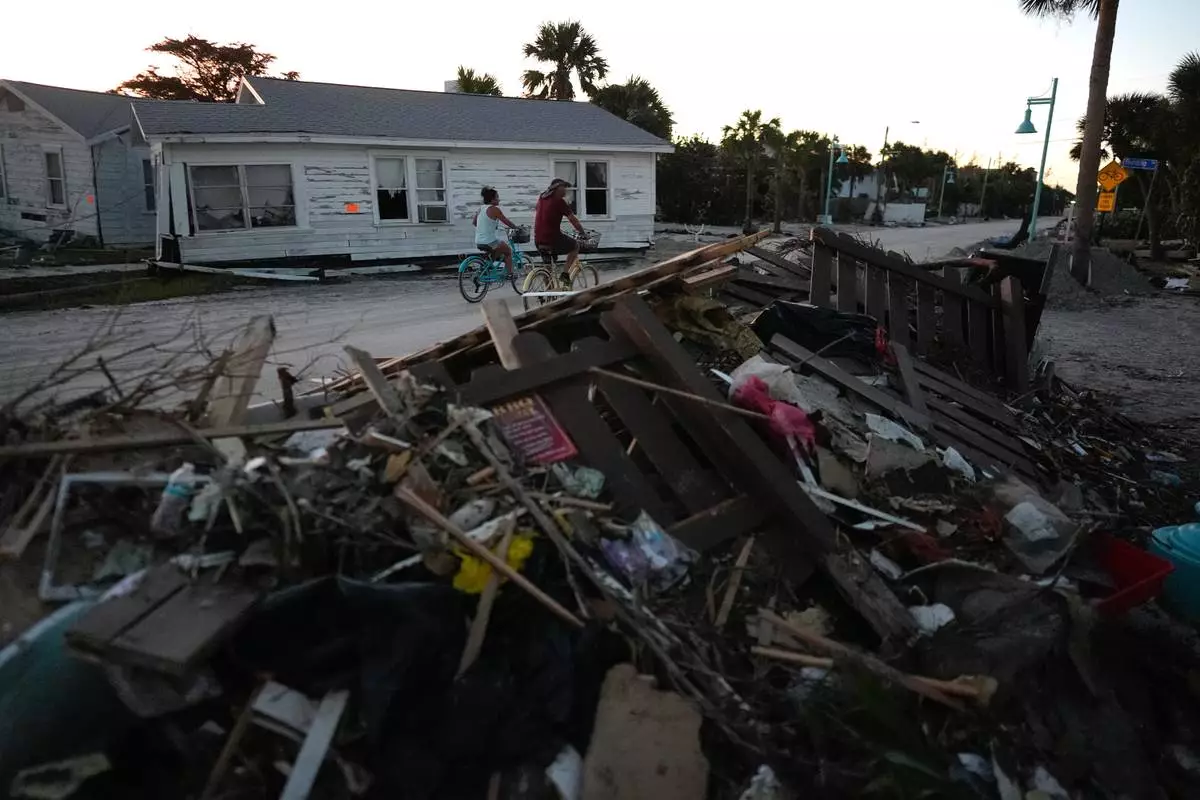
FILE - People bike past damaged homes and debris left by Hurricane Milton, on the sand-coated main road of southern Manasota Key, already cleared of feet of sand, in Englewood, Fla., Oct. 13, 2024. (AP Photo/Rebecca Blackwell, File)
FILE - People bike past damaged homes and debris left by Hurricane Milton, on the sand-coated main road of southern Manasota Key, already cleared of feet of sand, in Englewood, Fla., Oct. 13, 2024. (AP Photo/Rebecca Blackwell, File)

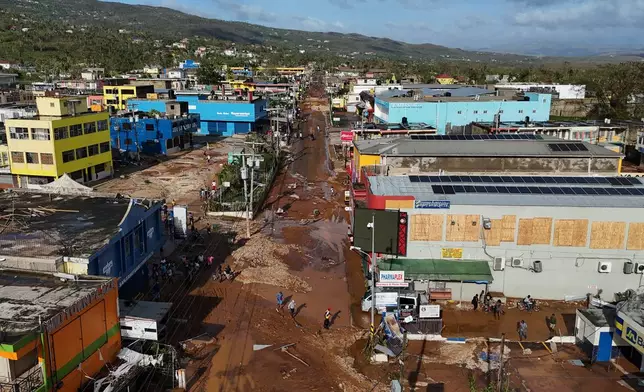
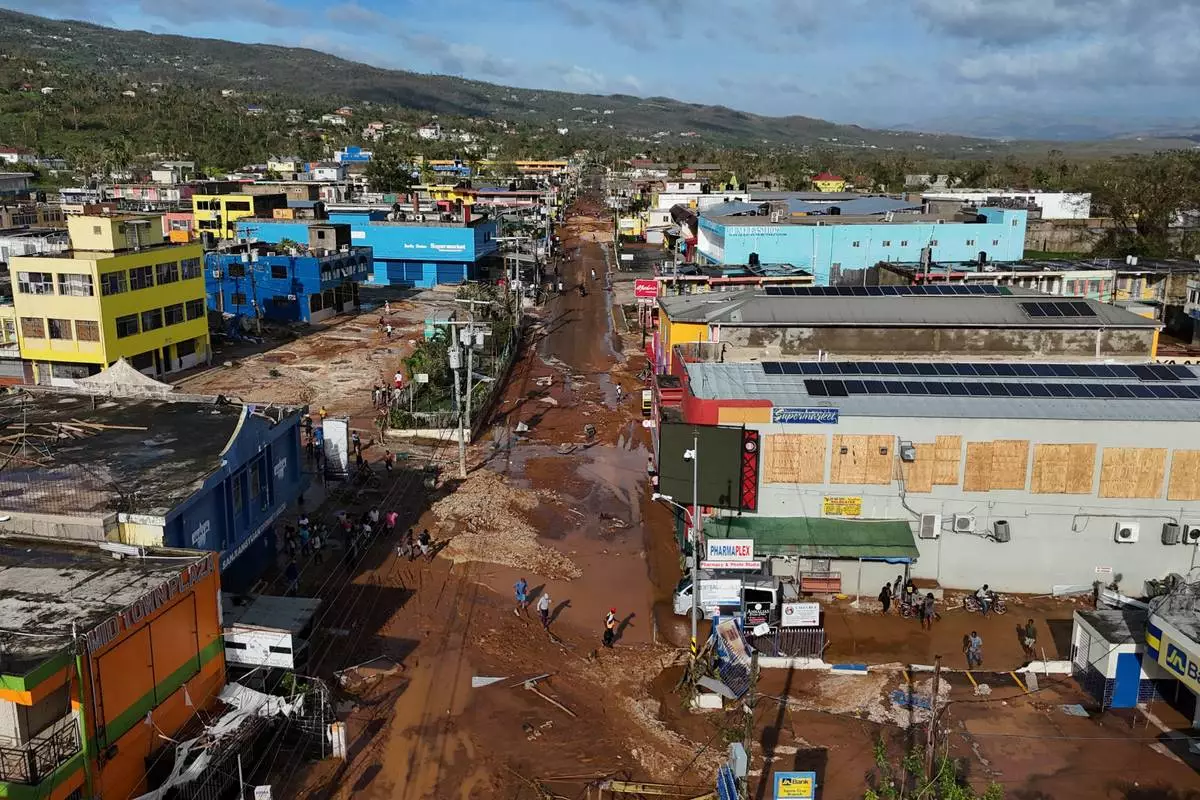
FILE - Residents walk through Santa Cruz, Jamaica, Oct. 29, 2025, after Hurricane Melissa passed. (AP Photo/Matias Delacroix, File)
FILE - Residents walk through Santa Cruz, Jamaica, Oct. 29, 2025, after Hurricane Melissa passed. (AP Photo/Matias Delacroix, File)

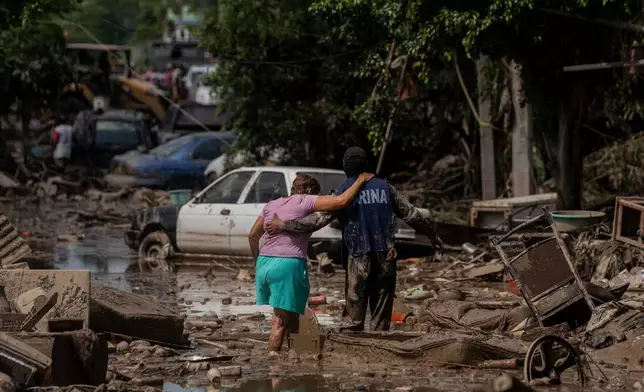
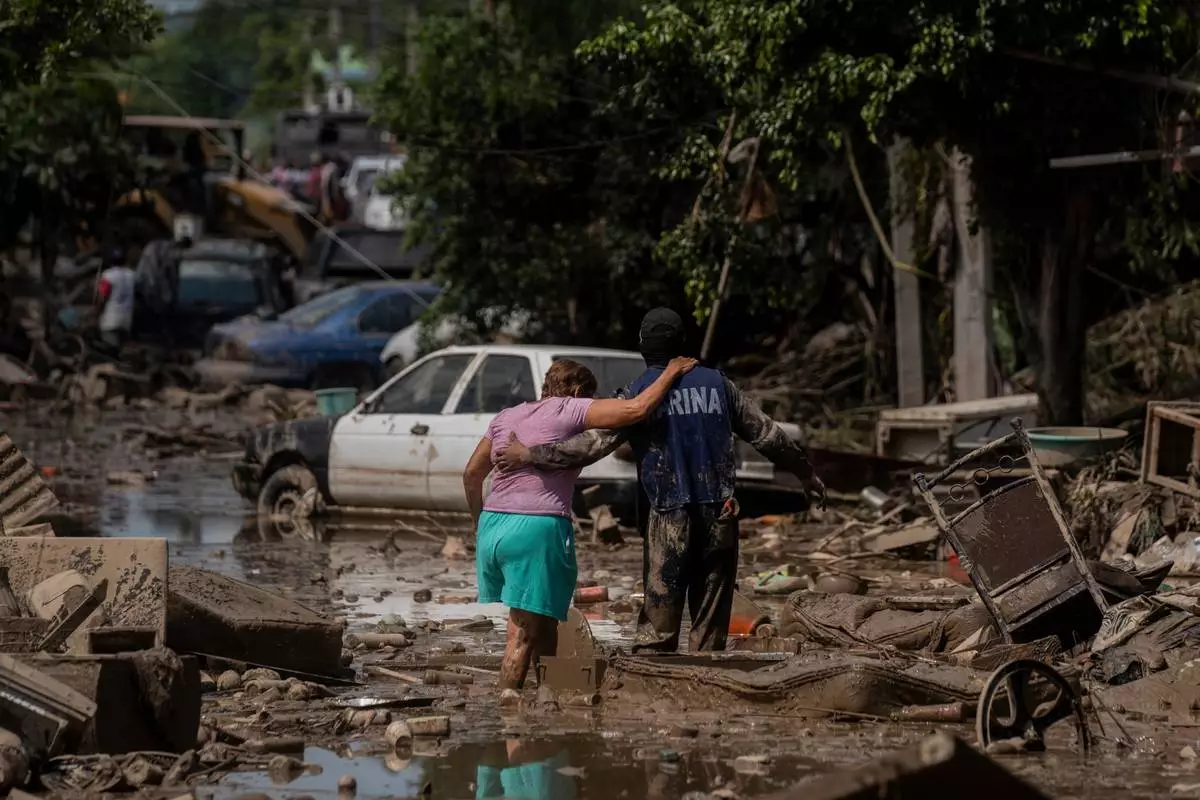
FILE - A Navy officer helps a woman cross a flooded street after heavy rain in Poza Rica, Veracruz state, Mexico, Oct. 12, 2025. (AP Photo/Felix Marquez, File)
FILE - A Navy officer helps a woman cross a flooded street after heavy rain in Poza Rica, Veracruz state, Mexico, Oct. 12, 2025. (AP Photo/Felix Marquez, File)

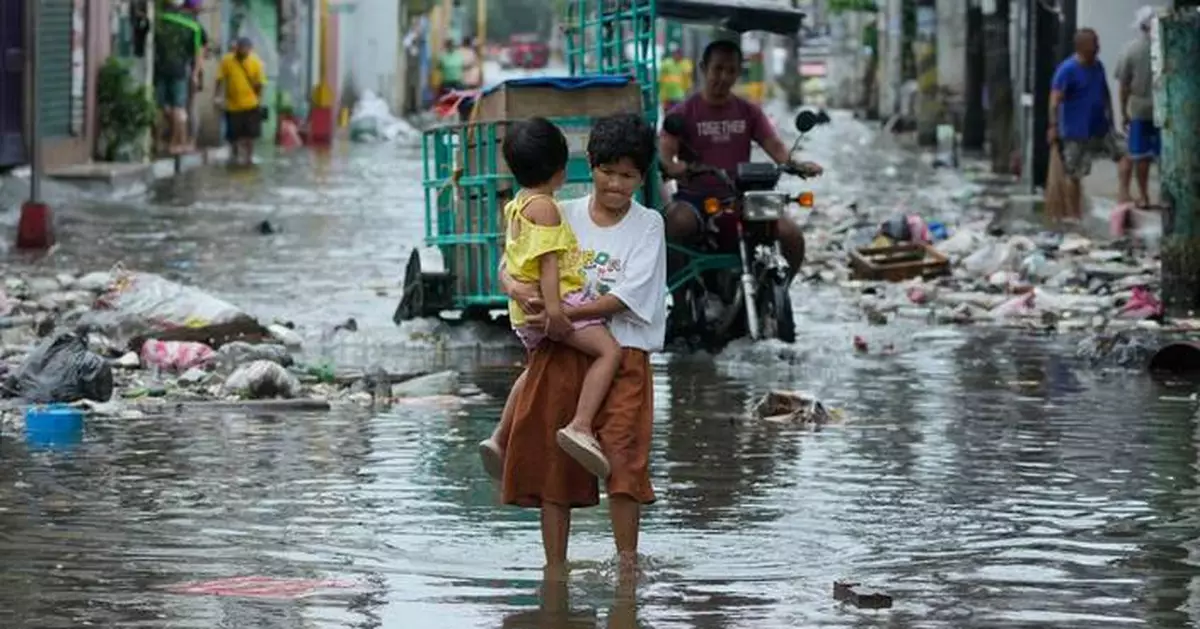
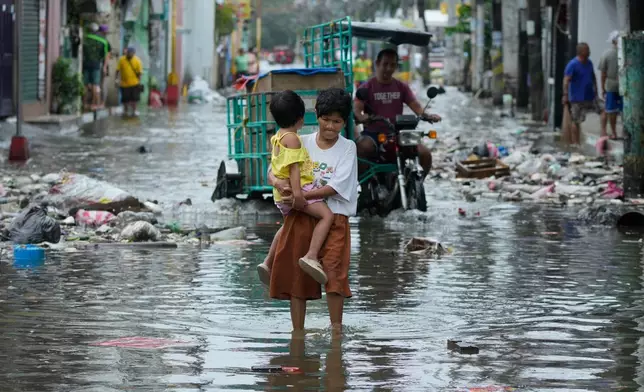
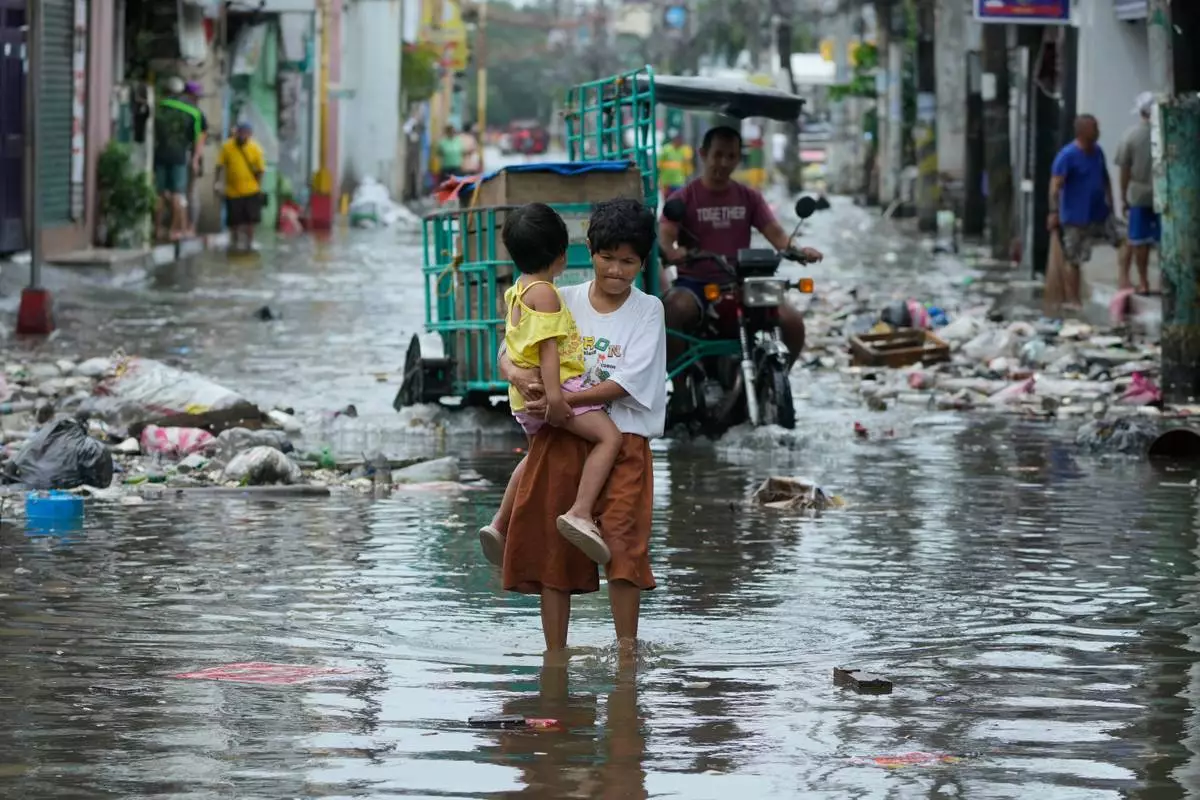
FILE - A woman and child crosses a flooded street due to Typhoon Fung-wong and high tide on Nov. 10, 2025, in Navotas, Philippines. (AP Photo/Aaron Favila, File)

FILE - A woman and child crosses a flooded street due to Typhoon Fung-wong and high tide on Nov. 10, 2025, in Navotas, Philippines. (AP Photo/Aaron Favila, File)

A normal hurricane season has 14 named storms, seven of them becoming hurricanes and three of them reaching major hurricane level, which is more than 110 mph (177 kph).

Eighteen other groups, private and academic, have also forecasted what they think the season will be like and most of them also call for a below average summer and fall. Those other forecasts average a dozen named storms, only five becoming hurricanes and two of those being major ones. Those forecasts also call for the Accumulated Cyclone Energy index, which takes into account strength and duration of storms, to be 80% of normal.

Colorado State University, which pioneered the science of hurricane seasonal forecasting in 1984, is predicting the lowest overall activity since 2015, which was the strongest El Nino in the last 75 years. And that forecast is likely to be revised to even lower numbers in June, said Colorado State's hurricane expert Phil Klotzbach.

This is after nine of the last 10 Atlantic hurricane seasons have been above normal or even hyperactive, Klotzbach said. Last year started slow, but then had a burst, producing a near-record total of three Category 5 hurricanes, including Melissa which devastated Jamaica and Cuba, said Suzana Camargo, a climate scientist and tropical weather expert at Columbia University.

Inflation-adjusted damage across the globe from tropical cyclones has increased from an average of $11.4 billion a year in the 1980s to $109.7 billion a year over the past 10 years, with three-quarters of the damage done in the Atlantic, Gulf of Mexico and Caribbean, according to insurance giant Munich Re.

Hurricanes, typhoons and cyclones are the same weather event, with the different names being used in different parts of the world.

“We should expect a less active year than certainly what we’ve seen recently, and perhaps significantly so below average,” said University at Albany atmospheric scientist Kristen Corbosiero. “But again, it only takes one to cause real devastation and destruction in the mainland U.S. or even in Hawaii.”

It's mostly because of “the elephant in the room” which is an El Nino, Camargo said.

An El Nino is the natural and cyclic warming of parts of the central Pacific that warps weather patterns around the globe, especially during winter. Scientists for decades have found a correlation between an El Nino and below average Atlantic hurricane activity and stronger and more storms in the central and eastern Pacific. This year many forecasts are calling for a strong, super-strong or even record setting intense El Nino. During a La Nina, the cool flip side of El Nino, the Atlantic is generally busier with stronger storms.

There's a 98% chance that there will be an El Nino this summer and an 80% chance it will be moderate or strong, NOAA Administrator Neil Jacobs said Thursday.

Atlantic hurricane seasons when an El Nino reaches strong or very strong status have two-thirds the named storms and half the hurricanes of the 1991-2020 average, according to an Associated Press analysis of storm and El Nino statistics.

El Ninos fight Atlantic storm formation in several ways, especially with cross winds about 1 mile to 7 miles (1.5 to 11 kilometers) above the surface “which can basically blow apart the thunderstorms that make up” a hurricane, Corbosiero said.

“A stronger than normal wind shear tends to tilt storms as they try to develop,” said University at Albany atmospheric scientist Brian Tang. “It pushes dry air into storms. And prevents storms from developing in the first place. And if they do develop, it also prevents them from intensifying.”

El Nino reduces the number and intensity of weaker storms, but once a storm hits hurricane status with 74 mph winds, “they can be kind of like a self-feeding entity” and are less prone to being dampened by El Nino's wind shear, said Matthew Rosencrans, lead hurricane season forecaster with NOAA’s National Weather Service.

Forecasts for peak hurricane season show strong wind shear from the west in the main development region for the largest and long-lasting hurricanes that come off of Africa and develop as they head west over the Atlantic, Klotzbach said. Fewer of these type storms happen during El Ninos.

In the 15 strongest El Nino years since 1950, 37 named storms, 11 hurricanes and three major hurricanes made landfall on the continental United States, but in the 15 coldest La Nina years 61 named storms, 31 hurricanes and 10 major hurricanes hit America's Gulf and Atlantic coasts, according to Klotzbach. He said El Nino shrinks the number of hits on the Atlantic coast, but has less of an influence on the number of Gulf coast landfalls.

In addition to El Nino, dry conditions in Africa and water in the Atlantic being only slightly warmer than normal contribute to the forecast of a weaker season, Rosencrans said.

El Ninos and La Ninas have the opposite effect on storms in the central and eastern Pacific as they do in the Atlantic, so experts are expecting a busier season in those regions. Jacobs said there's a 70% chance that the eastern Pacific will have an above normal season.

NOAA forecasts 15 to 22 named storms in the Pacific with nine to 14 becoming hurricanes and five to nine of those being major hurricanes. Average is 15 named storms, eight hurricanes and four major hurricanes. Rosencrans said the main area of central Pacific storm development shifts closer to Hawaii during El Ninos.

Eastern Pacific storms near Baja Mexico tend to “go west, affect the fishies and little else,” Corbosiero said. But at times they can turn east or north and cause massive damage as in Hurricane Otis in 2023 that smashed into Mexico, or 1992's Hurricane Lester, which caused heavy rains in the U.S. Southwest, she said.

Hawaii is a small island chain in a big ocean that can be threatened. In 1992, an El Nino year when there were few Atlantic storms (though Miami was devastated by Hurricane Andrew ), Hawaii was hit by Hurricane Iniki.

Further west toward Asia and India, “your odds of any storm forming becoming a super typhoon go up significantly in El Nino,” Klotzbach said.

The eastern Pacific hurricane season started May 15 and the Atlantic season begins June 1 and both end November 30.

The Associated Press’ climate and environmental coverage receives financial support from multiple private foundations. AP is solely responsible for all content. Find AP’s standards for working with philanthropies, a list of supporters and funded coverage areas at AP.org.
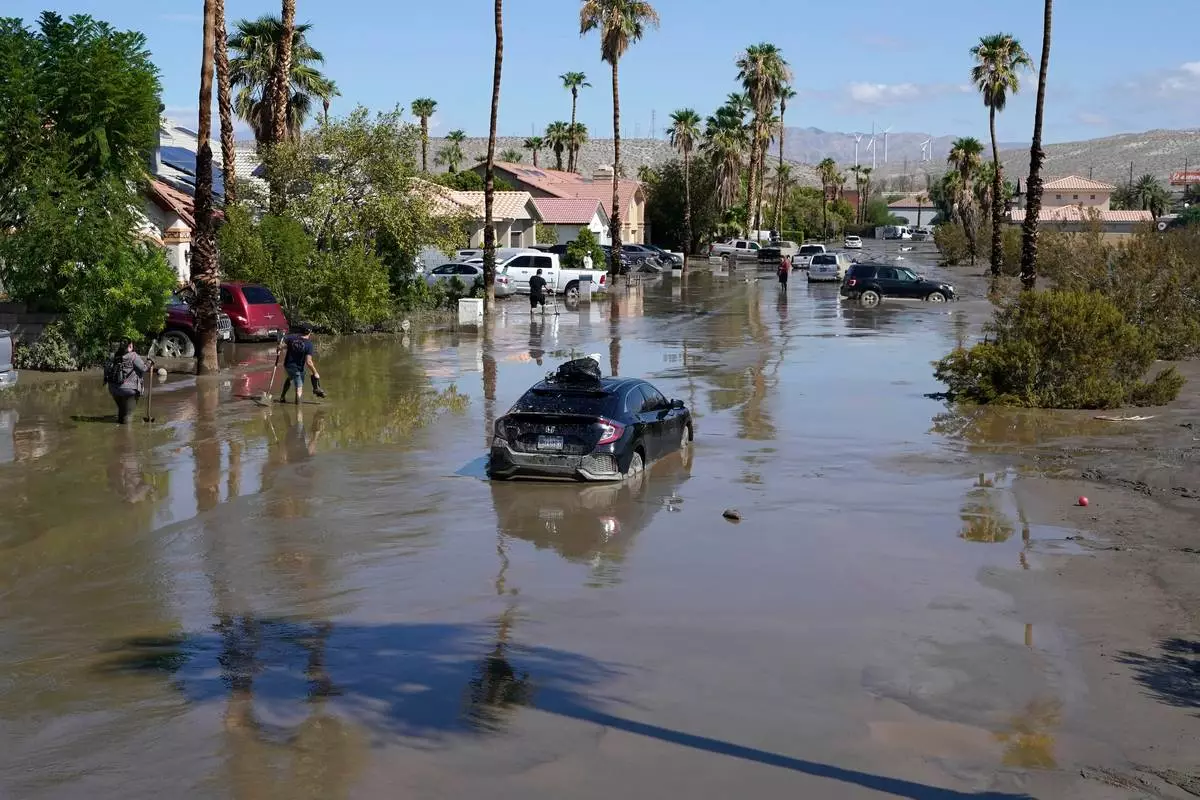
FILE - Cars are seen stuck in the mud following Tropical Storm Hilary on a street Aug. 21, 2023, in Cathedral City, Calif. (AP Photo/Mark J. Terrill, File)
FILE - Cars are seen stuck in the mud following Tropical Storm Hilary on a street Aug. 21, 2023, in Cathedral City, Calif. (AP Photo/Mark J. Terrill, File)

FILE - People bike past damaged homes and debris left by Hurricane Milton, on the sand-coated main road of southern Manasota Key, already cleared of feet of sand, in Englewood, Fla., Oct. 13, 2024. (AP Photo/Rebecca Blackwell, File)
FILE - People bike past damaged homes and debris left by Hurricane Milton, on the sand-coated main road of southern Manasota Key, already cleared of feet of sand, in Englewood, Fla., Oct. 13, 2024. (AP Photo/Rebecca Blackwell, File)

FILE - Residents walk through Santa Cruz, Jamaica, Oct. 29, 2025, after Hurricane Melissa passed. (AP Photo/Matias Delacroix, File)
FILE - Residents walk through Santa Cruz, Jamaica, Oct. 29, 2025, after Hurricane Melissa passed. (AP Photo/Matias Delacroix, File)

FILE - A Navy officer helps a woman cross a flooded street after heavy rain in Poza Rica, Veracruz state, Mexico, Oct. 12, 2025. (AP Photo/Felix Marquez, File)
FILE - A Navy officer helps a woman cross a flooded street after heavy rain in Poza Rica, Veracruz state, Mexico, Oct. 12, 2025. (AP Photo/Felix Marquez, File)

FILE - A woman and child crosses a flooded street due to Typhoon Fung-wong and high tide on Nov. 10, 2025, in Navotas, Philippines. (AP Photo/Aaron Favila, File)

FILE - A woman and child crosses a flooded street due to Typhoon Fung-wong and high tide on Nov. 10, 2025, in Navotas, Philippines. (AP Photo/Aaron Favila, File)

MINNEAPOLIS (AP) — A judge on Thursday handed down an extraordinary prison sentence — nearly 42 years — to the former leader of a Minnesota nonprofit who was convicted in a staggering $250 million fraud case that helped ignite an immigration crackdown by the Trump administration.

Aimee Bock ran Feeding Our Future, which had claimed it helped provide millions of meals to needy children during the pandemic. The U.S. Justice Department, however, said she was atop the “single largest COVID-19 fraud scheme in the country.”

“I understand I failed. I failed the public, my family, everyone,” Bock said in federal court.

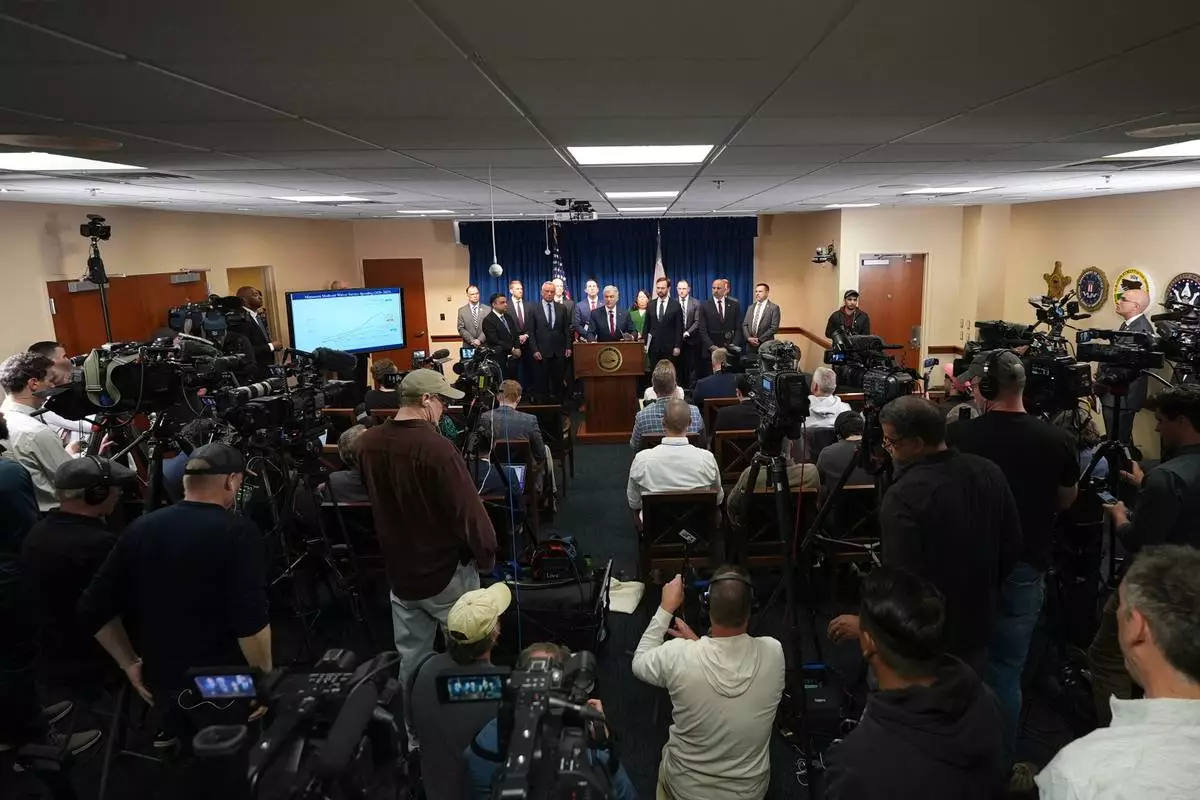
After the hearing, authorities held a news conference to announce charges against 15 more people accused of fraud in receiving federal payments for a variety of social services administered through Minnesota's state government. The FBI said one man jumped from a fourth-floor balcony to avoid arrest.

“We will claw back every dollar you have stolen from the American people,” Assistant Attorney General Colin McDonald said, noting that the government sent more prosecutors and agents to Minnesota this year.

President Donald Trump used the fraud cases against Bock and many others to initially justify a massive surge of federal officers to the Minneapolis-St. Paul area last winter to target immigrants, leading to pushback from residents and the deaths of two people.

Bock's nonprofit was at the center of a fraud network that included a web of partner organizations, phony distribution sites, kickbacks and fake lists of children supposedly being fed, prosecutors say. She had long proclaimed her innocence but was convicted last year of conspiracy, fraud and bribery.

Bock and co-conspirators enriched themselves with international travel, real estate purchases, luxury vehicles and other lavish spending, the government said.

“This was a vortex of fraud and you were at the epicenter,” U.S. District Judge Nancy Brasel told Bock.

A co-defendant was sentenced last August to 28 years in prison. Abdiaziz Farah claimed to be serving meals to thousands of children per day, investigators said, but the sites turned out to be parking lots or empty commercial space.

State auditors found that the Minnesota Department of Education received numerous complaints about Feeding Our Future, but often told the group to police itself. In January, Democratic Gov. Tim Walz said he would not run for reelection after being pounded by Trump about theft in programs that rely on federal cash.

Dozens of people, many from the state’s large Somali community, have been convicted in a series of overlapping food fraud cases that have spent years in the courts.

“This case has changed our state forever,” Joe Thompson, formerly the lead prosecutor in the case, said outside the courtroom. “Aimee Bock did everything she could to earn this long sentence.”

Bock’s lawyer, Kenneth Udoibok, argued for no more than three years in prison, saying she had provided key information to investigators. He argued that Bock had been unfairly painted as the mastermind and insisted that two co-defendants were responsible for running the scams.

In a fresh batch of criminal cases filed this week in Minnesota, the government said the alleged fraud involved $90 million across seven state-managed Medicaid programs.

The defendants include Fahima Mahamud, who was CEO of Future Leaders Early Learning Center, a childcare center in Minneapolis. Over three years, Mahamud’s organization was reimbursed approximately $4.6 million for services on behalf of people who didn’t make a required copayment, prosecutors allege.

A message seeking comment from her lawyer was not immediately returned Thursday. Mahamud earlier this year pleaded not guilty to fraud related to meals.

Two other people were charged with conspiring to get $975,000 in Medicaid subsidies for housing services that were not provided. They’re expected to plead guilty in June, according to a court filing.

Two additional people were accused of receiving $21.1 million by billing Medicaid for autism therapy that was either unnecessary or not provided. Investigators said the two paid families as much as $1,500 per child per month to add their names to the program and get reimbursement.

Trump, who has long derided Somalis, last year blasted Minnesota as “a hub of fraudulent money laundering activity.”

“Somali gangs are terrorizing the people of that great State, and BILLIONS of Dollars are missing. Send them back to where they came from,” Trump wrote on social media.

Bock is white and the U.S. Attorney’s Office says the overwhelming majority of defendants in the cases are of Somali descent. Most are U.S. citizens.

Trump's immigration enforcement surge led to repeated protests and confrontations between residents and federal officers and resulted in the killings of Renee Good and Alex Pretti.

AP reporters Scott Bauer in Madison, Wisconsin, and Ed White in Detroit contributed.

Centers for Medicare & Medicaid Services Administrator Dr. Mehmet Oz speaks to the media during a news conference Thursday, May 21, 2026, in Minneapolis. (AP Photo/Glen Stubbe)

Centers for Medicare & Medicaid Services Administrator Dr. Mehmet Oz speaks to the media during a news conference Thursday, May 21, 2026, in Minneapolis. (AP Photo/Glen Stubbe)

Assistant Attorney General for the Fraud Division Colin McDonald arrives for a press conference Thursday, May 21, 2026, in Minneapolis. (AP Photo/Glen Stubbe)

Assistant Attorney General for the Fraud Division Colin McDonald arrives for a press conference Thursday, May 21, 2026, in Minneapolis. (AP Photo/Glen Stubbe)

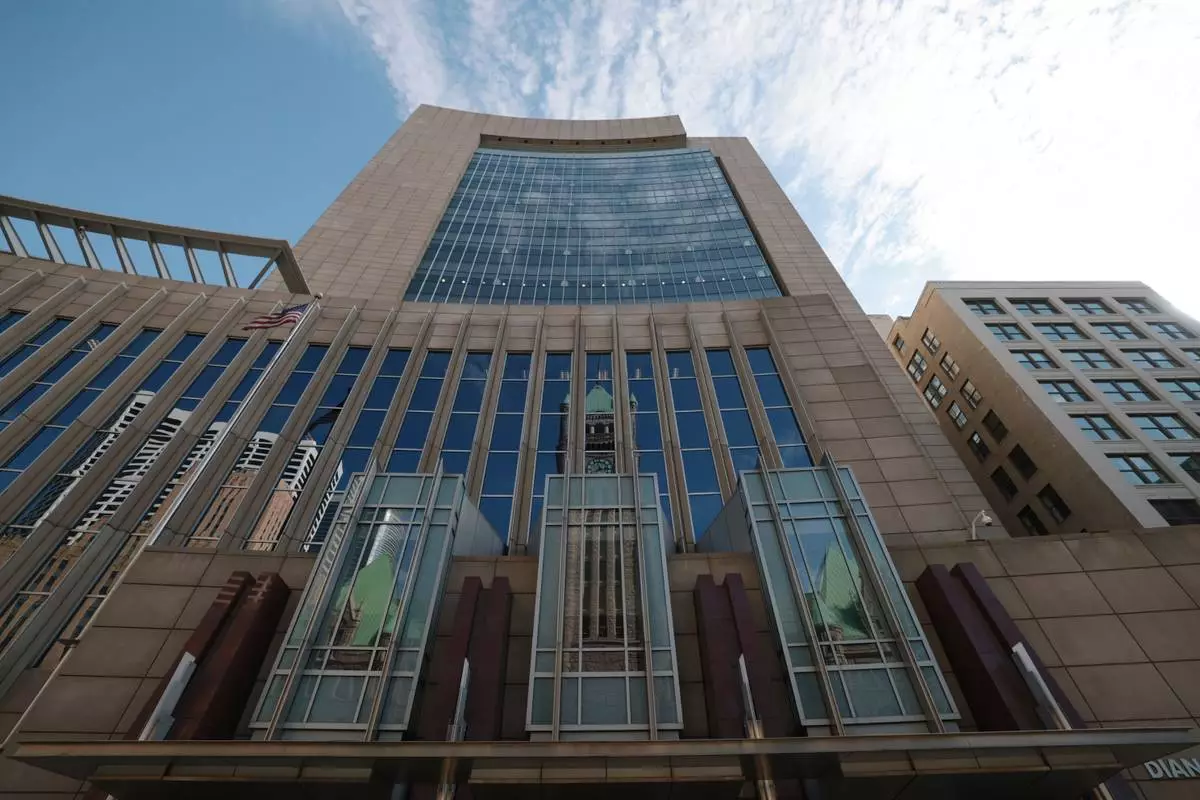
The exterior of Minneapolis federal courthouse on Thursday, May 21, 2026 in Minneapolis, Minn. Feeding our Future founder Aimee Bock is sentenced at the United States District Court in Minneapolis. (Carlos Gonzalez/Minnesota Star Tribune via AP)

The exterior of Minneapolis federal courthouse on Thursday, May 21, 2026 in Minneapolis, Minn. Feeding our Future founder Aimee Bock is sentenced at the United States District Court in Minneapolis. (Carlos Gonzalez/Minnesota Star Tribune via AP)

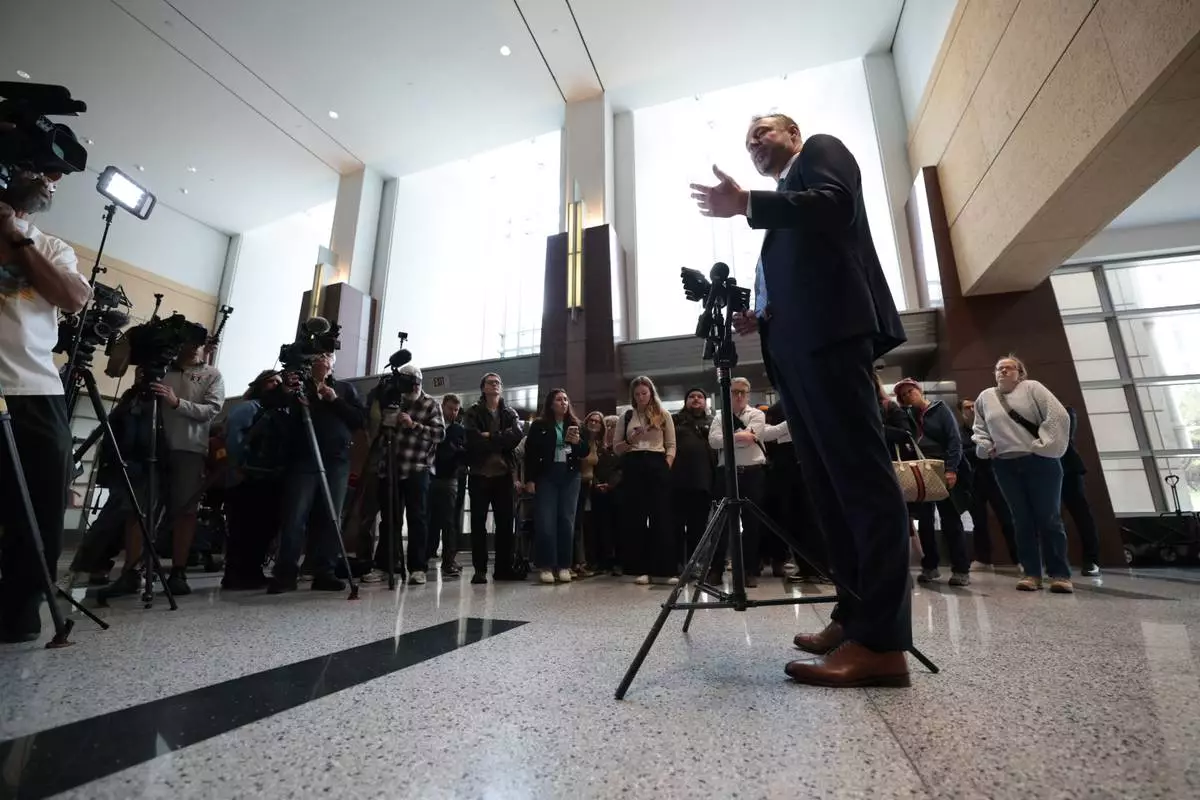
Acting U.S. Attorney for Minnesota Joe Thompson addresses the media following the sentencing of Feeding Our Future founder Aimee Bock on Thursday, May 21, 2026 at at the United States District Court in Minneapolis. (Carlos Gonzalez/Minnesota Star Tribune via AP)

Acting U.S. Attorney for Minnesota Joe Thompson addresses the media following the sentencing of Feeding Our Future founder Aimee Bock on Thursday, May 21, 2026 at at the United States District Court in Minneapolis. (Carlos Gonzalez/Minnesota Star Tribune via AP)

FILE - Aimee Bock, founder and executive director of the nonprofit organization Feeding Our Future, arrives at the Minneapolis federal courthouse with her attorney, Ken Udoibok, right, on March 19, 2025, in Minneapolis. (Kerem Yücel/Minnesota Public Radio via AP, File)

FILE - Aimee Bock, founder and executive director of the nonprofit organization Feeding Our Future, arrives at the Minneapolis federal courthouse with her attorney, Ken Udoibok, right, on March 19, 2025, in Minneapolis. (Kerem Yücel/Minnesota Public Radio via AP, File)

Recommended Articles