Skip to Content Facebook Feature Image

Takeaways from the Democratic National Committee's long-awaited autopsy report on 2024 election

News

Takeaways from the Democratic National Committee's long-awaited autopsy report on 2024 election
News

News

Takeaways from the Democratic National Committee's long-awaited autopsy report on 2024 election

2026-05-22 04:27 Last Updated At:04:31

WASHINGTON (AP) — It's never a good sign when a report comes with a big red disclaimer at the top of each page, but that's what happened on Thursday when the Democratic National Committee belatedly released its controversial autopsy report on the 2024 election.

“This document reflects the views of the author, not the DNC," the disclaimer said. "The DNC was not provided with the underlying sourcing, interviews, or supporting data for many of the assertions contained herein and therefore cannot independently verify the claims presented.”

More Images
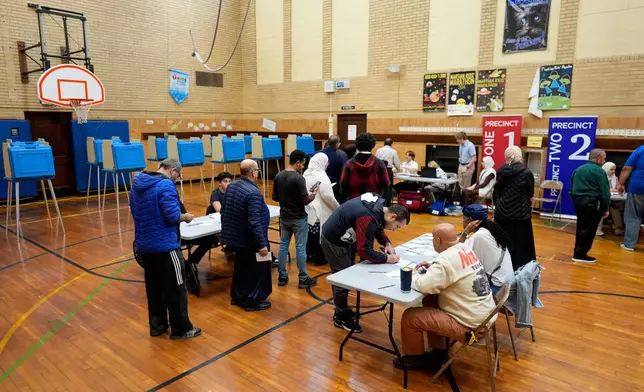
FILE - Voters wait to receive their ballots at a polling place at McDonald Elementary School, Nov. 5, 2024, in Dearborn, Mich. (AP Photo/Charlie Neibergall, File)
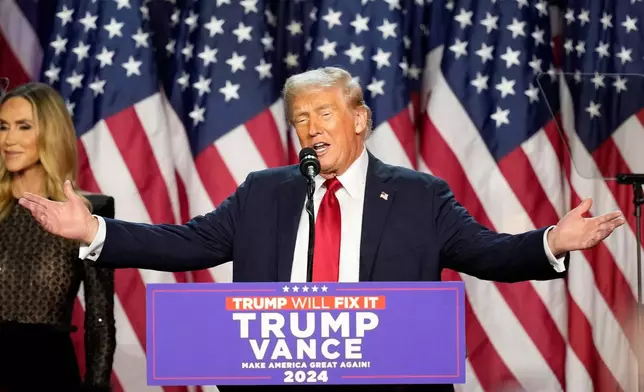
FILE - Voters wait to receive their ballots at a polling place at McDonald Elementary School, Nov. 5, 2024, in Dearborn, Mich. (AP Photo/Charlie Neibergall, File)

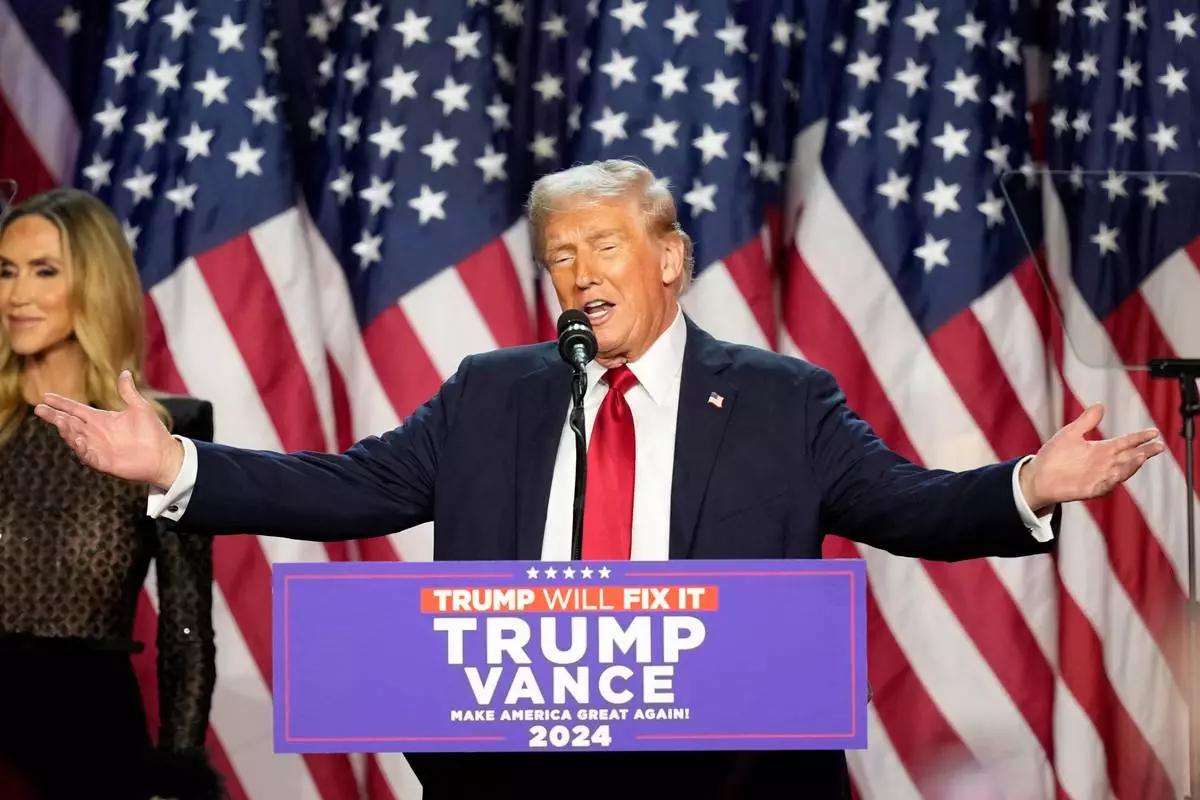
FILE - Republican presidential nominee former President Donald Trump speaks at an election night watch party, Nov. 6, 2024, in West Palm Beach, Fla. (AP Photo/Alex Brandon, File)
FILE - Republican presidential nominee former President Donald Trump speaks at an election night watch party, Nov. 6, 2024, in West Palm Beach, Fla. (AP Photo/Alex Brandon, File)

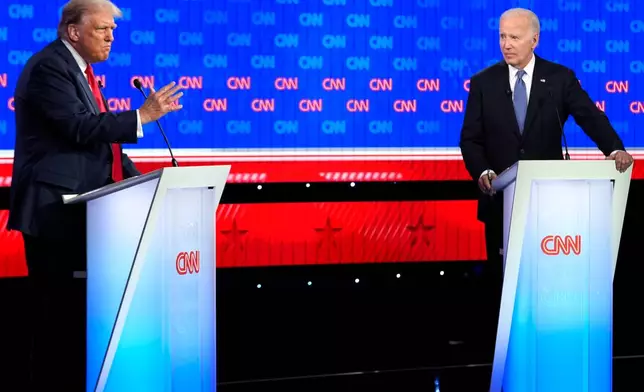
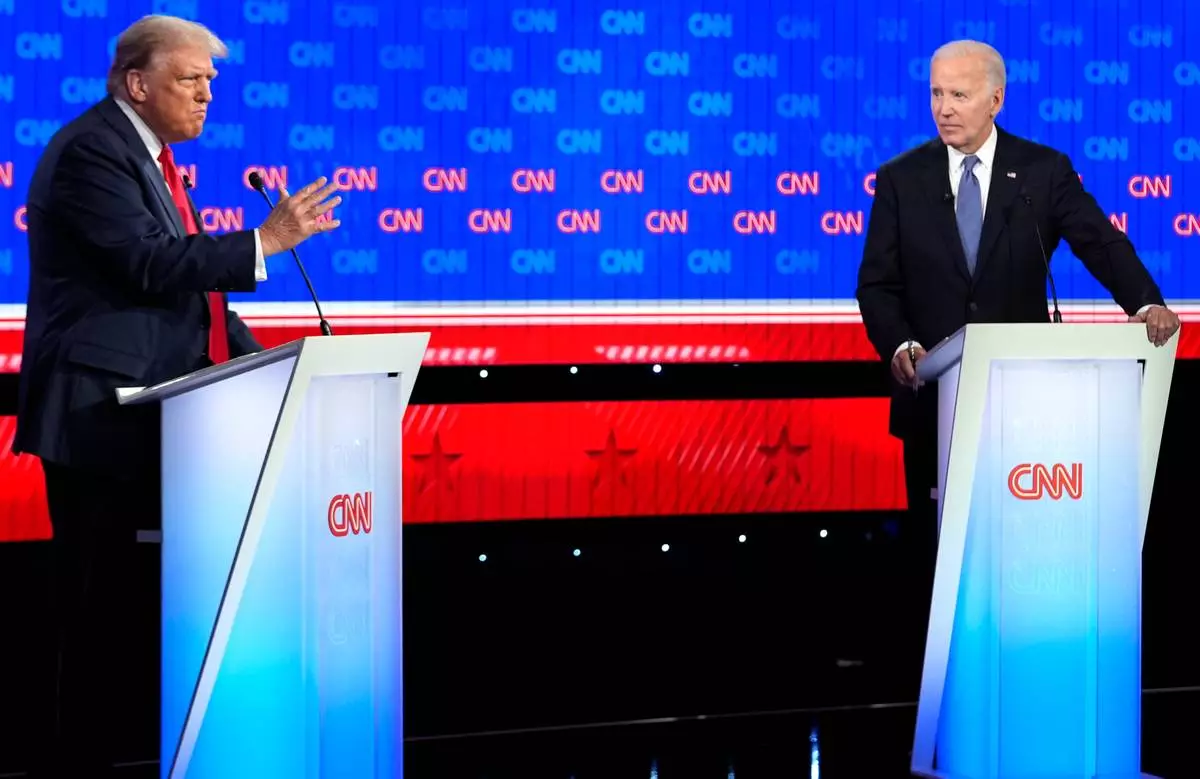
FILE - President Joe Biden, right, and Republican presidential candidate former President Donald Trump, left, participate in a presidential debate hosted by CNN, Thursday, June 27, 2024, in Atlanta. (AP Photo/Gerald Herbert)
FILE - President Joe Biden, right, and Republican presidential candidate former President Donald Trump, left, participate in a presidential debate hosted by CNN, Thursday, June 27, 2024, in Atlanta. (AP Photo/Gerald Herbert)

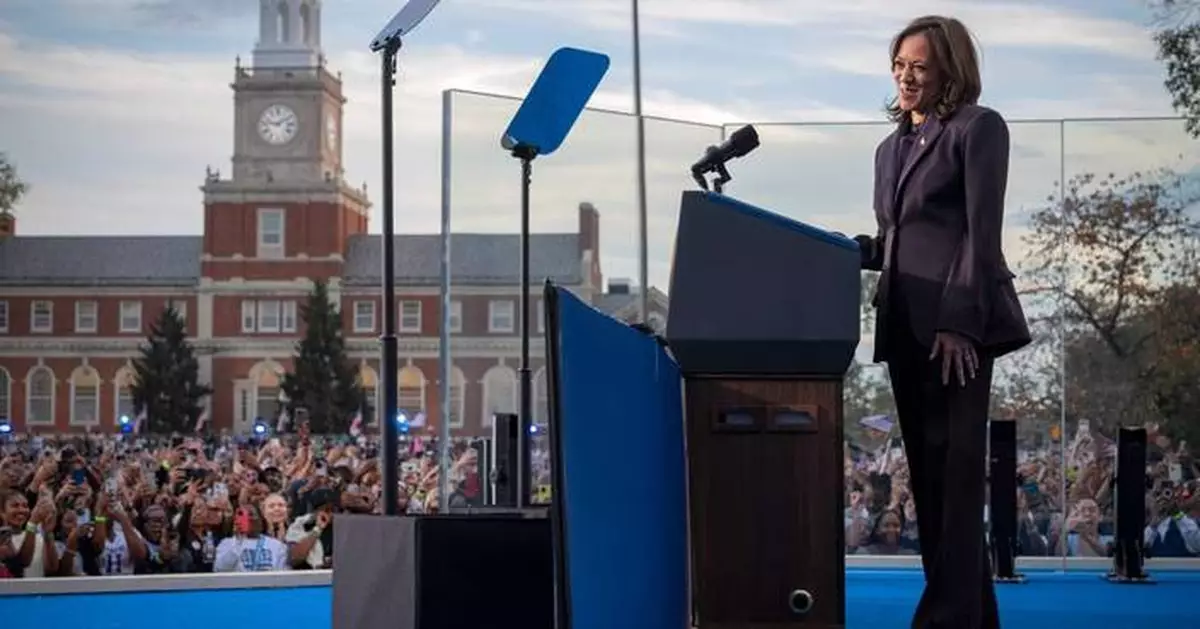
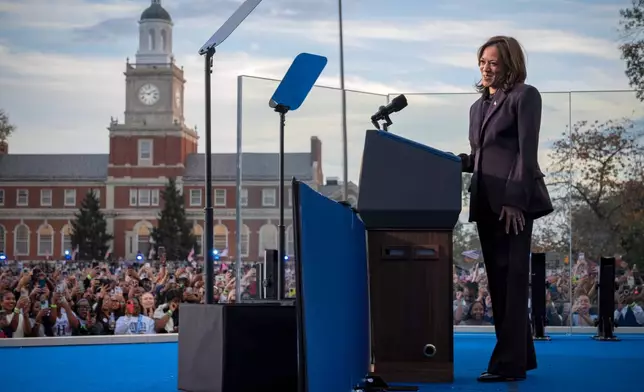
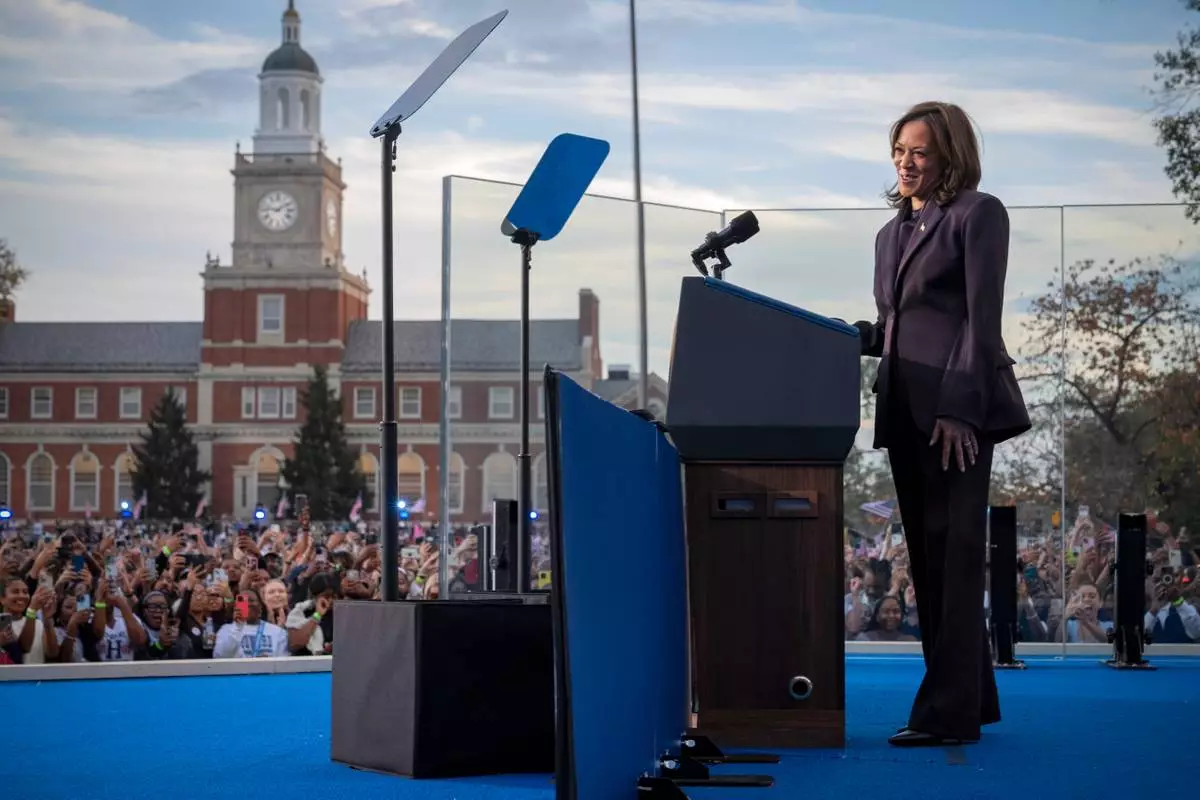
FILE - Democratic presidential nominee Vice President Kamala Harris delivers a concession speech for the 2024 Presidential election, Nov. 6, 2024, on the campus of Howard University in Washington. (AP Photo/Jacquelyn Martin, File)

FILE - Democratic presidential nominee Vice President Kamala Harris delivers a concession speech for the 2024 Presidential election, Nov. 6, 2024, on the campus of Howard University in Washington. (AP Photo/Jacquelyn Martin, File)

It's an inauspicious label on a document that has caused so much heartburn. Ken Martin, the DNC chair, originally promised to release the autopsy, then decided to keep it under wraps because he said he didn't want to cause a distraction ahead of the midterms.

After months of handwringing, Martin released the report on Thursday, saying it was only withheld because it was so shoddily done.

After all that, what's in the report? Here are some takeaways from the 192 pages.

The report is far from comprehensive, and it avoids some of the most critical factors in the 2024 race.

For example, it doesn't address President Joe Biden's decision to run for a second term at 81, despite widespread concerns about his age. Biden dropped out after a faltering debate performance, and Harris was quickly anointed to replace him at the top of the ticket.

After serving as Biden's vice president, Harris was viewed in some corners as the natural choice for a new nominee. But the report does not address lingering concerns that the process was rushed or should have been handled in a more deliberative manner.

Perhaps most notably, the words “Gaza” and “Israel” do not appear anywhere in the text. Democrats suffered from internal disagreements over the conflict, which sapped enthusiasm for Harris among voters who were upset by the Biden administration's support for Israel.

The report found that the Biden White House did not “position or prepare the vice president” in a way that would allow her to lead a successful campaign.

It wasn’t until Biden announced his departure from the race in July that the campaign’s polling team scrambled to get fresh public opinion on three key areas — “one on the Vice President’s biography and record, one on her vision and plan, and another on attacks and responses.”

The team also determined Harris had no answer on a sensitive issue: The Trump campaign's anti-transgender attacks. Specifically, the report highlighted the pollsters’ belief that the Democratic nominee was “boxed” in by Republicans' “very effective” advertisement highlighting Harris’ previous support for taxpayer-funded gender-affirming surgeries for prison inmates.

“Kamala is for they/them, President Trump is for you," the ad said.

The report said: “If the Vice President would not change her position — and she did not — then there was nothing which would have worked as a response.”

There's been no shortage of criticism toward Harris' campaign after her defeat. Some Democrats think she spent too much time campaigning with Republicans like Liz Cheney, others think she lacked a strong economic message.

The autopsy report reaches a different conclusion, saying not enough was done to convince voters that Trump was an unacceptable candidate.

“There was a decision in the 2024 Democratic leadership not to engage in negative advertising at the scale required,” the report states. “The Trump campaign and supportive Super PACs went full throttle against Vice President Harris, but there was not sufficient or similar negative firepower directed at Trump by Democrats.”

At another point, the report says, "Democrats made a mistake by assuming voters were already aware of Trump's various weaknesses.

“The idea Trump’s negatives were ‘baked in’ is a major failure of analysis and reality,” the report says.

DNC leadership did not appear to like these conclusions, adding annotations like “no evidence provided; contradicts claims elsewhere in report” and “no sourcing or evidence provided.”

The report criticized Harris’ outreach to key segments of America while including a handful of derisive references to “identity politics.” The document raises serious concerns about Latinos in particular.

“Democrats can no longer assume Latino voters, especially younger Latino men, are a reliable part of their base," the report says. “The party needs a complete rethink of its Latino outreach strategy, moving beyond traditional approaches like Spanish-language ads and late-cycle surrogates.”

The report points to successful Democratic statewide candidates in Arizona, Nevada and North Carolina, who showed that “economic messaging, and addressing cost-of-living concerns resonate more than identity politics.”

The autopsy also highlighted the Democrats' underperformance with men.

“Male voters require direct engagement. The gender gap can be narrowed," the report says. “Deploy male messengers, address economic concerns, and don’t assume identity politics will hold male voters of color.”

Harris also didn't have any answers for the party's struggle with rural voters.

“Harris wrote off rural America, assuming urban/suburban margins would compensate. The math doesn’t work,” the report says. “You can’t lose rural areas by overwhelming margins and make it up elsewhere when rural voters are a significant share of the electorate. If Democrats are to reclaim leadership in the Heartland or the South, candidates must perform well in rural turf. Show up, listen, and then do it again.”
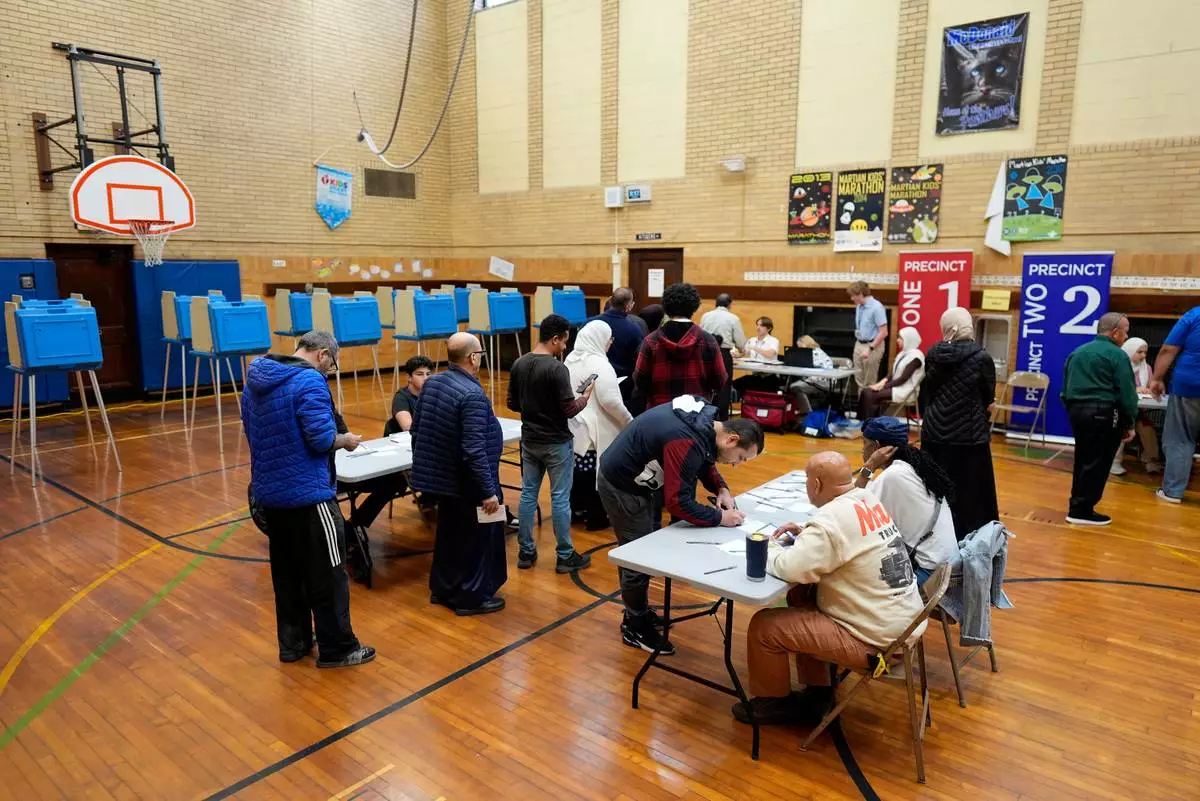
FILE - Voters wait to receive their ballots at a polling place at McDonald Elementary School, Nov. 5, 2024, in Dearborn, Mich. (AP Photo/Charlie Neibergall, File)
FILE - Voters wait to receive their ballots at a polling place at McDonald Elementary School, Nov. 5, 2024, in Dearborn, Mich. (AP Photo/Charlie Neibergall, File)

FILE - Republican presidential nominee former President Donald Trump speaks at an election night watch party, Nov. 6, 2024, in West Palm Beach, Fla. (AP Photo/Alex Brandon, File)
FILE - Republican presidential nominee former President Donald Trump speaks at an election night watch party, Nov. 6, 2024, in West Palm Beach, Fla. (AP Photo/Alex Brandon, File)

FILE - President Joe Biden, right, and Republican presidential candidate former President Donald Trump, left, participate in a presidential debate hosted by CNN, Thursday, June 27, 2024, in Atlanta. (AP Photo/Gerald Herbert)
FILE - President Joe Biden, right, and Republican presidential candidate former President Donald Trump, left, participate in a presidential debate hosted by CNN, Thursday, June 27, 2024, in Atlanta. (AP Photo/Gerald Herbert)

FILE - Democratic presidential nominee Vice President Kamala Harris delivers a concession speech for the 2024 Presidential election, Nov. 6, 2024, on the campus of Howard University in Washington. (AP Photo/Jacquelyn Martin, File)

FILE - Democratic presidential nominee Vice President Kamala Harris delivers a concession speech for the 2024 Presidential election, Nov. 6, 2024, on the campus of Howard University in Washington. (AP Photo/Jacquelyn Martin, File)
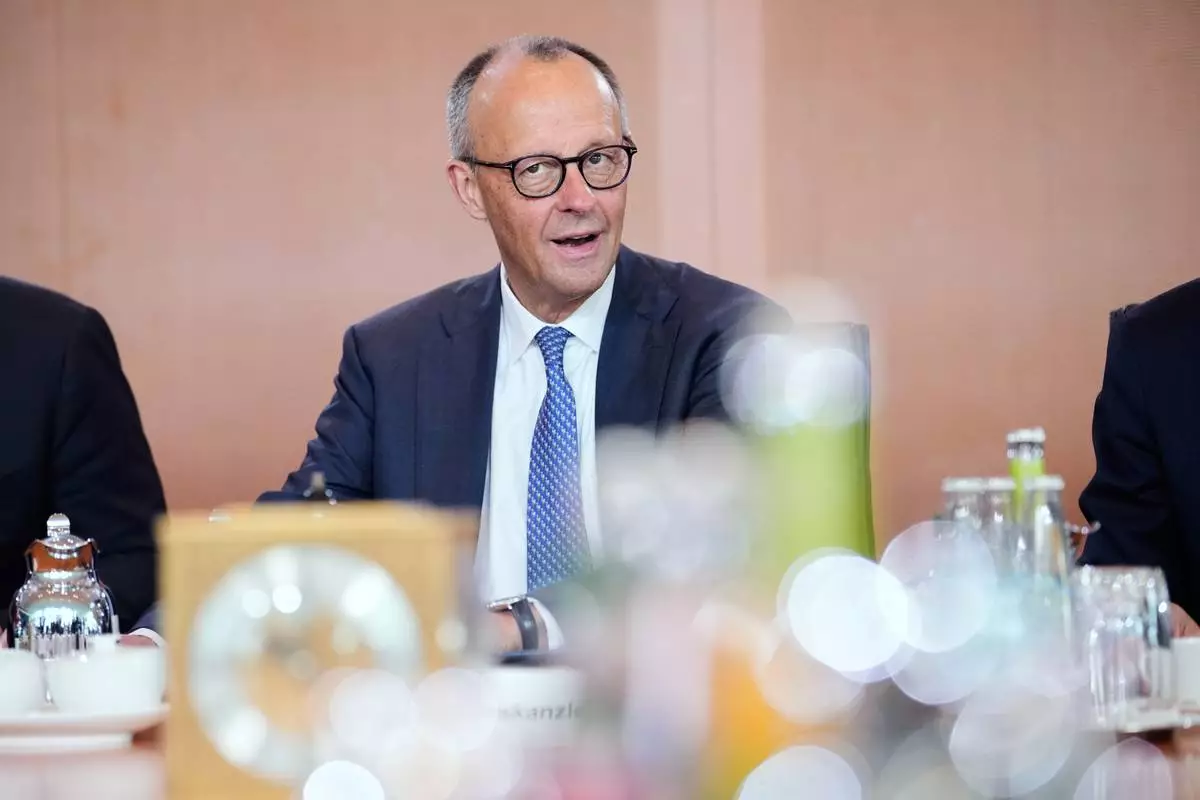
BRUSSELS (AP) — German Chancellor Friedrich Merz wants the European Union to consider offering “associate membership” to Ukraine and breathe new life into talks aimed at ending more than four years of war with Russia, according to a letter seen Thursday by The Associated Press.

His letter, to the EU’s top officials, comes as the 27-nation bloc weighs whether to try to launch its own negotiations with Russian President Vladimir Putin, with U.S. mediated talks bogged down while America’s attention focuses on the Iran war.

Under Merz’s proposals, Ukraine would take part in EU meetings, but without voting rights, and would also have non-voting “associate members” of the bloc’s powerful executive branch, the European Commission, and the European Parliament.

He insisted that this “would not be a membership light,” and “go far beyond” the Association Agreement that currently governs EU-Ukraine relations. Merz suggested a “snap-back mechanism” in case Ukraine backslides on democratic standards.

European Council President Antonio Costa and European Commission President Ursula von der Leyen reaffirmed last month that official membership talks with Ukraine should be opened “without delay,” and Merz too called for that process to start.

On Wednesday, Ukrainian President Volodymyr Zelenskyy welcomed signs of possible progress in the accession negotiations, saying in an address that it is “very important for us. Ukraine has fulfilled everything necessary for this progress.”

Candidate countries must bring their laws into line in 35 policy areas, or “chapters,” ranging from justice standards to farm and fishing rules. All 27 EU members must agree before each chapter can be opened, and then again for it to be closed.

Hungary, notably, has blocked the opening of negotiations, but with a new government now in place in Budapest this month that stance could change.

Still, Merz’s plan is unlikely to please those European officials who argue that EU membership must be a merits-based process that concludes only once all the benchmarks have been met.

But the German leader did say that his approach should be extended to other countries waiting in line to join, notably those in the Western Balkans, where EU leaders are due to gather for a summit next month.

On the war, Merz wrote that his proposal “will help facilitate the ongoing peace talks as part of a negotiated peace solution. This is essential not only for Ukraine’s but for the entire continent’s security.”

Ukraine sees EU membership as one “security guarantee” for a stable future once the war ends. Its best guarantee would be NATO membership, but the Trump administration insists that cannot happen, and others are wary of it joining while fighting continues.

As U.S-led mediation efforts have foundered, EU countries have begun to debate whether to launch a parallel negotiating track and who might mediate on their behalf in the unlikely event that Putin might agree to talk to them.

Earlier this month, Costa said that “we need, in the right moment, to have talks with Russia to address our common issues on security.” He said this should not “disturb” U.S.-led talks, but that it’s important for Europe to address its own security concerns.

Since then, speculation has swirled in European media about possible EU negotiators, including former German Chancellor Angela Merkel, a Russian speaker who knows Putin well, and former European Central Bank chief Mario Draghi.

Putin has suggested that he might talk to Gerhard Schröder, another past German chancellor. But officials have poured cold water on that idea even in Germany, where Schröder’s ties to the Russian energy sector and friendly relationship with Putin damaged his political standing after Russia’s full-scale invasion of Ukraine in 2022.

EU foreign policy chief Kaja Kallas said it would “not be very wise” to allow Putin to appoint a negotiator, and particularly a “high-level lobbyist for Russian state-owned companies.”

Zelenskyy has welcomed a European role, saying on Sunday that “Europe must be involved in the negotiations. It is important for Europe to have a strong voice and presence in this process, and it is worth determining who will represent Europe specifically.”

Moulson reported from Berlin. Susie Blann in Kyiv contributed.

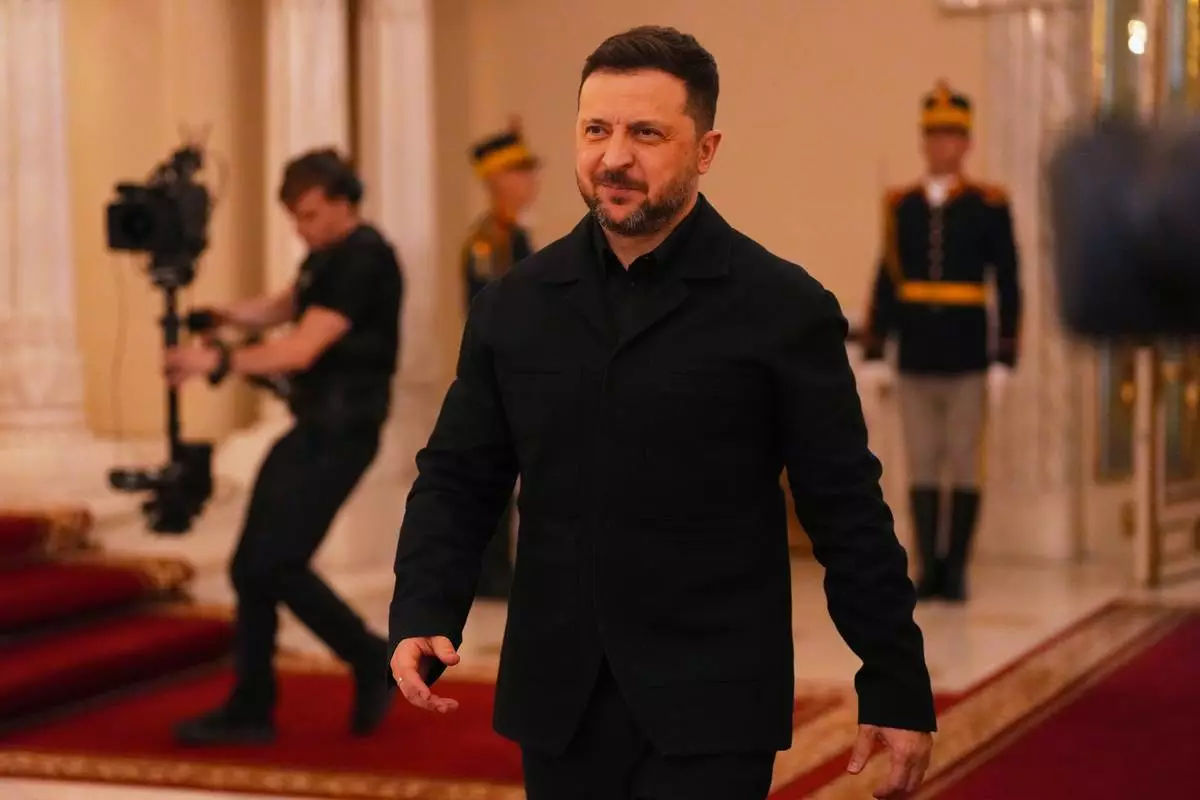
Ukraine's President Volodymyr Zelenskyy arrives at the Bucharest B9 summit held at the Cotroceni Presidential Palace in Bucharest, Romania, Wednesday, May 13, 2026. (AP Photo/Vadim Ghirda)

Ukraine's President Volodymyr Zelenskyy arrives at the Bucharest B9 summit held at the Cotroceni Presidential Palace in Bucharest, Romania, Wednesday, May 13, 2026. (AP Photo/Vadim Ghirda)

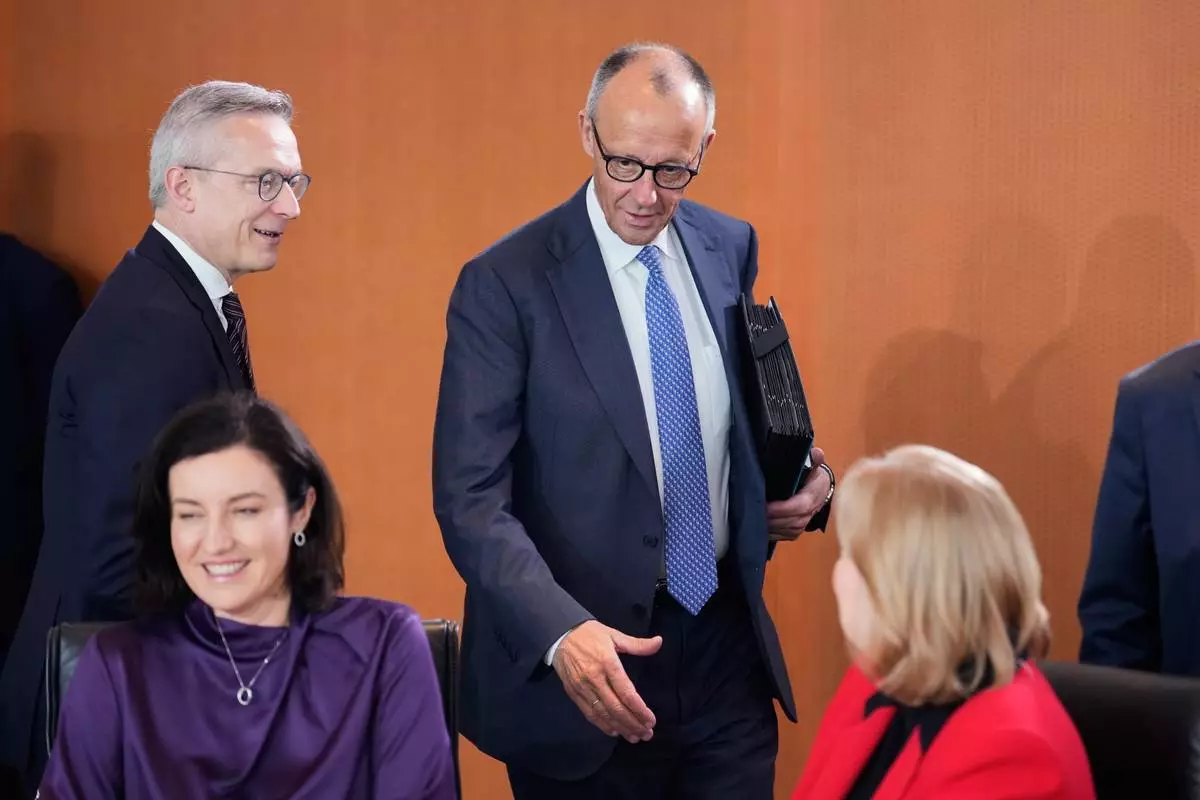
German Chancellor Friedrich Merz attends the cabinet meeting at the chancellery in Berlin, Germany, Wednesday, May 20, 2026. (AP Photo/Ebrahim Noroozi)

German Chancellor Friedrich Merz attends the cabinet meeting at the chancellery in Berlin, Germany, Wednesday, May 20, 2026. (AP Photo/Ebrahim Noroozi)

German Chancellor Friedrich Merz, center, attends the cabinet meeting at the chancellery in Berlin, Germany, Wednesday, May 20, 2026. (AP Photo/Ebrahim Noroozi)

German Chancellor Friedrich Merz, center, attends the cabinet meeting at the chancellery in Berlin, Germany, Wednesday, May 20, 2026. (AP Photo/Ebrahim Noroozi)

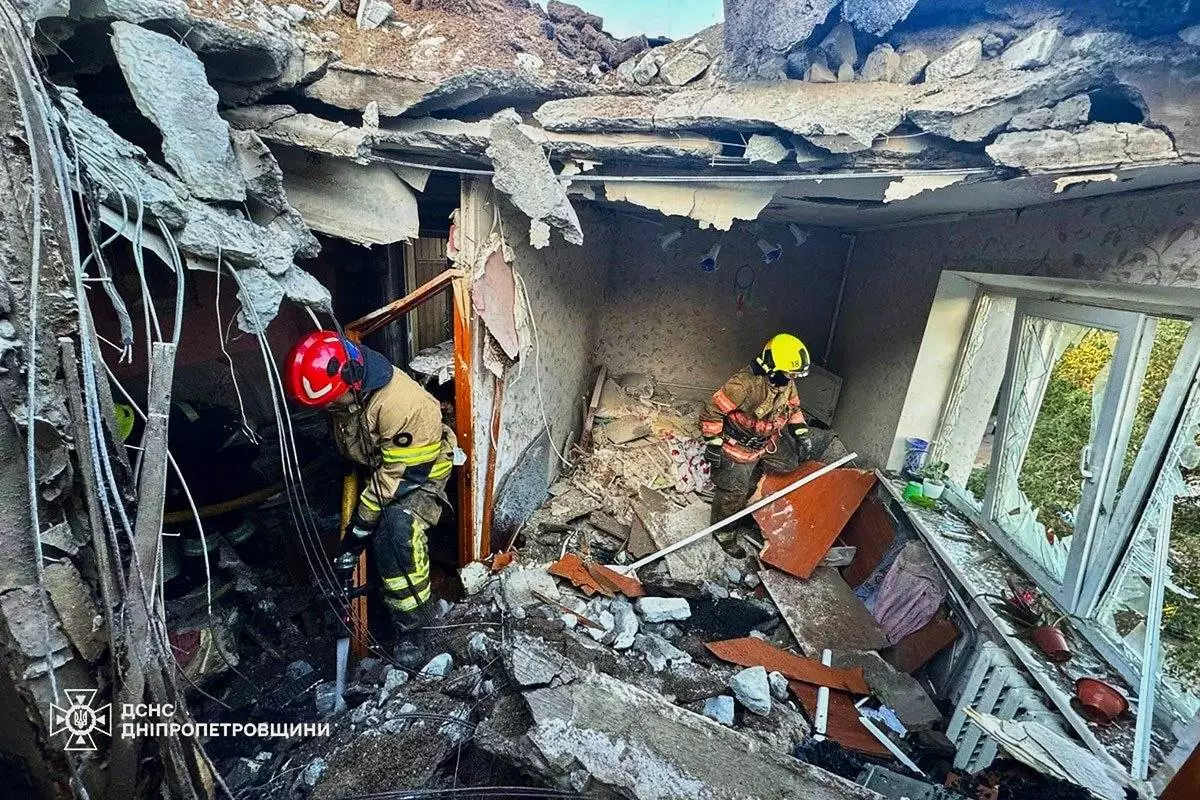
In this photo provided by the Ukrainian Emergency Service, firefighters put out a fire in a building following a Russian air attack in Dnipropetrovsk region, Ukraine, Thursday, May 21, 2026. (Ukrainian Emergency Service via AP)

In this photo provided by the Ukrainian Emergency Service, firefighters put out a fire in a building following a Russian air attack in Dnipropetrovsk region, Ukraine, Thursday, May 21, 2026. (Ukrainian Emergency Service via AP)

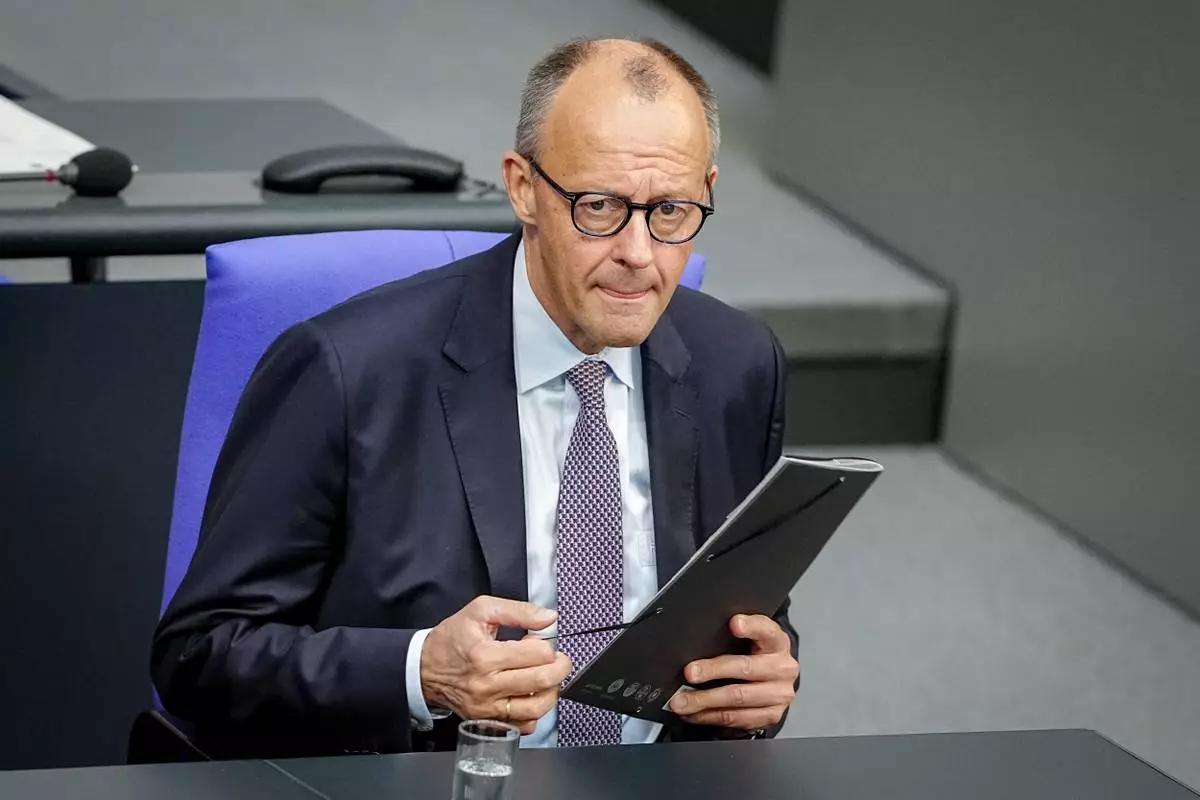
Federal Chancellor Friedrich Merz (CDU) attends a Bundestag session in Berlin, on Thursday, May 21, 2026. (Kay Nietfeld/dpa via AP)

Federal Chancellor Friedrich Merz (CDU) attends a Bundestag session in Berlin, on Thursday, May 21, 2026. (Kay Nietfeld/dpa via AP)

Recommended Articles