MINNEAPOLIS (AP) — Recent cost-cutting by the Minnesota Twins left a bare-bones bullpen they are trying to rebuild by committee with bargain pickups and a few top-flight prospects.
The budget-friendly lineup has been in flux, too, with none of their young homegrown players reliably producing at the plate and a crushing setback this week when standout catcher Ryan Jeffers was sidelined until perhaps the All-Star break.
Click to Gallery
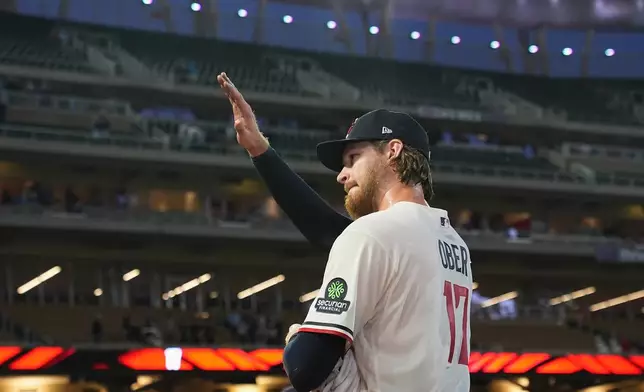
Minnesota Twins starting pitcher Bailey Ober (17) acknowledges the crowd after pitching a complete-game shutout of a baseball game against the Miami Marlins Tuesday, May 12, 2026, in Minneapolis. (AP Photo/Abbie Parr)
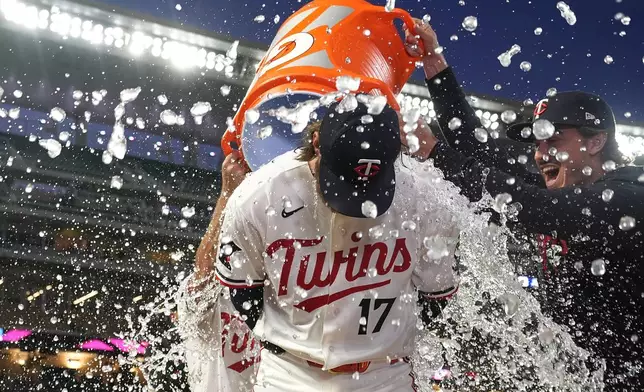
Minnesota Twins starting pitcher Bailey Ober (17) is doused with water by Brooks Lee, left, and Joe Ryan, right, after pitching a complete-game shutout of a baseball game against the Miami Marlins Tuesday, May 12, 2026, in Minneapolis. (AP Photo/Abbie Parr)
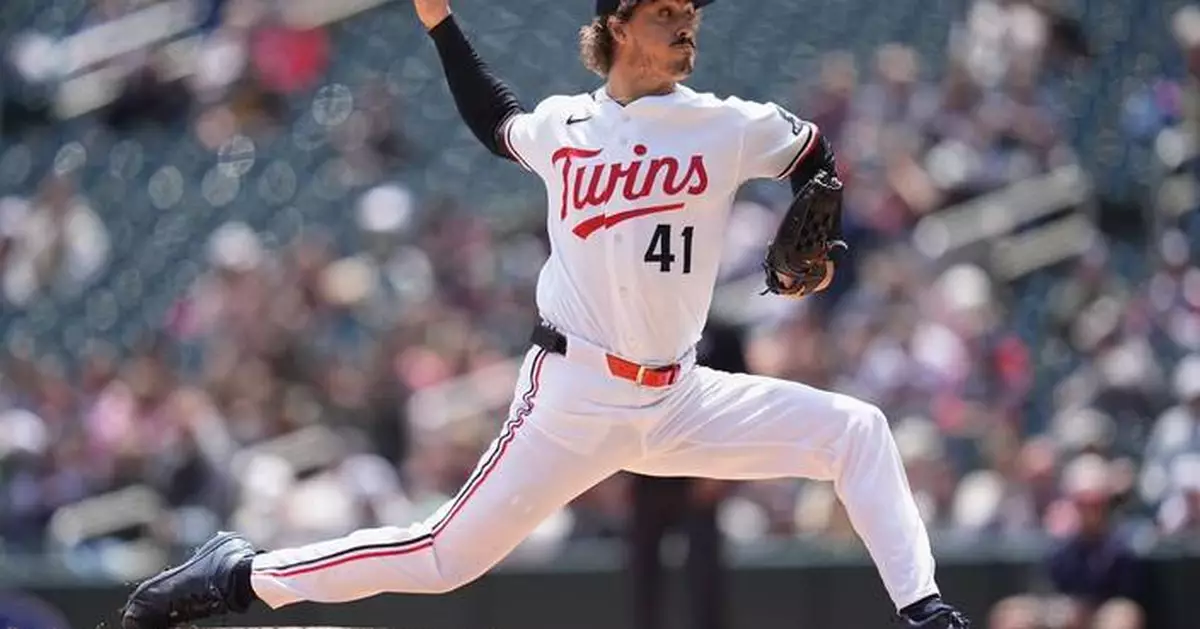
Minnesota Twins starting pitcher Joe Ryan (41) delivers during the first inning of a baseball game against the Houston Astros Wednesday, May 20, 2026, in Minneapolis. (AP Photo/Abbie Parr)
Minnesota Twins starting pitcher Joe Ryan (41) delivers during the first inning of a baseball game against the Houston Astros, Wednesday, May 20, 2026, in Minneapolis. (AP Photo/Abbie Parr)
The Twins have managed to stayed afloat in a wide-open American League during the first third of the 2026 schedule with repeated winning performances — hinting at a bright future for the foundational piece of any major league club — by their starting pitchers.
“We're starting to develop a little bit of an identity,” manager Derek Shelton said.
Joe Ryan was the latest with a masterpiece on the mound, matching his career high with 12 strikeouts in six innings and retiring the last 16 batters he faced to beat the Houston Astros on Wednesday. The 2025 All-Star lowered his ERA to 3.02, which would be a personal best over a full season, and shrunk his sparkling WHIP rate to 0.971, which ranks eighth in MLB among pitchers with a qualifying amount of innings.
After their selloff last summer that jettisoned 10 players off the major league roster, the Twins resisted a further teardown and kept their two best trade chips in Ryan and fellow ace Pablo López. Their greatest strength was immediately tested when López was injured on the first day of full-squad workouts in spring training and lost for the year to Tommy John elbow surgery. Mick Abel and Taj Bradley, two of the starting pitchers received in the 2025 trading spree, have since been sidelined.
But the rotation has kept on spinning with favorable results. The Twins rank fifth in MLB with 21 quality starts of six or more innings and three or fewer earned runs. They're seventh in starter ERA at 3.67.
“I just look at it as, ‘Go pitch on my day,’” Ryan said, uninterested in publicly embracing the role of staff leader in light of López's absence. “Whoever’s out there, they should think that they’re the guy that day and go do their job, and we’re all going to have their back the same way as anyone.”
Bailey Ober, who has one of three complete game shutouts in the major leagues this year, has made a sharp bounce back from a disappointing 2025 season. Zebby Matthews was recently promoted from Triple-A as a calmer and more confident version of himself after up-and-down stints over the last two years. Rookie Connor Prielipp, the organization's fifth-best prospect in MLB.com's preseason rankings, has quickly shown he belongs on a major league mound. Bradley could return from a chest muscle injury this weekend. Abel remains on the injured list indefinitely with elbow inflammation, but he's not expected to be out long term.
“You see behind the scenes what they’re doing and how they prepare and how they handle success and failure and stay the same, and that’s really a pretty good feeling just knowing guys are going to go out there and have good outings,” Ryan said.
AP MLB: https://apnews.com/hub/MLB

Minnesota Twins starting pitcher Bailey Ober (17) acknowledges the crowd after pitching a complete-game shutout of a baseball game against the Miami Marlins Tuesday, May 12, 2026, in Minneapolis. (AP Photo/Abbie Parr)

Minnesota Twins starting pitcher Bailey Ober (17) is doused with water by Brooks Lee, left, and Joe Ryan, right, after pitching a complete-game shutout of a baseball game against the Miami Marlins Tuesday, May 12, 2026, in Minneapolis. (AP Photo/Abbie Parr)

Minnesota Twins starting pitcher Joe Ryan (41) delivers during the first inning of a baseball game against the Houston Astros Wednesday, May 20, 2026, in Minneapolis. (AP Photo/Abbie Parr)

Minnesota Twins starting pitcher Joe Ryan (41) delivers during the first inning of a baseball game against the Houston Astros, Wednesday, May 20, 2026, in Minneapolis. (AP Photo/Abbie Parr)
WASHINGTON (AP) — In the year since President Donald Trump signed an executive order promising to create a deep-sea mining industry from scratch, businesses have raised millions of dollars from investors, stock prices have soared and federal regulators have raced to fast-track a permitting process.
At least nine companies are in talks with the government for access to seabed minerals, according to an Associated Press review. Sections of the seafloor from American Samoa to Alaska could be auctioned for offshore mining this summer and through the fall.
All the action suggests the U.S. may soon give the green light for companies to commercially mine the seabed — something that’s never been done in international waters.
But a close look at some of the companies involved reveals uncertain track records and histories spattered with legal disputes, while major questions about how the minerals would be processed and refined remain unanswered. Watchers of the nascent industry are skeptical the promised riches will ever materialize.
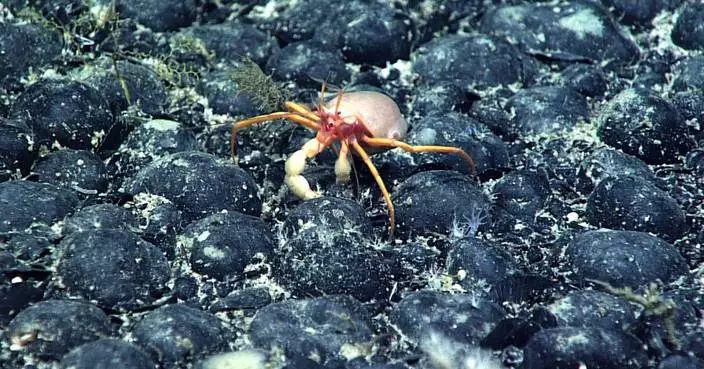
The most widely prized ores on the seafloor are fist-shaped rocks known as polymetallic nodules, formed over millions of years from the remains of sunken shark teeth and shells. They contain high grades of manganese, copper, nickel and cobalt, and much smaller amounts of rare earth elements. Trillions of nodules lie on the international seabed between Mexico and Hawaii, scientists say.
Nearer to shore, companies have proposed dredging ocean sands for titanium, zirconium and phosphorites.
Trump’s April 2025 executive order hailed seafloor minerals as vital to America’s future prosperity and its trade independence from China, and directed U.S. agencies to expedite permitting.
Two U.S. agencies will enforce rules: the National Oceanic and Atmospheric Administration and the Bureau of Ocean Energy Management. NOAA has never approved a commercial project for seabed mining; nor has BOEM, beyond a short-lived mining effort in California waters more than 60 years ago.
In June, Interior Secretary Doug Burgum announced a mandate for his staff to “speed up” the development of critical minerals offshore. The agency soon announced it was evaluating seabed mining in the waters of Alaska, Virginia, American Samoa and the Northern Mariana Islands. It plans to hold the first lease sale as early as August, according to a budget proposal.
NOAA has shortened the timeline for companies pursuing commercial permits, and targets processing 16 applications next fiscal year.
So far, companies include a firm that once made its money hunting for sunken treasure, and a startup that sprung from an effort to find Amelia Earhart’s long-lost plane.
And it includes The Metals Company, long seen as the industry's front-runner. If granted a permit, the firm says it can commercially mine the seafloor before the end of next year. It is one of few companies to have tested equipment in deep-water conditions — hauling up 3,000 metric tons of nodules in a 2022 trial.
The company has close ties to the Trump administration. CEO Gerard Barron says he was in the White House on the day Trump signed the executive order, and since then, he’s been invited to speak at three congressional hearings.
A spokesperson for The Metals Company said the firm had no unfair advantages, and is well-poised to address the strategic priorities of the U.S. after 15 years of preparation and testing.
Odyssey Marine Exploration formed in the 1990s with a mission to discover sunken treasure and sell the artifacts for profit. The company claims to have found more shipwrecks than any other organization in the world.
Odyssey ran into trouble in 2007, when it discovered an underwater shipwreck littered with silver and gold coins that Odyssey brought to the U.S. The treasure was later claimed by the government of Spain, prompting a yearslong court battle, during which Odyssey pivoted to pursuing seafloor minerals.
In December, BOEM announced that Odyssey had requested the agency begin the regulatory process to consider mining off the coast of Virginia.
The startup Impossible Metals has set its sights on seafloor nodules in U.S. waters near American Samoa and the Northern Mariana Islands, despite growing outcry from local residents and leaders. The company boasts of being the most environmentally friendly deep-sea mining company.
Still other companies are lining up for U.S. permission, including American Metal Resources, SeaX, Deep Sea Minerals Corp., and Deep Sea Rare Minerals, which planned to change its name to Eco Minerals this week.
A number of analysts and investors question the economic merit of deep-sea mining. Ian Lange, a professor of mineral economics at the Colorado School of Mines, said deep-sea mining advocates seem to overlook the more affordable and widely available sources of minerals on land. He questioned whether demand is strong enough: Copper mines in Michigan and Wyoming are fully permitted but inactive; a cobalt mine is idled in Idaho.
In an assessment of the economic viability of The Metals Company’s project, the company forecast that it would break even in its eighth year of commercial seabed mining – the same year that it forecast the mineral reserves to be “all mined.”
“No one goes into a project saying, ‘In the best-case scenario, we’ll break even,’” said mining consultant Steven Emerman.
The Metals Company said it had completed mining plans and seafloor surveys for the first eight years of the project, and that the costs of surveying, sampling and analyzing additional seafloor minerals were best incurred once the project was underway. It said at at least three land-based mines were needed to produce the four minerals that exist in polymetallic nodules, the company said, and this variety makes the project resilient to economic headwinds and changing demand for metals.
Despite Trump’s focus on trade independence, the U.S. currently has no major processing facilities for nickel, manganese or cobalt.
In the near term, companies will have to rely on existing supply chains abroad. The Metals Company has thus far explored processing in Japan, South Korea and Indonesia.
But reliance on foreign partners could raise a host of legal issues for deep-sea mining companies. Most other countries involved in deep-sea mining are bound by their commitments to the International Seabed Authority, and could be sued for helping the U.S. tap the global seabed.
—-
The Associated Press receives financial support from multiple private foundations. AP is solely responsible for all content. Find AP’s standards for working with philanthropies, a list of supporters and funded coverage areas at AP.org.
—-
Contact AP’s global investigative team at Investigative@ap.org or https://www.ap.org/tips/
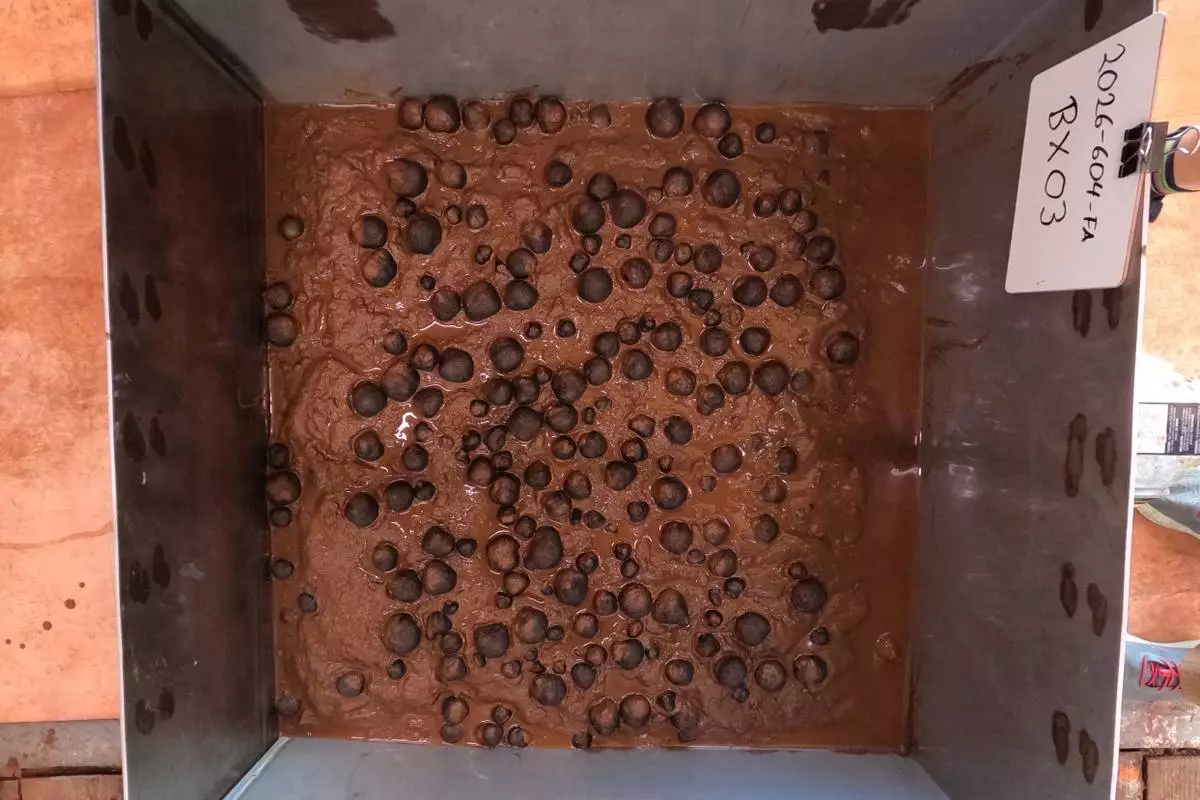
This photo provided by the U.S. Geological Survey shows polymetallic nodules in a sample from the seafloor that was collected on April 14, 2026, in U.S. waters off American Samoa. (USGS via AP)
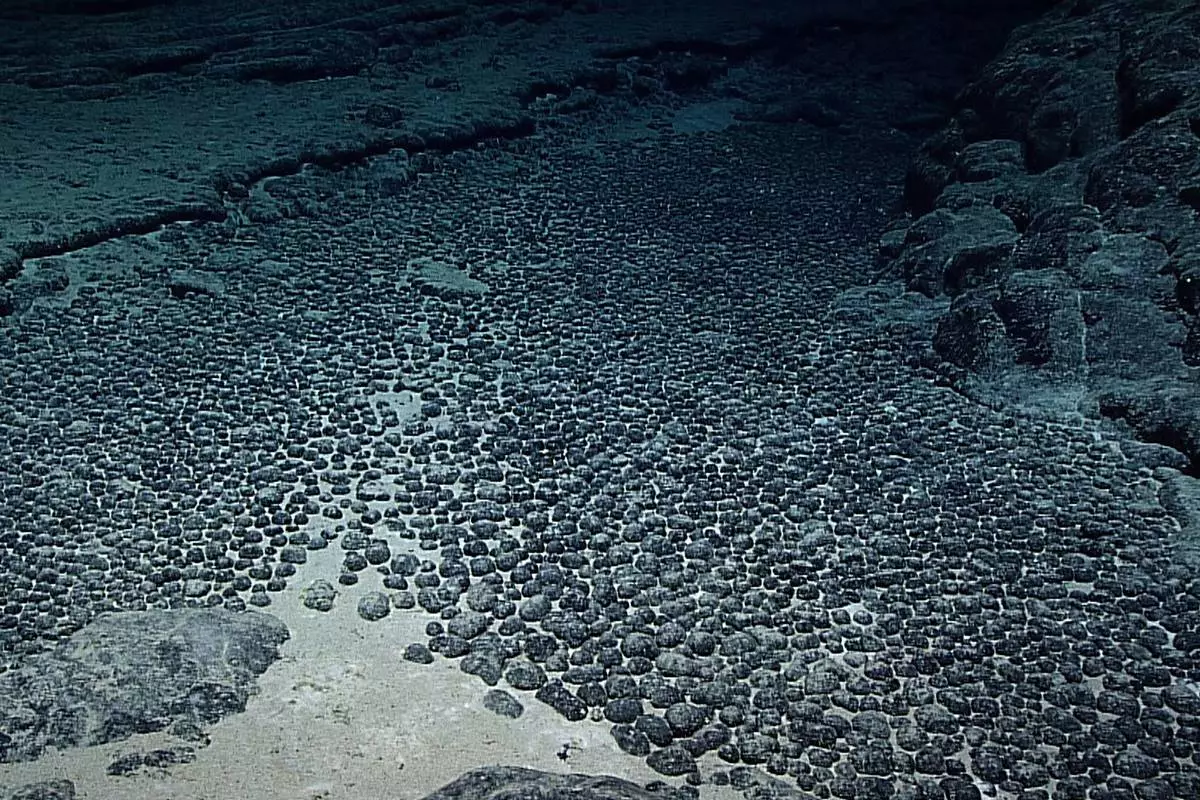
This photo provided by NOAA shows a field of manganese nodules in deep waters off of Hawaii during the Hohonu Moana (deep water) expedition in 2015. (NOAA Office of Ocean Exploration and Research via AP)