BRUSSELS (AP) — German Chancellor Friedrich Merz wants the European Union to consider offering “associate membership” to Ukraine and breathe new life into talks aimed at ending more than four years of war with Russia, according to a letter seen Thursday by The Associated Press.
His letter, to the EU’s top officials, comes as the 27-nation bloc weighs whether to try to launch its own negotiations with Russian President Vladimir Putin, with U.S. mediated talks bogged down while America’s attention focuses on the Iran war.
Click to Gallery
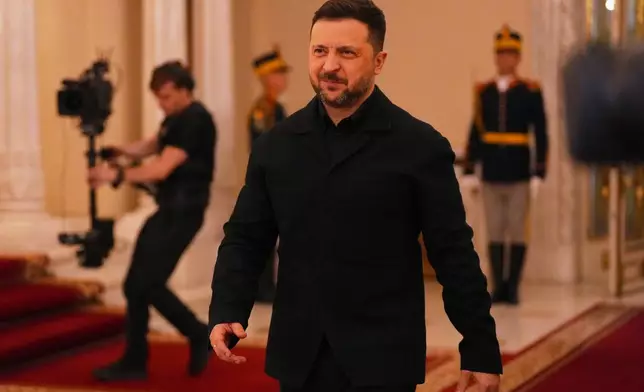
Ukraine's President Volodymyr Zelenskyy arrives at the Bucharest B9 summit held at the Cotroceni Presidential Palace in Bucharest, Romania, Wednesday, May 13, 2026. (AP Photo/Vadim Ghirda)
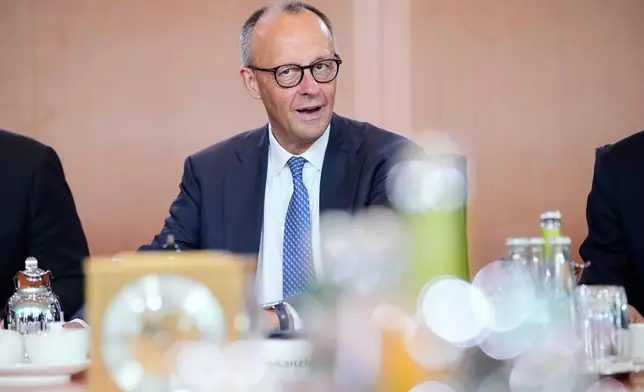
German Chancellor Friedrich Merz attends the cabinet meeting at the chancellery in Berlin, Germany, Wednesday, May 20, 2026. (AP Photo/Ebrahim Noroozi)
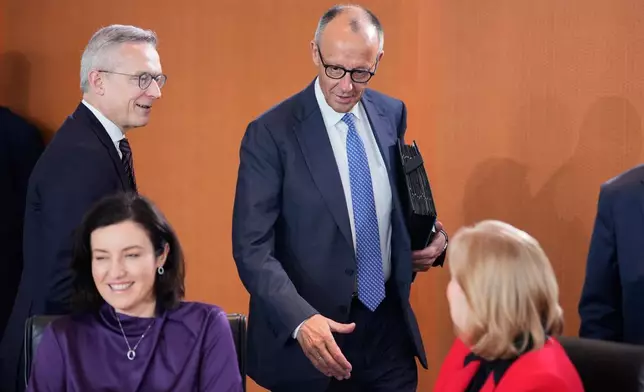
German Chancellor Friedrich Merz, center, attends the cabinet meeting at the chancellery in Berlin, Germany, Wednesday, May 20, 2026. (AP Photo/Ebrahim Noroozi)
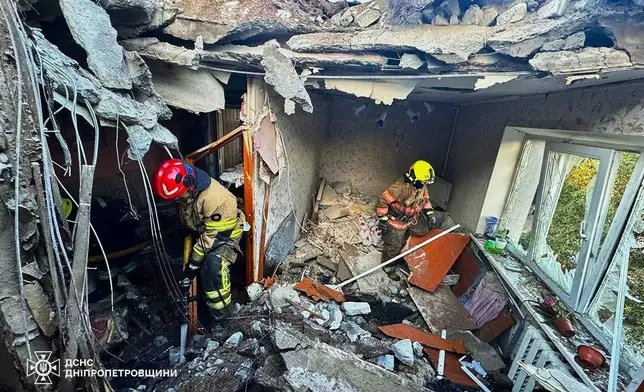
In this photo provided by the Ukrainian Emergency Service, firefighters put out a fire in a building following a Russian air attack in Dnipropetrovsk region, Ukraine, Thursday, May 21, 2026. (Ukrainian Emergency Service via AP)
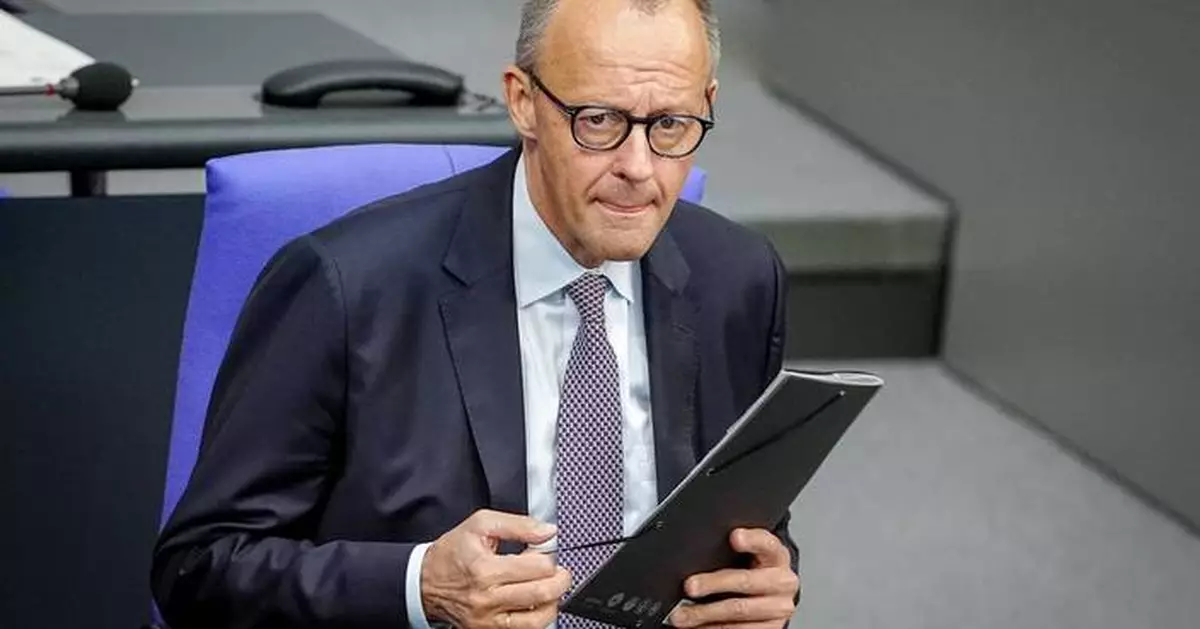
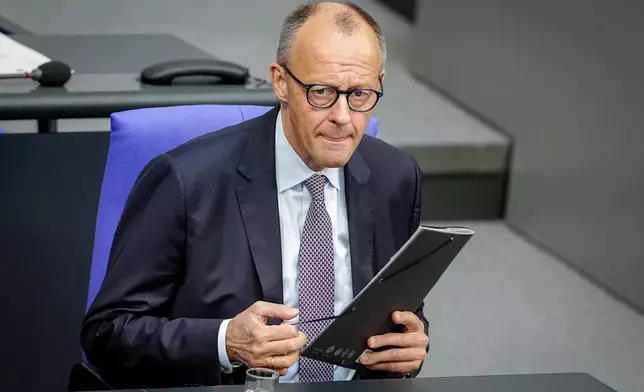
Federal Chancellor Friedrich Merz (CDU) attends a Bundestag session in Berlin, on Thursday, May 21, 2026. (Kay Nietfeld/dpa via AP)
Under Merz’s proposals, Ukraine would take part in EU meetings, but without voting rights, and would also have non-voting “associate members” of the bloc’s powerful executive branch, the European Commission, and the European Parliament.
He insisted that this “would not be a membership light,” and “go far beyond” the Association Agreement that currently governs EU-Ukraine relations. Merz suggested a “snap-back mechanism” in case Ukraine backslides on democratic standards.
European Council President Antonio Costa and European Commission President Ursula von der Leyen reaffirmed last month that official membership talks with Ukraine should be opened “without delay,” and Merz too called for that process to start.
On Wednesday, Ukrainian President Volodymyr Zelenskyy welcomed signs of possible progress in the accession negotiations, saying in an address that it is “very important for us. Ukraine has fulfilled everything necessary for this progress.”
Candidate countries must bring their laws into line in 35 policy areas, or “chapters,” ranging from justice standards to farm and fishing rules. All 27 EU members must agree before each chapter can be opened, and then again for it to be closed.
Hungary, notably, has blocked the opening of negotiations, but with a new government now in place in Budapest this month that stance could change.
Still, Merz’s plan is unlikely to please those European officials who argue that EU membership must be a merits-based process that concludes only once all the benchmarks have been met.
But the German leader did say that his approach should be extended to other countries waiting in line to join, notably those in the Western Balkans, where EU leaders are due to gather for a summit next month.
On the war, Merz wrote that his proposal “will help facilitate the ongoing peace talks as part of a negotiated peace solution. This is essential not only for Ukraine’s but for the entire continent’s security.”
Ukraine sees EU membership as one “security guarantee” for a stable future once the war ends. Its best guarantee would be NATO membership, but the Trump administration insists that cannot happen, and others are wary of it joining while fighting continues.
As U.S-led mediation efforts have foundered, EU countries have begun to debate whether to launch a parallel negotiating track and who might mediate on their behalf in the unlikely event that Putin might agree to talk to them.
Earlier this month, Costa said that “we need, in the right moment, to have talks with Russia to address our common issues on security.” He said this should not “disturb” U.S.-led talks, but that it’s important for Europe to address its own security concerns.
Since then, speculation has swirled in European media about possible EU negotiators, including former German Chancellor Angela Merkel, a Russian speaker who knows Putin well, and former European Central Bank chief Mario Draghi.
Putin has suggested that he might talk to Gerhard Schröder, another past German chancellor. But officials have poured cold water on that idea even in Germany, where Schröder’s ties to the Russian energy sector and friendly relationship with Putin damaged his political standing after Russia’s full-scale invasion of Ukraine in 2022.
EU foreign policy chief Kaja Kallas said it would “not be very wise” to allow Putin to appoint a negotiator, and particularly a “high-level lobbyist for Russian state-owned companies.”
Zelenskyy has welcomed a European role, saying on Sunday that “Europe must be involved in the negotiations. It is important for Europe to have a strong voice and presence in this process, and it is worth determining who will represent Europe specifically.”
Moulson reported from Berlin. Susie Blann in Kyiv contributed.
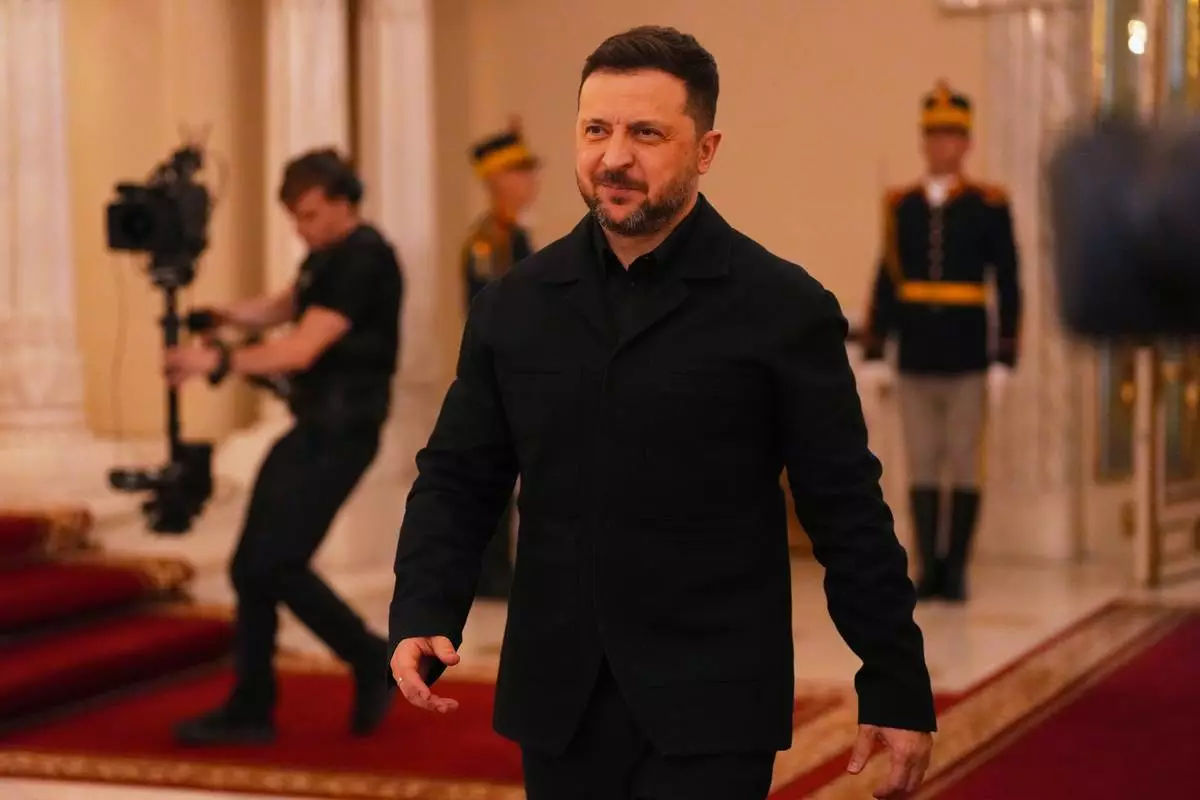
Ukraine's President Volodymyr Zelenskyy arrives at the Bucharest B9 summit held at the Cotroceni Presidential Palace in Bucharest, Romania, Wednesday, May 13, 2026. (AP Photo/Vadim Ghirda)
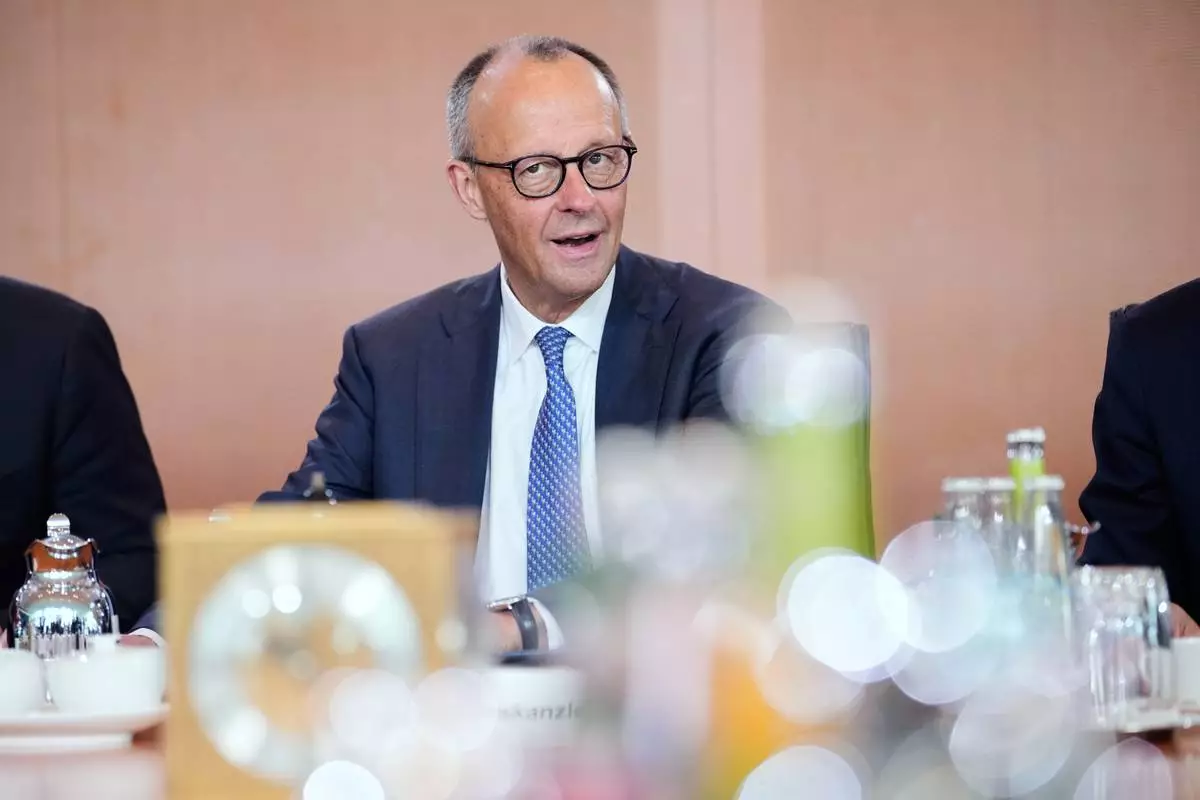
German Chancellor Friedrich Merz attends the cabinet meeting at the chancellery in Berlin, Germany, Wednesday, May 20, 2026. (AP Photo/Ebrahim Noroozi)
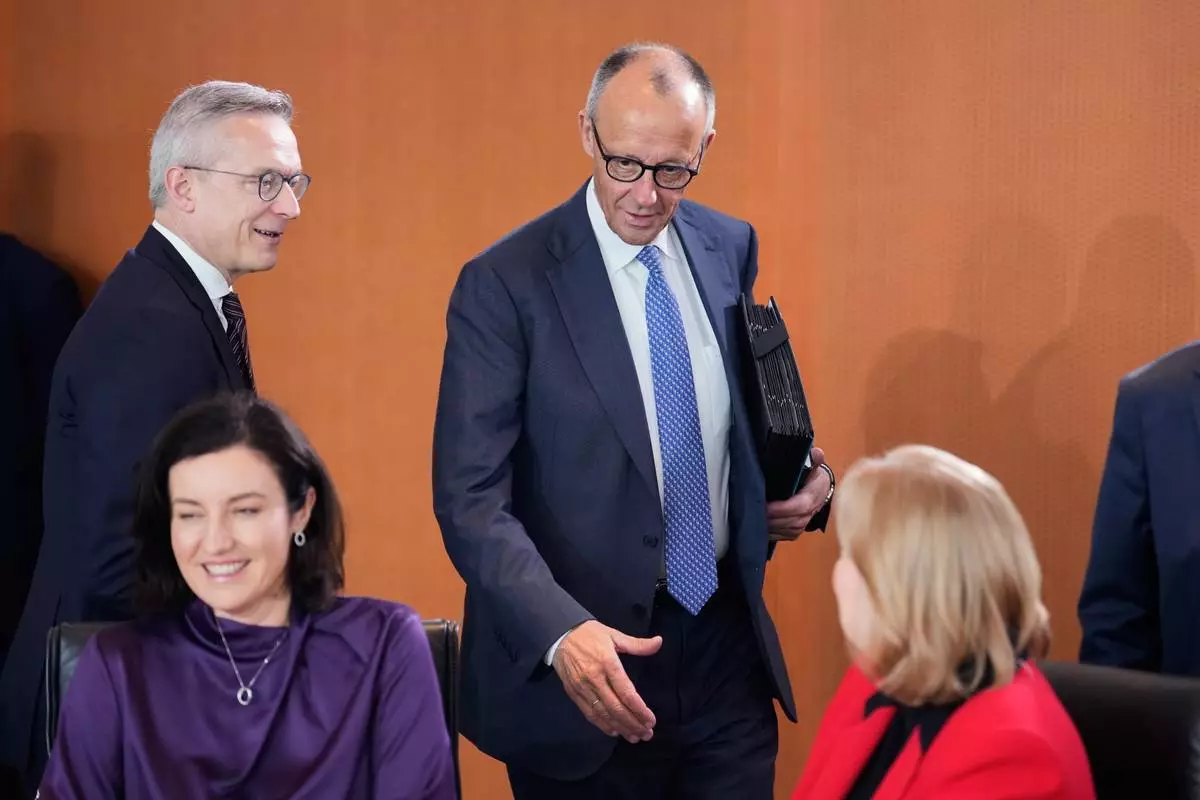
German Chancellor Friedrich Merz, center, attends the cabinet meeting at the chancellery in Berlin, Germany, Wednesday, May 20, 2026. (AP Photo/Ebrahim Noroozi)
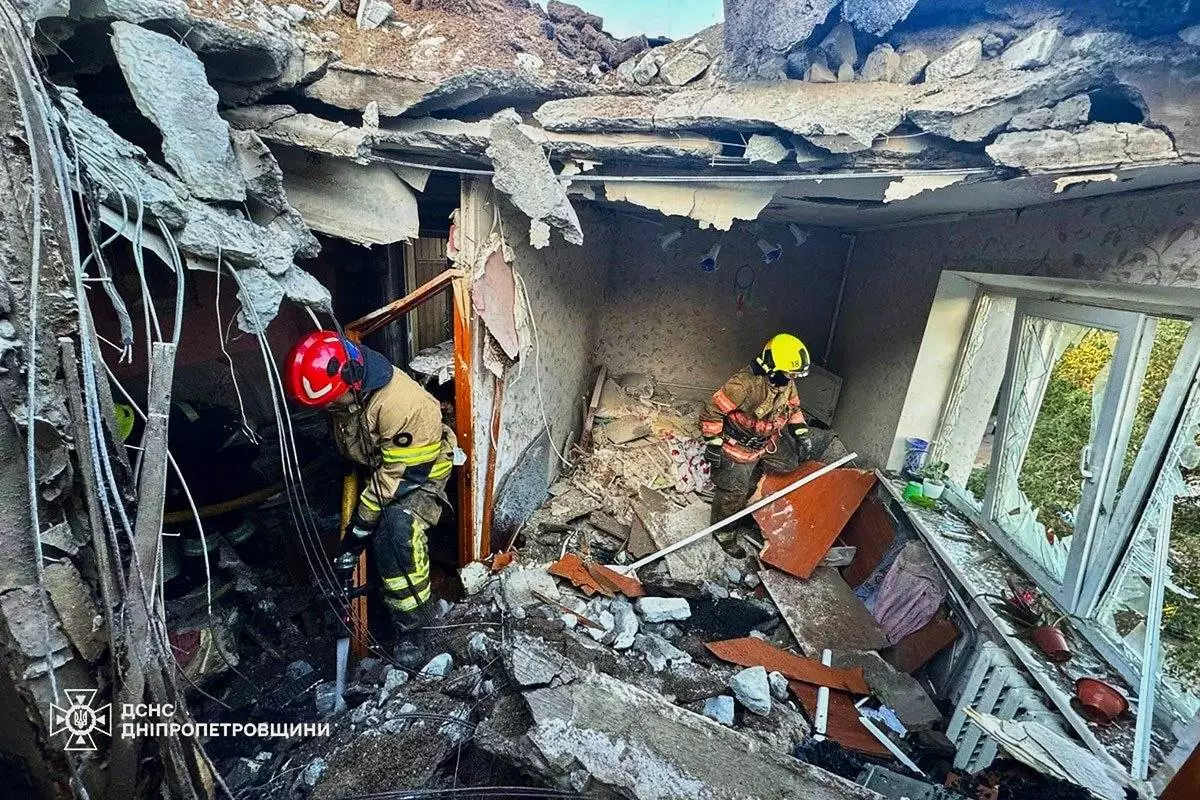
In this photo provided by the Ukrainian Emergency Service, firefighters put out a fire in a building following a Russian air attack in Dnipropetrovsk region, Ukraine, Thursday, May 21, 2026. (Ukrainian Emergency Service via AP)
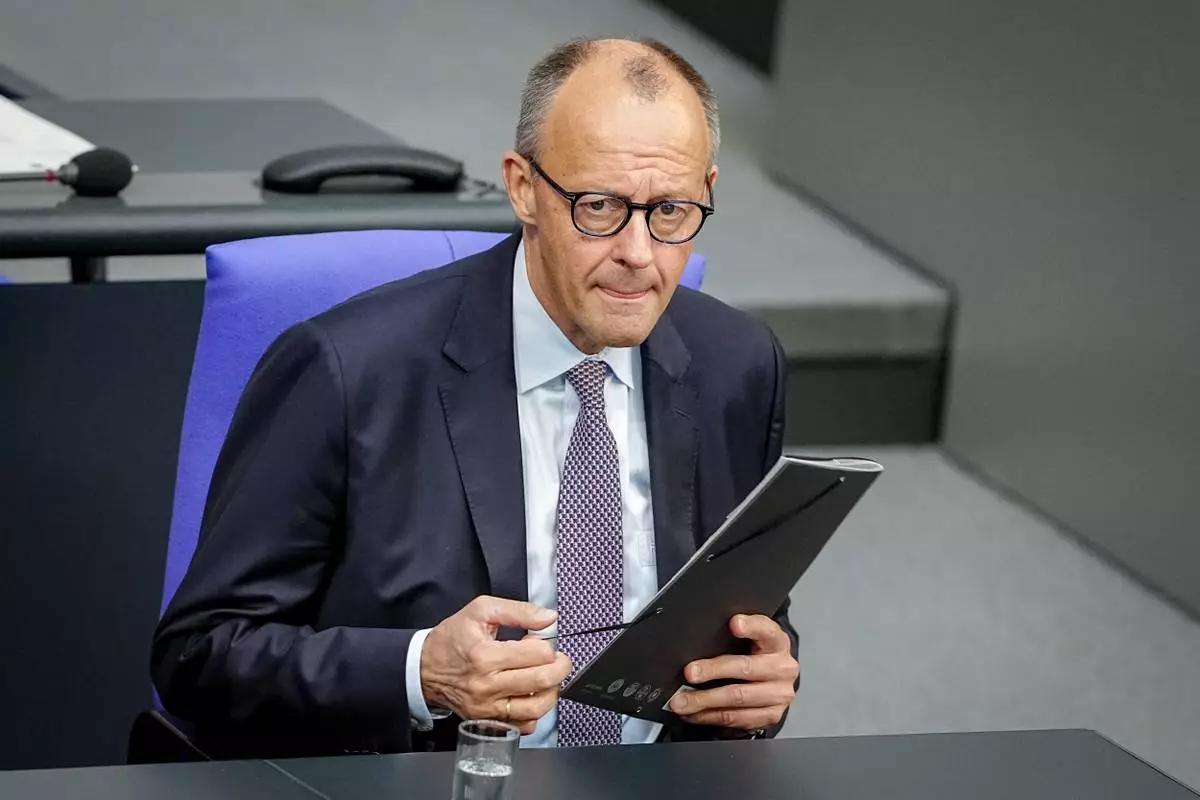
Federal Chancellor Friedrich Merz (CDU) attends a Bundestag session in Berlin, on Thursday, May 21, 2026. (Kay Nietfeld/dpa via AP)
WASHINGTON (AP) — The U.S. Commission of Fine Arts on Thursday approved the design for the triumphal arch that President Donald Trump wants built at an entrance to the nation's capital, a key step in the project's process but one that has no immediate bearing on the timeline for construction.
Commissioners, all appointed by Trump, acted despite overwhelming public opposition to the 250-foot arch, one of several projects the Republican president is pursuing alongside a White House ballroom to leave his imprint on Washington.
At the White House, Trump told reporters he thought the vote was “fantastic" adding that “we’re the only important and major city that doesn’t have one."
The commission only oversees designs and has no role in the actual construction or funding of the arch or any other project it considers. Preliminary surveys and testing of the arch site began last week. The National Capital Planning Commission, a separate federal agency that approves construction on federal land, has the arch on the agenda at its June meeting.
Trump had said last year that the arch could be paid for with private donations left over from the ballroom project. A cost estimate for the arch is still being calculated, but a mix of taxpayer and private money is expected to be used to pay for it, according to a White House official, who spoke on condition of anonymity because the president has not publicly discussed the project's cost.
“The building is beautiful,” said the commission's chairman, Rodney Mims Cook Jr., shortly before the vote on the slightly revised design. Commissioners had suggested several changes when they first reviewed the design in April. Some were made by the Harrison Design architecture firm and approved on Thursday.
The arch would stand 250 feet tall (76 meters) from its base to a torch held aloft by a Lady Liberty-like figure on top of the structure, flanked by two gilded eagles. But four lions envisioned as guarding the base were removed. The phrases “One Nation Under God” and “Liberty and Justice for All” would be inscribed in gold lettering atop either side of the monument.
A public observation deck on top would provide 360-degree views of the region. The arch would have an exterior made of granite.
The commission’s vice chairperson, architect James McCrery II, said in April that he preferred the arch without the figures on top, which would have reduced the height by about 80 feet (24.4 meters). Critics argue that the arch would dominate the skyline and disrupt carefully designed views between the Lincoln Memorial and Arlington National Cemetery.
It would be more than twice as tall as the Lincoln Memorial, which is 99 feet (30 meters) tall, and close to half the height of the Washington Monument, at about 555 feet (169 meters) tall.
Nicolas Charbonneau, a director at Harrison Design, told commissioners that Trump considered their recommendation to remove the statue “but elected not to pursue such an option" because he wants the arch to celebrate America and the living.
“This makes it distinct from monuments like the Jefferson and Lincoln Memorials,” Charbonneau said.
McCrery had also recommended nixing the ground-level lion statues along with an underground tunnel for pedestrians to get to the arch, which would be built on a busy traffic circle. The design approved Thursday has no lions and incorporates pedestrian crosswalks. A platform the arch would have been built on also has been removed.
Ten people who testified Thursday, including on behalf of organizations such as the National Trust for Historic Preservation and the DC Preservation League, opposed the arch on grounds that it is too big. They said the project needed to be approved by Congress because it would be built on federal land and that it would disrupt the sightline between the Lincoln Memorial and Arlington House at Arlington National Cemetery that was created to symbolize reunification after the Civil War.
A group of veterans and a historian have sued the Trump administration in federal court to block the arch construction over concerns about disruptions to the sightline.
Despite the arguments by preservationists, historians and others, Trump asserted Thursday that he does not need Congress to approve the arch. It’s the same justification he’s given for moving ahead quickly with the ballroom project last year.
Cook, the commission chairman, pushed back after listening to the testimony and noted the limitations of building anything new on the National Mall.
“Washington is not a static city. It must grow,” Cook said.
The president has said some of his other projects, including adding a blue coating to the interior of the Lincoln Memorial Reflecting Pool, will beautify the city in time for July 4 celebrations of America’s 250th birthday.
That project is also the subject of a court challenge brought by The Cultural Landscape Foundation, which said repainting the bottom of the Reflecting Pool blue without first undergoing relevant reviews runs afoul of federal preservation laws governing historic sites.
The nonprofit group argued in a lawsuit filed last week that the changes at the memorial to Abraham Lincoln are part of Trump’s broader effort to push through dramatic renovations in Washington without proper reviews and undermine the tone of the area.
U.S. District Judge Carl Nichols, a Trump nominee, didn't rule from the bench Thursday after hearing arguments on the group's request for an order pausing the reflecting pool project until the review process is properly completed. The judge said he would issue a written decision but didn't indicate how or when he would rule.
Justice Department attorney John Heise said Trump administration officials want to preserve the pool's historic character and believe it will retain its reflective characteristics after the work is done.
“Their alleged aesthetic injury is a little hard to pin down,” he said of the plaintiffs. “It's really opposing the change for the sake of opposing the change.”
The judge questioned whether any harms done to the plaintiffs are truly irreversible if the government is correct that the pool will remain a dark color, preserving its reflective quality.
“Everyone agrees it's not going to be the same color,” foundation attorney Joseph Mead said.
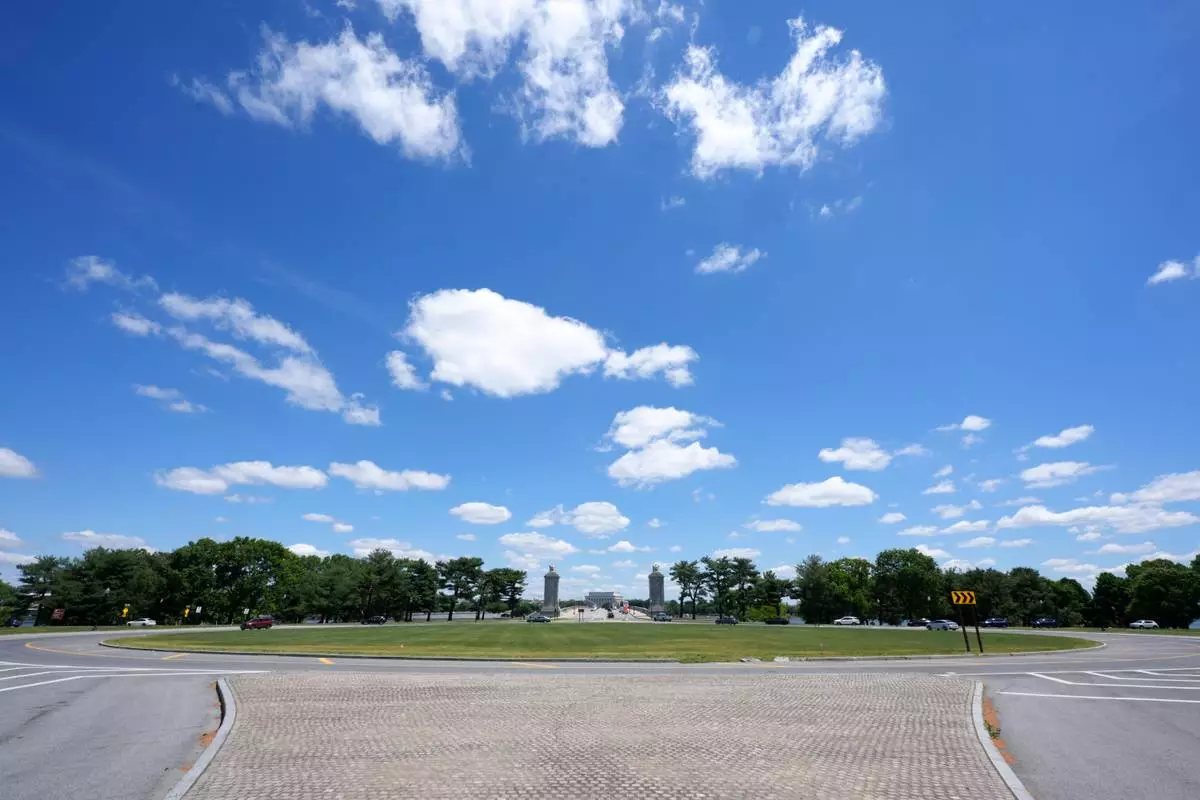
Flags placed by workers are pictured in the Memorial Circle, where President Donald Trump has proposed building an arch to commemorate the United States' 250th anniversary, Friday, May 15, 2026, in Washington. (AP Photo/Jacquelyn Martin)
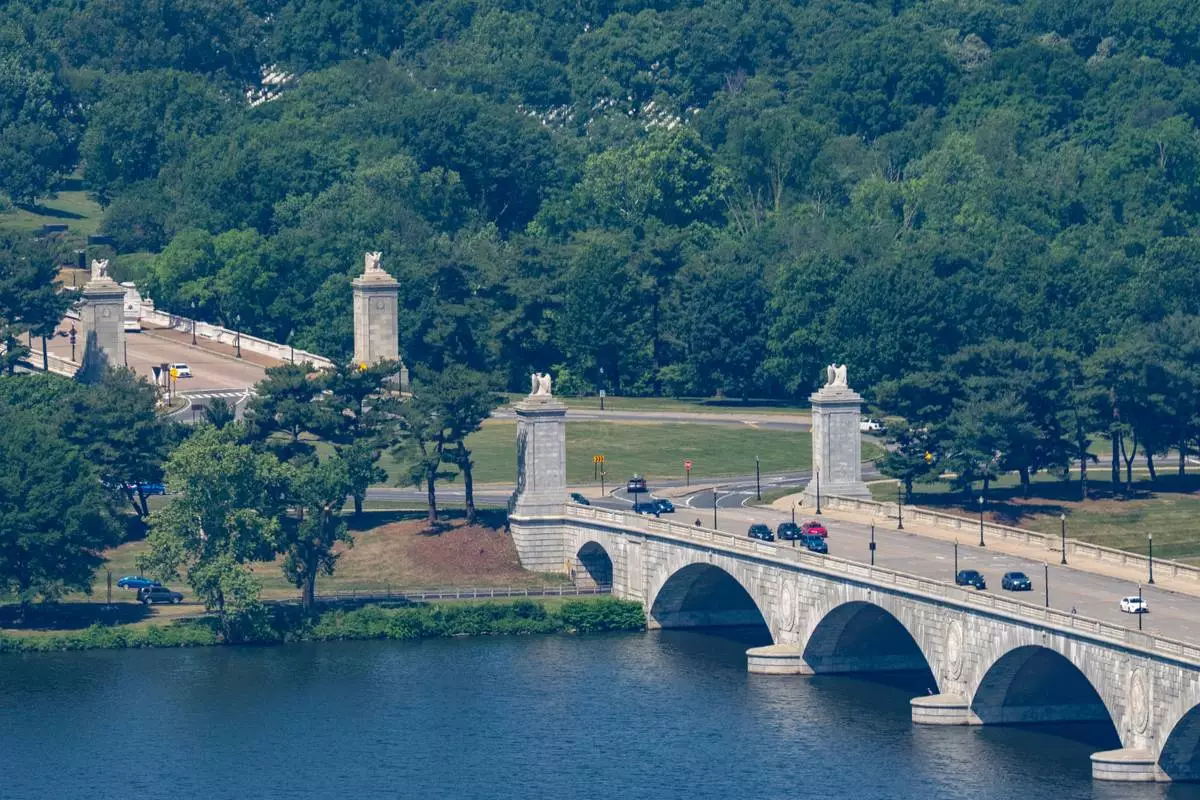
The Memorial Circle, where President Donald Trump has proposed building an arch to commemorate the United States' 250th anniversary is seen, Tuesday, May 19, 2026, in Washington. (AP Photo/Alex Brandon)