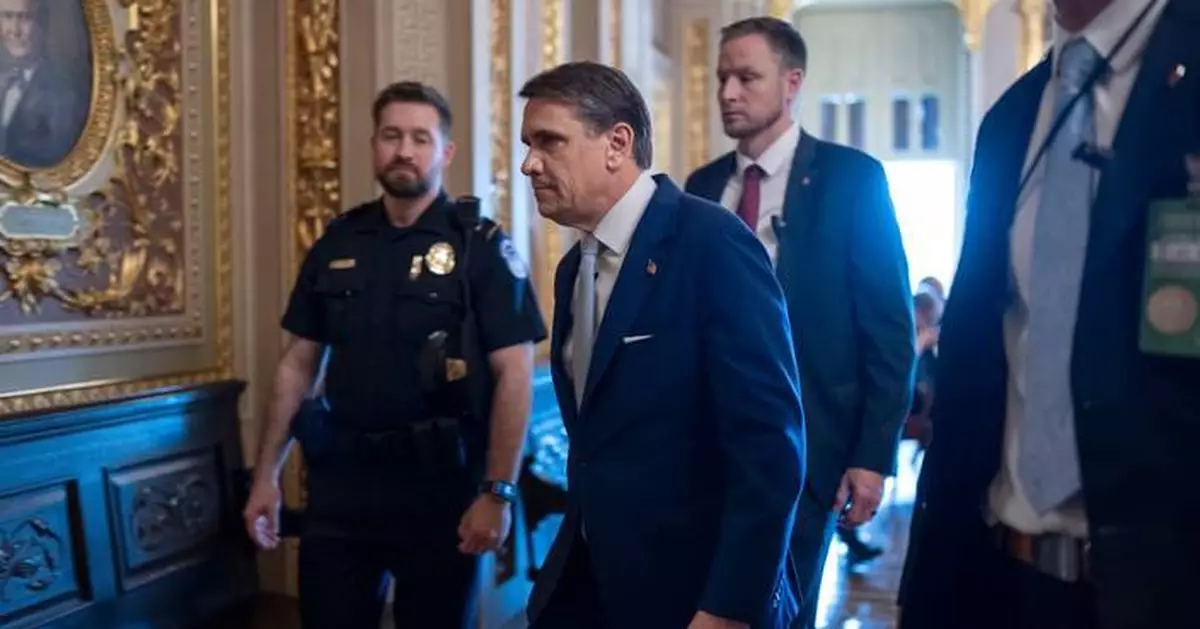
WASHINGTON (AP) — When acting Attorney General Todd Blanche signed off on a nearly $1.8 billion fund meant to compensate President Donald Trump's allies for alleged political prosecution, he may have pleased his boss.
But the eyebrow-raising move — the latest in his push to prove his loyalty to Trump — has agitated the same Republican lawmakers he would need to secure the permanent job.
Blanche insists he’s not auditioning for the job of attorney general. But a succession of splashy steps the Justice Department has taken under his watch since he took the position on an acting basis last month, including an indictment of former FBI Director James Comey, has left no doubt about the impression he’s hoping to make on the president who appointed him.
The fund in particular has put Blanche at the center of a Republican firestorm at a time when he aims to establish himself as the perfect person for the job for the remainder of Trump’s term. And it sharpened concerns from Democrats and other Blanche critics that he has not shed his mantle as the president’s personal attorney.
“So the nation’s top law enforcement official is asking for a slush fund to pay people who assault cops? Utterly stupid, morally wrong — Take your pick,” Republican Sen. Mitch McConnell of Kentucky, the former majority leader, said in a statement.
A former federal prosecutor in New York, Blanche came to public prominence for his lead role on Trump's defense team, including during the Republican's hush money trial in New York. That perch afforded him, he has said, a firsthand look at what he contends was the weaponization of the criminal justice system against Trump.
He was brought into the Justice Department as deputy attorney general, the No. 2 job, then was elevated last month after Trump ousted Pam Bondi.
Now he finds himself the latest Trump-appointed attorney general to simultaneously confront expectations from subordinates to uphold institutional norms and demands from the president to do his bidding.
Trump's first attorney general, Jeff Sessions, was forced out after the 2018 midterms after infuriating the president over his recusal from an investigation into ties between Russia and the 2016 presidential campaign. Another, William Barr, resigned after their relationship fizzled over Barr's refusal to back Trump's baseless claims of massive election fraud. Bondi was removed after struggling to bring successful prosecutions against Trump's political opponents.
Two weeks after becoming acting attorney general, Blanche announced the appointment of Joseph diGenova, an 81-year-old former Justice Department prosecutor from the Reagan administration, to a special position inside the department. He'll oversee a Florida-based investigation into whether former law enforcement and intelligence officials conspired over the last decade to undermine Trump.
“At some point, at the right time, that will be made public and the American people will see exactly what happened to this administration and President Trump over the past decade," Blanche told Fox News.
Prior government reviews of the FBI's Trump-Russia investigation, a centerpiece of the current conspiracy investigation, have failed to produce criminal charges against senior officials or evidence of criminal conduct by them. It's not clear what, if any, new information the continuing investigation has developed.
The Justice Department also last month obtained an indictment charging Comey, a Trump foe whose prosecution the president has long called for, with threatening Trump through a social media photo of seashells in the numerical arrangement of “86 47" — a case legal experts say will be challenging for prosecutors. Comey has said he wouldn't be surprised if the Justice Department pursues additional indictments.
In other moves, Blanche announced an indictment of the Southern Poverty Law Center, a nonprofit that has been the target of conservative outrage, with misleading donors about its activities, and has publicly defended a Justice Department crackdown on leaks to the news media, including subpoenas to reporters.
Arguably the most audacious demonstration of loyalty to Trump came this week when the Justice Department announced the creation of a $1.776 billion fund to compensate people who feel they've been unjustly investigated and prosecuted, coupled with a guarantee of immunity from tax audits for Trump and his eldest sons.
As Republican concerns grew, Blanche held a tense meeting with GOP lawmakers Thursday. Shortly afterward, Senate Republicans abruptly left Washington without voting on a roughly $70 billion bill to fund immigration enforcement agencies.
Blanche, who defended the fund at a congressional hearing this week, has said anyone who believes they've been persecuted can apply for compensation regardless of political affiliation. But the fund has been widely understood as a boon to Trump allies investigated during the Biden administration.
“It’s pretty clear that he’s not the attorney general for the United States as much as he's the attorney general for President Trump,” said Stephen Saltzburg, a George Washington University law professor and senior Justice Department official in the 1980s. He said Blanche would get an A+ if report cards were issued for fealty to Trump.
David Laufman, a former chief of staff to the deputy attorney general in President George W. Bush's administration, said that rather than protecting the Justice Department's independence, Blanche has been a “willing and ardent accomplice for carrying out any partisan or corrupt scheme the White House may devise.”
Blanche’s supporters dismiss the suggestion he is trying to curry favor with Trump to secure the permanent job.
“What he is doing is he is seeking justice based on facts and the law,” said Jay Town, who served as a U.S. attorney in Alabama during the first Trump administration. “And I don’t think that will ever change about him, whether he is the attorney general going forward or doesn’t spend another day in the administration. He is an honorable man and anybody that knows him knows that to be true.”
Blanche also says he is not angling to keep his job or feeling pressure to placate Trump.
He has told reporters he would be honored to be nominated but, "if he chooses to nominate somebody else and asks me to go do something else, I will say, ‘Thank you very much. I love you, sir.’ I don’t have any goals or aspirations beyond that.”
In recent days, he's functioned as the fund's public face and most visible defender, a role consistent with his comfort in the spotlight. He sometimes holds multiple press conferences a week and grants interviews to a variety of news outlets, a contrast to Bondi, who largely stuck to Fox News appearances.
His defenders say his experience as a federal prosecutor has made him a more sophisticated communicator for the department than Bondi, but his statements have at times invited backlash, including his refusal to rule out that violent Jan. 6 rioters could be eligible for payouts.
Though Blanche will appoint the five commissioners tasked with processing claims, his precise role in the fund’s implementation is unclear. He told CNN it was developed through negotiations with Trump’s private lawyers, not him.
For some Democrats, that's a difference without a distinction.
“Mr. Attorney General, you are acting today like the president's personal attorney," Sen. Chris Van Hollen, a Maryland Democrat, told Blanche during a combative exchange in a Senate hearing, "and that's the whole problem."
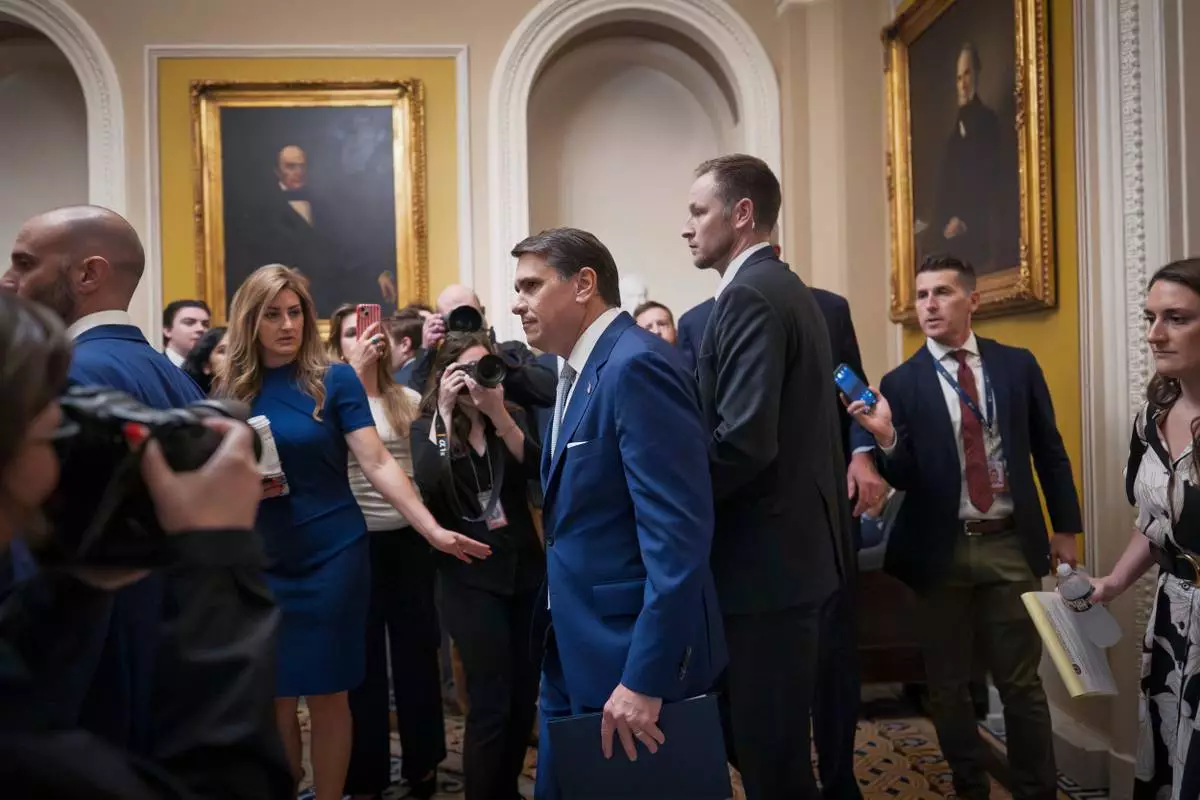
Acting Attorney General Todd Blanche arrives for a closed-door meeting with Republican senators who are expected to abandon a proposal for $1 billion in security money for the White House complex and President Donald Trump's ballroom after it has failed to win enough party support, at the Capitol in Washington, Thursday, May 21, 2026. (AP Photo/J. Scott Applewhite)
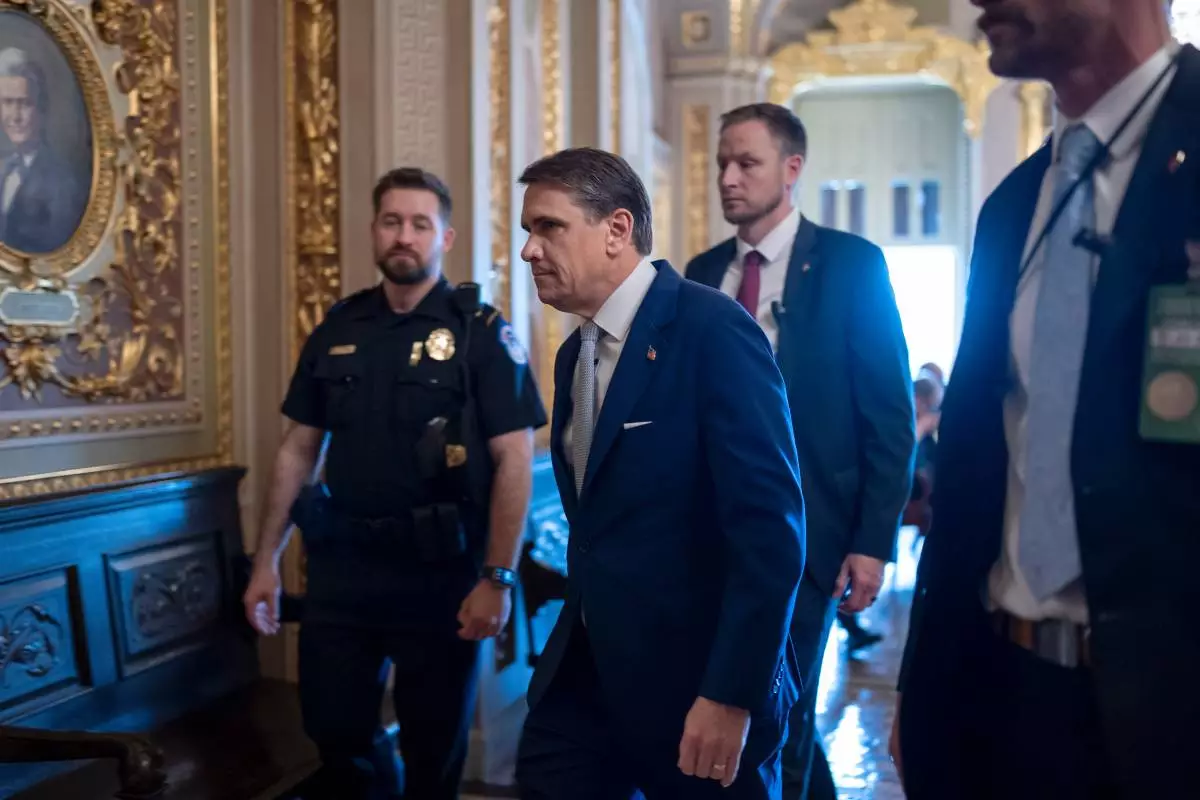
Acting Attorney General Todd Blanche arrives for a closed-door meeting with Republican senators who are expected to abandon a proposal for $1 billion in security money for the White House complex and President Donald Trump's ballroom after it has failed to win enough party support, at the Capitol in Washington, Thursday, May 21, 2026. (AP Photo/J. Scott Applewhite)
President Donald Trump hosted a White House swearing-in ceremony for Kevin Warsh, urging the new chairman of the Federal Reserve to be “totally independent” and then urging him not to overly constrain the central bank with concerns about inflation. Later Friday, he's expected to test his economic messaging in a New York stump speech, even as voters largely disapprove of his stewardship.
Meanwhile, Republicans are struggling to find the votes to keep supporting Trump's war with Iran. In Havana, a huge crowd of Cubans taunted Trump, and in Europe, Secretary of State Marco Rubio faced NATO allies confused by contradictory administration statements.
The Latest:
Kevin Warsh has been sworn in as Fed chair by Supreme Court Justice Clarence Thomas.
Warsh said it was an honor to be sworn in by his “esteemed friend,” Thomas. He explained Kavanaugh’s presence by telling the audience the two of them had worked at the White House earlier in their careers.
He’s also talking about former Fed chair Alan Greenspan, calling him an idol.
Greenspan was sworn in at the White House by President Ronald Reagan.
Warsh said that, like Greenspan, he intends to fill the role of Fed chair “with energy and purpose.”
“I really mean this. This is not said in any other way,” Trump said. “I want Kevin to be totally independent. I want him to be independent and just do a great job.”
“Don’t look at me, don’t look at anybody. Just do your own thing and do a great job, okay?” he added.
The pressure Trump placed on outgoing Fed chair Jay Powell to lower interest rates raised questions about the independence of the Federal Reserve.
The East Room was packed for the ceremony, which usually is held at the Federal Reserve Building.
Among those attending are Kevin Hassett, director of the National Economic Council and at one point a top contender to succeed Jay Powell as Fed chair, until Trump decided he wanted to keep Hassett at the White House.
Supreme Court Justice Clarence will deliver the oath. Supreme Court Justice Brett Kavanaugh was also present, as were members of Trump’s Cabinet, other top Trump administration officials, and current and former members of Congress.
Trump opened with praise for Warsh, predicting that he “will go down as one of the truly great chairmen of the Federal Reserve.”
“I think he’s got abilities that very few people have,” Trump said.
When Acting Attorney General Todd Blanche signed off on a nearly $1.8 billion fund meant to compensate Trump’s allies for alleged political prosecution, he may have pleased his boss. But the eyebrow-raising move — has agitated the same Republican lawmakers he would need to secure the permanent job.
Blanche insists he’s not auditioning for the job of attorney general. But a succession of splashy steps taken under his watch at the Justice Department, including an indictment of former FBI Director James Comey, have left no doubt that he’s trying to prove his loyalty to the president.
The fund in particular has put Blanche at the center of a Republican firestorm just when he aims to establish himself as the perfect person for the job for the remainder of Trump’s term. Read more
Texas Attorney General Ken Paxton is riding high ahead of his Republican primary runoff against Sen. John Cornyn, now that he has the president’s backing.
“I don’t know if y’all noticed this, but Donald Trump endorsed me,” Paxton told a small rally in a town outside Austin, inciting whoops and applause.
The senate race in Texas has drawn gobs of money and attention, including from Trump, who continues encouraging voters to boot any politician who displeases him.
Paxton has been turning his focus to state Rep. James Talarico, opening his latest event with attacks on the Democratic nominee, a sign of his confidence heading into Tuesday.
▶ Read more:
Democrats are cheering rulings by federal judges in Maine and Wisconsin that dismissed Justice Department demands for detailed voter registration information.
The DOJ has sued at least 30 states and the District of Columbia seeking to force the release of voter information including dates of birth, addresses, driver’s license numbers and partial Social Security numbers. Thursday’s defeats follow similar rulings in Arizona, California, Massachusetts, Michigan, Oregon and Rhode Island, In Georgia, a judge dismissed a DOJ lawsuit filed in the wrong city, prompting the Trump administration to refile elsewhere.
Bianca Shaw, state director of Common Cause Wisconsin, said the decision protects voters “from an unauthorized national database that would have been a goldmine for hackers and a tool for intimidation.”
Maine Secretary of State Shenna Bellows, a Democrat and Trump opponent who is running for governor, said the ruling affirms that states run elections.
Trump has a reputation for slashing his taxes using techniques that some experts find aggressive. Now the Justice Department has told the president he doesn’t have to worry about being called out on it.
In an extraordinary decision this week, the IRS is suspending probes into his past returns to settle a lawsuit that Trump brought against the agency he ultimately runs. Trump says tax authorities targeted him politically — a claim for which he has given no proof — and that he was right to seek a remedy.
Law experts say the move is unprecedented and unfair.
“This is giving the president and his affiliates completely different set of rules than everyday taxpayers,” said Brandon DeBot, policy director at New York University’s Tax Law Center.
▶ Read more:
“Iran is trying to create a tolling system,” Rubio said. “That’s just not acceptable. It can’t happen. If that were to happen in the Straits of Hormuz, it will happen in five other places around the world.”
Iran’s official Mizan news agency reported that 35 vessels passed through the Strait of Hormuz in coordination with Iran’s Revolutionary Guard navy in the previous 24 hours.
Without specifying the nationalities of the vessels, Mizan quoted the Revolutionary Guard navy as saying that the oil tankers, container ships and other commercial ships transited the strait after obtaining permission and in coordination with, and under the protection of, the Revolutionary Guard navy.
Iran has demanded the right to collect the tolls as a precondition for reopening the waterway vital to world oil supplies.
The Trump administration remains ready to resume mediation efforts that have been stalled for some time, Rubio said.
With concerns high in Europe, particularly in the Baltic states, that the administration’s interest in ending the conflict is waning, Rubio told reporters that the U.S. still believes the “the war can only end with a negotiated settlement. It will not end with a military victory by one side or the other.”
Previous rounds of talks were unfortunately “not fruitful,” Rubio said, but “if we see an opportunity to pull together talks that are productive, not counterproductive, and that have the chance to be fruitful, we’re prepared to play that role.”
The secretary of state said he and other foreign ministers discussed the issue of reopening the critical waterway, and that he reiterated the need for a “Plan B” if a deal isn’t reached between Washington and Tehran.
“Someone’s going to have to do something about it, okay?” Rubio said. “They’re not just going to voluntarily reopen the straits in that scenario.”
Rubio said he received lots of “nods” from European allies when he brought it up Friday. In the same breath, Rubio confirmed what Iranian officials had been saying, that progress is being made in the negotiations.
“I wouldn’t exaggerate it and I wouldn’t diminish it,” he said. “But there’s more work to be done.”
Rubio says America’s NATO allies understand that eventually there will be a reduction in the U.S. troop presence in Europe as the Trump administration evaluates its force posture globally.
“I think there’s a broad recognition that there are going to be eventually less U.S. troops in Europe than there has historically been for a variety of reasons,” Rubio told reporters.
NATO allies have been confused by contradictory statements coming from Trump and his top aides, including an announcement last week that troop levels would be reduced in Poland that Trump appeared to reverse on Thursday. A previously announced troop reduction in Germany appears to be going ahead but Rubio noted that the Germans “didn’t freak out about it” because it brought the numbers back to where they were three years ago.
The U.S. secretary of state has met with his NATO foreign minister counterparts in Sweden and reiterated U.S. demands for Europe and Canada to increase their defense spending and military industrial capabilities.
In meetings with his colleagues in Helsingborg on Friday, Rubio said the U.S. remains committed to NATO but said the force posture of American troops in Europe is contingent on what allies contribute. The alliance has been jolted by Trump’s abrupt decisions on troop deployments.
Trump has expressed strong dissatisfaction with some allies and their reluctance or refusal to assist in the war with Iran. Rubio said the president’s views and “frankly, disappointment at some of our NATO Allies and their response to our operations in the Middle East, they are well documented” and need to be addressed by NATO leaders at their summit in Turkey in July.
While the president’s handpicked candidates are winning GOP primaries, many are untested heading into general elections this fall. Trump’s own approval rating sits at a low point, and he’s spending his political capital, alienating would-be allies and threatening to detail GOP priorities.
Trump’s announcement of nearly $1.8 billion “anti-weaponization” fund for people he believes were wrongly prosecuted blindsided senators already fuming over his push for $1 billion to provide security for his new White House ballroom. The audacity of the arrangement proved too toxic for the Senate to bear.
Sen. Thom Tillis of North Carolina called it “stupid on stilts” and a “payout for punks.”
“So the nation’s top law enforcement official is asking for a slush fund to pay people who assault cops? Utterly stupid, morally wrong — Take your pick,” said Sen. Mitch McConnell of Kentucky, the former majority leader.
Voting on a roughly $70 billion budget package that would fuel Trump’s immigration and deportation operations for the remainder of his presidential term, into 2029, was postponed until Congress resumes next month. That blows Trump’s June 1 deadline to have it on his desk.
Trump shrugged when asked during an Oval Office event if he was losing control of the Senate.
“I really don’t know,” the president said.
And it wasn’t just the Senate. For the first time this year, enough Republican House members broke ranks to signal support for a war powers resolution from Democrats that’s designed to halt Trump’s military action in Iran. House Speaker Mike Johnson postponed the voting to avoid confronting the president.
Trump’s political revenge tour met its potential match this week as angry Republican senators, pushed to a breaking point by his seemingly insatiable and outlandish demands — particularly a $1.776 billion fund for Jan. 6 rioters and others he believes were wrongly prosecuted — did the unthinkable.
They simply refused, closed up shop, and went home.
The moment was as rare as it was daring, a sudden flex from the Congress that has become a shell of its former self as a coequal branch, the Republican majority almost always more willing to accommodate the Republican president than to confront him.
▶ Read more:
Rubio says America’s NATO allies understand that eventually there will be a reduction in the U.S. troop presence in Europe as the Trump administration evaluates its force posture globally.
“I think there’s a broad recognition that there are going to be eventually less U.S. troops in Europe than there has historically been for a variety of reasons,” Rubio told reporters.
NATO allies have been confused by contradictory statements coming from Trump and his top aides, including an announcement last week that troop levels would be reduced in Poland that Trump appeared to reverse on Thursday. A previously announced troop reduction in Germany appears to be going ahead but Rubio noted that the Germans “didn’t freak out about it” because it brought the numbers back to where they were three years ago.
The U.S. secretary of state has met with his NATO foreign minister counterparts in Sweden and reiterated U.S. demands for Europe and Canada to increase their defense spending and military industrial capabilities.
In meetings with his colleagues in Helsingborg on Friday, Rubio said the U.S. remains committed to NATO but said the force posture of American troops in Europe is contingent on what allies contribute. The alliance has been jolted by Trump’s abrupt decisions on troop deployments.
Trump has expressed strong dissatisfaction with some allies and their reluctance or refusal to assist in the war with Iran. Rubio said the president’s views and “frankly, disappointment at some of our NATO Allies and their response to our operations in the Middle East, they are well documented” and need to be addressed by NATO leaders at their summit in Turkey in July.
“Who do they think they are to judge Raúl?” Gerardo Hernández asked as the crowd cheered. He’s one of five Cubans accused of being a spy who was imprisoned and later released by the U.S. in 2014.
“For the United States, the law is a tailor-made suit,” he said before punching the air with this fist, to a shout of “Viva Raúl!”
The crowd responded to his call: “Homeland or death, we will vanquish!”
Thousands of people have crowded along Havana’s famed seawall to decry the U.S. indictment. Attendees include daughter, Mariela Castro, and his grandson, Raúl Guillermo Rodríguez Castro. Salsa songs with biting anti-Trump lyrics are booming across the old city.
The Castro indictment has many thinking the Trump administration is following a playbook it used to capture then-Venezuelan President Nicolás Maduro in a military operation in January. Maduro is now imprisoned in the U.S. on federal drug trafficking charges and has pleaded not guilty.
The U.S. military touted the arrival of the USS Nimitz aircraft carrier group for maritime exercises in the Caribbean Sea as the charges against Castro were announced. But professor William LeoGrande, a Latin America specialist at American University, warned against assumptions that a Maduro-like extraction would succeed in Cuba.
“The United States certainly has the military capability to seize Raúl Castro, just as they seized Maduro, although it would probably be more costly,” LeoGrande said. But Castro has been retired for almost a decade. “He still has influence and the leadership seeks his opinion on major decisions, but he is not running the government on a day-to-day basis. If the US were to abduct him, it would not change the operations of government, unlike what happened in Venezuela.”
A huge crowd of Cubans rallied Friday outside the U.S. Embassy in Havana to honor former President Raúl Castro and to protest the Trump administration’s criminal indictment.
“The Cuban people reaffirm that neither threats, nor blockade, nor energy embargo, nor false accusations will be able to break the will of an entire people in defense of their Revolution,” read a statement published by state media.
Raúl Castro has rarely appeared in public since stepping down and handing over to President Miguel Díaz-Canel, who was joined by military leaders at the rally.
Castro was last seen surrounded by tens of thousands of people at a state-organized rally on May 1.
The Trump administration has approved a modest $108 million arms sale to Ukraine that will help the country maintain and sustain its midrange air defense missile system.
The State Department announced the sale of ground-to-air Hawk missile components, spare parts and logistic support late Thursday. The administration has notably reduced military support for Ukraine over the past 18 months as it seeks to mediate an agreement with Russia to end the conflict.
The sale “will improve Ukraine’s capability to meet current and future threats by further equipping it to conduct self-defense and regional security missions with a more robust integrated air defense capability,” the department said in a statement.
Republicans struggled Thursday to find the votes to dismiss legislation that would compel President Donald Trump to withdraw from the war with Iran, delaying planned votes on the matter into June.
The House had scheduled a vote on a war powers resolution, brought by Democrats, that would rein in Trump’s military campaign. But as it became clear that Republicans would not have the numbers to defeat the bill, GOP leaders declined to hold a vote on it. It was the latest sign of the slipping support in Congress for a war that Trump launched more than two months ago without congressional approval.
Republicans in the Senate are also working to ensure they have the votes to dismiss another war powers resolution that advanced to a final vote earlier this week, when four GOP senators supported the resolution and three others were absent from the vote.
The actions by congressional leaders showed Republicans are struggling to maintain political backing for Trump’s handling of the war.
▶ Read more
NATO allies and defense officials expressed bewilderment at Trump’s decision to send 5,000 U.S. troops to Poland.
“It is confusing indeed, and not always easy to navigate,” Swedish Foreign Minister Maria Malmer Stenergard told reporters at a meeting she was hosting of her NATO counterparts, including U.S. Secretary of State Marco Rubio.
U.S. defense officials were also confused. “We just spent the better part of two weeks reacting to the first announcement. We don’t know what this means either,” said one of two officials who spoke on condition of anonymity to discuss sensitive military matters.
NATO allies have been blindsided, despite a U.S. pledge to coordinate troop deployments. “We’re going to stay well-synchronized with our allies moving forward,” NATO’s top military officer, U.S. Lt. Gen. Alex Grynkewich, promised on Wednesday.
▶ Read more
Trump on Thursday said the U.S. will send an additional 5,000 troops to Poland, stirring confusion following weeks of changing statements from Trump and his administration about reducing — not increasing — the American military footprint in Europe.
The Trump administration has said it was reducing levels in Europe by about 5,000 troops, and U.S. officials confirmed about 4,000 service members were no longer deploying to Poland. Trump’s social media announcement raises more uncertainty for European allies that have been blindsided by the changes, as the administration has complained about NATO members not shouldering enough of the burden of their own defense and failing to do more to support the Iran war.
Trump and the Pentagon have said in recent weeks that they were drawing down at least 5,000 troops in Germany after Chancellor Friedrich Merz said the U.S. was being “humiliated” by the Iranian leadership and criticized what he called a lack of strategy in the war.
▶ Read more
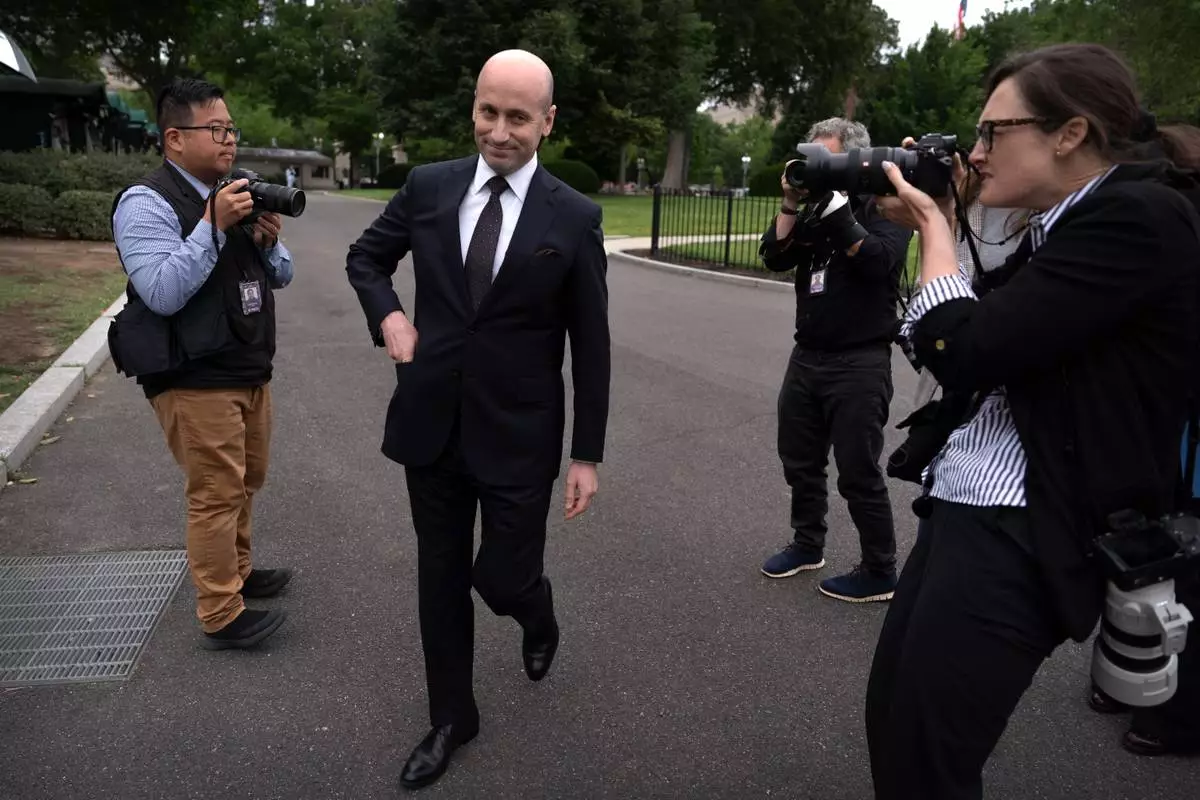
Stephen Miller, White House deputy chief of staff, leaves after speaking to reporters outside the White House, Thursday, May 21, 2026, in Washington. (AP Photo/Mark Schiefelbein)
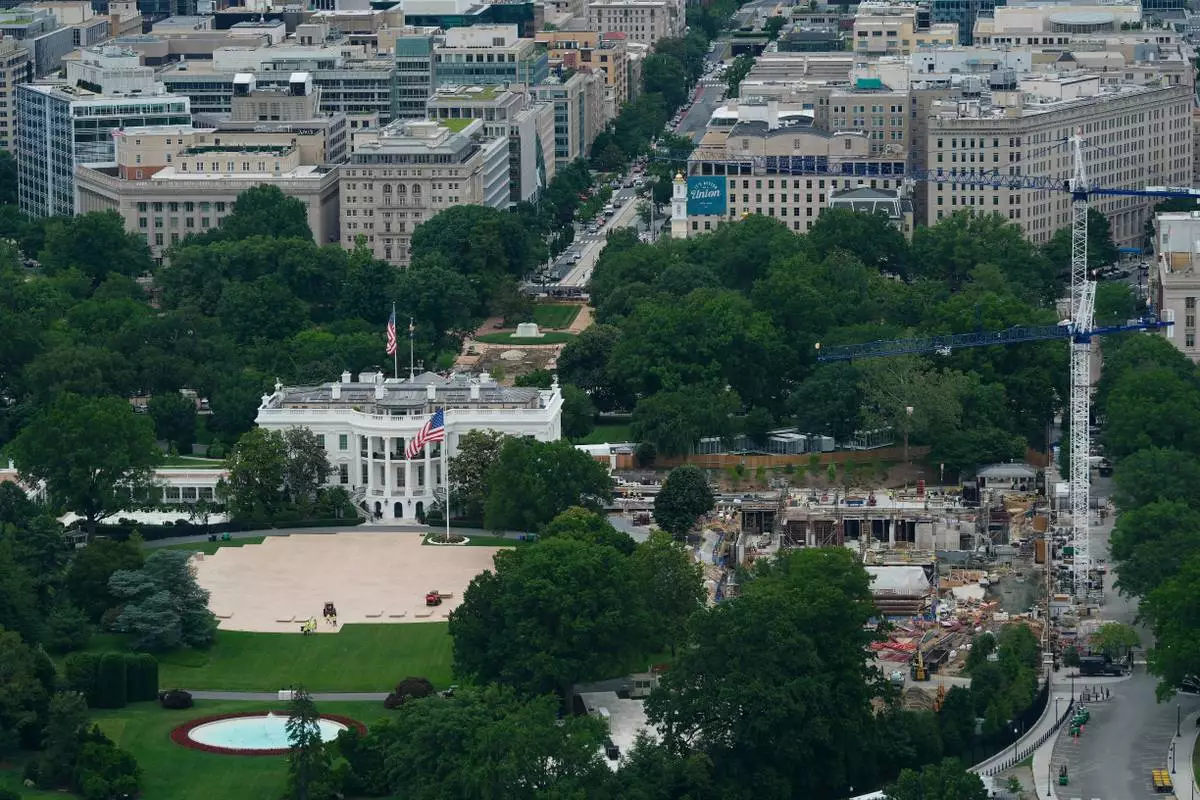
Work continues on the construction of the ballroom at the White House, Thursday, May 21, 2026, in Washington, where the East Wing once stood, as work also begins for the upcoming UFC fight on the South Lawn. (AP Photo/Pablo Martinez Monsivais)
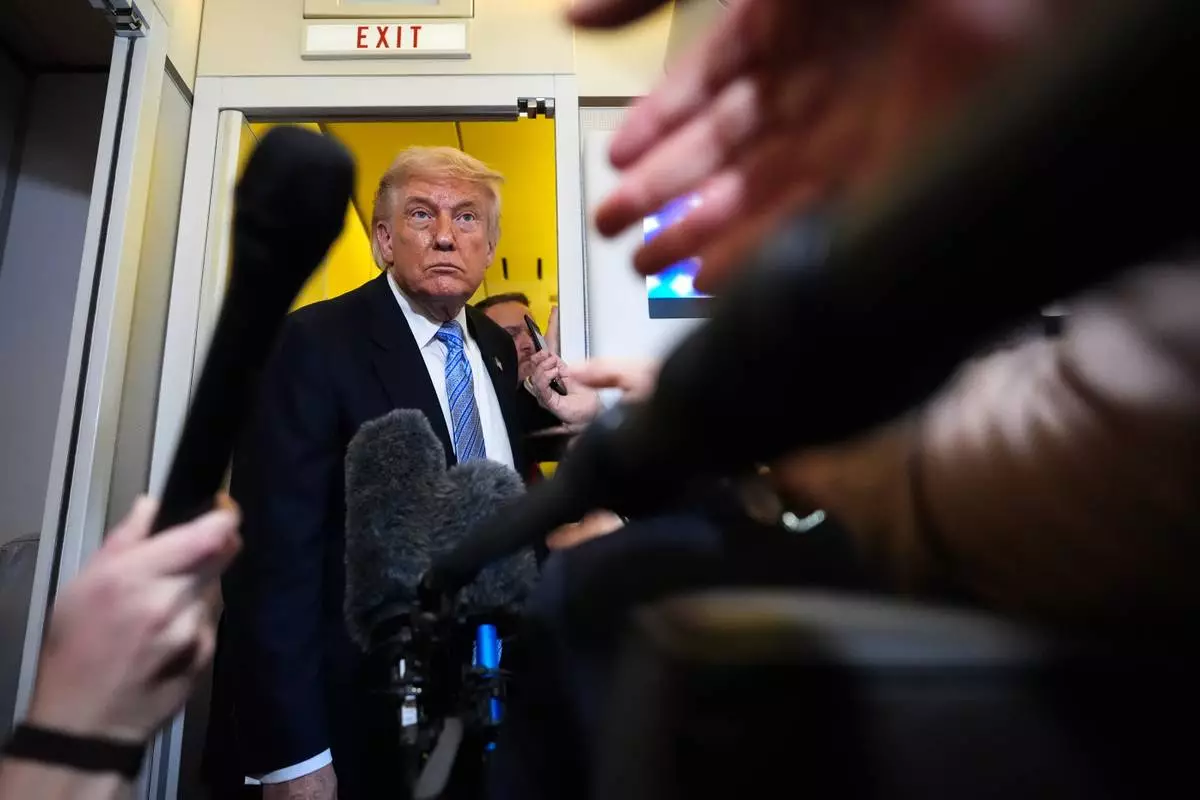
President Donald Trump speaks to reporters aboard Air Force One, Friday, May 15, 2026, as he returns from a trip to Beijing, China. (AP Photo/Mark Schiefelbein)