LONDON (AP) — A 21-year-old man was charged Thursday with three counts of arson for fires that targeted two properties and a car linked to British Prime Minister Keir Starmer.
The Metropolitan Police force said Roman Lavrynovych, who was arrested Tuesday, was charged with arson with intent to endanger life.
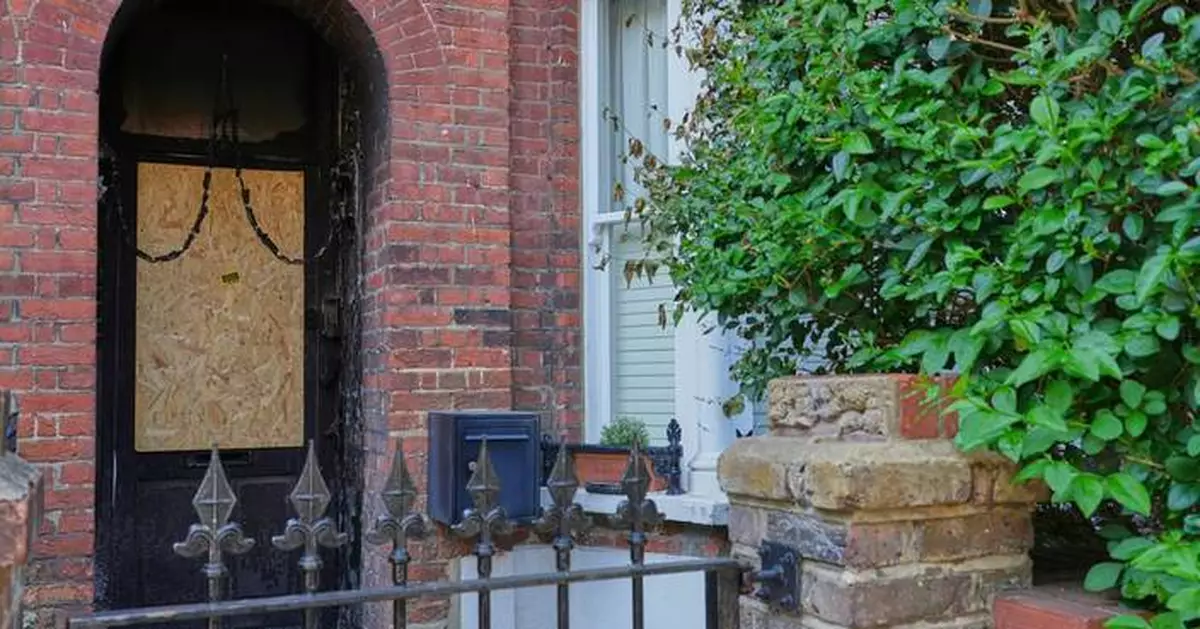
The charges are linked to three incidents over the past week — a car fire on May 8, a fire Monday at Starmer’s private home that damaged the door of the house, and a fire Sunday outside a north London house converted into apartments connected to the U.K. leader. No injuries were reported from any of the fires.
Lavrynovych, a Ukrainian national, is due to appear in court on Friday. After he was arrested, Lavrynovych remained in custody after warrants of further detention were obtained, the police said in a statement.
Starmer moved with his family to the prime minister’s official Downing Street residence after taking office in July.
The investigation was led by counterterrorism detectives as it involves the prime minister, and the charges were authorized by the Crown Prosecution Service’s Counter Terrorism Division, which is responsible for prosecuting offenses relating to state threats, among other crimes.
Earlier this week, Starmer said the recent arson attacks represented “an attack on all of us, on democracy and the values that we stand for.”
The attacks were condemned by leaders across the House of Commons, including by the Conservative Party’s Kemi Badenoch, who described them as “completely unacceptable.”
Starmer’s former house has attracted protesters in the past. Last year, three pro-Palestinian activists were arrested and charged with public order offenses after unfurling a banner covered in red handprints outside the building.
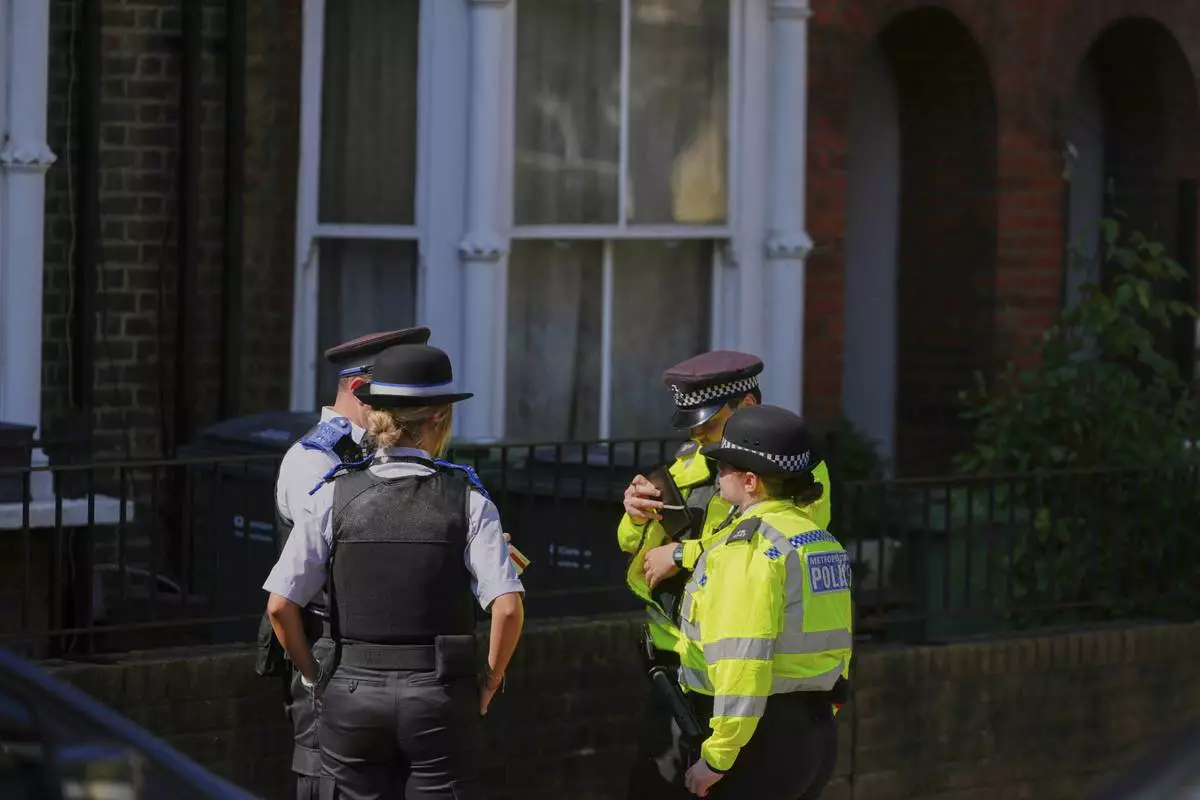
Police Community Support Officers and Police Officers stand on the street near a house belonging to British Prime Minister Keir Starmer at Kentish Town in London, Tuesday, May 13, 2025. (AP Photo/Kirsty Wigglesworth)
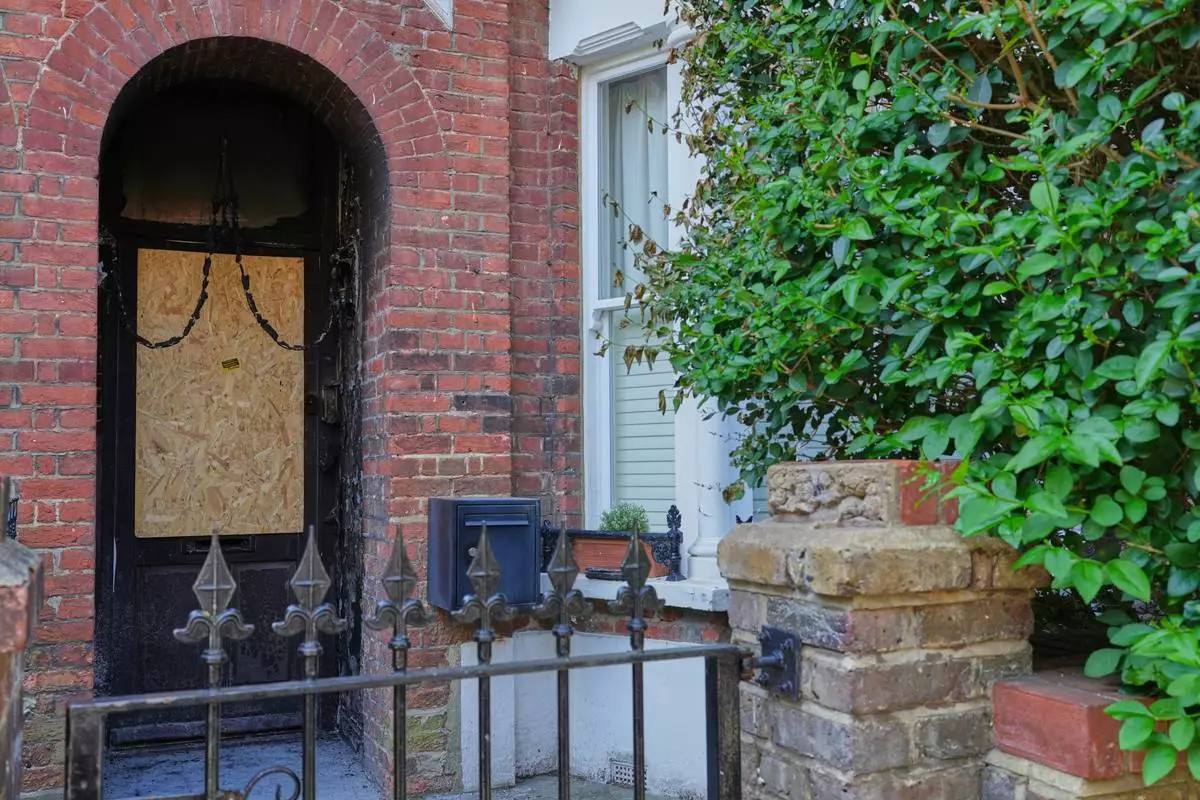
Fire damage is seen in the doorway of a house belonging to British Prime Minister Keir Starmer in Kentish Town in London, Tuesday, May 13, 2025. (AP Photo/Kirsty Wigglesworth)
CHICAGO (AP) — Looks like Shohei Ohtani is doing much better.
Ohtani hit a leadoff homer for the Los Angeles Dodgers on Saturday in his return to the starting lineup after being sidelined by inflammation in his left knee. He also walked three times and scored twice in a 7-1 victory over the Chicago White Sox.
“I felt good waking up in the morning, I feel good now, so I’m pretty confident that I’ll be able to stay healthy and should be good to go tomorrow as well,” Ohtani said through a translator.
The two-way star connected on a 1-0 fastball from White Sox right-hander Sean Burke for his 14th homer. The 409-foot drive to right in the first inning had an exit velocity of 109.6 mph.
It was Ohtani's fifth leadoff homer of the season and No. 29 for his career.
“Obviously he’s the best player in the world, so anytime you can get the best player in a world back in your lineup, he’s definitely going to help and he showed it immediately,” teammate Mookie Betts said.
The 31-year-old Ohtani was back at designated hitter after he rested during Friday’s 8-2 loss in the series opener at Chicago. The knee inflammation popped up Thursday night at Pittsburgh, prompting Ohtani to leave an 8-6 win over the Pirates in the seventh.
“We took him out of the game the other night just for precautionary,” manager Dave Roberts said before Saturday's win. “Yesterday, treated it up, today he feels great. All the confidence that he can go out there and hit, feel good, not regress at all.”
Ohtani, who had surgery on his left knee in September 2019, wasn't sure exactly what caused the inflammation.
“It’s actually hard to pinpoint at what moment this happened,” he said. “All I can really know for sure is that I think my mechanics wasn’t quite great in terms of my pitching side. So I believe that had something to do with this.”
Ohtani is scheduled to take the mound again on Wednesday against Tampa Bay. The 6-foot-4 right-hander tested his knee for his throwing motion by playing catch in the outfield before Saturday's victory.
“It wasn’t 100 percent today, but I, you know, with the next three, four days, I feel pretty confident with enough recovery that I should be able to make the next start,” he said.
Ohtani is batting .305 with 41 RBIs and 50 runs scored in 68 games for the NL West leaders. On the mound, the reigning NL MVP is 6-2 with a 1.06 ERA in 11 starts.
Roberts also said Justin Wrobleski is expected to make his next scheduled start Tuesday against the Rays. The left-hander left in the fifth inning on Thursday night because of a left hamstring contusion.
“Yesterday I talked to him and he is a little sore, which is understandable, but he’ll be ready to go on Tuesday,” Roberts said.
Roberts, 54, is going to miss Sunday's series finale against the White Sox. Bench coach Danny Lehmann will run the team while Roberts attends his daughter's college graduation.
AP MLB: https://apnews.com/hub/mlb
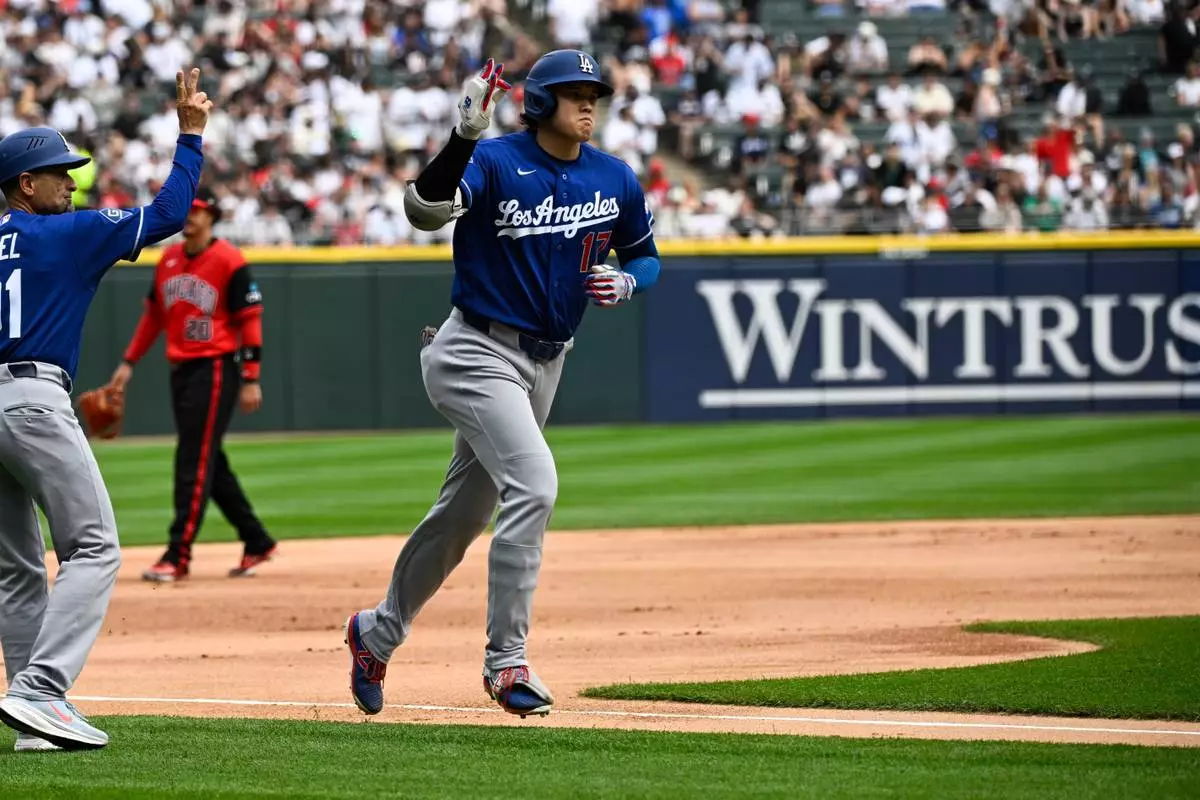
Los Angeles Dodgers' Shohei Ohtani, right, of Japan, gestures after he hit a home run during the first inning of a baseball game against the Chicago White Sox, Saturday, June 13, 2026, in Chicago. (AP Photo/Matt Marton)
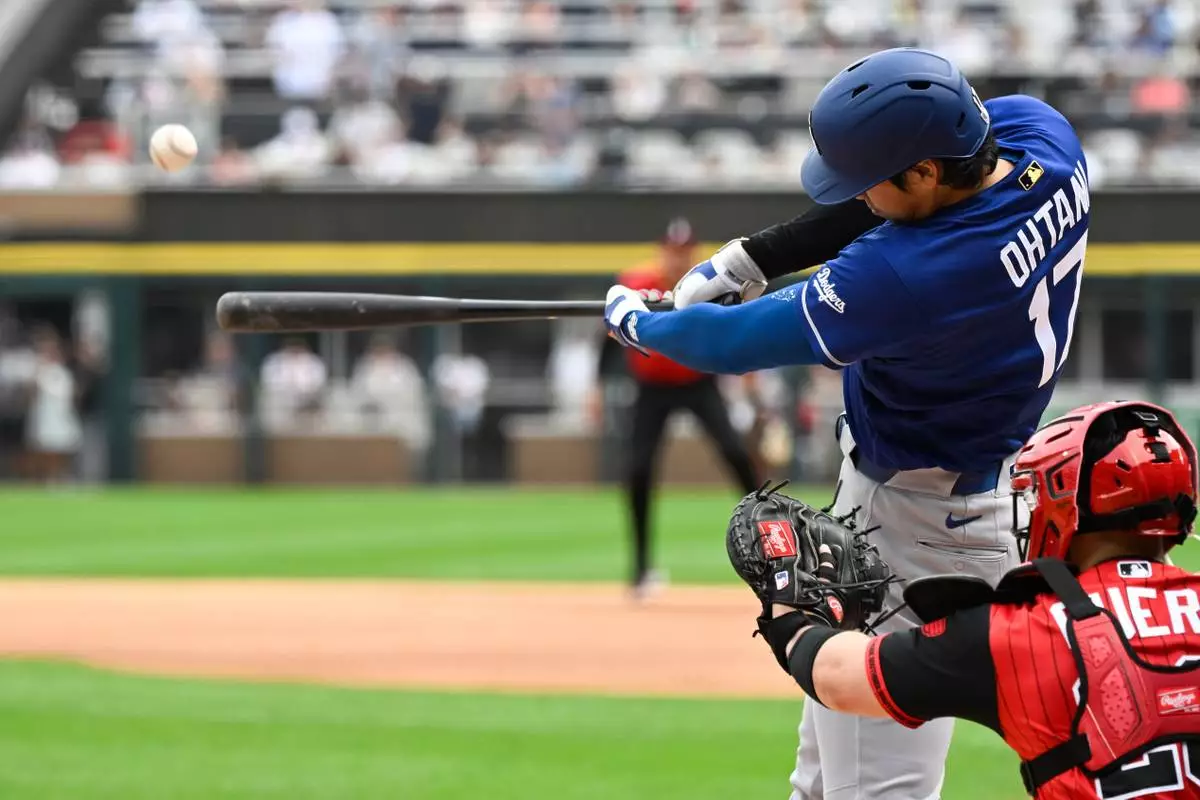
Los Angeles Dodgers' Shohei Ohtani (17), of Japan, hits a home run during the first inning of a baseball game against the Chicago White Sox, Saturday, June 13, 2026, in Chicago. (AP Photo/Matt Marton)
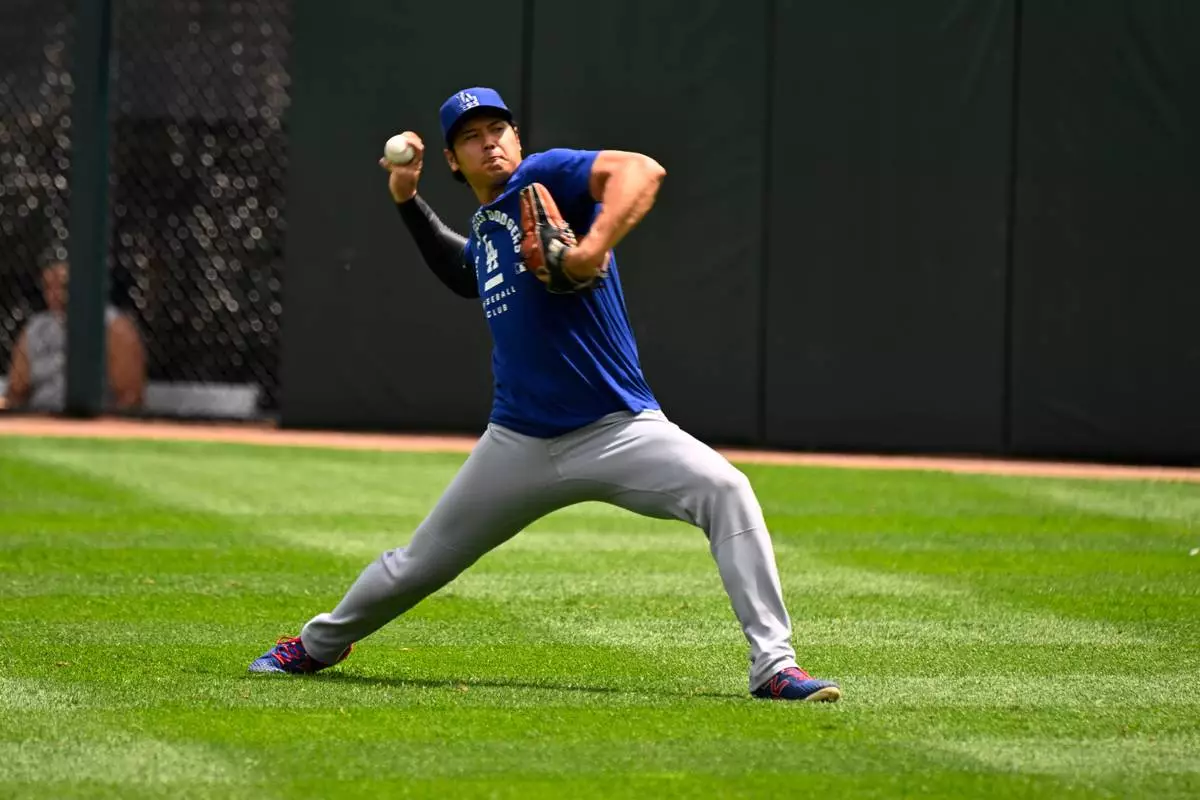
Los Angeles Dodgers two-way player Shohei Ohtani, from Japan, warms up before a baseball game against the Chicago White Sox, Saturday, June 13, 2026, in Chicago. (AP Photo/Matt Marton)
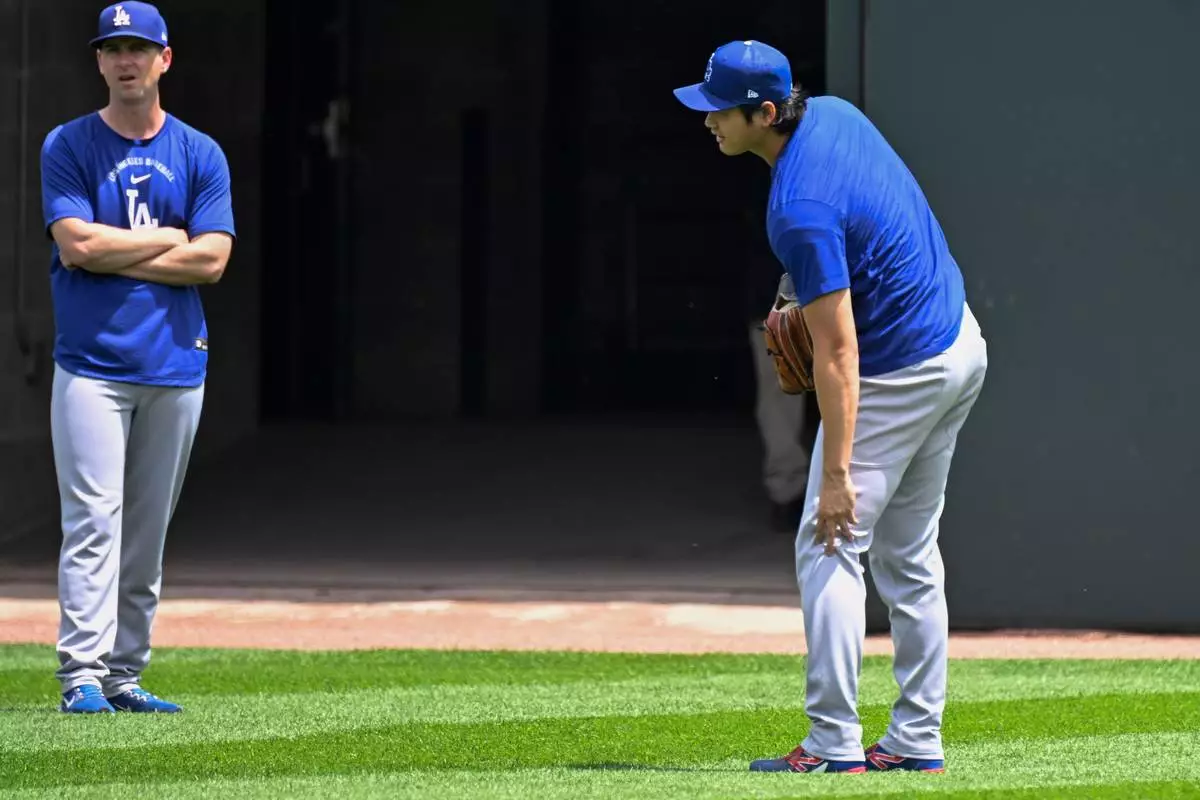
Los Angeles Dodgers two-way player Shohei Ohtani, from Japan, touches his knee before a baseball game against the Chicago White Sox, Saturday, June 13, 2026, in Chicago. (AP Photo/Matt Marton)
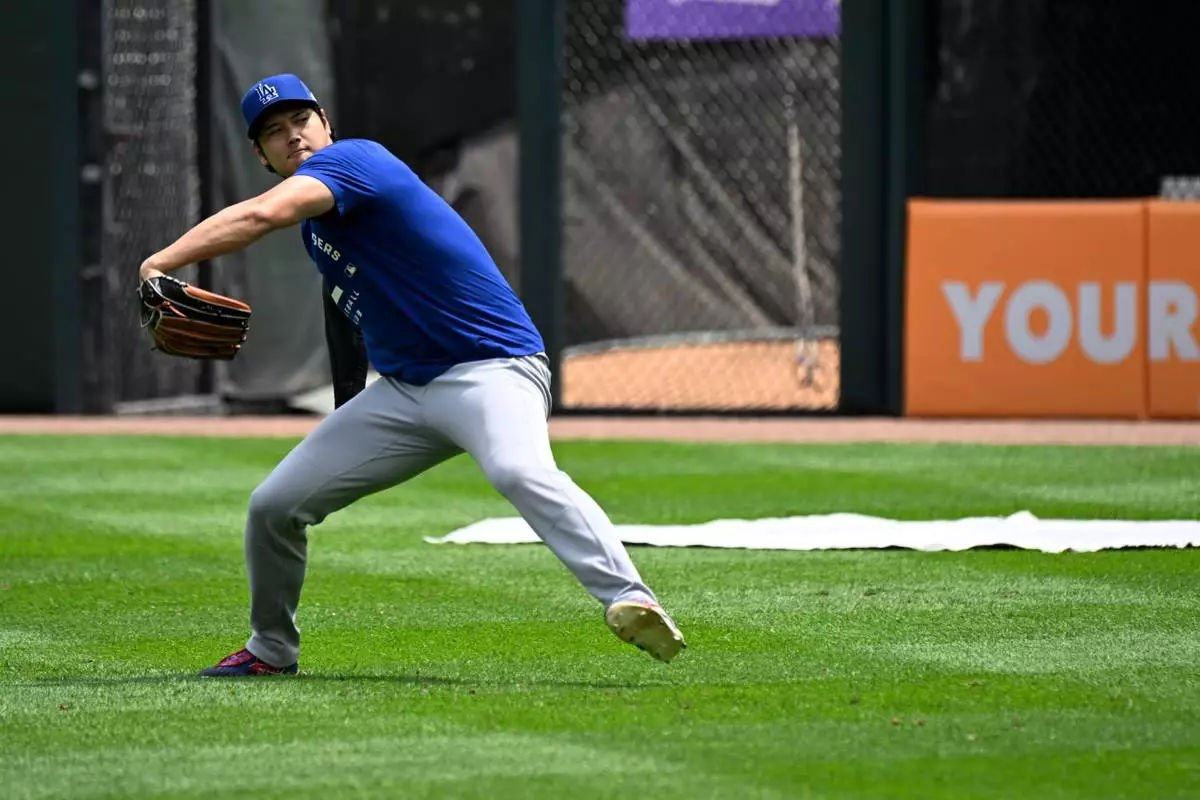
Los Angeles Dodgers two-way player Shohei Ohtani, from Japan, warms up before a baseball game against the Chicago White Sox, Saturday, June 13, 2026, in Chicago. (AP Photo/Matt Marton)
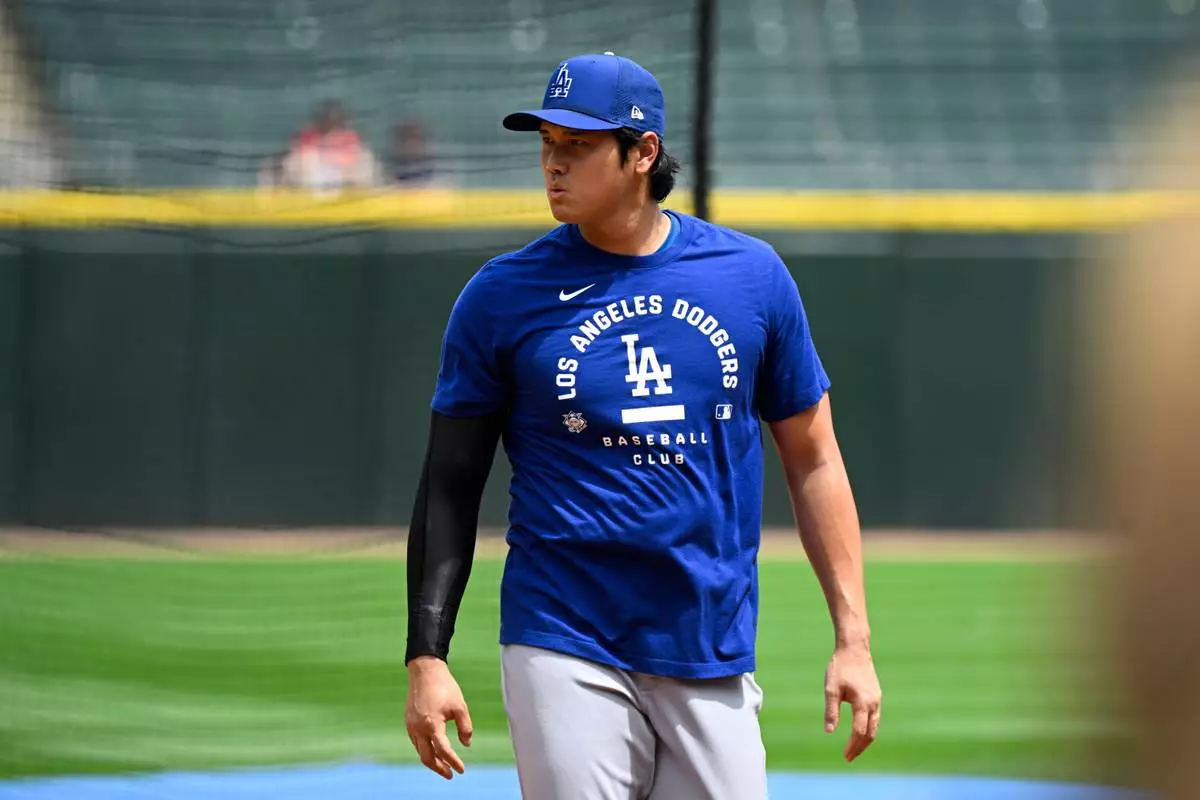
Los Angeles Dodgers two-way player Shohei Ohtani, from Japan, during warmups before a baseball game against the Chicago White Sox, Saturday, June 13, 2026, in Chicago. (AP Photo/Matt Marton)