Skip to Content Facebook Feature Image

New Zealand skier Alice Robinson is Mikaela Shiffrin's top challenger during the Olympic season

Sport

New Zealand skier Alice Robinson is Mikaela Shiffrin's top challenger during the Olympic season
Sport

Sport

New Zealand skier Alice Robinson is Mikaela Shiffrin's top challenger during the Olympic season

2025-12-17 20:17 Last Updated At:20:20

In the Northern Hemisphere’s winter, she competes on the Alpine skiing World Cup circuit in the Alps.

In the Southern Hemisphere’s winter, she trains at home in New Zealand.

Alice Robinson hardly ever gets to put her flip-flops on and enjoy summer.

And that’s just fine with her.

“It’s just been my yearly routine for so long that I don’t really know much better,” Robinson said. “I definitely miss some summer but I’m definitely a lot more comfortable in the winter climate.”

Is she ever.

Robinson is off to quite a start to the Olympic season, shaping up as Mikaela Shiffrin’s biggest challenger in the overall World Cup standings.

In four giant slaloms, Robinson has registered two victories and a third-place finish.

Then on Sunday, she finished ahead of Sofia Goggia and Lindsey Vonn in the season’s opening super-G for her first career win in a speed discipline.

The victory in St. Moritz, Switzerland, made Robinson the first man or woman from New Zealand to win a super-G. That came after a giant slalom victory last month — the fifth win of her career — made her the most successful women’s World Cup winner from a non-European or North American nation.

Nearly two months into the season, Robinson sits second in the overall standings, 162 points behind Shiffrin.

Expanding to the speed disciplines has been something that Robinson has been considering ever since she announced herself to the skiing world by winning the season-opening giant slalom on the Rettenbach glacier in Sölden, Austria, six years ago as a 17-year-old.

“I never just wanted to be a one-trick pony,” she said.

Robinson’s results make her a multi-medal contender for the Feb. 6-22 Milan Cortina Olympics — where she could become the first Alpine skiing gold medalist from her country.

New Zealand’s only Olympic medal in Alpine skiing was a silver in slalom by Annelise Coberger at the 1992 Albertville Games.

Coberger’s brother, Nils Coberger, is one of Robinson’s coaches.

At last season’s world championships, Robinson took silver behind Federica Brignone in giant slalom for New Zealand’s first medal in the biggest skiing competition outside of the Olympics.

Constantly being on snow does have some draw backs, though.

“There’s certain things about summer that I miss, because in New Zealand we have Christmas and New Year’s over summer so that’s kind of a bit more of a memory that I miss,” Robinson told reporters earlier this season. “My one advantage being from New Zealand is that I get to train at home in the offseason when everyone else is traveling around.”

And when she’s in the Alps, Robinson takes advantage of the abundance of wellness facilities.

“I’ve become a bit of like a spa fan,” she said. “In New Zealand we just don’t do that — hotels don’t have spas.”

Robinson was born in Sydney to Australian parents and moved to New Zealand when she was four.

“If that didn’t happen I don’t think I would have ended up in ski racing growing up in Bondi,” she said of the beach town.

In her new home in Queenstown, Robinson and her two siblings were surrounded by mountains and it was “15 minutes door-to-door” to the Coronet Peak ski area.

“My parents just put us in ski school. My mum told me the other day that it was cheaper to put me in the ski creche than to get a babysitter,” Robinson said on a recent International Ski and Snowboard Federation podcast.

Robinson entered the final giant slalom of last season leading the discipline standings and set to clinch the first crystal globe of her career.

But she struggled with a gate in her first run at the World Cup finals in Sun Valley, Idaho, last March, veered off course and handed the title to Brignone.

Robinson said that failure “definitely kept the fire burning for this offseason to try and work harder to be more prepared and to mentally know how to deal with those higher intensity, higher pressure moments.”

Robinson was New Zealand’s youngest-ever Winter Olympian as a 16-year-old at the 2018 Pyeongchang Games. Then she struggled with expectations at the 2022 Beijing Games after being locked out of her home country for two years due to New Zealand’s strict border controls during the coronavirus pandemic.

This time she has a new plan.

“With it being in Cortina, which is a familiar World Cup venue for us, I kind of just want to go into it treating it just like another World Cup race,” Robinson said.

During her first career race in Cortina, Robinson narrowly missed out on a medal at the 2021 world championships when she finished fourth in the giant slalom.

“Cortina was one of the first places that I ever skied in Europe because we had friends that were living there and so I’ve always loved Cortina,” Robinson said. “Outside of New Zealand, I think it’s definitely one of most beautiful places in the world.”

Andrew Dampf is at https://x.com/AndrewDampf

AP Olympics: https://apnews.com/hub/milan-cortina-2026-winter-olympics

Alice Robinson, of New Zealand, celebrates her first place finish in the women's World Cup giant slalom in Mont Tremblant, Quebec, Saturday, Dec. 6, 2025. (Sean Kilpatrick/The Canadian Press via AP)
Alice Robinson, of New Zealand, celebrates her first place finish in the women's World Cup giant slalom in Mont Tremblant, Quebec, Saturday, Dec. 6, 2025. (Sean Kilpatrick/The Canadian Press via AP)

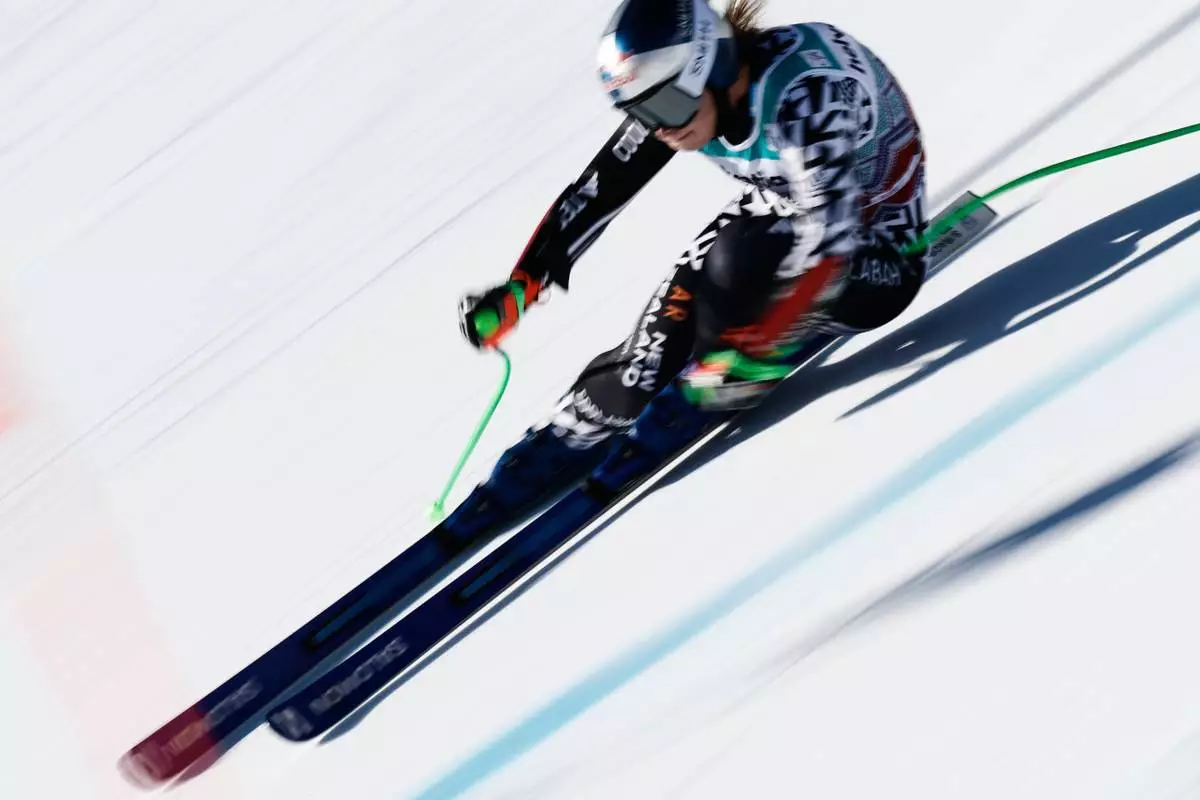
New Zealand's Alice Robinson speeds down the course during an alpine ski, women's World Cup super-G event, in St. Moritz, Switzerland, Sunday Dec. 14, 2025. (AP Photo/Gabriele Facciotti)
New Zealand's Alice Robinson speeds down the course during an alpine ski, women's World Cup super-G event, in St. Moritz, Switzerland, Sunday Dec. 14, 2025. (AP Photo/Gabriele Facciotti)

JOHANNESBURG (AP) — A United States refugee processing center in Johannesburg was raided by immigration authorities, South Africa's Home Affairs Ministry said Wednesday while denying any U.S. officials were arrested or applicants harassed.

Seven Kenyan nationals were arrested during the operation on Tuesday while working illegally at the center which processes applications by white South Africans who have been given priority for refugee status in the U.S. by the Trump administration after claims they are being persecuted by the Black-led government.

That claim over the treatment of members of South Africa's Afrikaner white minority group has been widely rejected but has been central to the deterioration of diplomatic relations between the U.S. and Africa's most advanced economy since President Donald Trump returned to office.

The Home Affairs Ministry said the detained Kenyans were working at the site while in the country on tourist visas which did not allow them to work, and U.S. officials working with the “undocumented workers” at the center “raises serious questions about intent and diplomatic protocol.”

It said no U.S. officials were arrested in the raid and it was not a diplomatic site.

South Africa's Foreign Ministry has started “formal diplomatic engagements with both the United States and Kenya to resolve this matter,” the Home Affairs Ministry said.

U.S. State Department spokesperson Tommy Pigott told CNN that the U.S. was still gathering information on the raid but “interfering in our refugee operations is unacceptable.” The U.S. government is “seeking immediate clarification from the South African government” and it expects “full cooperation and accountability,” Pigott said.

The U.S. Embassy in South Africa didn’t immediately respond to a request for comment from The Associated Press.

The raid, which involved immigration and law enforcement officers, is bound to increase tensions between the two countries.

Trump has singled out South Africa for criticism for months on a range of issues, claiming that Afrikaners are being killed and having their land seized, and that South Africa is pursuing anti-white policies at home and an anti-American foreign policy abroad through its diplomatic relations with Palestinian authorities and Iran.

The U.S. boycotted last month's Group of 20 world leaders summit in South Africa and Trump said it will exclude South Africa from the group when it hosts the annual summit in Florida next year. Trump also issued an executive order in February that said the U.S. would stop aid and assistance to South Africa over what it called its “egregious actions.”

South Africa's government said the U.S. claims over the persecution of Afrikaners are based on misinformation and white South Africans don't meet the criteria for refugee status because there is no persecution, although it wouldn't stop anyone applying. Afrikaners are white South Africans descended from mainly Dutch and French colonial settlers who first came to the country in the 17th century.

The Trump administration announced in October it was dramatically cutting the annual quota for refugees allowed in the U.S. to 7,500 from a previous limit of 125,000 and white South Africans would be given most of the places. A first group of white South African refugees had already arrived in the U.S. under the new program for them in May. It's not clear how many have been relocated since then.

The South African Home Affairs Ministry didn't say who the Kenyans arrested at the refugee processing site worked for, but the U.S. government has contracted a Kenya-based company, RSC Africa, to process refugee applications by white South Africans, according to a statement last month by the U.S. Embassy in South Africa.

RSC Africa is operated by Church World Service, a U.S.-based nongovernment organization that offers humanitarian aid and refugee assistance across the world and works with the U.S. Refugee Admissions Program.

The statement by South Africa's Home Affairs Ministry said Kenyan nationals had previously been denied visas to travel to South Africa to work on the U.S. refugee program and the raid “showcases the commitment that South Africa shares with the United States to combating illegal immigration and visa abuse in all its forms.”

The seven Kenyan nationals were given deportation orders and banned from entering South Africa for a five-year period, South African authorities said.

Imray reported from Cape Town, South Africa.

AP Africa news: https://apnews.com/hub/africa

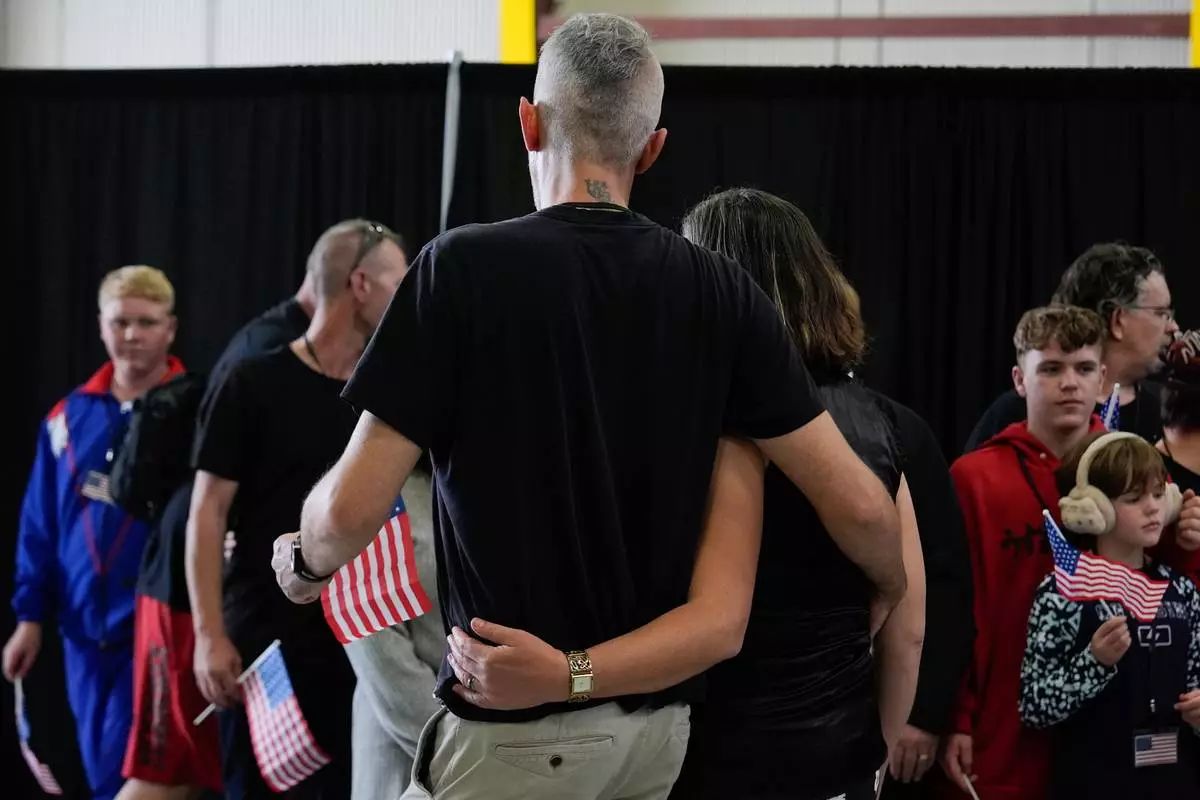
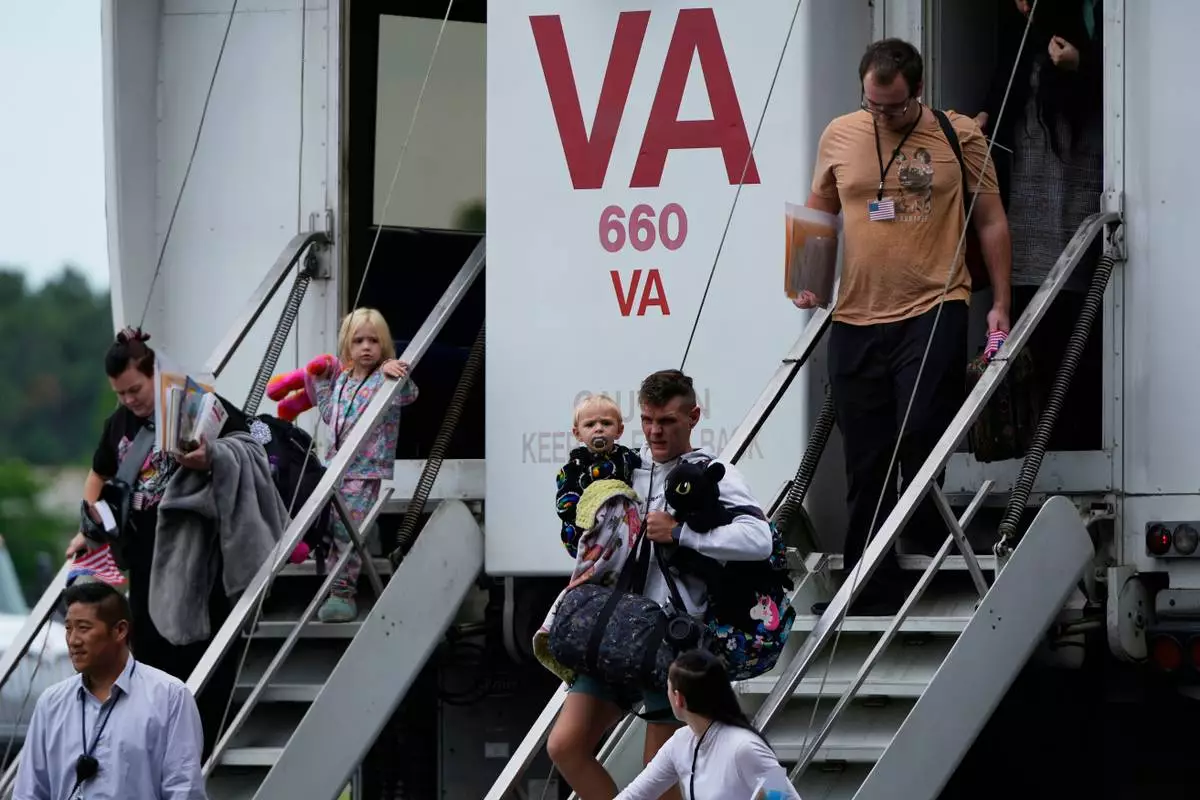
FILE - Refugees from South Africa arrive, Monday, May 12, 2025, at Dulles International Airport in Dulles, Va. (AP Photo/Julia Demaree Nikhinson, File)

FILE - Refugees from South Africa arrive, Monday, May 12, 2025, at Dulles International Airport in Dulles, Va. (AP Photo/Julia Demaree Nikhinson, File)

FILE - Refugees from South Africa, arrive Monday, May 12, 2025, at Dulles International Airport in Dulles, Va. (AP Photo/Julia Demaree Nikhinson, File)

FILE - Refugees from South Africa, arrive Monday, May 12, 2025, at Dulles International Airport in Dulles, Va. (AP Photo/Julia Demaree Nikhinson, File)

Recommended Articles