Skip to Content Facebook Feature Image

Zimbabwe is full of elephants and conflict with villagers is growing. A new approach hopes to help

News

Zimbabwe is full of elephants and conflict with villagers is growing. A new approach hopes to help
News

News

Zimbabwe is full of elephants and conflict with villagers is growing. A new approach hopes to help

2025-05-16 11:09 Last Updated At:11:41

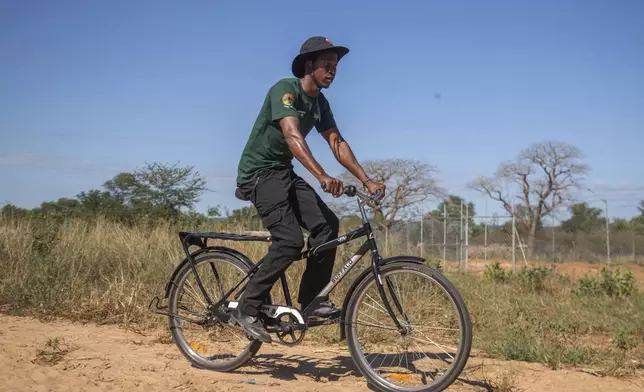
HWANGE, Zimbabwe (AP) — When GPS-triggered alerts show an elephant herd heading toward villages near Zimbabwe's Hwange National Park, Capon Sibanda springs into action. He posts warnings in WhatsApp groups before speeding off on his bicycle to inform nearby residents without phones or network access.

The new system of tracking elephants wearing GPS collars was launched last year by the Zimbabwe Parks and Wildlife Management Authority and the International Fund for Animal Welfare. It aims to prevent dangerous encounters between people and elephants, which are more frequent as climate change worsens competition for food and water.

More Images
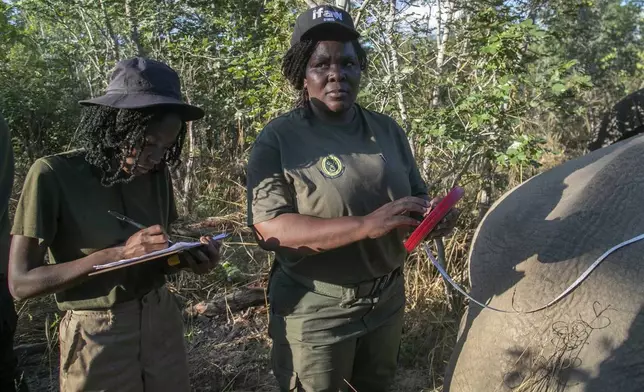
Zimbabwe Parks and Wildlife Management Authority officers record measurements of an elephant in the Hwange National Park, Zimbabwe, Tuesday, April 29, 2025. (AP Photo/Aaron Ufumeli)

Zimbabwe Parks and Wildlife Management Authority officers record measurements of an elephant in the Hwange National Park, Zimbabwe, Tuesday, April 29, 2025. (AP Photo/Aaron Ufumeli)

An official shows how the EarthRanger platform operates at Hwange National Park, Zimbabwe, Wednesday, April 30, 2025. (AP Photo/Aaron Ufumeli)
An official shows how the EarthRanger platform operates at Hwange National Park, Zimbabwe, Wednesday, April 30, 2025. (AP Photo/Aaron Ufumeli)

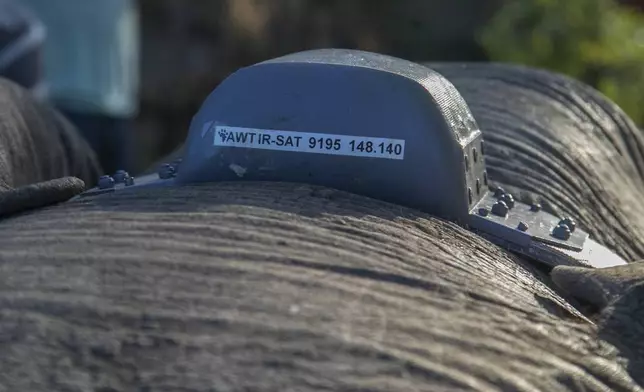
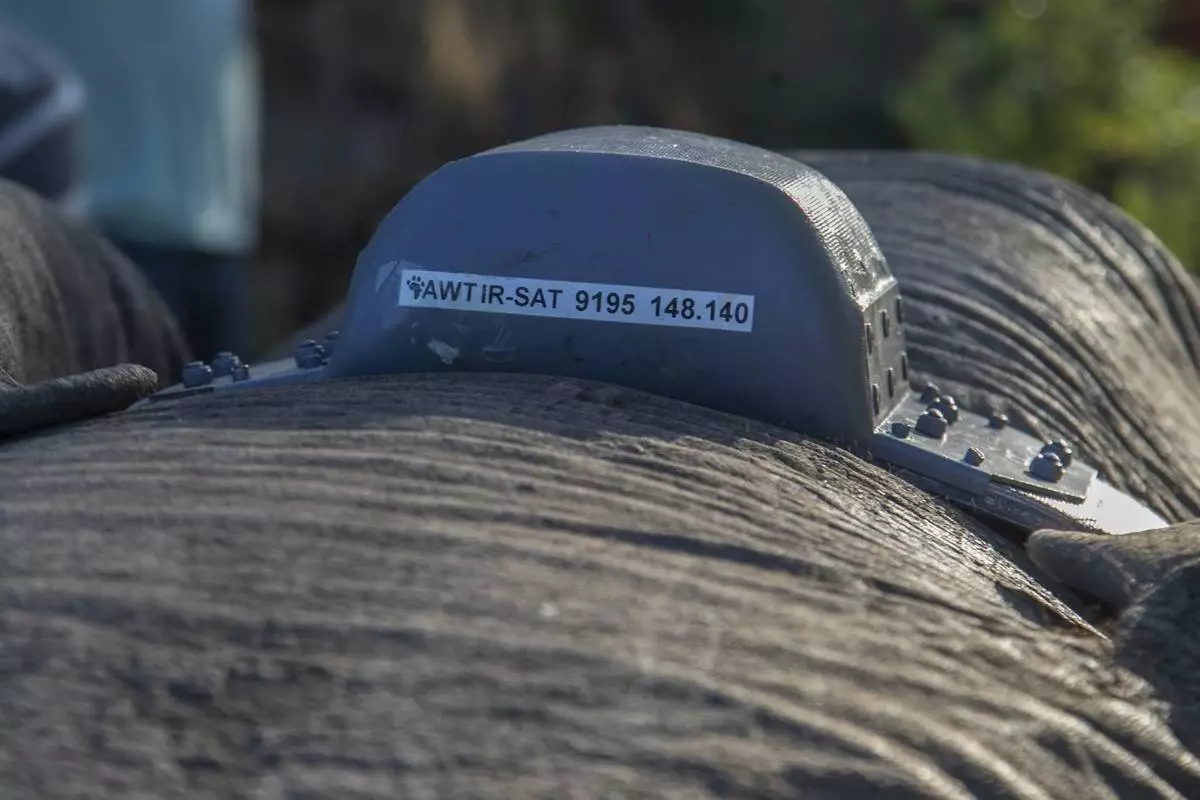
A GPS-enabled satellite collar on an elephant in Hwange National Park, Zimbabwe, Tuesday, April 29, 2025. (AP Photo/Aaron Ufumeli)
A GPS-enabled satellite collar on an elephant in Hwange National Park, Zimbabwe, Tuesday, April 29, 2025. (AP Photo/Aaron Ufumeli)

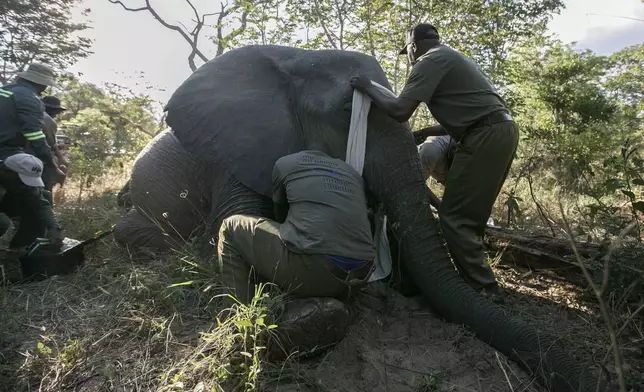
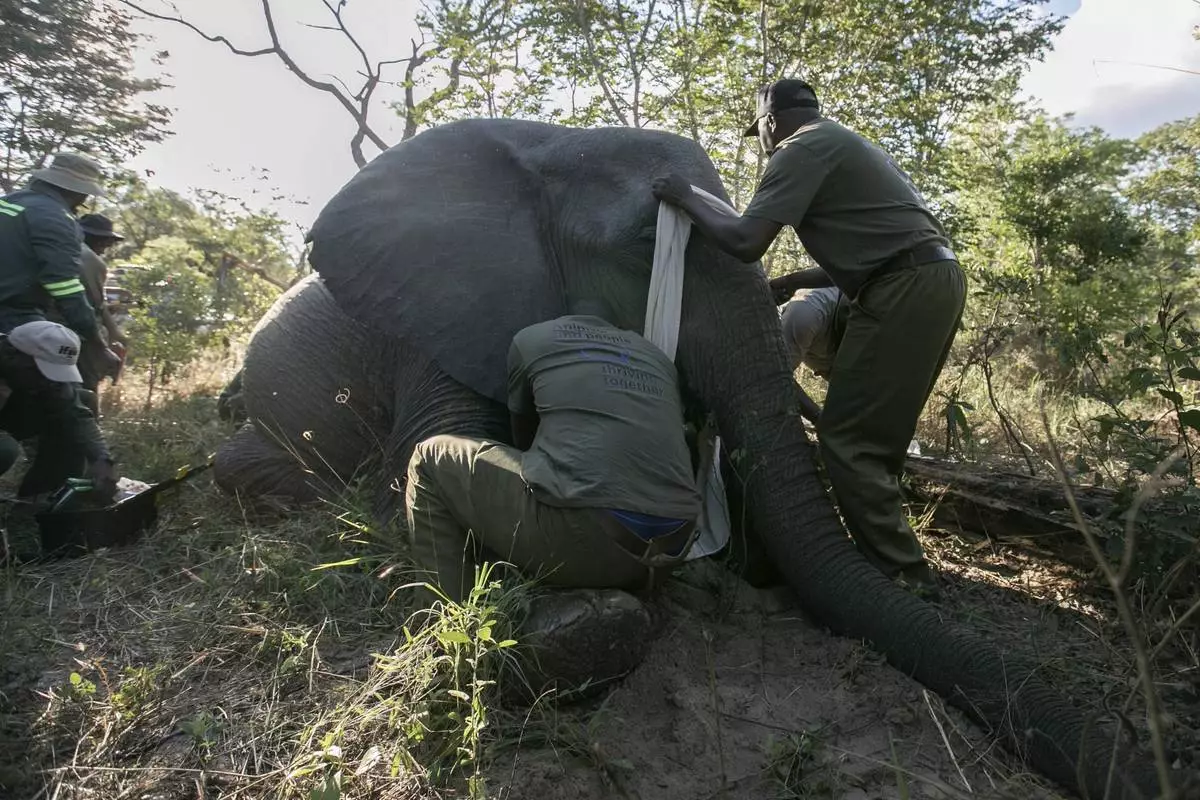
Zimbabwe Parks and Wildlife Management Authority and the International Fund for Animal Welfare officers collar an elephant in the Hwange National Park, Zimbabwe, Tuesday, April 29, 2025. (AP Photo/Aaron Ufumeli)
Zimbabwe Parks and Wildlife Management Authority and the International Fund for Animal Welfare officers collar an elephant in the Hwange National Park, Zimbabwe, Tuesday, April 29, 2025. (AP Photo/Aaron Ufumeli)

Capon Sibanda, a local volunteer trained to be a community guardian for encounters between people and elephants, rides on a bicycle in Hwange, Zimbabwe, Wednesday, April 30, 2025. (AP Photo/Aaron Ufumeli)
Capon Sibanda, a local volunteer trained to be a community guardian for encounters between people and elephants, rides on a bicycle in Hwange, Zimbabwe, Wednesday, April 30, 2025. (AP Photo/Aaron Ufumeli)

Zimbabwe Parks and Wildlife Management Authority and the International Fund for Animal Welfare officers stand around a collared elephant in Hwange National Park, Zimbabwe, Tuesday, April 29, 2025. (AP Photo/Aaron Ufumeli)
Zimbabwe Parks and Wildlife Management Authority and the International Fund for Animal Welfare officers stand around a collared elephant in Hwange National Park, Zimbabwe, Tuesday, April 29, 2025. (AP Photo/Aaron Ufumeli)

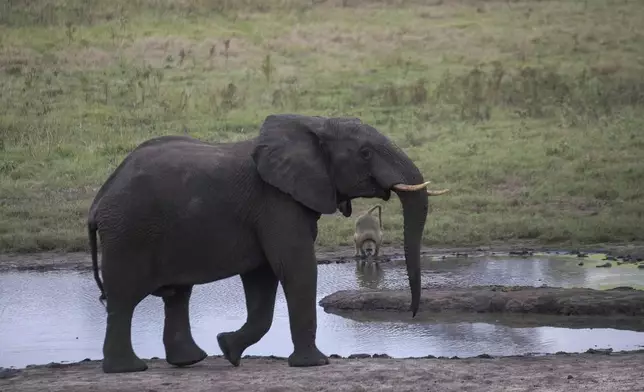
An elephant walks in the Hwange National Park, Zimbabwe, Monday, April 28 2025. (AP Photo/Aaron Ufumeli)
An elephant walks in the Hwange National Park, Zimbabwe, Monday, April 28 2025. (AP Photo/Aaron Ufumeli)

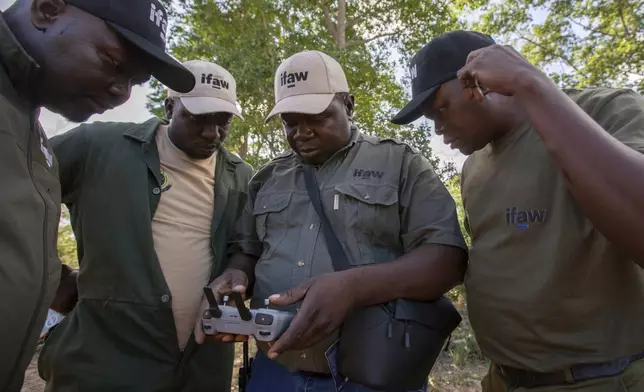
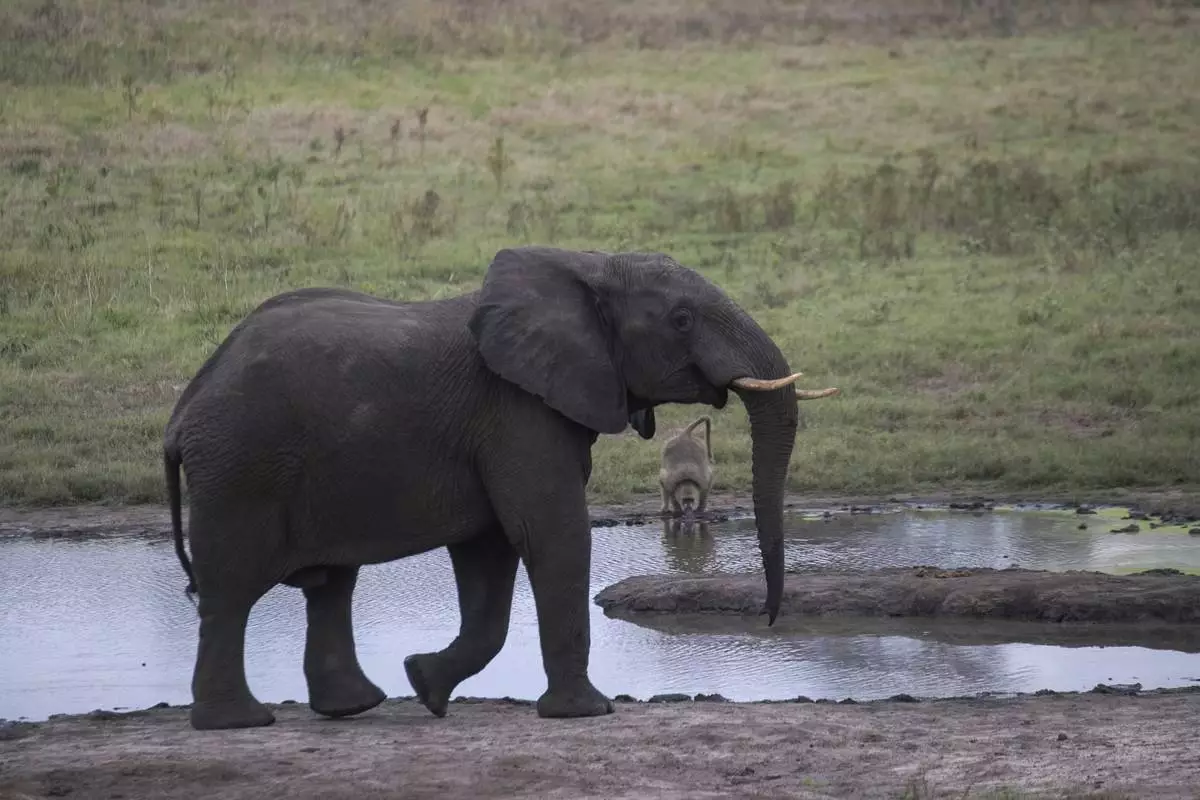
Zimbabwe Parks and Wildlife Management Authority and the International Fund for Animal Welfare officers monitor an elephant's movement using a drone in Zimbabwe’s Hwange National Park, Zimbabwe, Tuesday, April 29, 2025. (AP Photo/Aaron Ufumeli)
Zimbabwe Parks and Wildlife Management Authority and the International Fund for Animal Welfare officers monitor an elephant's movement using a drone in Zimbabwe’s Hwange National Park, Zimbabwe, Tuesday, April 29, 2025. (AP Photo/Aaron Ufumeli)

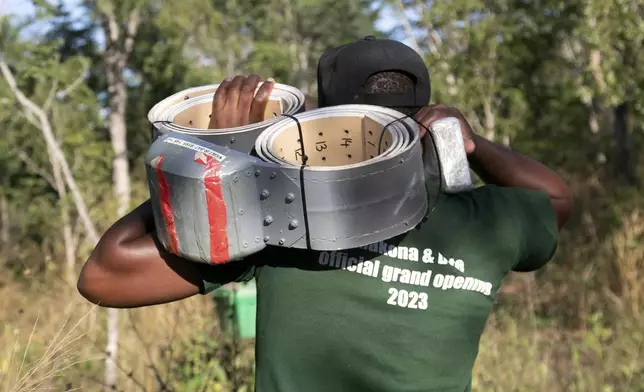
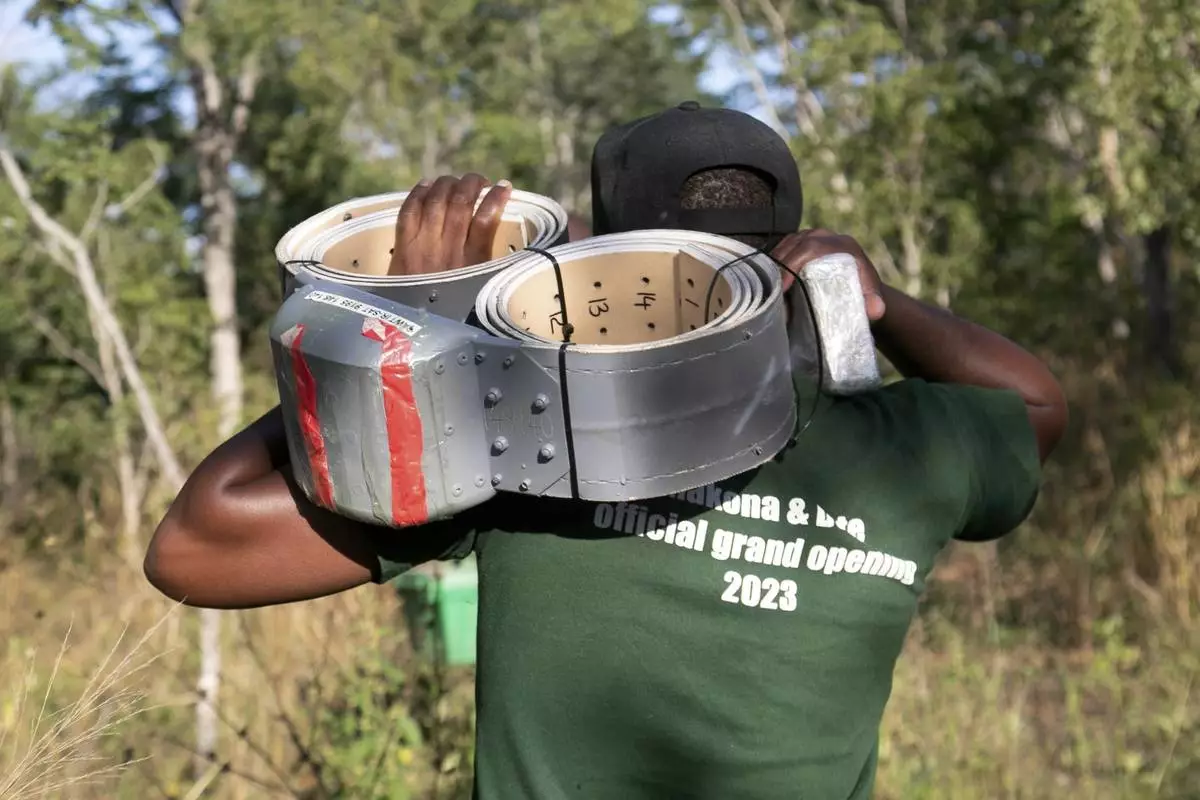
Zimbabwe Parks and Wildlife Management Authority officer carries a collar to be used to track an in elephant in the Hwange National Park, Zimbabwe, Tuesday, April 29 2025. (AP Photo/Aaron Ufumeli)
Zimbabwe Parks and Wildlife Management Authority officer carries a collar to be used to track an in elephant in the Hwange National Park, Zimbabwe, Tuesday, April 29 2025. (AP Photo/Aaron Ufumeli)

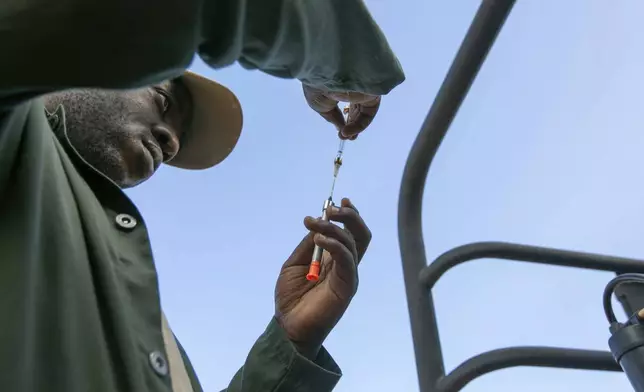
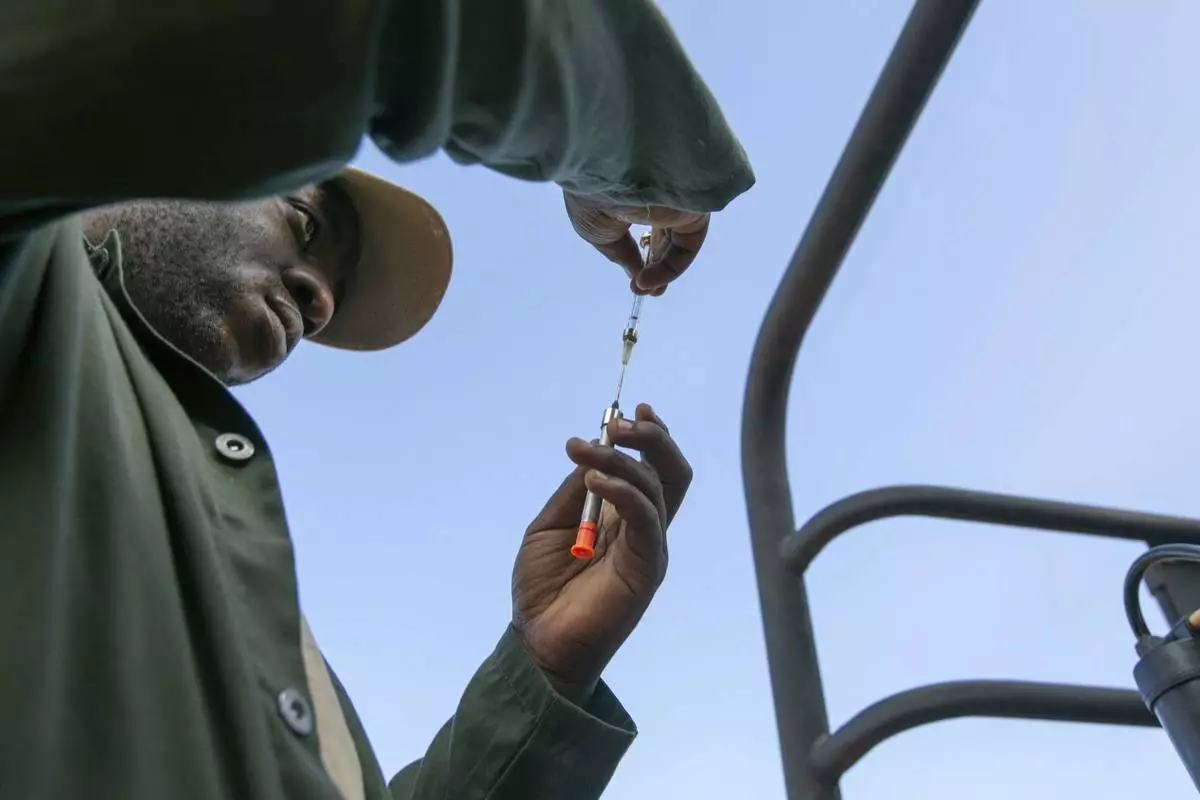
Kudzai Mapurisa, a Zimbabwe Parks and Wildlife Management Authority veterinarian, prepares to dart an elephant in Zimbabwe’s Hwange National Park, Tuesday, April 29, 2025. (AP Photo/Aaron Ufumeli)
Kudzai Mapurisa, a Zimbabwe Parks and Wildlife Management Authority veterinarian, prepares to dart an elephant in Zimbabwe’s Hwange National Park, Tuesday, April 29, 2025. (AP Photo/Aaron Ufumeli)

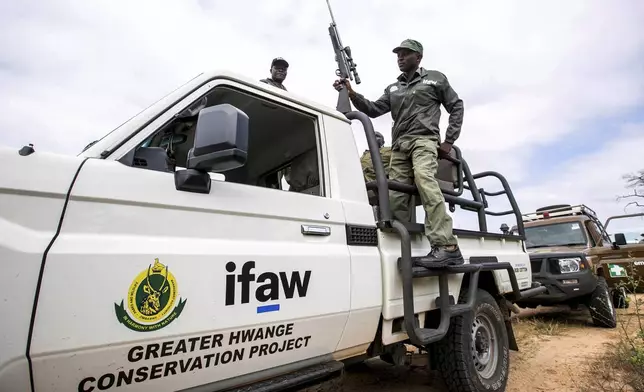
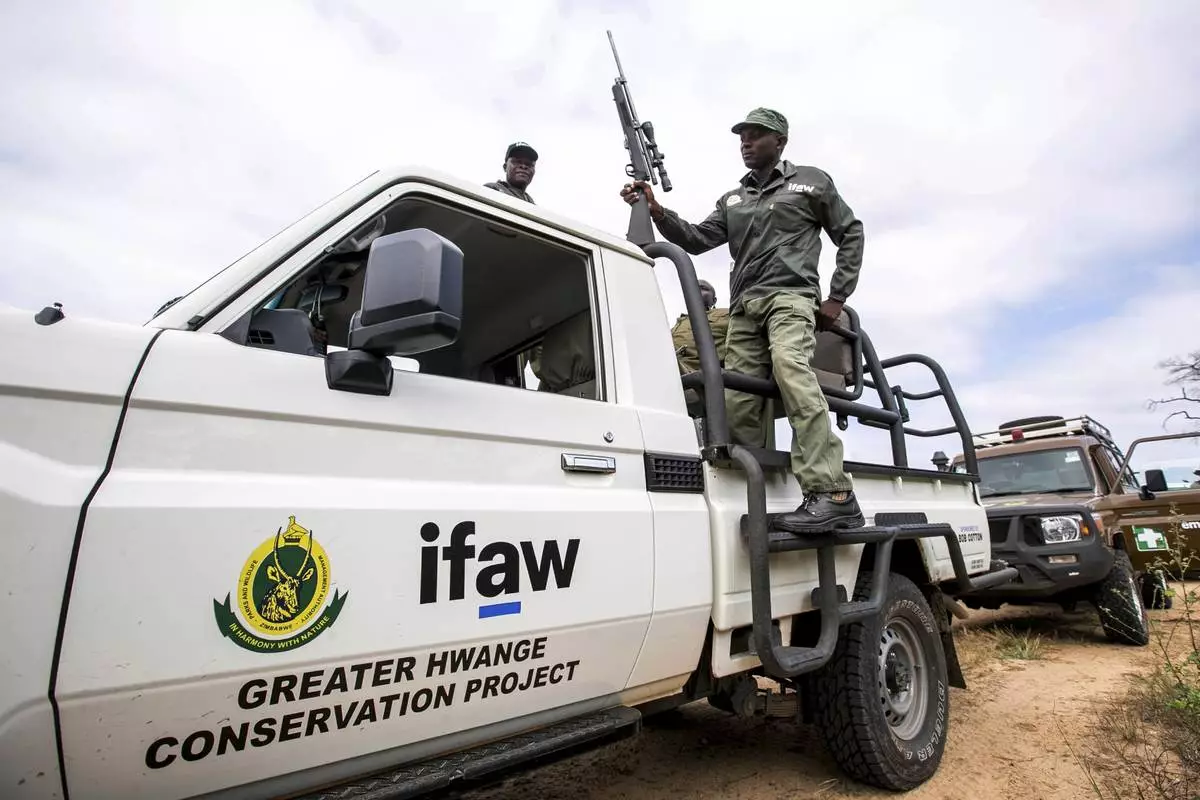
A Zimbabwe Parks and Wildlife Management Authority ranger carries a dart gun for elephants in the Hwange National Park, Zimbabwe, Tuesday, April 29, 2025. (AP Photo/Aaron Ufumeli)
A Zimbabwe Parks and Wildlife Management Authority ranger carries a dart gun for elephants in the Hwange National Park, Zimbabwe, Tuesday, April 29, 2025. (AP Photo/Aaron Ufumeli)

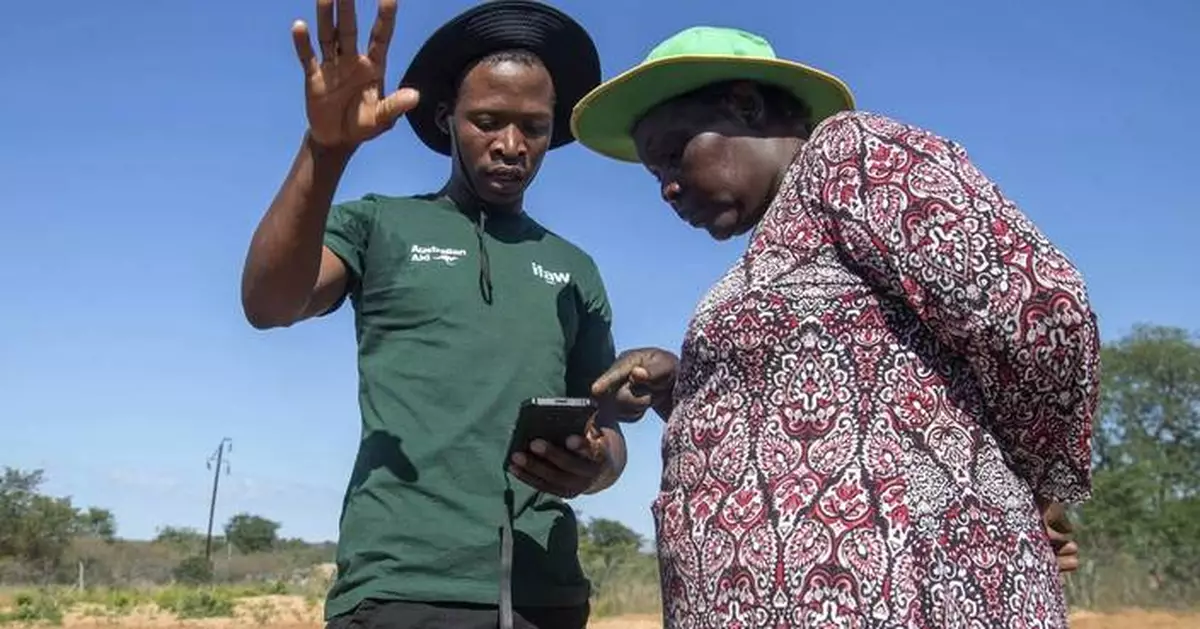
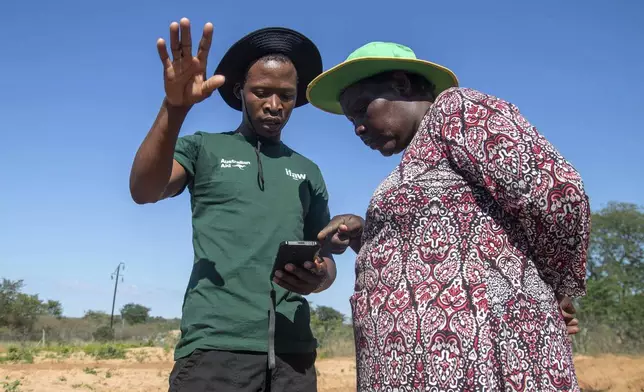
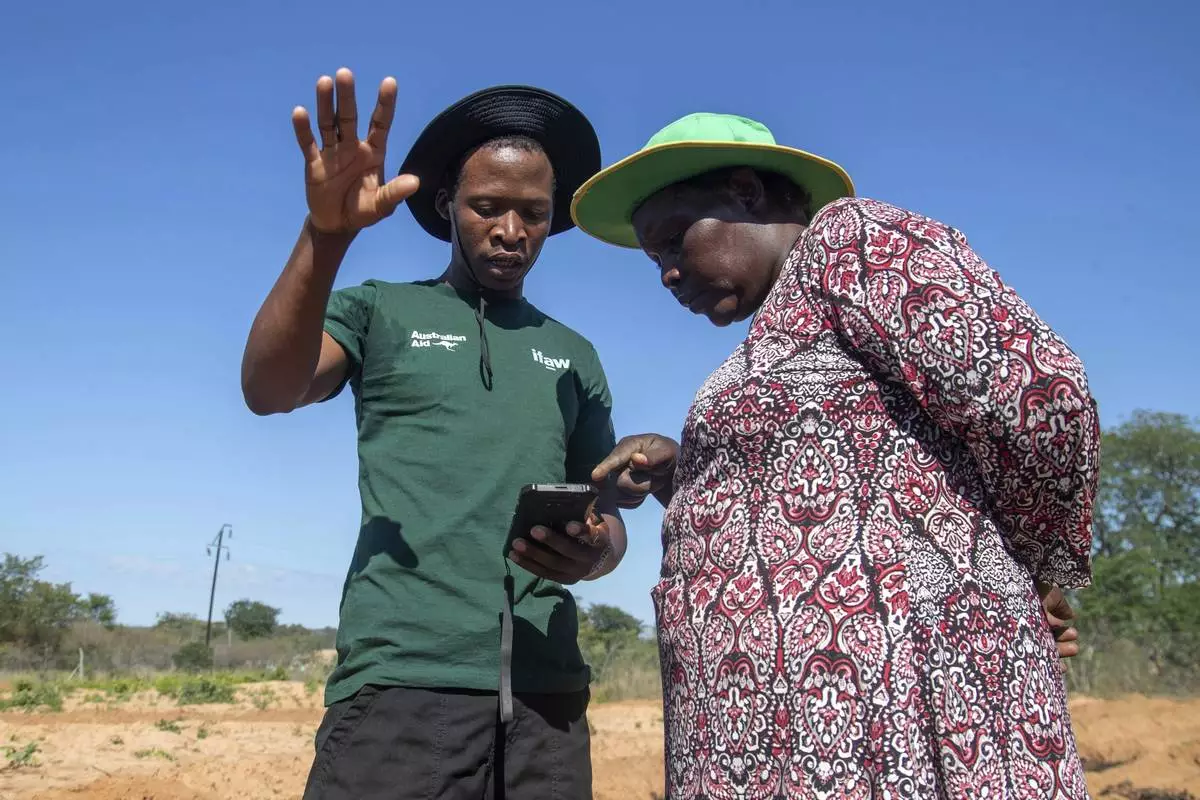
Capon Sibanda, left, a community guardian for encounters between people and elephants, talks with Senzeni Sibanda, a local councilor and farmer, in Hwange, Zimbabwe, Wednesday, April 30, 2025. (AP Photo/Aaron Ufumeli)

Capon Sibanda, left, a community guardian for encounters between people and elephants, talks with Senzeni Sibanda, a local councilor and farmer, in Hwange, Zimbabwe, Wednesday, April 30, 2025. (AP Photo/Aaron Ufumeli)

“When we started it was more of a challenge, but it’s becoming phenomenal,” said Sibanda, 29, one of the local volunteers trained to be community guardians.

For generations, villagers banged pots, shouted or burned dung to drive away elephants. But worsening droughts and shrinking resources have pushed the animals to raid villages more often, destroying crops and infrastructure and sometimes injuring or killing people.

Zimbabwe's elephant population is estimated at around 100,000, nearly double the land’s capacity. The country hasn’t culled elephants in close to four decades. That's because of pressure from wildlife conservation activists, and because the process is expensive, according to parks spokesman Tinashe Farawo.

Conflicts between humans and wildlife such as elephants, lions and hyenas killed 18 people across the southern African country between January and April this year, forcing park authorities to kill 158 “trouble” animals during that period.

“Droughts are getting worse. The elephants devour the little that we harvest,” said Senzeni Sibanda, a local councilor and farmer, tending her tomato crop with cow dung manure in a community garden that also supports a school feeding program.

Technology now supports the traditional tactics. Through the EarthRanger platform introduced by IFAW, authorities track collared elephants in real time. Maps show their proximity to the buffer zone — delineated on digital maps, not by fences — that separate the park and hunting concessions from community land.

At a park restaurant one morning IFAW field operations manager Arnold Tshipa monitored moving icons on his laptop as he waited for breakfast. When an icon crossed a red line, signaling a breach, an alert pinged.

“We’re going to be able to see the interactions between wildlife and people,” Tshipa said. “This allows us to give more resources to particular areas."

The system also logs incidents like crop damage or attacks on people and livestock by predators such as lions or hyenas and retaliatory attacks on wildlife by humans. It also tracks the location of community guardians like Capon Sibanda.

“Every time I wake up, I take my bike, I take my gadget and hit the road,” Sibanda said. He collects and stores data on his phone, usually with photos. “Within a blink,” alerts go to rangers and villagers, he said.

His commitment has earned admiration from locals, who sometimes gift him crops or meat. He also receives a monthly food allotment worth about $80 along with internet data.

Parks agency director Edson Gandiwa said the platform ensures that “conservation decisions are informed by robust scientific data.”

Villagers like Senzeni Sibanda say the system is making a difference: “We still bang pans, but now we get warnings in time and rangers react more quickly.”

Still, frustration lingers. Sibanda has lost crops and water infrastructure to elephant raids and wants stronger action. “Why aren’t you culling them so that we benefit?” she asked. “We have too many elephants anyway.”

Her community, home to several hundred people, receives only a small share of annual trophy hunting revenues, roughly the value of one elephant or between $10,000 and $80,000, which goes toward water repairs or fencing. She wants a rise in Zimbabwe's hunting quota, which stands at 500 elephants per year, and her community's share increased.

The elephant debate has made headlines. In September last year, activists protested after Zimbabwe and Namibia proposed slaughtering elephants to feed drought-stricken communities. Botswana’s then-president offered to gift 20,000 elephants to Germany, and the country’s wildlife minister mock-suggested sending 10,000 to Hyde Park in the heart of London so Britons could “have a taste of living alongside elephants.”

Zimbabwe's collaring project may offer a way forward. Sixteen elephants, mostly matriarchs, have been fitted with GPS collars, allowing rangers to track entire herds by following their leaders. But Hwange holds about 45,000 elephants, and parks officials say it has capacity for 15,000. Project officials acknowledge a huge gap remains.

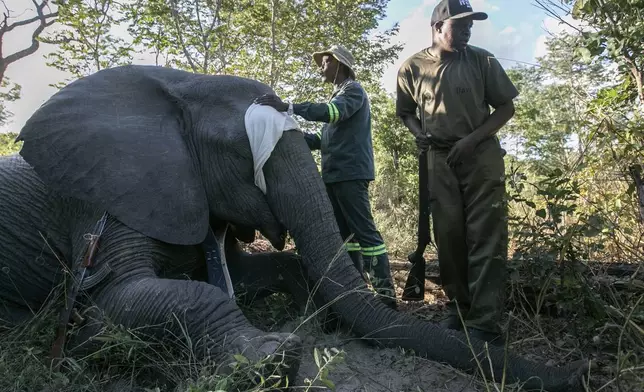
In a recent collaring mission, a team of ecologists, vets, trackers and rangers identified a herd. A marksman darted the matriarch from a distance. After some tracking using a drone and a truck, team members fitted the collar, whose battery lasts between two and four years. Some collected blood samples. Rangers with rifles kept watch.

Once the collar was secured, an antidote was administered, and the matriarch staggered off into the wild, flapping its ears.

“Every second counts,” said Kudzai Mapurisa, a parks agency veterinarian.

The Associated Press’ climate and environmental coverage receives financial support from multiple private foundations. AP is solely responsible for all content. Find AP’s standards for working with philanthropies, a list of supporters and funded coverage areas at AP.org.
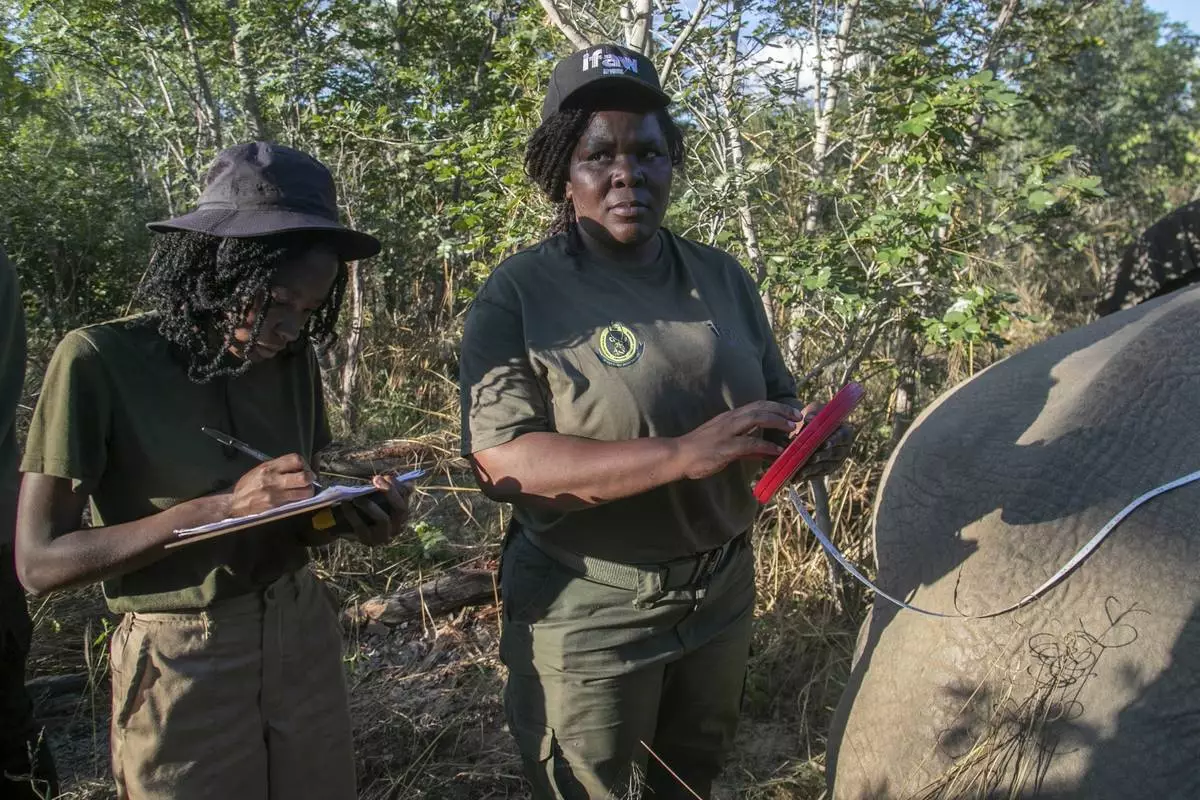
Zimbabwe Parks and Wildlife Management Authority officers record measurements of an elephant in the Hwange National Park, Zimbabwe, Tuesday, April 29, 2025. (AP Photo/Aaron Ufumeli)

Zimbabwe Parks and Wildlife Management Authority officers record measurements of an elephant in the Hwange National Park, Zimbabwe, Tuesday, April 29, 2025. (AP Photo/Aaron Ufumeli)

An official shows how the EarthRanger platform operates at Hwange National Park, Zimbabwe, Wednesday, April 30, 2025. (AP Photo/Aaron Ufumeli)
An official shows how the EarthRanger platform operates at Hwange National Park, Zimbabwe, Wednesday, April 30, 2025. (AP Photo/Aaron Ufumeli)

A GPS-enabled satellite collar on an elephant in Hwange National Park, Zimbabwe, Tuesday, April 29, 2025. (AP Photo/Aaron Ufumeli)
A GPS-enabled satellite collar on an elephant in Hwange National Park, Zimbabwe, Tuesday, April 29, 2025. (AP Photo/Aaron Ufumeli)

Zimbabwe Parks and Wildlife Management Authority and the International Fund for Animal Welfare officers collar an elephant in the Hwange National Park, Zimbabwe, Tuesday, April 29, 2025. (AP Photo/Aaron Ufumeli)

Zimbabwe Parks and Wildlife Management Authority and the International Fund for Animal Welfare officers collar an elephant in the Hwange National Park, Zimbabwe, Tuesday, April 29, 2025. (AP Photo/Aaron Ufumeli)

Capon Sibanda, a local volunteer trained to be a community guardian for encounters between people and elephants, rides on a bicycle in Hwange, Zimbabwe, Wednesday, April 30, 2025. (AP Photo/Aaron Ufumeli)

Capon Sibanda, a local volunteer trained to be a community guardian for encounters between people and elephants, rides on a bicycle in Hwange, Zimbabwe, Wednesday, April 30, 2025. (AP Photo/Aaron Ufumeli)

Zimbabwe Parks and Wildlife Management Authority and the International Fund for Animal Welfare officers stand around a collared elephant in Hwange National Park, Zimbabwe, Tuesday, April 29, 2025. (AP Photo/Aaron Ufumeli)
Zimbabwe Parks and Wildlife Management Authority and the International Fund for Animal Welfare officers stand around a collared elephant in Hwange National Park, Zimbabwe, Tuesday, April 29, 2025. (AP Photo/Aaron Ufumeli)

An elephant walks in the Hwange National Park, Zimbabwe, Monday, April 28 2025. (AP Photo/Aaron Ufumeli)
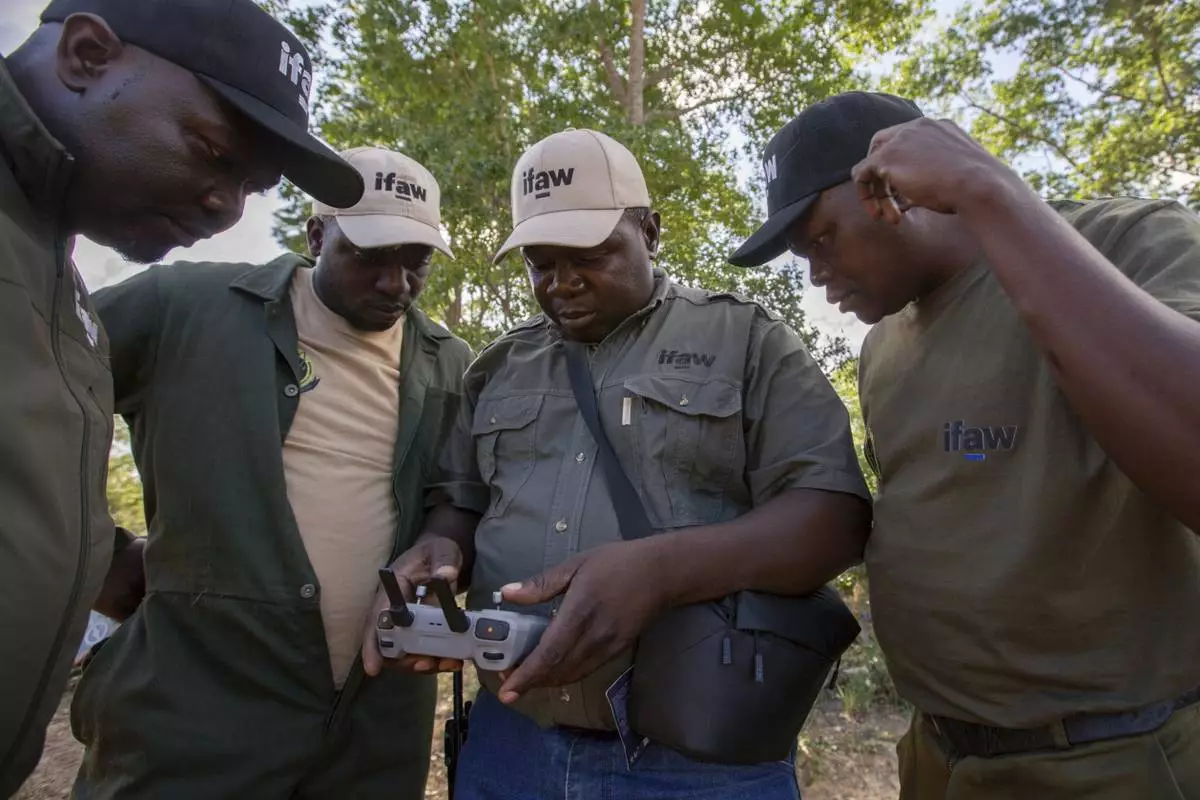
An elephant walks in the Hwange National Park, Zimbabwe, Monday, April 28 2025. (AP Photo/Aaron Ufumeli)

Zimbabwe Parks and Wildlife Management Authority and the International Fund for Animal Welfare officers monitor an elephant's movement using a drone in Zimbabwe’s Hwange National Park, Zimbabwe, Tuesday, April 29, 2025. (AP Photo/Aaron Ufumeli)
Zimbabwe Parks and Wildlife Management Authority and the International Fund for Animal Welfare officers monitor an elephant's movement using a drone in Zimbabwe’s Hwange National Park, Zimbabwe, Tuesday, April 29, 2025. (AP Photo/Aaron Ufumeli)

Zimbabwe Parks and Wildlife Management Authority officer carries a collar to be used to track an in elephant in the Hwange National Park, Zimbabwe, Tuesday, April 29 2025. (AP Photo/Aaron Ufumeli)
Zimbabwe Parks and Wildlife Management Authority officer carries a collar to be used to track an in elephant in the Hwange National Park, Zimbabwe, Tuesday, April 29 2025. (AP Photo/Aaron Ufumeli)

Kudzai Mapurisa, a Zimbabwe Parks and Wildlife Management Authority veterinarian, prepares to dart an elephant in Zimbabwe’s Hwange National Park, Tuesday, April 29, 2025. (AP Photo/Aaron Ufumeli)
Kudzai Mapurisa, a Zimbabwe Parks and Wildlife Management Authority veterinarian, prepares to dart an elephant in Zimbabwe’s Hwange National Park, Tuesday, April 29, 2025. (AP Photo/Aaron Ufumeli)

A Zimbabwe Parks and Wildlife Management Authority ranger carries a dart gun for elephants in the Hwange National Park, Zimbabwe, Tuesday, April 29, 2025. (AP Photo/Aaron Ufumeli)
A Zimbabwe Parks and Wildlife Management Authority ranger carries a dart gun for elephants in the Hwange National Park, Zimbabwe, Tuesday, April 29, 2025. (AP Photo/Aaron Ufumeli)

Capon Sibanda, left, a community guardian for encounters between people and elephants, talks with Senzeni Sibanda, a local councilor and farmer, in Hwange, Zimbabwe, Wednesday, April 30, 2025. (AP Photo/Aaron Ufumeli)
Capon Sibanda, left, a community guardian for encounters between people and elephants, talks with Senzeni Sibanda, a local councilor and farmer, in Hwange, Zimbabwe, Wednesday, April 30, 2025. (AP Photo/Aaron Ufumeli)

U.S. forces have boarded another oil tanker in the Caribbean Sea. The announcement was made Friday by the U.S. military. The Trump administration has been targeting sanctioned tankers traveling to and from Venezuela.

The pre-dawn action was carried out by U.S. Marines and Navy, taking part in the monthslong buildup of forces in the Caribbean, according to U.S. Southern Command, which declared “there is no safe haven for criminals” as it announced the seizure of the vessel called the Olina.

Navy officials couldn’t immediately provide details about whether the Coast Guard was part of the force that took control of the vessel as has been the case in the previous seizures. A spokesperson for the U.S. Coast Guard said there was no immediate comment on the seizure.

The Olina is the fifth tanker that has been seized by U.S. forces as part of a broader effort by Trump’s administration to control the distribution of Venezuela’s oil products globally following the U.S. ouster of President Nicolás Maduro in a surprise nighttime raid.

The latest:

Richard Grenell, president of the Kennedy Center, says a documentary film about first lady Melania Trump will make its premiere later this month, posting a trailer on X.

As the Trumps prepared to return to the White House last year, Amazon Prime Video announced a year ago that it had obtained exclusive licensing rights for a streaming and theatrical release directed by Brett Ratner.

Melania Trump also released a self-titled memoir in late 2024.

Some artists have canceled scheduled Kennedy Center performances after a newly installed board voted to add President Donald Trump’s to the facility, prompting Grenell to accuse the performers of making their decisions because of politics.

Mexico President Claudia Sheinbaum says that she has asked her foreign affairs secretary to reach out directly to U.S. Secretary of State Marco Rubio or Trump regarding comments by the American leader that the U.S. cold begin ground attacks against drug cartels.

In a wide-ranging interview with Fox News aired Thursday night, Trump said, “We’ve knocked out 97% of the drugs coming in by water and we are going to start now hitting land, with regard to the cartels. The cartels are running Mexico. It’s very sad to watch.”

As she has on previous occasions, Sheinbaum downplayed the remarks, saying “it is part of his way of communicating.” She said she asked her Foreign Affairs Secretary Juan Ramón de la Fuente to strengthen coordination with the U.S.

Sheinbaum has repeatedly rebuffed Trump’s offer to send U.S. troops after Mexican drug cartels. She emphasizes that there will be no violation of Mexico’s sovereignty, but the two governments will continue to collaborate closely.

Analysts do not see a U.S. incursion in Mexico as a real possibility, in part because Sheinbaum’s administration has been doing nearly everything Trump has asked and Mexico is a critical trade partner.

Trump says he wants to secure $100 billion to remake Venezuela’s oil infrastructure, a lofty goal going into a 2:30 meeting on Friday with executives from leading oil companies. His plan rides on oil producers being comfortable in making commitments in a country plagued by instability, inflation and uncertainty.

The president has said that the U.S. will control distribution worldwide of Venezuela’s oil and will share some of the proceeds with the country’s population from accounts that it controls.

“At least 100 Billion Dollars will be invested by BIG OIL, all of whom I will be meeting with today at The White House,” Trump said Friday in a pre-dawn social media post.

Trump is banking on the idea that he can tap more of Venezuela’s petroleum reserves to keep oil prices and gasoline costs low.

At a time when many Americans are concerned about affordability, the incursion in Venezuela melds Trump’s assertive use of presidential powers with an optical spectacle meant to convince Americans that he can bring down energy prices.

Trump is expected to meet with oil executives at the White House on Friday.

He hopes to secure $100 billion in investments to revive Venezuela’s oil industry. The goal rides on the executives’ comfort with investing in a country facing instability and inflation.

Since a U.S. military raid captured former Venezuelan leader Nicolás Maduro on Saturday, Trump has said there’s a new opportunity to use the country’s oil to keep gasoline prices low.

The full list of executives invited to the meeting has not been disclosed, but Chevron, ExxonMobil and ConocoPhillips are expected to attend.

Attorneys general in five Democratic-led states have filed a lawsuit against President Donald Trump’s administration after it said it would freeze money for several public benefit programs.

The Trump administration has cited concerns about fraud in the programs designed to help low-income families and their children. California, Colorado, Minnesota, Illinois and New York states filed the lawsuit Thursday in the U.S. District Court for the Southern District of New York.

The lawsuit asks the courts to order the administration to release the funds. The attorneys general have called the funding freeze an unconstitutional abuse of power.

Iran’s judiciary chief has vowed decisive punishment for protesters, signaling a coming crackdown against demonstrations.

Iranian state television reported the comments from Gholamhossein Mohseni-Ejei on Friday. They came after Supreme Leader Ayatollah Ali Khamenei criticized Trump’s support for the protesters, calling Trump’s hands “stained with the blood of Iranians.”

The government has shut down the internet and is blocking international calls. State media has labeled the demonstrators as “terrorists.”

The protests began over Iran’s struggling economy and have become a significant challenge to the government. Violence has killed at least 50 people, and more than 2,270 have been detained.

Trump questions why a president’s party often loses in midterm elections and suggests voters “want, maybe a check or something”

Trump suggested voters want to check a president’s power and that’s why they often deliver wins for an opposing party in midterm elections, which he’s facing this year.

“There’s something down, deep psychologically with the voters that they want, maybe a check or something. I don’t know what it is, exactly,” he said.

He said that one would expect that after winning an election and having “a great, successful presidency, it would be an automatic win, but it’s never been a win.”

Hiring likely remained subdued last month as many companies have sought to avoid expanding their workforces, though the job gains may be enough to bring down the unemployment rate.

December’s jobs report, to be released Friday, is likely to show that employers added a modest 55,000 jobs, economists forecast. That figure would be below November’s 64,000 but an improvement after the economy lost jobs in October. The unemployment rate is expected to slip to 4.5%, according to data provider FactSet, from a four-year high of 4.6% in November.

The figures will be closely watched on Wall Street and in Washington because they will be the first clean readings on the labor market in three months. The government didn’t issue a report in October because of the six-week government shutdown, and November’s data was distorted by the closure, which lasted until Nov. 12.

FILE - President Donald Trump dances as he walks off stage after speaking to House Republican lawmakers during their annual policy retreat, Tuesday, Jan. 6, 2026, in Washington. (AP Photo/Evan Vucci, File)

FILE - President Donald Trump dances as he walks off stage after speaking to House Republican lawmakers during their annual policy retreat, Tuesday, Jan. 6, 2026, in Washington. (AP Photo/Evan Vucci, File)

Recommended Articles