Skip to Content Facebook Feature Image

Donald Trump's Library of Congress fight is really about the separation of powers

News

Donald Trump's Library of Congress fight is really about the separation of powers
News

News

Donald Trump's Library of Congress fight is really about the separation of powers

2025-05-17 08:03 Last Updated At:08:11

WASHINGTON (AP) — It’s not really about the books.

President Donald Trump’s abrupt firing of top officials at the Library of Congress and equally sudden attempt to appoint a slate of loyalists as replacements has instead morphed into an enormous fight over the separation of powers, as the White House tries to wrest control of what has for centuries been a legislative institution.

It’s a power struggle with potentially vast consequences. The Library of Congress not only stores the world's largest collection of books but also an office overseeing reams of copyrighted material of untold value.

There is a research institute that has long been protected from outside influence. Its servers house extremely sensitive information regarding claims of workplace violations on Capitol Hill, as well as payments and other financial data for the legislative branch’s more than 30,000 employees. There’s even speculation that the whole affair is tied to an ongoing debate over whether big tech companies can use copyrighted material for artificial intelligence systems.

Because of this, the battle over control of the Library of Congress has prompted Republican leaders on Capitol Hill to deliver rare pushback against a president who has pressed to expand the boundaries of his own power to enact his priorities. Senate Majority Leader John Thune and other Republicans have been talking with the White House about a potential path to détente.

This all has left the library in a bizarre state of purgatory.

For now, Trump's choices for interim library leaders — most notably Todd Blanche, a deputy attorney general who had represented the president in his criminal proceedings — have not appeared to challenge the assertion by the library that one of its veteran officials would be the acting head. It would be unheard of for an executive branch official such as Blanche to simultaneously serve in the legislative branch, according to experts.

All the while, the agency-slashing Department of Government Efficiency has been trying to access legislative branch offices — with leaders there refusing.

“This egregious overreach into the legislature by the executive branch is just unwarranted and, we believe, unprecedented,” said New York Rep. Joe Morelle, the top Democrat on the House Administration Committee, which oversees the Library of Congress.

The controversy began to unfold publicly last week, when Librarian of Congress Carla Hayden was fired in a terse email from a White House official. She had just one year left in her 10-year term.

Then this week, Blanche was tapped by the White House to be the interim librarian, and two other Justice Department officials were chosen for other senior library posts. Those officials, Brian Nieves and Paul Perkins, tried unsuccessfully to enter the U.S. Copyright Office on Monday, but left voluntarily after library officials called Capitol Police.

Thune told The Associated Press that Congress was “not entirely” consulted ahead of Trump’s dismissal of Hayden.

Lawmakers want to ensure that “congressional legislative branch equities are protected,” Thune said. He speculated that discussions with the White House to resolve the standoff would bleed into next week.

The White House has said Trump was within his authority to dismiss Hayden, a former head of the library systems in Baltimore. It cited “quite concerning” behavior from Hayden involving diversity, equity and inclusion efforts as well as books for children that the White House found inappropriate.

A copy of virtually every book published in the U.S. is sent to the Copyright Office, then the library decides whether to include it in the main collection. No one under 16 can get a reader card to access the collection.

Existing regulations and past practices call for an acting librarian to come from the Library of Congress’ current ranks if there is a vacancy. But the White House has argued that a law governing federal vacancies applies, even though the 1998 law deals with the executive branch, according to two people familiar with the discussions.

When Nieves and Perkins showed up on Monday, they held a letter that invoked the vacancies law to justify their appointments, according to one of the people.

Oklahoma Sen. Markwayne Mullin, who leads the panel overseeing funding for the Library of Congress, argued that in practice, the librarian is not a legislative branch employee, saying: “It’s an appointment by the president of the United States, because we have to confirm her.”

Yet there is deep concern among lawmakers and aides about any unjustified intrusion of the administration into the Library of Congress and its operations.

Especially worrisome to them is potential meddling with the Congressional Research Service, known as the nonpartisan think tank of Capitol Hill. It fields roughly 75,000 requests from members of Congress every year for research, legal expertise and other information critical for policymaking.

The discussions between lawmakers and the Congressional Research Service are considered so sensitive that they are protected under the speech or debate clause of the Constitution, which shields members of Congress from being questioned -– such as in court -– about official legislative acts.

The service's “utility and trustworthiness would be substantially undercut if these inquiries were not protected or the Administration sought to shape responses to reflect its priorities,” said Hope O’Keeffe, a former associate general counsel at the Library of Congress.

It stores financial information about legislative branch employees, who include not just those at the Library of Congress, lawmakers and their aides, but employees of the Capitol Police, the Architect of the Capitol and the Government Accountability Office. The library also houses the Office of Congressional Workplace Rights, which functions as the human resources office of the legislative branch, fielding complaints about harassment, discrimination and other workplace violations.

DOGE officials reached out to the workplace office this week to discuss assigning one of its teams there, according to emails obtained by the AP. The office promptly denied DOGE's request, noting that it was a legislative branch agency and not subject to Trump's executive order on streamlining government, the emails show. DOGE made similar requests to the GAO this week, according to other emails and letters seen by the AP.

Robert Newlen, the principal deputy librarian, told library staffers shortly after Hayden’s firing that he will serve as the acting librarian. He said in a note this week that while the White House had appointed its own acting librarian, “we have not yet received direction from Congress about how to move forward,” indicating that the library was defying Trump’s wishes.

California Sen. Alex Padilla, the top Democrat on the Senate Rules Committee, this week said flatly that Newlen is the acting librarian of Congress. Asked whether Blanche was respecting that, Padilla said, “that’s my understanding.”

But a White House official stressed on Thursday that Trump selected Blanche to be the acting librarian. The official, granted anonymity because of the ongoing private discussions with lawmakers, said Trump chose Blanche because the president is “appointing highly-qualified individuals who are wholeheartedly committed to advancing the America-first agenda." The Justice Department did not respond to a request for comment.

Some suspect that the Copyright Office is the true aim of the administration. Housed in the Library of Congress with a leader chosen by the librarian, the office accepts millions of copies of copyrighted material such as books, artwork and music every year as part of the copyright registration process.

Shortly before the director of the office, Shira Perlmutter, was fired, her office released a report that questioned whether it was legal for the tech industry to use copyrighted material to “train” their artificial intelligence systems. Tech companies contend that doing so is legal when used for educational or research purposes or creating something new. Perlmutter’s report said doing so, in some circumstances, would go beyond established boundaries of fair use when the AI-generated content is competing with creative works made by people.

The material there is extremely valuable. For instance, copyright violation damages for the office's existing collection — if, for instance, tech companies scraped the material for AI purposes and then later were found liable for copyright infringement — would likely exceed $1.5 trillion, according to a person familiar with the calculations.

Morelle noted that the firing came “one day after, and I doubt there’s any coincidence to this, a report which is in many ways at odds with what Elon Musk wants to do around intellectual property and copyright.” Musk is the billionaire outside adviser for Trump who operates his own AI startup, called xAI. The White House did not respond to a request for comment.

Associated Press writer Alanna Durkin Richer contributed to this report.
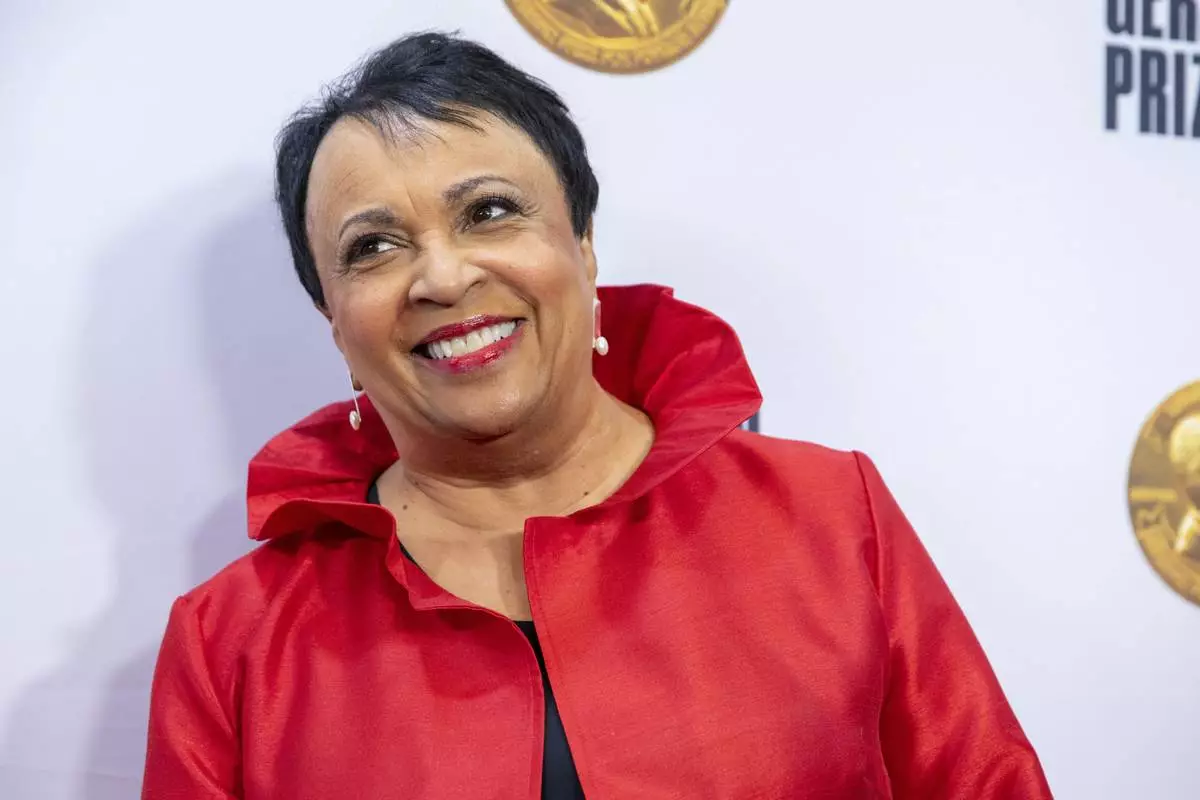
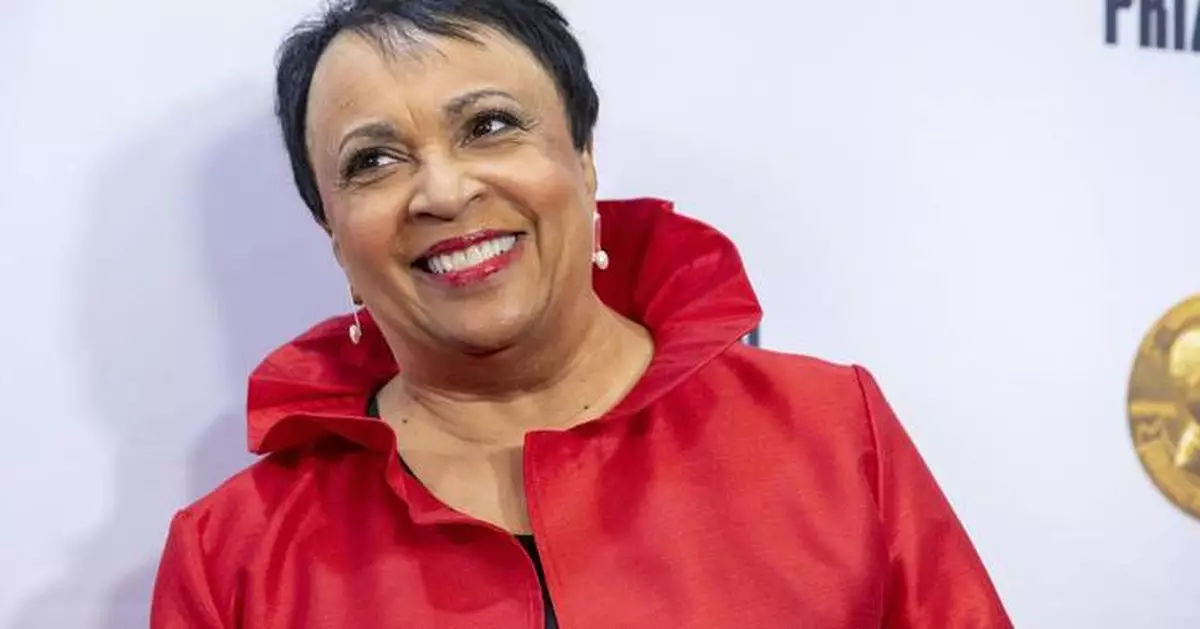
FILE - Librarian of Congress Carla Hayden arrives at the presentation of the Gershwin Prize, to be awarded to Joni Mitchell at DAR Constitution Hall in Washington March 1, 2023. (AP Photo/Amanda Andrade-Rhoades, File)

FILE - Librarian of Congress Carla Hayden arrives at the presentation of the Gershwin Prize, to be awarded to Joni Mitchell at DAR Constitution Hall in Washington March 1, 2023. (AP Photo/Amanda Andrade-Rhoades, File)
DUBAI, United Arab Emirates (AP) — Widening protests in Iran sparked by the Islamic Republic's ailing economy are putting new pressure on its theocracy.

Tehran is still reeling from a 12-day war launched by Israel in June that saw the United States bomb nuclear sites in Iran. Economic pressure, which has intensified since September when the United Nations reimposed sanctions on the country over its atomic program, has put Iran's rial currency into a free fall, now trading at some 1.4 million to $1.

Meanwhile, Iran's self-described “Axis of Resistance” — a coalition of countries and militant groups backed by Tehran — has been decimated in the years since the start of the Israel-Hamas war in 2023.

A threat by U.S. President Donald Trump warning Iran that if Tehran “violently kills peaceful protesters” the U.S. “will come to their rescue," has taken on new meaning after American troops captured Venezuelan President Nicolás Maduro, a longtime ally of Tehran. Iran has installed a banner in Tehran warning the United States and Israel that their soldiers could be killed if they take military action there.

Here's what to know about the protests and the challenges facing Iran's government.

Demonstrations have reached over 170 locations in 25 of Iran’s 31 provinces, the U.S.-based Human Rights Activists News Agency reported early Sunday. The death toll had reached at least 15 killed, it added, with more than 580 arrests. The group, which relies on an activist network inside of Iran for its reporting, has been accurate in past unrest.

Understanding the scale of the protests has been difficult. Iranian state media has provided little information about the demonstrations. Online videos offer only brief, shaky glimpses of people in the streets or the sound of gunfire. Journalists in general in Iran also face limits on reporting such as requiring permission to travel around the country, as well as the threat of harassment or arrest by authorities.

But the protests do not appear to be stopping, even after Supreme Leader Ayatollah Ali Khamenei on Saturday said “rioters must be put in their place.”

The collapse of the rial has led to a widening economic crisis in Iran. Prices are up on meat, rice and other staples of the Iranian dinner table. The nation has been struggling with an annual inflation rate of some 40%.

In December, Iran introduced a new pricing tier for its nationally subsidized gasoline, raising the price of some of the world’s cheapest gas and further pressuring the population. Tehran may seek steeper price increases in the future, as the government now will review prices every three months.

The protests began first with merchants in Tehran before spreading. While initially focused on economic issues, the demonstrations soon saw protesters chanting anti-government statements as well. Anger has been simmering over the years, particularly after the 2022 death of 22-year-old Mahsa Amini in police custody that triggered nationwide demonstrations.

Iran's “Axis of Resistance," which grew in prominence in the years after the 2003 U.S.-led invasion and subsequent occupation of Iraq, is reeling.

Israel has crushed Hamas in the devastating war in the Gaza Strip. Hezbollah, the Shiite militant group in Lebanon, has seen its top leadership killed by Israel and has been struggling since. A lightning offensive in December 2024 overthrew Iran’s longtime stalwart ally and client in Syria, President Bashar Assad, after years of war there. Yemen's Iranian-backed Houthi rebels also have been pounded by Israeli and U.S. airstrikes.

Now Venezuelan ally Maduro is in U.S. custody. Iran’s Foreign Ministry has condemned the “illegal U.S. attack against Venezuela." U.S. Defense Secretary Pete Hegseth likened the attack to the U.S. strikes in Iran last year, saying that “Maduro had his chance, just like Iran had their chance.” He added that adversaries of the U.S. should “remain on notice” that “America can project our will anywhere, anytime.”

China meanwhile has remained a major buyer of Iranian crude oil, but hasn't provided overt military support. Neither has Russia, which has relied on Iranian drones in its war on Ukraine.

Iran has insisted for decades that its nuclear program is peaceful. However, its officials have increasingly threatened to pursue a nuclear weapon. Iran had been enriching uranium to near weapons-grade levels prior to the U.S. attack in June, making it the only country in the world without a nuclear weapons program to do so.

Tehran also increasingly cut back its cooperation with the International Atomic Energy Agency, the U.N.'s nuclear watchdog, as tensions increased over its nuclear program in recent years. The IAEA's director-general has warned Iran could build as many as 10 nuclear bombs, should it decide to weaponize its program.

U.S. intelligence agencies have assessed that Iran has yet to begin a weapons program, but has “undertaken activities that better position it to produce a nuclear device, if it chooses to do so.”

Iran recently said it was no longer enriching uranium at any site in the country, trying to signal to the West that it remains open to potential negotiations over its atomic program to ease sanctions. But there's been no significant talks in the months since the June war.

Iran decades ago was one of the United States’ top allies in the Mideast under Shah Mohammad Reza Pahlavi, who purchased American military weapons and allowed CIA technicians to run secret listening posts monitoring the neighboring Soviet Union. The CIA fomented a 1953 coup that cemented the shah’s rule.

But in January 1979, the shah, fatally ill with cancer, fled Iran as mass demonstrations swelled against his rule. Then came the Islamic Revolution led by Ayatollah Ruhollah Khomeini, which created Iran’s theocratic government.

Later that year, university students overran the U.S. Embassy in Tehran, seeking the shah’s extradition and sparking the 444-day hostage crisis that saw diplomatic relations between Iran and the U.S. severed.

During the Iran-Iraq war of the 1980s, the U.S. backed Saddam Hussein. During that conflict, the U.S. launched a one-day assault that crippled Iran at sea as part of the so-called “Tanker War,” and later shot down an Iranian commercial airliner that the U.S. military said it mistook for a warplane.

Iran and the U.S. have seesawed between enmity and grudging diplomacy in the years since, and relations peaked with the 2015 nuclear deal, which saw Iran greatly limit its program in exchange for the lifting of sanctions. But Trump unilaterally withdrew America from the accord in 2018, sparking tensions in the Mideast that intensified after Hamas' Oct. 7, 2023, attack on Israel.

FILE - An Iranian security official in protective clothing walks through part of the Uranium Conversion Facility just outside the Iranian city of Isfahan, on March 30, 2005. (AP Photo/Vahid Salemi, File)

FILE - An Iranian security official in protective clothing walks through part of the Uranium Conversion Facility just outside the Iranian city of Isfahan, on March 30, 2005. (AP Photo/Vahid Salemi, File)

FILE - A customer shops at a supermarket at a shopping mall in northern Tehran, on Sept. 28, 2025. (AP Photo/Vahid Salemi, File)

FILE - A customer shops at a supermarket at a shopping mall in northern Tehran, on Sept. 28, 2025. (AP Photo/Vahid Salemi, File)

FILE - Current and pre-revolution Iranian banknotes are displayed by a street money exchanger at Ferdowsi square, Tehran's go-to venue for foreign currency exchange, in downtown Tehran, Iran, on Aug. 28, 2025. (AP Photo/Vahid Salemi, File)

FILE - Current and pre-revolution Iranian banknotes are displayed by a street money exchanger at Ferdowsi square, Tehran's go-to venue for foreign currency exchange, in downtown Tehran, Iran, on Aug. 28, 2025. (AP Photo/Vahid Salemi, File)

FILE - People cross the Enqelab-e-Eslami (Islamic Revolution) street in Tehran, Iran, on Sept. 27, 2025. (AP Photo/Vahid Salemi, File)

FILE - People cross the Enqelab-e-Eslami (Islamic Revolution) street in Tehran, Iran, on Sept. 27, 2025. (AP Photo/Vahid Salemi, File)

FILE - Protesters march on a bridge in Tehran, Iran, on Dec. 29, 2025. (Fars News Agency via AP, File)

FILE - Protesters march on a bridge in Tehran, Iran, on Dec. 29, 2025. (Fars News Agency via AP, File)

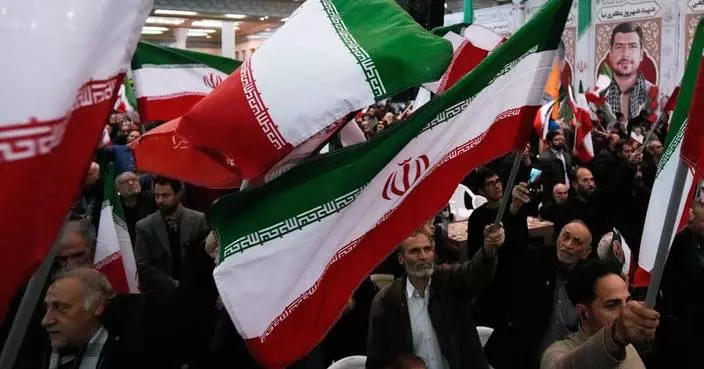
People wave national flags during a ceremony commemorating the death anniversary of the late commander of the Iran's Revolutionary Guard expeditionary Quds Force, Gen. Qassem Soleimani, who was killed in a U.S. drone attack in 2020 in Iraq, at the Imam Khomeini grand mosque in Tehran, Iran, Thursday, Jan. 1, 2026. (AP Photo/Vahid Salemi)

People wave national flags during a ceremony commemorating the death anniversary of the late commander of the Iran's Revolutionary Guard expeditionary Quds Force, Gen. Qassem Soleimani, who was killed in a U.S. drone attack in 2020 in Iraq, at the Imam Khomeini grand mosque in Tehran, Iran, Thursday, Jan. 1, 2026. (AP Photo/Vahid Salemi)

Recommended Articles