A federal judge in Texas struck down guidance from a government agency establishing protections against workplace harassment based on gender identity and sexual orientation.
Judge Matthew J. Kacsmaryk of the U.S. District Court for the Northern District of Texas on Thursday determined that the U.S. Equal Employment Opportunity Commission exceeded its statutory authority when the agency issued guidance to employers against deliberately using the wrong pronouns for an employee, refusing them access to bathrooms corresponding with their gender identity, and barring employees from wearing dress code-compliant clothing according to their gender identity because they may constitute forms of workplace harassment.
Title VII of the 1964 Civil Rights Act protects employees and job applicants from employment discrimination based on race, color, religion, sex and national origin.
The EEOC, which enforces workplace anti-discrimination laws, had updated its guidance on workplace harassment in April of last year under President Joe Biden for the first time in 25 years. It followed a 2020 Supreme Court ruling that gay, lesbian and transgender people are protected from employment discrimination.
Texas and the Heritage Foundation, the conservative think tank behind Project 2025, in August challenged the guidance, which the agency says serves as a tool for employers to assess compliance with anti-discrimination laws and is not legally binding. Kacsmaryk disagreed, writing that the guidance creates “mandatory standards ... from which legal consequences will necessarily flow if an employer fails to comply.”
The decision marks the latest blow to workplace protections for transgender workers following President Donald Trump's Jan. 20 executive order declaring that the government would recognize only two “immutable” sexes — male and female.
Kacsmaryk, a 2017 Trump nominee, invalidated all portions of the EEOC guidance that defines “sex” to include “sexual orientation” and “gender identity,” along with an entire section addressing the subject.
“Title VII does not require employers or courts to blind themselves to the biological differences between men and women,” he wrote in the opinion.
Heritage Foundation president Kevin Roberts commended the decision in an emailed statement: “The Biden EEOC tried to compel businesses — and the American people — to deny basic biological truth. Today, thanks to the great state of Texas and the work of my Heritage colleagues, a federal judge said: not so fast.”
He added: “This ruling is more than a legal victory. It’s a cultural one. It says no — you don’t have to surrender common sense at the altar of leftist ideology. You don’t have to pretend men are women."
Texas Attorney General Ken Paxton also touted the victory against “Biden’s 'Pronoun Police' Rule" in a Friday press release, saying: “The federal government has no right to force Texans to play along with delusions or ignore biological reality in our workplaces."
The National Women’s Law Center, which filed an amicus brief in November in support of the harassment guidance, blasted the decision in an emailed statement.
“The district court’s decision is an outrage and blatantly at odds with Supreme Court precedent,” said Liz Theran, senior director of litigation for education and workplace justice at NWLC. “The EEOC’s Harassment Guidance reminds employers and workers alike to do one simple thing that should cost no one anything: refrain from degrading others on the job based on their identity and who they love. This decision does not change the law, but it will make it harder for LGBTQIA+ workers to enforce their rights and experience a workplace free from harassment.”
Kacsmaryk offered a more narrow interpretation of Bostock v. Clayton County, the landmark Supreme Court case that established discrimination protections for LGBTQ+ workers, saying in his decision that the Supreme Court "firmly refused to expand the definition of ‘sex’ beyond the biological binary,” and found only that employers could not fire workers for being gay or transgender.
Employment attorney Jonathan Segal, a partner at Duane Morris who advises companies on how best to comply with anti-discrimination laws, emphasized that legal minds may disagree on the scope of Bostock, and Kacsmaryk's decision is just one interpretation.
“If you assume that a transgender employee has no rights beyond not being fired for transgender status, you are likely construing their rights too narrowly under both federal and state law,” which would put employers in a risky position, Segal said.
And regardless of whether explicit guidance is in place, employers still need to address gender identity conflicts in the workplace, according to Tiffany Stacy, an Ogletree Deakins attorney in San Antonio who defends employers against claims of workplace discrimination.
“From a management perspective, employers should be prepared to diffuse those situations,” Stacy said.
The EEOC in fiscal year 2024 received more than 3,000 charges alleging discrimination based on sexual orientation or gender identity, and 3,000-plus in 2023, according to the agency’s website.
The U.S. Department of Justice and the EEOC declined to comment on the outcome of the Texas case.
EEOC Acting Chair Andrea Lucas, a Trump appointee, voted against the harassment guidelines last year but has been unable to rescind or revise them after Trump fired two of the three Democratic commissioners, leaving the federal agency without the quorum needed to make major policy changes.
But earlier this month, Trump tapped an assistant U.S. attorney in Florida, Brittany Panuccio, to fill one of the vacancies. If Panuccio is confirmed by the Senate, the EEOC would regain a quorum and establish a Republican majority 2-1, clearing the path to fully pivot the agency toward focusing on Trump’s priorities.
“It is neither harassment nor discrimination for a business to draw distinctions between the sexes in providing single-sex bathrooms,” Lucas wrote in a statement expressing her dissent to that aspect of the guidelines.
In her four-month tenure as Acting Chair, Lucas has overhauled the agency's interpretation of civil rights law, including abandoning seven of its own cases representing transgender workers alleging they have experienced discrimination, and instructing employees to sideline all new gender identity discrimination cases received by the agency.
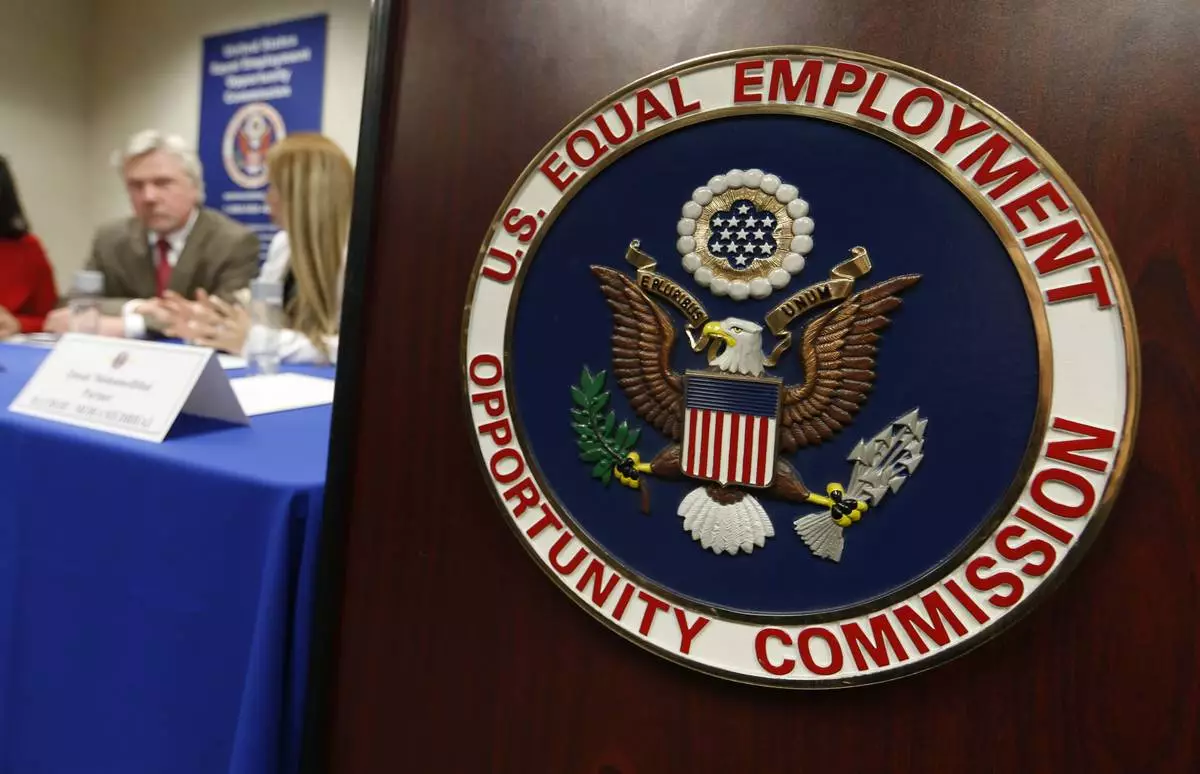
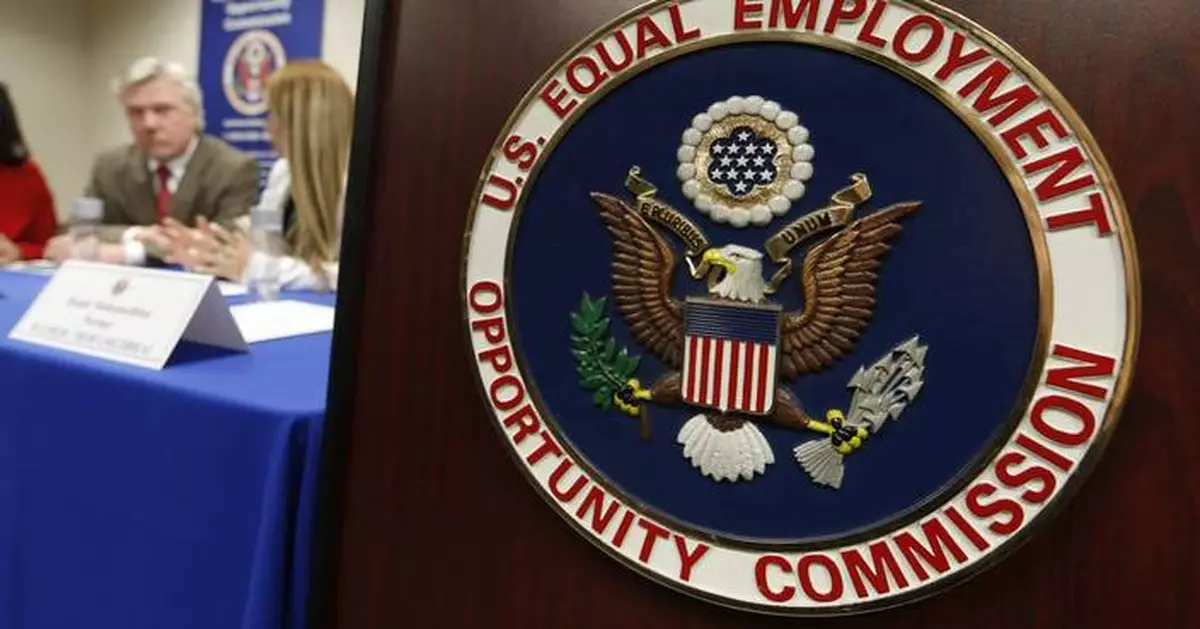
FILE - The emblem of the U.S. Equal Employment Opportunity Commission (EEOC) is shown on a podium in Vail, Colorado, Feb. 16, 2016, in Denver. (AP Photo/David Zalubowski, File)
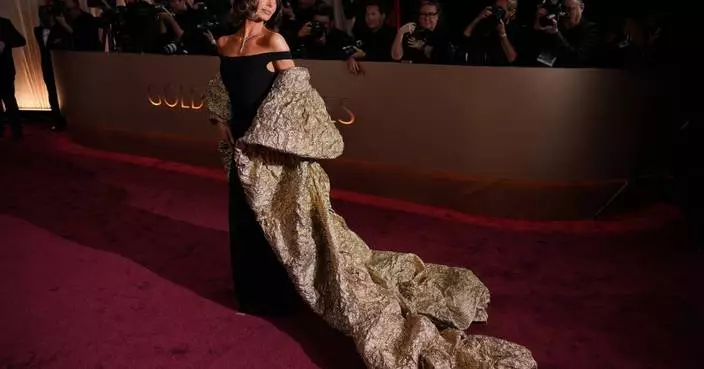
The Golden Globes bill themselves as Hollywood’s booziest bash. This year, is anyone ready to party?
Political tension and industrywide uncertainty are the prevailing moods heading into Sunday night's 83rd Golden Globes. Hollywood is coming off a disappointing box-office year and now anxiously awaits the fate of one of its most storied studios, Warner Bros.
A celebratory mood might be even more elusive given that the wide majority of the performers and filmmakers congregating at the Beverly Hilton in Beverly Hills, California, oppose the policies of President Donald Trump. Likely to be on the minds of many attendees: the recent U.S. involvement in Venezuela and the fatal shooting of 37-year-old mother Renee Good in Minneapolis by Immigration and Customs Enforcement.
But through their ups and downs, the Globes have always tried to put pomp over politics. Host Nikki Glaser has vowed as much.
“You’d be surprised that half the room had no clue why I was saying ‘Venezuela,’” Glaser told The Associated Press earlier in the week, referring to her comedy-club warm-ups. “People aren’t getting the news like we all are.”
Glaser, a comic known for her roast appearances, has promised to go after A-listers in her second time hosting.
“We’re going to hit Leo,” Glaser said. “The icebergs are coming.”
Here’s what to look for at this year’s Globes:
The Golden Globes kick off at 8 p.m. EST on CBS while streaming live for Paramount+ premium subscribers. E!’s red carpet coverage begins at 6 p.m. EST.
The Associated Press will be have a livestream show beginning at 4:30 p.m. Eastern with a mix of stars' arrivals, fashion shots and celebrity interviews. It will be available on YouTube and APNews.
The overwhelming Oscar favorite “One Battle After Another” comes in with a leading nine nominations. It’s competing in the Globes’ musical or comedy category, which means the drama side might be more competitive. There, Ryan Coogler’s “Sinners,” Chloé Zhao’s “Hamnet” and Joachim Trier’s “Sentimental Value” are all in the mix.
But thus far, “One Battle After Another” has cleaned up just about everywhere. Much of Paul Thomas Anderson’s cast is nominated, including DiCaprio, Teyana Taylor, Sean Penn, Chase Infiniti and Benicio Del Toro.
If it and “Sinners” take home the two biggest prizes, it will be a banner night for Warner Bros. even as its future hangs in the balance. The studio has agreed to be acquired by Netflix is a deal worth $82.7 billion. Movie theaters have warned such a result would be “a direct and irreversible negative impact on movie theaters around the world.”
The merger awaits regulatory approval, while Paramount Skydance is still trying to convince Warner shareholders to accept its rival offer.
After an audacious promotional tour for “Marty Supreme,” Timothée Chalamet is poised to win his first Globe in five nominations. In best actor, comedy or musical, he’ll have to beat DiCaprio, a three-time Globe winner, and Ethan Hawke (“Blue Moon”).
In best actress, comedy or musical, Rose Byrne is the favorite for her performance in the not especially funny A24 indie “If I Had Legs I’d Kick You.” One prominent nominee in the category, Cynthia Erivo (“Wicked: For Good”), won’t be attending due to her schedule in the West End production “Dracula.”
Jessie Buckley (“Hamnet”) is the clear front-runner in best actress, drama. In the star-studded best actor, drama, category, the Brazilian actor Wagner Moura (“The Secret Agent”) may win over Michael B. Jordan (“Sinners”) and Joel Edgerton (“Train Dreams”).
In the supporting categories, Teyana Taylor and Stellan Skarsgård come in the favorites.
The Globes, formerly presented by the Hollywood Foreign Press Association, have no overlap or direct correlation with the Academy Awards. After being sold in 2023 to Todd Boehly’s Eldridge Industries and Dick Clark Productions, a part of Penske Media, the Globes are voted on by around 400 people. The Oscars are voted on by more than 10,500 professionals.
But in the fluctuating undulations of awards season, a good speech at the Globes can really boost an Oscar campaign. Last year, that seemed to be the case for Demi Moore, who won for “The Substance” and gave the night's most emotional speech. Mikey Madison (“Anora”), however, scored the upset win at the Oscars.
A few potentially good moments this year went instead in a Golden Eve ceremony earlier this week. There, the Cecil B. DeMille and Carol Burnett honorees, Helen Mirren and Sarah Jessica Parker, accepted their awards.
One to watch, if he wins, will be the Iranian director Jafar Panahi. His revenge drama “It Was Just an Accident” is up for four awards. Panahi has spent most of his career making films clandestinely, without approval of authorities, and was until recently banned from leaving the country. Last month, he was sentenced to a year in prison, which would be only his latest stint behind bars if Panahi returns home to serve it. This week, protests over Iran’s ailing economy have spread throughout the country in a new test to Iran's leaders.
For the first time, the Globes are trotting out a new podcast category. The nominees are: “Armchair Expert,” “Call Her Daddy,” “Good Hang With Amy Poehler,” “The Mel Robbins Podcast,” “SmartLess” and “Up First.”
In TV, HBO Max’s “The White Lotus” — another potential big winner for Warner Bros. — leads with six nominations. Netflix’s “Adolescence” comes in with five nods.
But the most closely watched nominee might be “The Studio.” The first season of Seth Rogen’s Hollywood satire memorably included an episode devoted to drama around a night at the Globes. (Sample line: “I remember when the red carpet of the Golden Globes actually stood for something.”) “The Studio” is up for three awards, giving three chances for life to imitate art.
For more coverage of this year’s Golden Globe Awards, visit: https://apnews.com/hub/golden-globe-awards
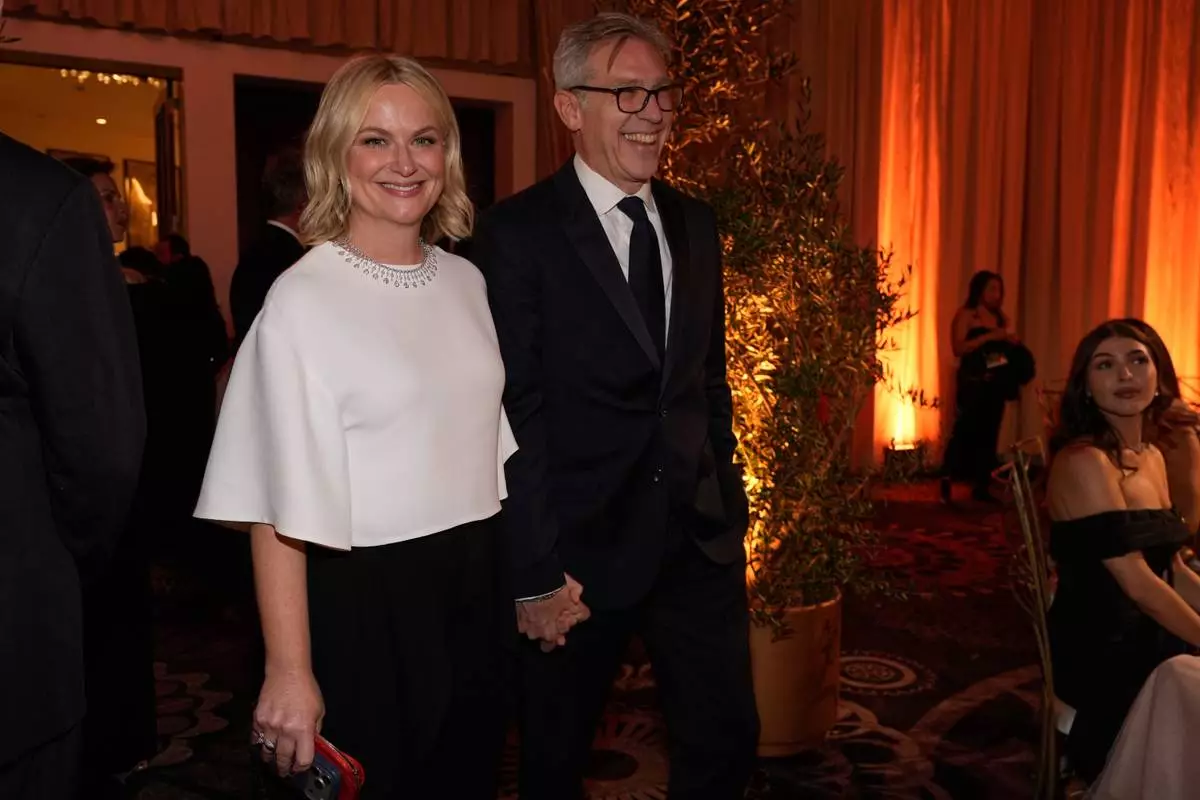
Amy Poehler, left, and Joel Lovell arrive at the 83rd Golden Globes on Sunday, Jan. 11, 2026, at the Beverly Hilton in Beverly Hills, Calif. (AP Photo/Chris Pizzello)
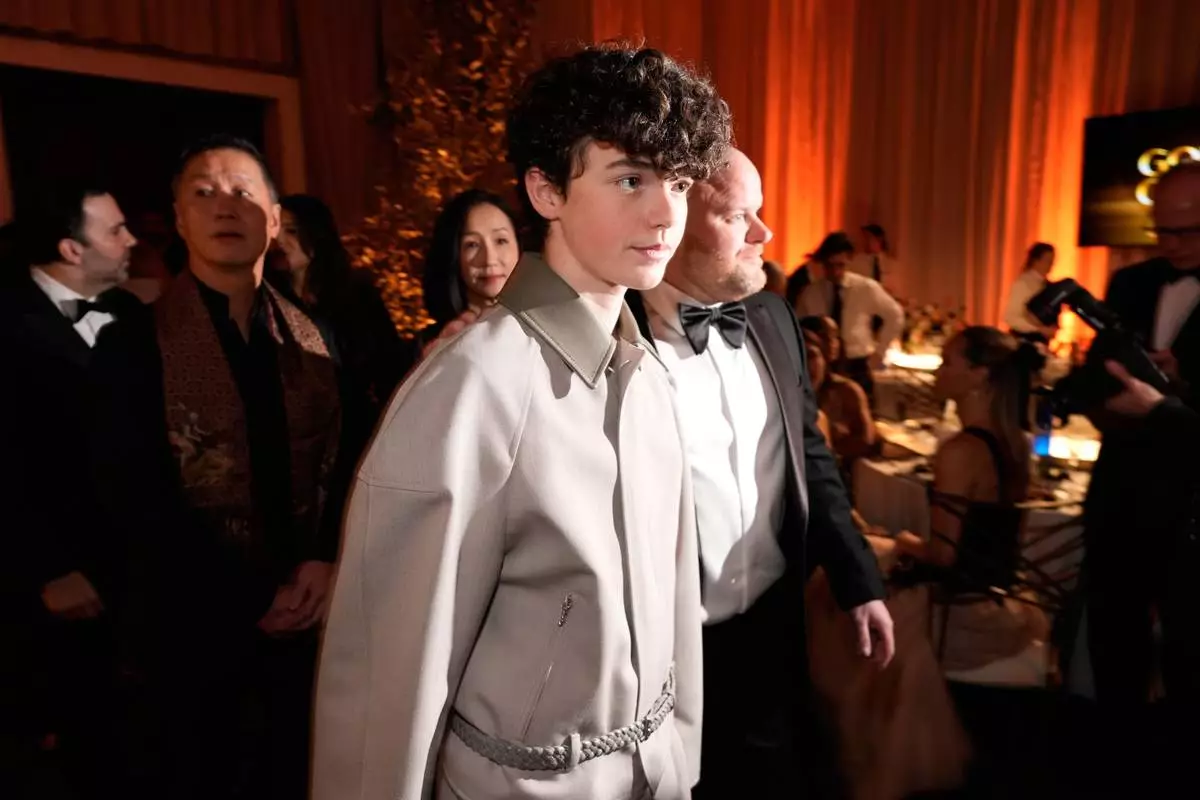
Owen Cooper arrives at the 83rd Golden Globes on Sunday, Jan. 11, 2026, at the Beverly Hilton in Beverly Hills, Calif. (AP Photo/Chris Pizzello)
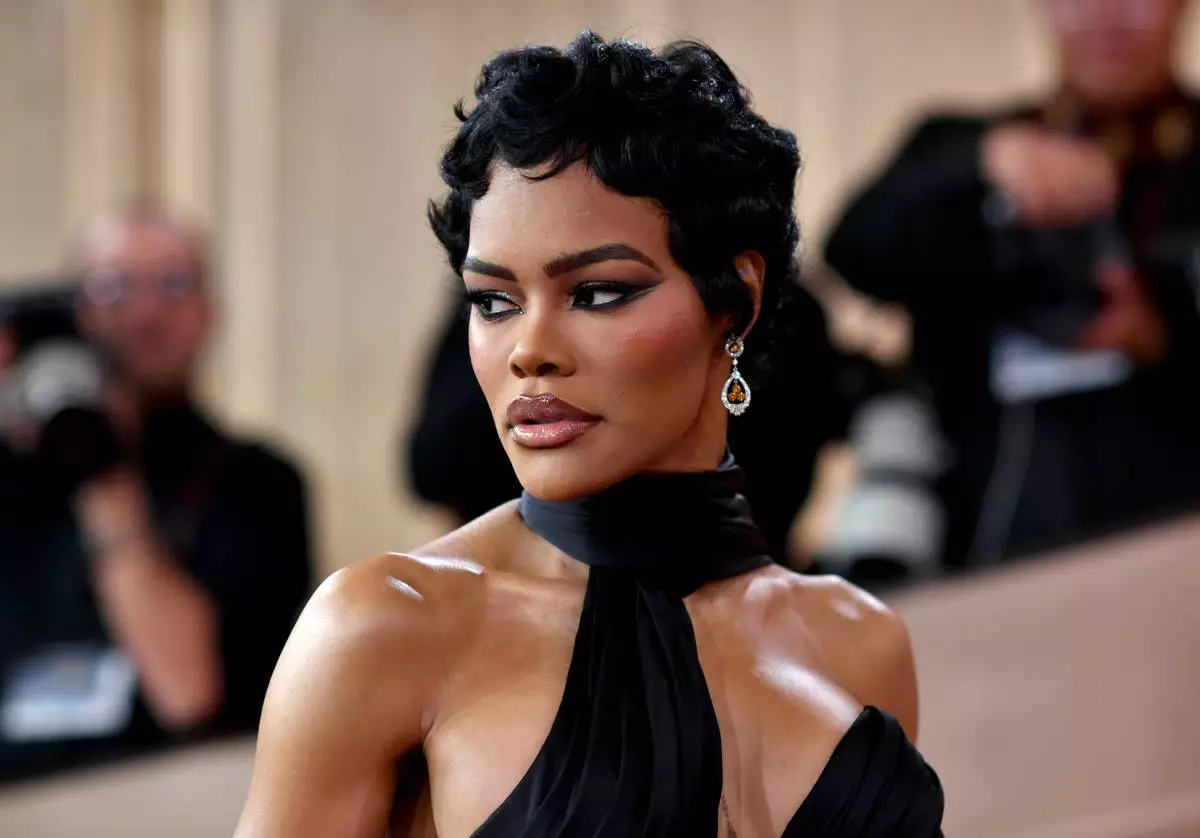
Teyana Taylor arrives at the 83rd Golden Globes on Sunday, Jan. 11, 2026, at the Beverly Hilton in Beverly Hills, Calif. (Photo by Richard Shotwell/Invision/AP)
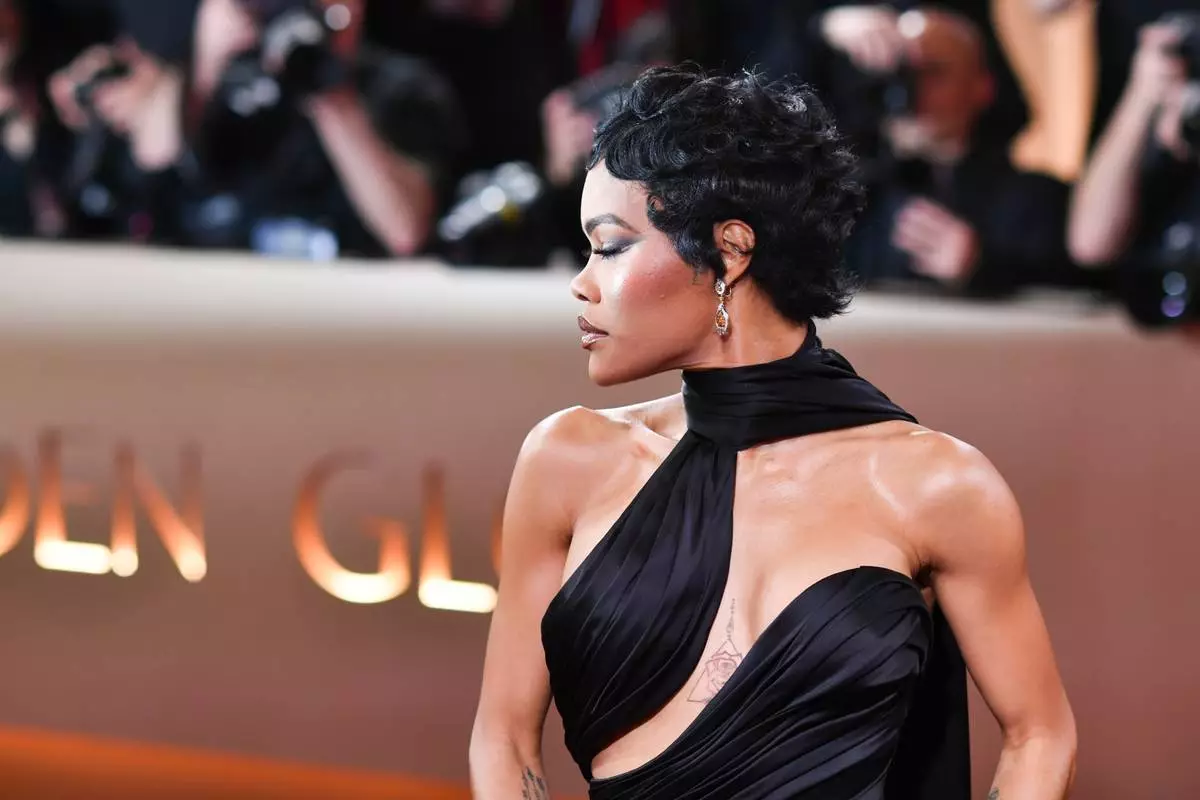
Teyana Taylor arrives at the 83rd Golden Globes on Sunday, Jan. 11, 2026, at the Beverly Hilton in Beverly Hills, Calif. (Photo by Richard Shotwell/Invision/AP)
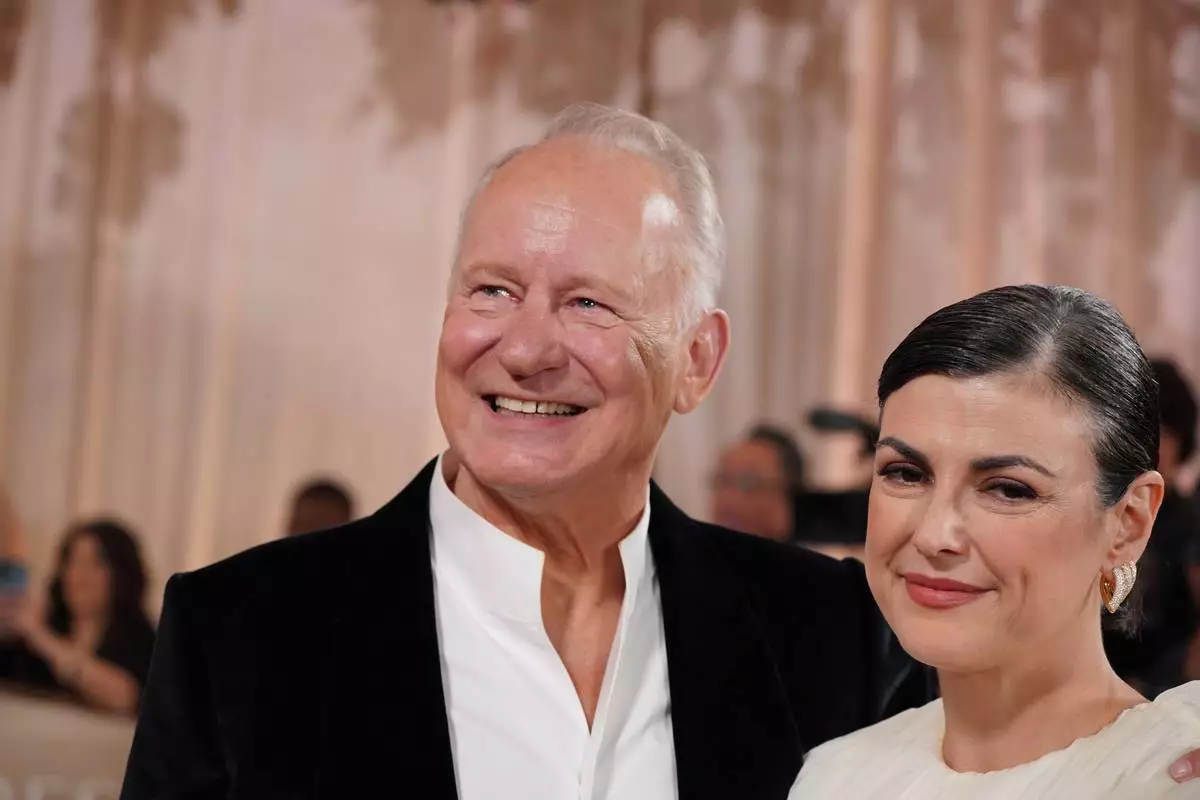
Stellan Skarsgård, left, and Megan Everett-Skarsgard arrive at the 83rd Golden Globes on Sunday, Jan. 11, 2026, at the Beverly Hilton in Beverly Hills, Calif. (Photo by Jordan Strauss/Invision/AP)
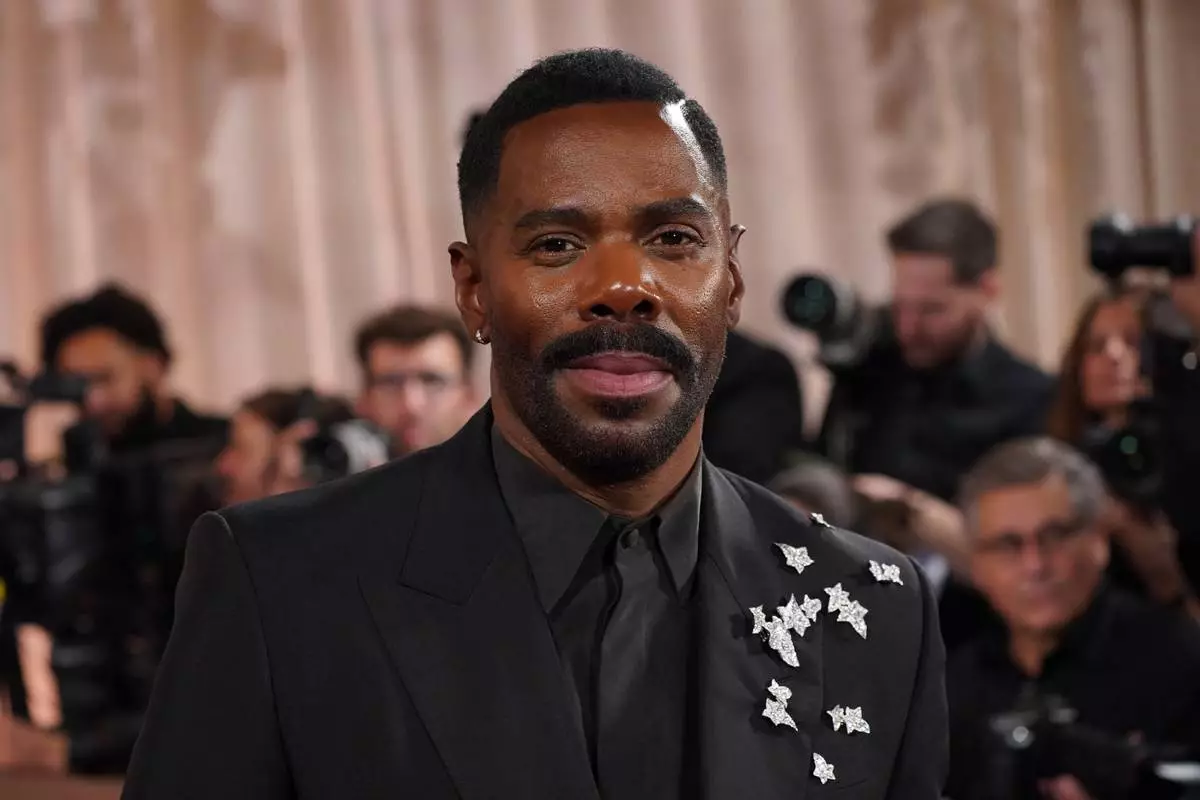
Colman Domingo arrives at the 83rd Golden Globes on Sunday, Jan. 11, 2026, at the Beverly Hilton in Beverly Hills, Calif. (Photo by Jordan Strauss/Invision/AP)
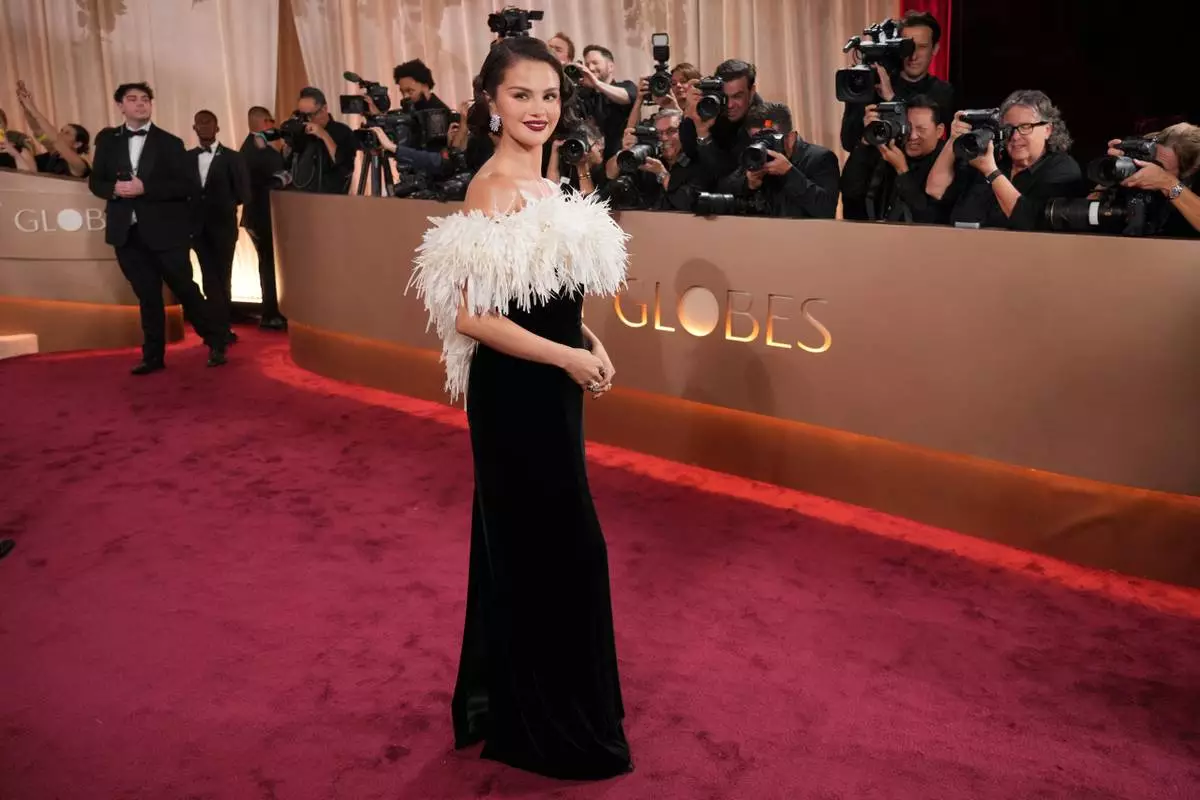
Selena Gomez arrives at the 83rd Golden Globes on Sunday, Jan. 11, 2026, at the Beverly Hilton in Beverly Hills, Calif. (Photo by Jordan Strauss/Invision/AP)
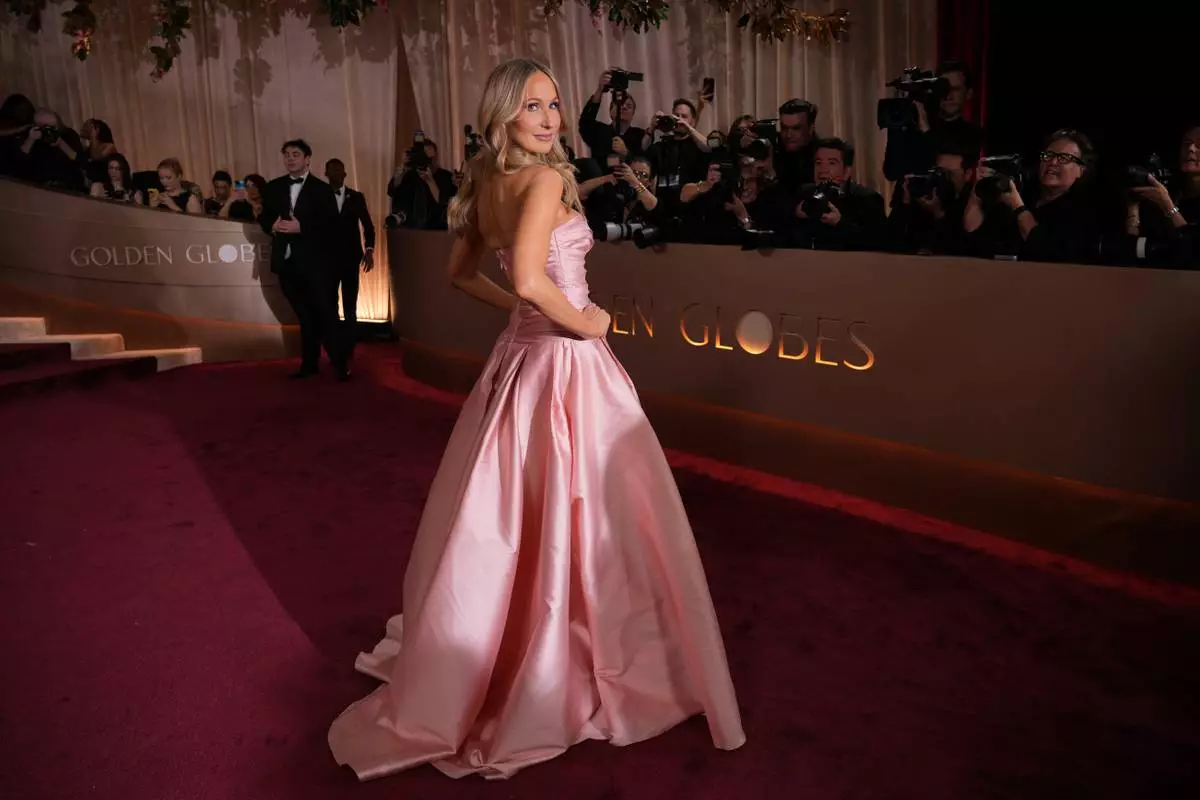
Nikki Glaser arrives at the 83rd Golden Globes on Sunday, Jan. 11, 2026, at the Beverly Hilton in Beverly Hills, Calif. (Photo by Jordan Strauss/Invision/AP)
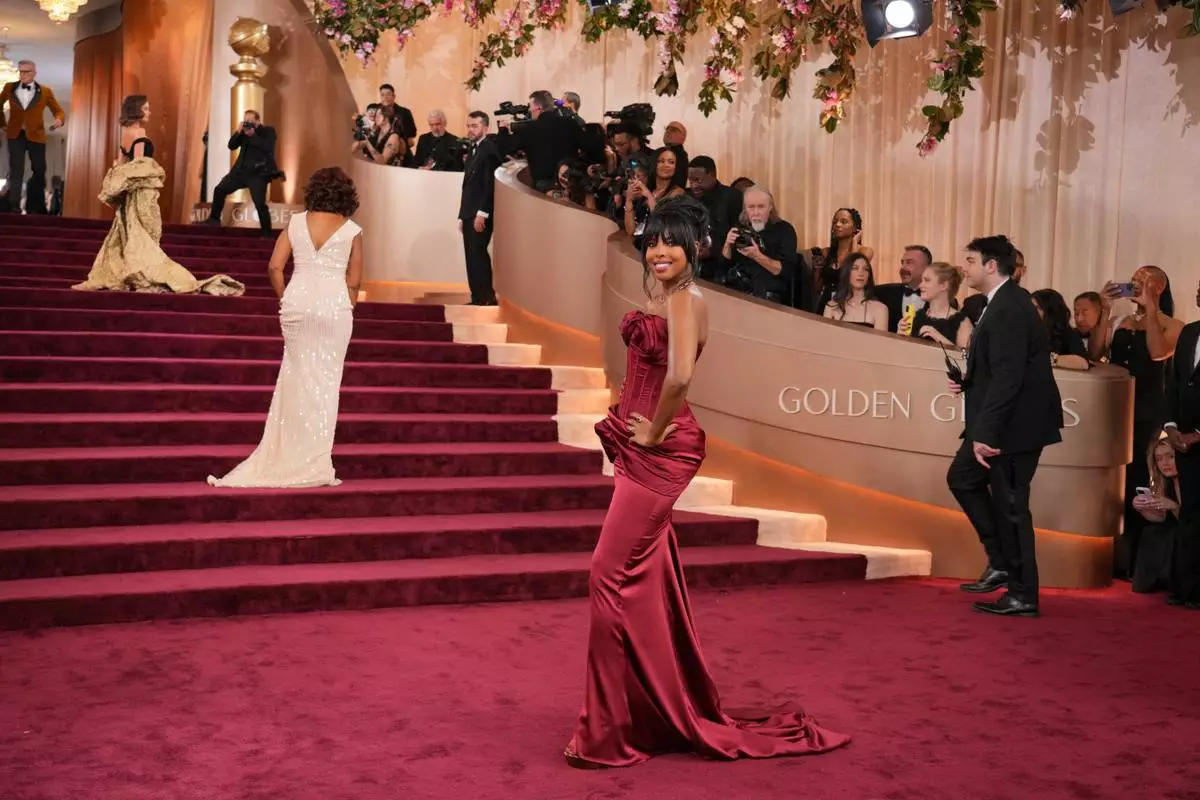
Maura Higgins, from ledt, Gayle King, and Mona Kosar Abdi arrive at the 83rd Golden Globes on Sunday, Jan. 11, 2026, at the Beverly Hilton in Beverly Hills, Calif. (Photo by Jordan Strauss/Invision/AP)
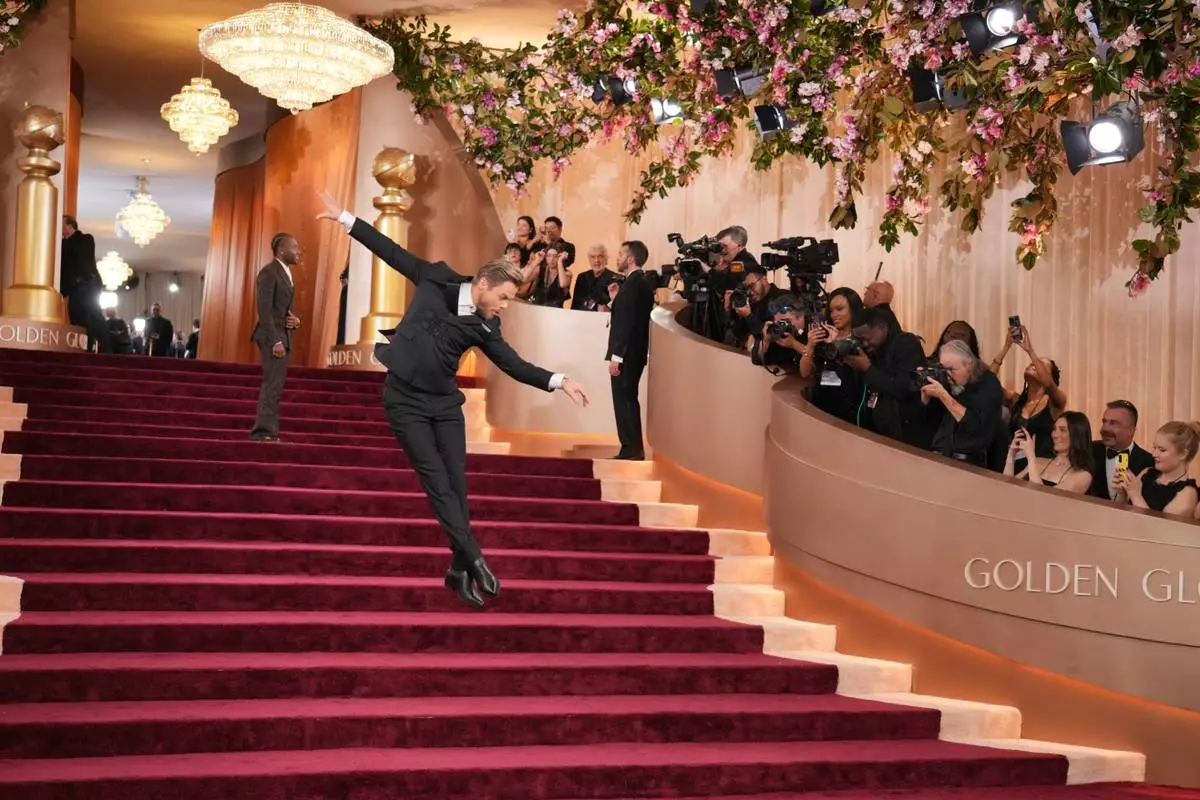
Derek Hough arrives at the 83rd Golden Globes on Sunday, Jan. 11, 2026, at the Beverly Hilton in Beverly Hills, Calif. (Photo by Jordan Strauss/Invision/AP)
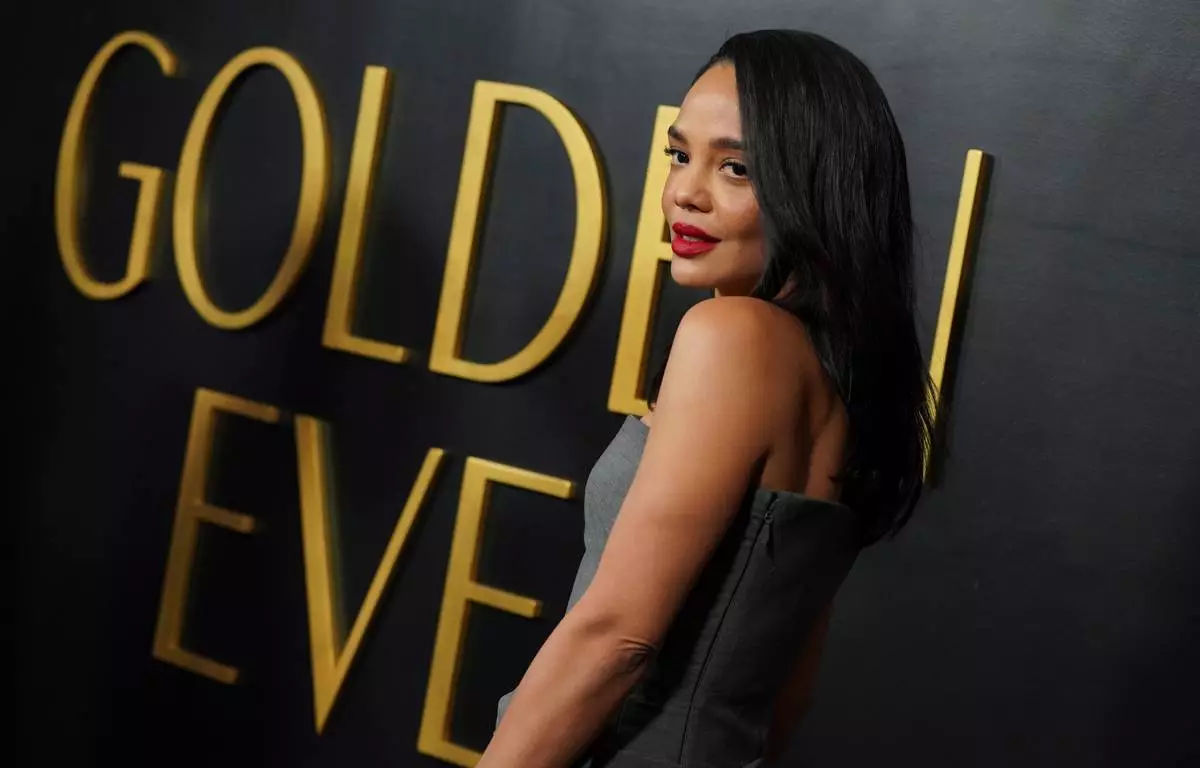
Tessa Thompson arrives at the Golden Globes Golden Eve on Tuesday, Jan. 6, 2026, at The Beverly Hilton Hotel, in Beverly Hills, Calif. (Photo by Jordan Strauss/Invision/AP)
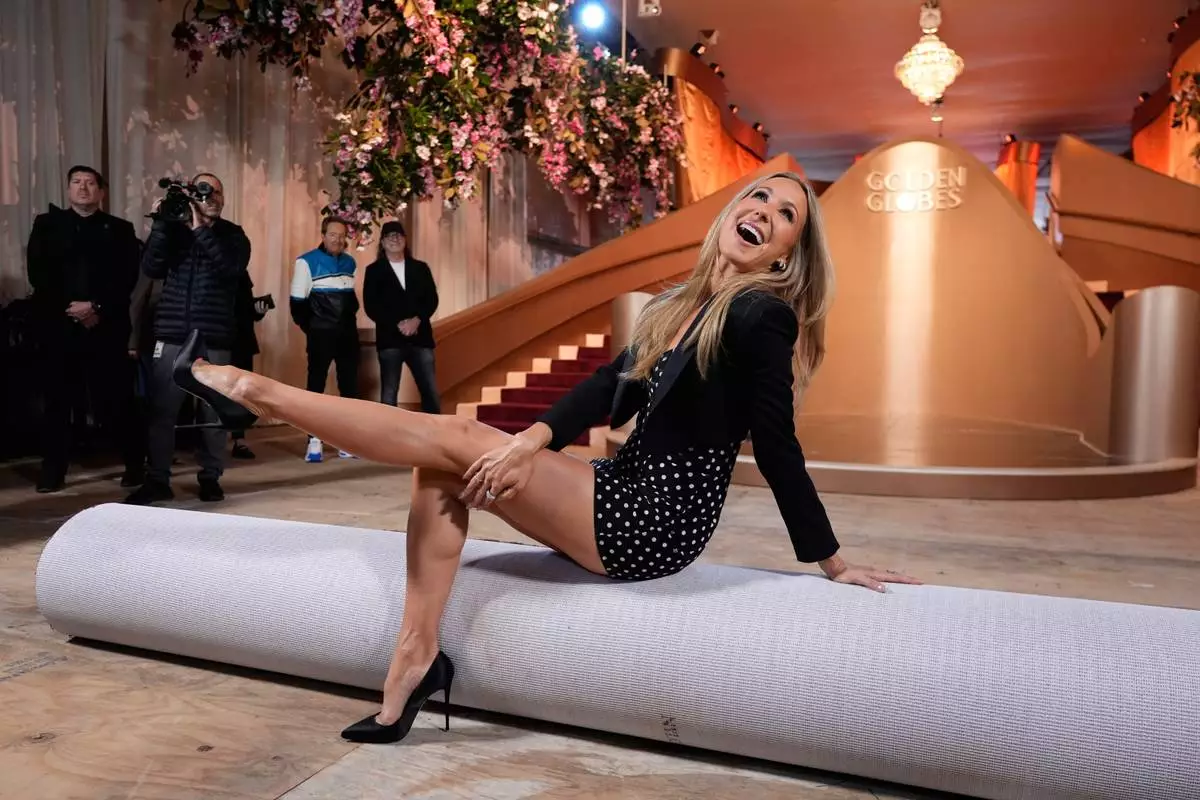
Nikki Glaser rolls out the red carpet during the 83rd Golden Globes press preview on Thursday, Jan. 8, 2026, at the Beverly Hilton in Beverly Hills, Calif. (AP Photo/Chris Pizzello)