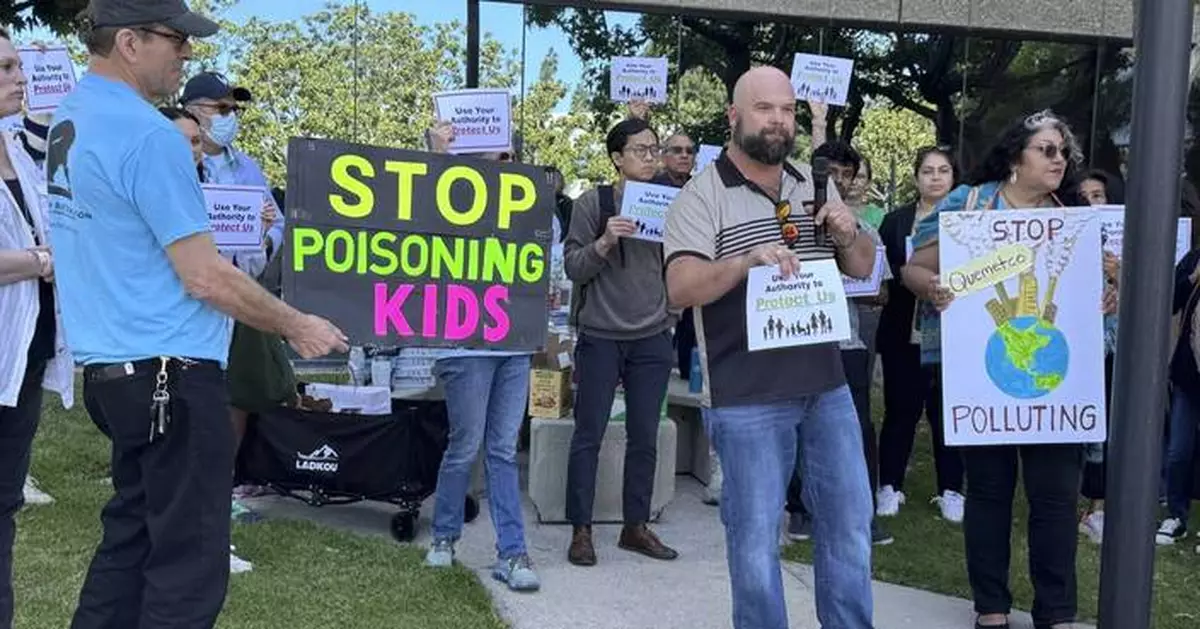
Skip to Content Facebook Feature Image

Board stops California toxic waste regulators from weakening a hazardous waste rule

News

Board stops California toxic waste regulators from weakening a hazardous waste rule
News

News

Board stops California toxic waste regulators from weakening a hazardous waste rule

2025-05-17 08:06 Last Updated At:08:11

CYPRESS, Calif. (AP) — California shouldn't weaken hazardous waste rules to allow local landfills to accept toxic dirt that currently goes to two specialized disposal sites in the Central Valley and hazardous facilities in other states, the state Board of Environmental Safety voted Thursday.

The vote went against a proposal by the Department of Toxic Substances Control that had prompted fierce opposition from environmental groups.

“I think they have been really listening to the community," said Melissa Bumstead with the advocacy group Parents Against the Santa Susana Field Lab.

California's hazardous waste laws are stricter than the federal government's, and the state has long transported much of the waste it considers hazardous to other states with more lenient rules.

The Department of Toxic Substances Control said disposing more waste in state would likely reduce costs and truck emissions. But environmental advocates worried the plan could have exposed already vulnerable communities to contaminated waste and set the precedent for more rules to be weakened.

“I don't think that municipal waste landfills were ever designed to accept this kind of waste, and to deregulate it ... puts those landfill communities” at risk, said Jane Williams, executive director of California Communities Against Toxics.

California only has two hazardous waste landfills — Buttonwillow and Kettleman Hills in the San Joaquin Valley — which are expected to reach capacity by 2039, according to a report by the department. An estimated 47% of California’s hazardous waste is trucked across state borders. Contaminated soil, waste oil and mixed oil are the state’s three largest annual sources of hazardous waste. On average, more than 567,000 tons (514,373 metric tons) of toxic soil are produced every year.

The hearing comes months after wildfires in Los Angeles incinerated cars, homes and everything in them, turning ordinary objects into hundreds of tons of hazardous waste requiring specialized cleanup. It was the largest wildfire hazardous materials cleanup in the EPA’s history.

The infernos have also raised concerns about toxic ash and soil. Just this week, the Pasadena Unified School District published soil testing results showing high levels of arsenic or brain-damaging lead in nearly half its schools.

After the fires, hazardous waste was sent to temporary sites to be separated and packaged before most of it was trucked to Utah, Arizona, Nebraska and Arkansas. Two facilities were in California — in Wilmington, near the port of Long Beach, and Buttonwillow. The type and amount of waste deposited in them varies by site, but it includes oil, radioactive materials, paint residue, asbestos, controlled substances and fluorescent lamps.

“I think that the fires have really brought to the fore some long-standing issues,” said Angela Johnson Meszaros with the environmental law group Earthjustice. “And one of them is, how are we going to deal with cleanup, right? Because fires are not the only thing that cause soil to be hazardous.”

A state law passed in 2021 set out to reform the Department of Toxic Substances Control. In March, the department released a draft plan of sweeping proposals that would guide state and local hazardous management. The board is expected to make a final decision in the summer.

Board member Alexis Strauss Hacker recalled how concerned people were about the proposal during their March meeting in Fresno. The fear, she said, was “so palpable.”

Although California has decreased its hazardous waste by more than 40% since 2000, lithium-ion batteries and other types of waste are expected to increase, the report says, and the state currently lacks the capacity to manage them. Lithium-ion batteries are found in common items such as electronic vehicles, cellphones and laptops.

Decades of industrial environmental pollution can accumulate, too.

Bumstead has lived near the heavily polluted Santa Susana Field Laboratory in Southern California, once a site for rocket testing and nuclear reactor development.

Her 15-year-old daughter is a two-time cancer survivor, and Bumstead was born with three spleens. She believes her family’s health issues are linked to pollution from the nearby site. So when she heard that California environmental regulators wanted to weaken hazardous waste disposal rules in a bid to dump toxic soil into local landfills, she was very concerned.

The Los Angeles fires have made more people realize that toxic materials could end up in their backyard, Bumstead said.

“The more we see climate change, the more we see wildfires, the more this is going to become a front line issue,” she told the board. “This is an opportunity not just for hazardous waste that is manufactured, but also hazardous waste that is created by wildfires on how to create a plan that is going to protect Californians in the future.”

———

The Associated Press receives support from the Walton Family Foundation for coverage of water and environmental policy. The AP is solely responsible for all content. For all of AP’s environmental coverage, visit https://apnews.com/hub/climate-and-environment.
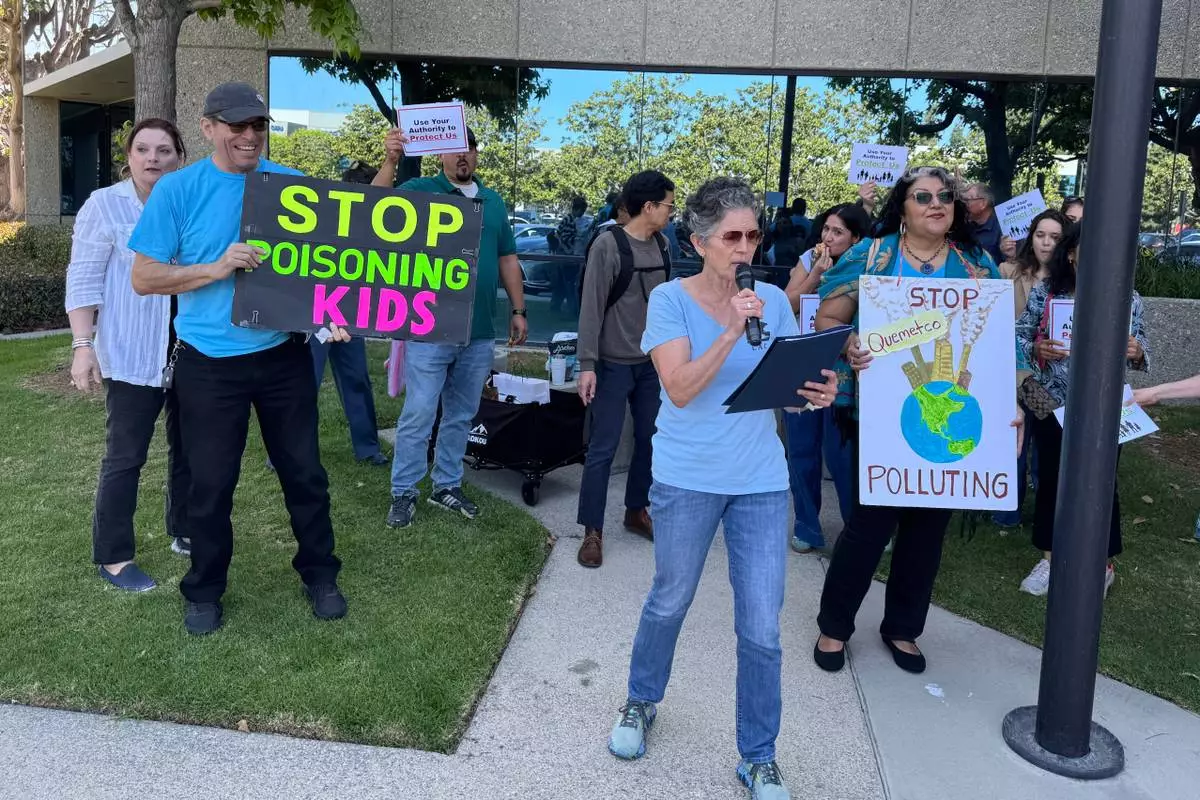
Rebecca Overmyer-Velázquez, a community organizer and coordinator with the environmental group Clean Air Coalition, gives a speech before Thursday's California's Board of Environmental Safety public hearing in Cypress, Calif, Thursday, May 15, 2025. (AP Photo/Dorany Pineda)
Rebecca Overmyer-Velázquez, a community organizer and coordinator with the environmental group Clean Air Coalition, gives a speech before Thursday's California's Board of Environmental Safety public hearing in Cypress, Calif, Thursday, May 15, 2025. (AP Photo/Dorany Pineda)

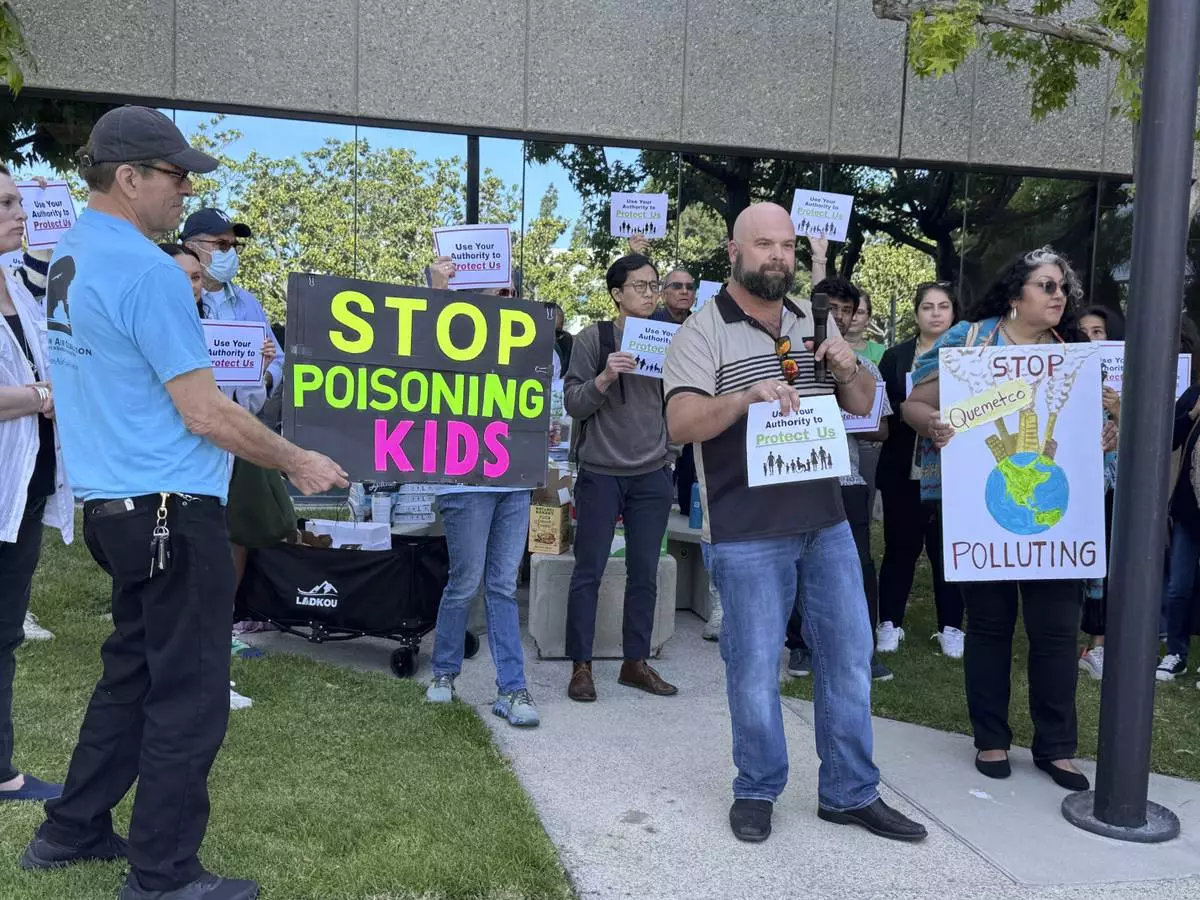
Matt Holmes with the California Environmental Justice Coalition gives a speech before Thursday's Board of Environmental Safety public hearing in Cypress, Calif., Thursday, May 15, 2025. (AP Photo/Dorany Pineda)


Matt Holmes with the California Environmental Justice Coalition gives a speech before Thursday's Board of Environmental Safety public hearing in Cypress, Calif., Thursday, May 15, 2025. (AP Photo/Dorany Pineda)

ADELBODEN, Switzerland (AP) — The big surprise of the World Cup slalom season scored his second win Sunday adding to his fast-rising reputation before the Winter Olympics.

Paco Rassat raced to the fastest time in the second run to rise from fourth place, and push two Norwegians down the podium steps after they had been fastest in the morning run.

United States-born Atle Lie McGrath was edged out by 0.18 seconds and first-run leader Henrik Kristoffersen dropped to third, trailing 0.20 behind Rassat.

The 27-year-old Frenchman had a career-best result of ninth in World Cup races before this Olympic season started.

Rassat now has two wins, a third place and two sixth places this season and shapes as a medal contender for the Milano Cortina Olympics. The men’s slalom is on Feb. 16 at Bormio.

“To win on this crazy hill at Adelboden, It’s something really unbelievable," Rassat told Swiss broadcaster RTS, describing his season as “a magnificent surprise.”

Rassat also took the lead in the seasonlong World Cup slalom standings, ahead of his France teammate Clément Noël, the defending Olympic champion. Noël tied for eighth Sunday.

McGrath was runner-up in the Adelboden slalom for the third time in four years.

“It’s kind of crazy,” said McGrath, whose father Felix skied for the U.S. at the 1988 Calgary Olympics. “I’m of course super happy, it’s such a challenging slope and mentally it’s one of the toughest places to perform because of this amazing crowd.”

Another packed finish-area crowd at Adelboden observed a minute’s silence before racing for the victims of the fatal fire in a bar in nearby Crans-Montana on New Year’s Day. Crans-Montana hosts men’s and women’s World Cup races in three weeks’ time.

The World Cup overall standings leader, four-time title holder Marco Odermatt, does not ski slalom and his huge lead was cut a little by Lucas Pinheiro Braathen, who placed fourth. Pinheiro Braathen was second to Odermatt in the classic giant slalom Saturday.

The men’s World Cup circuit stays in central Switzerland for the storied Lauberhorn meeting at Wengen, for a super-G on Friday, the classic downhill Saturday and a slalom Sunday.

AP skiing: https://apnews.com/hub/alpine-skiing

Norway's Atle Lie McGrath reacts at the finish line during an alpine ski, men's World Cup slalom, in Adelboden, Switzerland, Sunday, Jan. 11, 2026. (AP Photo/Gabriele Facciotti)

Norway's Atle Lie McGrath reacts at the finish line during an alpine ski, men's World Cup slalom, in Adelboden, Switzerland, Sunday, Jan. 11, 2026. (AP Photo/Gabriele Facciotti)

Norway's Henrik Kristoffersen reacts at the finish line during an alpine ski, men's World Cup slalom, in Adelboden, Switzerland, Sunday, Jan. 11, 2026. (AP Photo/Gabriele Facciotti)

Norway's Henrik Kristoffersen reacts at the finish line during an alpine ski, men's World Cup slalom, in Adelboden, Switzerland, Sunday, Jan. 11, 2026. (AP Photo/Gabriele Facciotti)

France's Paco Rassat speeds down the course during an alpine ski, men's World Cup slalom, in Adelboden, Switzerland, Sunday, Jan. 11, 2026. (AP Photo/Giovanni Zenoni)

France's Paco Rassat speeds down the course during an alpine ski, men's World Cup slalom, in Adelboden, Switzerland, Sunday, Jan. 11, 2026. (AP Photo/Giovanni Zenoni)

France's Paco Rassat reacts at the finish line during an alpine ski, men's World Cup slalom, in Adelboden, Switzerland, Sunday, Jan. 11, 2026. (AP Photo/Gabriele Facciotti)

France's Paco Rassat reacts at the finish line during an alpine ski, men's World Cup slalom, in Adelboden, Switzerland, Sunday, Jan. 11, 2026. (AP Photo/Gabriele Facciotti)

Finland's Eduard Hallberg speeds down the course during an alpine ski, men's World Cup slalom, in Adelboden, Switzerland, Sunday, Jan. 11, 2026. (AP Photo/Gabriele Facciotti)

Finland's Eduard Hallberg speeds down the course during an alpine ski, men's World Cup slalom, in Adelboden, Switzerland, Sunday, Jan. 11, 2026. (AP Photo/Gabriele Facciotti)

Norway's Atle Lie McGrath speeds down the course during an alpine ski, men's World Cup slalom, in Adelboden, Switzerland, Sunday, Jan. 11, 2026. (AP Photo/Giovanni Zenoni)

Norway's Atle Lie McGrath speeds down the course during an alpine ski, men's World Cup slalom, in Adelboden, Switzerland, Sunday, Jan. 11, 2026. (AP Photo/Giovanni Zenoni)

Norway's Henrik Kristoffersen ahead of an alpine ski, men's World Cup slalom, in Adelboden, Switzerland, Sunday, Jan. 11, 2026. (AP Photo/Gabriele Facciotti)

Norway's Henrik Kristoffersen ahead of an alpine ski, men's World Cup slalom, in Adelboden, Switzerland, Sunday, Jan. 11, 2026. (AP Photo/Gabriele Facciotti)

Norway's Henrik Kristoffersen speeds down the course during an alpine ski, men's World Cup slalom, in Adelboden, Switzerland, Sunday, Jan. 11, 2026. (AP Photo/Gabriele Facciotti)

Norway's Henrik Kristoffersen speeds down the course during an alpine ski, men's World Cup slalom, in Adelboden, Switzerland, Sunday, Jan. 11, 2026. (AP Photo/Gabriele Facciotti)

Recommended Articles