MADRID (AP) — Every morning at 6 a.m., Teresa sets out in search of work, a shower and a bit of exercise before she returns home. For the past six months, that has been Terminal 4 of Madrid’s international airport.
Teresa, 54, who didn’t want her full name to be used because of safety concerns, is one of the estimated hundreds of homeless people sleeping in the Spanish capital’s airport amid a growing housing crisis in Spain, where rental costs have risen especially fast in cities like Madrid, the country's capital, and Barcelona.
Click to Gallery
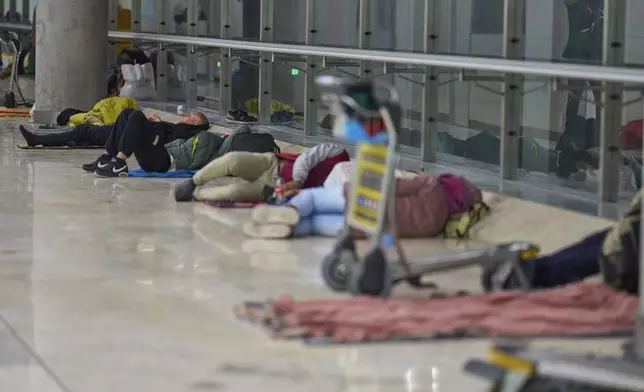
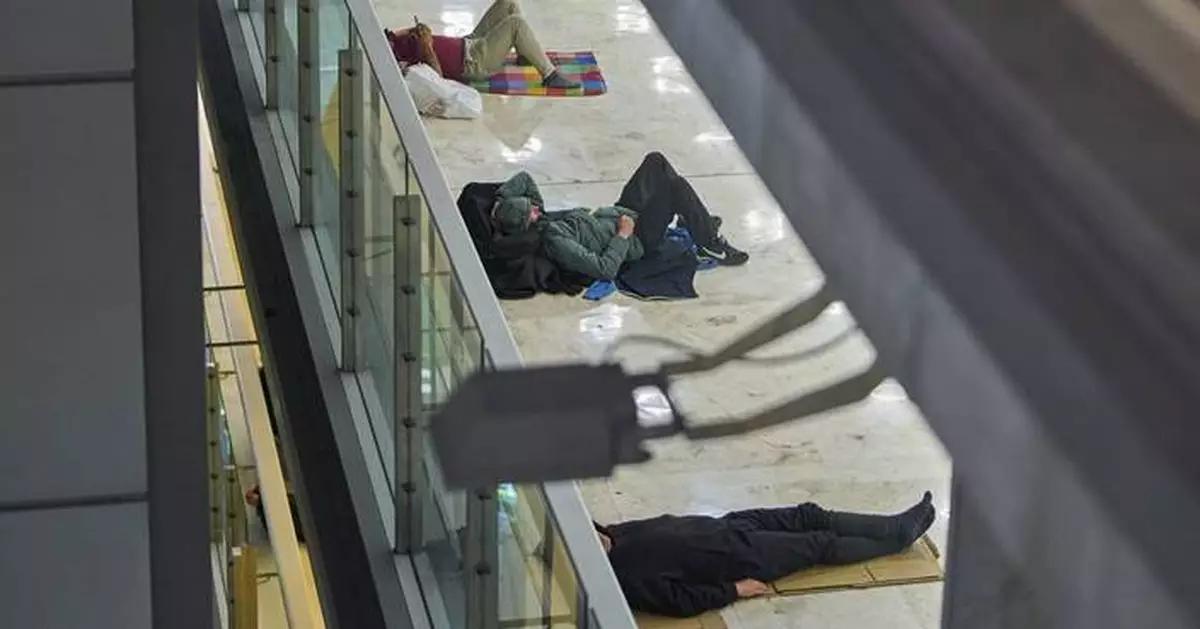
People sleep on the floor of Terminal 4 at Adolfo Suarez-Madrid Barajas Airport in Madrid, Spain, Thursday, May 15, 2025. (AP Photo/Manu Fernandez)
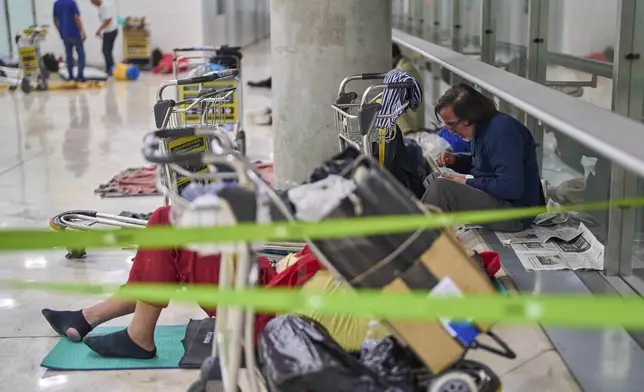
A person eats sitting on the floor of Terminal 4 at Adolfo Suarez-Madrid Barajas Airport in Madrid, Spain, Thursday, May 15, 2025. (AP Photo/Manu Fernandez)
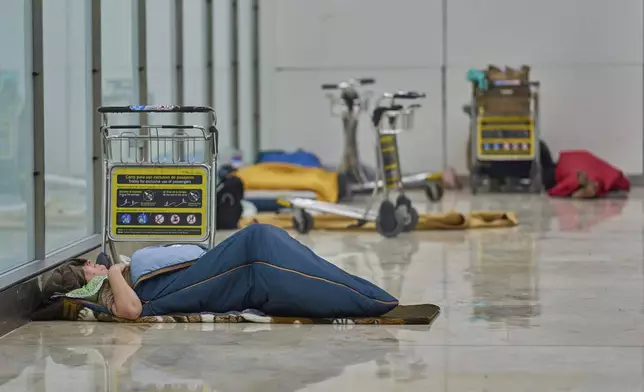
People sleep on the floor of Terminal 4 at Adolfo Suarez-Madrid Barajas Airport in Madrid, Spain, Thursday, May 15, 2025. (AP Photo/Manu Fernandez)
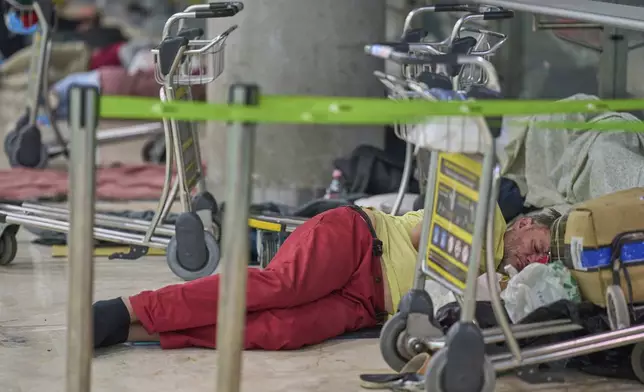
A person sleeps on the floor of Terminal 4 at Adolfo Suarez-Madrid Barajas Airport in Madrid, Spain, Thursday, May 15, 2025. (AP Photo/Manu Fernandez)
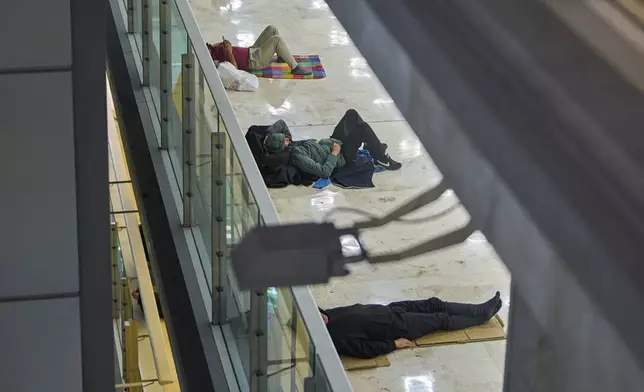
People sleep on the floor of Terminal 4 at Adolfo Suarez-Madrid Barajas Airport in Madrid, Spain, Thursday, May 15, 2025. (AP Photo/Manu Fernandez)
She and others sleeping at Adolfo Suárez Madrid-Barajas Airport — the third-busiest airport in Europe in 2023, according to Eurostat — described a situation where for months, authorities have neither helped them find other living arrangements nor have they kicked them out from the corners of the airport that they have occupied with sleeping bags unfurled on the floor as well as blankets, luggage carts and bags.
Soon, things could change.
Spain’s airport operator AENA this week said that it would start limiting who can enter Madrid’s airport during low-travel hours by asking visitors to show their boarding passes. AENA said that the policy would take effect in the next few days, but didn't specify exactly when. It said that exceptions would be made for airport workers and anyone accompanying a traveler.
Teresa, a Spanish-Ecuadorian who said she has lived in Spain for a quarter-century, told The Associated Press on Thursday that she hadn't heard of the new policy. She and her husband would be forced to sleep outside on park benches and other public spaces if they aren’t allowed back in.
“We can’t make demands. We’re squatters,” Teresa said, using a controversial term common in Spain. “Squatters in what is private property. We are aware of that. We want help from authorities, but not a single one has come here.”
For months, a political blame game between officials at different levels of government has meant that the homeless encampments in the airport have largely gone unaddressed. In recent weeks, videos on social media and news reports of the airport's homeless population put a spotlight on the issue.
Madrid’s city council on Thursday said that it had asked Spain’s national government to take charge and come up with a plan to rehabilitate every homeless individual sleeping in the airport. Spanish airports are overseen by AENA, a state-owned publicly listed company. A city council spokesperson said that Madrid's city government had recently called for a meeting with officials from AENA, the regional government of Madrid and several national ministries that declined.
“Without them, there is no possible solution,” said Lucía Martín, a spokesperson for Madrid’s city council division of social policies, family and equality. She said that the national ministries of transport, interior, inclusion, social rights and health declined to participate in a working group.
A day earlier, AENA accused Madrid’s city authorities of providing inadequate help and said that the city government's statements about the unfolding situation confirmed its “dereliction of duty” and abandonment of the airport’s homeless individuals.
“It's like a dog chasing its tail,” said Marta Cecilia Cárdenas of the long list of authorities she was told could help her. Cárdenas, a 58-year-old homeless woman originally from Colombia, said that she had spent several months sleeping in Madrid's airport.
It’s not known how many people are sleeping in Madrid’s airport, through which 66 million travelers transited last year. Spain’s El País newspaper reported that a recent count taken by a charity group identified roughly 400 homeless people in the airport, many of whom, like Teresa, had previously lived in Madrid and were employed in some capacity.
AP wasn't able to confirm that number. Madrid city council officials, meanwhile, said that the Spanish capital's social service teams had helped 94 individuals in April with ties to the city, 12 of whom were rehabilitated into municipal shelters, addiction treatment centers or independent living.
Teresa said she had heard about sleeping in the airport by word of mouth. Before she lost her job, she said she lived in an apartment in Madrid’s Leganés neighborhood, earning a living taking care of older people.
She currently earns 400 euros ($450) per month, working under the table caring for an older woman. With the earnings, Teresa said she maintains a storage unit in the neighborhood that she used to live in. Though the work is sporadic, she said it was still enough to also cover fees for the gym in which she showers daily, pay for transportation, and purchase food.
Over the last decade, the average rent in Spain has almost doubled, according to real estate website Idealista, with steeper increases in Madrid and Barcelona. Spain also has a smaller public housing stock than many other European Union countries.
Teresa said that she hopes to find a job soon and leave the airport, whatever authorities may force her to do in the coming days and weeks. She and her husband keep to themselves, avoiding others sleeping in the brightly-lit hallway dotted with sleeping bags who were battling mental health problems, addiction and other issues, she said.
“You end up adjusting to it a bit, accepting it even, but never getting used to it,” Teresa said over the constant din of airline announcements. “I hope to God that it gets better, because this is not life.”
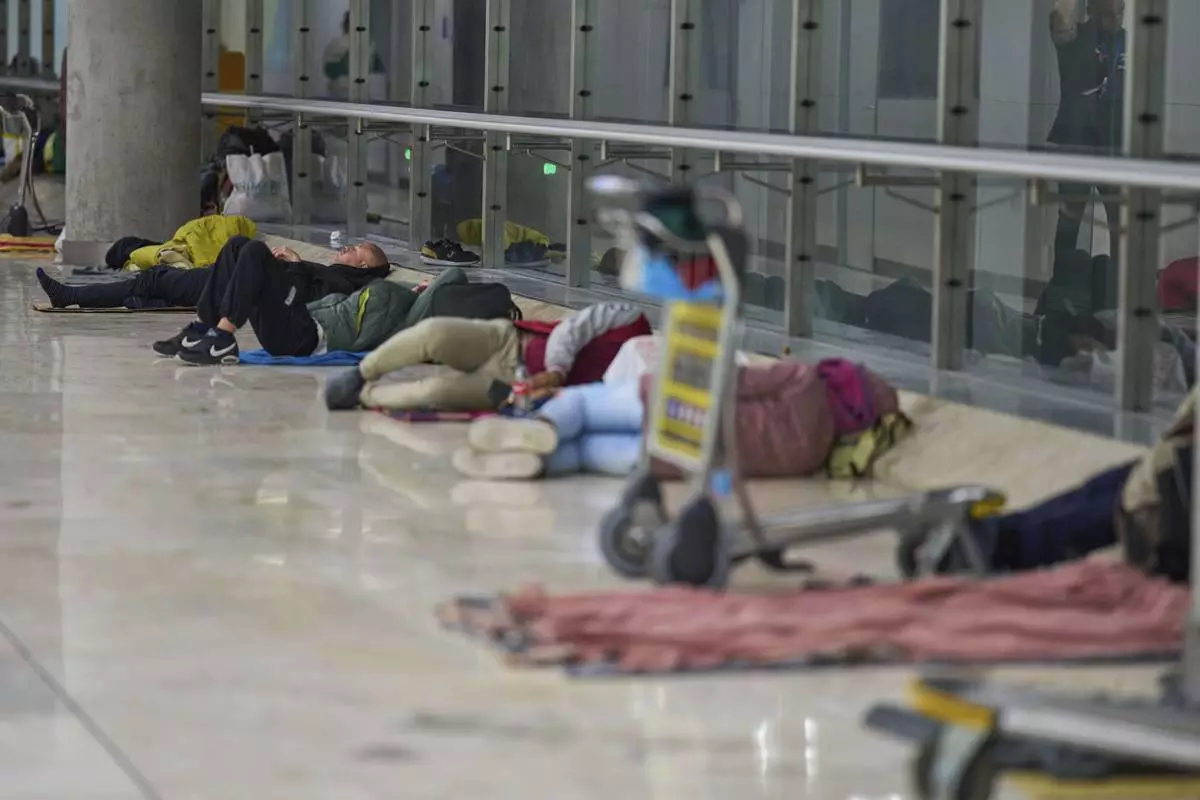
People sleep on the floor of Terminal 4 at Adolfo Suarez-Madrid Barajas Airport in Madrid, Spain, Thursday, May 15, 2025. (AP Photo/Manu Fernandez)
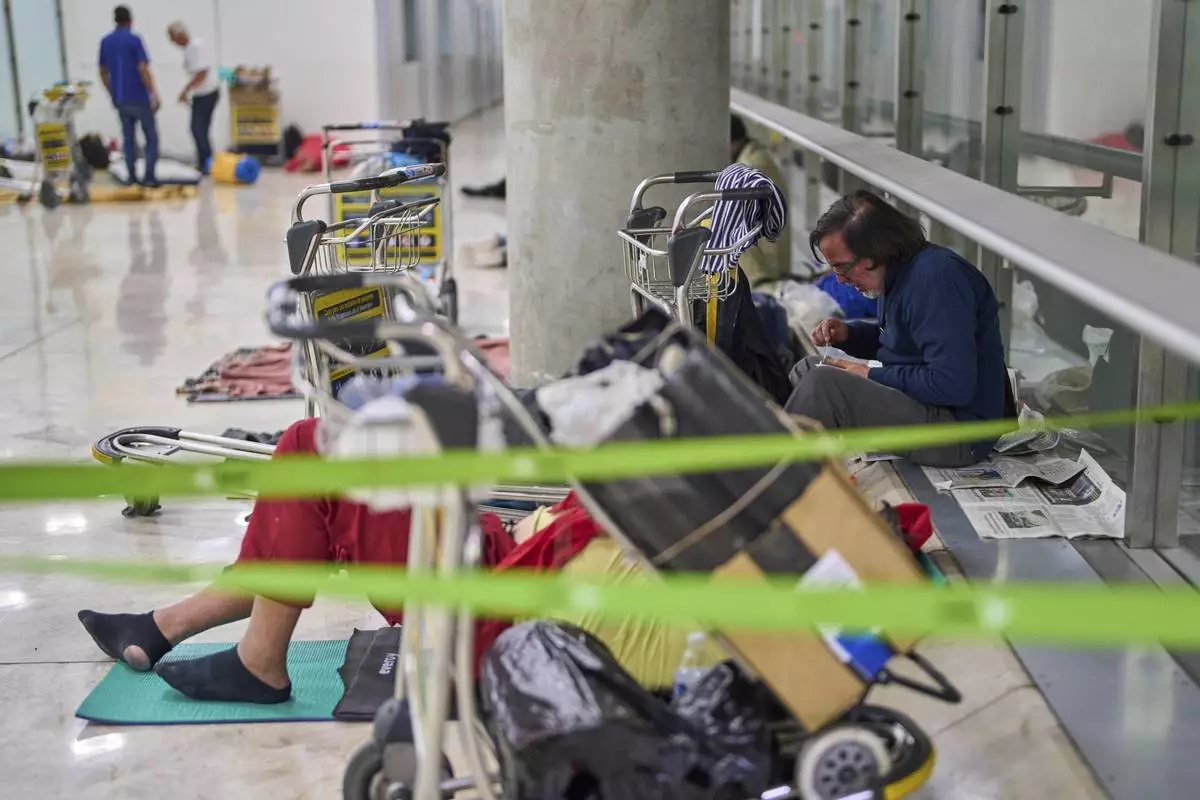
A person eats sitting on the floor of Terminal 4 at Adolfo Suarez-Madrid Barajas Airport in Madrid, Spain, Thursday, May 15, 2025. (AP Photo/Manu Fernandez)
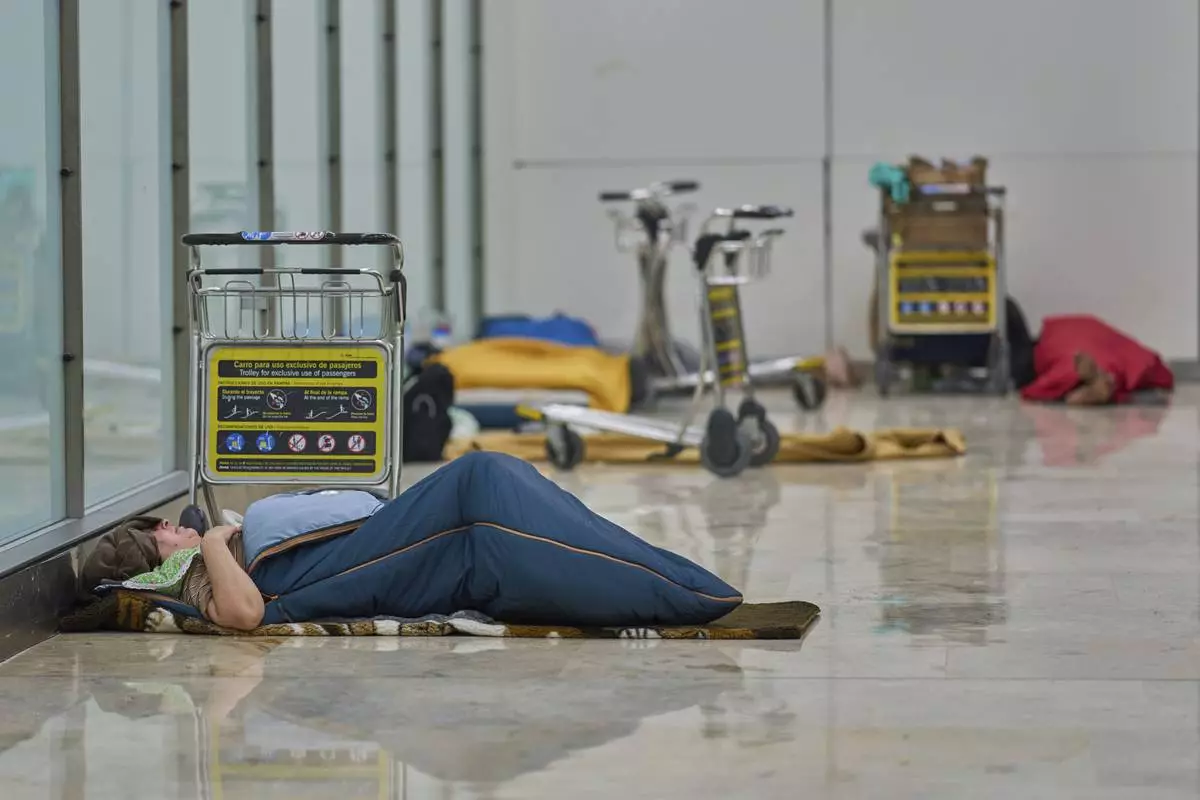
People sleep on the floor of Terminal 4 at Adolfo Suarez-Madrid Barajas Airport in Madrid, Spain, Thursday, May 15, 2025. (AP Photo/Manu Fernandez)
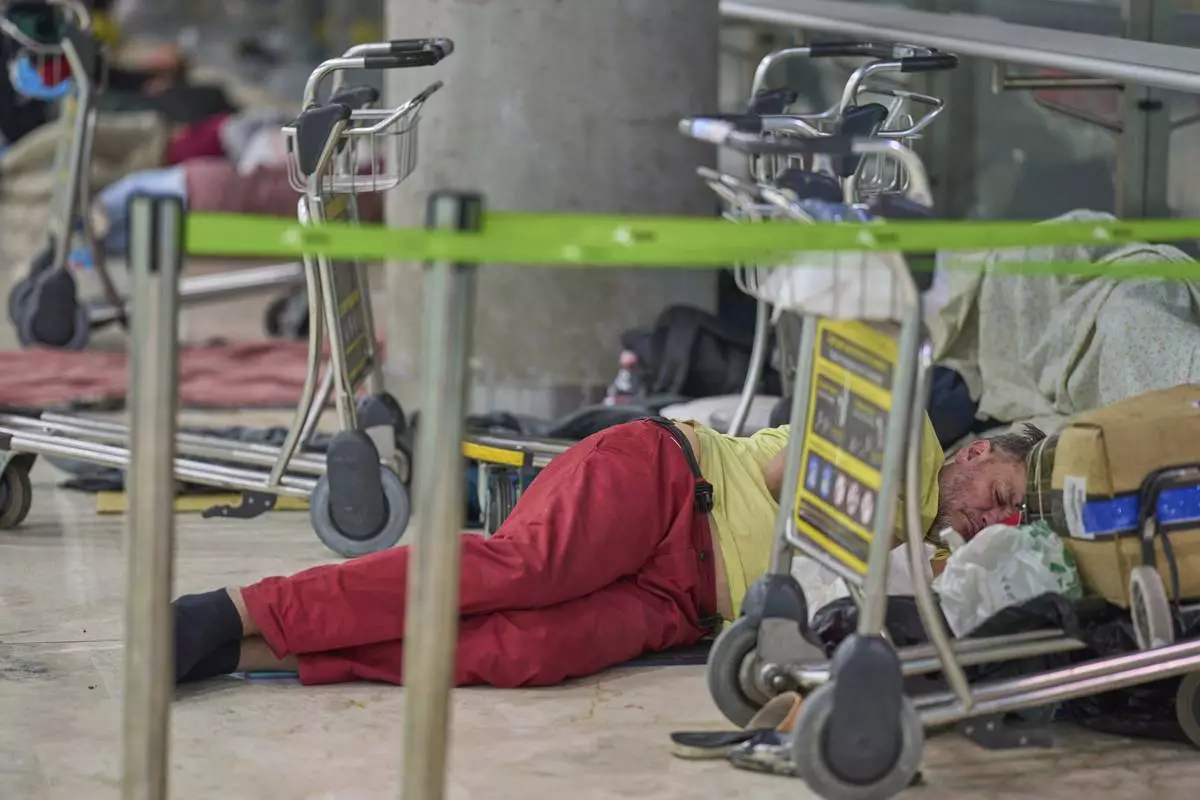
A person sleeps on the floor of Terminal 4 at Adolfo Suarez-Madrid Barajas Airport in Madrid, Spain, Thursday, May 15, 2025. (AP Photo/Manu Fernandez)
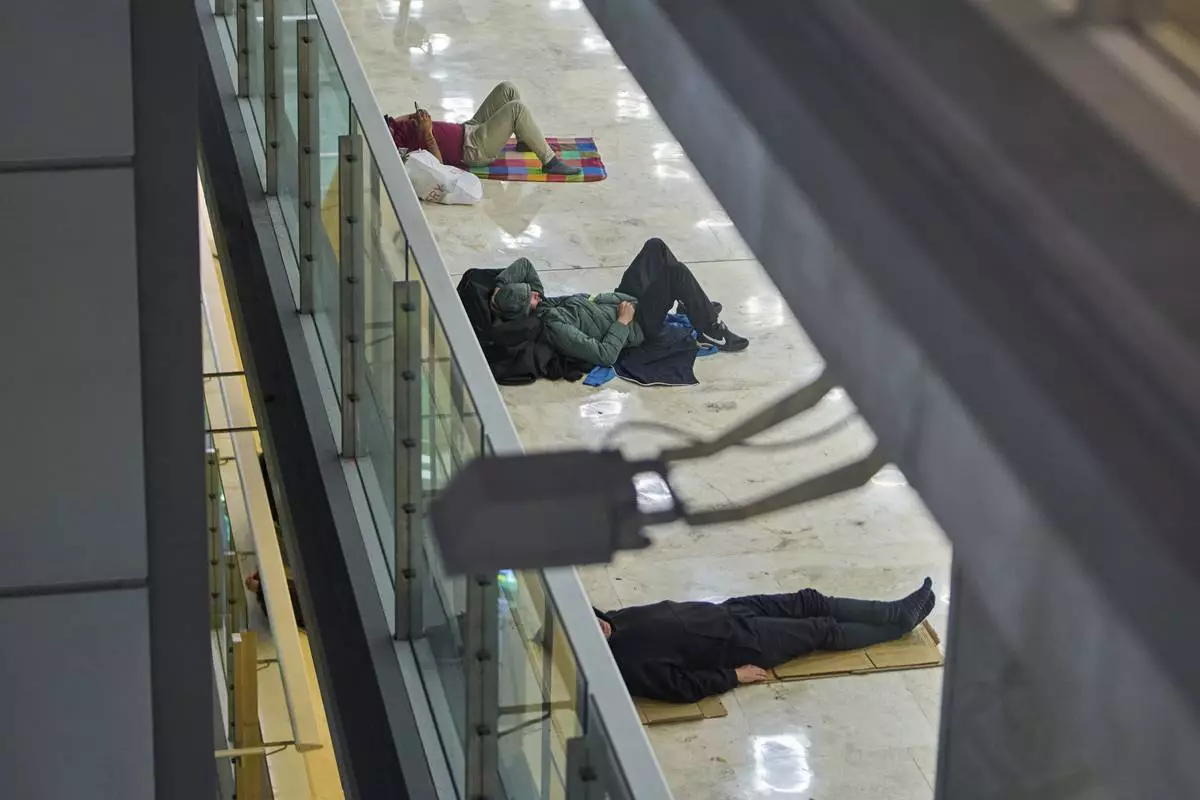
People sleep on the floor of Terminal 4 at Adolfo Suarez-Madrid Barajas Airport in Madrid, Spain, Thursday, May 15, 2025. (AP Photo/Manu Fernandez)