NEW YORK (AP) — The slang term at the center of a political brouhaha swirling around former FBI Director James Comey is an old one, likely originating as food-service-industry jargon before extending to other contexts. Some of that spread has given rise to accusations from Republicans that it was meant as a threat to President Donald Trump.
In a since-deleted Instagram post, Comey wrote “cool shell formation on my beach walk” to accompany a photo of shells displayed in the shapes of “86 47.”
He said in a follow-up post that he took it only as a political message since Trump is the 47th president, and to “86” something can be to get rid of it, like a rowdy patron at a bar or something that is no longer wanted.
But Trump and other Republicans took it more ominously. They say Comey, with whom Trump has had a contentious relationship, was advocating violence against the Republican president, given that the slang term has at times been used as a way to mean someone's killing.
The slang origins of “86” go back to codes used in diners and restaurants as staff shorthand in the 1930s or so, said Jesse Sheidlower, adjunct assistant professor in Columbia University's writing program and formerly editor-at-large for the Oxford English Dictionary.
It meant that something on the menu was no longer available. Over time, he said, related uses developed.
“The original sense is, we are out of an item. But there are a bunch of obvious metaphorical extensions for this,” he said. “86 is something that’s not there, something that shouldn’t be there like an undesirable customer. Then it’s a verb, meaning to throw someone out. These are fairly obvious and clear semantic development from the idea of being out of something.”
He said there have been uses of it as a euphemism for killing someone, as in certain fiction stories, but that usage is not nearly as widespread. More likely it means to jettison something that is no longer useful — a definition parodied in the popular 1960s TV show “Get Smart,” whose lead character was known — wink, nudge — as Agent 86.
That type of meaning is reflected in the entry for “86” from Merriam-Webster, the dictionary used by The Associated Press. That definition says the meaning is “to throw out,” “to get rid of” or “to refuse service to.” While referencing that there have been uses of it to mean killing, the dictionary said, "We do not enter this sense, due to its relative recency and sparseness of use.”
But Trump and his administration insist that was the intent of the usage in Comey’s initial post Thursday.
“He knew exactly what that meant,” Trump said during a Fox News interview Friday. “A child knows what that meant. If you’re the FBI director and you don’t know what that meant, that meant assassination. And it says it loud and clear.”
Trump's administration is investigating.
Comey said on social media: “I posted earlier a picture of some shells I saw today on a beach walk, which I assumed were a political message. I didn’t realize some folks associate those numbers with violence."
The relationship between the president and Comey has been strained for years. Trump fired Comey as FBI director in 2017, early in Trump's first term. In 2018, in a book, Comey said Trump was unethical and “untethered to truth."
That a slang reference can cause this kind of agita is not surprising, especially not at a time like the one we are living in, said Nicole Holliday, acting associate professor of linguistics at the University of California, Berkeley.
“I think that because we are in a hyperpartisan, polarized culture, everything is a Rorschach test,” she said. “We’re very sensitive about any indication that people are part of our in group or part of the out group.”
Language can be a fraught subject because language and the meaning of words can be fluid based on context or culture or other factors. “We’re always kind of navigating this issue of, ‘Well, I said this word and it meant X. But you heard this word and you thought it meant Y,'” she said.
That navigation can be hard enough when it's person-to-person direct conversation. Taking it online the way much of our modern discourse is makes it even more so, she said.
“In real life, when you have a conversation with a human being, you are negotiating meaning. (But) when somebody posts ... There’s no space. This is why people are always arguing themselves to death in the comments,” Holliday said.
“We’re not meant to communicate like this about serious issues,” she said. “Really, we’re not.”
Associated Press writer Eric Tucker in Washington contributed to this report.

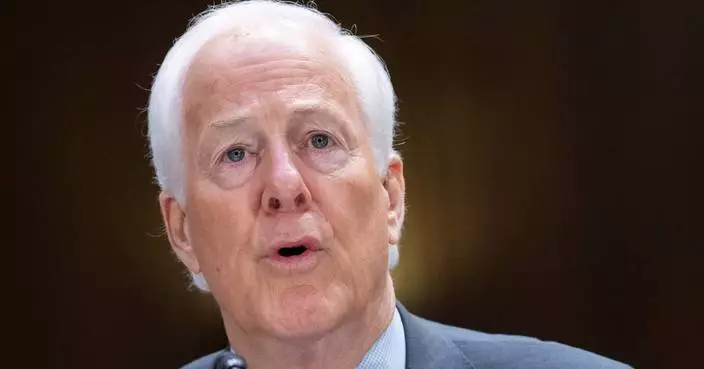
FILE - Former FBI director James Comey gestures while speaking at Harvard University's Institute of Politics' JFK Jr. Forum in Cambridge, Mass., Feb. 24, 2020. (AP Photo/Charles Krupa, File)
WASHINGTON (AP) — The Food and Drug Administration commissioner's effort to drastically shorten the review of drugs favored by President Donald Trump's administration is causing alarm across the agency, stoking worries that the plan may run afoul of legal, ethical and scientific standards long used to vet the safety and effectiveness of new medicines.
Marty Makary's program is causing new anxiety and confusion among staff already rocked by layoffs, buyouts and leadership upheavals, according to seven current or recently departed staffers. The people spoke to The Associated Press on the condition of anonymity because they were not authorized to discuss confidential agency matters.
At the highest levels of the FDA, questions remain about which officials have the legal authority to sign off on drugs cleared under the Commissioner’s National Priority Voucher program, which promises approval in as little as one month for medicines that support “U.S. national interests.”
Traditionally, approval decisions have nearly always been handled by FDA review scientists and their immediate supervisors, not the agency’s political appointees and senior leaders.
But drug reviewers say they've received little information about the new program's workings. And some staffers working on a highly anticipated anti-obesity pill were recently told they can skip certain regulatory steps to meet top officials' aggressive deadlines.
Outside experts point out that FDA drug reviews — which range from six to 10 months — are already the fastest in the world.
“The concept of doing a review in one to two months just does not have scientific precedent,” said Dr. Aaron Kesselheim, a professor at Harvard Medical School. “FDA cannot do the same detailed review that it does of a regular application in one to two months, and it doesn’t have the resources to do it.”
On Thursday Reuters reported that FDA officials have delayed the review of two drugs in the program, in part due to safety concerns, including the death of a patient taking one of the medications.
Health and Human Services spokesman Andrew Nixon said the voucher program prioritizes “gold standard scientific review” and aims to deliver “meaningful and effective treatments and cures."
The program remains popular at the White House, where pricing concessions announced by the Republican president have repeatedly been accompanied by FDA vouchers for drugmakers that agree to cut their prices.
For instance, when the White House announced that Eli Lilly and Novo Nordisk would reduce prices on their popular obesity drugs, FDA staffers had to scramble to vet new vouchers for both companies in time for Trump's news conference, according to multiple people involved in the process.
That’s sparked widespread concern that FDA drug reviews — long pegged to objective standards and procedures — have become open to political interference.
“It’s extraordinary to have such an opaque application process, one that is obviously susceptible to politicization,” said Paul Kim, a former FDA attorney who now works with pharmaceutical clients.
Many of the concerns around the program stem from the fact that it hasn't been laid out in federal rules and regulations.
The FDA already has more than a half-dozen programs intended to speed up or streamline reviews for promising drugs — all approved by Congress, with regulations written by agency staff.
In contrast, information about the voucher program is mostly confined to an agency website. Drugmakers can apply by submitting a 350-word “statement of interest.”
Increasingly, agency leaders such as Dr. Vinay Prasad, the FDA’s top medical officer and vaccine center director, have been contacting drugmakers directly about awarding vouchers. That’s created quandaries for FDA staffers on even basic questions, such as how to formally award a voucher to a company that didn’t request one.
Nixon, the HHS spokesman, said that voucher submissions are evaluated by “a senior, multidisciplinary review committee,” led by Prasad.
Questions about the legality of the program led the FDA’s then-drug director, Dr. George Tidmarsh, to decline to sign off on approvals under the pathway, according to several people with direct knowledge of the matter. Tidmarsh resigned from the agency in November after a lawsuit challenging his conduct on issues unrelated to the voucher program.
After his departure, Sara Brenner, the FDA’s principal deputy commissioner, was set to have the power to decide, but she also declined the role after looking further into the legal implications, according to the people. Currently the agency’s deputy chief medical officer, Dr. Mallika Mundkur, who works under Prasad, is taking on the responsibility.
Giving final approval to a drug carries significant legal risks, essentially certifying that the medicine meets FDA standards for safety and effectiveness. If unexpected safety problems later emerge, both the agency and individual staffers could be pulled into investigations or lawsuits.
Traditionally, approval comes from FDA drug office directors, made in consultation with a team of reviewers. Under the voucher program, approval comes through a committee vote by senior agency leaders led by Prasad, according to multiple people familiar with the process. Staff reviewers don't get a vote.
“It is a complete reversal from the normal review process, which is traditionally led by the scientists who are the ones immersed in the data,” said Kesselheim, who is a lawyer and a medical researcher.
Not everyone sees problems with the program. Dan Troy, the FDA’s top lawyer under President George W. Bush, a Republican, says federal law gives the commissioner broad discretion to reorganize the handling of drug reviews.
Still, he says, the voucher program, like many of Makary’s initiatives, may be short-lived because it isn't codified.
“If you live by the press release then you die by the press release,” Troy said. “Anything that they’re doing now could be wiped out in a moment by the next administration.”
Initially framed as a pilot program of no more than five drugs, it has expanded to 18 vouchers awarded, with more under consideration. That puts extra pressure on the agency’s drug center, where 20% of the staff has left through retirements, buyouts or resignations over the past year.
When Makary unveiled the program in October there were immediate concerns about the unprecedented power he would have in deciding which companies benefit.
Makary then said that nominations for drugs would come from career staffers. Indeed, some of the early drugs were recommended by FDA reviewers, according to two people familiar with the process. They said FDA staffers deliberately selected drugs that could be vetted quickly.
But, increasingly, selection decisions are led by Prasad or other senior officials, sometimes unbeknownst to FDA staff, according to three people. In one case, FDA reviewers learned from GlaxoSmithKline representatives that Prasad had contacted the company about a voucher.
Access to Makary is limited because he does not use a government email account to do business, according to people familiar with the matter, breaking with longstanding precedent.
Once a voucher is awarded, some drugmakers have their own interpretation of the review timeline — creating further confusion and anxiety among staff.
Two people involved in the ongoing review of Eli Lilly's anti-obesity pill said company executives initially told the FDA they expected the drug approved within two months.
The timeline alarmed FDA reviewers because it did not include the agency's standard 60-day prefiling period, when staffers check the application to ensure it isn’t missing essential information. That 60-day window has been in place for more than 30 years.
Lilly pushed for a quicker filing turnaround, demanding one week. Eventually the agency and the company agreed to a two-week period.
Nixon declined to comment on the specifics of Lilly's review but said FDA reviewers can “adjust timelines as needed.”
Staffers were pushed to keep the application moving forward, even though key pieces of data about the drug's chemistry appeared to be missing, according to one person involved in the process. When reviewers raised concerns about some of the gaps during an internal meeting, the person said, they were told by a senior official: “If the science is sound then you can overlook the regulations.”
Former reviewers and outside experts say that approach is the opposite of how FDA reviews should work: By following the regulations, staffers scientifically confirm the safety and effectiveness of drugs.
Skipping review steps could also carry risks for drugmakers if future FDA leaders decide a drug wasn’t properly vetted. Like other experts, Kesselheim says the program may not last beyond the current administration.
“They are fundamentally changing the application of the standards, but the underlying law remains what it is,” he said. “The hope is that one day we will return to these scientifically sound, legally sound principles.”
The Associated Press Health and Science Department receives support from the Howard Hughes Medical Institute’s Department of Science Education and the Robert Wood Johnson Foundation. The AP is solely responsible for all content.
FILE - The Food and Drug Administration seal is seen at the Hubert Humphrey Building Auditorium in Washington, April 22, 2025. (AP Photo/Jose Luis Magana, File)
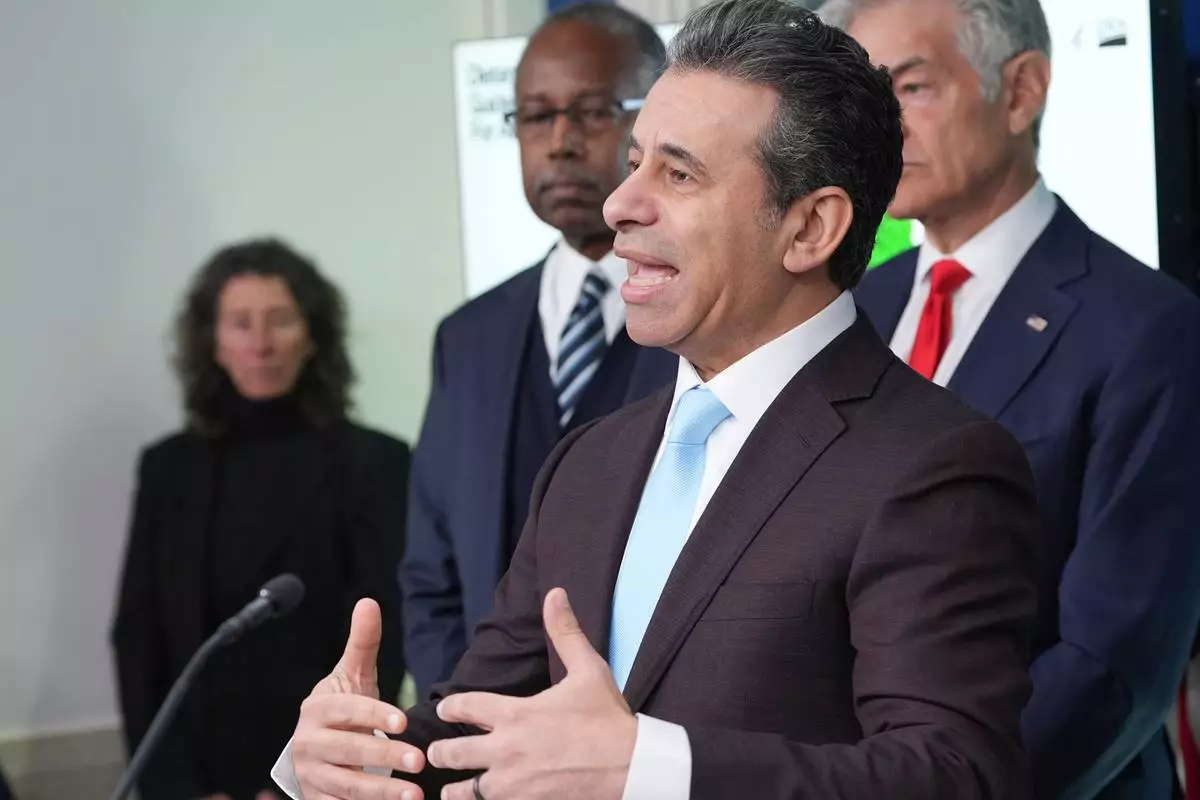
Dr. Marty Makary, commissioner of the Food and Drug Administration, speaks during a press briefing at the White House, Wednesday, Jan. 7, 2026, in Washington. (AP Photo/Jacquelyn Martin)