A museum on the Protectorate of the Western Regions of the Western Han Dynasty (202 BC-8 AD) opened in Luntai County of northwest China's Xinjiang Uygur Autonomous Region on Sunday -- the May 18 International Museum Day -- to display the history of interactions, exchange and integration among various ethnic groups then and there.
The Museum on the Protectorate of the Western Regions is showcasing for the first time the important archaeological achievements from a national project which started in 2018.
Large amounts of archaeological findings, including cultural relics unearthed from the Koyuk Shahri Ancient City and the Zhuoerkut Ancient City in Luntai County, proved that the county was the original location of the Protectorate of the Western Regions of the Western Han Dynasty.
In 60 BC, the central government of the Western Han Dynasty established the Protectorate of the Western Regions as its highest governing military and political institution in Xinjiang's Luntai County, formerly known as Wulei. Since then, successive central authorities exercised jurisdiction over the Western Regions.
Oracle bones used for divinations were unearthed from Luntai County, confirming the close connection between Xinjiang and the Central Plains during the Western Han Dynasty.
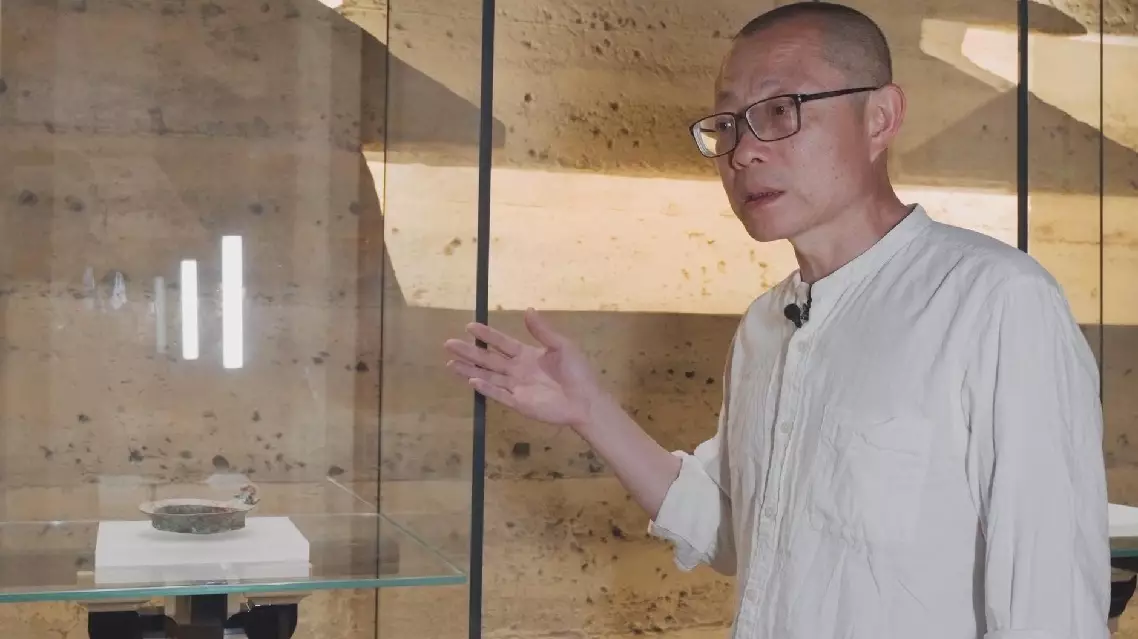
"The cultural relics unearthed from the Zhuoerkut Ancient City are very unique, and some of them were not found elsewhere in Xinjiang, including three pieces of well preserved oracle bones used for divinations," said Tang Yulan, curator of the Museum on the Protectorate of the Western Regions.
"The bronze pan of this shape was found for the first time in Xinjiang and the Central Plains. Many of such cultural relics proved the Western Han Dynasty central authorities' effective governance in the Western Regions, as well as cultural dissemination and identification," said Professor Chen Ling with the School of Archaeology and Museology under the Beijing University.
New museum on ancient dynasty governance opens in Xinjiang