When a Mexican navy tall ship crashed into the Brooklyn Bridge, it was maneuvering in turbulent waters. The tide had just turned, and a fast current was heading up the East River as a 10 mph wind set in.
While such hazards are easily handled by an experienced captain, mistakes can be costly in the heavily transited New York harbor, where narrow, curvy channels, winds howling off the jagged Manhattan skyline and whirlpool-like eddies can combine to make for difficult passage.
Click to Gallery
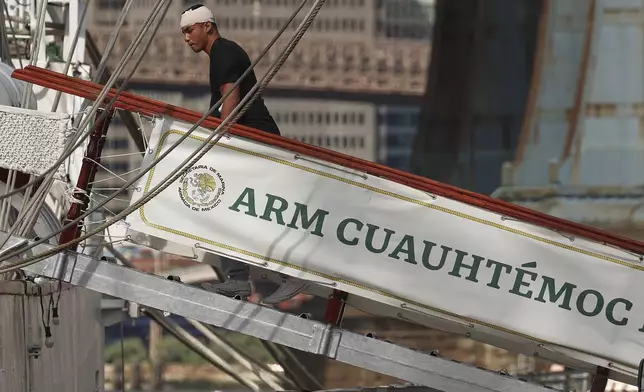
A sailor arrives back at the Cuauhtémoc, Sunday, May 18, 2025 in New York, a masted Mexican Navy training ship that collided with the Brooklyn Bridge the night before. (AP Photo/Yuki Iwamura)
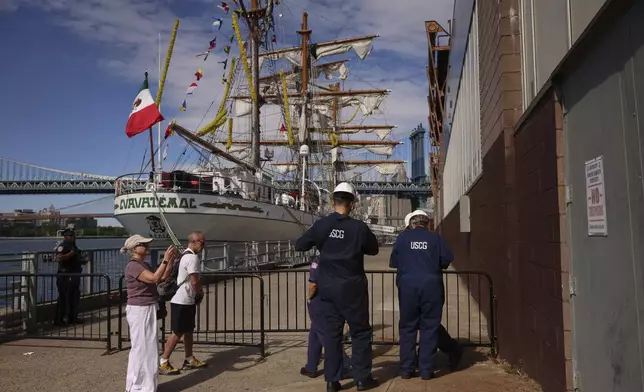
United States Coast Guardsmen arrive at Pier 35, Sunday, May 18, 2025 in New York, where the Cuauhtémoc, a masted Mexican Navy training ship that collided with the Brooklyn Bridge the night before, sits docked. (AP Photo/Yuki Iwamura)
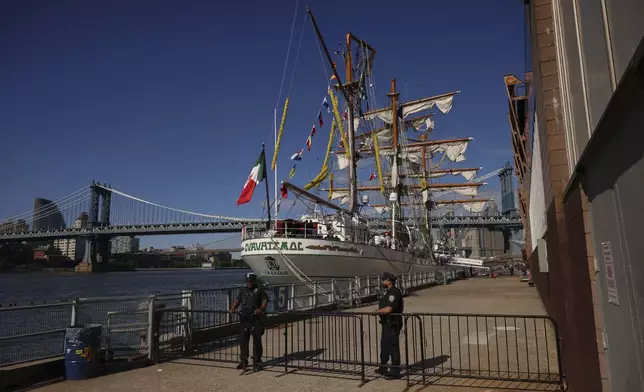
New York Police officers stands watch on Pier 35 where the Cuauhtémoc, a masted Mexican Navy training ship that collided with the Brooklyn Bridge the night before, sits docked. (AP Photo/Yuki Iwamura)
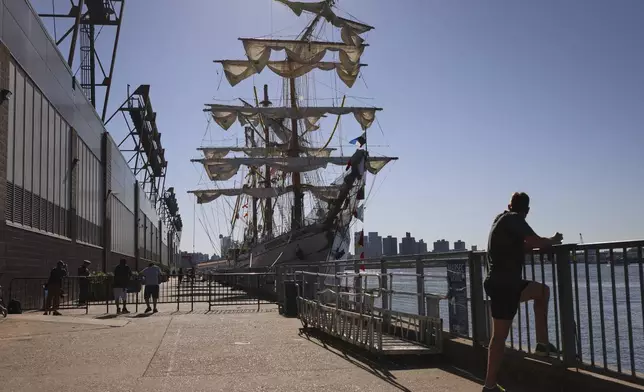
After colliding with the Brooklyn Bridge on Saturday evening, the Cuauhtémoc, a masted Mexican Navy training ship, sits docked at Pier 35 Sunday, May 18, 2025, in New York. (AP Photo/Yuki Iwamura)
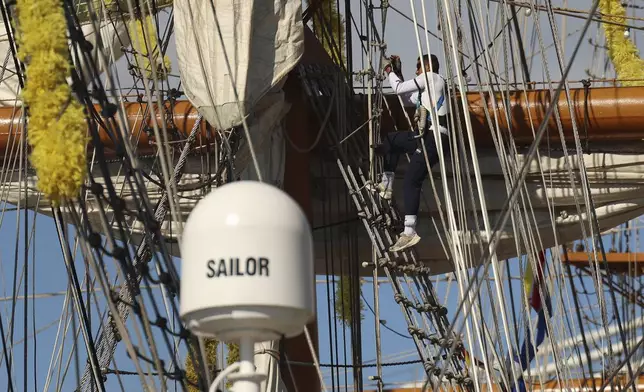
While docked at Pier 35, Sunday, May 18, 2025 in New York, a sailor climbs the mast rigging on the Cuauhtémoc, a masted Mexican Navy training ship that collided with the Brooklyn Bridge the night before. (AP Photo/Yuki Iwamura)
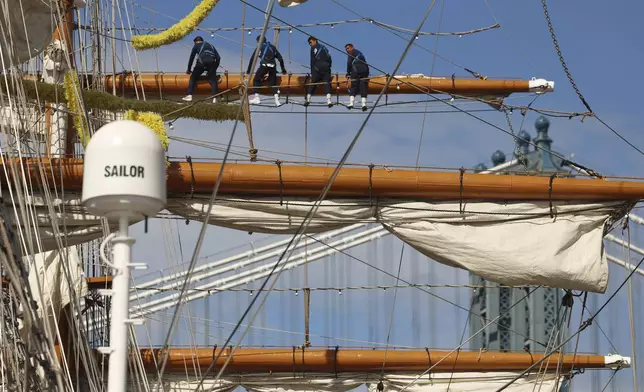
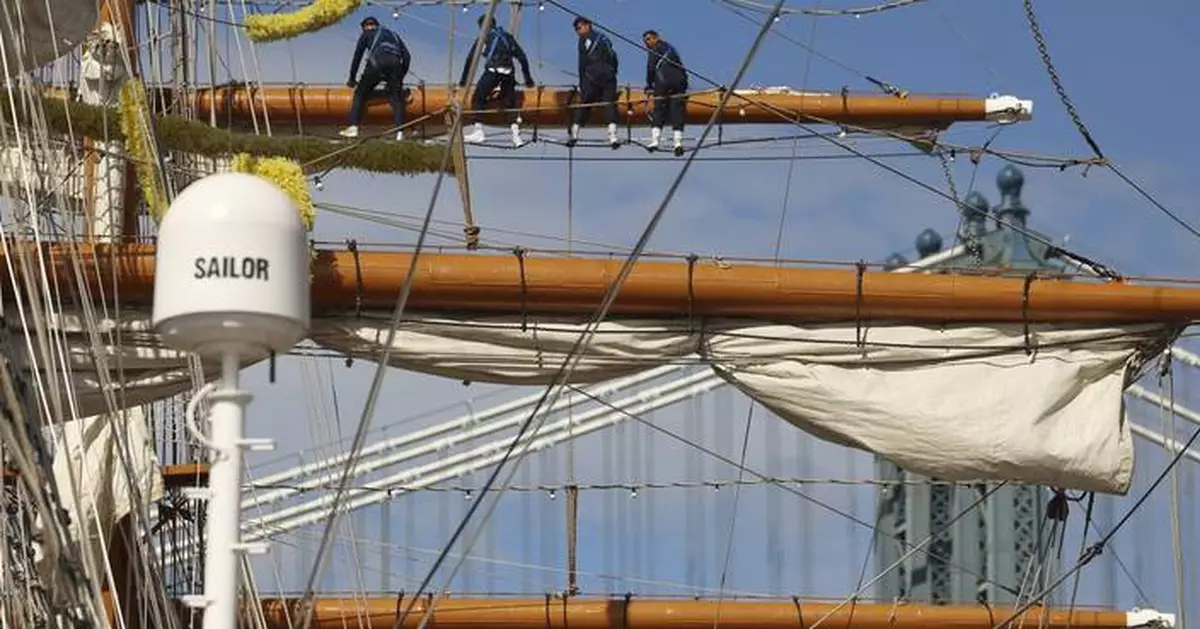
Sailors work on the yard arms of the Cuauhtémoc, Sunday, May 18, 2025 in New York. The masted Mexican Navy training ship collided with the Brooklyn Bridge the night before. (AP Photo/Yuki Iwamura)
In the case of the 300-foot (90-meter) Cuauhtemoc, two sailors were killed and 19 were injured Saturday evening when the training ship struck the iconic bridge, toppling the vessel's three masts like dominoes as it drifted toward a crowded pier. It’s unknown what caused the collision, and an investigation by the National Transportation Safety Board is likely to take months.
But footage of the collision shot by horrified onlookers show the ship hurtling into the bridge in reverse at full speed, suggesting the captain lost control of the engine. There are also questions about whether a tugboat escort peeled away too soon and should have been rigged to the ship or stayed with it until it headed out to sea. Similar tugboat concerns emerged when a large cargo vessel crashed into a bridge in Baltimore last year.
Sal Mercogliano, a former merchant mariner who has powered multiple ships through the New York harbor, said all those “worst-case scenarios” — the ship’s height, a strong current, heavy wind and the absence of a more controlled tugboat escort — all contributed to the tragedy.
“The prudent thing would’ve been to leave two hours earlier, when the tide was going out. That would’ve been the ideal time," said Mercogliano, who writes a widely followed shipping blog. “But I don’t think they ever envisioned that their engine would’ve propelled them into the bridge.”
Still, he said an even deadlier catastrophe was avoided by the ship’s steel rigging, which prevented the masts from falling into the water, as well as the fact that the crew stayed harnessed in position rather than taking the risk that some members could tumble from a 12-story height as they scrambled down the rat lines.
“You could have had guys strapped in drowning in the river," he said. “This could have been a lot worse.”
Mexican authorities told the family of América Yamilet Sánchez that the 20-year-old sailor died after falling from one of the Cuauhtemoc’s masts, her aunt María del Rosario Hernández Jacome said Sunday at the family’s home in Xalapa in the Mexican state of Veracruz.
Earlier in the day Saturday, Sánchez, who was studying engineering at the Mexican naval academy, had spoken with her mother and excitedly told her that the ship’s next stop would be Iceland. Her parents traveled to Mexico City on Sunday to arrange for the return of their daughter’s body, Hernández said.
Relatives and friends arrived at the family’s home carrying flowers. A small altar was set up on the patio with a photograph of Sánchez and candles.
The Cuauhtemoc visited New York as part of a 15-nation global goodwill tour and was departing when it struck the bridge at around 8:20 p.m., briefly halting traffic atop the span.
Mayor Eric Adams said the 142-year-old bridge escaped major damage, but at least 19 of the 277 sailors aboard the ship needed medical treatment. Two of the four people who suffered serious injuries later died.
The Cuauhtemoc sailed for the first time in 1982. It is almost 300 feet long and its main mast has a height of 160 feet (50 meters), about 30 feet (9 meters) higher than the span of the Brooklyn Bridge.
The vessel, which arrived in New York on May 13, backed out from the tourist-heavy South Street Seaport, where it had been docked for several days welcoming visitors. It's unknown if the Mexican captain requested a dock pilot to assist with the unmooring, but a harbor pilot was on board to sail it through the harbor, as required.
Tracking data from Marine Traffic and eyewitness videos show that an 1,800-horsepower tugboat, the Charles D. McAllister, gently nudged the vessel as it backed astern into the channel but dropped off before the vessel turned. Seconds later, as the ship continued drifting in the wrong direction, the tugboat tried to overtake the vessel but arrived too late to wedge itself between the fast-moving ship and the Brooklyn riverbank.
McAllister Towing, the company that would have operated the tug and been responsible for any docking pilot aboard, declined to comment.
Following last year's crash in Baltimore, Mercogliano said, port authorities there tightened rules to require a tug escort and slower speeds for vessels sailing through the harbor entrance past the partially collapsed Francis Scott Key Bridge. The ship in that crash, the MV Dali, was a 95,000-ton container ship about 50 times heavier than the Cuauhtemoc.
Accidents in New York harbor are rare because large cargo ships and modern warships generally avoid the area due to the low height of the bridges. But in July 2026, the harbor is expected to play host to the largest-ever flotilla of tall ships from around the world to celebrate the 250th anniversary of the founding of the United States.
Mercogliano said investigators will evaluate whether the Mexican crew performed the recommended safety checks prior to their departure. Typically that involves testing the engine's propellers, rudder and propulsion six to 12 hours in advance to make sure everything is working properly and nothing is left to chance.
“It’s not like your car where you’re just throwing your shifter,” he said.
On Sunday, the damaged ship was moored at Pier 35 in lower Manhattan. A stream of people, including those who appeared to be investigators and crew, could be seeing getting on and off the vessel.
The Coast Guard said damage to the Cuauhtémoc was being assessed. The Coast Guard established a 50-yard (46-meter) safety zone around the ship as the investigation by both the U.S. and Mexican governments got underway.
Sen. Chuck Schumer, a New York Democrat and the Senate minority leader, said any investigation should look into whether the Trump administration’s federal hiring freeze affected the U.S. Coast Guard’s staffing levels, safety procedures and accident-response readiness.
“After being fully briefed on last night’s Brooklyn Bridge accident, one thing is predominantly clear: There are more questions than answers as it relates to exactly how this accident occurred,” Schumer said.
Associated Press Writer Alba Alemán in Xalapa, Mexico, contributed to this report.
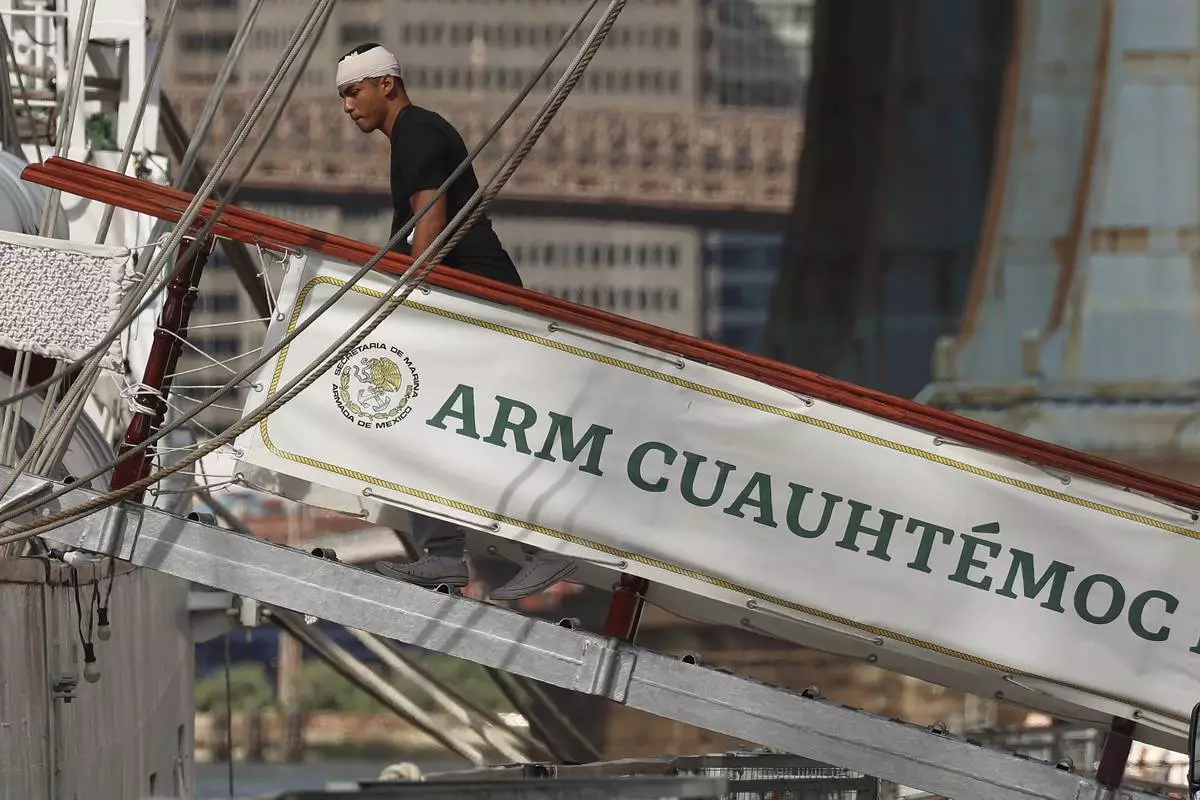
A sailor arrives back at the Cuauhtémoc, Sunday, May 18, 2025 in New York, a masted Mexican Navy training ship that collided with the Brooklyn Bridge the night before. (AP Photo/Yuki Iwamura)
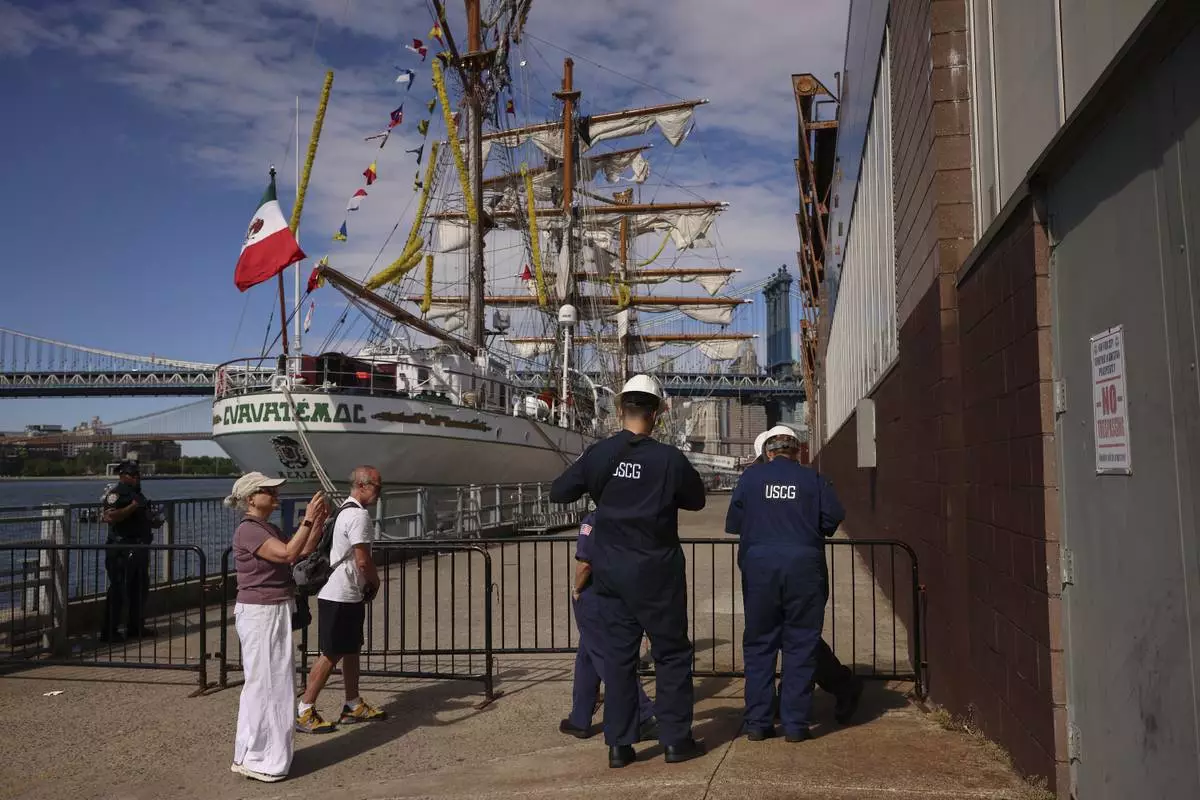
United States Coast Guardsmen arrive at Pier 35, Sunday, May 18, 2025 in New York, where the Cuauhtémoc, a masted Mexican Navy training ship that collided with the Brooklyn Bridge the night before, sits docked. (AP Photo/Yuki Iwamura)
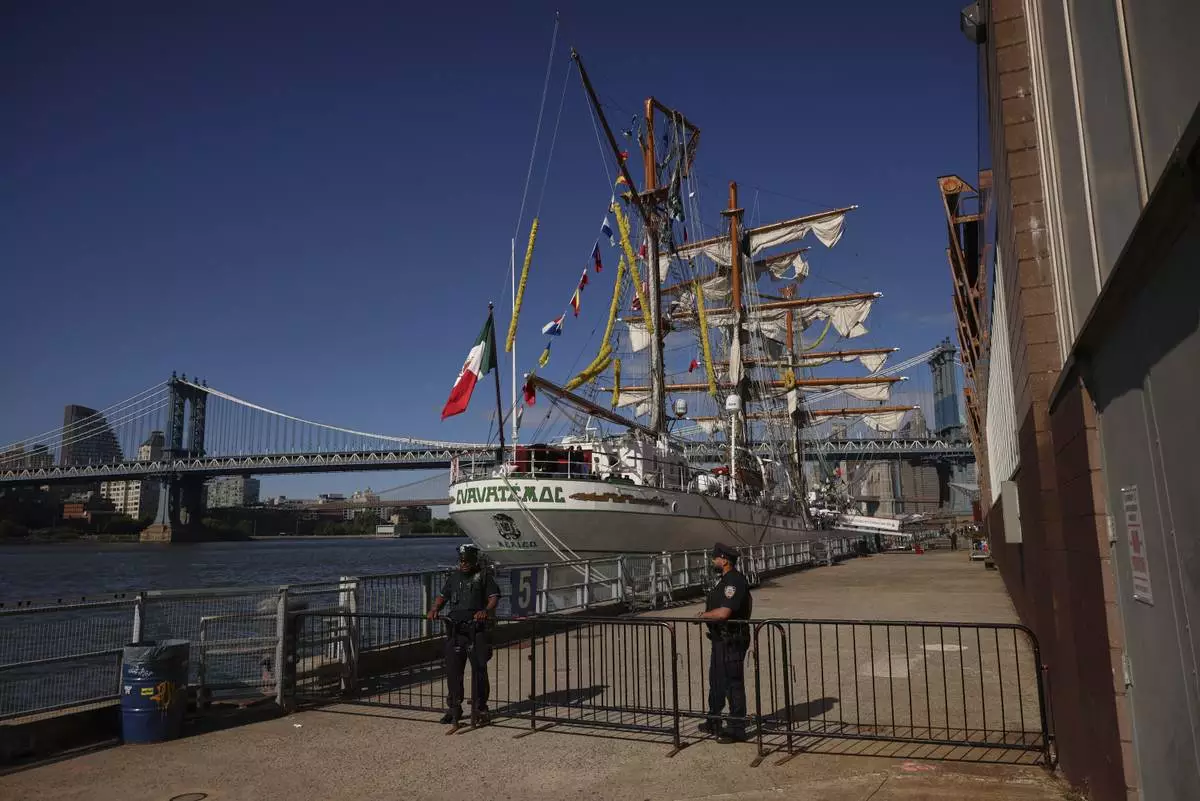
New York Police officers stands watch on Pier 35 where the Cuauhtémoc, a masted Mexican Navy training ship that collided with the Brooklyn Bridge the night before, sits docked. (AP Photo/Yuki Iwamura)
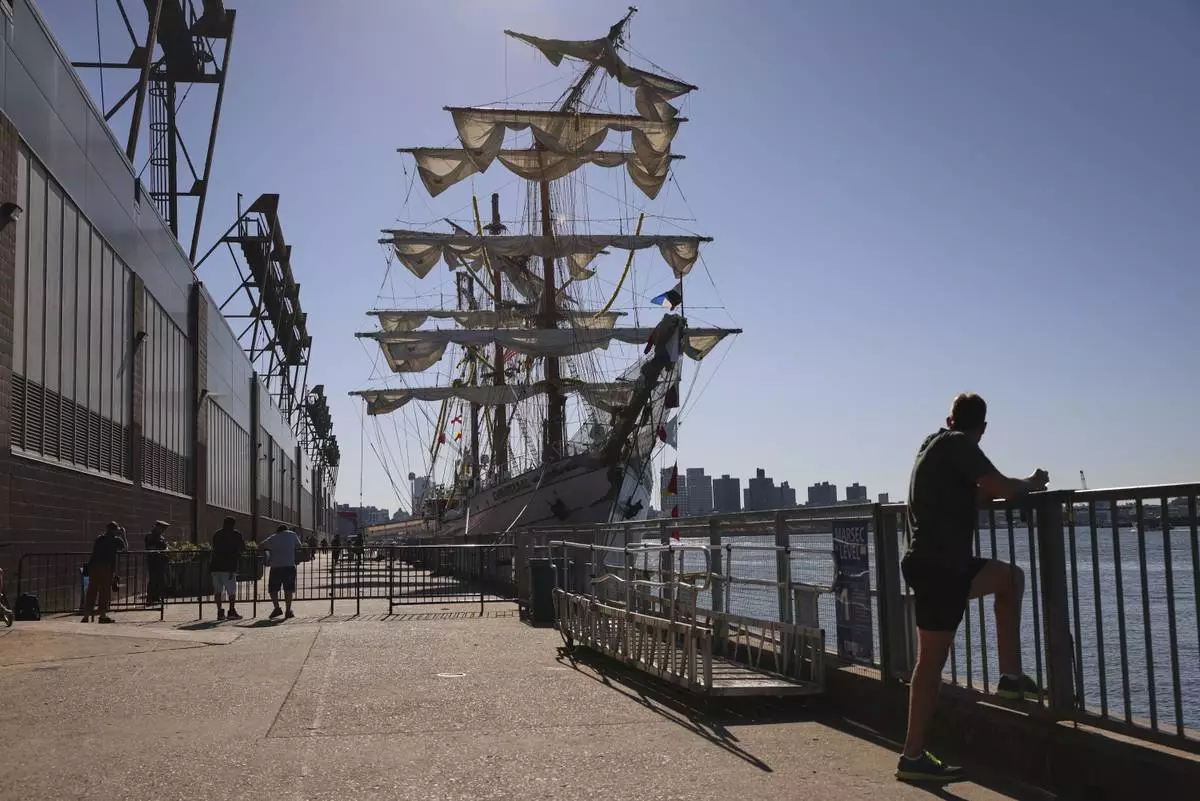
After colliding with the Brooklyn Bridge on Saturday evening, the Cuauhtémoc, a masted Mexican Navy training ship, sits docked at Pier 35 Sunday, May 18, 2025, in New York. (AP Photo/Yuki Iwamura)
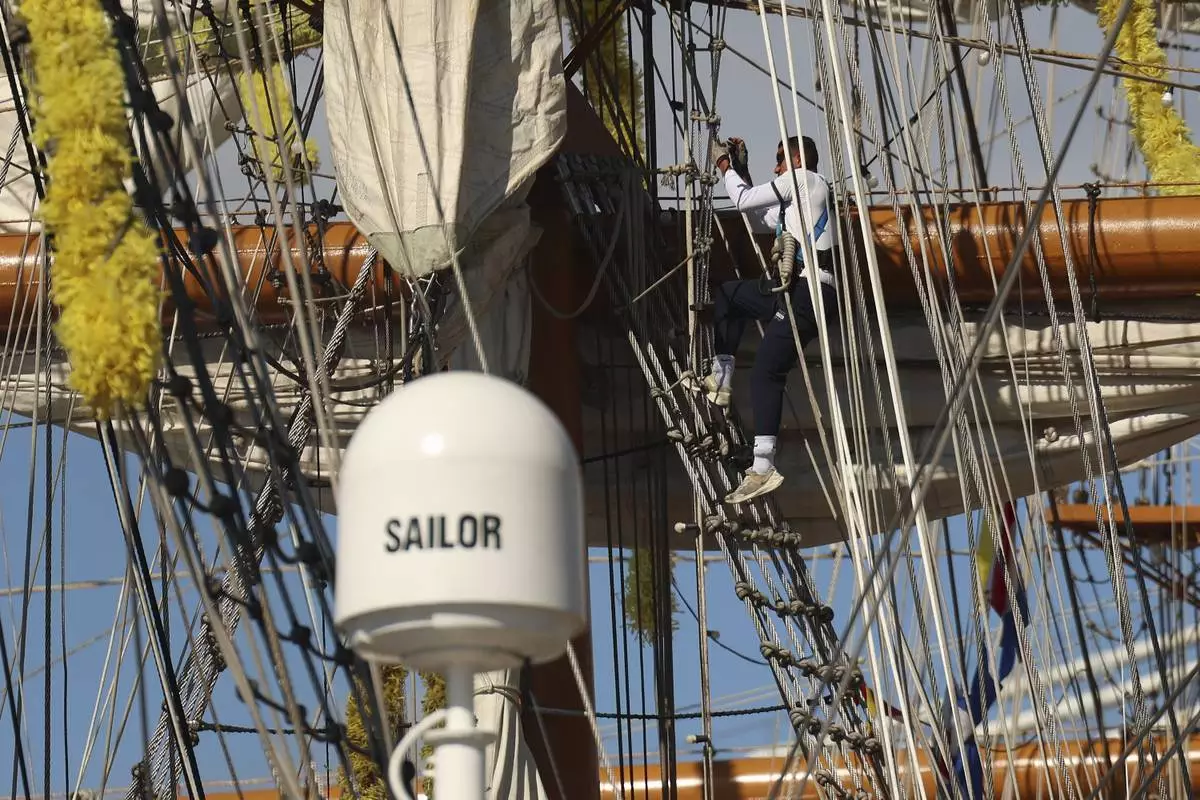
While docked at Pier 35, Sunday, May 18, 2025 in New York, a sailor climbs the mast rigging on the Cuauhtémoc, a masted Mexican Navy training ship that collided with the Brooklyn Bridge the night before. (AP Photo/Yuki Iwamura)
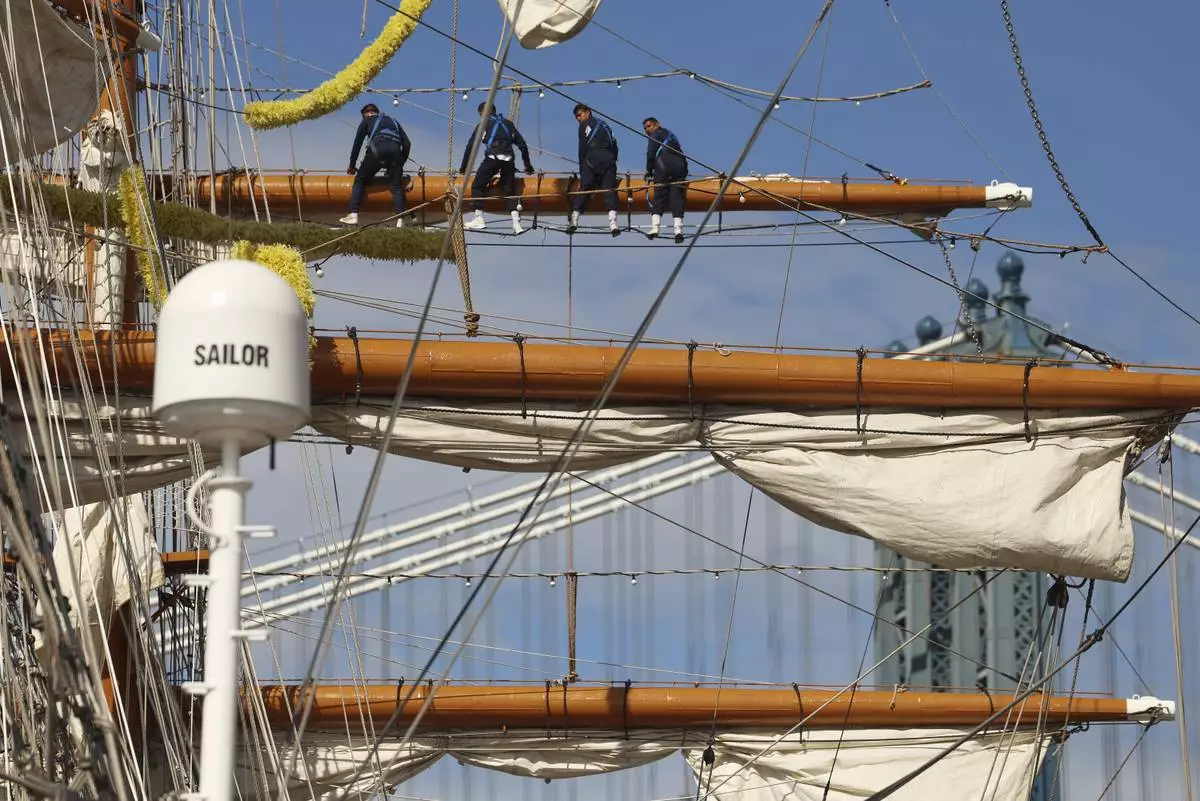
Sailors work on the yard arms of the Cuauhtémoc, Sunday, May 18, 2025 in New York. The masted Mexican Navy training ship collided with the Brooklyn Bridge the night before. (AP Photo/Yuki Iwamura)