WASHINGTON (AP) — For generations, official American documents have been meticulously preserved and protected — from the era of quills and parchment to boxes of paper to the cloud, safeguarding snapshots of the government and the nation for posterity.
Now, the Trump administration has sought to expand the executive branch’s power to shield from public view key administration initiatives. Officials have used apps like Signal that can auto-delete messages containing sensitive information rather than retaining them for record-keeping. And they have shaken up the National Archives leadership.
To historians and archivists, it points to the possibility that President Donald Trump will leave less for the nation’s historical record than nearly any president before him.
Such an eventuality creates a conundrum: How will experts — and even ordinary Americans — piece together what occurred when those charged with setting aside the artifacts properly documenting history refuse to do so?
The Trump administration says it’s the “most transparent in history,” citing the president’s fondness for taking questions from reporters nearly every day. But flooding the airwaves, media outlets and the internet with all things Trump isn’t the same as keeping records that document the inner workings of an administration, historians caution.
“He thinks he controls history,” says Timothy Naftali, a presidential historian who served as founding director of the Richard Nixon Presidential Library and Museum in Yorba Linda, California. “He wants to control what Americans ultimately find out about the truth of his administration, and that’s dangerous.”
Trump long refused to release his tax returns despite every other major White House candidate and president having done so since Jimmy Carter. And, today, White House stenographers still record every word Trump utters, but many of their transcriptions are languishing in the White House press office without authorization for release — meaning no official record of what the president says for weeks, if at all.
“You want to have a record because that’s how you ensure accountability,” said Lindsay Chervinsky, executive director of the George Washington Presidential Library in Mount Vernon, Virginia.
The Presidential Records Act of 1978 mandates the preservation, forever, of White House and vice presidential documents and communications. It deems them the property of the U.S. government and directs the National Archives and Records Administration to administer them after a president’s term.
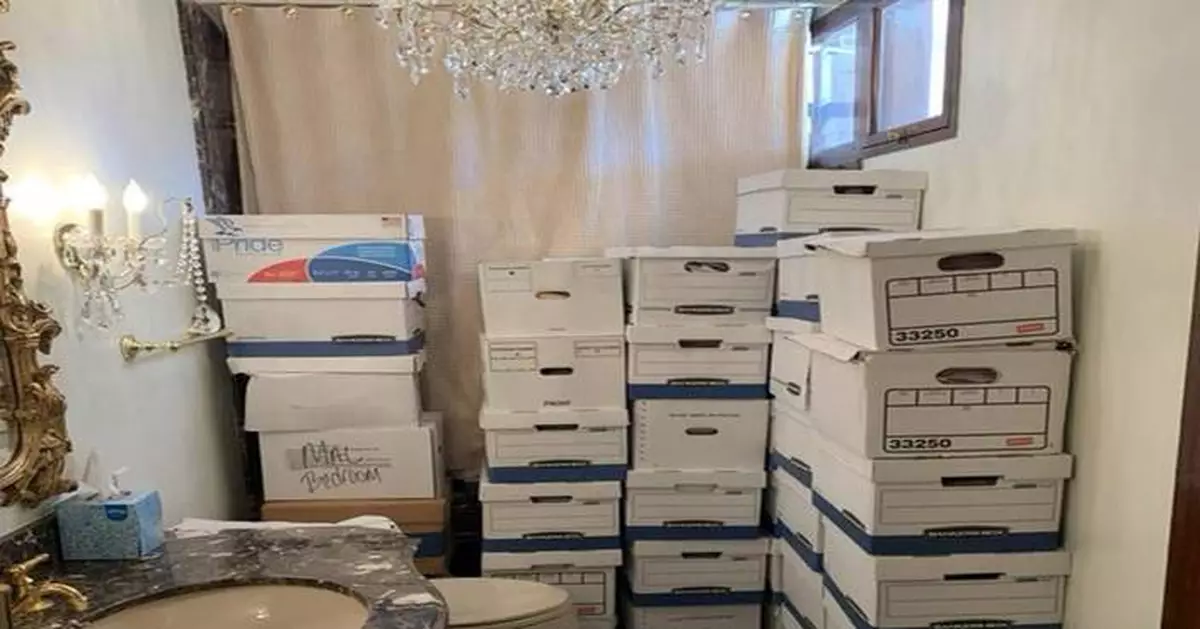
After his first term, rather than turn classified documents over the National Archives, Trump hauled boxes of potentially sensitive documents to his Florida estate, Mar-a-Lago, where they ended piled in his bedroom, a ballroom and even a bathroom and shower. The FBI raided the property to recover them. The case was later scrapped.
Trudy Huskamp Peterson, who served as acting archivist of the United States from 1993 to 1995, said keeping such records for the public is important because “decision-making always involves conflicting views, and it’s really important to get that internal documentation to see what the arguments were.”
President George H.W. Bush’s administration destroyed some informal notes, visitor logs and emails. After President Bill Clinton left office, his former national security adviser, Sandy Berger, pleaded guilty to taking copies of a document about terrorist threats from the National Archives.
President George W. Bush’s administration disabled automatic archiving for some official emails, encouraged some staffers to use private email accounts outside their work addresses and lost 22 million emails that were supposed to have been archived, though they were eventually uncovered in 2009.
Congress updated the Presidential Records Act in 2014 to encompass electronic messaging — including commercial email services known to be used by government employees to conduct official business.
But back then, use of auto-delete apps like Signal was far less common.
“It’s far easier to copy — or forward — a commercial email to a dot-gov address to be preserved, than it is to screenshot a series of messages on an app like Signal,” said Jason R. Baron, a professor at the University of Maryland and former director of litigation at the National Archives.
There were efforts during the first Trump administration to safeguard transparency, including a memo issued through the Office of White House counsel Don McGahn in February 2017 that reminded White House personnel of the necessity to preserve and maintain presidential records.
The White House now points to having recently ordered the declassification of bevies of historical files, including records related to the assassinations of Kennedy, his brother Robert and Martin Luther King Jr.
The Trump administration says it also ended a Biden policy that allowed staffers to use Microsoft Teams, where chats weren’t captured by White House systems. The Biden administration had over 800 users on Teams, meaning an unknown number of presidential records might have been lost, the Trump administration now says.
But the White House did not answer questions about the possibly of drafting a new memo on record retention like McGahn’s from 2017.
Chervinsky, author of "The Cabinet: George Washington and the Creation of an American Institution, said Congress, the courts and even the public often don’t have the bandwidth to ensure records retention laws are enforced, meaning, “A lot of it is still, I think, an honor system.”
“There aren’t that many people who are practicing oversight,” she said. “So, a lot of it does require people acting in good faith and using the operating systems that they’re supposed to use, and using the filing systems they’re supposed to use.”
Angered by the role the National Archives played in his documents case, meanwhile, Trump fired the ostensibly independent agency’s head, Archivist of the United States Colleen Shogan, and named Secretary of State Marco Rubio as her acting replacement.
Peterson, the former acting national archivist, said she still believes key information about the Trump administration will eventually emerge, but “I don’t know how soon.”
“Ultimately things come out,” she said. “That’s just the way the world works.”
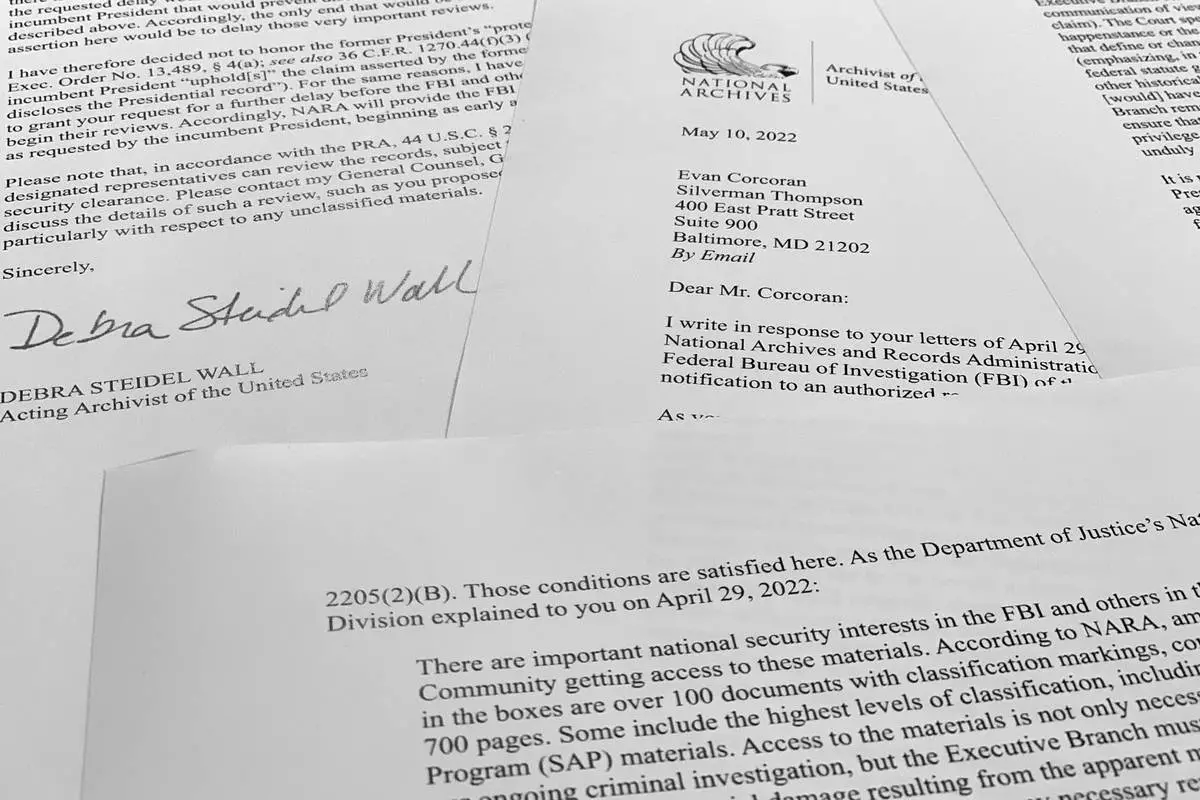
FILE - A letter from acting archivist of the United States Debra Steidel Wall to former President Donald Trump's legal team is photographed, Aug. 23, 2022. The letter details that the National Archives recovered 100 documents bearing classified markings, totaling more than 700 pages, from an initial batch of 15 boxes retrieved from Mar-a-Lago earlier in 2022. (AP Photo/Jon Elswick, File)
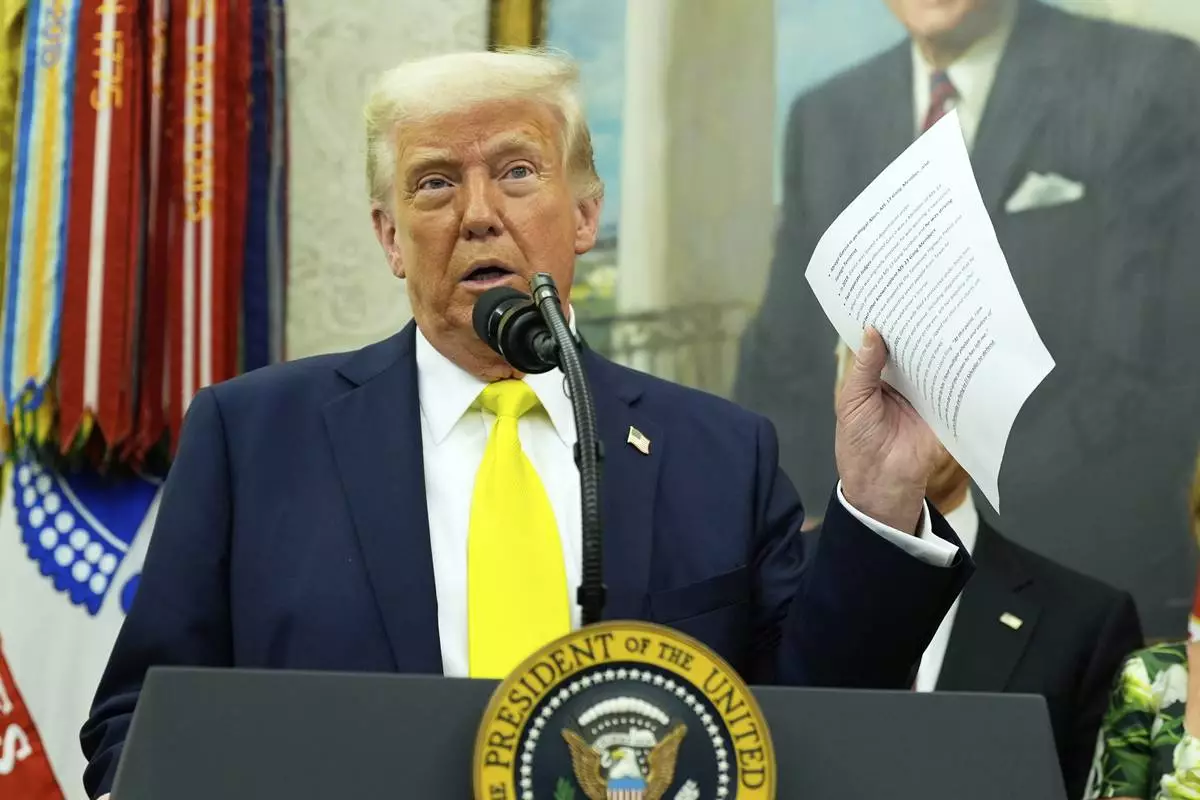
FILE - President Donald Trump holds a document with notes about Kilmar Abrego Garcia as he speaks with reporters in the Oval Office of the White House, April 18, 2025, in Washington.(AP Photo/Alex Brandon, File)
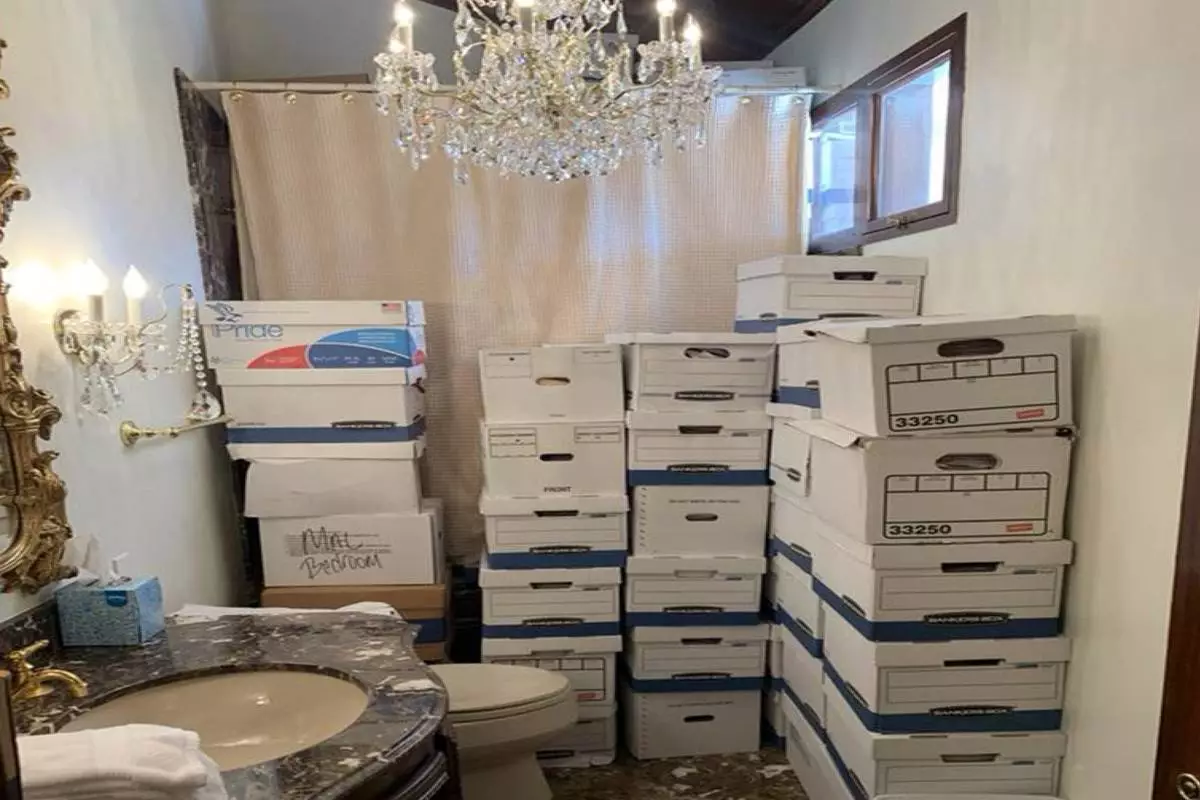
This image, contained in the indictment against former President Donald Trump, shows boxes of records stored in a bathroom and shower in the Lake Room at Trump's Mar-a-Lago estate in Palm Beach, Fla. (Justice Department via AP)