Chinese home textile manufacturers based in the eastern province of Jiangsu say they have seen the recovery of U.S. orders following the latest adjustments in the U.S.-China tariff policies, while export-oriented companies are also tapping into other overseas markets.
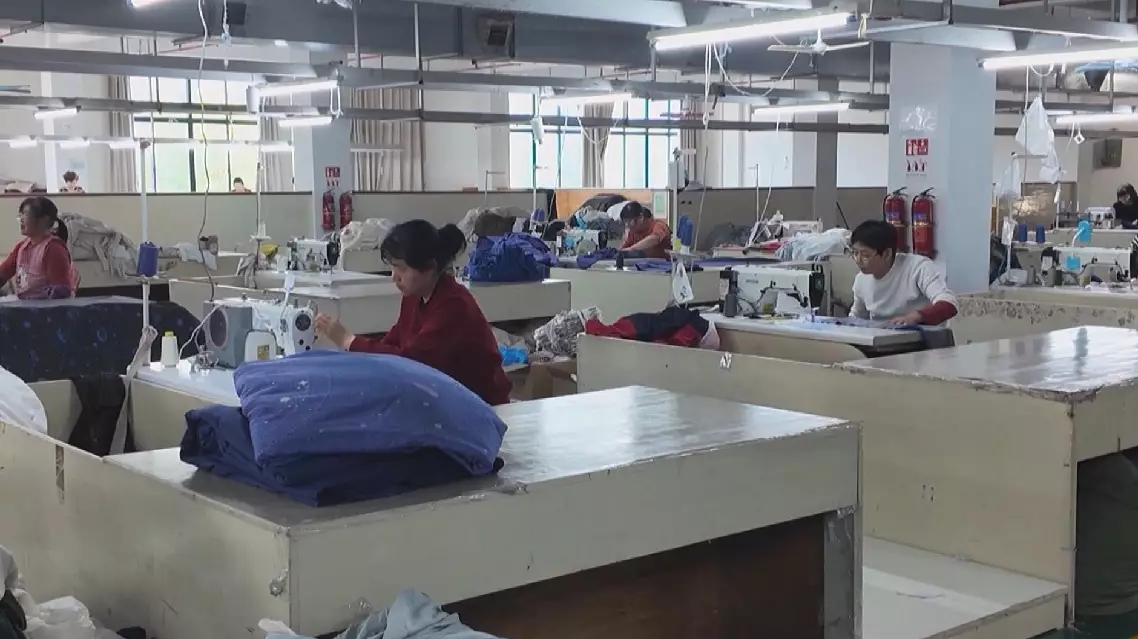
Nantong City of Jiangsu Province is known as the "home textile capital" of the country. Since 1980, the products made at the China Dieshiqiao International Home Textiles City in Nantong have been exported to more than 130 other countries and regions, with annual trade volume reaching 250 billion yuan.
Among the Dieshiqiao-based firms is Jiangsu Xinshengyuan Bedding Articles Company, which has 90 percent of its business overseas, with as high as 70 to 80 percent of the orders coming from the United States alone.
The company once suspended shipments due to the high tariffs imposed by the Trump administration on most of its vital trade partners including China in early April. Following the two countries' tariff adjustments on May 14, many American customers have sent emails, demanding continuation of shipment. At present, the number of U.S. customers has basically not declined, the company's manager told China Central Television (CCTV).
"Our salespeople have been communicating with customers successively over the past few days to discuss how our goods can be delivered in the future. Some new orders are under negotiation. The situation is gradually recovering," said Fan Jiali, administrative director of the company.
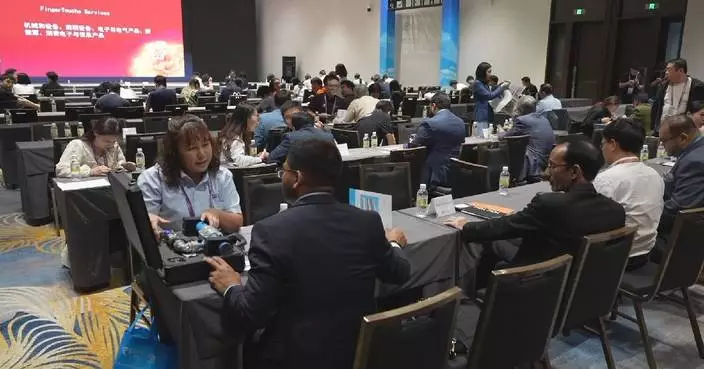
Meanwhile, the number of foreign purchasers at Dieshiqiao has also increased significantly as the trade tensions have eased.
Indian businessman Brady has been engaged in trade in Nantong for more than 20 years. He sent more than 100 containers from the city to India every year, with an annual sales volume exceeding 10 million yuan (about 1.39 million U.S. dollars).
Over the past month or so, the U.S. tariffs indirectly affected the shipping schedules and prices between China and India. After the tariff adjustment, Brady rushed to Nantong immediately to get fresh supplies.
"This [home textile] market is really good. You can find new products here. And there are many suppliers. The prices are also appropriate," he said.
Another export-oriented company focusing on the U.S. market said that although the tariff war has posed huge challenges, it has also created rare development opportunities for the affected businesses.
The company signed an overseas warehouse rental service contract with Dieshiqiao Home Textile Industry Group, as a strategic adjustment to explore more emerging markets.
"The trade war has made me realize that the business in the United States is only a small part of this global market. With the overseas warehouses of the [Dieshiqiao] Home Textile Industry Group, I think we would better bring Nantong's home textiles to other countries, allowing people in other countries to enjoy our high-quality and reasonably priced Chinese products. This is a kind of mutual benefit for people all over the world," said Shi Si, director general of Nantong Bulanni Home Textile Company.
In recent years, Nantong has established the Dieshiqiao cross-border e-commerce industry center to promote in-depth integration of the home textile industry and cross-border e-commerce, providing support for small and medium-sized enterprises in developing overseas markets.
So far, Nantong has built 31 overseas warehouses covering Europe, the U.S. and Belt and Road partner countries, including seven provincial-level public ones.
"We hope that our overseas warehouses can provide significant assistance to enterprises in terms of cost, service, and after-sales contact, so as to truly bring about transformation and upgrading to the industry through operation of the warehouses," said Jia Changwu, general manager of international trade at Jiangsu Dieshiqiao Home Textiles Industry Group.
Chinese home textile makers welcome return of U.S. orders, explore other markets