Experts on both sides of the Taiwan Strait have criticized Lai Ching-te, Taiwan's regional leader, for intensifying confrontation and obstructing people-to-people exchanges since he took office nearly a year ago.
Widespread criticism over Lai Ching-te's governance has ratcheted up recently. In the first year in office, Lai fawned over the United States and sold Taiwan out, labeled the mainland as an "external hostile force," increased Taiwan's defense budget to more than 3 percent of its GDP, expanded military purchases from the U.S., and prompted moves to relocate chip giant TSMC's operations to the U.S., according to some commentators.
The Democratic Progressive Party (DPP) authorities' move to solicit U.S. support to seek separatism has brought huge security risks to Taiwan, and deepened suspicions of the U.S. in the Taiwan region, said Liu Xiangping, head of the Institute of Taiwan Studies at Nanjing University.
"Any attempt made by Lai Ching-te and secessionist forces to rely on the U.S. and other external forces for separatism should be regarded as very naive," he said.
However, Lai's flattery has not won him favor as U.S. President Donald Trump repeatedly refused to take a position on "whether or not to assist in the defense of Taiwan" in the early stages of his election campaign, and recently even mentioned "unification and peace" when talking about the results of the high-level talks on trade and economic cooperation between China and the U.S., which has made the DPP authorities very nervous, Liu said.
"Our motherland is growing from strength to strength at a faster pace. We now have firm confidence and will, and sufficient capacity to oppose and crush all Taiwan secessionist activities as well as sufficient capacity to respond to and counteract external interference," he said.
Since Lai took office, the DPP authorities have continued to manipulate "de-sinicization" and advocate the wrong view of history, attempting to cut the deep historical and cultural connection between both sides of the Taiwan Strait and weaken the Chinese national consciousness and Chinese cultural identity of Taiwan compatriots, experts warn.
At the same time, the DPP authorities have created a "chilling effect" and erected numerous obstacles to cross-Strait exchanges, said Hsiao Hsu-tsen, executive director of the Ma Ying-jeou Foundation.
"Now there is a bleak atmosphere within Taiwan. Many groups are afraid to go to the mainland. As far as I know, about five or six groups of people originally planned to go. Some were academic, some were cultural, and of course, there were also groups of teenagers. But all of them canceled their trips for various reasons. Many groups on the island are worried that they will get into trouble or be pressured after returning from the mainland," he said.
Lai has stirred up cross-Strait confrontation and undermined peace and stability in the region, fully proving that he is a "saboteur of peace" and a "crisis maker" across the Taiwan Strait, experts say.
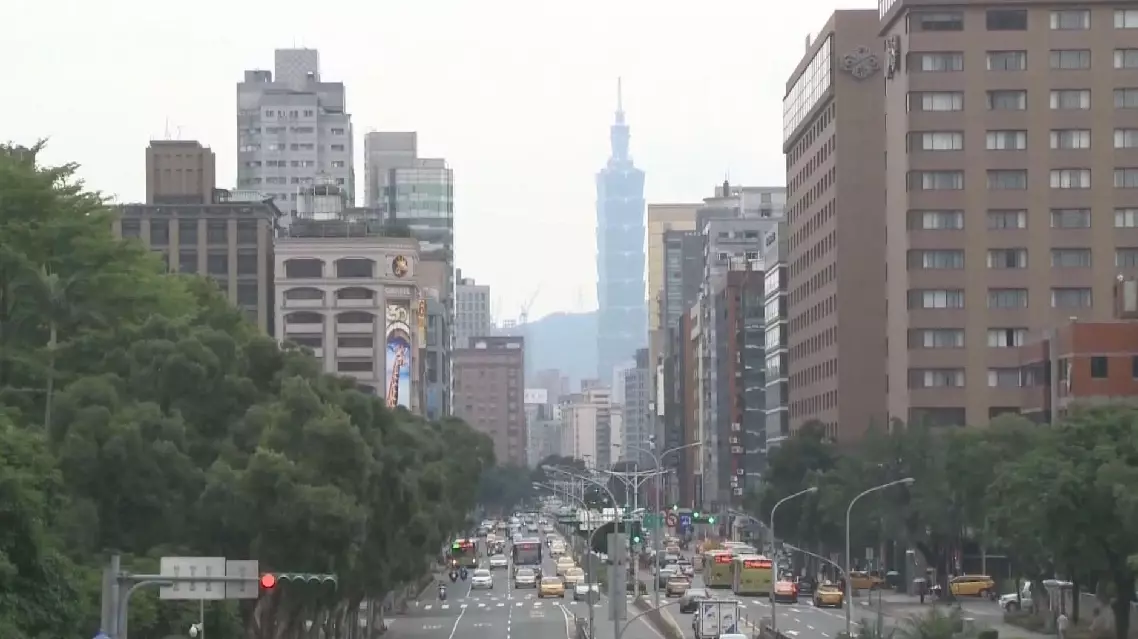
Experts criticize Lai Ching-te for intensifying cross-Strait confrontation, obstructing exchanges

International guests who have dedicated their lives to historical truth joined China's 12th national memorial event honoring the hundreds of thousands of victims killed by Japanese troops in the Nanjing Massacre during World War II.
The memorial was held on Saturday at the public square of the Memorial Hall of the Victims in Nanjing Massacre by Japanese Invaders in Nanjing, capital of east China's Jiangsu Province. China's national flag was flown at half-mast in the presence the crowd that included survivors of the massacre, local students, and international guests.
In one of the most barbaric episodes during WWII, the Nanjing Massacre took place when Japanese troops captured the then-Chinese capital Nanjing on Dec 13, 1937. Over the course of six weeks, they proceeded to kill approximately 300,000 Chinese civilians and unarmed soldiers.
Joining the crowd was Christoph Reinhardt, the great-grandson of John Rabe (1882-1950) who was then a representative of German conglomerate Siemens in the war-ravaged Nanjing. During the Nanjing Massacre, Rabe set up an international safety zone with other foreigners, and they together saved the lives of around 250,000 Chinese people between 1937 and 1938 from the Japanese invaders.
Throughout the massacre, Rabe continued to keep a diary. To this day, all his pages remain one of the most comprehensive historical records of the atrocities committed by the Japanese aggressors.
Sayoko Yamauchi, who was also in the crowd of mourners, arrived in Nanjing on Friday from Japan's Osaka to attend Saturday's ceremony, just as she has done almost every year since China designated Dec 13 as the National Memorial Day for the Victims of the Nanjing Massacre in 2014.
Yamauchi's grandfather was one of the Japanese soldiers who invaded Nanjing in January 1938. However, since first setting foot in Nanjing in 1987, she has dedicated herself to uncovering and spreading the truth about Japan's history of aggression and enlightening the Japanese public about their country's wartime atrocities.
In 2014, ahead of China's first National Memorial Day for the Victims of the Nanjing Massacre, Yamauchi, along with 10 other individuals, received an award for her special contribution to the Memorial Hall of the Victims in the Nanjing Massacre by Japanese Invaders.
By attending the grand memorial event, Reinhardt and Yamauchi both said they hope to convey a message of remembering history and cherishing peace.
"This is my fifth visit to China, and Nanjing, and the third times I visited the ceremony. I have a wish that these survivors survive again and again and again. But my other wish is that the families of the survivors, that they transport the information, the right intention like their ancestors, because anyone must hold a hand (during) this remembering," Reinhardt told China Central Television (CCTV) in an interview before the event began on Saturday.
"Our delegation is on its 20th visit to China, coming to Nanjing to express our heartfelt condolences to those who perished 88 years ago, to remember this history, and to reflect on what we can do for a new future. That's why we are here," Yamauchi told CCTV on board the bus that took her to a local hotel in Nanjing on Friday evening.
Int'l guests call for remembering history at China's national event honoring Nanjing Massacre victims