Skip to Content Facebook Feature Image

Syria's driest winter in nearly 7 decades triggers a severe water crisis in Damascus

News

Syria's driest winter in nearly 7 decades triggers a severe water crisis in Damascus
News

News

Syria's driest winter in nearly 7 decades triggers a severe water crisis in Damascus

2025-05-20 20:55 Last Updated At:21:00

BARADA VALLEY, Syria (AP) — Inside a mountain above the Syrian capital, Hassan Bashi walked through tunnels that used to be filled with water from a spring famous for its pure waters.

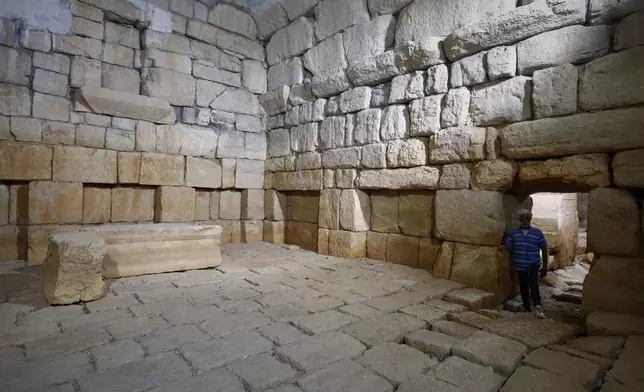
The spring rises inside the ruins of a Roman temple in the Barada Valley and flows toward Damascus, supplying the city with drinking water for thousands of years. Normally, during the winter flood season, water fills all the tunnels and washes over much of the temple.

More Images
Visitors fill bottles with water from the spring in Ein el-Fijeh, Barada Valley, Syria, Thursday, May 8, 2025. The Ein el-Fijeh spring, the main source of water for Damascus, is almost dry and many people in the capital and its suburbs are now relying on buying water from tanker trucks that fill from wells. (AP Photo/Omar Sanadiki)

Visitors fill bottles with water from the spring in Ein el-Fijeh, Barada Valley, Syria, Thursday, May 8, 2025. The Ein el-Fijeh spring, the main source of water for Damascus, is almost dry and many people in the capital and its suburbs are now relying on buying water from tanker trucks that fill from wells. (AP Photo/Omar Sanadiki)

Residents work on rebuilding their properties damaged during the war in Ein el-Fijeh, Barada Valley, Syria, Thursday, May 8, 2025. (AP Photo/Omar Sanadiki)
Residents work on rebuilding their properties damaged during the war in Ein el-Fijeh, Barada Valley, Syria, Thursday, May 8, 2025. (AP Photo/Omar Sanadiki)

A worker stands on a dry reservoir of the Ein el-Fijeh spring, in the Barada Valley, Syria, Thursday, May 8, 2025. The Ein el-Fijeh spring, the main water source for Damascus, has nearly dried up, forcing many residents in the capital and its suburbs to rely on water delivered by tanker trucks that fill from local wells. (AP Photo/Omar Sanadiki)

A worker stands on a dry reservoir of the Ein el-Fijeh spring, in the Barada Valley, Syria, Thursday, May 8, 2025. The Ein el-Fijeh spring, the main water source for Damascus, has nearly dried up, forcing many residents in the capital and its suburbs to rely on water delivered by tanker trucks that fill from local wells. (AP Photo/Omar Sanadiki)
A worker holds up a cell phone displaying a photo of the Ein el-Fijeh reservoir, now seen dry in the background, in the Barada Valley, Syria, Thursday, May 8, 2025. The Ein el-Fijeh spring, the main water source for Damascus, has nearly dried up, forcing many residents in the capital and its suburbs to rely on water delivered by tanker trucks that fill from local wells. (AP Photo/Omar Sanadiki)

A worker holds up a cell phone displaying a photo of the Ein el-Fijeh reservoir, now seen dry in the background, in the Barada Valley, Syria, Thursday, May 8, 2025. The Ein el-Fijeh spring, the main water source for Damascus, has nearly dried up, forcing many residents in the capital and its suburbs to rely on water delivered by tanker trucks that fill from local wells. (AP Photo/Omar Sanadiki)

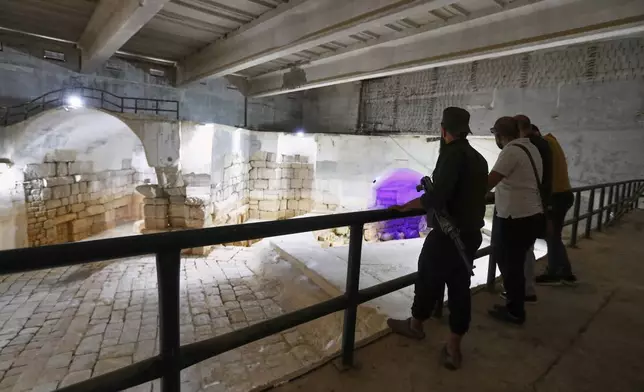
Visitors watch the dry main reservoir of the spring in Ein el-Fijeh, Barada Valley, Syria, Thursday, May 8, 2025. The Ein el-Fijeh spring, the main source of water for Damascus, is almost dry and many people in the capital and its suburbs are now relying on buying water from tanker trucks that fill from wells. (AP Photo/Omar Sanadiki)
Visitors watch the dry main reservoir of the spring in Ein el-Fijeh, Barada Valley, Syria, Thursday, May 8, 2025. The Ein el-Fijeh spring, the main source of water for Damascus, is almost dry and many people in the capital and its suburbs are now relying on buying water from tanker trucks that fill from wells. (AP Photo/Omar Sanadiki)

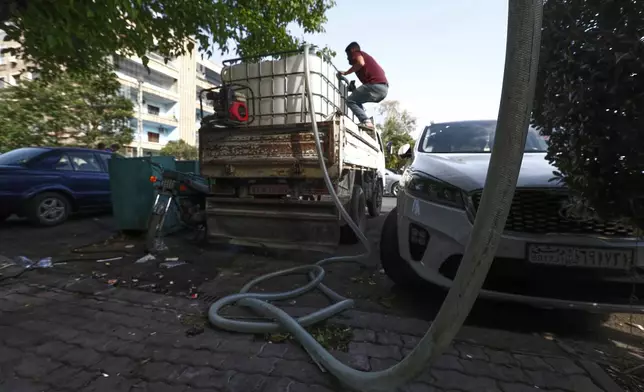
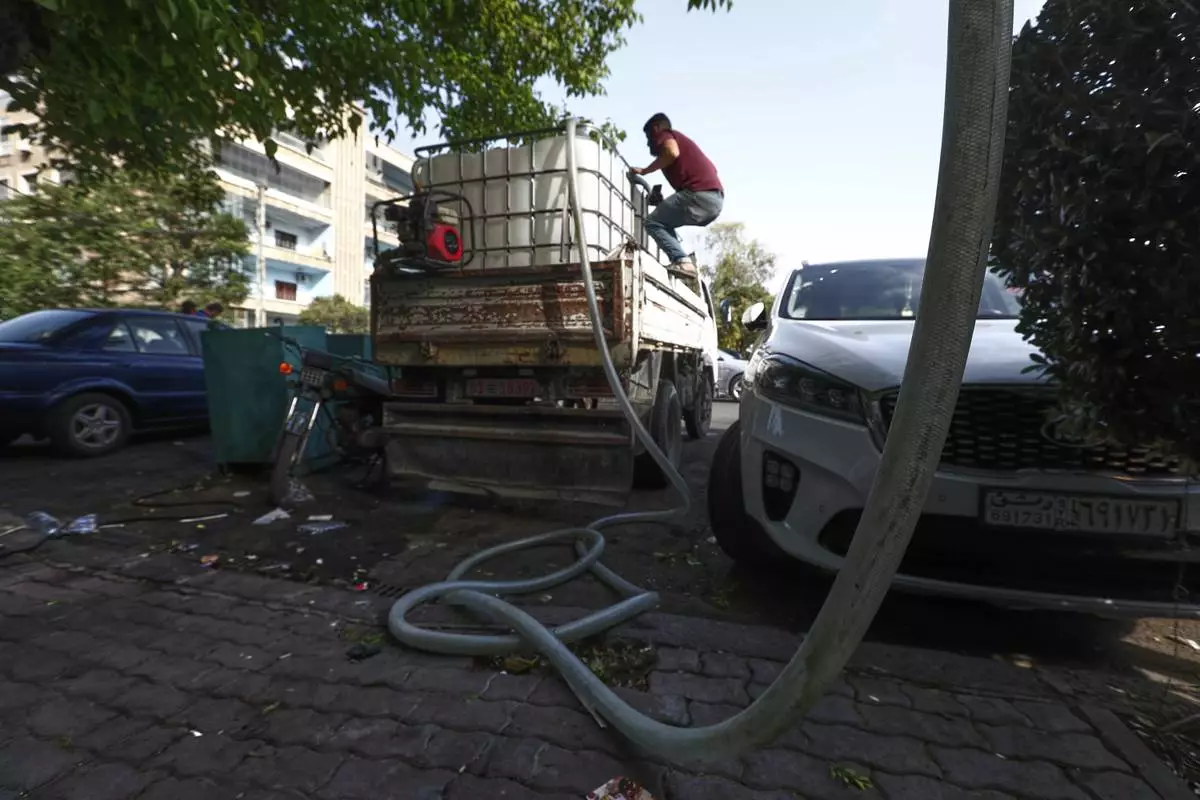
A worker supplies water from a tank to houses in Damascus, Sunday, May 11, 2025.(AP Photo/Omar Sanadiki)
A worker supplies water from a tank to houses in Damascus, Sunday, May 11, 2025.(AP Photo/Omar Sanadiki)

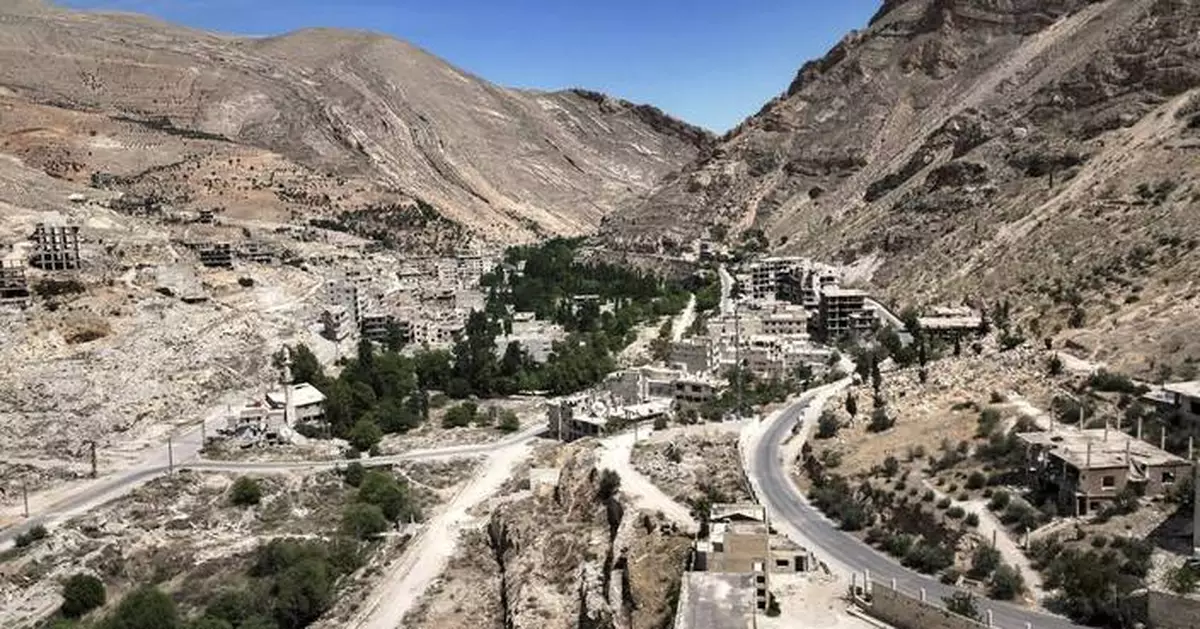
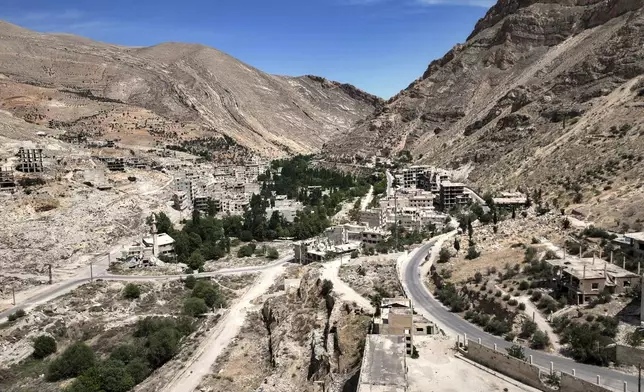
Aerial view of the nearly dry Ein el-Fijeh spring in the Barada Valley, Syria, Thursday, May 8, 2025. As the main water source for Damascus, its depletion has forced many residents in the capital and surrounding suburbs to rely on water from tanker trucks that draw from local wells.(AP Photo/Ghaith Alsayed)

Aerial view of the nearly dry Ein el-Fijeh spring in the Barada Valley, Syria, Thursday, May 8, 2025. As the main water source for Damascus, its depletion has forced many residents in the capital and surrounding suburbs to rely on water from tanker trucks that draw from local wells.(AP Photo/Ghaith Alsayed)

Now, there is only a trickle of water following the driest winter in decades.

Bashi, who is a guard but also knows how to operate the pumping and water filtration machines in the absence of the engineer in charge, displayed an old video on his cell phone of high waters inside the ruins.

“I have been working at the Ein al-Fijeh spring for 33 years and this is the first year it is that dry,” Bashi said.

The spring and the Barada River that it feeds are the main source of water for 5 million people, supplying Damascus and its suburbs with 70% of their water.

As the city suffers its worst water shortages in years, many people now rely on buying water from private tanker trucks that fill from wells. Officials are warning that the situation could get worse in the summer and urge residents to use water sparingly while showering, cleaning or washing dishes.

“The Ein al-Fijeh spring is working now at its lowest level,” said Ahmad Darwish, head of the Damascus City Water Supply Authority, adding that the current year witnessed the lowest rainfall since 1956.

The channels that have been there since the day of the Romans two millennia ago were improved in 1920 and then again in 1980, he said.

Darwish said the spring water comes mainly from rainfall and melted snow off the mountains along the border with Lebanon, but because of this year’s below-average rainfall, “it has given us amounts that are much less than normal.”

There are 1.1 million homes that get water from the spring, and in order to get through the year, people will have to cut down their consumption, he said.

The spring also feeds the Barada River, which cuts through Damascus and which is also mostly dry this year.

In the city's eastern area of Abbasids, Bassam Jbara is feeling the shortage. His neighborhood only gets water for about 90 minutes a day, compared with previous years when water was always running when they turned on the taps.

Persistent electricity cuts are making the problem worse, he said, as they sometimes have water but no power to pump it to the tankers on the roof of the building. Jbara once had to buy five barrels of undrinkable water from a tanker truck that cost him and his neighbors $15, a large amount of money in a country where many people make less than $100 a month.

“From what we are seeing, we are heading toward difficult conditions regarding water,” he said, fearing that supplies will drop to once or twice a week over the summer. He is already economizing.

“The people of Damascus are used to having water every day and to drinking tap water coming from the Ein al-Fijeh spring, but unfortunately the spring is now weak," Jbara said.

During Syria’s nearly 14-year civil war, Ein al-Fijeh was subjected to multiple shellings, changing between forces of then- President Bashar Assad and insurgents over the years.

In early 2017, government forces captured the area from insurgents and held it until December, when the five-decade Assad dynasty collapsed in a stunning offensive by fighters led by the Hayat Tahrir al-Sham group, or HTS, of current President Ahmad al-Sharaa.

Tarek Abdul-Wahed returned to his home near the spring in December, nearly eight years after he was forced to leave with his family. He is now working on rebuilding the restaurant he had once owned — it was blown up by Assad’s forces after Abdul-Wahed left.

He looked at the parched region that used to be filled with tourists and Syrians who would come in the summer to enjoy the cool weather.

“The Ein al-Fijeh spring is the only artery to Damascus,” Abdul-Wahed said as reconstruction work was ongoing in the restaurant, which had helped 15 families in the area make a living in addition to the employees who came from other parts of Syria.

“Now it looks like a desert. There is no one,” he said. “We hope that the good old days return with people coming here.”

Visitors fill bottles with water from the spring in Ein el-Fijeh, Barada Valley, Syria, Thursday, May 8, 2025. The Ein el-Fijeh spring, the main source of water for Damascus, is almost dry and many people in the capital and its suburbs are now relying on buying water from tanker trucks that fill from wells. (AP Photo/Omar Sanadiki)

Visitors fill bottles with water from the spring in Ein el-Fijeh, Barada Valley, Syria, Thursday, May 8, 2025. The Ein el-Fijeh spring, the main source of water for Damascus, is almost dry and many people in the capital and its suburbs are now relying on buying water from tanker trucks that fill from wells. (AP Photo/Omar Sanadiki)

Residents work on rebuilding their properties damaged during the war in Ein el-Fijeh, Barada Valley, Syria, Thursday, May 8, 2025. (AP Photo/Omar Sanadiki)

Residents work on rebuilding their properties damaged during the war in Ein el-Fijeh, Barada Valley, Syria, Thursday, May 8, 2025. (AP Photo/Omar Sanadiki)

A worker stands on a dry reservoir of the Ein el-Fijeh spring, in the Barada Valley, Syria, Thursday, May 8, 2025. The Ein el-Fijeh spring, the main water source for Damascus, has nearly dried up, forcing many residents in the capital and its suburbs to rely on water delivered by tanker trucks that fill from local wells. (AP Photo/Omar Sanadiki)

A worker stands on a dry reservoir of the Ein el-Fijeh spring, in the Barada Valley, Syria, Thursday, May 8, 2025. The Ein el-Fijeh spring, the main water source for Damascus, has nearly dried up, forcing many residents in the capital and its suburbs to rely on water delivered by tanker trucks that fill from local wells. (AP Photo/Omar Sanadiki)

A worker holds up a cell phone displaying a photo of the Ein el-Fijeh reservoir, now seen dry in the background, in the Barada Valley, Syria, Thursday, May 8, 2025. The Ein el-Fijeh spring, the main water source for Damascus, has nearly dried up, forcing many residents in the capital and its suburbs to rely on water delivered by tanker trucks that fill from local wells. (AP Photo/Omar Sanadiki)

A worker holds up a cell phone displaying a photo of the Ein el-Fijeh reservoir, now seen dry in the background, in the Barada Valley, Syria, Thursday, May 8, 2025. The Ein el-Fijeh spring, the main water source for Damascus, has nearly dried up, forcing many residents in the capital and its suburbs to rely on water delivered by tanker trucks that fill from local wells. (AP Photo/Omar Sanadiki)

Visitors watch the dry main reservoir of the spring in Ein el-Fijeh, Barada Valley, Syria, Thursday, May 8, 2025. The Ein el-Fijeh spring, the main source of water for Damascus, is almost dry and many people in the capital and its suburbs are now relying on buying water from tanker trucks that fill from wells. (AP Photo/Omar Sanadiki)
Visitors watch the dry main reservoir of the spring in Ein el-Fijeh, Barada Valley, Syria, Thursday, May 8, 2025. The Ein el-Fijeh spring, the main source of water for Damascus, is almost dry and many people in the capital and its suburbs are now relying on buying water from tanker trucks that fill from wells. (AP Photo/Omar Sanadiki)

A worker supplies water from a tank to houses in Damascus, Sunday, May 11, 2025.(AP Photo/Omar Sanadiki)

A worker supplies water from a tank to houses in Damascus, Sunday, May 11, 2025.(AP Photo/Omar Sanadiki)

Aerial view of the nearly dry Ein el-Fijeh spring in the Barada Valley, Syria, Thursday, May 8, 2025. As the main water source for Damascus, its depletion has forced many residents in the capital and surrounding suburbs to rely on water from tanker trucks that draw from local wells.(AP Photo/Ghaith Alsayed)
Aerial view of the nearly dry Ein el-Fijeh spring in the Barada Valley, Syria, Thursday, May 8, 2025. As the main water source for Damascus, its depletion has forced many residents in the capital and surrounding suburbs to rely on water from tanker trucks that draw from local wells.(AP Photo/Ghaith Alsayed)
MINNEAPOLIS (AP) — A judge on Wednesday gave the Trump administration time to respond to a request to suspend an immigration crackdown in Minnesota, while the Pentagon looked for military lawyers to join what has become a chaotic law enforcement effort in the state.

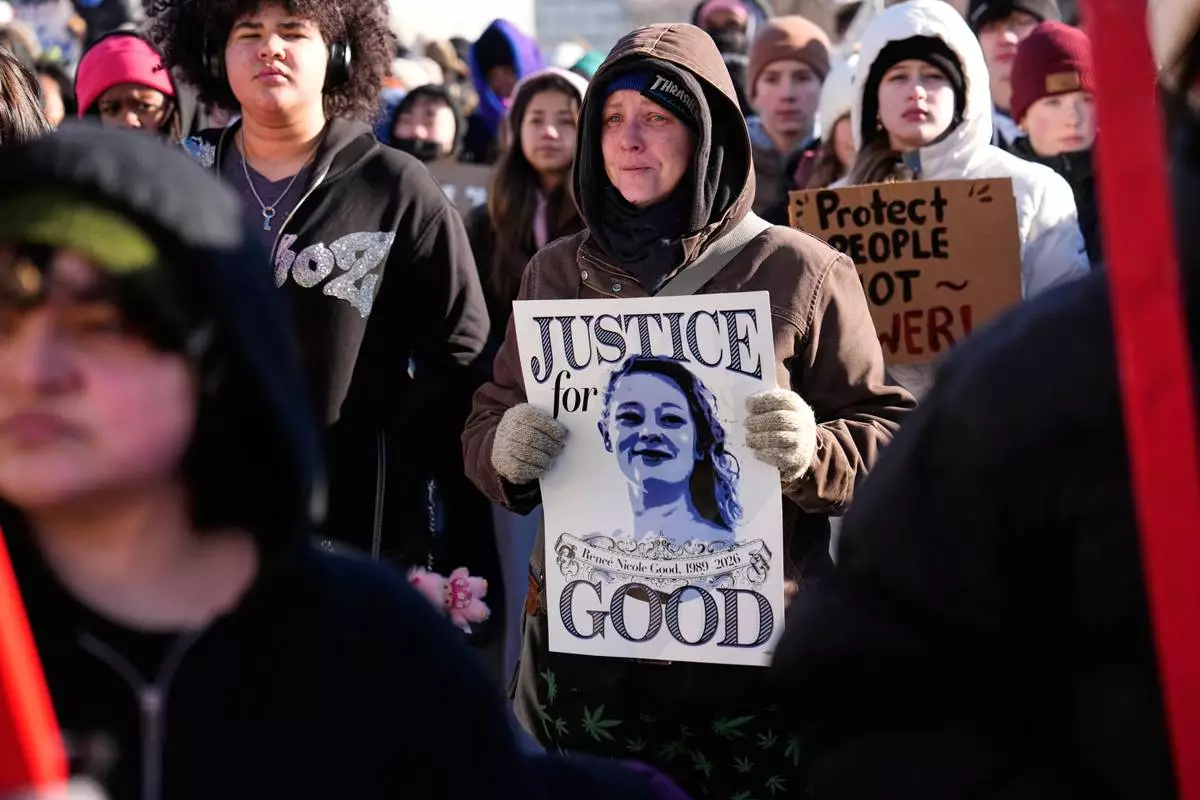
Plumes of tear gas, bursts of chemical irritants and the screech of protest whistles have become common on the streets of Minneapolis, especially since an immigration agent fatally shot Renee Good in the head on Jan. 7 as she drove away.

Agents have yanked people from cars and homes and been confronted by angry bystanders who are demanding that officers pack up and leave.

“What we need most of all right now is a pause. The temperature needs to be lowered," state Assistant Attorney General Brian Carter said during the first hearing in a lawsuit filed by Minnesota and the cities of Minneapolis and St. Paul.

Local leaders say the government is violating free speech and other constitutional rights with the surge of law enforcement. U.S. District Judge Katherine Menendez promised to keep the case “on the front burner” and gave the U.S. Justice Department until Monday to file a response to a request for a restraining order.

The judge said these are "grave and important matters,” and that there are few legal precedents to apply to some of the key points in the case.

Justice Department attorney Andrew Warden suggested the approach set by Menendez was appropriate.

The judge is also handling a separate lawsuit challenging the tactics used by Immigration and Customs Enforcement and other federal officers when they encounter protesters and observers. A decision could be released this week.

The Department of Homeland Security says it has made more than 2,000 arrests in the state since early December and is vowing to not back down. The Pentagon is preparing to send military lawyers to Minneapolis to assist.

CNN, citing an email circulating in the military, says Defense Secretary Pete Hegseth is asking the branches to identify 40 lawyers known as judge advocate general officers or JAGs, and 25 of them will serve as special assistant U.S. attorneys in Minneapolis.

Pentagon spokesperson Kingsley Wilson appeared to confirm the CNN report by posting it on X with a comment that the military “is proud to support” the Justice Department.

The Pentagon did not immediately respond to emails from The Associated Press seeking more details.

It’s the latest step by the Trump administration to dispatch military and civilian attorneys to areas where federal immigration operations are taking place. The Pentagon last week sent 20 lawyers to Memphis, U.S. Attorney D. Michael Dunavant said.

Mark Nevitt, an associate professor at Emory University School of Law and a former Navy JAG, said there's concern that the assignments are taking lawyers away from the military justice system.

“There are not many JAGs but there are over one million members of the military, and they all need legal support,” he said.

Jonathan Ross, the Immigration and Customs Enforcement officer who killed Good, suffered internal bleeding to his torso during the encounter, a Homeland Security official told The Associated Press.

The official spoke to AP on condition of anonymity in order to discuss Ross’ medical condition. The official did not provide details about the severity of the injuries, and the agency did not respond to questions about the extent of the bleeding, exactly how he suffered the injury, when it was diagnosed or his medical treatment.

There are many causes of internal bleeding, and they vary in severity from bruising to significant blood loss. Video from the scene showed Ross and other officers walking without obvious difficulty after Good was shot and her Honda Pilot crashed into other vehicles.

She was killed after three ICE officers surrounded her SUV on a snowy street a few blocks from her home.

Bystander video shows one officer ordering Good to open the door and grabbing the handle. As the vehicle begins to move forward, Ross, standing in front, raises his weapon and fires at least three shots at close range. He steps back as the SUV advances and turns.

Homeland Security Secretary Kristi Noem has said Ross was struck by the vehicle and that Good was using her SUV as a weapon — a self-defense claim that has been deeply criticized by Minnesota officials.

Chris Madel, an attorney for Ross, declined to comment on any injuries.

Good’s family, meanwhile, has hired a law firm, Romanucci & Blandin, that represented George Floyd’s family in a $27 million settlement with Minneapolis. Floyd, who was Black, died after a white police officer pinned his neck to the ground in the street in May 2020.

The firm said Good was following orders to move her car when she was shot. It said it would conduct its own investigation and publicly share what it learns.

“They do not want her used as a political pawn,” the firm said, referring to Good and her family, “but rather as an agent of peace for all.”

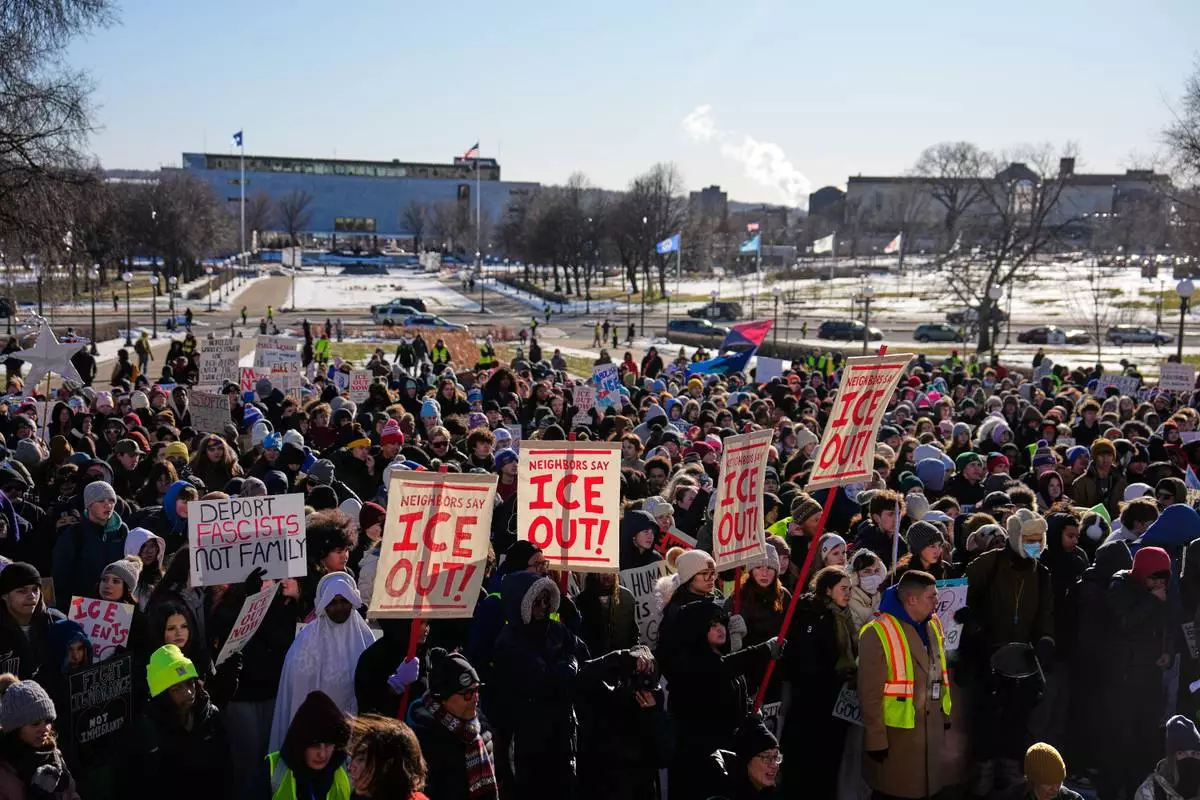
Waving signs reading “Love Melts ICE” and “DE-ICE MN,” hundreds of teenagers left school in St. Paul and marched in freezing temperatures to the state Capitol for a protest and rally.

The University of Minnesota, meanwhile, informed its 50,000-plus students that there could be online options for some classes when the new term starts next week. President Rebecca Cunningham noted that “violence and protests have come to our doorstep.” The campus sits next to the main Somali neighborhood in Minneapolis.

Associated Press reporters Julie Watson in San Diego, California; Rebecca Santana in Washington, D.C.; Ed White in Detroit; Giovanna Dell’Orto in Minneapolis; and Graham Lee Brewer in Oklahoma City, Oklahoma, contributed.

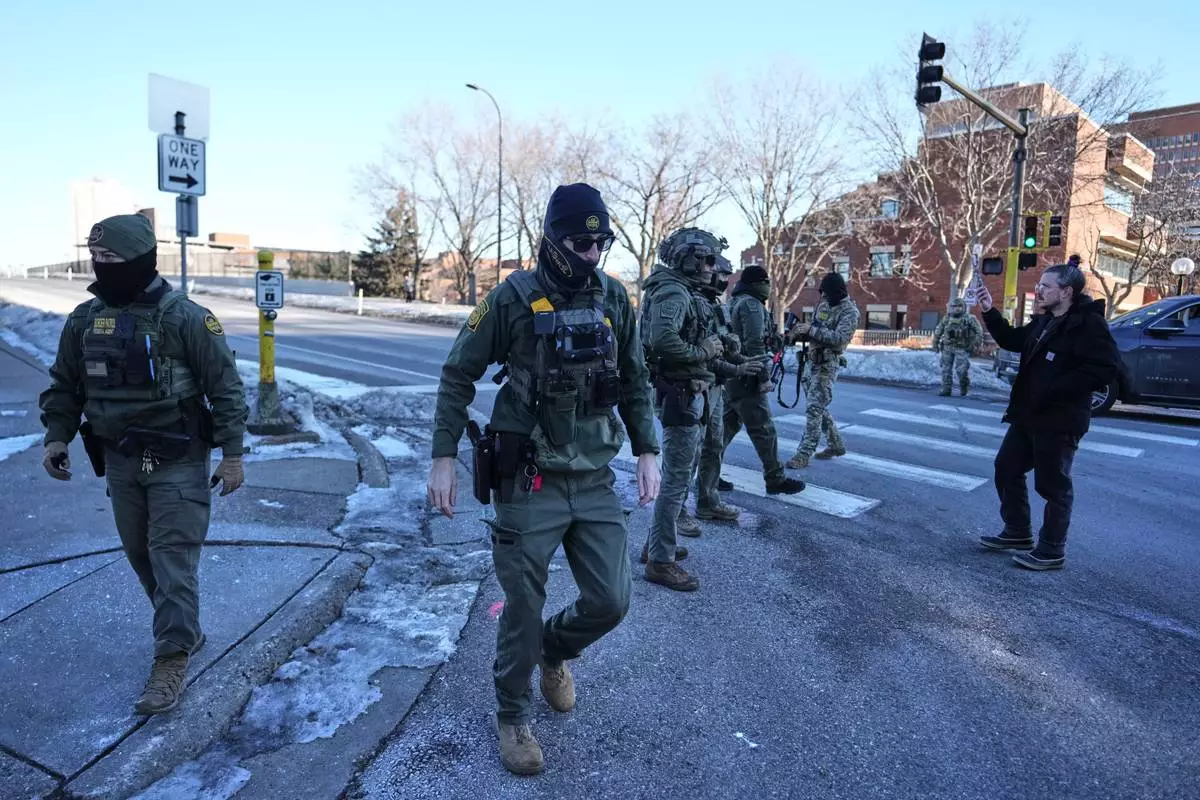
Federal immigration officers are seen Wednesday, Jan. 14, 2026, in Minneapolis. (AP Photo/Abbie Parr)

Federal immigration officers are seen Wednesday, Jan. 14, 2026, in Minneapolis. (AP Photo/Abbie Parr)

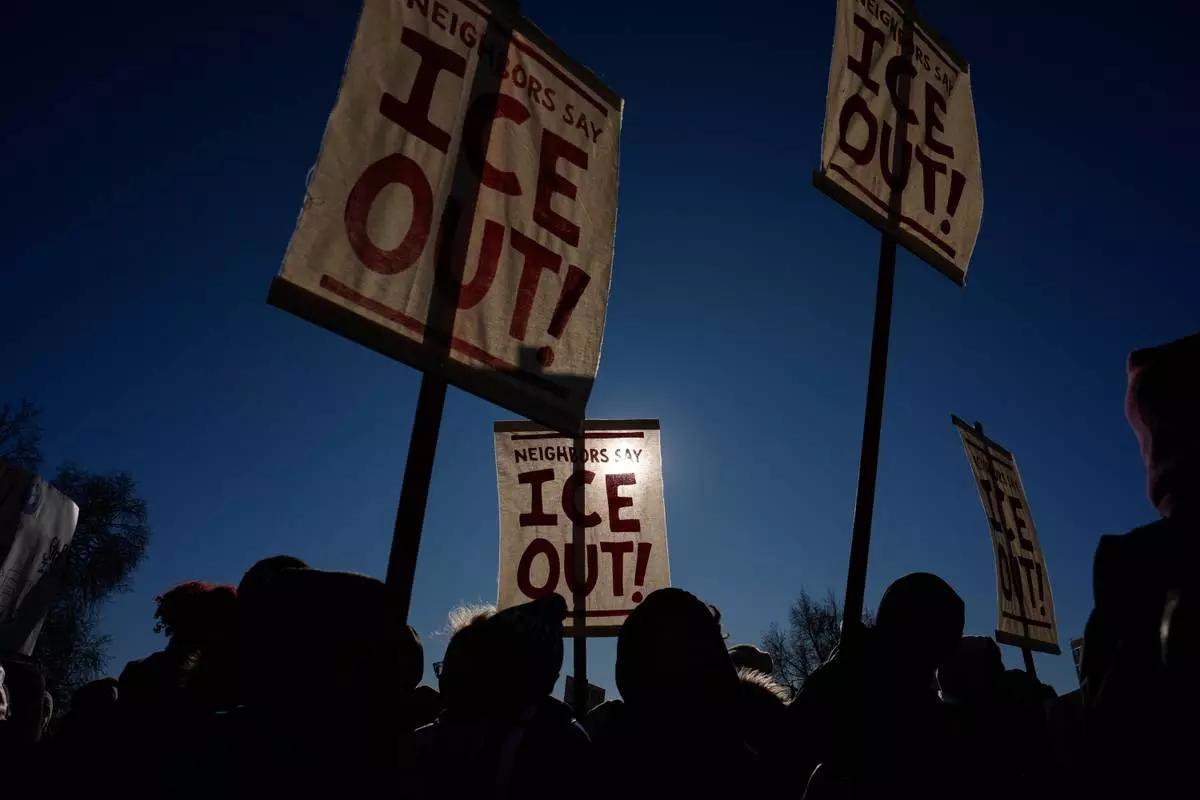
Hundreds of protesters gather in front of the Minnesota State Capitol in response to the death of Renee Good, who was fatally shot by an ICE officer last week, Wednesday, Jan. 14, 2026, in St. Paul, Minn. (AP Photo/John Locher)

Hundreds of protesters gather in front of the Minnesota State Capitol in response to the death of Renee Good, who was fatally shot by an ICE officer last week, Wednesday, Jan. 14, 2026, in St. Paul, Minn. (AP Photo/John Locher)

Protesters gather in front of the Minnesota State Capitol in response to the death of Renee Good, who was fatally shot by an ICE officer last week, Wednesday, Jan. 14, 2026, in St. Paul, Minn. (AP Photo/John Locher)

Protesters gather in front of the Minnesota State Capitol in response to the death of Renee Good, who was fatally shot by an ICE officer last week, Wednesday, Jan. 14, 2026, in St. Paul, Minn. (AP Photo/John Locher)

Protesters gather in front of the Minnesota State Capitol in response to the death of Renee Good, who was fatally shot by an ICE officer last week, Wednesday, Jan. 14, 2026, in St. Paul, Minn. (AP Photo/John Locher)

Protesters gather in front of the Minnesota State Capitol in response to the death of Renee Good, who was fatally shot by an ICE officer last week, Wednesday, Jan. 14, 2026, in St. Paul, Minn. (AP Photo/John Locher)

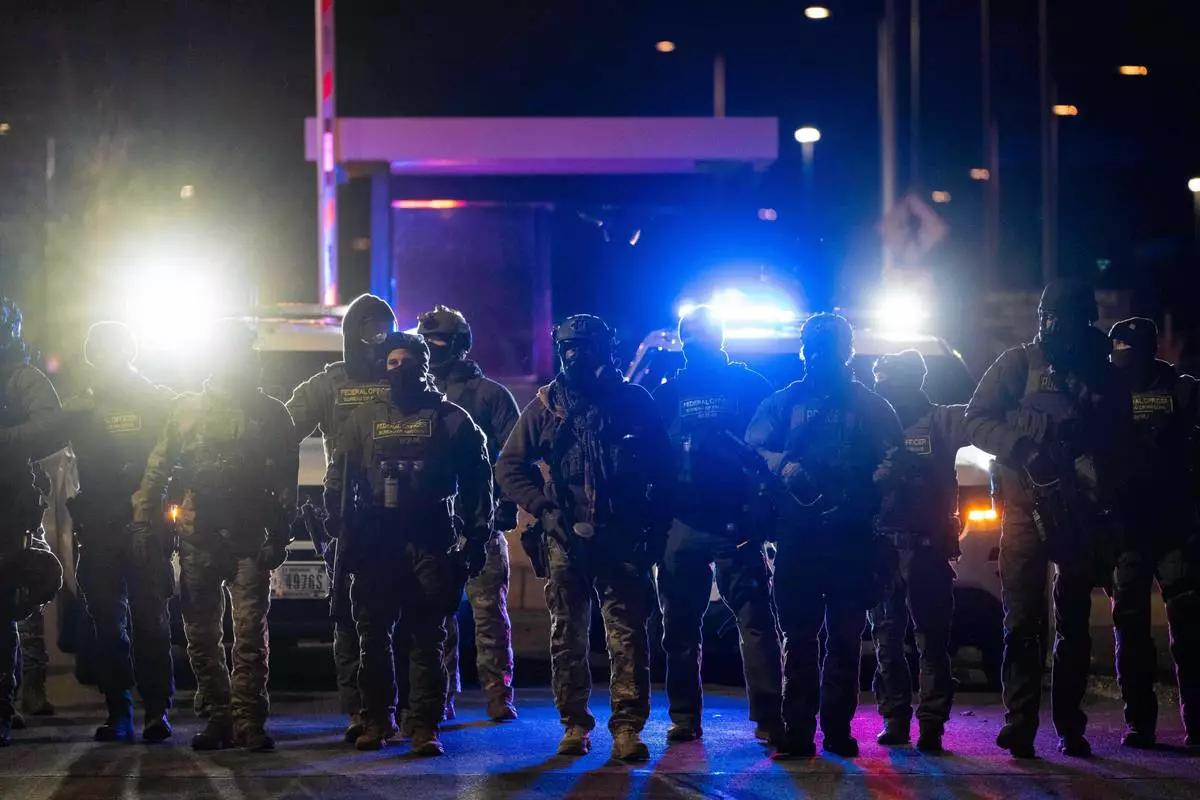
Federal officers stand guard after detaining people outside of Bishop Henry Whipple Federal Building, Tuesday, Jan. 13, 2026, in Minneapolis. (AP Photo/Adam Gray)

Federal officers stand guard after detaining people outside of Bishop Henry Whipple Federal Building, Tuesday, Jan. 13, 2026, in Minneapolis. (AP Photo/Adam Gray)

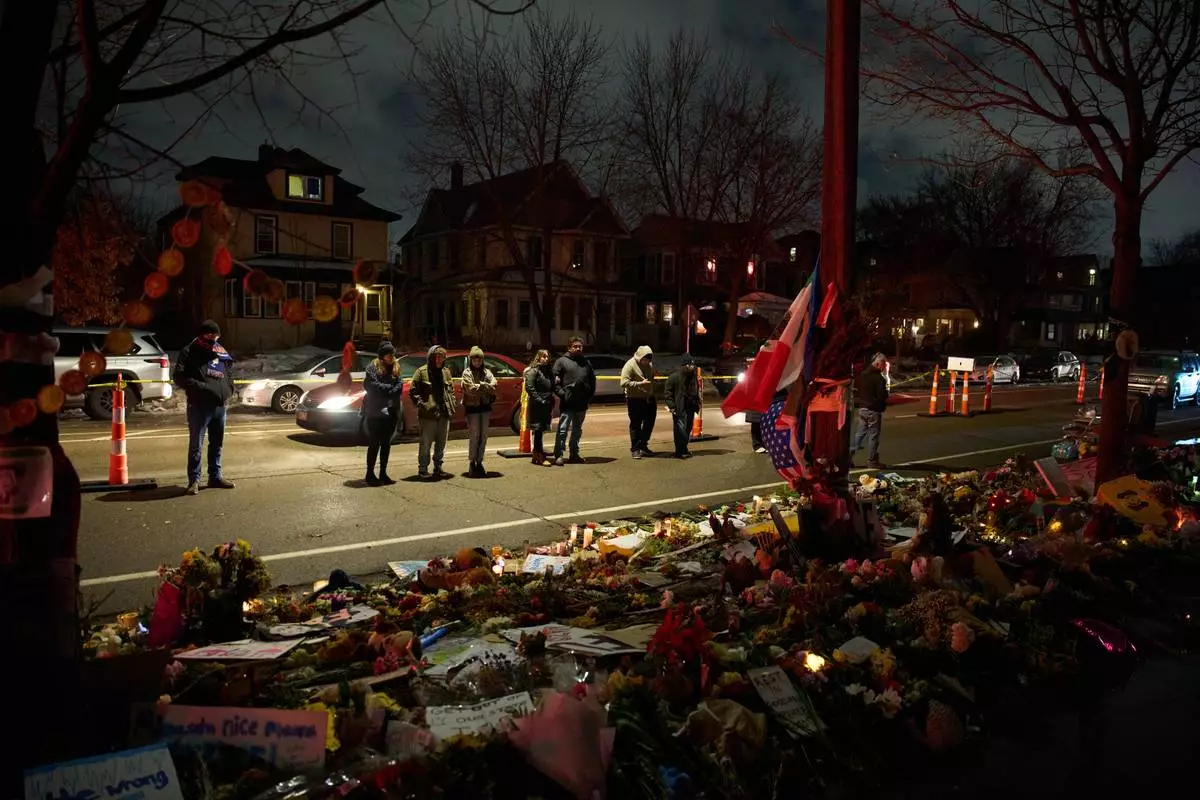
People visits a makeshift memorial for Renee Good, who was fatally shot by an ICE officer last week, Tuesday, Jan. 13, 2026, in Minneapolis. (AP Photo/John Locher)

People visits a makeshift memorial for Renee Good, who was fatally shot by an ICE officer last week, Tuesday, Jan. 13, 2026, in Minneapolis. (AP Photo/John Locher)

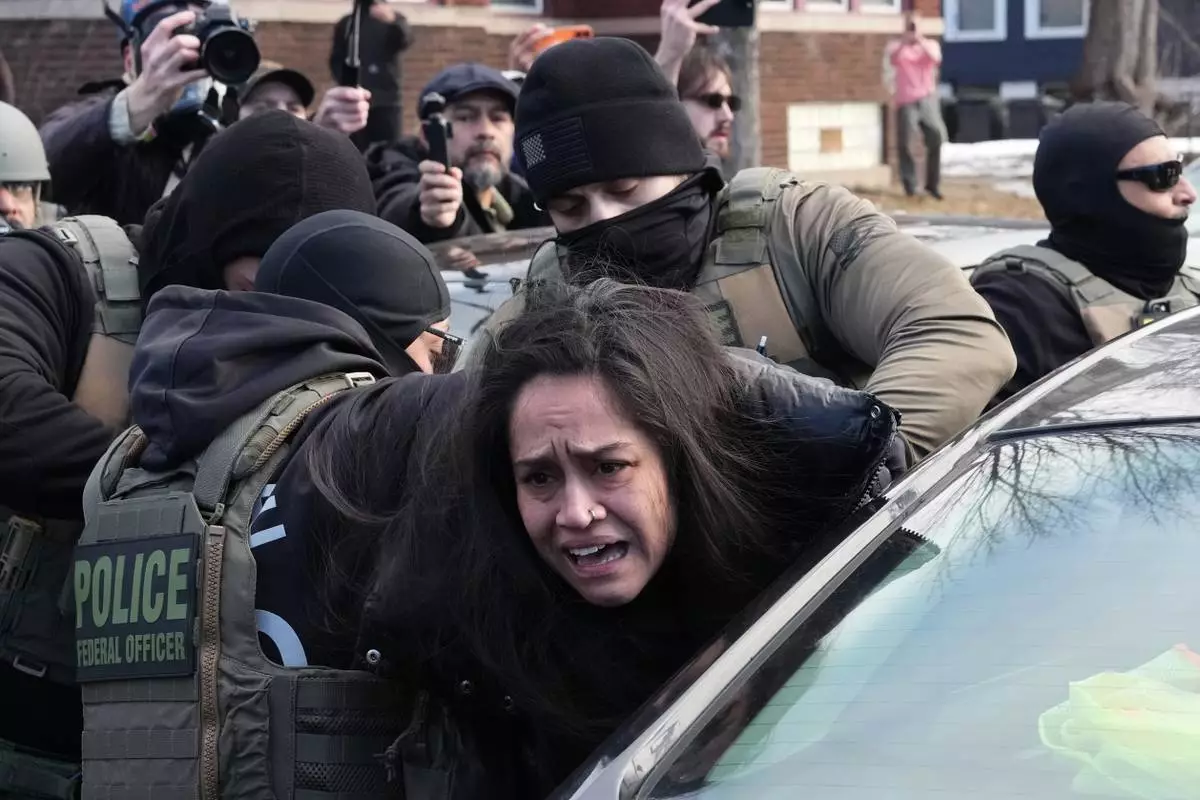
A person is detained by federal agents near the scene where Renee Good was fatally shot by an ICE officer last week, Tuesday, Jan. 13, 2026, in Minneapolis. (AP Photo/Adam Gray)

A person is detained by federal agents near the scene where Renee Good was fatally shot by an ICE officer last week, Tuesday, Jan. 13, 2026, in Minneapolis. (AP Photo/Adam Gray)

Recommended Articles