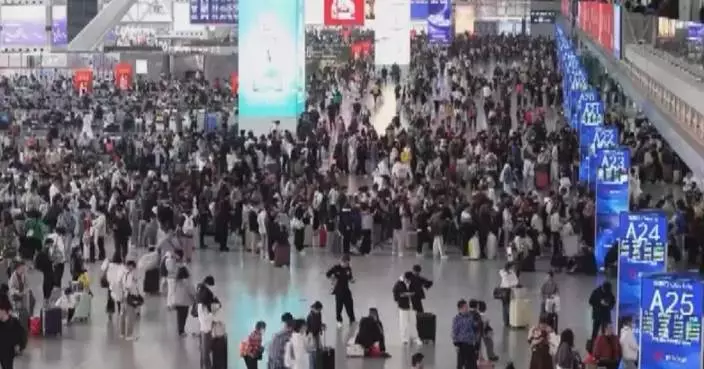
The recent tariff reduction for 90 days, agreed by China and the United States, has triggered a rapid surge in shipments bound for the U.S., creating a sudden boom in demand for Chinese logistics firms.
American buyers, who had previously halted orders due to tariff hikes, are now rushing to restock, creating a surge in demand. Meanwhile, freight workers are racing against time to manage an overwhelming volume of shipments being processed in bustling warehouses in Fuyong, a small town in Shenzhen which is home to over 4,300 cross-border logistics companies. "With tariffs now lowered, we're seeing a boom in demand at the moment. You can see it in the numbers of shipment. We used to have empty warehouse space around this time last week when you visited. Now, the volume probably triples what it was," said Ling Hushun, general manager of Shenzhen 1st International Logistics Group Co.
While businesses welcome the rebound, the spike in demand has strained capacity, driving up freight costs, and pushing logistics companies to adapt quickly.
"Shipments have surged so suddenly that neither we nor the airlines were fully prepared. There are still capacity shortages. Airlines are now adding flights, and rates are going up," said Ling.
The surge in activity serves as a clear reminder of China's crucial role in global trade. Ling sees the rebound as proof that U.S. reliance on Chinese goods isn't easily severed.
"Trade between China and the U.S. can't just stop on a whim. Chinese products remain highly recognized in the U.S.," said Ling.
Pago Logistics, another firm in international logistics, has also witnessed the tariff reduction's effects firsthand.
"All of the goods you see in this warehouse right now are being shipped to the U.S.," said Tan Fangqiang, CEO of Pago Logistics .
With uncertainty looming over global trade, many U.S. buyers are choosing to ship goods in bulk to American warehouses, locking in costs before demand surges further.
"I noticed a significant spike in orders after the 14th, about a 40- to 60-percent increase. If this pace continues, I expect we could hit a 80-percent increase soon," said Tan.
Although freight costs are rising, Tan said that the increases are minor compared to the cost of tariffs. Even with higher prices, shipments to the U.S. continue to roll in, proving the U.S. reliance on Chinese goods.
"Can the U.S. really decouple from Chinese manufacturing? I don't think so -- not in the short term. Look at big U.S. retailers like Walmart and Costco, 70 to 80 percent of their goods come from China,"said Tan.
As the trade between China and the U.S. remain unpredictable, logistics firms need to move quickly, balancing new challenges while riding this latest surge in demand.
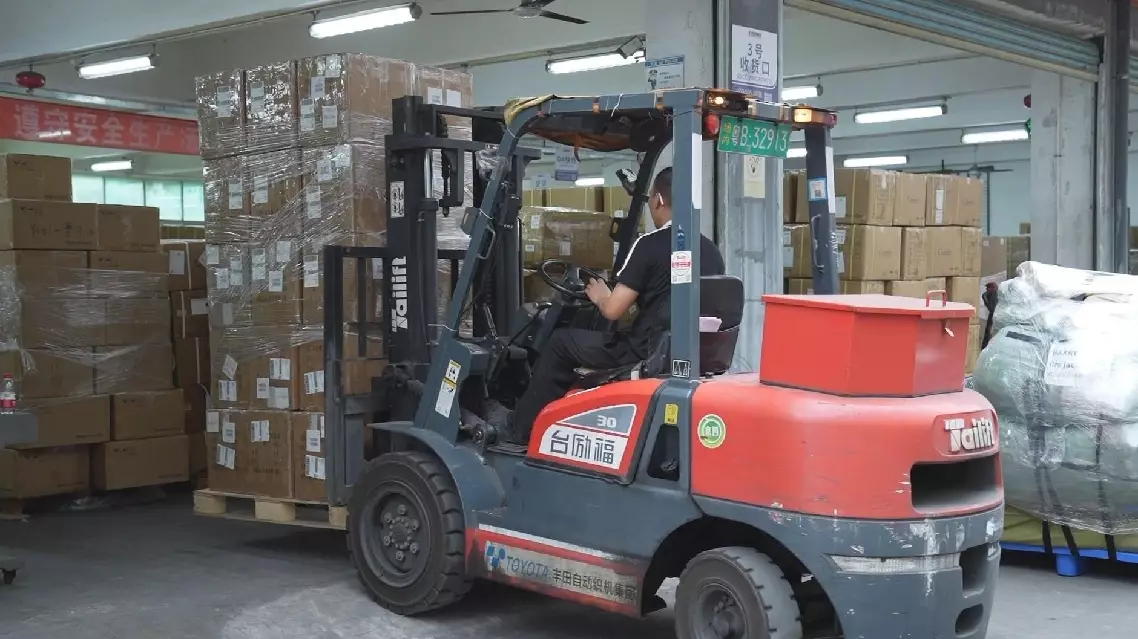
Tariff reduction sparks surge in U.S.-bound shipments in China
Tariff reduction sparks surge in U.S.-bound shipments in China
Tariff reduction sparks surge in U.S.-bound shipments in China