Skip to Content Facebook Feature Image

George Wendt, who played beloved barfly Norm on 'Cheers' and found another home onstage, dies at 76

ENT

George Wendt, who played beloved barfly Norm on 'Cheers' and found another home onstage, dies at 76
ENT

ENT

George Wendt, who played beloved barfly Norm on 'Cheers' and found another home onstage, dies at 76

2025-05-21 07:12 Last Updated At:07:21

NEW YORK (AP) — George Wendt, an actor with an Everyman charm who played the affable, beer-loving barfly Norm on the hit 1980s TV comedy “Cheers” and later crafted a stage career that took him to Broadway in “Art,” “Hairspray” and “Elf,” has died. He was 76.

Wendt's family said he died early Tuesday morning, peacefully in his sleep while at home, according to the publicity firm The Agency Group.

More Images
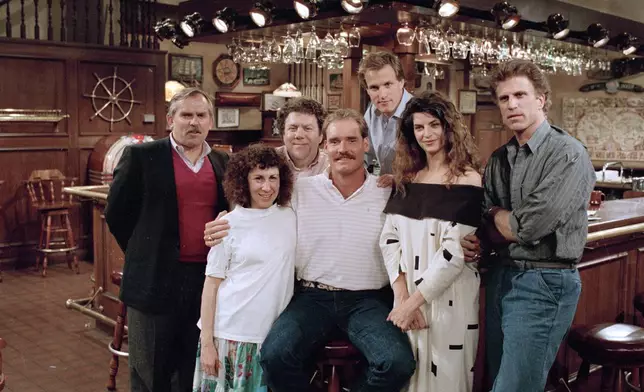
FILE -Boston Red Sox third baseman Wade Boggs, center, poses, March 2, 1988, with the cast of "Cheers" during rehearsal for an episode in which he appears. Cast members include, John Ratzenberger, Rhea Perlman, George Wendt, Woody Harrelson, Kirstie Alley and Ted Danson. (AP Photo/Ira Mark Gostin, File)
FILE -Boston Red Sox third baseman Wade Boggs, center, poses, March 2, 1988, with the cast of "Cheers" during rehearsal for an episode in which he appears. Cast members include, John Ratzenberger, Rhea Perlman, George Wendt, Woody Harrelson, Kirstie Alley and Ted Danson. (AP Photo/Ira Mark Gostin, File)

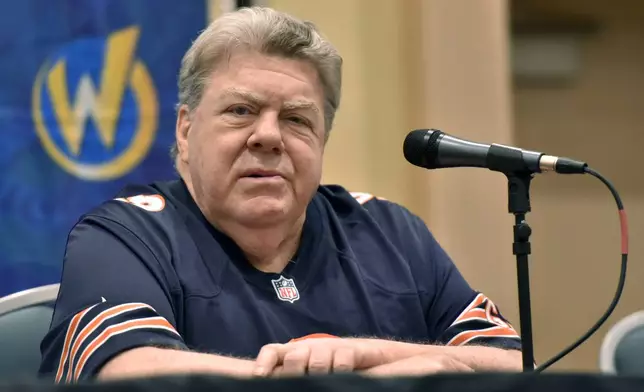
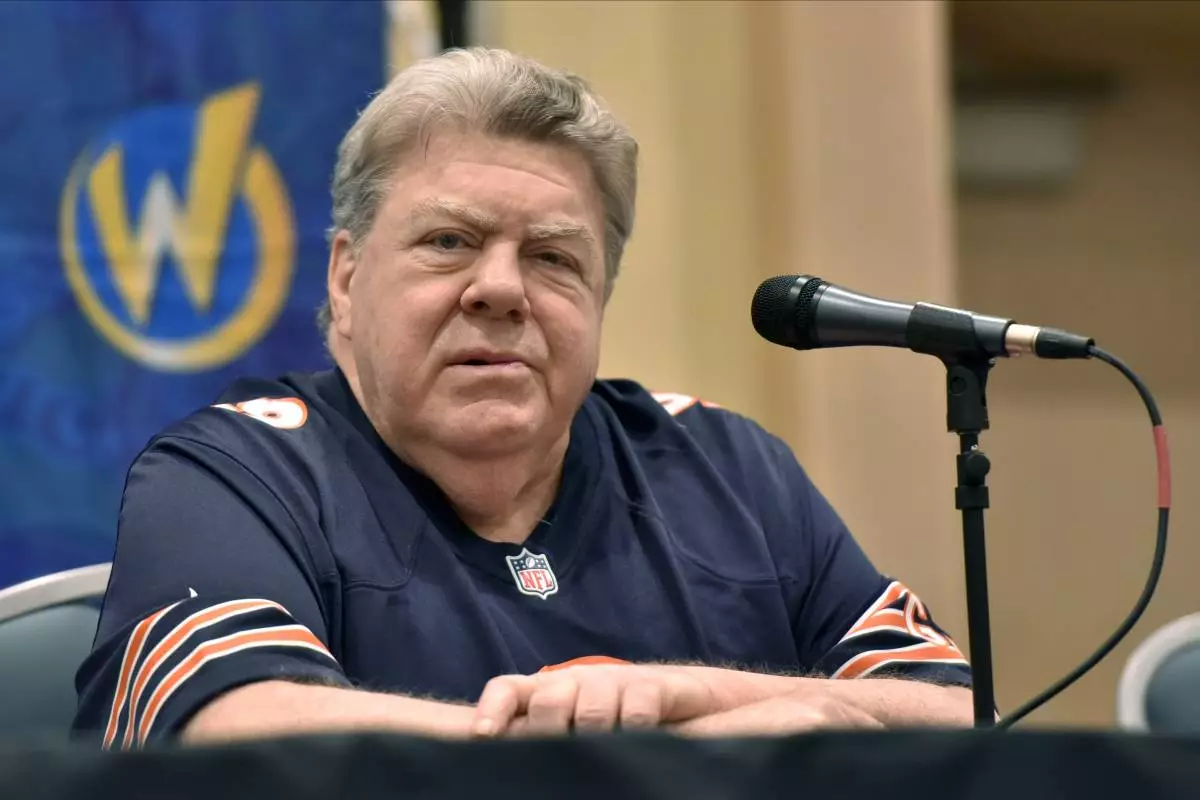
FILE - George Wendt participates during a Q&A panel on Day 2 at Wizard World at the Donald E Stephens Convention Center, Saturday, Aug. 24, 2019, in Chicago. (Photo by Rob Grabowski/Invision/AP, file)
FILE - George Wendt participates during a Q&A panel on Day 2 at Wizard World at the Donald E Stephens Convention Center, Saturday, Aug. 24, 2019, in Chicago. (Photo by Rob Grabowski/Invision/AP, file)

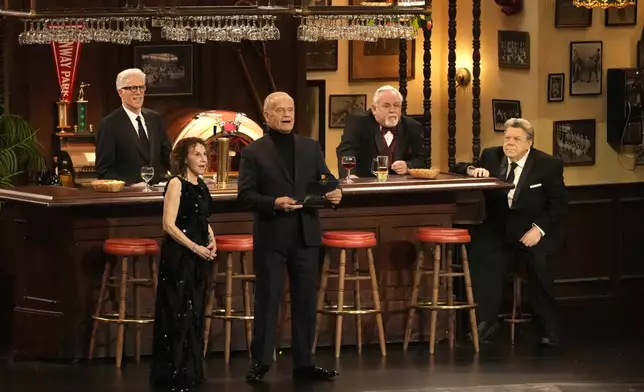
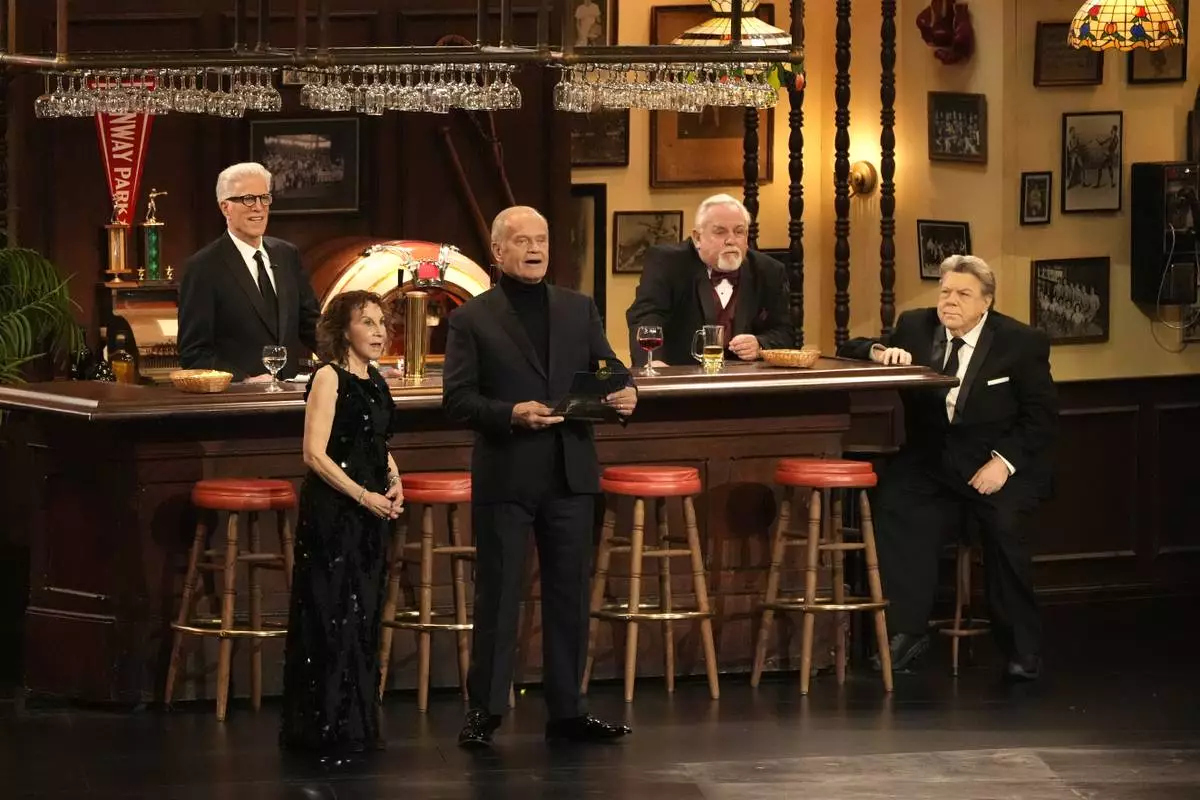
FILE - Rhea Perlman, from left, Kelsey Grammar, Ted Danson, John Ratzenberger, George Wendt present the award for outstanding writing for a comedy series during the 75th Primetime Emmy Awards on Monday, Jan. 15, 2024, at the Peacock Theater in Los Angeles. (AP Photo/Chris Pizzello, file)
FILE - Rhea Perlman, from left, Kelsey Grammar, Ted Danson, John Ratzenberger, George Wendt present the award for outstanding writing for a comedy series during the 75th Primetime Emmy Awards on Monday, Jan. 15, 2024, at the Peacock Theater in Los Angeles. (AP Photo/Chris Pizzello, file)

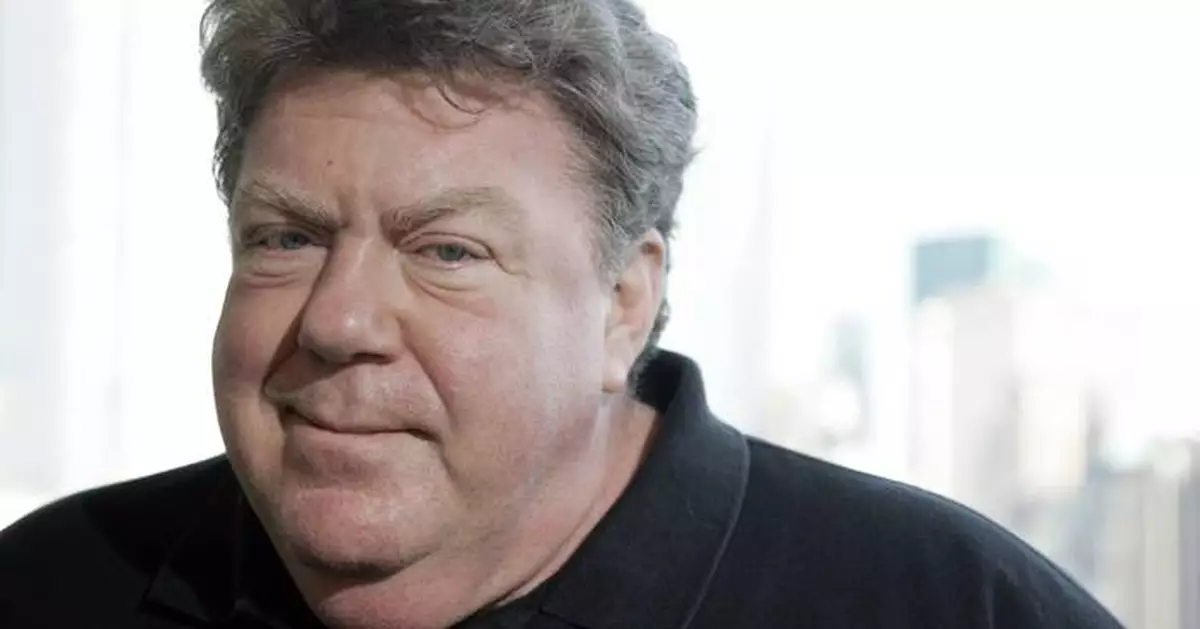
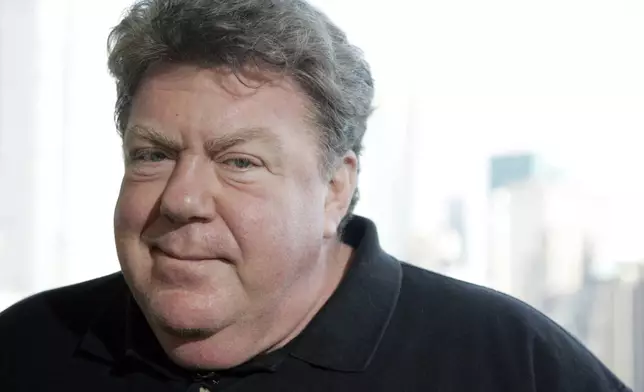
FILE - Actor George Wendt posing for a portrait in New York, Oct. 20, 2009. (AP Photo/Jeff Christensen, file)

FILE - Actor George Wendt posing for a portrait in New York, Oct. 20, 2009. (AP Photo/Jeff Christensen, file)

“George was a doting family man, a well-loved friend and confidant to all of those lucky enough to have known him,” the family said in a statement. “He will be missed forever.” The family has requested privacy during this time.

Despite a long career of roles onstage and on TV, it was as gentle and henpecked Norm Peterson on “Cheers” that he was most associated, earning six straight Emmy Award nominations for best supporting actor in a comedy series from 1984-89.

The series was centered on lovable losers in a Boston bar and starred Ted Danson, Shelley Long, Rhea Perlman, Kelsey Grammer, John Ratzenberger, Kirstie Alley and Woody Harrelson. It would spin off another megahit in “Frasier” and was nominated for an astounding 117 Emmy Awards, winning 28 of them.

Wendt, who spent six years in Chicago’s renowned Second City improv troupe before sitting on a barstool at the place where everybody knows your name, didn't have high hopes when he auditioned for “Cheers.”

“My agent said, ‘It’s a small role, honey. It’s one line. Actually, it’s one word.’ The word was ‘beer.’ I was having a hard time believing I was right for the role of ‘the guy who looked like he wanted a beer.’ So I went in, and they said, ‘It’s too small a role. Why don’t you read this other one?’ And it was a guy who never left the bar,” Wendt told GQ in an oral history of “Cheers.”

“Cheers” premiered on Sept. 30, 1982, and spent the first season with low ratings. NBC president Brandon Tartikoff championed the show, and it was nominated for an Emmy for best comedy series in its first season. Some 80 million people would tune in to watch its series finale 11 years later.

Wendt became a fan favorite in and outside the bar — his entrances were cheered with a warm “Norm!” — and his wisecracks always landed. “How’s a beer sound, Norm?” he would be asked by the bartender. “I dunno. I usually finish them before they get a word in,” he’d respond.

While the beer the cast drank on set was nonalcoholic, Wendt and other “Cheers” cast members have admitted they were tipsy on May 20, 1993, when they watched the show’s final episode then appeared together on “The Tonight Show” in a live broadcast from the Bull and Finch Pub in Boston, the bar that inspired the series.

″We had been drinking heavily for two hours but nobody thought to feed us,” Wendt told the Beaver County Times of Pennsylvania in 2009. “We were nowhere near as cute as we thought we were.”

Perlman, who regularly served Wendt on “Cheers,” in a statement called him “the sweetest, kindest man I ever met. It was impossible not to like him.

"As Carla, I was often standing next to him, as Norm always took the same seat at the end of the bar, which made it easy to grab him and beat the crap out of him at least once a week. I loved doing it and he loved pretending it didn’t hurt. What a guy! I’ll miss him more than words can say.”

After “Cheers,” Wendt starred in his own short-lived sitcom “The George Wendt Show” — “too bad he had to step out of Norm and down so far from that corner stool for his debut stanza,” sniffed Variety — and had guest spots on TV shows like “The Ghost Whisperer,” “Harry’s Law” and “Portlandia.” He was part of a brotherhood of Chicago Everymen who gathered over sausage and beers and adored “Da Bears” on “Saturday Night Live.” In 2023, he competed on “The Masked Singer.”

But he found steady work onstage: Wendt slipped on Edna Turnblad’s housecoat in Broadway’s “Hairspray” beginning in 2007, and was in the Tony Award-winning play “Art” in New York and London.

He starred in the national tour of “12 Angry Men” and appeared in a production of David Mamet’s “Lakeboat.” He also starred in regional productions of “Death of a Salesman,” “The Odd Couple,” “Never Too Late” and “Funnyman.”

“A, it’s by far the most fun, but B, I seem to have been kicked out of television,” Wendt told the Kansas City Star in 2011. “I overstayed my welcome. But theater suits me.”

Wendt had an affinity for playing Santa Claus, donning the famous red outfit in the stage musical “Elf” on Broadway in 2017, the TV movie “Santa Baby” with Jenny McCarthy in 2006 and in the doggie Disney video “Santa Buddies” in 2009. He also played Father Christmas for TV specials by Larry the Cable Guy and Stephen Colbert.

“I think it just proves that if you stay fat enough and get old enough, the offers start rolling in,” the actor joked to the AP in his Broadway dressing room.

Born in Chicago, Wendt attended Campion High School, a Catholic boarding school in Prairie du Chien, Wisconsin, and then Notre Dame, where he rarely went to class and was kicked out. He transferred to Rockhurst University in Kansas City and graduated, after majoring in economics.

He found a home at Second City in both the touring company and the mainstage.

“I think comedy is my long suit, for sure. My approach to comedy is usually not full-bore clownish,” he told the AP. “If you’re trying to showboat or step outside, it doesn’t always work. There are certain performers who almost specialize in doing that, and they do it really well. But that’s not my approach.”

He had a lifelong association with beer. He had his first taste as an 8-year-old and got drunk at 16, at the World’s Fair in New York.

His beer knowledge was poured into the book ″Drinking With George: A Barstool Professional’s Guide to Beer,” co-written with Jonathan Grotenstein. One line: “Will Rogers once said he never met a man he didn’t like. I feel the same about beer.”

Part autobiography, part beer drinker’s guide, the book had Wendt’s conversational tone and lists, such as “Five Good Bar Bets,” ″77 Toasts from Around the World” and ”(More Than) 100 Ways to Say That You’re Drunk,” which alphabetically lists 126 synonyms from “annihilated” through “zozzled.”

He is survived by his wife, Second City alum Bernadette Birkett, who voiced Norm’s never-seen not-so better half, Vera, on “Cheers”; his children, Hilary, Joe and Daniel; and his stepchildren, Joshua and Andrew.

“From his early days with The Second City to his iconic role as Norm on ‘Cheers,’ George Wendt’s work showcased how comedy can create indelible characters that feel like family. Over the course of 11 seasons, he brought warmth and humor to one of television’s most beloved roles,” National Comedy Center Executive Director Journey Gunderson said in a statement.
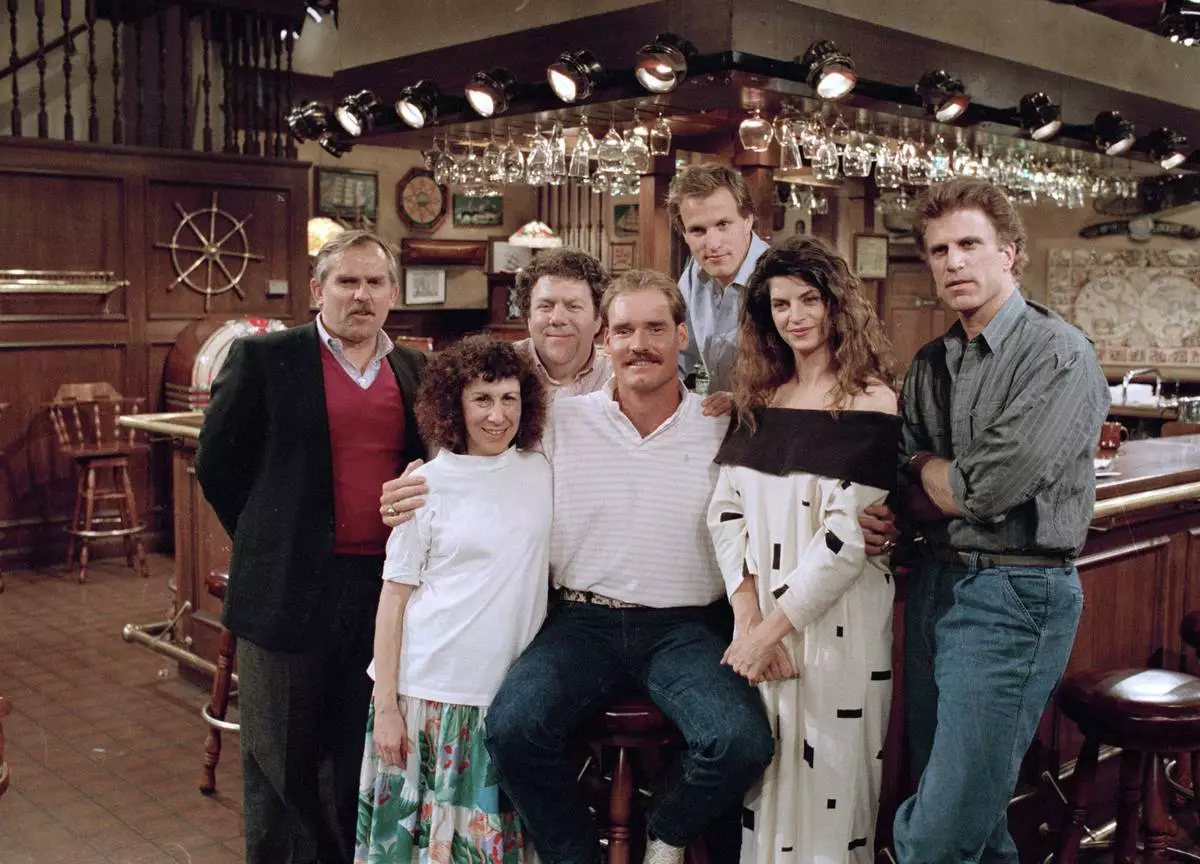
FILE -Boston Red Sox third baseman Wade Boggs, center, poses, March 2, 1988, with the cast of "Cheers" during rehearsal for an episode in which he appears. Cast members include, John Ratzenberger, Rhea Perlman, George Wendt, Woody Harrelson, Kirstie Alley and Ted Danson. (AP Photo/Ira Mark Gostin, File)
FILE -Boston Red Sox third baseman Wade Boggs, center, poses, March 2, 1988, with the cast of "Cheers" during rehearsal for an episode in which he appears. Cast members include, John Ratzenberger, Rhea Perlman, George Wendt, Woody Harrelson, Kirstie Alley and Ted Danson. (AP Photo/Ira Mark Gostin, File)

FILE - George Wendt participates during a Q&A panel on Day 2 at Wizard World at the Donald E Stephens Convention Center, Saturday, Aug. 24, 2019, in Chicago. (Photo by Rob Grabowski/Invision/AP, file)
FILE - George Wendt participates during a Q&A panel on Day 2 at Wizard World at the Donald E Stephens Convention Center, Saturday, Aug. 24, 2019, in Chicago. (Photo by Rob Grabowski/Invision/AP, file)

FILE - Rhea Perlman, from left, Kelsey Grammar, Ted Danson, John Ratzenberger, George Wendt present the award for outstanding writing for a comedy series during the 75th Primetime Emmy Awards on Monday, Jan. 15, 2024, at the Peacock Theater in Los Angeles. (AP Photo/Chris Pizzello, file)

FILE - Rhea Perlman, from left, Kelsey Grammar, Ted Danson, John Ratzenberger, George Wendt present the award for outstanding writing for a comedy series during the 75th Primetime Emmy Awards on Monday, Jan. 15, 2024, at the Peacock Theater in Los Angeles. (AP Photo/Chris Pizzello, file)

FILE - Actor George Wendt posing for a portrait in New York, Oct. 20, 2009. (AP Photo/Jeff Christensen, file)


FILE - Actor George Wendt posing for a portrait in New York, Oct. 20, 2009. (AP Photo/Jeff Christensen, file)

WASHINGTON (AP) — Becky Pepper-Jackson finished third in the discus throw in West Virginia last year though she was in just her first year of high school. Now a 15-year-old sophomore, Pepper-Jackson is aware that her upcoming season could be her last.

West Virginia has banned transgender girls like Pepper-Jackson from competing in girls and women's sports, and is among the more than two dozen states with similar laws. Though the West Virginia law has been blocked by lower courts, the outcome could be different at the conservative-dominated Supreme Court, which has allowed multiple restrictions on transgender people to be enforced in the past year.

The justices are hearing arguments Tuesday in two cases over whether the sports bans violate the Constitution or the landmark federal law known as Title IX that prohibits sex discrimination in education. The second case comes from Idaho, where college student Lindsay Hecox challenged that state's law.

Decisions are expected by early summer.

President Donald Trump's Republican administration has targeted transgender Americans from the first day of his second term, including ousting transgender people from the military and declaring that gender is immutable and determined at birth.

Pepper-Jackson has become the face of the nationwide battle over the participation of transgender girls in athletics that has played out at both the state and federal levels as Republicans have leveraged the issue as a fight for athletic fairness for women and girls.

“I think it’s something that needs to be done,” Pepper-Jackson said in an interview with The Associated Press that was conducted over Zoom. “It’s something I’m here to do because ... this is important to me. I know it’s important to other people. So, like, I’m here for it.”

She sat alongside her mother, Heather Jackson, on a sofa in their home just outside Bridgeport, a rural West Virginia community about 40 miles southwest of Morgantown, to talk about a legal fight that began when she was a middle schooler who finished near the back of the pack in cross-country races.

Pepper-Jackson has grown into a competitive discus and shot put thrower. In addition to the bronze medal in the discus, she finished eighth among shot putters.

She attributes her success to hard work, practicing at school and in her backyard, and lifting weights. Pepper-Jackson has been taking puberty-blocking medication and has publicly identified as a girl since she was in the third grade, though the Supreme Court's decision in June upholding state bans on gender-affirming medical treatment for minors has forced her to go out of state for care.

Her very improvement as an athlete has been cited as a reason she should not be allowed to compete against girls.

“There are immutable physical and biological characteristic differences between men and women that make men bigger, stronger, and faster than women. And if we allow biological males to play sports against biological females, those differences will erode the ability and the places for women in these sports which we have fought so hard for over the last 50 years,” West Virginia's attorney general, JB McCuskey, said in an AP interview. McCuskey said he is not aware of any other transgender athlete in the state who has competed or is trying to compete in girls or women’s sports.

Despite the small numbers of transgender athletes, the issue has taken on outsize importance. The NCAA and the U.S. Olympic and Paralympic Committees banned transgender women from women's sports after Trump signed an executive order aimed at barring their participation.

The public generally is supportive of the limits. An Associated Press-NORC Center for Public Affairs Research poll conducted in October 2025 found that about 6 in 10 U.S. adults “strongly” or “somewhat” favored requiring transgender children and teenagers to only compete on sports teams that match the sex they were assigned at birth, not the gender they identify with, while about 2 in 10 were “strongly” or “somewhat” opposed and about one-quarter did not have an opinion.

About 2.1 million adults, or 0.8%, and 724,000 people age 13 to 17, or 3.3%, identify as transgender in the U.S., according to the Williams Institute at the UCLA School of Law.

Those allied with the administration on the issue paint it in broader terms than just sports, pointing to state laws, Trump administration policies and court rulings against transgender people.

"I think there are cultural, political, legal headwinds all supporting this notion that it’s just a lie that a man can be a woman," said John Bursch, a lawyer with the conservative Christian law firm Alliance Defending Freedom that has led the legal campaign against transgender people. “And if we want a society that respects women and girls, then we need to come to terms with that truth. And the sooner that we do that, the better it will be for women everywhere, whether that be in high school sports teams, high school locker rooms and showers, abused women’s shelters, women’s prisons.”

But Heather Jackson offered different terms to describe the effort to keep her daughter off West Virginia's playing fields.

“Hatred. It’s nothing but hatred,” she said. "This community is the community du jour. We have a long history of isolating marginalized parts of the community.”

Pepper-Jackson has seen some of the uglier side of the debate on display, including when a competitor wore a T-shirt at the championship meet that said, “Men Don't Belong in Women's Sports.”

“I wish these people would educate themselves. Just so they would know that I’m just there to have a good time. That’s it. But it just, it hurts sometimes, like, it gets to me sometimes, but I try to brush it off,” she said.

One schoolmate, identified as A.C. in court papers, said Pepper-Jackson has herself used graphic language in sexually bullying her teammates.

Asked whether she said any of what is alleged, Pepper-Jackson said, “I did not. And the school ruled that there was no evidence to prove that it was true.”

The legal fight will turn on whether the Constitution's equal protection clause or the Title IX anti-discrimination law protects transgender people.

The court ruled in 2020 that workplace discrimination against transgender people is sex discrimination, but refused to extend the logic of that decision to the case over health care for transgender minors.

The court has been deluged by dueling legal briefs from Republican- and Democratic-led states, members of Congress, athletes, doctors, scientists and scholars.

The outcome also could influence separate legal efforts seeking to bar transgender athletes in states that have continued to allow them to compete.

If Pepper-Jackson is forced to stop competing, she said she will still be able to lift weights and continue playing trumpet in the school concert and jazz bands.

“It will hurt a lot, and I know it will, but that’s what I’ll have to do,” she said.

The Supreme Court stands is Washington, Friday, Jan. 9, 2026. (AP Photo/J. Scott Applewhite)

The Supreme Court stands is Washington, Friday, Jan. 9, 2026. (AP Photo/J. Scott Applewhite)

FILE - Protestors hold signs during a rally at the state capitol in Charleston, W.Va., on March 9, 2023. (AP Photo/Chris Jackson, file)

FILE - Protestors hold signs during a rally at the state capitol in Charleston, W.Va., on March 9, 2023. (AP Photo/Chris Jackson, file)

Recommended Articles