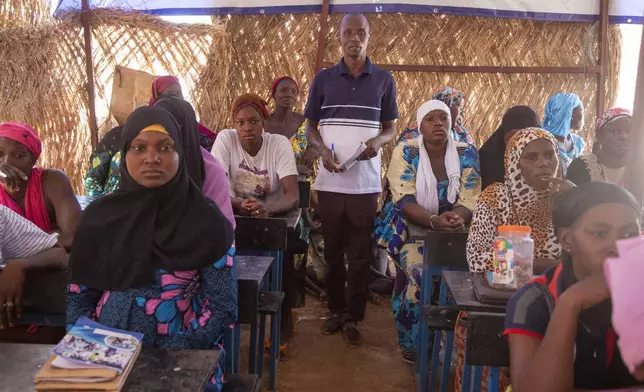
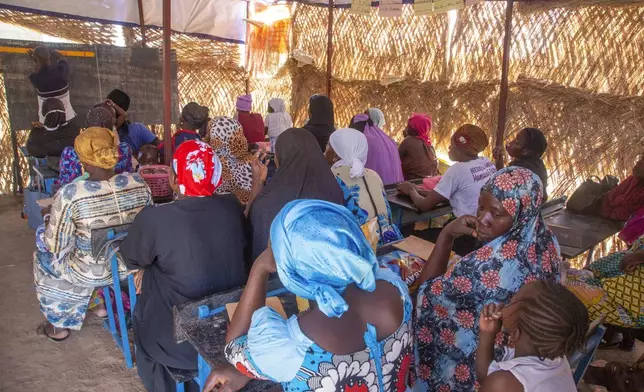
MOUNTOUGOULA, Mali (AP) — For Aminata Doumbia, an 18-year-old Malian, the “Shifin ni Tagne” project was a path for her life dreams. A phrase meaning “our future” in the country’s main local language, it refers to a yearslong program aimed at teaching around 20,000 young Malians to read and write in their local languages.
Backed by $25 million in funding from the U.S. Agency for International Development, or USAID, over five years, the project has now shut down following the Trump administration's decision to cut 90% of the agency’s foreign aid.
Click to Gallery
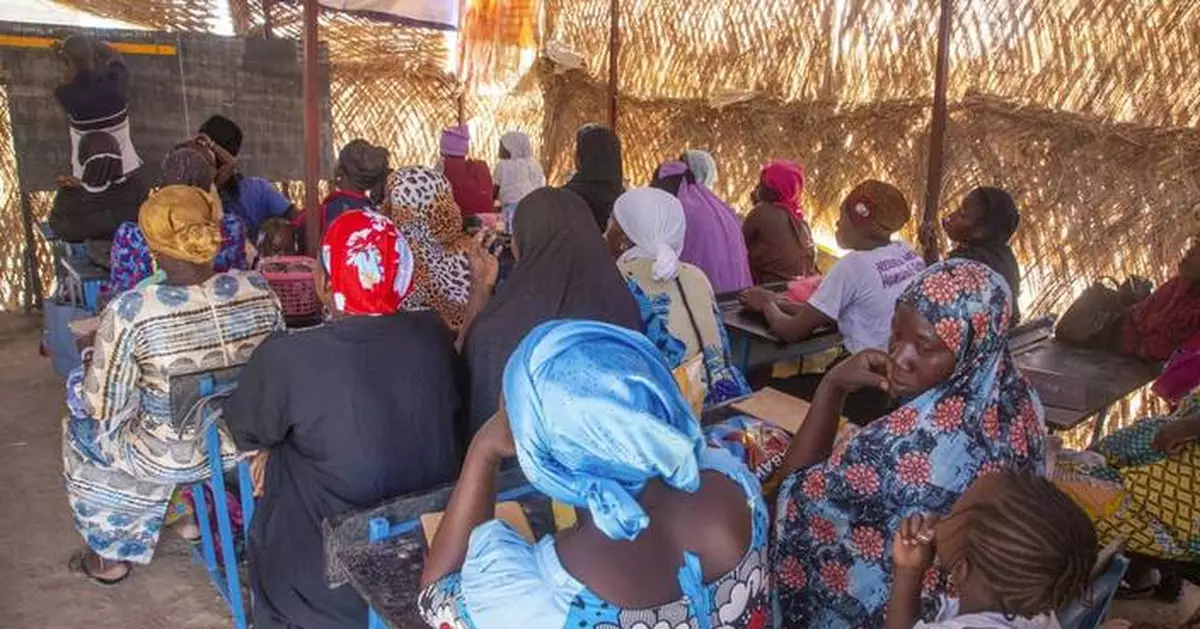
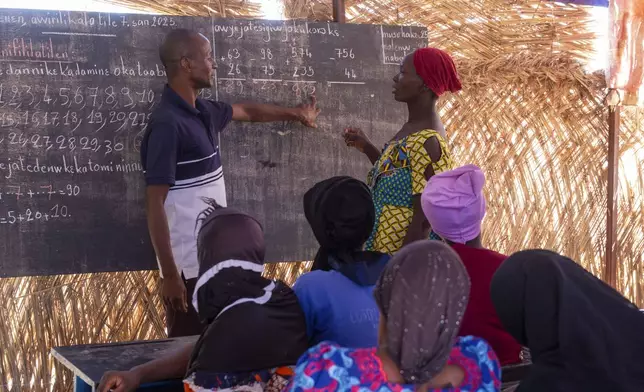
Sidi Yaya Sangare, left, teaches Bambara in a makeshift classroom in the village of Mountougoula, Mali, April 7, 2025. (AP Photo/Saydou Camara)
Sidi Yaya Sangare, left, teaches Bambara in a makeshift classroom in the village of Mountougoula, Mali, April 7, 2025. (AP Photo/Saydou Camara)
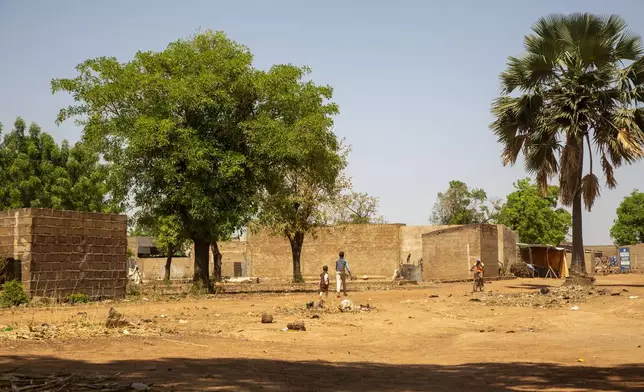
People walk through the village of Mountougoula, Mali, April 7, 2025. (AP Photo/Saydou Camara)
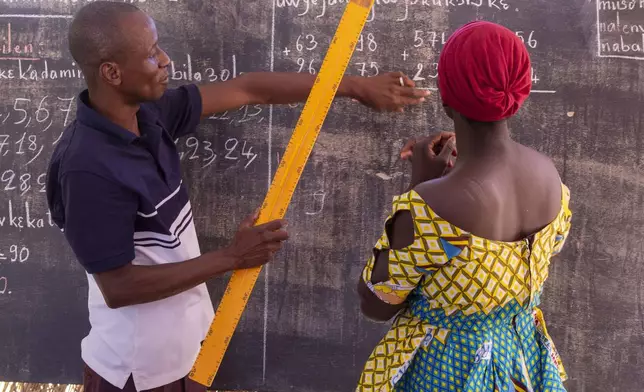
Sidi Yaya Sangare, center, teaches Bambara in a makeshift classroom in the village of Mountougoula, Mali, April 7, 2025. (AP Photo/Saydou Camara)
Sidi Yaya Sangare teaches Bambara in a makeshift classroom in the village of Mountougoula, Mali, April 7, 2025. (AP Photo/Saydou Camara)
“The joy I felt when I was selected for this project has been replaced by sadness,” said Doumbia in Mali's capital, Bamako.
She had hoped to take advantage of the empowerment program to train as a pastry chef.
”I don’t have any hope of realizing my dream (again)," Doumbia said.
Doumbia is among thousands of people who now find themselves stranded in Mali, a country ravaged by high poverty and insecurity levels and where 70% of the population of at least 22 million people haven’t had the opportunity to learn to read and write, according to Sylla Fatoumata Cissé, director of a government agency focusing on nonformal education and national languages in Mali.
The USAID funding cut also came at a time when Mali’s other development partners in Europe have withdrawn their support in the aftermath of the 2021 coup, which brought the current junta leader, Assimi Goita, to power.
For many, the literacy project was the only path to literacy and empowerment.
Once literate, program beneficiaries move on to the next stage, which involves the acquisition of vocational skills like hairdressing, carpentry, sewing, welding, and pastry-making, according to Modibo Sissoko, literacy supervisor at the Malian Association for Survival in the Sahel nonprofit involved in the “Shifin ni Tagne” project.
These skills enable the economically disadvantaged to create jobs for themselves, earn a living or support their families, Sissoko said.
“With the teaching of mother tongues, it’s possible to move quickly towards mass literacy among the population,” said Issiaka Ballo, a professor and researcher in native languages at Mali's University of Bamako.
On the other hand, "only 30% of the population has been educated in French,” the common language in the country, he added.
USAID’s involvement in Mali had made it the primary development partner of the government. The abrupt end of its assistance hit not only the literacy programs, but also others designed to increase adult education and expand the literacy project to public schools.
The Gaoussou Dabo School in the Malian capital, Bamako, is among 1,000 schools that benefited from mother-tongue education thanks to funding from USAID.
Teachers trained for the program last year continue to teach, but the monitoring and evaluation aspect of the program has been withdrawn.
The funding cut was "a big shock for us,” said Amadi Ba, a counsellor at the Pedagogical Animation Center, which is in charge of the school in Bamako.
In a country where local language-education relies solely on funding from Mali’s development partners with little to no help from the government, concerns exceed its immediate impact on the education of children.
In 2023, Mali's military government decided to make the country’s native tongues the official languages in place of French, which then became the “working language.” Official documents, including the constitution, the mining code and other texts, were then translated into the national languages.
The USAID cut will "certainly have a negative impact on the development of mother-tongue education, especially since it came in the middle of the school year,” Cissé said.
“We haven’t even had time to think about a mechanism to cushion the blow,” she added.
While it lasted, the program was beneficial to many in various ways.
Oumou Traoré, a mother of two who grows onions and eggplants for a living, recalled how the training improved her farming business, particularly in pricing her goods in Bamako's Mountougoula district.
“Since I learned to calculate the weight of my onions and keep my accounts in my mother tongue, I’ve started selling my onions myself,” said Traore, 29. “I now earn $95 instead of the $60 I used to get. This has encouraged me to grow other vegetables.”
The 2021 coup resulted in the country turning to Russia as a key ally after severing ties with the West, including the U.S., which at some point was Mali's leading foreign aid donor.
While some experts have said the withdrawal of U.S. aid may open the door for rivals such as Russia, whose mercenaries have been accused of human rights abuses and extrajudicial killings in the country, some say USAID has left a hole too large to be filled by others.
“It will be difficult to find takers for the projects left behind by USAID,” said Fatimata Touré, a development specialist and director of the Research, Study and Training Group civic group in Mali.
For more on Africa and development: https://apnews.com/hub/africa-pulse
The Associated Press receives financial support for global health and development coverage in Africa from the Gates Foundation. The AP is solely responsible for all content. Find AP’s standards for working with philanthropies, a list of supporters and funded coverage areas at AP.org.
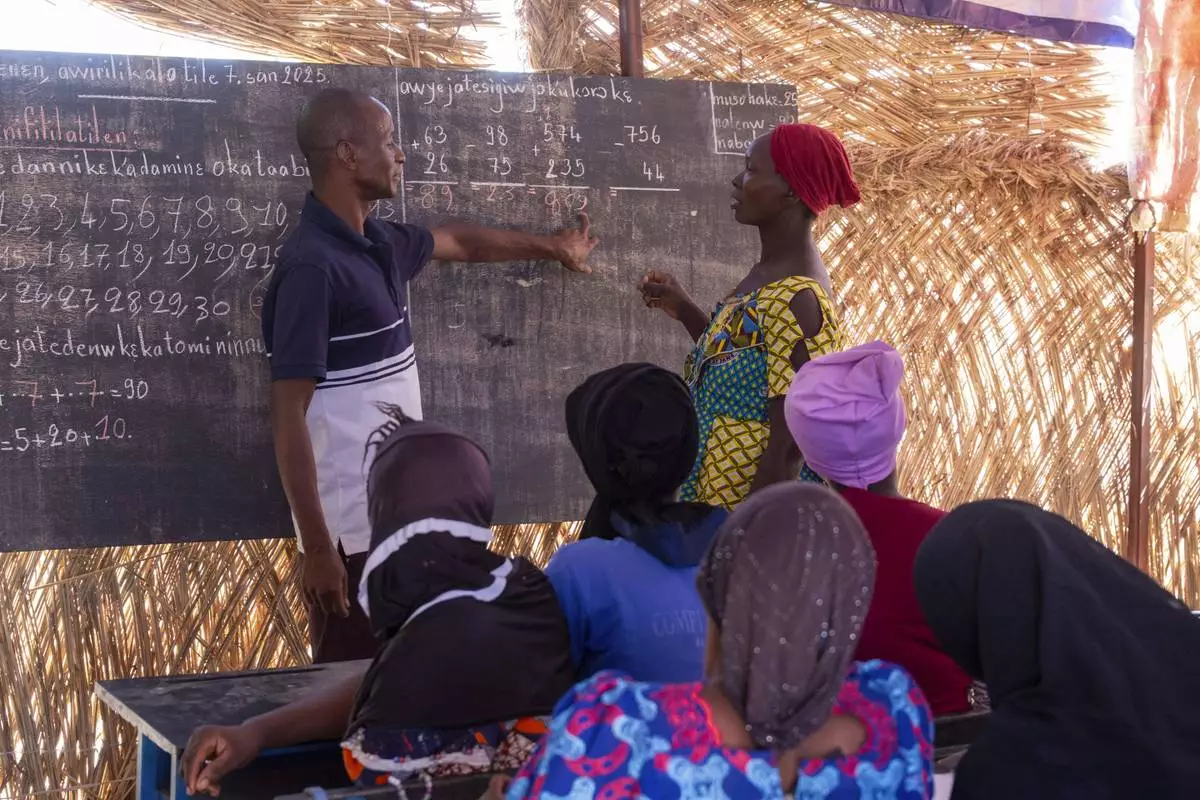
Sidi Yaya Sangare, left, teaches Bambara in a makeshift classroom in the village of Mountougoula, Mali, April 7, 2025. (AP Photo/Saydou Camara)
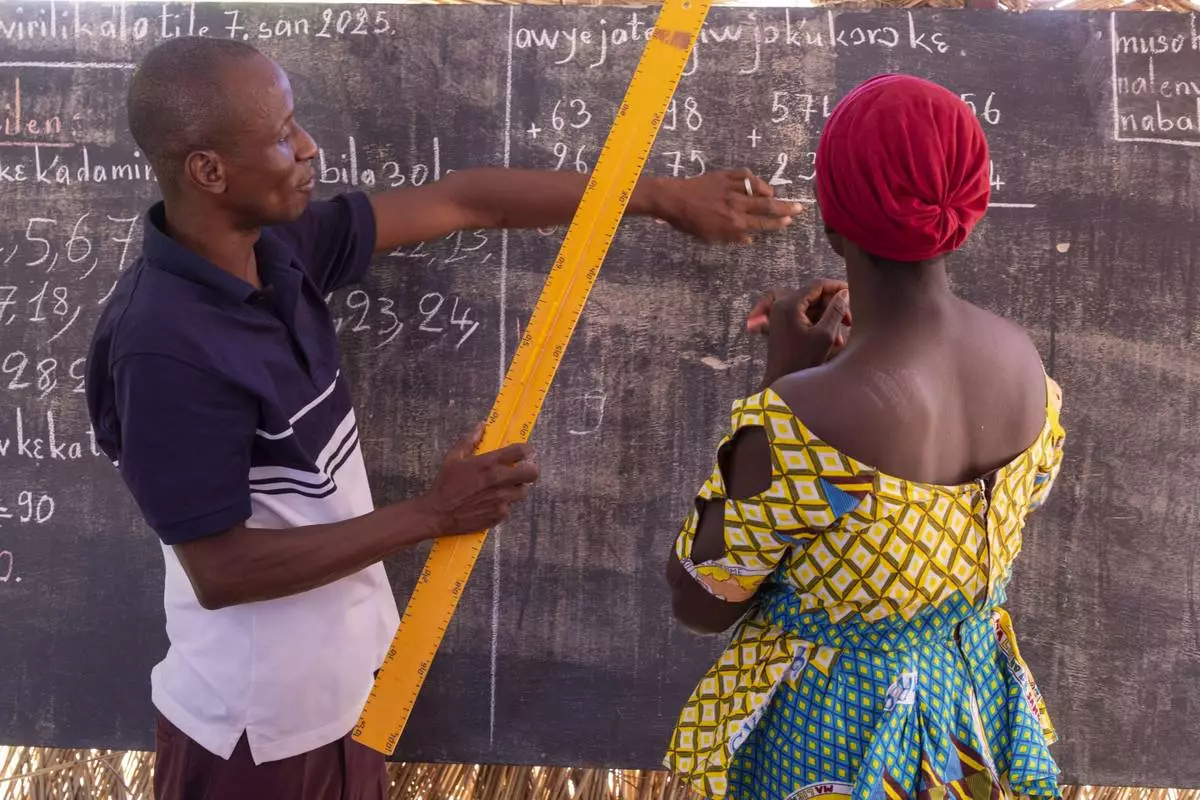
Sidi Yaya Sangare, left, teaches Bambara in a makeshift classroom in the village of Mountougoula, Mali, April 7, 2025. (AP Photo/Saydou Camara)
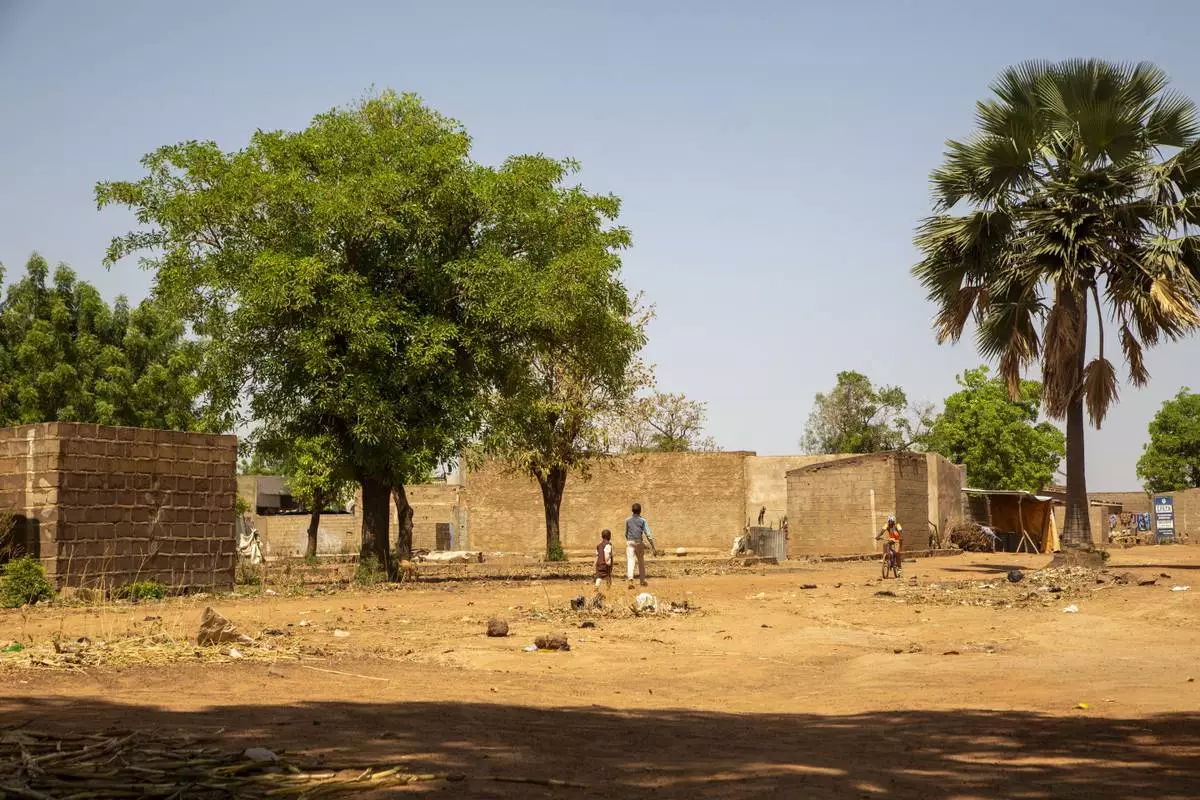
People walk through the village of Mountougoula, Mali, April 7, 2025. (AP Photo/Saydou Camara)
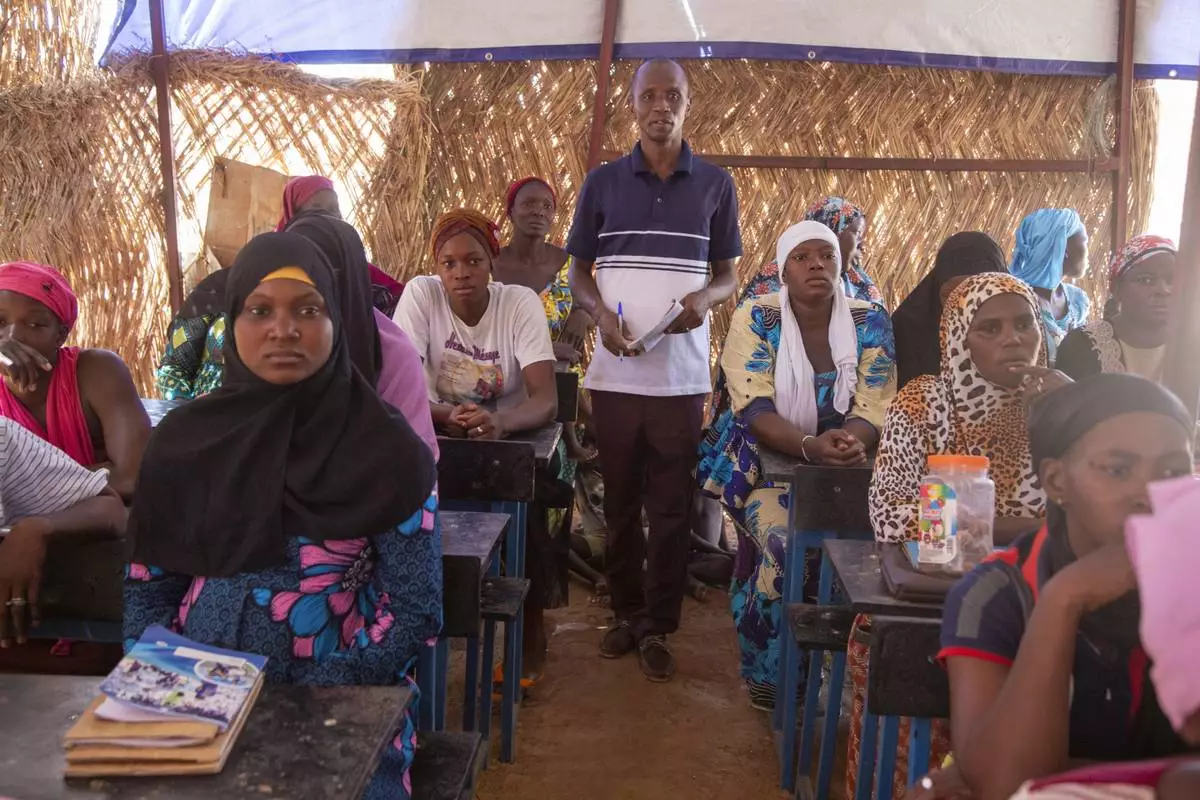
Sidi Yaya Sangare, center, teaches Bambara in a makeshift classroom in the village of Mountougoula, Mali, April 7, 2025. (AP Photo/Saydou Camara)
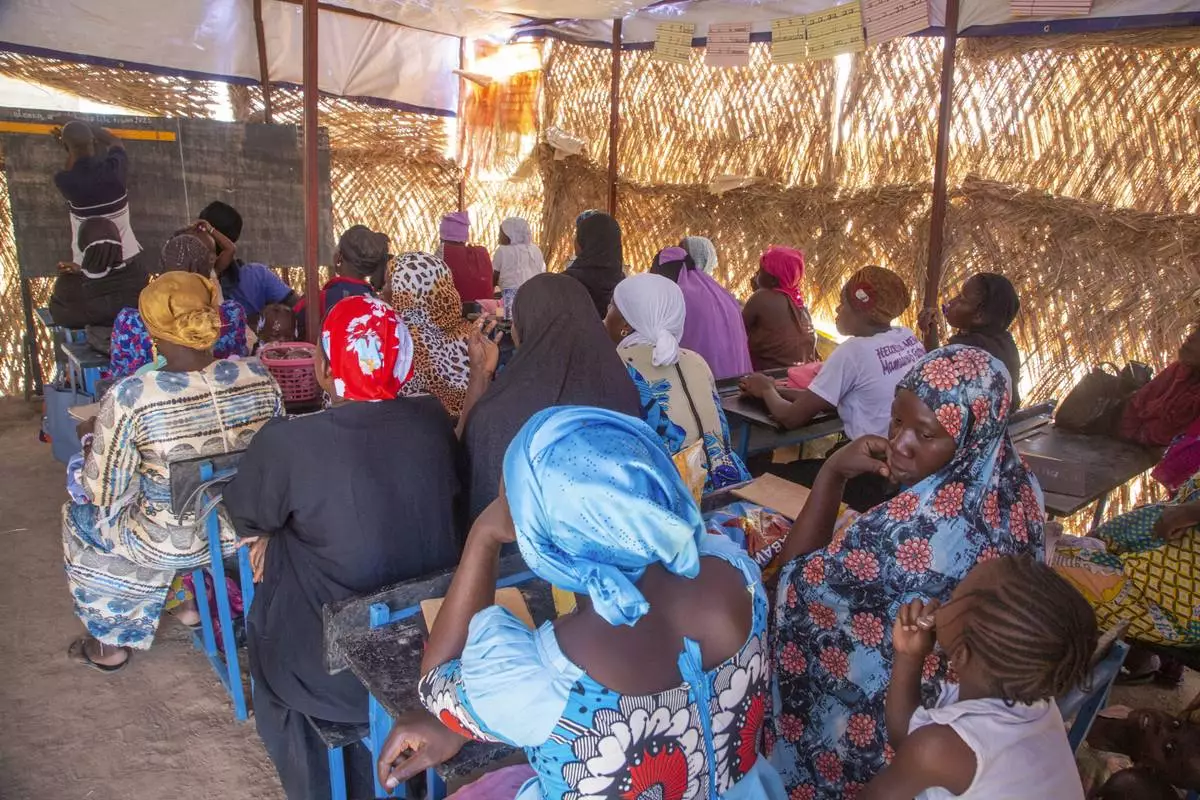
Sidi Yaya Sangare teaches Bambara in a makeshift classroom in the village of Mountougoula, Mali, April 7, 2025. (AP Photo/Saydou Camara)
PARIS (AP) — The painting shows a girl in a bonnet and her younger brother staring across the Normandy coast toward an unknown horizon.
The artwork itself faced an unknown future in 1942, when it was acquired in Paris for Adolf Hitler, one of countless works swept up in the Nazi plunder of European Jews.
On Tuesday, it went on permanent display in a new room at the city's Musée d’Orsay as part of France’s long-delayed reckoning with Nazi-era looting. The gallery is the first in the museum's history given over to the orphaned masterpieces of the Nazi era.
It is also the first such display in France where the paintings are hung so visitors can read the backs. The stamps, labels and inventory marks map how each piece of art moved from private homes into Nazi hands.
The painting by Belgian artist Alfred Stevens was originally earmarked for the Führer’s planned museum in Linz, Austria. But by 1943, it was reassigned to Hitler’s mountain home in the Bavaria region of Germany. The museum was never built following Germany's defeat.
Allied recovery teams — the Monuments Men made famous by the 2014 George Clooney film — finally found the painting after the war.
No heir came forward, and no one knows who owned it before 1942.
The 1891 Stevens painting is not unique. It is one of 2,200 such artistic orphans in France — known as MNR, short for Musées Nationaux Récupération, or National Museums Recovery. These artworks were retrieved from Germany and Austria after 1945 and entrusted to French national museums in the early 1950s.
They were never claimed. The state does not own them but holds them in trust for heirs who may yet appear. The Musée d’Orsay holds 225 such pieces.
Marie Duboisse, a retired schoolteacher from Lyon, paused Tuesday in front of the Stevens painting.
“I have seen those three letters — M, N, R — at the Louvre. I never knew what they meant. I thought it was a donor,” she said.
Last month, the museum launched its first research unit dedicated to tracing the orphans’ rightful heirs, file by file. The effort involves six Franco-German researchers led by Ines Rotermund-Reynard, the Orsay’s head of provenance research.
The new gallery displays 13 such works.
France is reckoning, in plain sight, with one of the longest silences in its postwar memory: the looted, sold and lost art of the Nazi era — and the French hands that helped move it.
Starting in the late 1960s, documentaries and historians began naming what France had done under the Vichy government that cooperated with the Nazis, including helping to send 80,000 Jews from France to their deaths and presiding over a Paris art market that grew rich on the property of the dead.
In July 1995, President Jacques Chirac stood at the site of the Vél d’Hiv roundup — the 1942 mass arrest in Paris of Jews who were then deported to Nazi camps — and said, for the first time, that the French state itself bore responsibility. In 1997, France launched a national inquiry into the plundering of artwork from Jews.
About 100,000 cultural objects were declared looted from France during the war. Some 60,000 were recovered. About 45,000 went home.
Roughly 15,000 had no identified owner. The 2,200 MNR artworks were chosen from that remainder.
For four decades, they were largely a dormant file. Between 1954 and 1993, France returned only four.
Chirac’s mea culpa, and the country’s slow reckoning with its own role, changed that.
The Orsay has returned 15 since 1994.
The most recent pieces of art to be returned — by Alfred Sisley and Auguste Renoir, given to the heirs of Grégoire Schusterman — went home in 2024.
Inside the new gallery, the histories hang on the wall.
There is a piece by Edgar Degas, a copy he made of a Berlin ballroom scene around 1879. The Jewish collector Fernand Ochsé bought it in 1919. Ochsé was deported to Auschwitz and killed.
There is another Renoir, a portrait of the writer Alphonse Daudet’s wife, sold to a Cologne museum in November 1941. No record names the seller.
There is also a painting by Paul Cézanne that was dismissed as a fake by a Louvre curator in the 1950s. Recent study suggests it may be real.
Daniel Lévy, a software engineer visiting from Strasbourg, stood at the Cézanne, looking at its back.
“You walk past these labels your whole life and you do not read them. Now I will read them," he said. "My grandmother lost some of her family in the camps. Some of these paintings were probably hanging in homes like hers.”
Paris was Western Europe's richest art hub in the early 20th century.
The Hôtel Drouot, the city’s main auction house, reopened in autumn 1940 and ran briskly through the Nazi occupation.
French dealers were among the conduits. German museums sent buyers, and Hitler’s agents took the best.
“The most important art market in Europe was concentrated in Paris,” Rotermund-Reynard said. “The moment the Nazis arrived in occupied territory, they had enormous buying power. They threw themselves at the market.”
Almost every museum in Nazi Germany, Rotermund-Reynard said, sent buyers to Paris to expand its collections. Those buyers drew on a market thick with looted and forced-sale property.
“Hitler himself wanted to build the world’s largest museum, in Linz, the city in Austria where he grew up,” she said.
Hermann Göring, Hitler’s deputy, traveled 21 times to Paris during the occupation to help himself to works taken from Jewish collectors.
“There was an enormous thirst,” Rotermund-Reynard said, “both for the possessions of Jewish collectors, and for acquisitions to expand the German museums.”
For Rotermund-Reynard, the works cannot be separated from the genocide.
“All of this is part of the history of the Shoah,” she said, using the Hebrew word for the Holocaust. “When you try to understand this drive to take from Jewish families, it is part of the terrifying Nazi ideology to erase Jewish life.”
Antisemitic acts in France — home to Europe’s largest Jewish community — hit 1,320 in 2025, according to the French Interior Ministry. Those near-record levels followed a sharp surge after the Oct. 7, 2023, Hamas attack on Israel.
The gallery was not built to fight antisemitism, said François Blanchetière, the Orsay’s chief sculpture curator and co-curator of the gallery. But the consequences of the Holocaust must be repaired, he said.
“There is no statute of limitations on these crimes," he said.
A previous version of this story had the wrong first name for Degas.
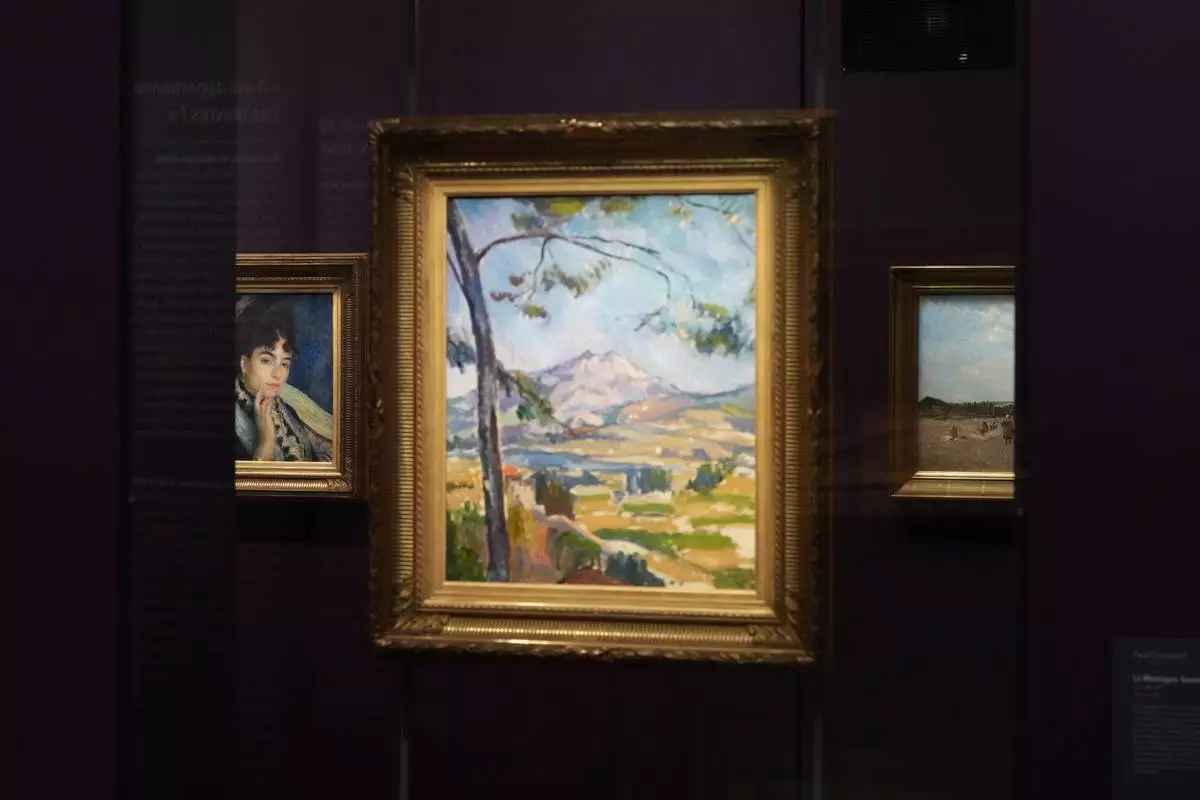
French painter Pierre-Auguste Renoir's painting, "Madame Alphonse Daudet," left, is seen at the Musée d'Orsay museum's new permanent gallery dedicated artworks recovered after World War II whose ownership remains uncertain, in Paris on Monday, May 4, 2026. (AP Photo/Thibault Camus)
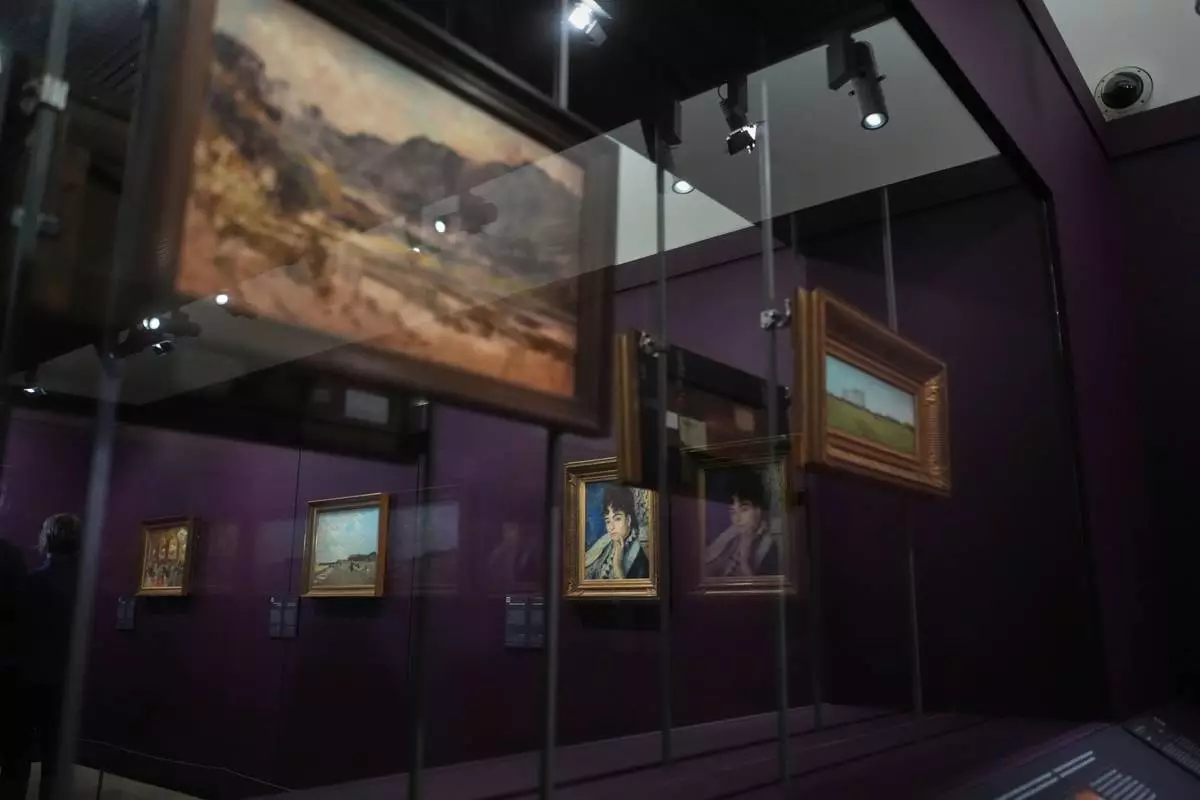
French painter Pierre-Auguste Renoir's painting titled Madame Alphonse Daudet, center, is on exhibit in the Musée d'Orsay museum's new permanent gallery dedicated to so-called MNR artworks, pieces recovered after World War II whose ownership remains uncertain, in Paris, Monday, May 4, 2026. (AP Photo/Thibault Camus)
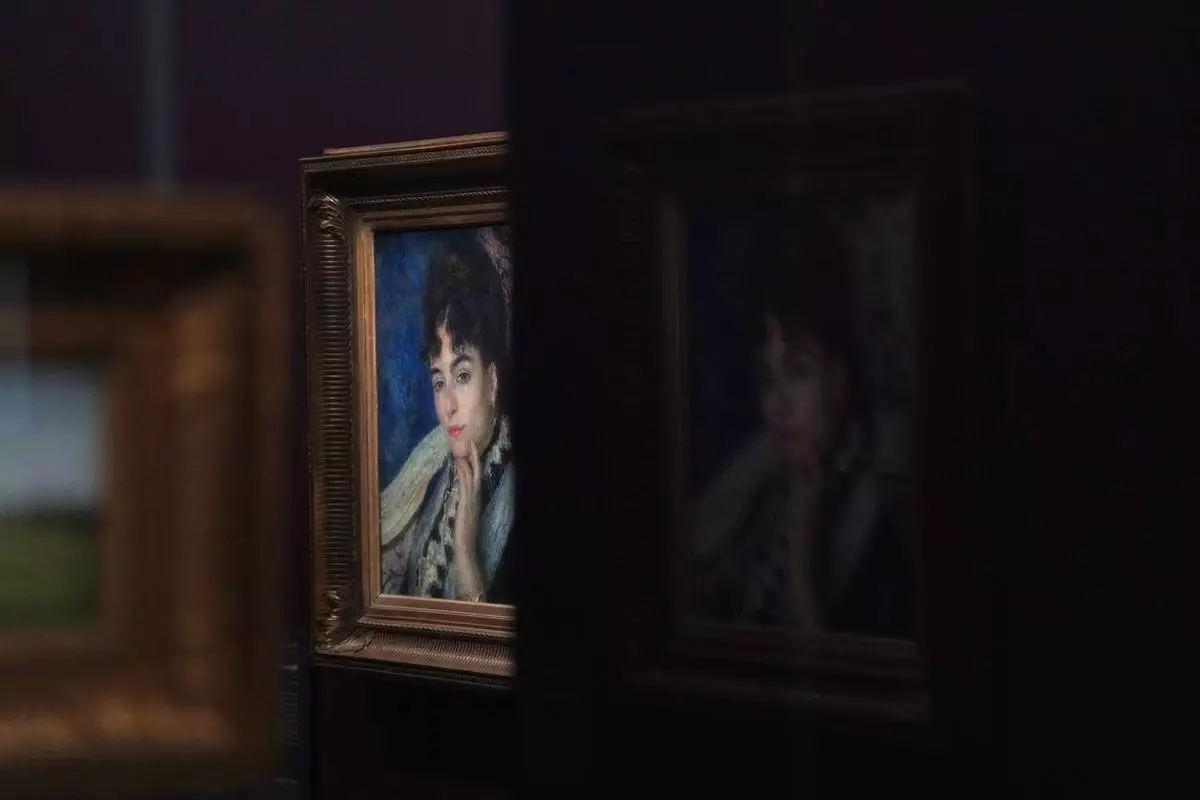
French painter Pierre-Auguste Renoir's painting titled Madame Alphonse Daudet is on exhibit at the Musée d'Orsay museum's new permanent gallery dedicated to so-called MNR artworks, pieces recovered after World War II whose ownership remains uncertain, in Paris, Monday, May 4, 2026. (AP Photo/Thibault Camus)