|  |
Over half of deaths in low-and middle-income countries could be addressed with effective emergency care.
GENEVA, May 21, 2025 /PRNewswire/ -- A newly-announced philanthropic partnership between Laerdal Global Health and the WHO Foundation will fund WHO to scale up acute care training for health workers in select African countries.
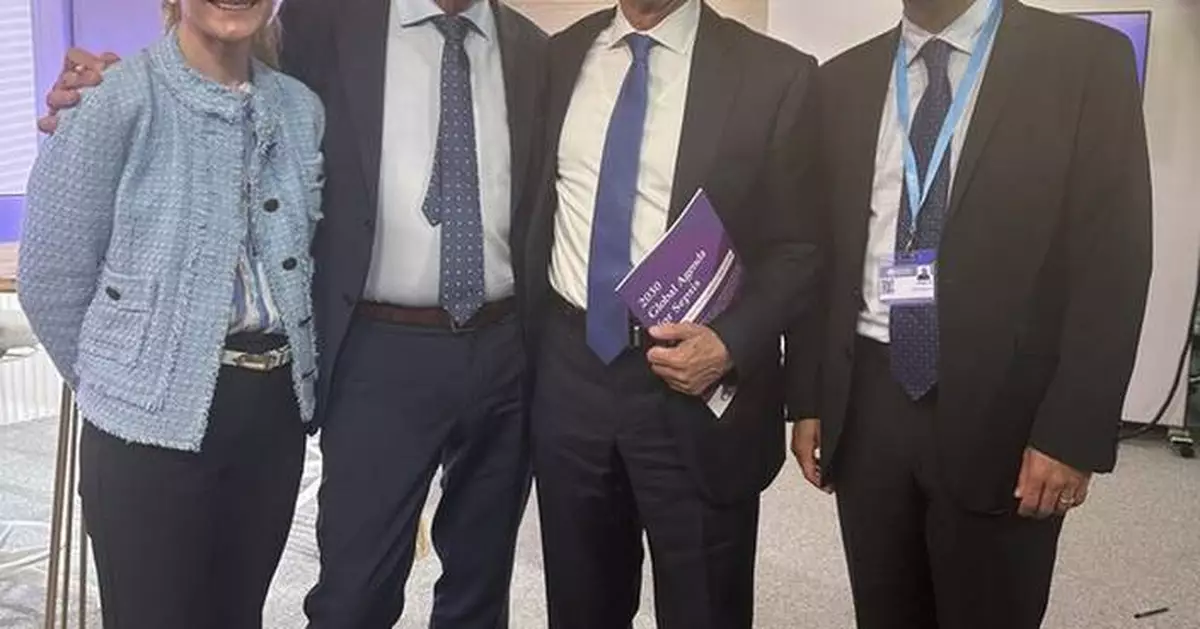
Laerdal Global Health founder, Tore Laerdal and WHO Foundation Chair, Thomas Zeltner announced the US $12.5 million commitment at an event during the World Health Assembly in Geneva on Tuesday 20th May 2025.
This contribution includes support for WHO Basic Emergency Care training in 400 hospitals across three African countries, as well as specially designed training kits for ongoing workplace-based training.
In association with this core commitment, the WHO Foundation and Laerdal Global Health have also established a funding consortium – Lifeline: the Acute Care Action Fund – and are already in active discussions with other private and public partners to reach a total of $25M to bring this program to 1,000 hospitals in five or more countries, saving an estimated 50,000 lives every year.
The Basic Emergency Care (BEC) program was developed in 2016 by WHO, with the collaboration of the International Committee of the Red Cross and the International Federation for Emergency Medicine. Since that time, tens of thousands of health workers have been trained in Basic Emergency Care across more than 60 countries.
Prior studies in first level hospitals across Africa and Asia showed a 34 to 50 percent reduction in mortality from acute conditions –- including pneumonia, road injuries, diabetic crisis and post-partum haemorrhage – following the implementation of the BEC program.
"We know that the Basic Emergency Care program can reduce mortality from a range of acute conditions by up to 50 percent," says Tore Laerdal.
"We have been privileged to collaborate with WHO, the International Federation for Emergency Medicine, and the International Committee of the Red Cross in developing a new course model that uses simpler and much more affordable training materials, enabling ongoing refresher sessions at each hospital," he adds.
"Strengthening health systems and supporting health workers to deliver effective acute care is essential to universal health coverage and health security," says Bruce Aylward, Assistant Director General, Universal Health Coverage, Life Course Division, WHO.
"This support to bring the Basic Emergency Care program to scale— particularly at this time of constricting resources— will have a critical impact around the world."
WHO Foundation Chair, Thomas Zeltner, adds: "This generous and timely contribution from Laerdal Global Health supports WHO's vital work at a time when funding for global health is under threat."
"We now invite others to join Lifeline: the Acute Care Action Fund to support the scale-up of the BEC program across the region and beyond - including in humanitarian settings - saving millions of lives."
About Laerdal Global Health
Laerdal Global Health is a not-for-profit company dedicated to helping save lives in low-resource settings. It develops simple, scalable, and locally adaptable solutions for health worker training and clinical care—supporting countries to improve outcomes for mothers, newborns, and people affected by trauma, sepsis, and other acute conditions.
Working in close collaboration with governments, global and local partners, Laerdal Global Health works to strengthen health systems by empowering frontline providers with the tools, skills and confidence they need. It is part of the Laerdal group, a mission-driven organization with a shared goal of helping save one million more lives, every year, by 2030.
About the WHO Foundation
The WHO Foundation, headquartered in Geneva, Switzerland, is an independent grant-making organization that supports the mission of the World Health Organization. It mobilizes philanthropic capital and builds catalytic partnerships to address the world's most pressing health challenges, especially for vulnerable communities.
Over half of deaths in low-and middle-income countries could be addressed with effective emergency care.
GENEVA, May 21, 2025 /PRNewswire/ -- A newly-announced philanthropic partnership between Laerdal Global Health and the WHO Foundation will fund WHO to scale up acute care training for health workers in select African countries.
Laerdal Global Health founder, Tore Laerdal and WHO Foundation Chair, Thomas Zeltner announced the US $12.5 million commitment at an event during the World Health Assembly in Geneva on Tuesday 20th May 2025.
This contribution includes support for WHO Basic Emergency Care training in 400 hospitals across three African countries, as well as specially designed training kits for ongoing workplace-based training.
In association with this core commitment, the WHO Foundation and Laerdal Global Health have also established a funding consortium – Lifeline: the Acute Care Action Fund – and are already in active discussions with other private and public partners to reach a total of $25M to bring this program to 1,000 hospitals in five or more countries, saving an estimated 50,000 lives every year.
The Basic Emergency Care (BEC) program was developed in 2016 by WHO, with the collaboration of the International Committee of the Red Cross and the International Federation for Emergency Medicine. Since that time, tens of thousands of health workers have been trained in Basic Emergency Care across more than 60 countries.
Prior studies in first level hospitals across Africa and Asia showed a 34 to 50 percent reduction in mortality from acute conditions –- including pneumonia, road injuries, diabetic crisis and post-partum haemorrhage – following the implementation of the BEC program.
"We know that the Basic Emergency Care program can reduce mortality from a range of acute conditions by up to 50 percent," says Tore Laerdal.
"We have been privileged to collaborate with WHO, the International Federation for Emergency Medicine, and the International Committee of the Red Cross in developing a new course model that uses simpler and much more affordable training materials, enabling ongoing refresher sessions at each hospital," he adds.
"Strengthening health systems and supporting health workers to deliver effective acute care is essential to universal health coverage and health security," says Bruce Aylward, Assistant Director General, Universal Health Coverage, Life Course Division, WHO.
"This support to bring the Basic Emergency Care program to scale— particularly at this time of constricting resources— will have a critical impact around the world."
WHO Foundation Chair, Thomas Zeltner, adds: "This generous and timely contribution from Laerdal Global Health supports WHO's vital work at a time when funding for global health is under threat."
"We now invite others to join Lifeline: the Acute Care Action Fund to support the scale-up of the BEC program across the region and beyond - including in humanitarian settings - saving millions of lives."
About Laerdal Global Health
Laerdal Global Health is a not-for-profit company dedicated to helping save lives in low-resource settings. It develops simple, scalable, and locally adaptable solutions for health worker training and clinical care—supporting countries to improve outcomes for mothers, newborns, and people affected by trauma, sepsis, and other acute conditions.
Working in close collaboration with governments, global and local partners, Laerdal Global Health works to strengthen health systems by empowering frontline providers with the tools, skills and confidence they need. It is part of the Laerdal group, a mission-driven organization with a shared goal of helping save one million more lives, every year, by 2030.
About the WHO Foundation
The WHO Foundation, headquartered in Geneva, Switzerland, is an independent grant-making organization that supports the mission of the World Health Organization. It mobilizes philanthropic capital and builds catalytic partnerships to address the world's most pressing health challenges, especially for vulnerable communities.
** The press release content is from PR Newswire. Bastille Post is not involved in its creation. **
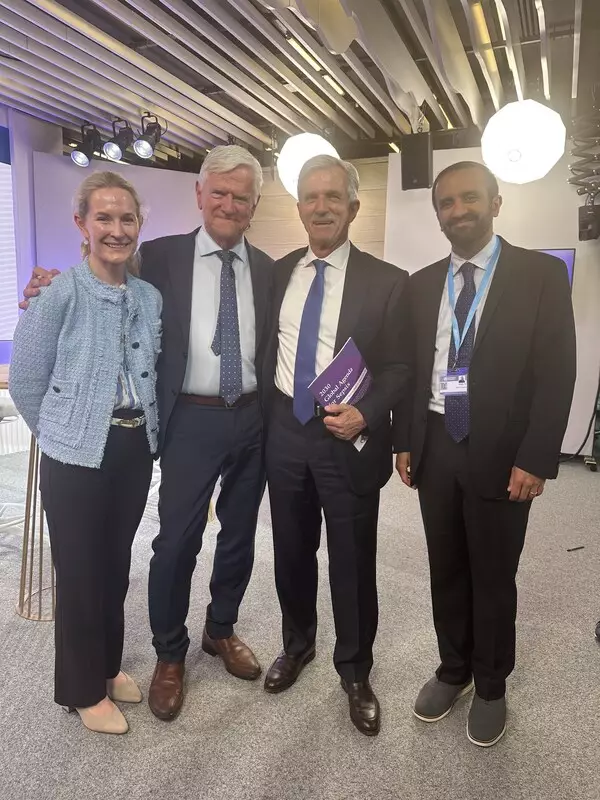
WHO Foundation and Laerdal Global Health announce US $12.5 million to launch massive Acute Care scale up aiming to save over 50,000 lives per year
|
YONGIN, South Korea, Jan. 14, 2026 /PRNewswire/ -- WIRobotics, a global robotics company co-led by Co-CEOs Younbaek Lee and Yongjae Kim, announced the successful conclusion of its participation at CES 2026, marking a shift from technology demonstration to the execution phase of global collaboration across both humanoid and wearable robotics.
Across CES 2026 Unveiled and the main exhibition, WIRobotics showcased its wearable walking-assist robot WIM S and humanoid robot ALLEX, moving beyond demonstrations to engage in concrete business discussions and technical collaboration planning. This year's CES served as a meaningful turning point, with tangible outcomes pointing toward real-world partnerships and business expansion.
At the exhibition, ALLEX attracted strong interest from global technology companies including NVIDIA, Meta, and Amazon, with purchase interest expressed by several organizations. WIRobotics also established concrete plans for technical collaboration and joint technology development with select AI big-tech companies, advancing discussions into an actionable stage.
ALLEX was highly regarded for its high-degree-of-freedom hands and arms, as well as its ability to deliver human-like force control and natural interaction across the full body. Strong anticipation was also shown for ALLEX's research-focused platform scheduled for commercial availability later this year, along with an expanded configuration integrated with a wheeled mobile base.
The company's wearable robot WIM also delivered tangible business outcomes at CES 2026. WIRobotics held discussions regarding potential collaboration with senior living communities and government-led programs in the United States, while advancing distribution partnerships in Mexico, the Middle East, and Southeast Asia, further solidifying its global expansion strategy.
With nearly three years of commercial deployment, WIM continues to demonstrate its value as a wearable robot designed for long-term daily use. Existing users from around the world visited the WIRobotics booth to experience product upgrades and share real-world usage feedback, reinforcing user trust and sustained adoption.
"CES 2026 marked a pivotal transition for WIRobotics—from presenting technology to executing real collaboration and business initiatives with global partners," said Younbaek Lee, Co-CEO of WIRobotics.
"The real-world experience and data accumulated through wearable robotics have become a core asset in accelerating the maturity and commercialization of our humanoid robotics technology. Building on both platforms, we will actively expand joint development and global market opportunities with our partners."
Following CES 2026, WIRobotics plans to accelerate global collaboration and business expansion centered on humanoid and wearable robotics, contributing to the broader integration of robotics across research, industry, and everyday life.
About WIRobotics
Founded in 2021, WIRobotics is a global robotics company spanning wearable robotics for everyday use and next-generation humanoid robotics. The company began commercial sales of lower-back and walking-assist wearable robots in 2023, and in the summer of 2025 unveiled the upper body of its humanoid robot, ALLEX, expanding into advanced humanoid robotics. By advancing both practical and cutting-edge robotic technologies, WIRobotics continues to shape the future of robotics on a global scale.
YONGIN, South Korea, Jan. 14, 2026 /PRNewswire/ -- WIRobotics, a global robotics company co-led by Co-CEOs Younbaek Lee and Yongjae Kim, announced the successful conclusion of its participation at CES 2026, marking a shift from technology demonstration to the execution phase of global collaboration across both humanoid and wearable robotics.
Across CES 2026 Unveiled and the main exhibition, WIRobotics showcased its wearable walking-assist robot WIM S and humanoid robot ALLEX, moving beyond demonstrations to engage in concrete business discussions and technical collaboration planning. This year's CES served as a meaningful turning point, with tangible outcomes pointing toward real-world partnerships and business expansion.
At the exhibition, ALLEX attracted strong interest from global technology companies including NVIDIA, Meta, and Amazon, with purchase interest expressed by several organizations. WIRobotics also established concrete plans for technical collaboration and joint technology development with select AI big-tech companies, advancing discussions into an actionable stage.
ALLEX was highly regarded for its high-degree-of-freedom hands and arms, as well as its ability to deliver human-like force control and natural interaction across the full body. Strong anticipation was also shown for ALLEX's research-focused platform scheduled for commercial availability later this year, along with an expanded configuration integrated with a wheeled mobile base.
The company's wearable robot WIM also delivered tangible business outcomes at CES 2026. WIRobotics held discussions regarding potential collaboration with senior living communities and government-led programs in the United States, while advancing distribution partnerships in Mexico, the Middle East, and Southeast Asia, further solidifying its global expansion strategy.
With nearly three years of commercial deployment, WIM continues to demonstrate its value as a wearable robot designed for long-term daily use. Existing users from around the world visited the WIRobotics booth to experience product upgrades and share real-world usage feedback, reinforcing user trust and sustained adoption.
"CES 2026 marked a pivotal transition for WIRobotics—from presenting technology to executing real collaboration and business initiatives with global partners," said Younbaek Lee, Co-CEO of WIRobotics.
"The real-world experience and data accumulated through wearable robotics have become a core asset in accelerating the maturity and commercialization of our humanoid robotics technology. Building on both platforms, we will actively expand joint development and global market opportunities with our partners."
Following CES 2026, WIRobotics plans to accelerate global collaboration and business expansion centered on humanoid and wearable robotics, contributing to the broader integration of robotics across research, industry, and everyday life.
About WIRobotics
Founded in 2021, WIRobotics is a global robotics company spanning wearable robotics for everyday use and next-generation humanoid robotics. The company began commercial sales of lower-back and walking-assist wearable robots in 2023, and in the summer of 2025 unveiled the upper body of its humanoid robot, ALLEX, expanding into advanced humanoid robotics. By advancing both practical and cutting-edge robotic technologies, WIRobotics continues to shape the future of robotics on a global scale.
** The press release content is from PR Newswire. Bastille Post is not involved in its creation. **

WIRobotics Concludes CES 2026, Advancing into Execution Phase of Global Collaboration Across Humanoid and Wearable Robotics