The European Union (EU) approved its 17th package of sanctions against Russia on Tuesday.
The EU's Foreign Affairs Council and its Defense Subcommittee on Tuesday held a meeting in Brussels, Belgium, to discuss issues such as the Russia-Ukraine conflict.
The meeting, chaired by the EU High Representative for Foreign Affairs and Security Policy Kaja Kallas, brought together foreign and defense ministers from EU member states. The primary objective of the meeting was to strengthen support for Ukraine and enhance Europe's defense capabilities.
During the meeting, the EU foreign ministers held a video conference with Ukrainian Foreign Minister Andrii Sybiha, reiterating their continued support for Ukraine.
On the same day, the European Council issued a press release announcing the formal adoption of the 17th round of sanctions against Russia. This package includes measures targeting 189 Russian ships used to evade Western sanctions through the so-called "shadow fleet." The new sanctions prohibit these ships from docking in EU ports and halt related maritime services. This represents the largest set of sanctions yet imposed on the "shadow fleet," bringing the total number of sanctioned Russian vessels to 342.
The new sanctions package also targets key Russian oil and gas companies, including Surgutneftegas, and a Russian oil transportation firm, aiming to further diminish Russia's energy revenues. In addition, the EU has imposed asset freezes and travel bans on multiple individuals and entities connected to the Russian government and economy.
The UK Foreign Office also unveiled Tuesday a fresh round of sanctions targeting Russia, which will affect critical sectors such as defense, energy, and finance. The sanctions also extend to individuals and organizations involved in Russia's "information warfare" against Ukraine.
Meanwhile, the EU's foreign and defense ministers reviewed the progress of the "2030 Readiness" White Paper during the meeting. The document sets out plans to invest 800 billion euros over the next four years to bolster Europe's defense capabilities. Of this sum, 650 billion will come from the budgets of EU member states, while 150 billion will be raised through credit.
The ministers also discussed the creation of a 150-billion-euro weapons procurement fund, aimed at centralizing the purchase of equipment and supplying it to Ukraine.
In response to the EU's announcement of its new round of sanctions, the Russian Mission to the EU issued a statement warning that these new measures would be "devastating" for the EU. The statement highlighted the role of the sanctions in exacerbating the economic challenges faced by EU member states.
The statement noted growing internal criticism within the EU regarding the sanctions policy. It argued that the European Commission's unwavering stance on sanctions has led to several economic issues across the bloc, including industrial decline, a fall in living standards, and rising national debt.
Additionally, Russia pointed to the European Commission's latest economic forecast, which projected a modest 1.1 percent growth for the EU in 2025. It also noted that Germany, traditionally the engine of Europe's economy, is expected to experience zero growth next year. It warned that, unless the EU changes course, economic stagnation is likely to persist across the region.
The statement further emphasized that any unilateral sanctions without the approval of the United Nations Security Council violate international law, and Russia will respond resolutely.
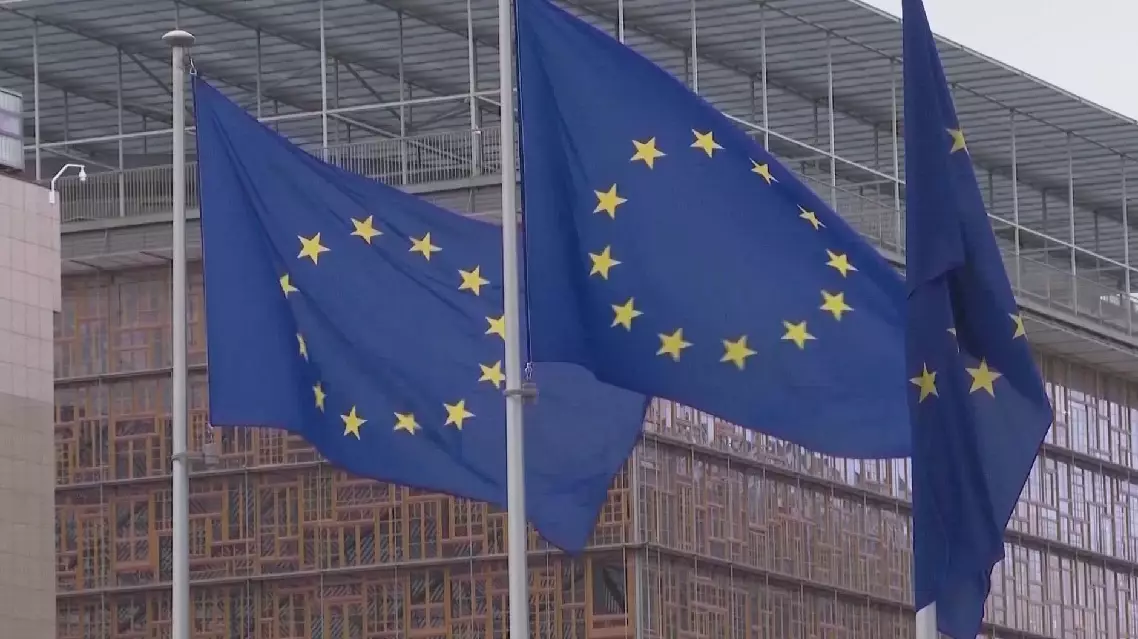
EU approves 17th sanction package against Russia
EU approves 17th sanction package against Russia