OUAGADOUGOU, Burkina Faso (AP) — The military rulers of Burkina Faso have turned to a man once known as “Africa’s Che Guevara" as a way to rally a country struggling to defeat extremists and turning away from former Western allies.
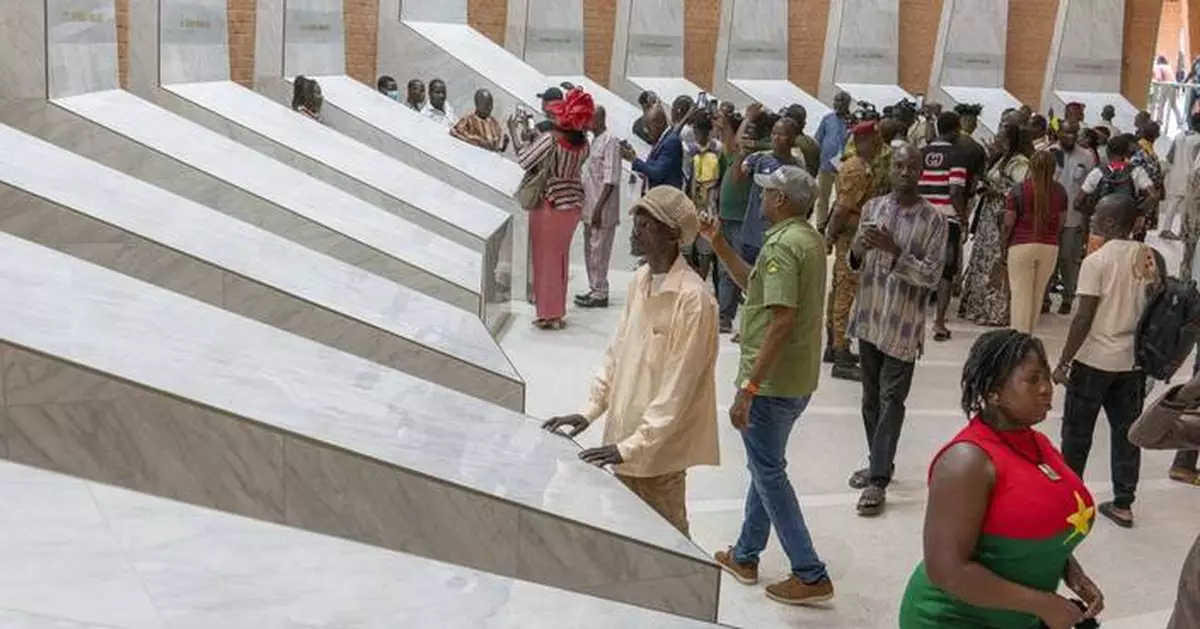
Hundreds of young people gathered over the weekend in the capital, Ouagadougou, for the opening of a mausoleum for legendary leader Thomas Sankara.
“I’m the driver of the revolution!" one young man exclaimed with delight, sitting behind the wheel of the jeep that Sankara used during his presidency decades ago.
A charismatic Marxist leader who seized global attention by defiantly declaring his country could rely on itself, Sankara came to power in 1983 at the age of 33 after he and former ally Blaise Compaore led a leftist coup that overthrew a moderate military faction. But in 1987, Compaore turned on his former friend in a coup that killed Sankara in the capital — and later became president himself.
Nearly four decades after his death, Sankara is being celebrated in Burkina Faso, a nation of 23 million people once known for its bustling arts scene and vibrant intellectual life — including Sankara's anti-imperialist and pan-African legacy.
“When I stepped inside the mausoleum, I felt the revolution,” said Timoté, a 22-year-old who said he came because of what he heard about Sankara at home and at school.
Sankara's mausoleum, designed by Pritzker Architecture Prize-winning architect Francis Kéré, has been the project of current military leader Capt. Ibrahim Traore.
Since taking power during a coup in 2022, Traore has presented himself as the new Sankara. He has named one of the main streets after the revolutionary leader, elevated him to the rank of Hero of the Nation and revived revolutionary slogans such as “Fatherland or death, we will win!” in most of his speeches.
The mission of the mausoleum is "to keep the flame of the revolution alive and to remind the world of Capt. Thomas Sankara’s fight to break the chains of slavery and imperialist domination,” Burkina Faso Prime Minister Jean Emmanuel Ouédraogo said as he read Traore's statement.
Despite promising to fight the security crisis that pushed them to stage a coup, Burkina Faso's military leaders have struggled to deal with the worsening crisis. According to conservative estimates, more than 60% of the country is now outside of government control, more than 2 million people have lost their homes and almost 6.5 million need humanitarian aid to survive.
Human rights groups say the military leadership has installed a system of de facto censorship, crushing critics, while many have been killed by jihadi groups or government forces.
As people flocked to Ouagadougou to celebrate Sankara, life elsewhere in the country reflects a different reality.
“We can go out for a bit in the city center, but with caution,” said one student from Dori, the capital of the northern region, echoing concerns about restrictions on free speech and movement.
The student spoke on condition of anonymity for fear of being arrested.
Security concerns have permeated every aspect of life outside Ouagadougou. Even the price of beer has skyrocketed as more places become inaccessible to traders.
“There are two Burkina Fasos,” said a teacher from the east, speaking on condition of anonymity for safety reasons. “One where the streets are deserted at night, and another that comes alive to enjoy the cool evening air.”
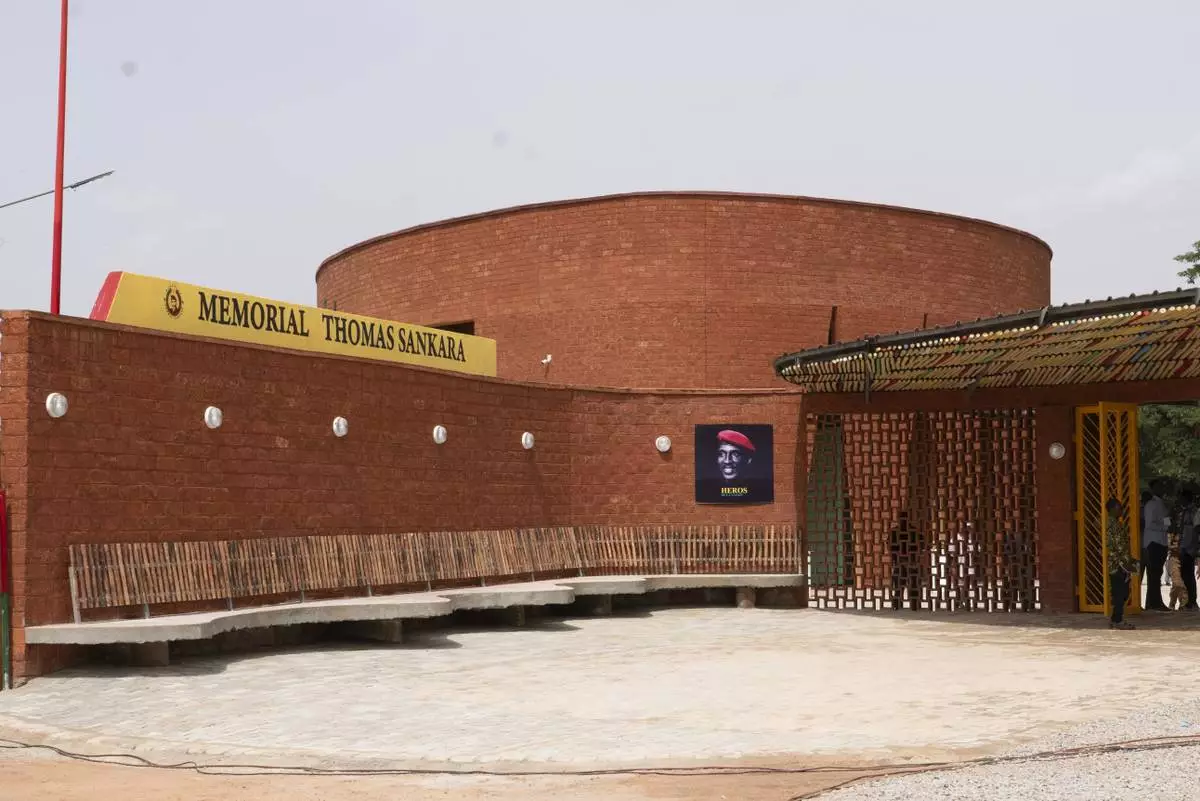
A view of the entrance of the newly inaugurated mausoleum for Burkina Faso's legendary leader Thomas Sankara in Ouagadougou, Saturday, May 17, 2025 (AP Photo/Elia Borras)
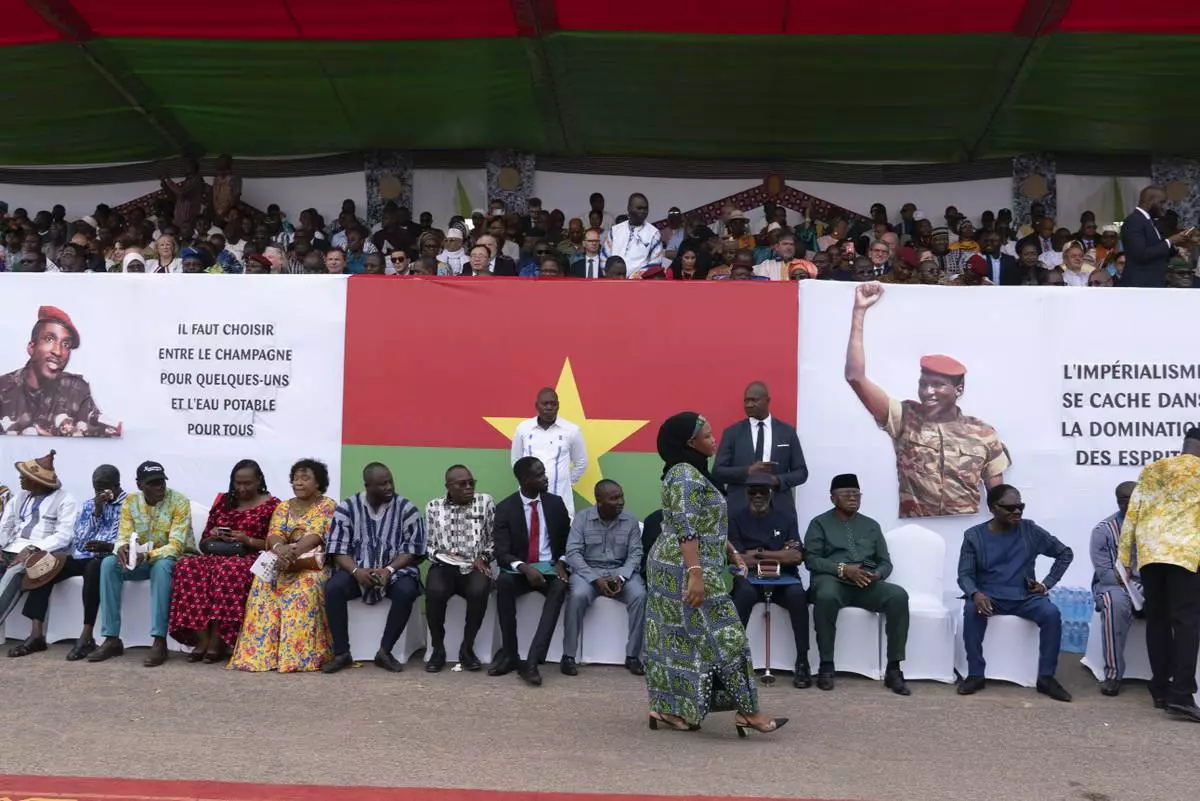
People attend the inauguration of the mausoleum for Burkina Faso's legendary leader Thomas Sankara in Ouagadougou, Saturday, May 17, 2025 (AP Photo/Elia Borras)
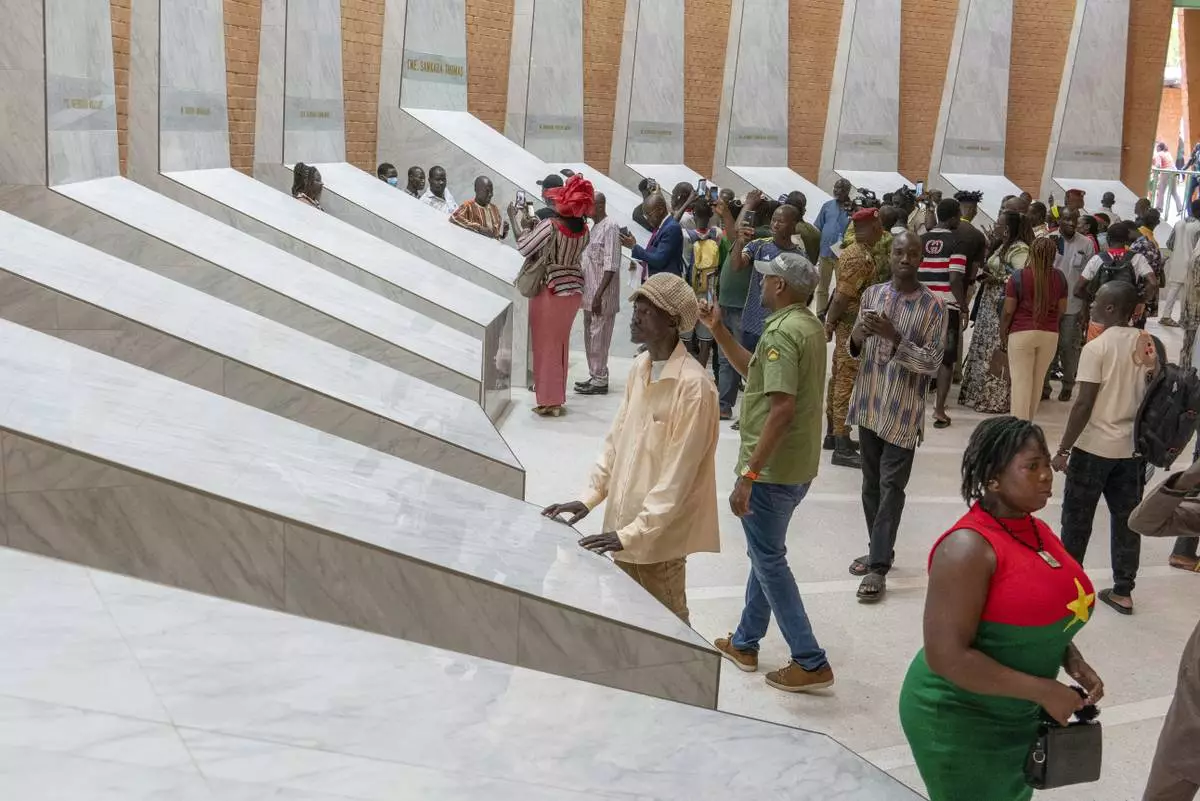
People visit the newly inaugurated mausoleum for Burkina Faso's legendary leader Thomas Sankara in Ouagadougou, Saturday, May 17, 2025 (AP Photo/Elia Borras)
ARAFAT, Saudi Arabia (AP) — Muslim pilgrims from around the world congregated on Mount Arafat in Saudi Arabia on Tuesday, the second official day of the annual Islamic pilgrimage, considered the pinnacle of the Hajj.
Despite the sweltering heat, the pilgrims gathered on the rocky hill and surrounding plain for intense prayers and worship that often mark a spiritual peak for them. They fervently murmured prayers and poured their hearts out in supplications. Many raised their hands in worship. It is common for pilgrims on that day, some with tears streaming down their faces, to ask God for forgiveness, mercy, blessings and good health.
The Hajj, one of the Five Pillars of Islam, is required once in a lifetime for every Muslim who can afford it and is physically able to perform it.
For pilgrims, the Hajj, performed over several days, can be a deeply moving spiritual experience and a chance to seek God’s forgiveness and the erasure of past sins. As they brave the intense heat to perform religious rituals, many pilgrims have been using umbrellas for shade.
A Saudi official said on Friday that more than 1.5 million pilgrims have arrived in the country from abroad.
This year, Muslims have been pouring into Saudi Arabia for the Hajj against the backdrop of a tenuous ceasefire in the Iran war and related uncertainty in the region.
The U.S. military said Monday that it carried out “self-defense” strikes in southern Iran, including on missile launch sites and boats used to lay mines, even as President Donald Trump said on social media that negotiations with Tehran were “proceeding nicely." Iran on Tuesday denounced the most recent U.S. strikes as a sign of “bad faith and unreliability” as negotiations pressed on toward a possible deal to end the war.
For many, performing the Hajj can be a realization of a lifelong dream as they spend years hoping and praying to one day be able to undertake the pilgrimage or saving up money and waiting for a permit to embark on the trip.
“This happens once in a lifetime,” Mohammad Asal, an Egyptian pilgrim, said. “People here have prepared their prayers, hoping that God will respond to them, because we know that ... the most important ritual of the Hajj is being in Arafat.”
The Hajj brings together large numbers of Muslims of diverse races, ethnicities, languages and socioeconomic classes, creating a sense of unity for many. It’s a mass, communal experience, with Muslims performing rituals together. But it is also deeply personal, as every pilgrim brings their own yearnings and experiences.
“It was incredible,” Ahmed Sufyan, a pilgrim from the United States, said on Tuesday. “The unity and peace that we feel is something I’ve never experienced before,” he added via WhatsApp.
“Our wishes are many,” Mohammad Obaid, a Sudanese pilgrim, said, adding he was praying for Sudan and Muslims everywhere.
Fam reported from Winter Park, Florida.
Associated Press religion coverage receives support through the AP’s collaboration with The Conversation US, with funding from Lilly Endowment Inc. The AP is solely responsible for this content.
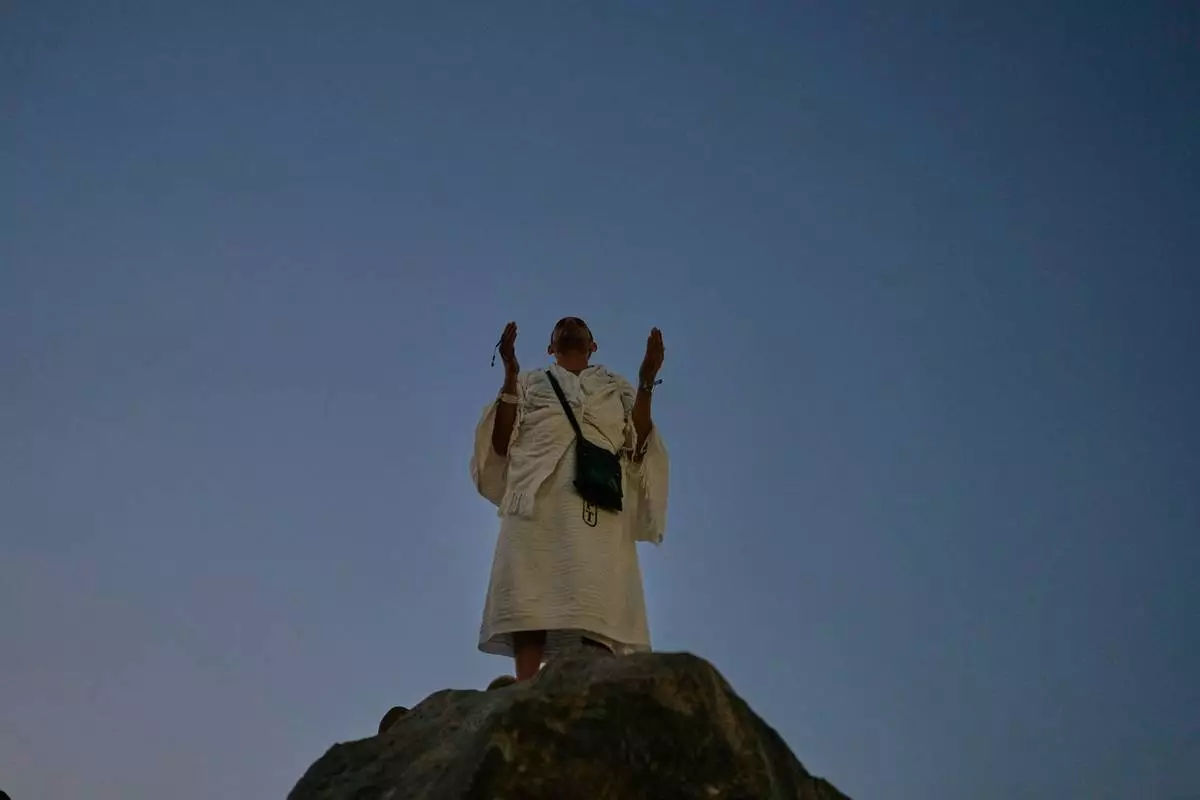
A Muslim pilgrim pray atop of the rocky hill known as the Mountain of Mercy, on the Plain of Arafat, during the annual Hajj pilgrimage near the holy city of Mecca, Saudi Arabia, Tuesday, May 26, 2026. (AP Photo/Altaf Qadri)
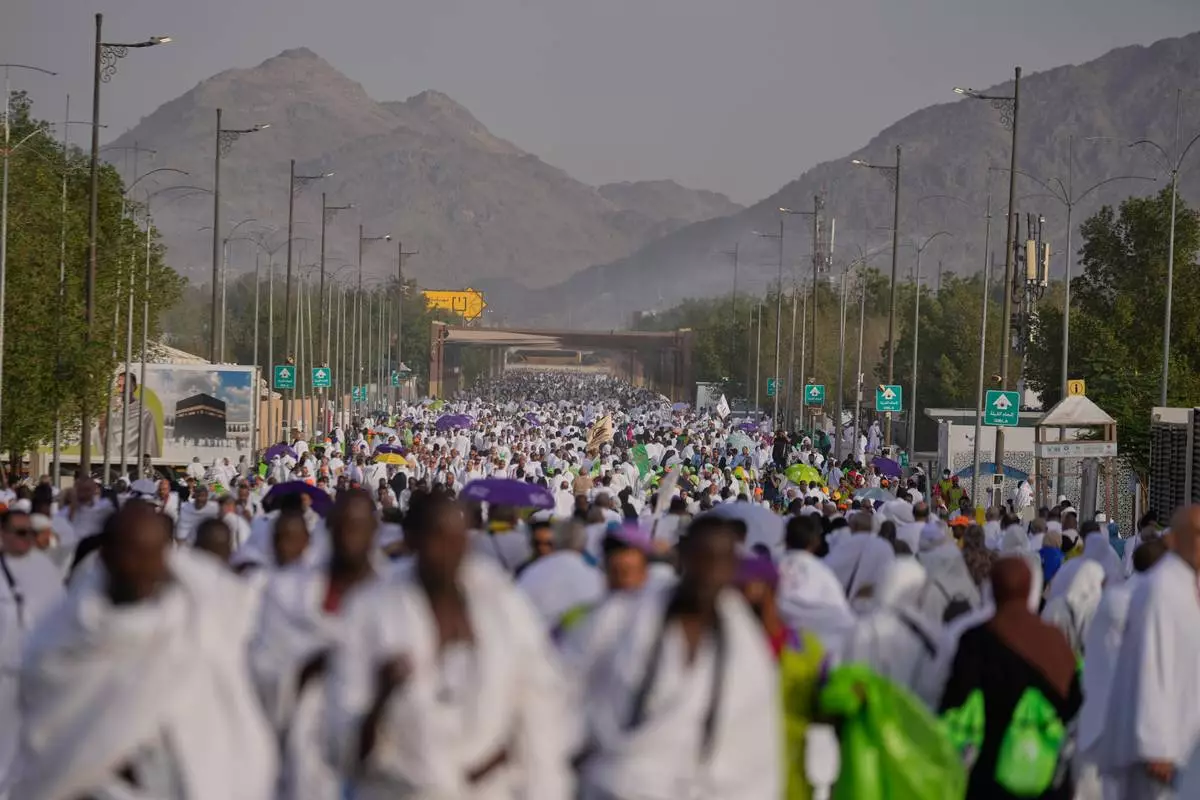
Muslim pilgrims walk towards the rocky hill known as the Mountain of Mercy, on the Plain of Arafat, during the annual Hajj pilgrimage near the holy city of Mecca, Saudi Arabia, Tuesday, May 26, 2026. (AP Photo/Altaf Qadri)
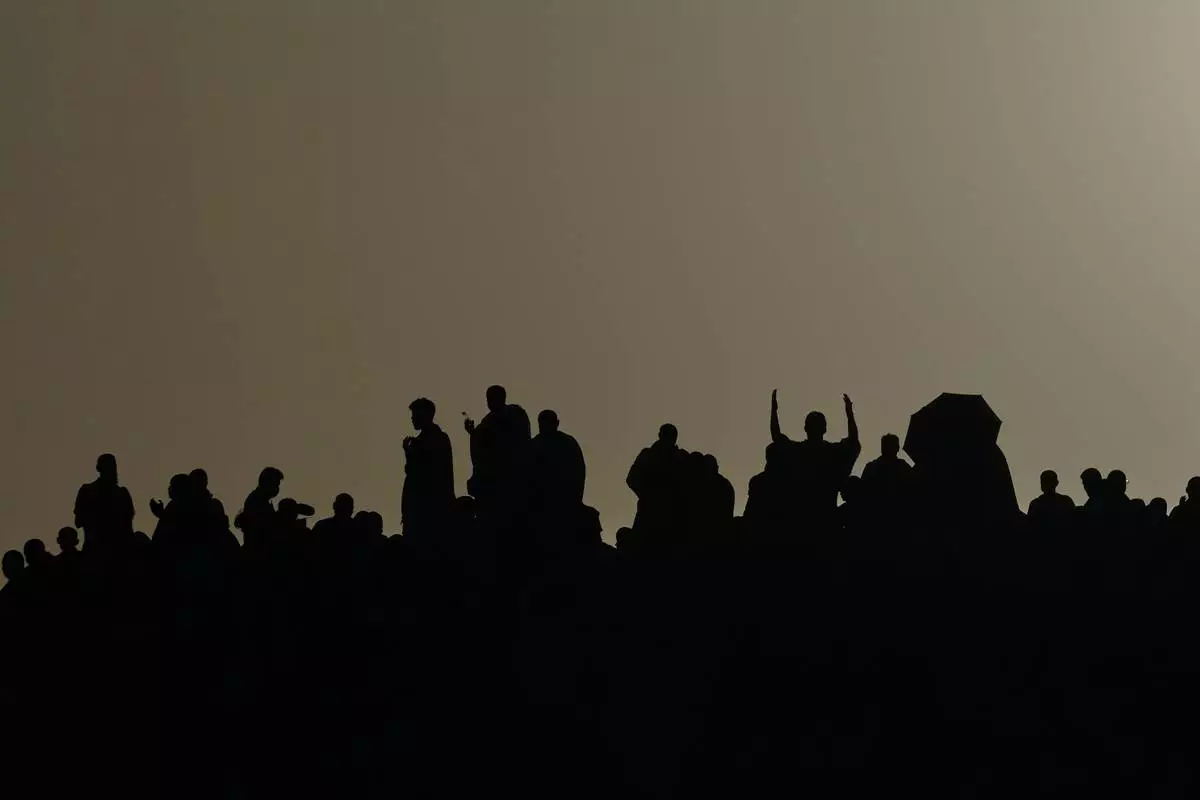
Muslim pilgrims are silhouetted as they pray at top of the rocky hill known as the Mountain of Mercy, on the Plain of Arafat, during the annual Hajj pilgrimage near the holy city of Mecca, Saudi Arabia, Tuesday, May 26, 2026. (AP Photo/Altaf Qadri)
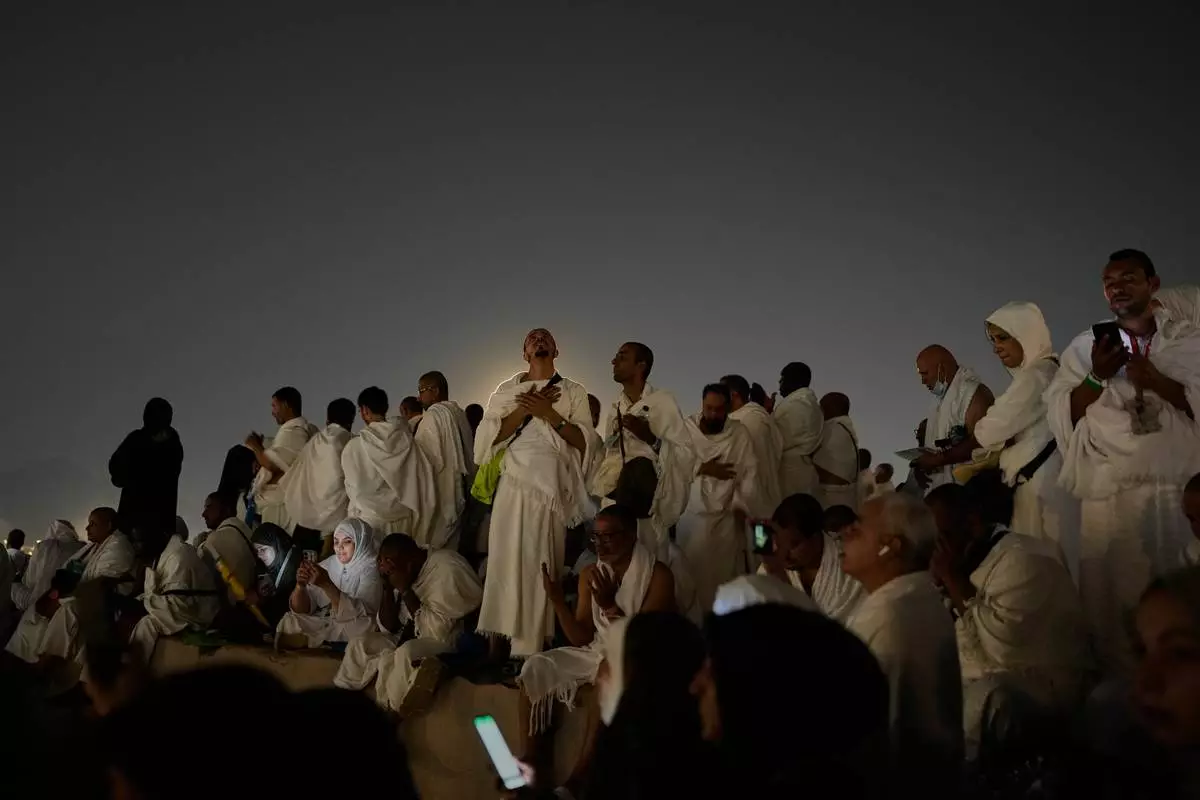
Muslim pilgrims pray at top of the rocky hill known as the Mountain of Mercy, on the Plain of Arafat, during the annual Hajj pilgrimage near the holy city of Mecca, Saudi Arabia, Tuesday, May 26, 2026. (AP Photo/Altaf Qadri)
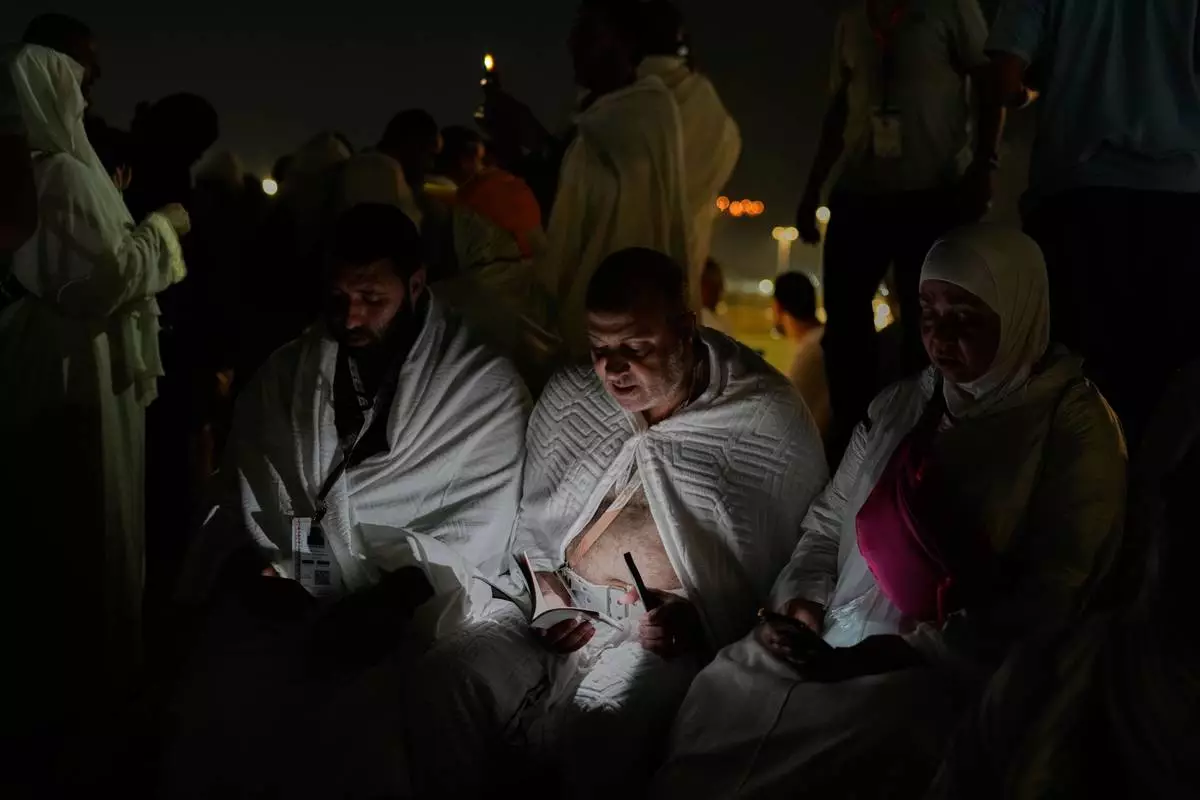
Muslim pilgrims read a copy of Islam's holy book Quran atop of the rocky hill known as the Mountain of Mercy, on the Plain of Arafat, during the annual Hajj pilgrimage near the holy city of Mecca, Saudi Arabia, Tuesday, May 26, 2026. (AP Photo/Altaf Qadri)