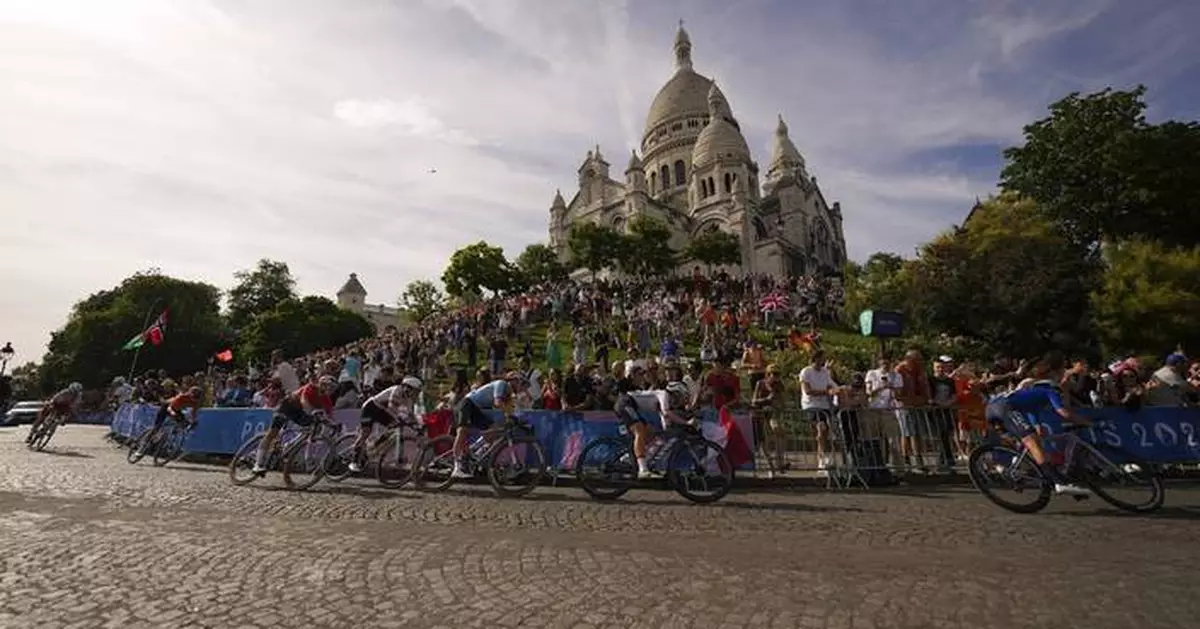
PARIS (AP) — Tour de France riders will climb the Montmartre hill three times during this year's final stage — a significant break from tradition that will add a dose of suspense and requires heightened security measures.
There was a village atmosphere when massive crowds lined the streets of Montmartre during last year's Olympics to cheer on riders who climbed narrow cobbled streets in the northern area of Paris.
Tour director Christian Prudhomme said on Wednesday that he wanted to recapture that popular fervor, while offering new race scenarios.
Traditionally, the final stage is largely processional until a sprint decides the day’s winner on the Champs-Elysées. This summer, the final climb up the cobbled Rue Lepic will come less than 7km from the finish, and it's unlikely many sprinters will still be in the mix for the stage win when the leading group reaches the iconic avenue.
“It will be more complicated for the sprinters," Prudhomme said as he unveiled the stage route, which could however favor one-day classic specialists good at tackling short and steep hills.
The 21st stage of the Tour on July 27, starting from the Paris suburb of Mantes-la-Ville, will include three passages beneath the Sacré-Coeur basilica. The Montmartre area is a maze of narrow streets and it will require a deployment of extra security forces, urban planning and many security barriers.
During the Olympics, the road races attracted more than 500,000 spectators in Paris, organizers said.
Laurent Nunez, the Paris police prefect, said “several thousand” security forces will be on duty to guarantee the safety of riders and fans. “But it does not pose any particular challenge, we proved that during the Paris Olympics,” he added.
The inclusion of Montmartre will derail the pure sprinters' quest for glory on the Champs-Elysées. It could even have an influence on the general classification if gaps between the main contenders remain tight heading into the final stage.
“Imagine an attack by one of the main contenders of the Tour de France at the last moment, a few kilometers from the finish,” Prudhomme said.
The last time the final stage proved decisive was in 1989, when Greg LeMond won his second Tour de France with the closest finish ever, edging Laurent Fignon by 8 seconds.
LeMond started the day 50 seconds behind Fignon and won the final stage, a 15-mile race against the clock from Versailles to Paris.
Not all riders are thrilled by the change.
“Montmartre was nice to do in the Olympics, it seemed good, a lot of people, a really good atmosphere,” two-time Tour champion Jonas Vingegaard said this week. “But when they came to the Montmartre, there was only 15 riders left in the bunch. And when we do the Tour de France, there will be 150 guys fighting for positions on a very narrow climb. It could end up being more stress than they want to have.”
The Tour starts from the northern city of Lille on July 5, and the women’s race kicks off on July 26 from the Brittany town of Vannes.
Last year’s final stage was held outside Paris for the first time since 1905 because of a clash with the Olympics, moving instead to Nice. The Champs-Élysées returns this year for the conclusion of the 3,320-kilometer (2,060-mile) race.
AP cycling: https://apnews.com/hub/cycling
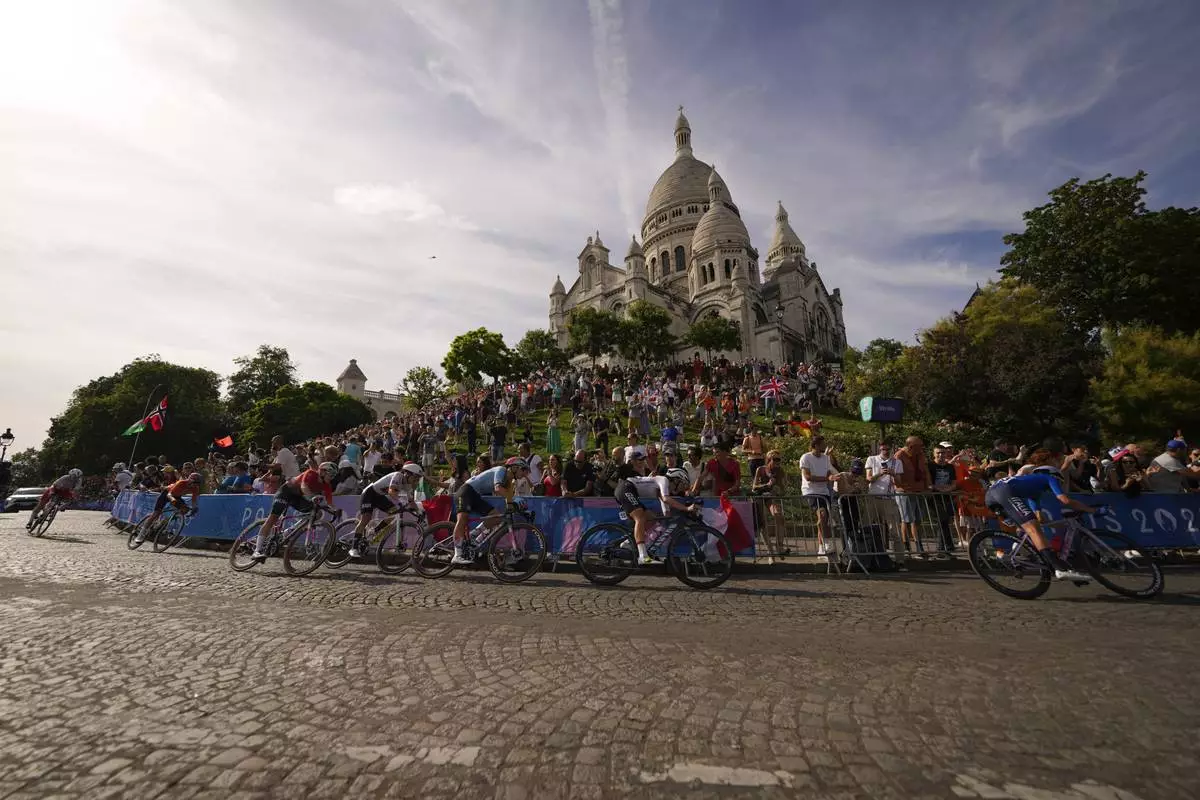
FILE - Competitors ride past the Sacre Coeur basilica, during the women's road cycling event, at the 2024 Summer Olympics, Sunday, Aug. 4, 2024, in Paris, France. (AP Photo/Vadim Ghirda, File)
MINNEAPOLIS (AP) — President Donald Trump on Thursday threatened to invoke the Insurrection Act and deploy troops to quell persistent protests against the federal officers sent to Minneapolis to enforce his administration's massive immigration crackdown.
The president's threat comes a day after a federal immigration officer shot and wounded a Minneapolis man who had attacked the officer with a shovel and broom handle. That shooting further heightened the fear and anger radiating across the Minnesota city since an Immigration and Customs Enforcement agent fatally shot a Renee Good in the head.
Trump has repeatedly threatened to invoke the rarely used federal law to deploy the U.S. military or federalize the National Guard for domestic law enforcement, over the objections of state governors.
“If the corrupt politicians of Minnesota don’t obey the law and stop the professional agitators and insurrectionists from attacking the Patriots of I.C.E., who are only trying to do their job, I will institute the INSURRECTION ACT, which many Presidents have done before me, and quickly put an end to the travesty that is taking place in that once great State,” Trump said in social media post.
The Associated Press has reached out to the offices of Gov. Tim Walz and Minneapolis Mayor Jacob Frey for comment.
The Department of Homeland Security says it has made more than 2,000 arrests in the state since early December and is vowing to not back down. ICE is a DHS agency.
In Minneapolis, smoke filled the streets Wednesday night near the site of the latest shooting as federal officers wearing gas masks and helmets fired tear gas into a small crowd. Protesters responded by throwing rocks and shooting fireworks.
Police Chief Brian O’Hara said during a news conference that the gathering was an unlawful assembly and “people need to leave.”
Things later quietened down and by early Thursday only a few demonstrators and law enforcement officers remained at the scene.
Demonstrations have become common on the streets of Minneapolis since the ICE agent fatally shot 37-year-old Good on Jan. 7. Agents have yanked people from their cars and homes, and have been confronted by angry bystanders demanding that the officers pack up and leave.
Minneapolis Mayor Jacob Frey described the situation as not “sustainable.”
“This is an impossible situation that our city is presently being put in and at the same time we are trying to find a way forward to keep people safe, to protect our neighbors, to maintain order,” he said.
Frey said the federal force — five times the size of the city’s 600-officer police force — has “invaded” Minneapolis, scaring and angering residents.
In a statement describing the events that led to Wednesday's shooting, Homeland Security said federal law enforcement officers stopped a driver from Venezuela who is in the U.S. illegally. The person drove away and crashed into a parked car before taking off on foot, DHS said.
After officers reached the person, two other people arrived from a nearby apartment and all three started attacking the officer, according to DHS.
“Fearing for his life and safety as he was being ambushed by three individuals, the officer fired a defensive shot to defend his life,” DHS said.
The two people who came out of the apartment are in custody, it said.
O’Hara said the man shot was in the hospital with a non-life-threatening injury.
The shooting took place about 4.5 miles (7.2 kilometers) north of where Good was killed. O’Hara's account of what happened largely echoed that of Homeland Security.
During a speech before the latest shooting, Walz described Minnesota as being in chaos, saying what's happening in the state “defies belief.”
“Let’s be very, very clear, this long ago stopped being a matter of immigration enforcement,” he said. “Instead, it’s a campaign of organized brutality against the people of Minnesota by our own federal government.”
Jonathan Ross, the Immigration and Customs Enforcement officer who killed Good, suffered internal bleeding to his torso during the encounter, a Homeland Security official told The Associated Press.
The official spoke to AP on condition of anonymity in order to discuss Ross’ medical condition. The official did not provide details about the severity of the injuries, and the agency did not respond to questions about the extent of the bleeding, exactly how he suffered the injury, when it was diagnosed or his medical treatment.
Good was killed after three ICE officers surrounded her SUV on a snowy street a few blocks from her home.
Bystander video shows one officer ordering Good to open the door and grabbing the handle. As the vehicle begins to move forward, Ross, standing in front, raises his weapon and fires at least three shots at close range. He steps back as the SUV advances and turns.
Homeland Security Secretary Kristi Noem has said Ross was struck by the vehicle and that Good was using her SUV as a weapon — a self-defense claim that has been criticized by Minnesota officials.
Chris Madel, an attorney for Ross, declined to comment.
Good’s family has hired the same law firm that represented George Floyd’s family in a $27 million settlement with Minneapolis. Floyd, who was Black, died after a white police officer pinned his neck to the ground in the street in May 2020.
Madhani reported from Washington, D.C. Associated Press reporters Julie Watson in San Diego; Rebecca Santana in Washington; Ed White in Detroit and Giovanna Dell’Orto in Minneapolis contributed.
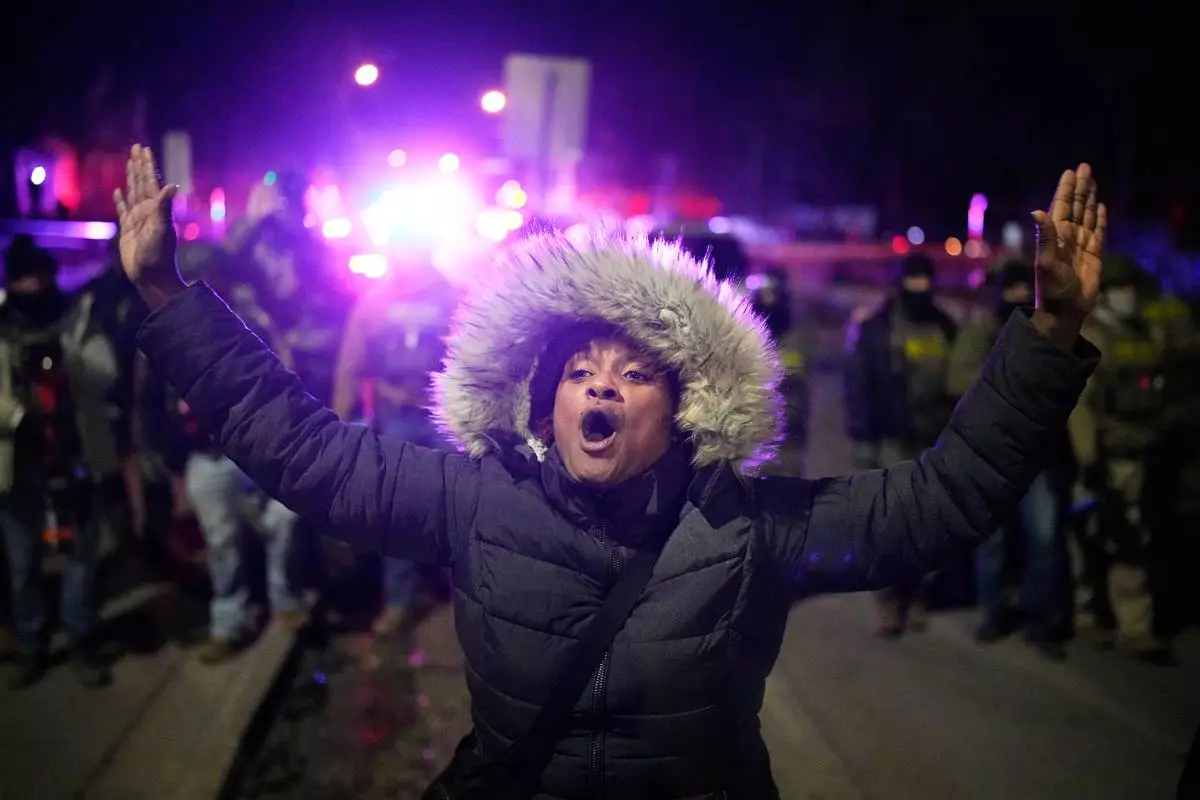
A protester yells in front of law enforcement after a shooting on Wednesday, Jan. 14, 2026, in Minneapolis. (AP Photo/John Locher)
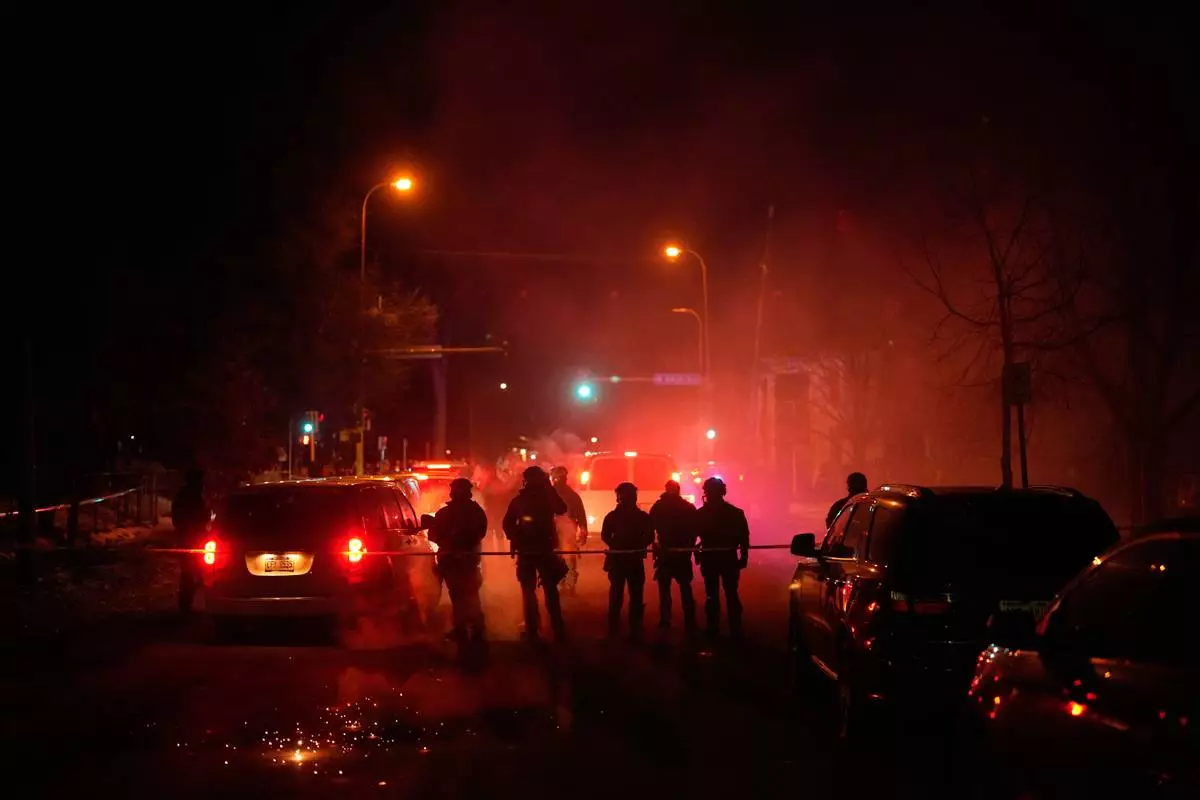
Tear gas surrounds federal law enforcement officers as they leave a scene after a shooting on Wednesday, Jan. 14, 2026, in Minneapolis. (AP Photo/John Locher)
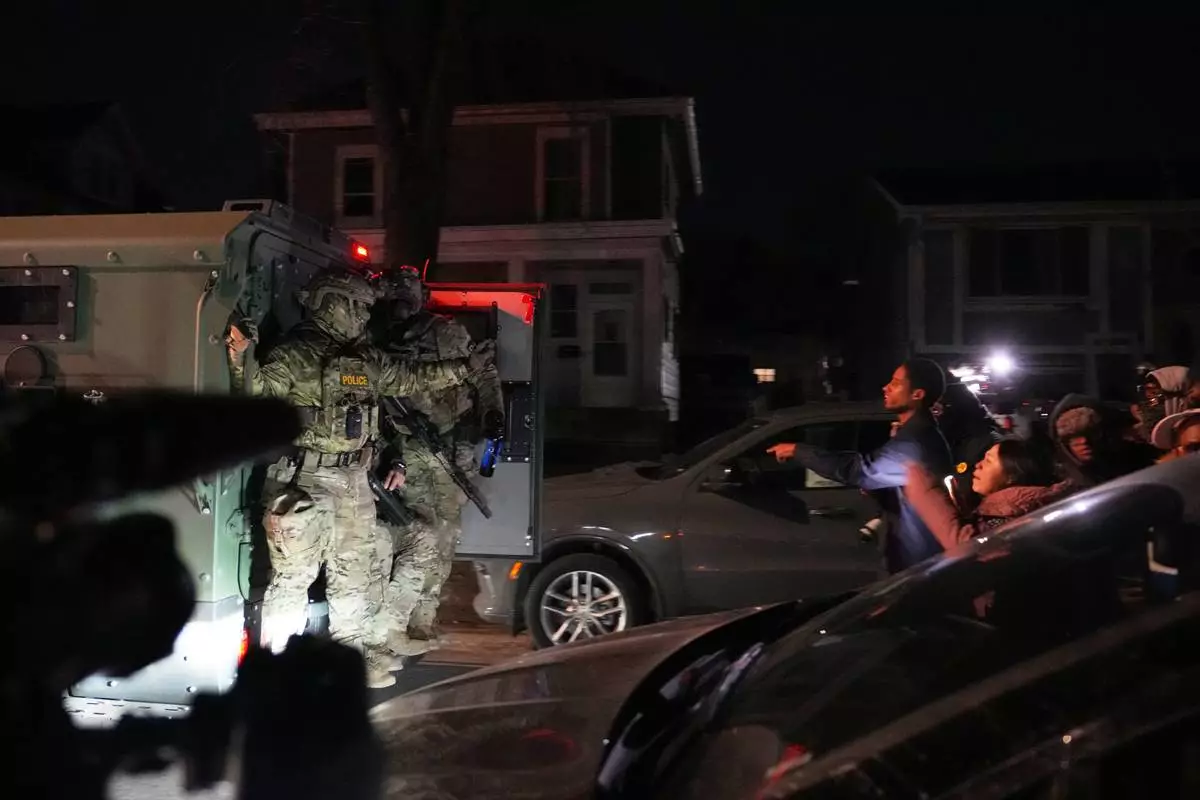
Protesters shout at law enforcement officers after a shooting on Wednesday, Jan. 14, 2026, in Minneapolis. (AP Photo/Abbie Parr)
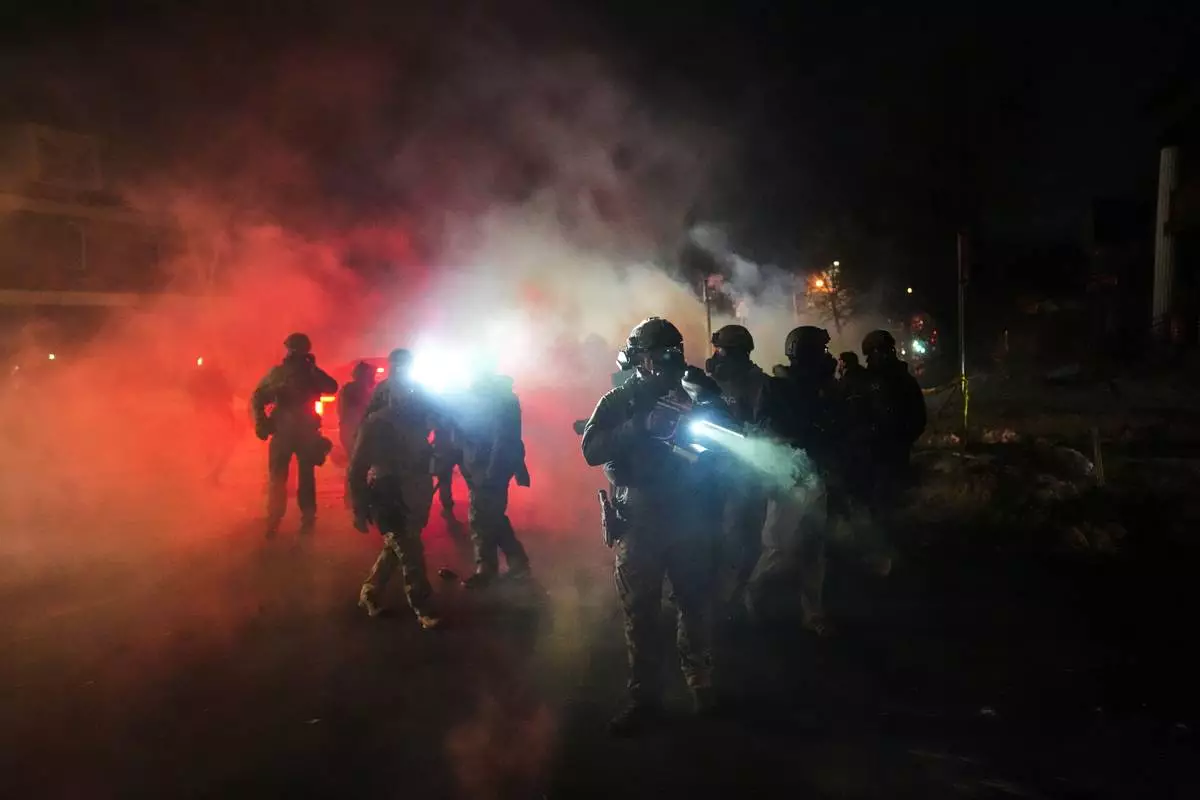
Law enforcement officers stand amid tear gas at the scene of a reported shooting Wednesday, Jan. 14, 2026, in Minneapolis. (AP Photo/Adam Gray)