NEW YORK (AP) — A lot of American adults — about 3 in 10 — make use of astrology, tarot cards or fortunetellers at least once a year. But only a small fraction of them rely on what they learn from these practices to make major decisions.
That’s according to a nationwide survey released Wednesday by the Pew Research Center, encompassing 9,593 U.S. adults who were interviewed last October.
Overall, according to Pew, about 2 in 10 U.S. adults say they engage in at least one of these activities mostly "just for fun," while about 1 in 10 say they engage mostly because they “believe the practices give them helpful insights.” Only about 1% say they rely “a lot” on what they learn from these practices when making major life decisions.
Yet it's a big business. The psychic services industry — which encompasses various specialties such as astrology, palm-reading, psychic readings and fortunetelling — generated an estimated $2.3 billion in revenue in 2024 and employed 105,000 people, according to market research firm IBIS World.
“Traditional skepticism about consulting psychics has waned, with more consumers embracing these services, especially in times of uncertainty,” wrote IBIS World analyst Michal Dalal.
There were some major demographic differences in responses to the Pew survey, notably finding that younger adults — and especially younger women — are more likely than other major age groups to consult astrology or horoscopes. According to Pew, about 4 in 10 women ages 18 to 49 say they believe in astrology. That compares with about 3 in 10 women 50 and older and about 2 in 10 men under age 50.
Another distinctive group: LGBTQ+ adults. According to the survey, about half of them consult astrology or a horoscope at least yearly — roughly twice the share among U.S. adults overall. Pew found that about 2 in 10 LGBTQ+ adults say that when they make major life decisions, they rely at least “a little” on what they’ve learned from a fortuneteller, tarot cards, astrology or a horoscope — a considerably larger share than any other demographic subgroup.
On the other hand, the survey found that adults ages 65 or older, those with high incomes and college degrees, and those who identify as politically conservative are less likely than other adults to believe in astrology and engage with tarot cards and fortunetellers.
Among other questions, Pew asked respondents if they were religiously affiliated, and about 7 in 10 said yes. Of that group, about 3 in 10 said they believe in astrology — very similar to the percentage of astrology believers among the religiously unaffiliated respondents who identified as atheist, agnostic or “nothing in particular.”
About one-third of Black Protestants, Hispanic Catholics and adults who say their religion is “nothing in particular” said they believe in astrology, according to Pew. Atheists, agnostics, white evangelical Protestants and Jewish Americans, meanwhile, were less likely than the general public to say they believe in astrology.
Among Hispanic Catholics, about 1 in 10 said they rely on insights from these practices at least “a little” when making major life decisions, which was more than most of the other religious groups featured in the survey.
On the specific question of astrology, the new survey found that 27% of U.S. adults believed in it — similar to the 29% who answered affirmatively in a 2017 Pew survey.
According to IBIS World, the psychic services industry's total revenue has increased by more than 4% annually since the start of the COVID-19 pandemic five years ago, “when business closures, sickness and loss of loved ones prompted a surge in demand for spiritual guidance services.”
“Astrology and aura reading are leveraging digital platforms to extend their reach,” IBIS World said. “Thanks to easy access via mobile apps and social media platforms, personalized reports and virtual readings are gaining traction with younger consumers.”
Astrology, throughout its long history, has been embraced by its believers and treated with bemusement or even ridicule by skeptics. It was the subject of extensive research led by a Massachusetts Institute of Technology professor, Jackson Lu. His team, using a sample of more than 170,000 people, determined in 2020 that there was extensive discrimination in China against Virgos, but that the bias was “irrational” because astrological signs predict neither personality or job performance.
For supporters of psychic services, there have been positive developments more recently. Among them:
— Last year, the City Council in Norfolk, Virginia, repealed a 45-year-old ban on “the practice of palmistry, palm reading, phrenology or clairvoyance, for monetary or other compensation.” Under that ban, various forms of fortunetelling could lead to as much as a year in jail.
— “ Look Into My Eyes,” a full-length documentary about psychics in New York, received numerous positive reviews after it was released in September. AP film critic Lindsey Bahr called it “unjudgmental, funny and poignant.”
Associated Press religion coverage receives support through the AP’s collaboration with The Conversation US, with funding from Lilly Endowment Inc. The AP is solely responsible for this content.
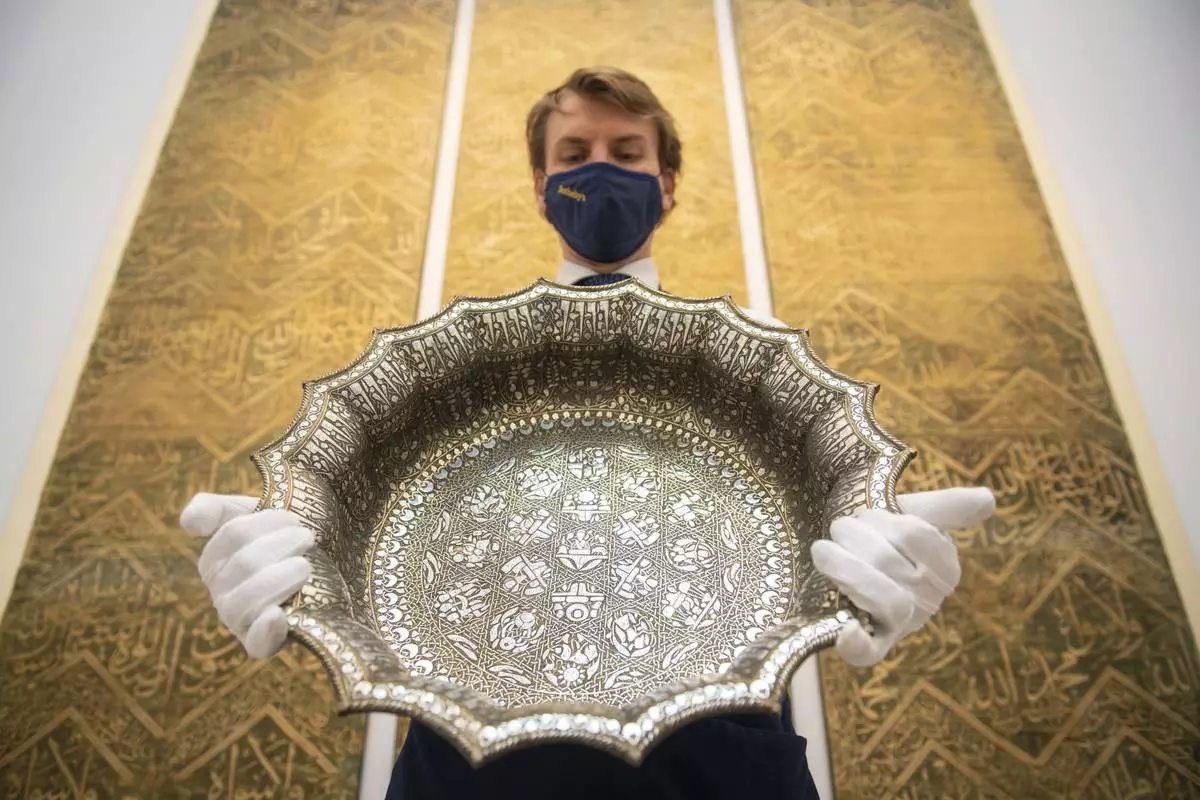
FILE - An employee at Sotheby's auction house holds a twelfth-century silver inlaid scalloped basin with astrological designs, estimated to fetch 1,000,000 - 1,500,000 sterling pounds, as part of the auction house's forthcoming Arts of the Islamic World and India sale on March 31, in London, March 29, 2021. (Dominic Lipinski/PA via AP)
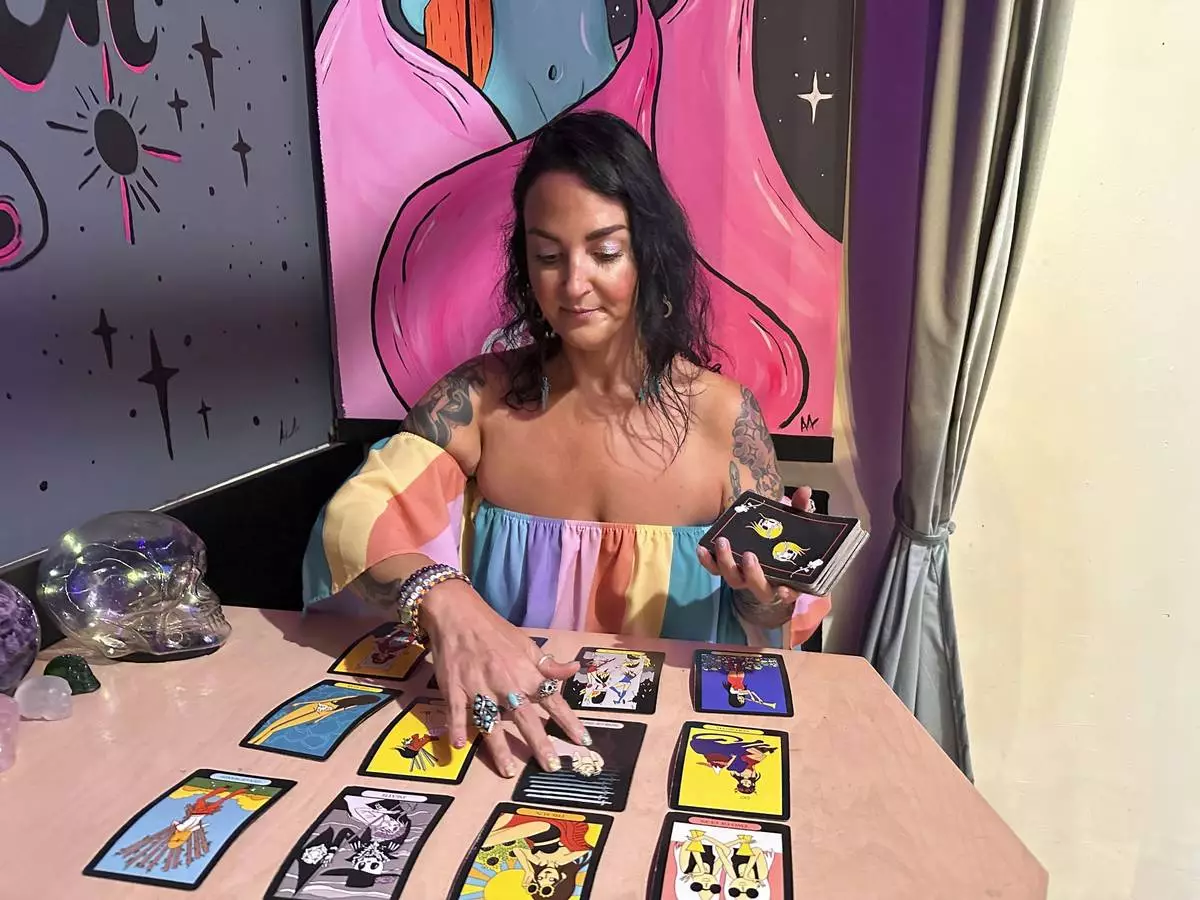
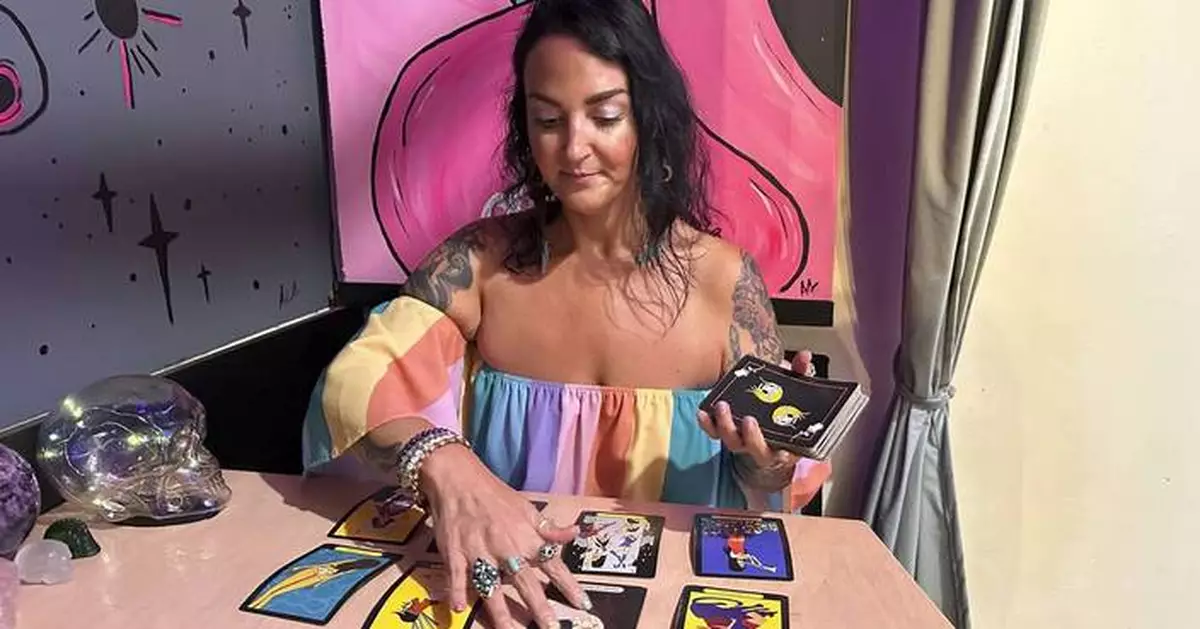
FILE - Ashley Branton lays out tarot cards in the back of her shop, Velvet Witch, in Norfolk, Va., June 13, 2024. (AP Photo/Ben Finley, File)