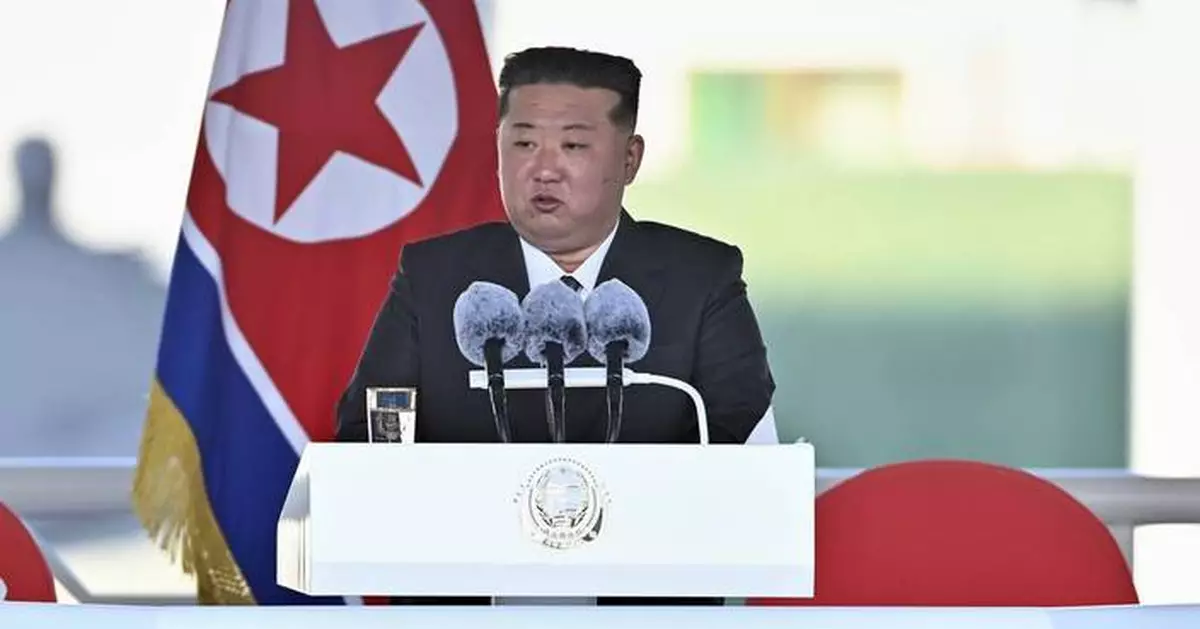
SEOUL, South Korea (AP) — North Korea's second naval destroyer was damaged in a failed launch this week, state media reported Thursday, sparking fury from leader Kim Jong Un, who wants bigger warships to deal with what he calls escalating U.S.-led threats against his country.
It's not common for North Korea to acknowledge military-related setbacks, but observers say the disclosure of the failed ship launch suggests that Kim is serious about his naval advancement program and confident of ultimately achieving that objective.
During a launching event at the northeastern port of Chongjin on Wednesday, the newly built 5,000-ton-class destroyer became unbalanced and was punctured in its bottom sections after a transport cradle on the stern section slid off first and became stuck, according to the Korean Central News Agency.
KCNA didn't provide details on what caused the problem, the severity of the damage or whether anyone was injured.
According to KCNA, Kim, who was present at the ceremony, blamed military officials, scientists and shipyard operators for a “serious accident and criminal act caused by absolute carelessness, irresponsibility and unscientific empiricism." Kim called for a ruling Workers’ Party meeting slated for late June to address their “irresponsible errors."
“It's a shameful thing. But the reason why North Korea disclosed the incident is it wants to show it's speeding up the modernization of its navy forces and expresses its confidence that it can eventually build" a greater navy, said Moon Keun-sik, a navy expert who teaches at Seoul’s Hanyang University.
Moon suspected the incident likely happened because North Korean workers aren't yet familiar with such a large warship and were rushed to put it in the water.
The damaged vessel was likely the same class as the country’s first destroyer unveiled last month, which experts assessed as North Korea's largest and most advanced warship to date. Kim called the first vessel, named Choe Hyon — a famed Korean guerilla fighter during the Japanese colonial period — a significant asset for advancing his goal of expanding the military’s operational range and nuclear strike capabilities.
State media described that ship as designed to carry weapons systems including nuclear-capable ballistic and cruise missiles. Kim said the ship was expected to enter active duty early next year and later supervised test-firings of missiles from the warship.
Lee Sung Joon, spokesperson for South Korea’s Joint Chiefs of Staff, said Thursday that the damaged vessel was likely equipped with similar systems and remains toppled over in the sea. Satellite images from Planet Labs PBC seen by The Associated Press appeared to show the vessel rolled onto its side, positioned diagonally from the dock, with most of its hull submerged and draped in blue covers.
Earlier commercial satellite images indicated that the country was building its second destroyer at a shipyard in Chongjin.
Beyond Parallel, a website run by the Center for Strategic and International Studies think tank, said the satellite imagery of Chongjin’s Hambuk shipyard on May 12 showed that a second vessel in the Choe Hyon-class of guided missile destroyers was under construction.
A report by the North Korea-focused 38 North website assessed last week that the destroyer in Chongjin was being prepared to be launched sideways from the quay, a method that has been rarely used in North Korea. The report said the previous destroyer launched at the western shipyard of Nampo, in contrast, used a floating dry dock.
South Korean officials and experts say the Choe Hyon destroyer was likely built with Russian assistance as the two countries' military partnerships are booming. While North Korea’s naval forces are considered far inferior to those of its rivals, analysts say the destroyer with nuclear-capable missiles and an advanced radar system would still enhance the North's offensive and defensive capabilities.
Kim has framed the arms buildup as a response to perceived threats from the United States and South Korea, which have been expanding joint military exercises in response to the North’s advancing nuclear program. He says the acquisition of a nuclear-powered submarine would be his next big step in strengthening the North Korean navy.
Hours after releasing the report on the damaged destroyer, North Korea test-fired multiple cruise missiles from an area about 300 kilometers (185 miles) south of Chongjin, according to South Korea's military. The launches were a continuation of a streak of weapons-testing activities by North Korea in recent years. South Korea's Joint Chiefs of Staff said the launches were being analyzed by South Korean and U.S. intelligence authorities.
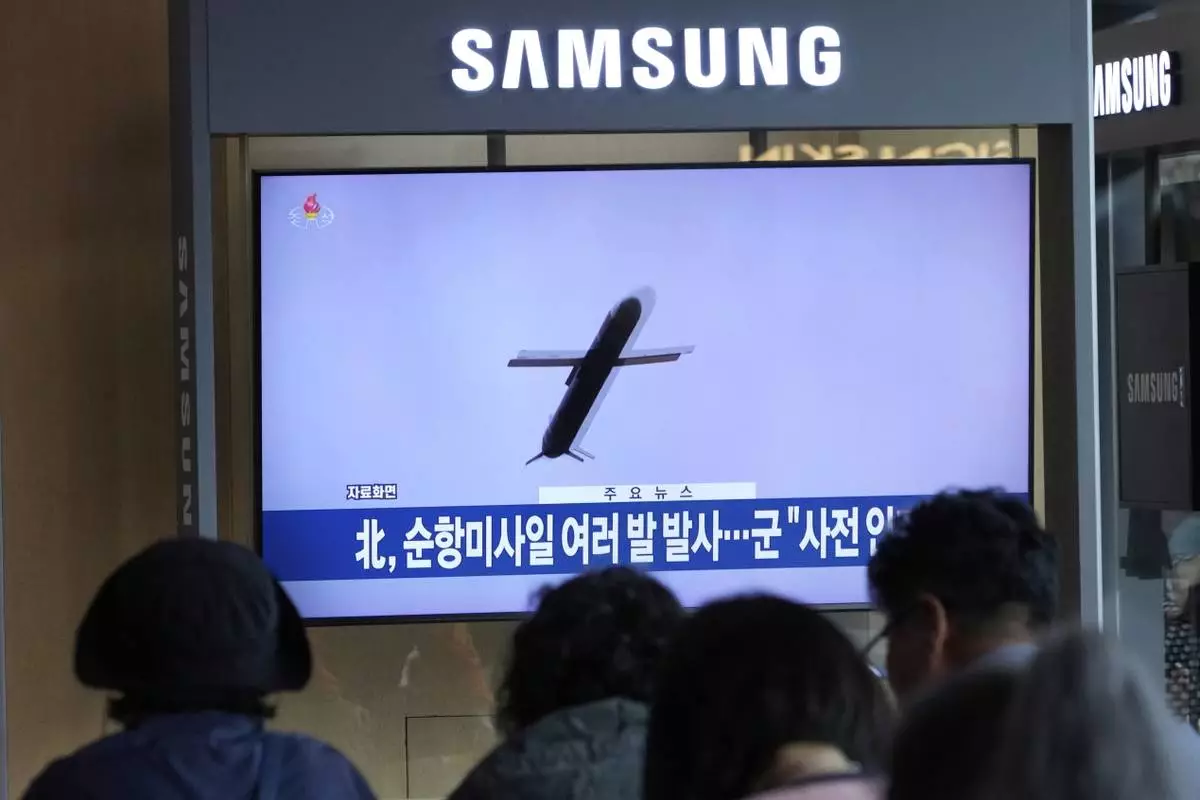
A TV screen shows a file image of North Korea's missile launch during a news program at Seoul Railway Station in Seoul, South Korea, Thursday, May 22, 2025. (AP Photo/Ahn Young-joon)
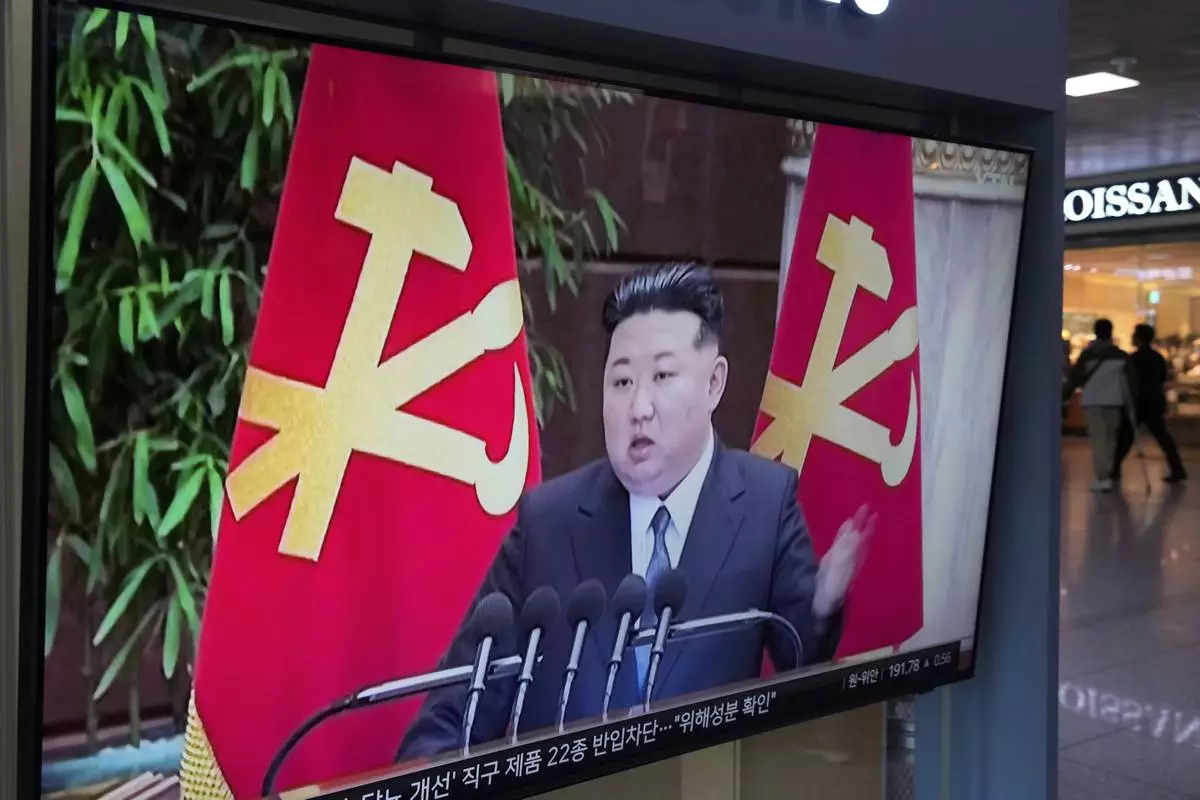
A TV screen shows a file image of North Korean leader Kim Jong Un during a news program at Seoul Railway Station in Seoul, South Korea, Thursday, May 22, 2025. (AP Photo/Ahn Young-joon)
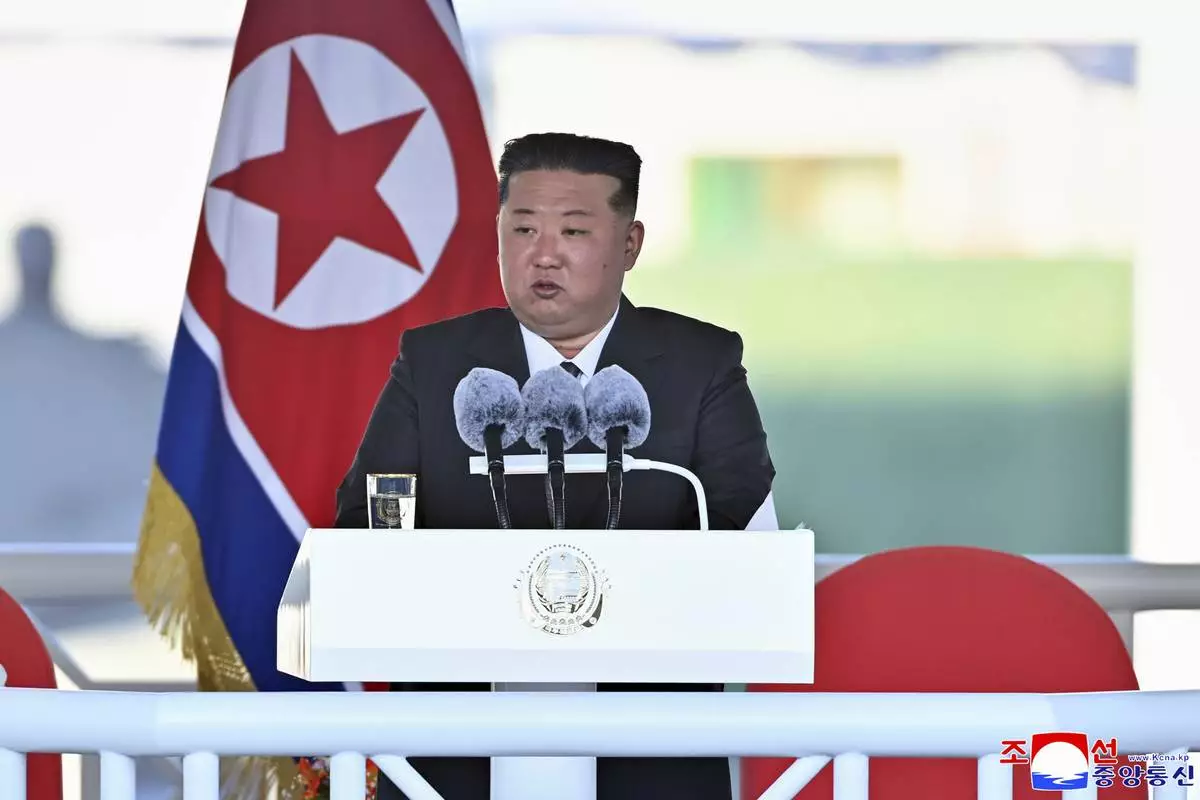
FILE - In this photo provided by the North Korean government, its leader Kim Jong Un speaks during a launching ceremony of a new naval destroyer at a western port in Nampo, North Korea, on April 25, 2025. Independent journalists were not given access to cover the event depicted in this image distributed by the North Korean government. The content of this image is as provided and cannot be independently verified. Korean language watermark on image as provided by source reads: "KCNA" which is the abbreviation for Korean Central News Agency. (Korean Central News Agency/Korea News Service via AP, File)
LONDON (AP) — British Prime Minister Keir Starmer pledged revive his struggling government but faced growing calls to resign after a disastrous set of local and regional elections for his Labour Party.
As the final results came in Saturday, Labour had lost 1,000 local council seats across England and was booted from power in Wales after 27 years. Anti-immigration party Reform UK won almost 1,300 seats across England, came second in Wales and made significant gains in Scotland.
It was a blunt verdict from voters in elections widely seen as an unofficial referendum on Starmer, whose popularity has plummeted since he led the center-left party to power less than two years ago.
Here are five things we’ve learned from the elections.
Starmer insisted he would not walk away and "plunge the country into chaos,” and the dire election results did not produce an immediate challenge to his leadership.
"The right thing to do is rebuild and show the path forward,” Starmer said Saturday. “That’s what I’m going to do in the coming days.”
Starmer’s Cabinet colleagues expressed support, and none of the high-profile Labour politicians considered potential challengers has made a move. Health Secretary Wes Streeting, former Deputy Prime Minister Angela Rayner and Greater Manchester Mayor Andy Burnham are keeping quiet for now.
But a growing number of Labour lawmakers urged the prime minister to set a timetable for his departure this year. British politics allows parties to change leader midterm without the need for a new election.
“There has to be a timetable,” legislator Clive Betts told the BBC. Another lawmaker, Tony Vaughan, said there should be an “orderly transition of leadership.”
Starmer tried to demonstrate change on Saturday by bringing back two figures from past Labour governments. He made former Prime Minister Gordon Brown a special envoy on global finance, and appointed the party's ex-deputy leader Harriet Harman an adviser on women and girls.
Starmer is due to make a speech on Monday in an attempt to regain momentum, before the government sets out its legislative plans on Wednesday in a speech delivered by King Charles III at the State Opening of Parliament.
The elections were a breakthrough for Reform UK, the latest hard-right party led by the veteran nationalist politician Nigel Farage.
Running on an anti-establishment and anti-immigration message, the party won hundreds of local council seats in working-class areas in England’s north, such as Sunderland, that were solid Labour turf for decades. It also made gains from the Conservatives in areas like the county of Essex, east of London.
Farage said the results marked a “historic change in British politics.” He said he's confident that “voters who have come to us are not doing it as a short-term protest.”
Reform UK currently holds just eight of the 650 seats in Parliament and it’s unclear whether it could repeat its success in a national election.
The elections produced semiautonomous administrations in Scotland and Wales led by parties devoted to independence and the breakup of the United Kingdom — though neither has that policy on the front burner.
The Scottish National Party, which has governed in Edinburgh since 2007, won another term but fell short of a majority, meaning an independence referendum is unlikely. Labour and Reform tied in a distant second place.
Plaid Cymru (The Party of Wales) won the most seats in the Cardiff-based legislature, the Senedd. The party, which has an ambition for Wales to leave the U.K. but no plan to do so anytime soon, fell short of a majority but will likely form the new government. Reform came second and Labour a distant third in one of its most historic heartlands, with outgoing First Minister Eluned Morgan losing her seat.
The economy lies at the heart of Labour’s troubles, as it does for many incumbent governments.
Since ending 14 years of Conservative rule roiled by austerity and the COVID-19 pandemic, Labour has struggled to ease the cost of living and jump-start a sluggish economy against the tough economic backdrop of war in Ukraine and, more recently, Iran. Starmer also has angered supporters with attempts to cut welfare spending, some of which were reversed after Labour revolts.
Some in Labour say the government's achievements, including protections for renters and a higher minimum wage, are going unnoticed. Many blame Starmer, an uninspiring leader distracted by scandals including his disastrous decision to appoint Peter Mandelson, a scandal-tarnished friend of Jeffrey Epstein, as Britain’s ambassador to Washington.
But Stephen Houghton, the outgoing leader of Barnsley council in northern England, where Labour lost to Reform, said the problem “goes deeper than the prime minister.”
“This has been coming for 30 years around the country, in post-industrial communities, coastal communities, that have been left behind,” he said. “You can change prime ministers all day long. If you don’t change policy, it’s not going to change.”
The results reflect a fragmentation of U.K. politics after decades of domination by Labour and the Conservative Party, which also suffered major losses on Thursday.
The elections offered voters a rainbow of choices, including the centrist Liberal Democrats and the nationalist parties in Scotland and Wales.
But the big winners were populist insurgents, Reform UK and the Green Party, whose focus has expanded from the environment to social justice and the Palestinian cause under self-described “eco populist” leader Zack Polanski. The Greens won hundreds of council seats from Labour in urban centers and university towns and took control of several local authorities.
Tony Travers, professor of government at the London School of Economics, said the results suggest the next national election, due by 2029, won’t produce a majority for any party.
“So then you’re in the world of, after the election, two or three big minority parties trying to work out how they would govern,” he said — something traditionally considered “very un-British.”
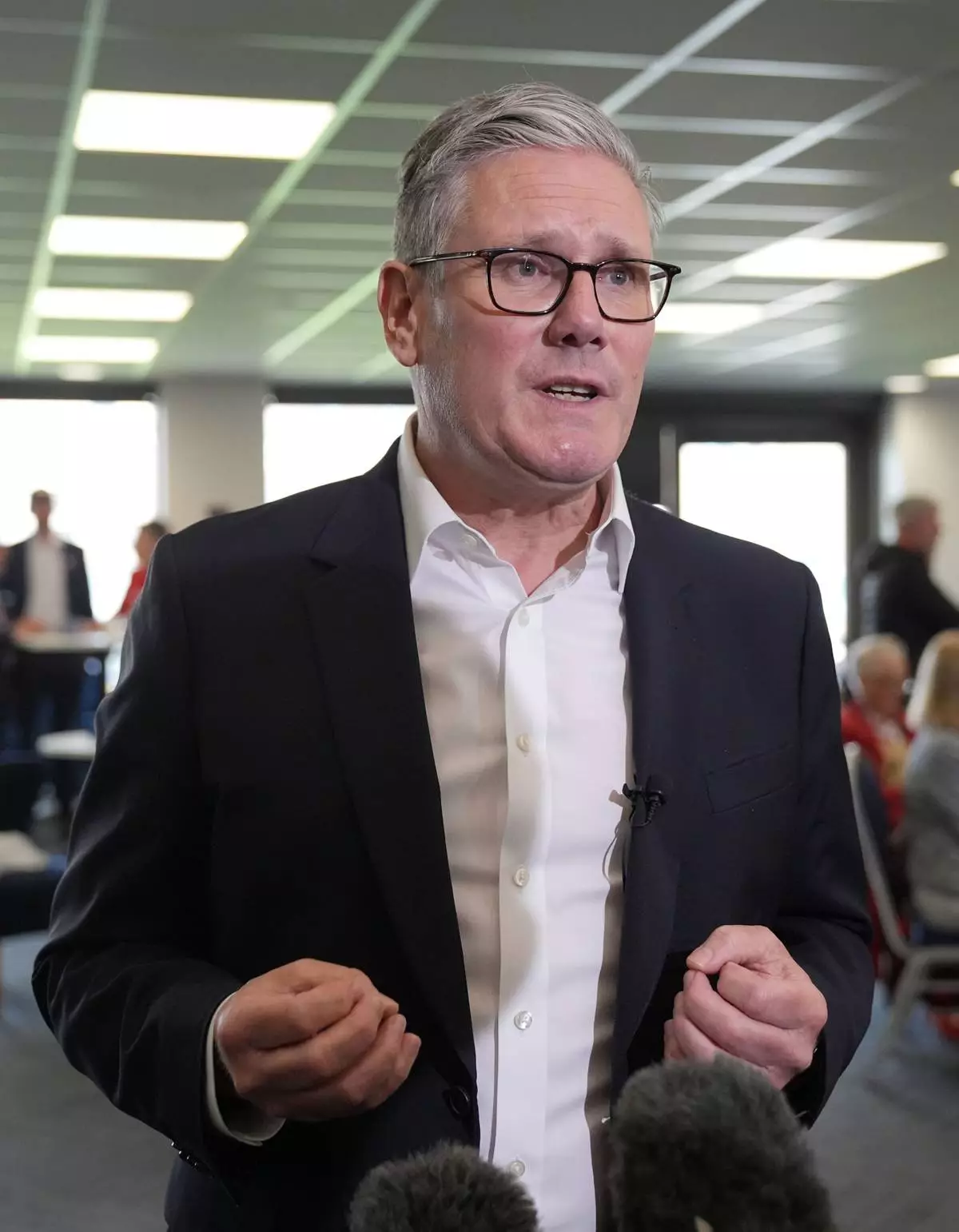
British Prime Minister Sir Keir Starmer speaking to the media after meeting Labour Party members during a visit to AFC Wimbledon in south London, Saturday May 9, 2026. (Maja Smiejkowska/PA via AP)
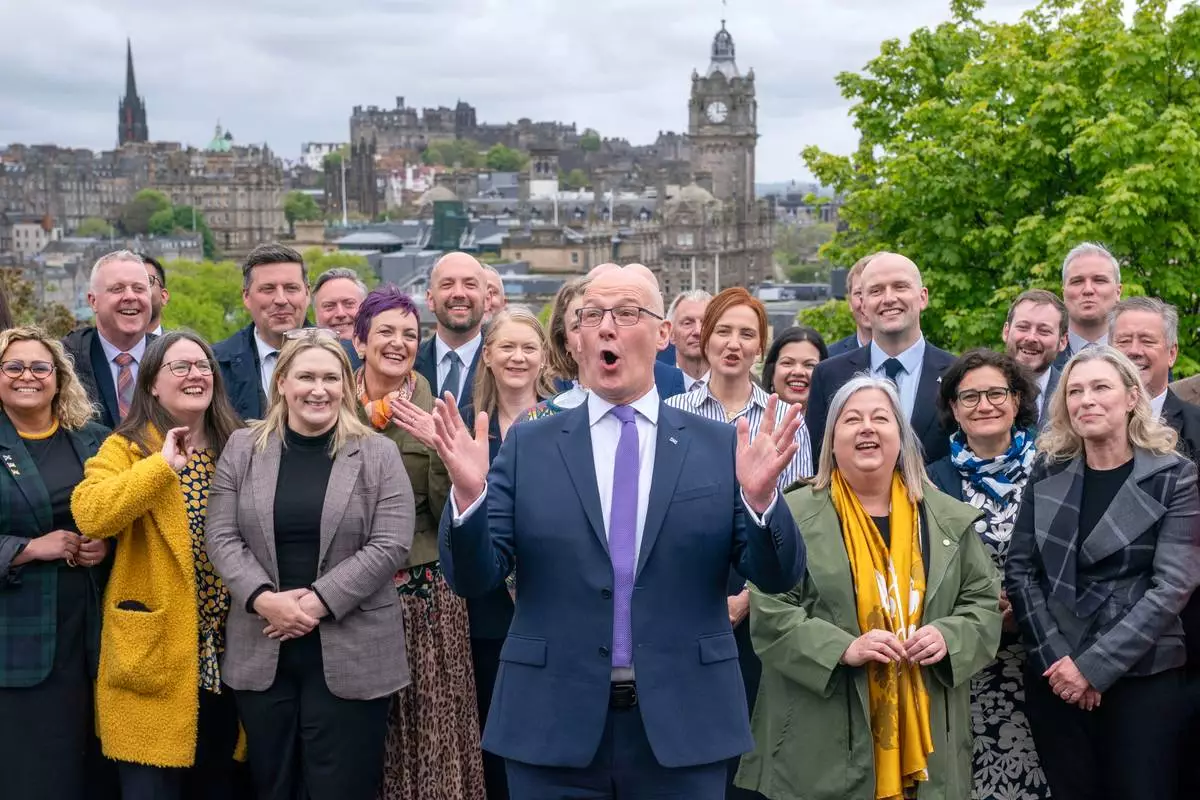
First Minister and SNP leader John Swinney with some of the newly elected SNP MSPs in Edinburgh, Saturday May 9, 2026, following the 2026 Holyrood elections. (Jane Barlow/PA via AP)
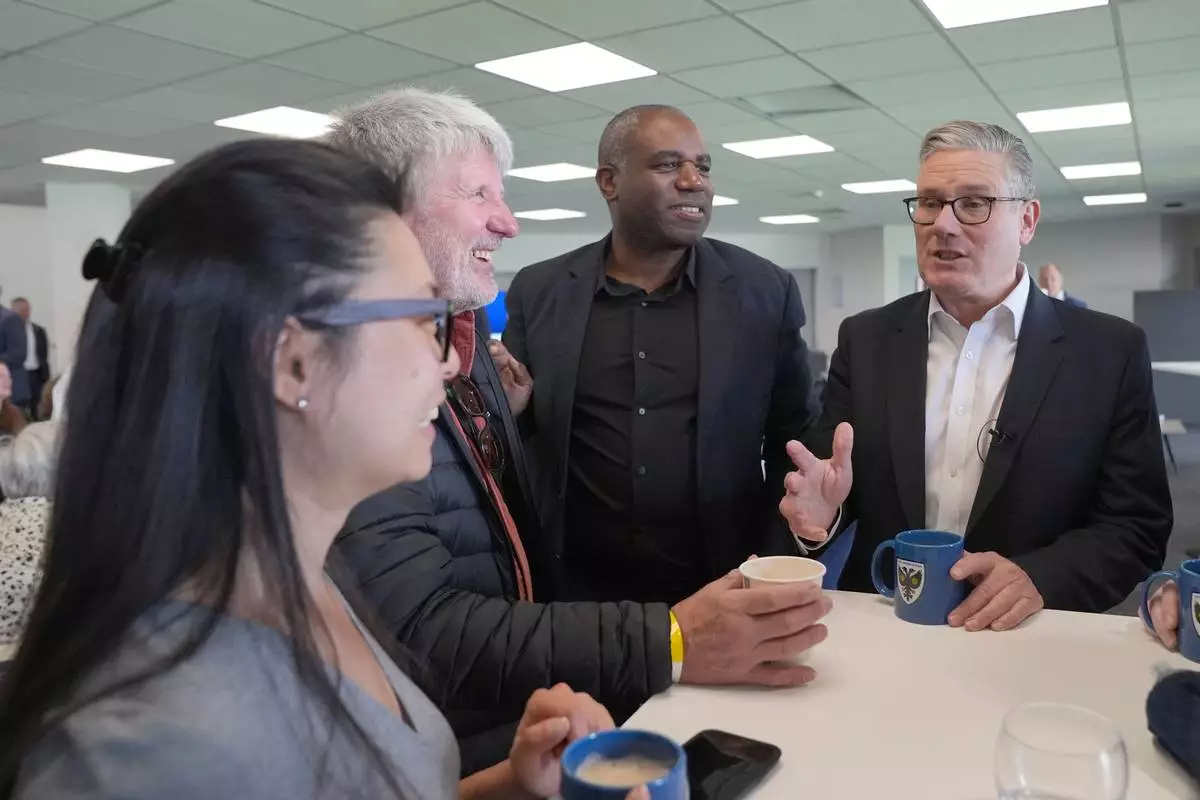
British Prime Minister Sir Keir Starmer and Foreign Secretary David Lammy meeting Labour Party members during a visit to AFC Wimbledon in south London, Saturday May 9, 2026. (Maja Smiejkowska/PA via AP)
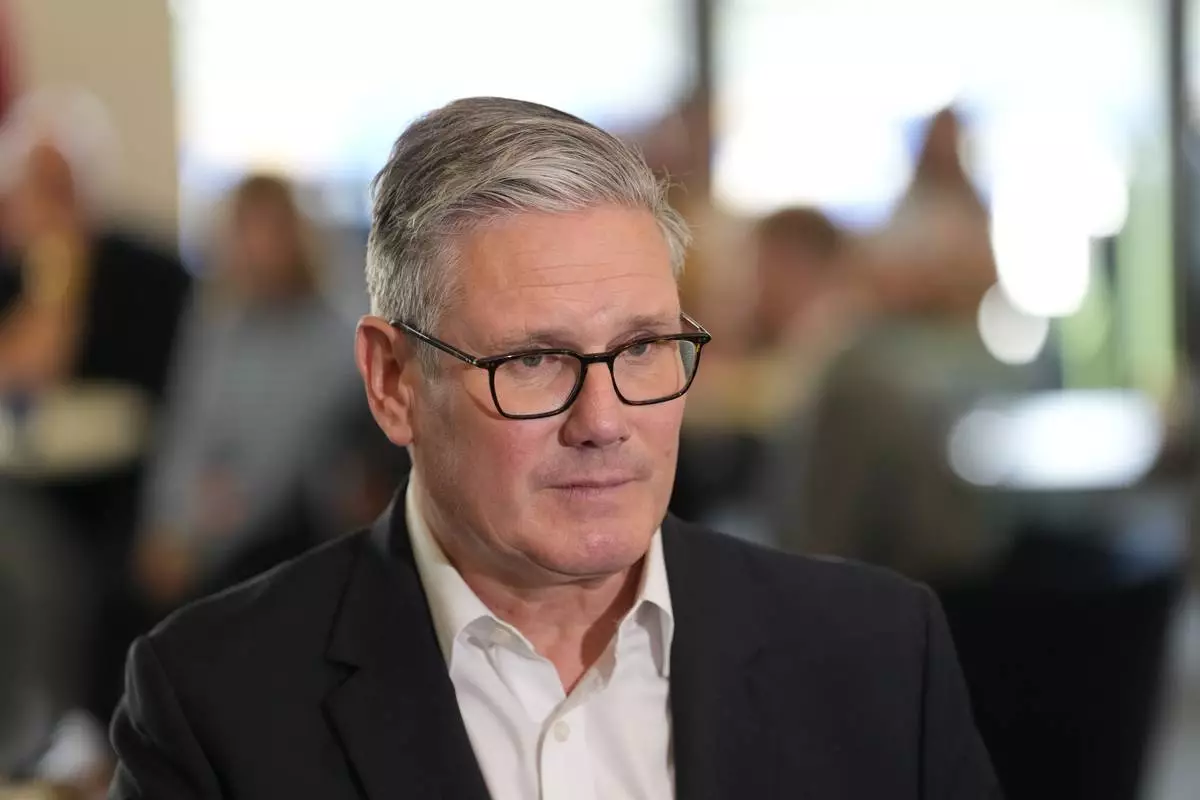
British Prime Minister Sir Keir Starmer speaking to the media after meeting Labour Party members during a visit to AFC Wimbledon in south London, Saturday May 9, 2026. (Maja Smiejkowska/PA via AP)
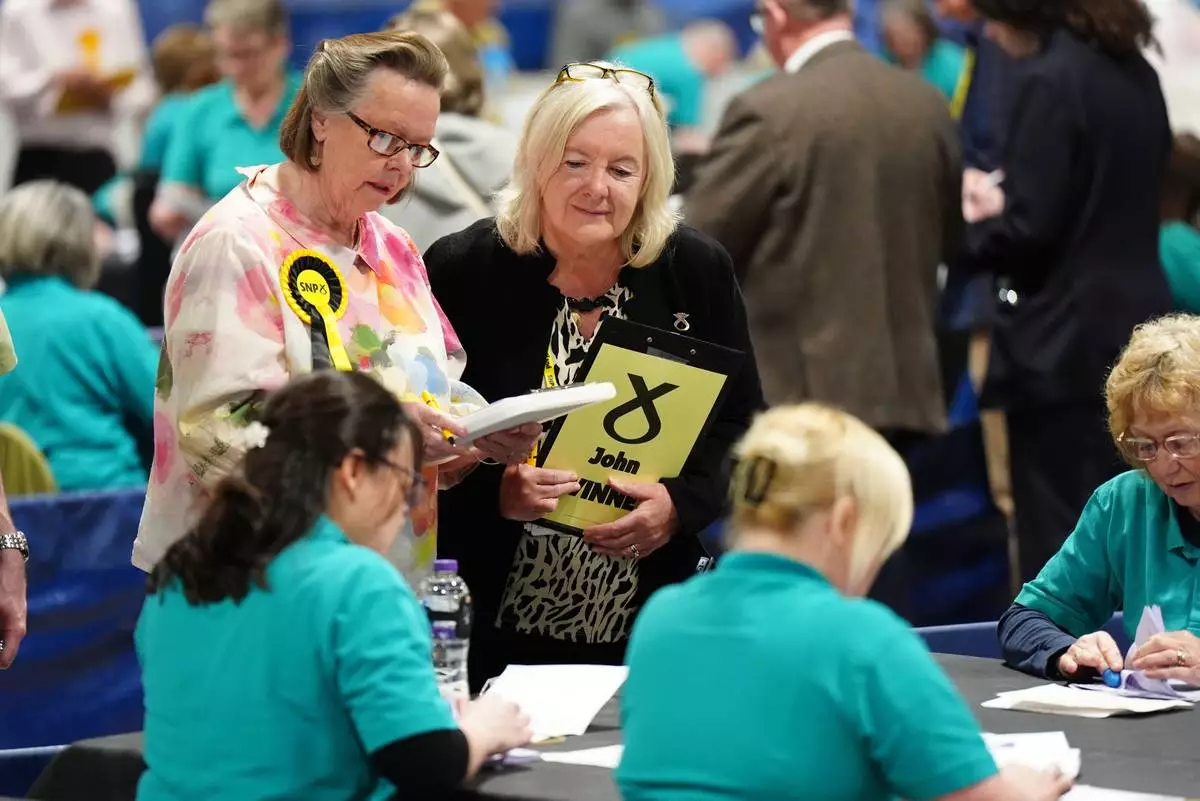
Observers from the Scottish National Party (SNP) watch as votes are counted for the 2026 Holyrood elections, at Dewars Centre in Perth, Scotland, Friday May 8, 2026. (Jane Barlow/PA via AP)
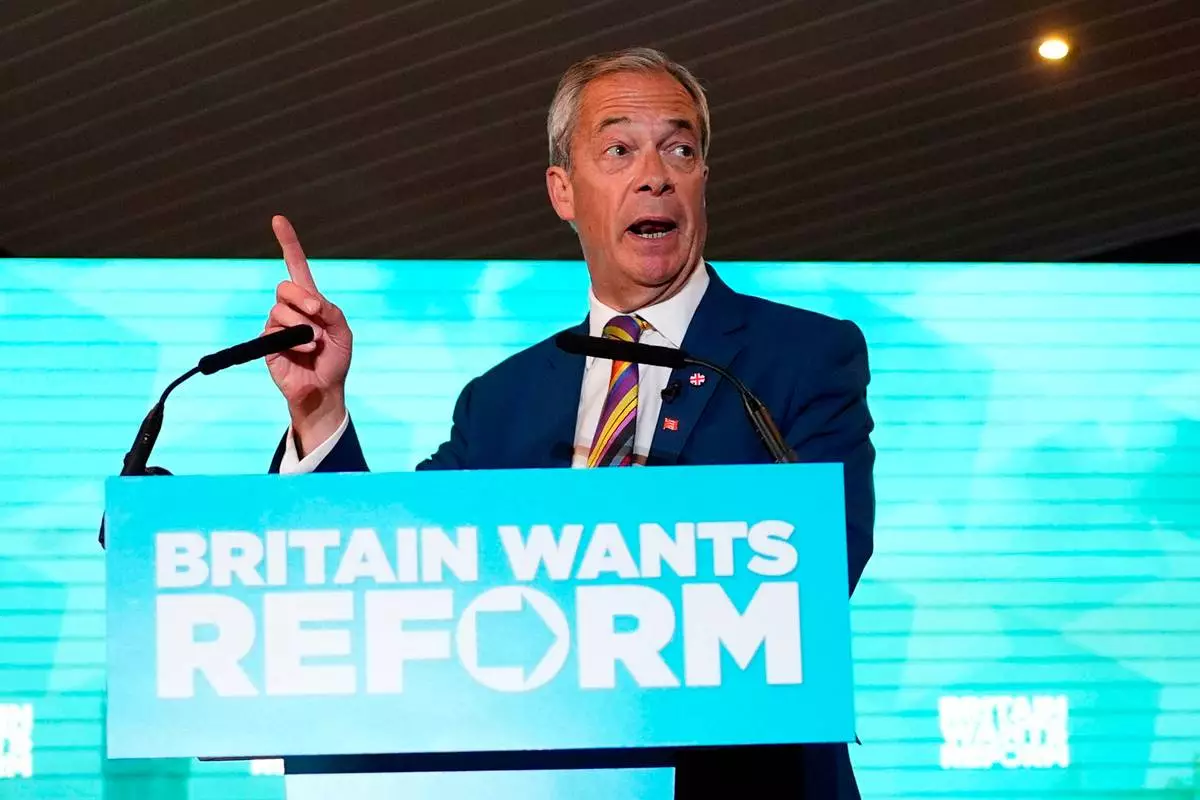
Reform UK leader Nigel Farage speaks to supporters at Chelmsford City Racecourse, Friday May 8, 2026, in Essex, England, following the 2026 local election results. (Jordan Pettitt/PA via AP)
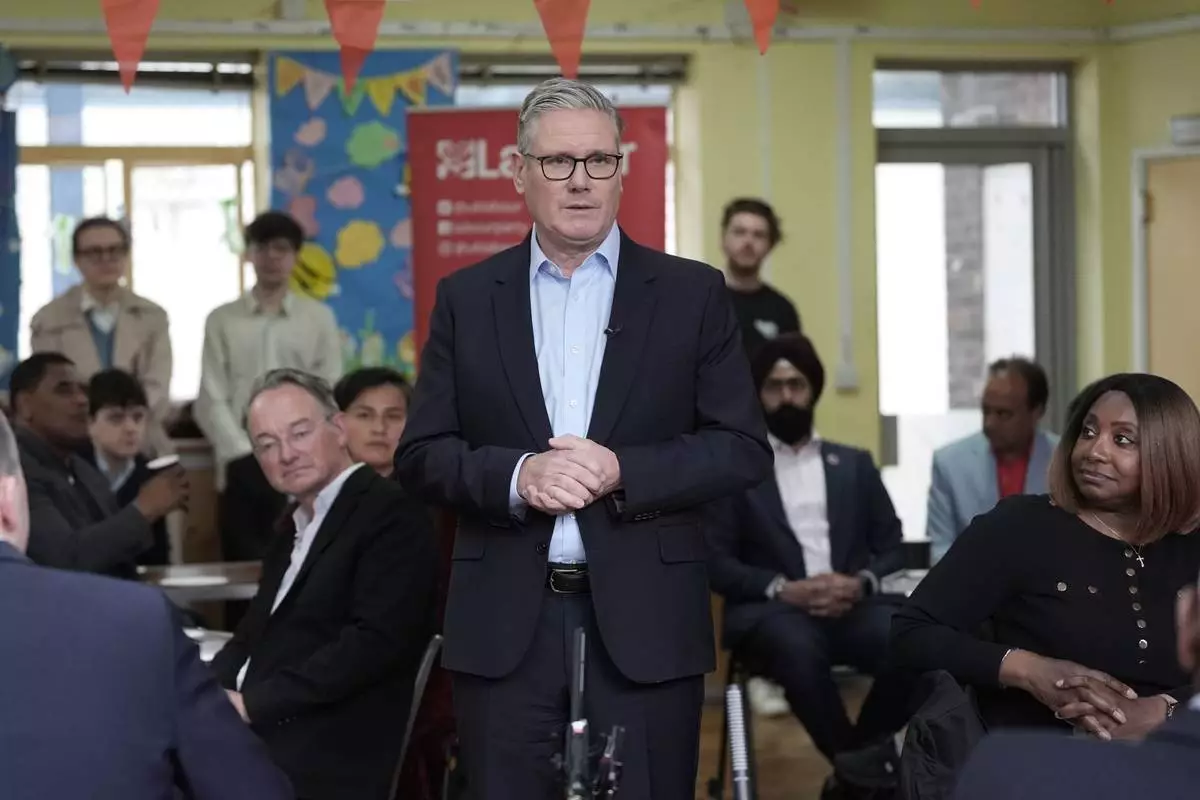
Britain's Prime Minister Sir Keir Starmer speaks to Labour Party members at Kingsdown Methodist Church Hall, in Ealing, west London, Friday May 8, 2026, a day after the local elections. (Stefan Rousseau/PA via AP)