- Joining Microsoft's Copilot ecosystem, unveiling AI accessibility on the stage
- 'Dot Vista' demo shows tactile conversion of visual content by leveraging Windows AI APIs and Copilot+ PCs
- PowerPoint reimagined as a tactile interface for the visually impaired
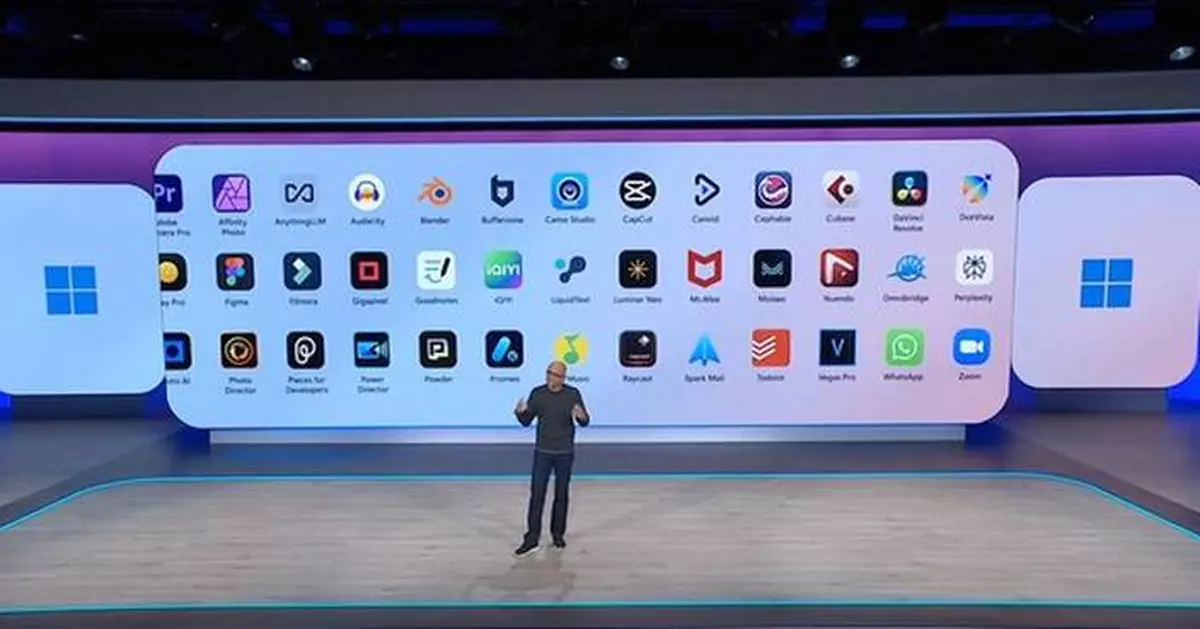
SEOUL, South Korea, May 22, 2025 /PRNewswire/ -- Dot Inc. was invited to present at Microsoft's annual developer conference "@Build 2025" and, on May 20, at the Seattle Convention Center, unveiled its accessibility solution, Dot Vista, which combined Microsoft's Copilot+ PC with Windows AI Foundry technologies.
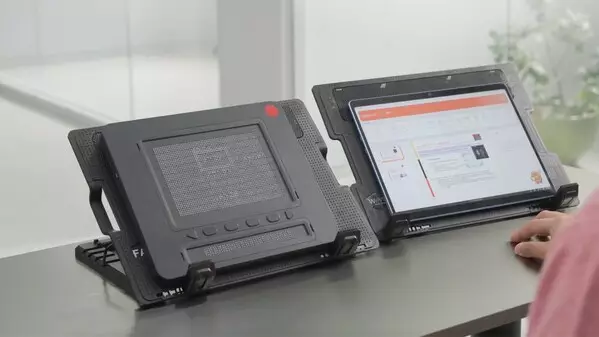
Dot Vista was developed by Dot Inc.'s AI team in collaboration with Prof. Yongjae Yoo's AI group at Hanyang University. It is the world's first Windows accessibility app that uses Windows AI APIs and the Dot Pad's tactile display to convert PowerPoint slide text and visuals—such as charts and graphs—into spoken audio and raised graphics, helping visually impaired users better follow presentations.
This showcase was part of a session led by the Microsoft Windows AI APIs team, where Dot presented a live demo of Dot Vista on a Windows Copilot+ PC that integrated three key Windows AI APIs:
- Phi Silica API: Quickly summarizes text-heavy PowerPoint slides.
- Image Description API: Provides contextual descriptions of slide images.
- Text OCR API: Extracts and explains data from charts and graphs.
SEOUL, South Korea, May 22, 2025 /PRNewswire/ -- Dot Inc. was invited to present at Microsoft's annual developer conference "@Build 2025" and, on May 20, at the Seattle Convention Center, unveiled its accessibility solution, Dot Vista, which combined Microsoft's Copilot+ PC with Windows AI Foundry technologies.
Dot Vista was developed by Dot Inc.'s AI team in collaboration with Prof. Yongjae Yoo's AI group at Hanyang University. It is the world's first Windows accessibility app that uses Windows AI APIs and the Dot Pad's tactile display to convert PowerPoint slide text and visuals—such as charts and graphs—into spoken audio and raised graphics, helping visually impaired users better follow presentations.
This showcase was part of a session led by the Microsoft Windows AI APIs team, where Dot presented a live demo of Dot Vista on a Windows Copilot+ PC that integrated three key Windows AI APIs:
Dot's CEO Eric Ju-Yoon Kim stated, "We chose Windows AI APIs for their lightweight architecture, which enables rapid summarization and keyâ€information extraction without relying on a complex LLM server."
Dot's flagship product, the Dot Pad, breaks free from traditional single-line braille displays by showing up to seven lines at once, so users can quickly scan large amounts of information. It also intuitively renders complex content, like math formulas, extended code snippets, and tables, boosting both learning efficiency and work productivity.
RNIB accessibility expert Dave Williams highlighted Dot Pad's transformative potential in fostering inclusion: "Dot Pad delivers tactile access to images from maps to music and enables collaboration between blind and sighted users. As a blind parent, I could finally experience my son's drawing by touch. And with AI advancing, this is just the beginning."
Maziar Zarrehparvar, a leading haptic learning researcher at Oxford University and head of the Global University Initiative, said, "I'm impressed by how the Dot team uses AI to make our content more interactive. We believe the future of personalized learning for visually impaired students will gain momentum through Dot's advanced machine learning models, and Oxford fully embraces Dot's AI-based approach to personalized education."
Dot Inc. has partnered with leading institutions—including Oxford University and Boston University—to co-develop a "Tactile Curriculum." It has also broadened partnerships with libraries and with organizations such as the Royal National Institute of Blind People (RNIB), setting new benchmarks in accessible education and digital public services.
These global efforts have established Dot as a vital accessibility partner in Korea's public and educational sectors and across North, Central, and South America. Dot's groundbreaking innovations and social impact have earned international acclaim, including the CES Innovation Award and the SXSW Innovation Award.
** The press release content is from PR Newswire. Bastille Post is not involved in its creation. **
Dot Inc. Presented 'Inclusive AI' Innovations at Microsoft Build 2025

Samsung TV aims to be the first to launch Google Photos features in 2026, debuting with memories on the big screen for the first time, while create and personalized results capabilities roll out later in the year
SEOUL, South Korea, Dec. 29, 2025 /PRNewswire/ -- Samsung Electronics Co., Ltd. today announced that they are working to bring Google Photos to Samsung TVs to give users a seamless way to enjoy the moments that matter most, from trips and hobbies to everyday memories with loved ones—now on an immersive and larger screen. The experience aims to offer families a delightful and meaningful way to rediscover their favorite memories together.[1]
"Samsung TVs have always brought people together, and bringing Google Photos to the big screen makes that experience even more personal," said Kevin Lee, Executive Vice President of the Customer Experience Team at the Visual Display (VD) Business of Samsung Electronics. "Through this partnership, we help users rediscover and relive cherished moments by bringing to light the stories behind their photos—right from the comfort of their living room."
A More Meaningful Way to Enjoy Personal Photos
Google Photos makes reliving and sharing special memories easy. With the planned integration, it will seamlessly bring the photos people capture on their phones to Samsung TVs, where they can appear in a larger, cinematic format.
Through the proposed integration, users can explore curated memories on their TVs organized by people, places, and meaningful moments. Google Photos will also expand the suite of photo-driven experiences that integrate with Samsung's Vision AI Companion (VAC), enriching how memories are highlighted and enjoyed throughout the day.
Samsung wants Google Photos to be deeply woven into the TV experience. Imagine Photos surfacing naturally through Daily+ and Daily Board, ensuring that meaningful memories[2] greet users throughout their day in contextual and convenient moments. The setup should be simple—users sign in with their Google Account, and their photo memories instantly appear on the big screen.[3]
Three Ways to Relive and Rediscover: Memories, Create and Personalized Results
- Memories (planned to launch exclusive in early 2026): Shows curated stories based on people, locations, and meaningful moments for the first time on TV, available first and exclusively on Samsung TVs for six months.[4]
- Create with AI (planned to launch later in 2026): Introduces themed templates[5] built on Nano Banana, Google DeepMind's image generation and editing model, featuring playful and fun transformation. Users can also utilize Remix to transform the art style of an image, or Photo to Video to bring still moments to life as short videos.
- Personalized Results (planned to launch later in 2026): Users may view related photos as a slideshow based on topics or contents of memories e.g. ocean, hiking, Paris, etc.
A Seamless Way to Experience Memories on Samsung TV
Samsung and Google Photos want to bring a cinematic gallery experience to the heart of the home, enabling Samsung TV users to browse and relive their most important moments in stunning detail. This integration will transform personal photo libraries into a space where users are invited to explore their journey, create new stories, and reminisce over cherished memories with depth and simplicity.
"Google Photos is a home for people's photos and videos, helping them organize and bring their memories to life," said Shimrit Ben-Yair, Vice President, Google Photos and Google One. "We're excited to bring Google Photos to Samsung TVs—helping people enjoy their favorite photos on a larger screen and reconnect with their memories in new ways."
About Samsung Electronics Co., Ltd.
Samsung inspires the world and shapes the future with transformative ideas and technologies. The company is redefining the worlds of TVs, digital signage, smartphones, wearables, tablets, home appliances and network systems, as well as memory, system LSI and foundry. Samsung is also advancing medical imaging technologies, HVAC solutions and robotics, while creating innovative automotive and audio products through Harman. With its SmartThings ecosystem, open collaboration with partners, and integration of AI across its portfolio, Samsung delivers a seamless and intelligent connected experience. For the latest news, please visit the Samsung Newsroom at news.samsung.com.
1. Features and availability may vary by model and region.
2. Available on Samsung TV models launched 2026 with a Google Account and backed-up photos/videos. For in market models, experience will be available following the OS update schedule.
3. Memories must not be turned off in Google Photos settings.
4. Memories available beginning March 2026; Create and Search available in the second half of 2026.
5. Select creative AI templates will be available exclusively on Samsung TVs.
** The press release content is from PR Newswire. Bastille Post is not involved in its creation. **
Samsung Plans to Bring Google Photos to Samsung AI TV Lineup, Helping Users Relive Their Favorite Memories on the Big Screen