Staff at the Longmen Grottoes, the world's largest treasure trove of stone carvings, highlighted the importance of preserving cultural heritage following President Xi Jinping's encouragement for protecting historical legacies while boosting cultural and tourism industries. Xi on Monday inspected the Longmen Grottoes in Luoyang City, Henan Province. "President Xi paid close attention to the preservation efforts of Longmen Grottoes. He inquired in detail about the overall layout of the grotto statues, the current preservation status, and existing issues. What struck me most was how President Xi, while interacting with tourists, emphasized that China's 5,000-year civilization is well-documented and traceable. He encouraged everyone to visit more often and urged children to come and learn about it. We are deeply inspired and feel a great sense of responsibility," said Yu Jie, Party secretary of the Longmen Grottoes Academy. The 1,500-year-old Longmen Grottoes are one of China's Four Great Grottoes and have been acclaimed by UNESCO as the "pinnacle of Chinese stone carving art." Its construction began during the reign of Emperor Xiaowen of the Northern Wei Dynasty (386-534) and lasted for as many as 400 years. It now boasts 2,345 caves and niches, housing nearly 110,000 Buddhist stone statues, making the grottoes stand out in a city famous for rich cultural relics.
In July 2022, restoration works at the Fengxian Temple of the Longmen Grottoes were completed -- the first major restoration in 50 years. "President Xi has shown great concern for the protection of cultural relics, which has strengthened our resolve to preserve cultural heritage with even greater determination," said Liu Yi, member of Grotto Protection Research and Heritage at Monitoring Center under the Longmen Grottoes Research Institute. President Xi also visited Luoyang's White Horse Temple, China's first Buddhist temple, to learn about heritage conservation efforts. "President Xi's visit motivates us to protect, inherit, and utilize cultural heritage while deepening Buddhism's integration with traditional Chinese culture," said Miao Tong, the temple administrator of White Horse Temple.
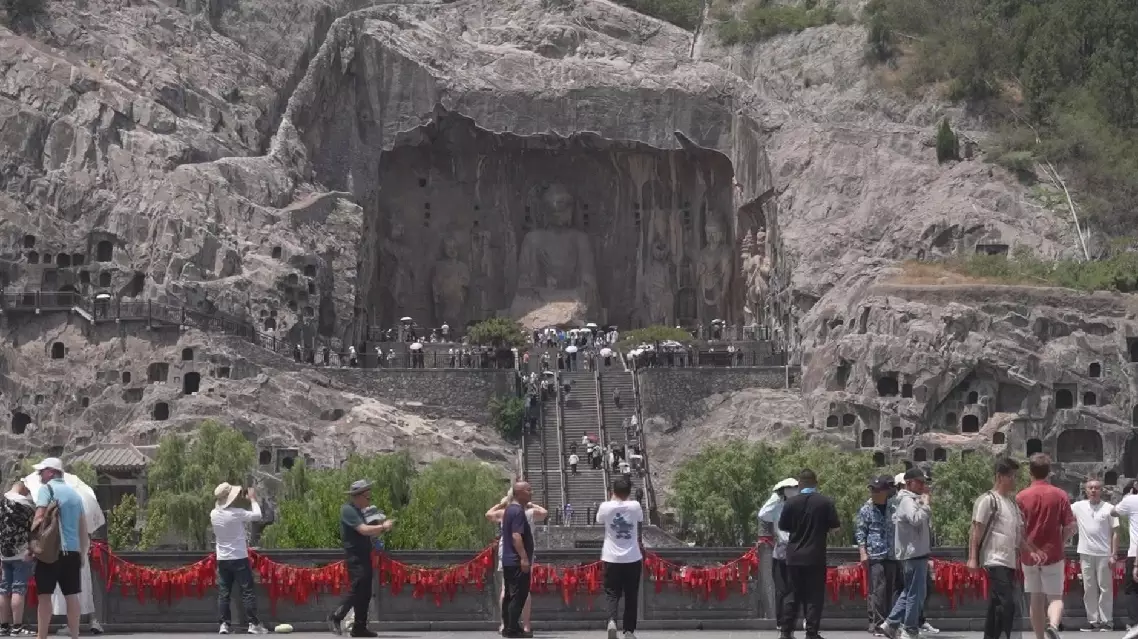
Xi's visit inspires Longmen Grottoes staff to champion cultural preservation
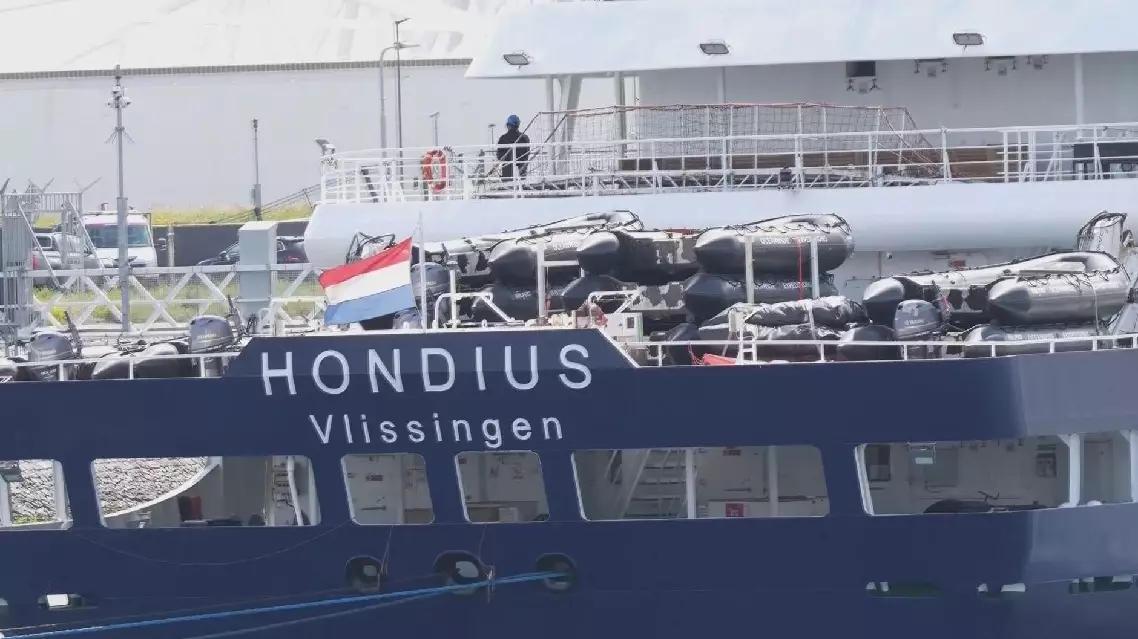
A major port in northern Venezuela came under U.S. airstrikes in the early hours of January 3, which caused extensive damage to civilian infrastructure, destroyed critical medical supplies in a warehouse, and severely impacted centuries-old cultural heritage sites, according to local residents.
The La Guaira Port, a vital hub for imports that support daily life in the region, was heavily damaged during the attack.
Large quantities of medical supplies stored at the port were destroyed. A historic cultural building dating back for some 300 years was also badly damaged by the bombardment.
Residents living near the port recalled the terrifying scenes as explosions shook nearby neighborhoods.
Humberto Bolivar, who lives in a community separated from the port by only a main road, said the blast waves shattered his home's windows, while stray shrapnel struck the water tank on his roof. According to reports, three missiles were fired at the port that night.
Bolivar said that beyond material losses, he is most concerned about the psychological impact on his children, who remain too frightened to leave their home days after the attack.
"The United States invaded our country. The children were frightened. This is not good for them, because it leaves some children with psychological trauma. They do not want to go to school or leave the house, because they are afraid that something worse might happen. We truly do not want this to happen to our country," he said.
Apart from civilian facilities, local cultural heritage site was also affected.
The La Guaira state government building, a structure with nearly 300 years of history and once served as the site of Venezuela's first national customs office, was struck by the force of the explosions.
Windows of the building were shattered, and furniture scattered across the floor.
"As people of La Guaira, we feel deep pain. Our cultural heritage has been bombed. We are living in constant anxiety and suffering, and life can no longer be the same as it was before," said a local named Henry Cumares.
The U.S. side has claimed the airstrikes targeted warehouses allegedly used to store narcotics. However, locals refuted such accusation.
"According to what Donald Trump said, they bombed this place using the excuse that the warehouses here were used to store drugs at the port. But based on the video released by our governor, these warehouses that were burned contained medicine for kidney patients and foods. Many people depend on these supplies to survive. I think the bombing is extremely despicable," said a local resident named Alejandro Capriles.
US strike hits Venezuelan port, wrecking medical supplies, heritage building