Skip to Content Facebook Feature Image

JBS shareholders approve US stock listing despite pushback from environmental groups and others

News

JBS shareholders approve US stock listing despite pushback from environmental groups and others
News

News

JBS shareholders approve US stock listing despite pushback from environmental groups and others

2025-05-24 04:49 Last Updated At:04:50

Brazilian meat giant JBS came a step closer Friday to its long-held goal of trading its shares on the New York Stock Exchange.

The company's minority shareholders voted to approve JBS's plan to list its shares both in Sao Paulo and New York, casting aside opposition from environmental groups, U.S. lawmakers and others who noted JBS' record of corruption, monopolistic behavior and environmental destruction.

JBS said the outcome showed shareholders were confident in the benefits a dual listing would bring.

"This step is expected to further unlock value for JBS, providing broader access to investors and more competitive interest rates, thereby expanding our ability to finance growth at a lower cost and accelerating our diversification strategy,” JBS Global Chief Financial Officer Guilherme Cavalcanti said in a statement.

JBS said it expected to begin trading on the NYSE on June 12. The U.S. Securities and Exchange Commission granted the company’s request to list its shares in New York late last month.

JBS is one of the world’s largest food companies, with more than 250 production facilities in 17 countries. Half of its annual revenue comes from the U.S., where it has more than 72,000 employees. It’s America’s top beef producer and it’s second-largest producer of poultry and pork.

JBS has pushed for several years to have its stock traded in New York and received significant pushback. Mighty Earth, an environmental group, said Friday that activists and political pressure had long kept the meat processor from making an initial public offering in the U.S.

“Giving JBS access to billions of dollars of new funding will serve only to supercharge deforestation and its climate-wrecking operations," Mighty Earth CEO Glenn Hurowitz said in a statement. “Listing on the NYSE is meant to be a signal to investors that a company is serious about transparency, but JBS has shown its only playbook is hiding the true scale of its destruction, climate emissions and human rights abuses.”

Intercontinental Exchange, the parent company of the NYSE, said it had no comment Friday.

Glass Lewis, an influential independent investor advisory firm, was also among those recommending that shareholders reject the plan.

In its report, Glass Lewis said the recent return of brothers Joesley and Wesley Batista to the JBS board should concern investors. The brothers, who are the sons of JBS’ founder, were briefly jailed in Brazil in 2017 on bribery and corruption charges.

“In our view, the involvement of the company and of Joesley and Wesley Batista in multiple high-profile scandals has tarnished the company’s reputation, undermining stakeholder trust and posing a significant risk to its competitive position,” Glass Lewis said.

Glass Lewis also objected to the company’s plan for dual share classes, which would give the Batistas and other controlling shareholders more voting power.

In its response to Glass Lewis' report, JBS said it has established more stringent controls and anti-corruption training at the company in recent years. It also said a U.S. listing would ensure more oversight from U.S. authorities.

“We believe this transaction will increase our visibility in global markets, attract new investors and further strengthen our position as a global food industry leader,” Tomazoni said in a statement last month when the company announced Friday’s vote.

Many U.S. lawmakers also aren't convinced JBS belongs on the NYSE.

In a letter sent last week to JBS, U.S. Sen. Elizabeth Warren, a Massachusetts Democrat, noted that Pilgrim’s Pride — a U.S. company owned by JBS — was the largest single donor to President Donald Trump’s inaugural committee, with a $5 million gift. The SEC’s approval came just weeks after that donation, Warren said.

“I am concerned Pilgrim’s Pride may have made its contribution to the inaugural fund to curry favor with the Trump administration,” Warren wrote in the letter, which asked the company why the donation was made.

In a statement, JBS said it has a “long bipartisan history of participating in the civic process.”

Warren was also among a bipartisan group of 15 U.S. senators who sent a letter to the SEC in January 2024 urging the agency to reject a U.S. listing for JBS. The senators, a diverse group that rarely agrees on policy, included Republicans Marco Rubio of Florida and Josh Hawley of Missouri, Democrat Cory Booker of New Jersey and Independent Bernie Sanders of Vermont.

The letter noted that in 2020, J&F Investments, a controlling shareholder of JBS that is owned by the Batista family, pleaded guilty to bribery charges in U.S. federal court and agreed to pay fines of $256 million.

It also said Pilgrim’s Pride pleaded guilty to price-fixing charges in 2021. And it said U.S. Senate investigations found that JBS is “turning a blind eye” to rainforest destruction in the Amazon by its suppliers.

“Approval of JBS’ proposed listing would subject U.S. investors to risk from a company with a history of blatant, systemic corruption, and further entrench its monopoly power and embolden its monopoly practices,” the letter said.
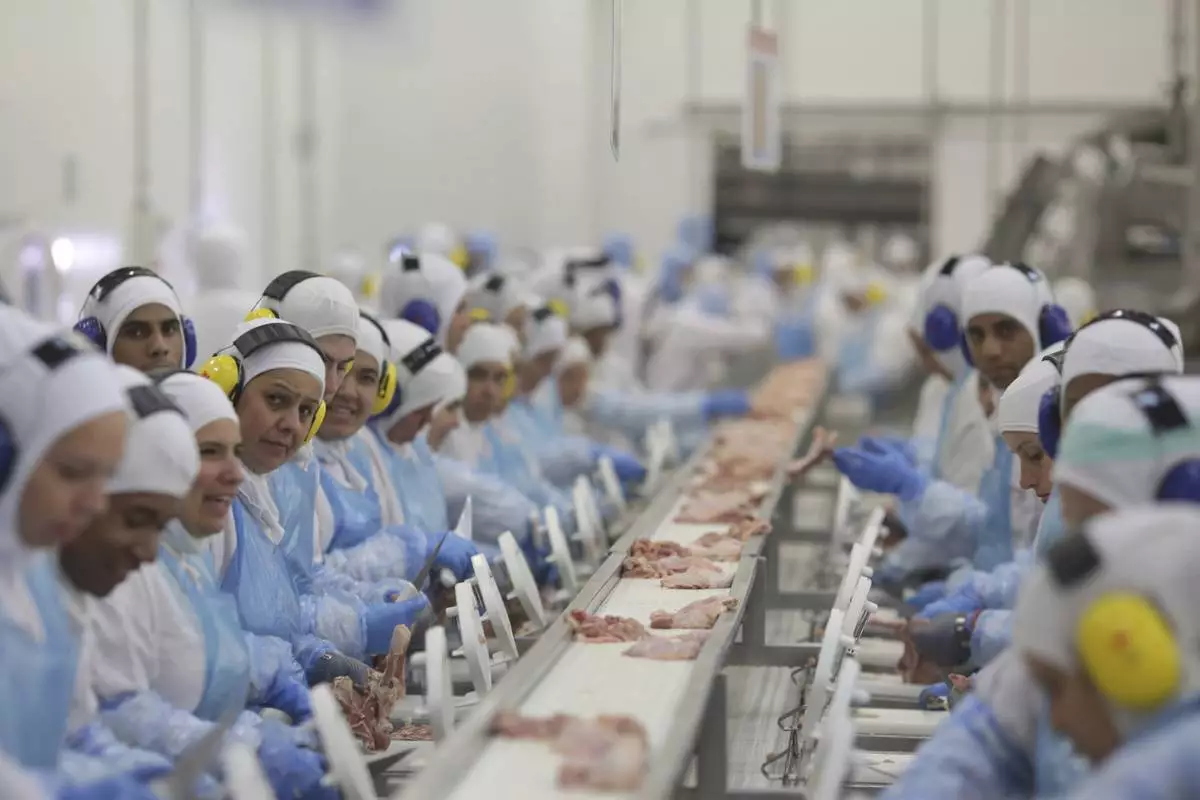
FILE - Workers prep poultry at the meatpacking company JBS, in Lapa, in the Brazilian state of Parana, March 21, 2017. (AP Photo/Eraldo Peres, File)
FILE - Workers prep poultry at the meatpacking company JBS, in Lapa, in the Brazilian state of Parana, March 21, 2017. (AP Photo/Eraldo Peres, File)

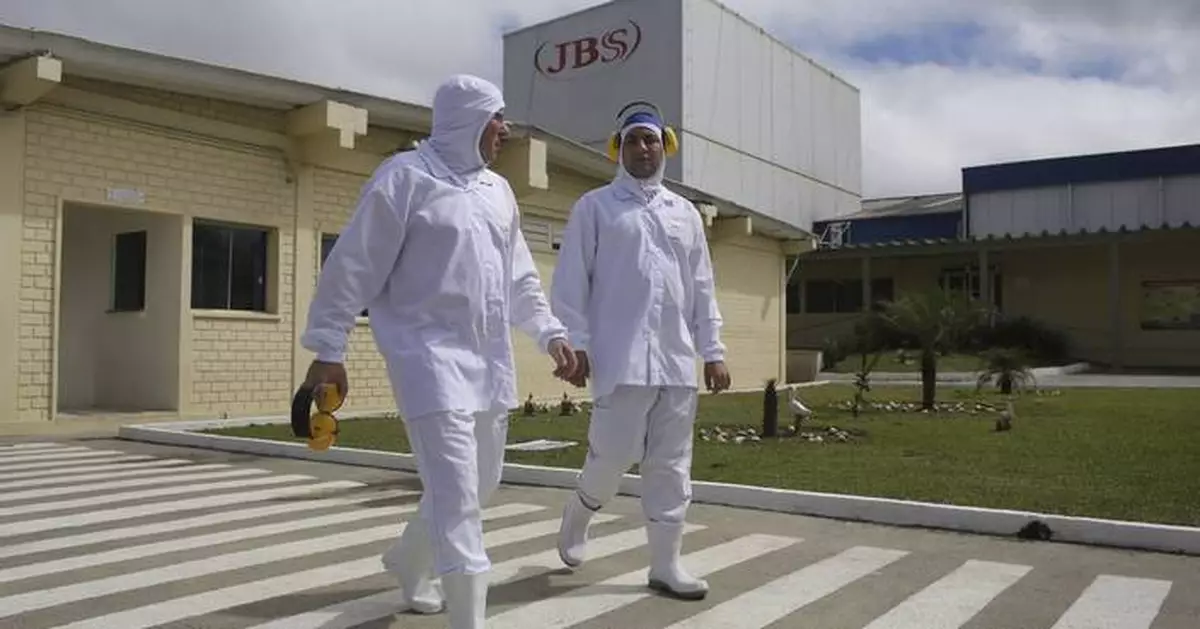
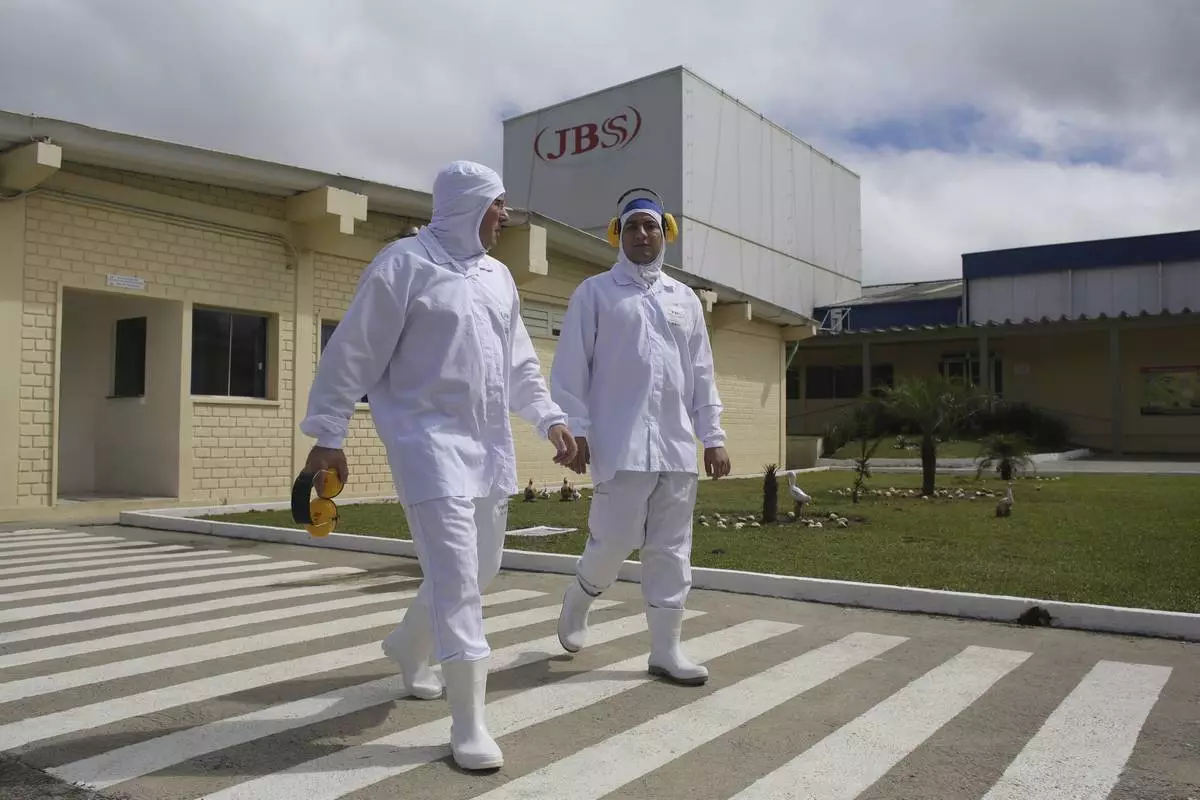
FILE - Employees walk on the plant grounds of meatpacker JBS, in Lapa, in the Brazilian state of Parana, March 21, 2017. (AP Photo/Eraldo Peres, File)
FILE - Employees walk on the plant grounds of meatpacker JBS, in Lapa, in the Brazilian state of Parana, March 21, 2017. (AP Photo/Eraldo Peres, File)
BRUSSELS (AP) — European Union leaders are about to attempt something they’ve never tried before. The chances of failure are significant. Their actions this week could set dangerous precedents and a wrong move could undermine trust among the bloc's 27 member countries for years to come.

At a summit starting on Thursday, many of the leaders will press for tens of billions of euros in frozen Russian assets held in Europe to be used to meet Ukraine’s economic and military needs for the next two years.

Ukraine is on the verge of bankruptcy. The International Monetary Fund estimates that it will require a total of 137 billion euros ($160 billion) in 2026 and 2027. It must get the money by spring. The EU has pledged to come up with the funds, one way or another.

“One thing is very, very clear," European Commission President Ursula von der Leyen told EU lawmakers on Wednesday. "We have to take the decision to fund Ukraine for the next two years in this European Council.”

European Council President António Costa, who will chair the summit, has vowed to keep the leaders negotiating until an agreement is reached, even if it takes days.

The European Commission has proposed that the leaders use some of the frozen assets — totaling 210 billion euros ($246 billion) — to underwrite a 90 billion-euro ($105 billion) “reparations loan” to Ukraine. The U.K., Canada and Norway would fill the gap.

The plan is contentious. The European Commission insists that its reasoning and legal basis are sound. But the European Central Bank has warned that international trust in the euro single currency could be damaged, if the leaders are suspected of seizing the assets.

Most of the frozen assets belong to the Russian Central Bank and are held in the financial clearing house Euroclear, which is based in Brussels. Belgium fears Russian reprisals, through the courts or in other more nefarious ways.

Euroclear fears for its reputation. It believes the commission’s idea is legally shaky and that international investors might look elsewhere, if it transfers the Russian assets to an EU debt instrument, as von der Leyen's plan demands.

Last week, the Russian Central Bank announced that it's suing Euroclear in a Moscow court. The chances that the case will succeed appear limited, but the move does increase pressure on all parties before the summit.

The commission, the EU’s powerful executive branch, has proposed a second option. It could try to raise the money on international markets, much in the way it underwrote a major economic recovery fund after the start of the coronavirus pandemic.

Belgium prefers this option. But plan B would require all 27 leaders to agree for it to work, and Hungary refuses to fund Ukraine. Hungarian Prime Minister Viktor Orbán sees himself as a peacemaker. He's also Russian President Vladimir Putin’s closest ally in Europe.

In contrast, plan A — the reparations loan — only requires a majority of around two-thirds of member countries to pass. Hungary can't veto it alone. Slovakia might say no. Belgium, Bulgaria, Italy and Malta remain to be convinced.

Even if all six countries reject the loan to Ukraine — which would only be refunded if Russia ends its war and pays hundreds of billions of euros in war damages, something many Europeans doubt Putin would do — they still wouldn't have a blocking minority.

Running a steamroller over Belgium, which has a great stake in the outcome and deep concerns about the loan, could undermine the entire European project, making it infinitely more difficult to find voting majorities on other issues in the future.

But on the eve of the summit, it remained unclear precisely how the plan would work, what kind of guarantees each country would give to reassure Belgium it doesn't face Russia alone, and even whether the leaders can actually approve it outright this week.

“It’s a really new approach. Everyone has questions,” according to a senior EU diplomat involved in the negotiations, which continued on Wednesday. “You’re talking about mobilizing public finances. Parliaments might need to weigh in. It’s not easy.”

The diplomat was appointed to brief reporters on the latest developments on the condition that he not be named.

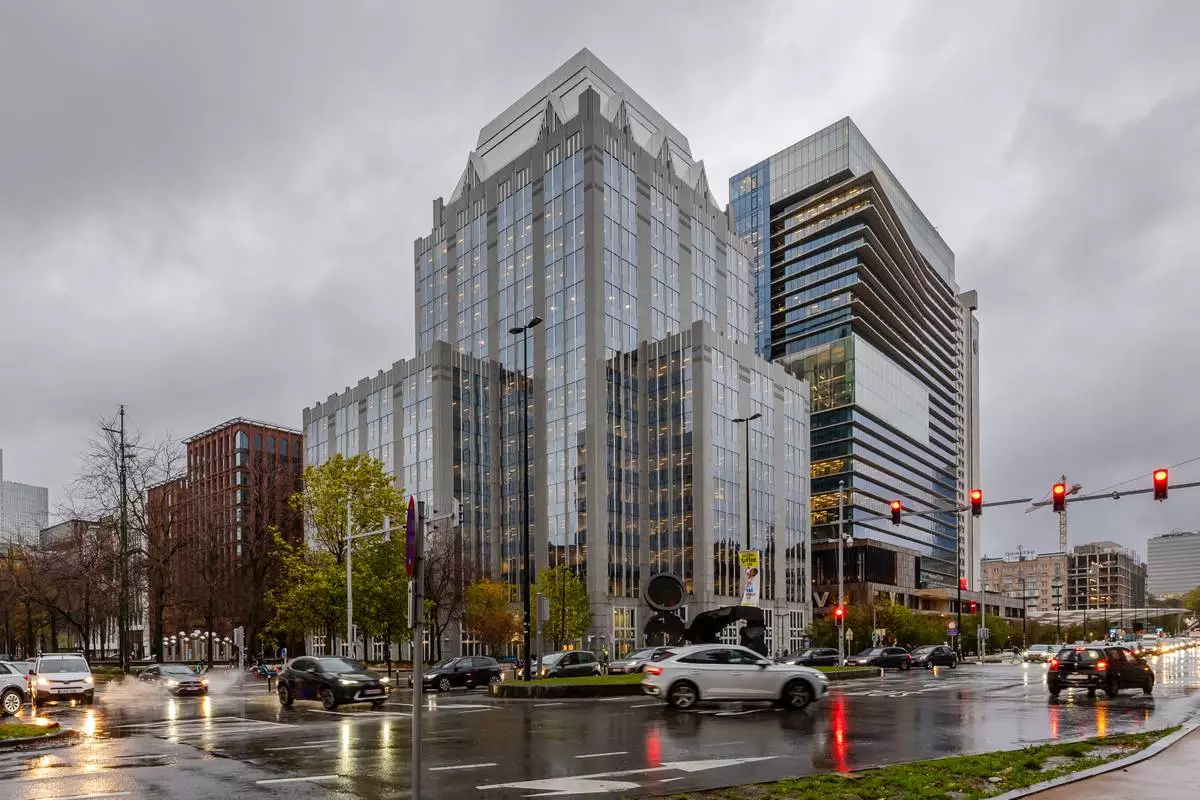
FILE - A view of the headquarters of Euroclear in Brussels, on Oct. 23, 2025. (AP Photo/Geert Vanden Wijngaert, File)

FILE - A view of the headquarters of Euroclear in Brussels, on Oct. 23, 2025. (AP Photo/Geert Vanden Wijngaert, File)

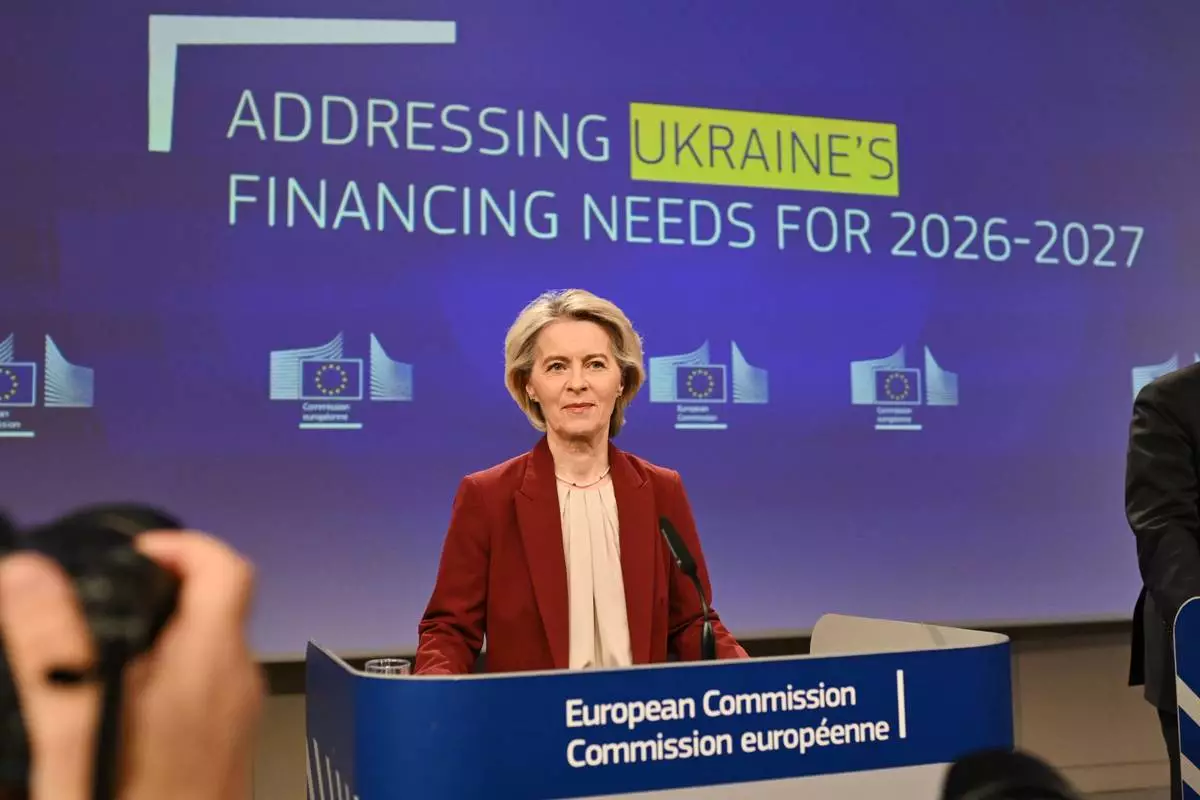
European Commission President Ursula von der Leyen addresses a media conference regarding Ukraine's financing needs for 2026-2027 at EU headquarters in Brussels, Wednesday, Dec. 3, 2025. (AP Photo/Harry Nakos)

European Commission President Ursula von der Leyen addresses a media conference regarding Ukraine's financing needs for 2026-2027 at EU headquarters in Brussels, Wednesday, Dec. 3, 2025. (AP Photo/Harry Nakos)

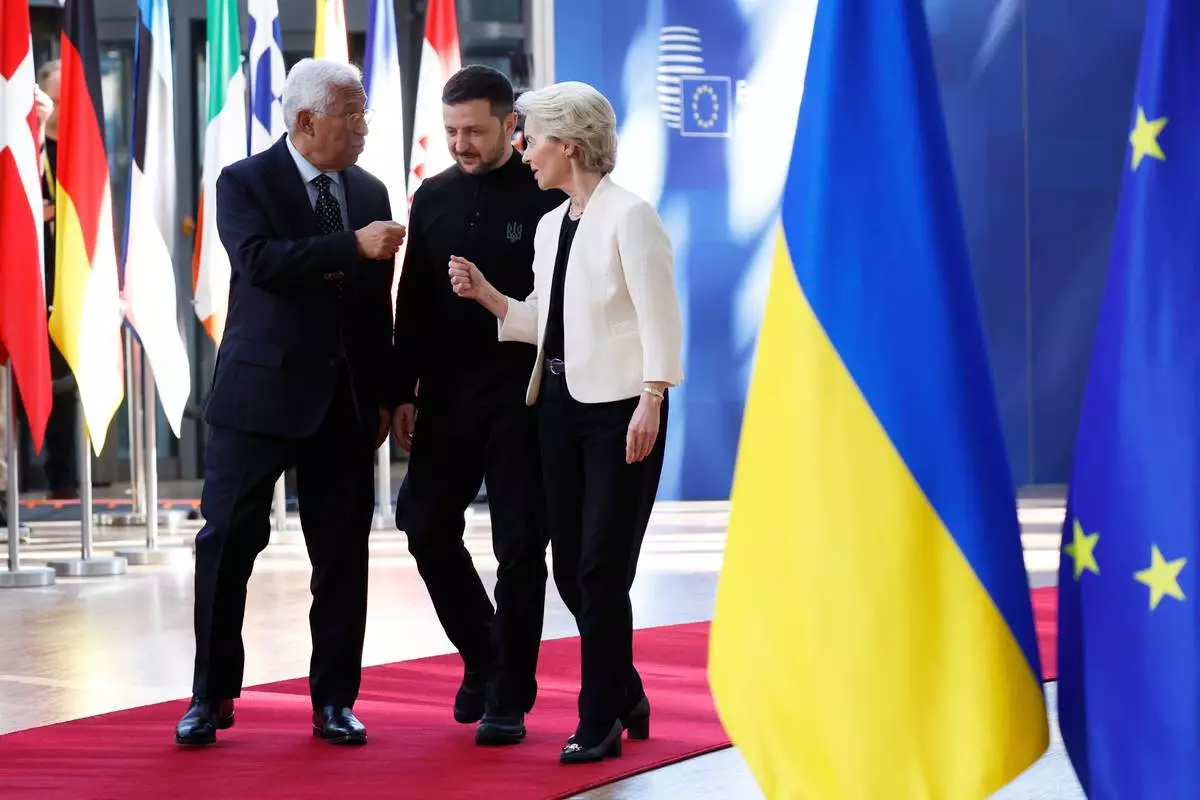
FILE - From left, European Council President Antonio Costa, Ukraine's President Volodymyr Zelenskyy and European Commission President Ursula von der Leyen arrive for an EU Summit at the European Council building in Brussels, March 6, 2025. (AP Photo/Omar Havana, File)

FILE - From left, European Council President Antonio Costa, Ukraine's President Volodymyr Zelenskyy and European Commission President Ursula von der Leyen arrive for an EU Summit at the European Council building in Brussels, March 6, 2025. (AP Photo/Omar Havana, File)

Recommended Articles