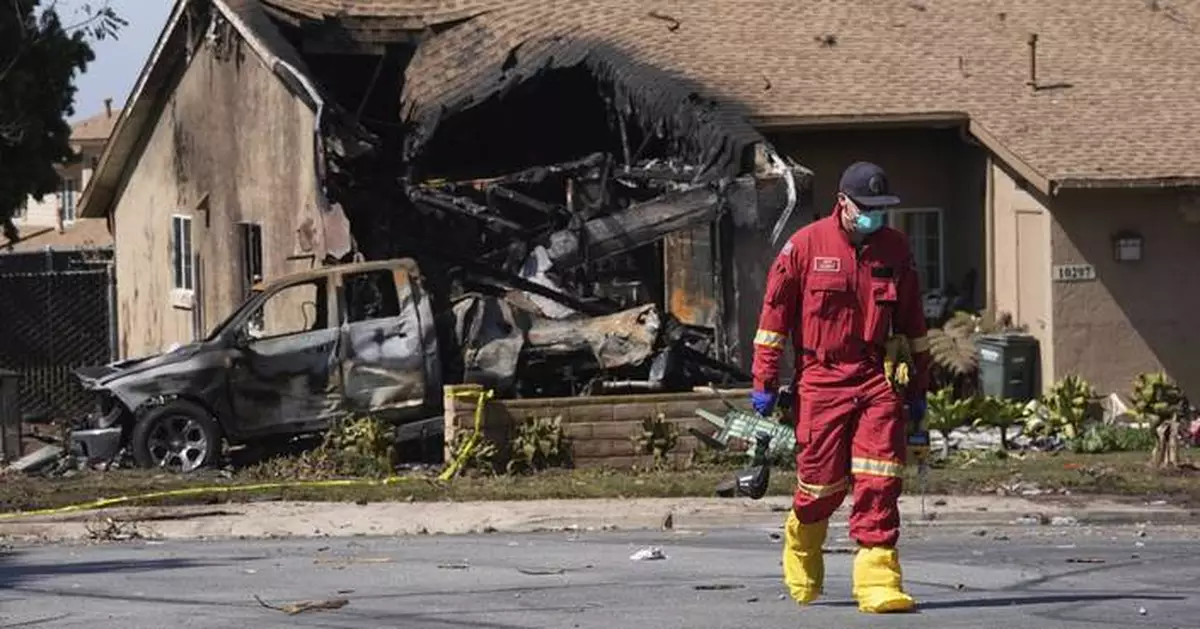
NEW YORK (AP) — The alternative music community is in mourning after a private jet hit a power line in foggy weather early Thursday and crashed into a San Diego neighborhood, killing multiple people on board.
Among them was the groundbreaking music executive Dave Shapiro, a pillar of his music scene, and Daniel Williams, a former drummer for the popular Ohio metalcore band The Devil Wears Prada. Also killed were Kendall Fortner, 24, and Emma Huke, 25, both employees of Shapiro’s Sound Talent Group agency; Celina Marie Rose Kenyon, 36, a professional photographer; and Dominic Christopher Damian, 41.
Both Williams and Shapiro served as success stories for their respective rock music scenes — proof that these subcultural sounds had real mainstream appeal.
Williams' band, which had two releases reach the Top 10 of the Billboard 200, was a client of Sound Talent Group. Shapiro cofounded the company in 2018 with fellow agents Tim Borror and Matt Andersen, who previously worked at the Agency Group and United Talent Agency.
Sound Talent Group’s roster focused on bands in and across pop-punk, metalcore, post-hardcore and other popular hard rock subgenres — such as Sum 41, Pierce the Veil, Parkway Drive, Silverstein, I Prevail — plus pop acts like the '90s brother-boy band, Hanson, best known for their song “MMMBop,” and “A Thousand Miles (Interlude)” singer-songwriter Vanessa Carlton.
The post-hardcore band Thursday called Shapiro, 42, an inspiration “who despite achieving success never forgot the scenes and the communities they came from.”
“It’s hard to put into words how much this man meant to so many of us,” Pierce the Veil, which has been performing for nearly two decades including a sold-out concert this week at New York's Madison Square Garden, said in a tribute on the social platform X.
The World Alive, a band signed on Shapiro's label, said he was among “the most influential and positive forces in our music scene and beyond. And Dan was one of the most influential and positive forces behind the kit.”
Shortly after punk rock entered the cultural zeitgeist in the late 1970s, it inspired musical sub-movements fueled by its “do-it-yourself,” community-minded ethics: hardcore punk begat post-hardcore, metalcore, emo and so on. Across decades, these music genres evolved in sound and scope, moving from underground popularity at concerts held in garages and basements to real mainstream fame, while refusing to abandon its independent ethos.
Thomas Gutches, who manages Beartooth and Archetypes Collide, recalled a time when now-popular bands like The Devil Wears Prada were getting their start playing in “DIY shows” in his hometown of Columbus, Ohio, in which you could see 10 bands perform for $5.
Shapiro was “single-handedly developing this next wave of bands that are coming in,” Gutches said. “He was able to take those bands, package them together and put them on a larger scale. ... He took a risk in being like, ‘OK, I’m going to go and take them to that next level.' ”
These artists reached a kind of apex in the 2000s and 2010s. Once-obscure bands that had found audiences on early online social media platforms like Myspace, at the mall goth haven Hot Topic, or in the pages of left-of-center publications like Alternative Press became MTV staples, celebrities in their own right.
Although many of these acts played similar-yet-different music — think of the blast beats of metalcore and the palm-muted power chords of pop-punk associated with the Vans Warped Tour — they were brought together by a shared punk rock spirit. And for the last few decades, these tight-knit groups have proven to be the dominant force in alternative rock, according to Mike Shea, founder of “Alternative Press,” who used the word “community” to describe the scene.
Shea said Shapiro was “vital” in bringing these punk rock subcultures to the masses.
“In this music industry, there are just too many people ripping people off and using people,” he said. “Dave was not like that. He was a beautiful soul, and beautiful person, a guiding force, just someone who would end up being an inspiration for so many people. And he will continue to be an inspiration.”
And it was not only musicians but also many booking agents, band, and tour managers and promoters who got their big breaks because of Shapiro, Gutches said.
The bands Shapiro represented are many of the most popular of their genre and scene, like the Grammy-nominated Sum 41 or the platinum-selling Pierce the Veil.
That also includes The Devil Wears Prada, one of the best-known metalcore bands of the last few decades, celebrated for their ability to marry melodic punk rock with metallic detouring. When Williams “was in the band, that's when they broke out,” Shea said.
Gutches said Williams captivated audiences at shows with his drumming as much as a band's frontman does: “Daniel was putting on a show from his style of playing.”
The tributes will continue for both, Shea said, as more and more artists reveal the impact Williams and Shapiro had on their lives.
Case in point: “There is no single person more responsible for my identity as a professional adult than Dave Shapiro,” metalcore band Issues bassist Skyler Acord said via Instagram.
His band coined a phrase they would use when things got heated "to remind us to chill out and try to understand each other,” he wrote.
“We'd say, ‘Do it for Dave.’ ”
Associated Press writers Jaimie Ding in Los Angeles and Rio Yamat in Las Vegas contributed.
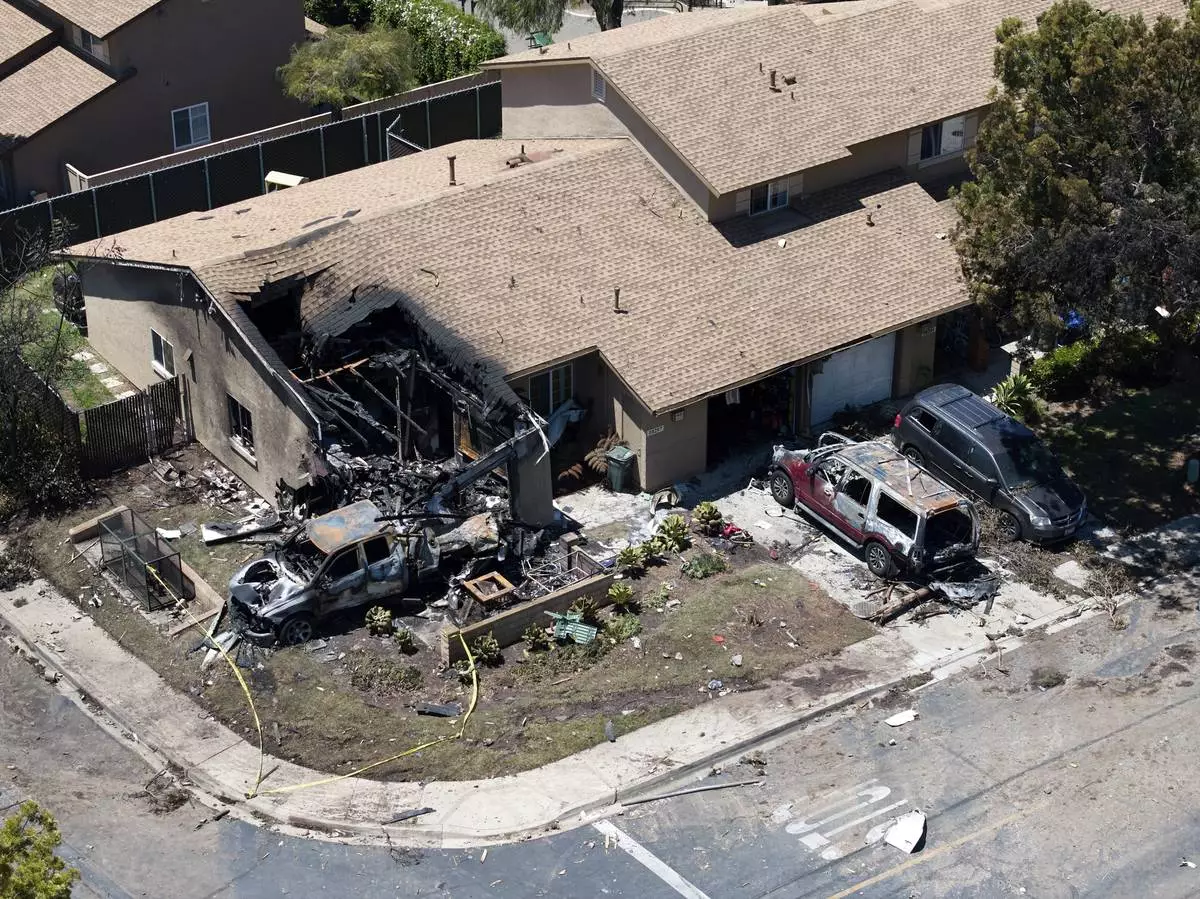
Debris covers the ground after a small plane crashed into a San Diego neighborhood, setting homes and cars on fire and forcing evacuations early Thursday, May 22, 2025. (AP Photo/William Liang)
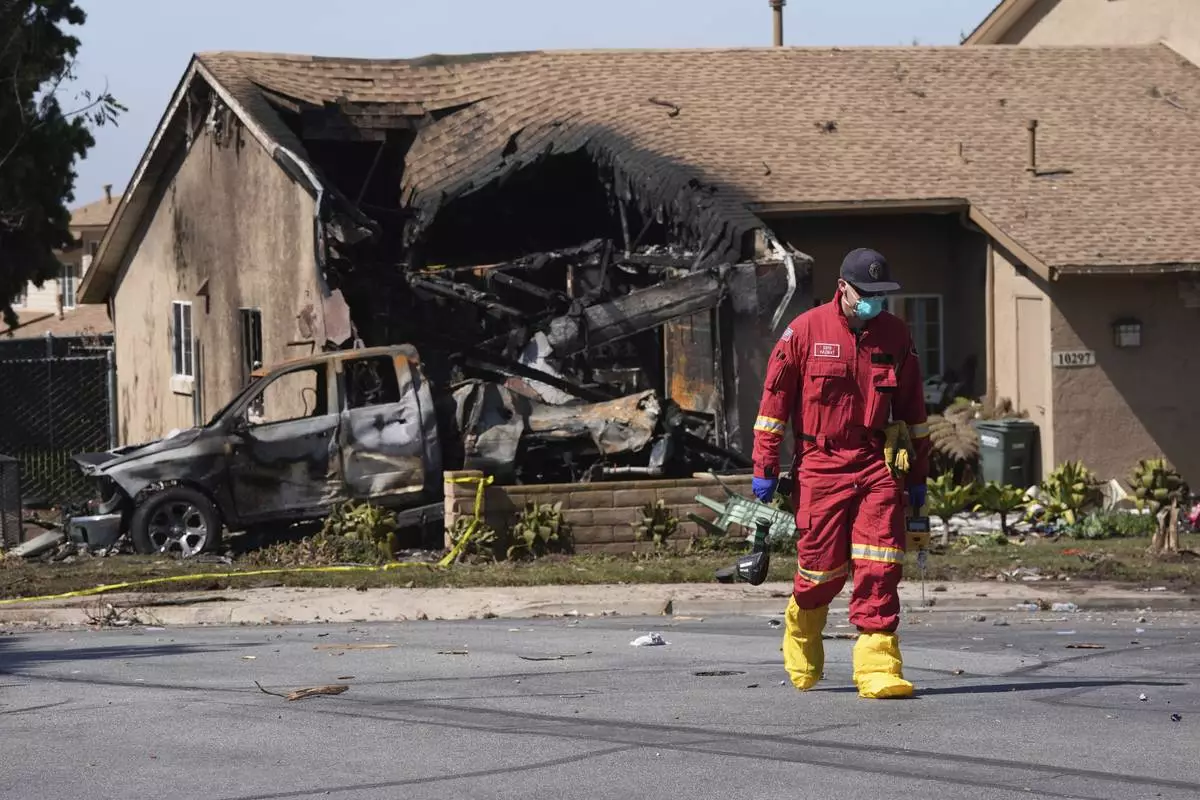
Authorities work the scene where a small plane crashed into a San Diego neighborhood, setting several homes on fire and forcing evacuations along several blocks early Thursday, May 22, 2025. (AP Photo/Gregory Bull)
LOS GATOS, Calif. (AP) — Like many retirement communities, The Terraces serves as a tranquil refuge for a nucleus of older people who no longer can travel to faraway places or engaging in bold adventures.
But they can still be thrust back to their days of wanderlust and thrill-seeking whenever caretakers at the community in Los Gatos, California, schedule a date for residents — many of whom are in their 80s and 90s — to take turns donning virtual reality headsets.
Within a matter of minutes, the headsets can transport them to Europe, immerse them in the ocean depths or soar them on breathtaking hang-gliding expeditions while they sit by each other. The selection of VR programming was curated by Rendever, a company that has turned a sometimes isolating form of technology into a catalyst for better cognition and social connections in 800 retirement communities in the United States and Canada.
A group of The Terraces residents who participated in a VR session earlier this year found themselves paddling their arms alongside their chairs as they swam with a pod of dolphins while watching one of Rendever's 3D programs. “We got to go underwater and didn't even have to hold our breath!” exclaimed 81-year-old Ginny Baird following the virtual submersion.
During a session featuring a virtual ride in a hot-air balloon, one resident gasped, “Oh my God!” Another shuddered, “It's hard to watch!”
The Rendever technology can also be used to virtually take older adults back to the places where they grew up as children. For some, it will be the first time they've seen their hometowns in decades.
A virtual trip to her childhood neighborhood in New York City's Queens borough helped sell Sue Livingstone, 84, on the merits of the VR technology even though she still is able to get out more often than many residents of The Terraces, which is located in Silicon Valley about 55 miles south of San Francisco.
“It isn't just about being able to see it again, it's about all the memories that it brings back,” Livingstone said. “There are a few people living here who never really leave their comfort zones. But if you could entice them to come down to try out a headset, they might find that they really enjoy it.”
Adrian Marshall, The Terraces' community life director, said that once word about a VR experience spreads from one resident to another, more of the uninitiated typically become curious enough to try it out — even if it means missing out on playing Mexican Train, a dominoes-like board game that's popular in the community.
“It turns into a conversation starter for them. It really does connect people,” Marshall said of Rendever's VR programming. “It helps create a human bridge that makes them realize they share certain similarities and interests. It turns the artificial world into reality.”
Rendever, a privately owned company based in Somerville, Massachusetts, hopes to build upon its senior living platform with a recent grant from the National Institutes of Health that will provide nearly $4.5 million to study ways to reduce social isolation among seniors living at home and their caregivers.
Some studies have found VR programming presented in a limited viewing format can help older people maintain and improve cognitive functions, burnish memories and foster social connections with their families and fellow residents of care facilities. Experts say the technology may be useful as an addition to and not a replacement for other activities.
“There is always a risk of too much screen time," Katherine “Kate” Dupuis, a neuropsychologist and professor who studies aging issues at Sheridan College in Canada, said. “But if you use it cautiously, with meaning and purpose, it can be very helpful. It can be an opportunity for the elderly to engage with someone and share a sense of wonder.”
VR headsets may be an easier way for older people to interact with technology instead of fumbling around with a smartphone or another device that requires navigating buttons or other mechanisms, said Pallabi Bhowmick, a researcher at the University of Illinois Urbana-Champaign who is examining the use of VR with older adults.
“The stereotypes that older adults aren’t willing to try new technology needs to change because they are willing and want to adapt to technologies that are meaningful to them,” Bhowmick said. "Besides helping them to relieve stress, be entertained and connect with other people, there is an intergenerational aspect that might help them build their relationships with younger people who find out they use VR and say, ‘Grandpa is cool!’"
Rendever CEO Kyle Rand's interest in helping his own grandmother deal with the emotional and mental challenges of aging pushed him down a path that led him to cofound the company in 2016 after studying neuroengineering at Duke University.
“What really fascinates me about humans is just how much our brain depends on social connection and how much we learn from others,” Rand said. “A group of elderly residents who don't really know each other that well can come together, spend 30 minutes in a VR experience together and then find themselves sitting down to have lunch together while continuing a conversation about the experience.”
It's a large enough market that another VR specialist, Dallas-based Mynd Immersive, competes against Rendever with services tailored for senior living communities.
Besides helping create social connections, the VR programming from both Rendever and Mynd has been employed as a possible tool for potentially slowing down the deleterious effects of dementia. That's how another Silicon Valley retirement village, the Forum, sometimes uses the technology.
Bob Rogallo, a Forum resident with dementia that has rendered him speechless, seemed to be enjoying taking a virtual hike through Glacier National Park in Montana as he nodded and smiled while celebrating his 83rd birthday with his wife of 61 years.
Sallie Rogallo, who doesn't have dementia, said the experience brought back fond memories of the couple's visits to the same park during the more than 30 years they spent cruising around the U.S. in their recreational vehicle.
“It made me wish I was 30 years younger so I could do it again,” she said of the virtual visit to Glacier. “This lets you get out of the same environment and either go to a new place or visit places where you have been.”
In another session at the Forum, 93-year-old Almut Schultz laughed with delight while viewing a virtual classical music performance at the Red Rocks Amphitheatre in Colorado and later seemed to want to play with a puppy frolicking around in her VR headset.
“That was quite a session we had there,” Schultz said with a big grin after she took off her headset and returned to reality.
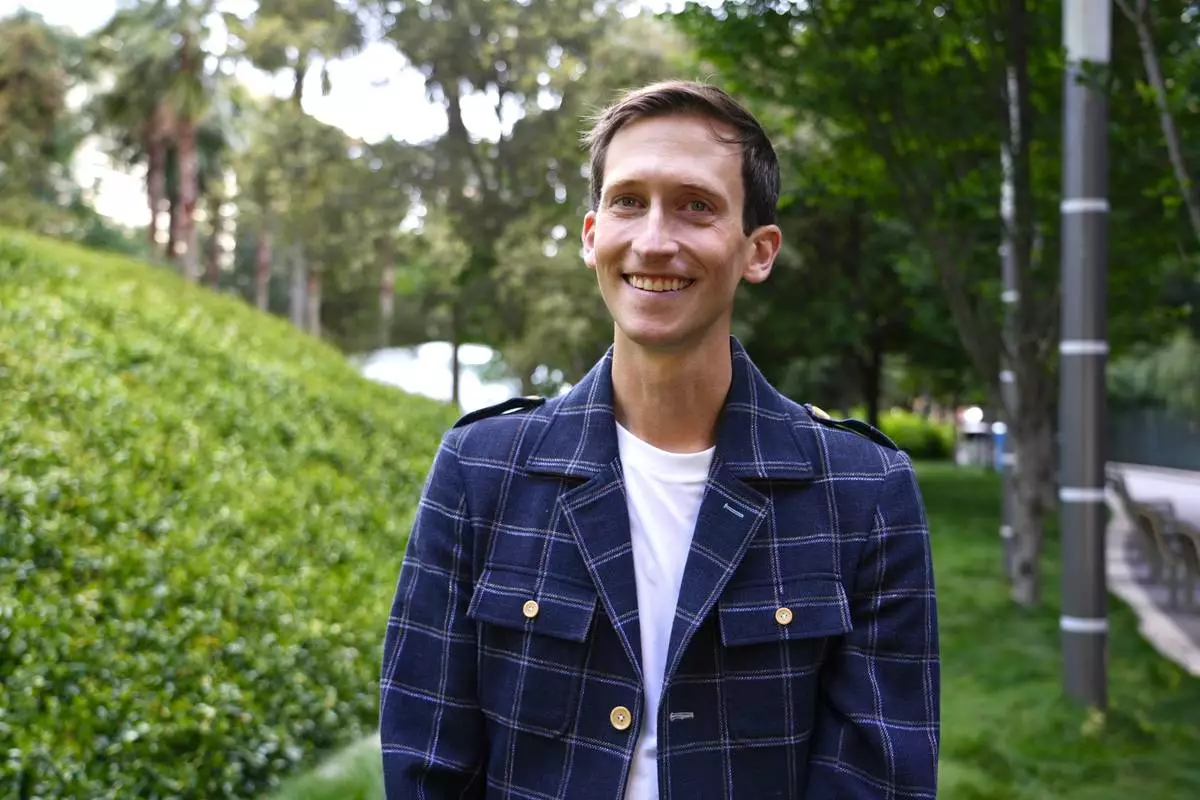
Rendever CEO Kyle Rand is pictured at Salesforce Park in San Francisco on June 27, 2025. (AP Photo/Terry Chea)
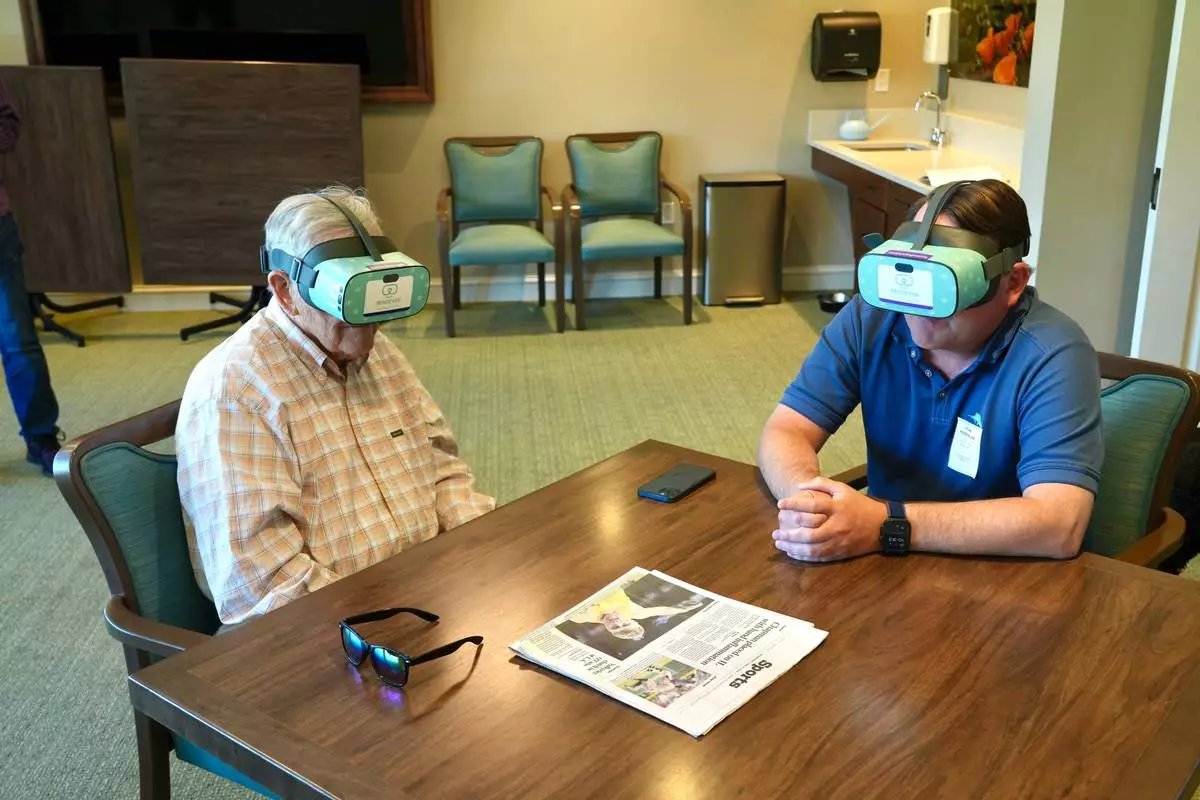
Jim Holtshouse and his son, Mike Holtshouse, watch video through Rendever virtual-reality headsets at the Forum at Rancho San Antonio retirement community in Cupertino, Calif. on June 11, 2025. (AP Photo/Terry Chea)
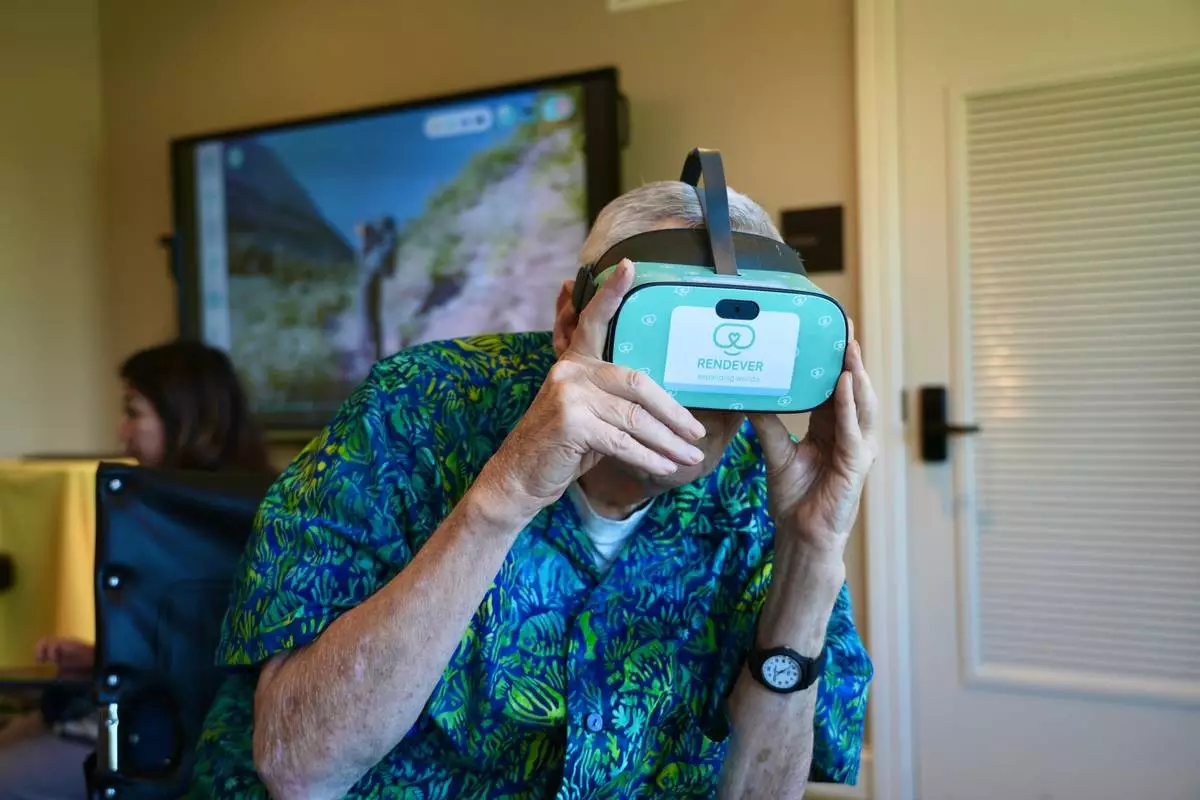
Bob Rogallo watches video through a Rendever virtual-reality headset at the Forum at Rancho San Antonio retirement community in Cupertino, Calif. on June 11, 2025. (AP Photo/Terry Chea)
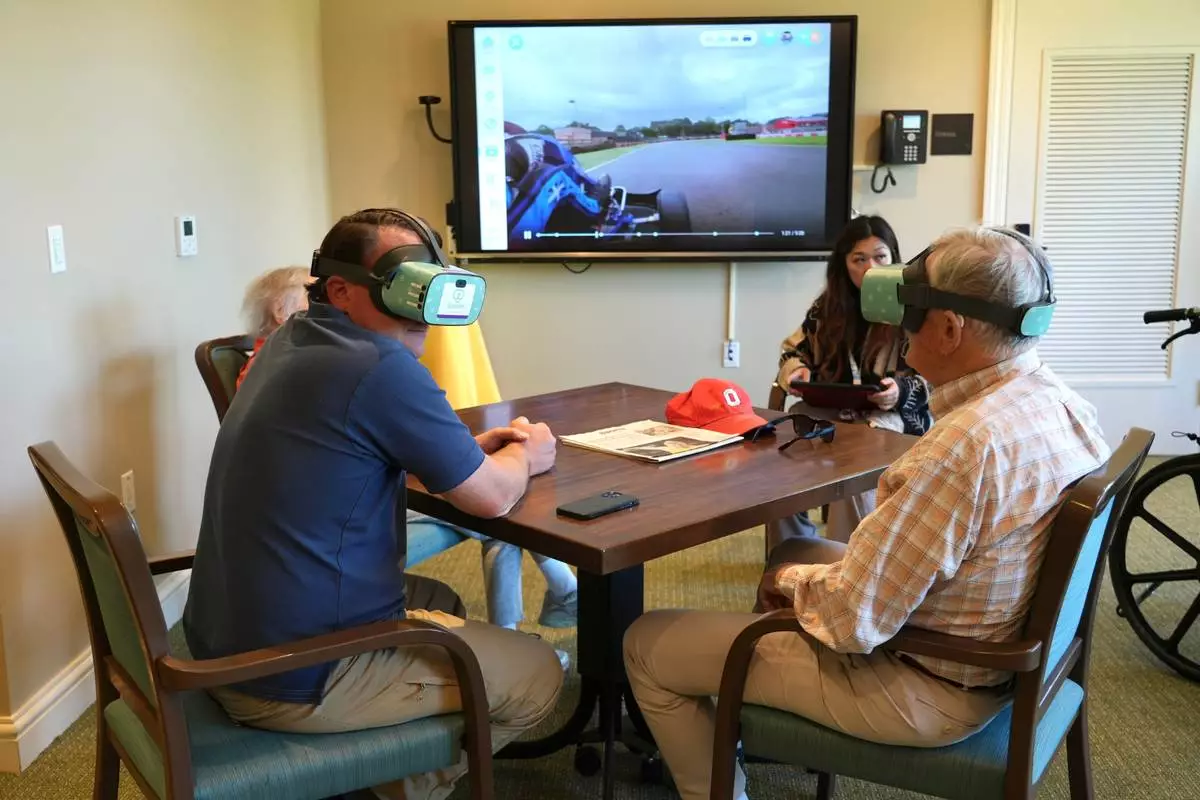
Mike Holtshouse and his father, Jim Holtshouse, watch video through Rendever virtual-reality headsets at the Forum at Rancho San Antonio retirement community in Cupertino, Calif. on June 11, 2025. (AP Photo/Terry Chea)
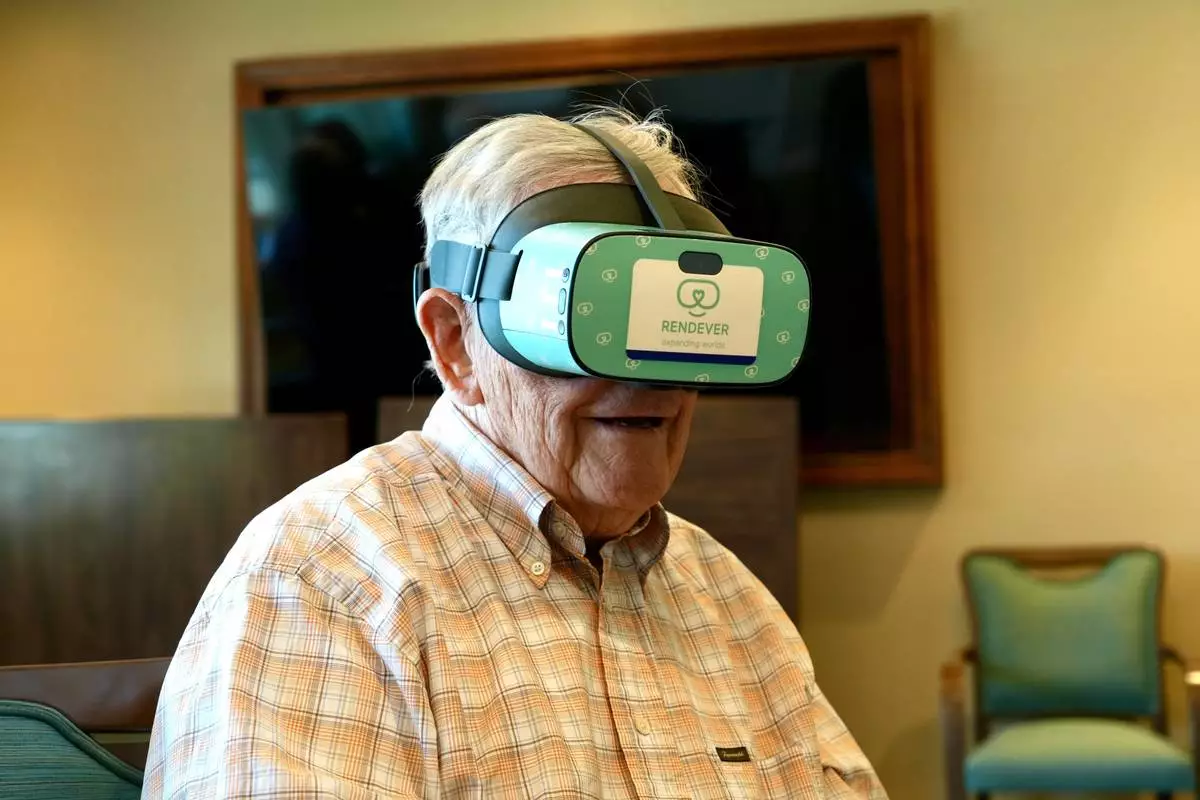
Jim Holtshouse watches video through a Rendever virtual-reality headset at the Forum at Rancho San Antonio retirement community in Cupertino, Calif. on June 11, 2025. (AP Photo/Terry Chea)