The world's first robot fighting competition will open on Sunday in Hangzhou City of east China's Zhejiang Province, highlighting humanoid robots equipped with cutting-edge technologies.
The event, China Media Group (CMG) World Robot Contest: Mech Combat Arena Competition, will be livestreamed globally.
The competition is set in the Olympic Sports Center in Hangzhou. The participating humanoid robots not only master fighting skills such as straight punches, hooks, and side kicks, but can also stand up quickly after falling to the ground.
Sun Baoyan, marketing manager of Hangzhou-based tech startup Unitree Robotics, one of the developers of the robots, said that these moves are extremely challenging for the robot's balance ability, reaction speed, endurance, and other factors.
"Taking a leg swinging action as an example, the motion control program needs to first analyze the various sensors inside the robot, so that it can sense the state of its body in real time, and then mobilize the motors of each joint to complete such a set of actions. This series of analyses are achieved in milliseconds," Sun said.
A greater challenge for the developers is to solve problems such as robot stability, endurance and heat dissipation in high-intensity confrontations.
The competition mainly consists of two parts: exhibition matches and competitive matches. On the eve of the event, both developers and robots are undergoing high-intensity skill training every day.
"We need to add a lot of fighting-related actions to the robot, all of which require special optimization. At the same time, you can see that our robot has a very strong anti-fall capability, thanks to the large amount of optimization work we have done in motion control algorithms," said Wang Qixin, a board member of Unitree Robotics.
All robots used in this competition adopt domestically developed core technologies. In addition to professional referees and commentators, experts in related fields will be invited to the competition site to deeply analyze the robots' every move, presenting a feast of technology and vision for the audience.
"We have adopted a lot of new technologies in camera settings and technical applications, including free view, AR, VR, and online packaging, trying to use more stylized lenses to make each robot very vivid (in the livestreaming) and make their performance in the matches more infectious. We also hope to further explore the capabilities of humanoid robots through such live broadcasts," said Jiang Hua, chief technical director of the event.
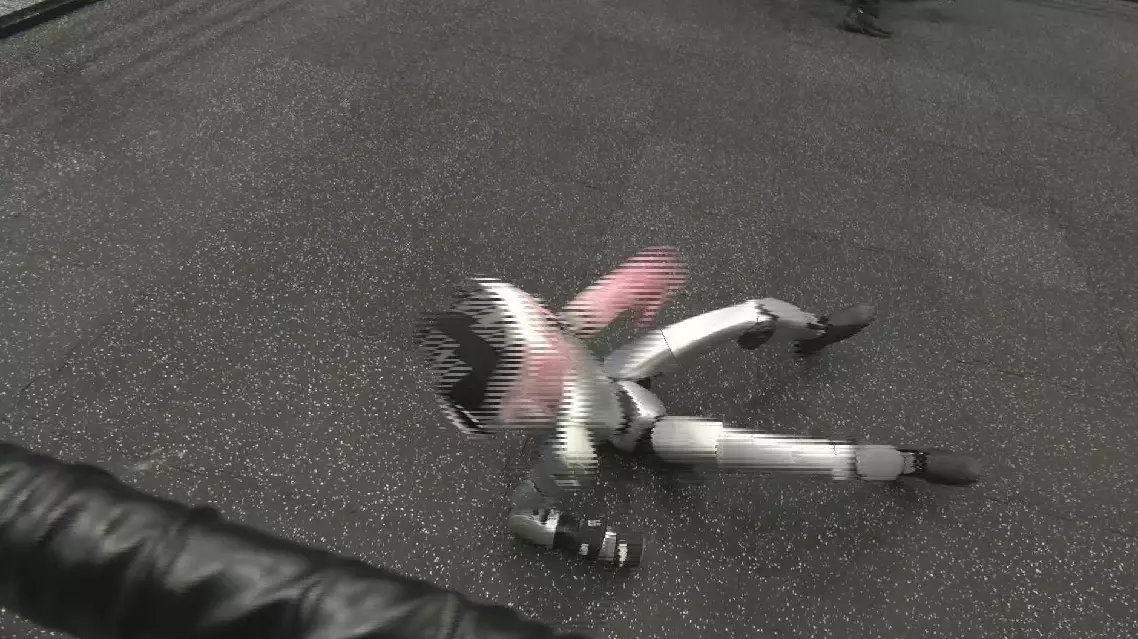
Humanoid robots with cutting-edge technology to shine at fighting competition
The China-Cambodia-Thailand foreign ministers' meeting was held in Yuxi City, southwest China's Yunnan Province on Monday.
After the trilateral meeting, a press communique was issued, which made it clear from five aspects that Cambodia and Thailand will further enhance communication, deepen understanding, and gradually consolidate the ceasefire situation, restore mutual exchanges, rebuild political mutual trust, achieve a turnaround in relations, and maintain regional peace.
Wang Yi, Chinese Foreign Minister and a member of the Political Bureau of the Communist Party of China Central Committee, said that upholding the spirit of the Global Security Initiative proposed by President Xi Jinping, China has actively mediated between Cambodia and Thailand since the outbreak of their border conflict.
Chinese leaders have maintained friendly communication with Cambodian and Thai leaders, with multiple phone calls made among foreign ministers, and the Chinese special envoy has made four shuttle-diplomacy trips to Cambodia and Thailand, heeding views from both sides and learning about their respective legitimate concerns, and working to find a way to resolve differences through dialog and negotiation.
With the concerted efforts of all parties, the Cambodian and Thai armies reached a ceasefire agreement a few days ago, which is gratifying to China, Wang said.
Wang noted that it was just time to hold the trilateral meeting, which followed several bilateral meetings, especially the in-depth face-to-face exchanges between the foreign and defense ministries of Cambodia and Thailand, during which both sides demonstrated positive and open attitude, their commitment to de-escalating tensions, and their willingness to improve bilateral relations on the basis of a ceasefire.
The trilateral discussions were beneficial and constructive, with important consensus reached, Wang said.
The three sides have agreed that Cambodia and Thailand should look forward and move forward together and avoid the resumption of fighting; should maintain communication in implementing the ceasefire agreement, and remain confident and engage in equal dialog to gradually advance bilateral relations; and should rebuild mutual trust, Wang said.
Noting Cambodia and Thailand are eternal neighbors with a long history of friendly exchanges, Wang expressed hope that the trilateral meeting could heal the wounds caused by the conflict, remove the estrangement between the two countries, and truly achieve reconciliation, which meets the interests of the Cambodian and Thai people, as well as the common wish of all parties.
China will always be a promoter of the development of Cambodia-Thailand relations, Wang said, pledging all necessary assistance and support in ceasefire monitoring, humanitarian assistance, and demining cooperation.
China looks forward to and believes that Cambodia-Thailand relations will return to the right track at an early date, Wang said.
Cambodian and Thai foreign ministers thanked China for providing the dialog platform, expressing high appreciation for China's constructive role in resolving the conflict, easing tensions, and promoting dialog.
Both sides emphasized the preciousness of peace and expressed their willingness to actively implement the ceasefire agreement, make good use of dialog mechanisms at all levels, jointly manage and resolve disputes, and jointly safeguard peace and tranquility in the border areas between the two countries.
China-Cambodia-Thailand foreign ministers' meeting held in Yunnan