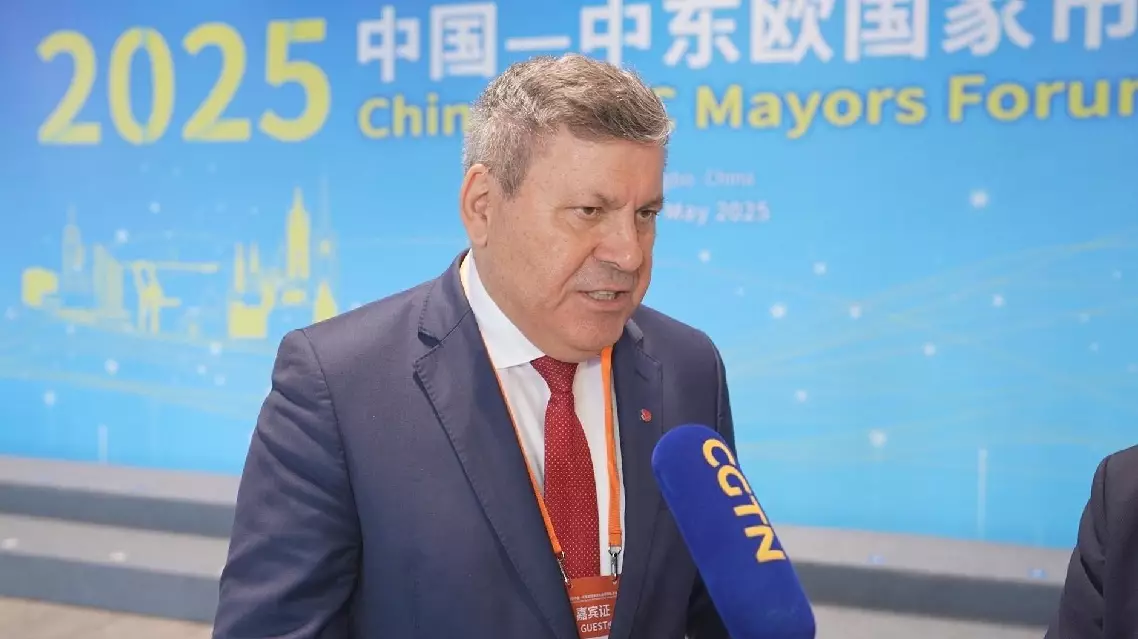
The response to global uncertainties should be more friendship, more cooperation, and more engagement, said Janusz Piechocinski, former Deputy Prime Minister and Economy Minister of Poland, on Friday while attending a mayors' forum, a side event of the fourth China-CEEC Expo and International Consumer Goods Fair, in Ningbo City of east China's Zhejiang Province.
The Expo running from Thursday to Sunday attracted 435 enterprises from 14 Central and Eastern European countries (CEECs) and nine other countries, including the UK, France, Germany and Italy, showcasing over 8,000 featured products.
"What businesses in China, Poland, Germany, and the United States all need are peace, predictability, dialogue, and clear rules of operation. If tensions arise, we need to resolve them by meeting and talking, not by trade wars. So our response to these global uncertainties should be more friendship, more cooperation, more engagement," said Piechocinski.
Data from China's customs showed that in 2024, China's trade with CEECs increased by 6.3 percent year on year to reach a record high of 142.3 billion U.S. dollars.
Import deals worth over 10 billion yuan (about 1.39 billion U.S. dollars) are expected to be reached during the Expo.
The year 2025 marks the 50th anniversary of the establishment of diplomatic relations between China and the EU, and the 13th anniversary of the establishment of the China-CEEC cooperation mechanism.
With more deals, projects and policies set to be in place, China and CEECs are forging a partnership that is poised to offer more certainty and confidence for the development of the world.
World needs more cooperation amid uncertainties: former Polish deputy PM
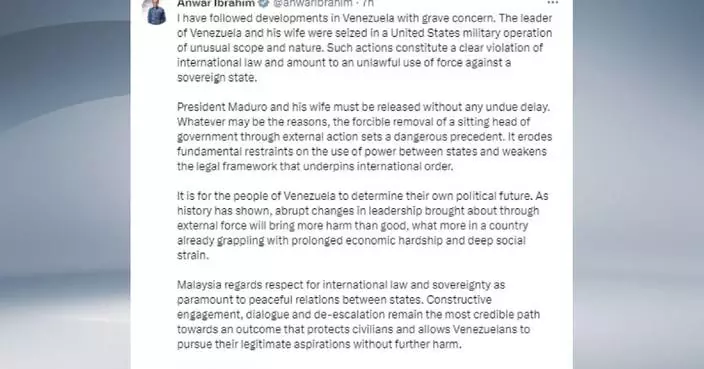
The United States cannot legitimize an operation that attacked Venezuela and captured its president, a Chinese scholar said Sunday.
On Saturday, the United States launched a large-scale strike on Venezuela, during which Venezuelan President Nicolas Maduro and his wife were 'captured and flown out of Venezuela' according to a post by U.S. President Donald Trump on his Truth Social account.
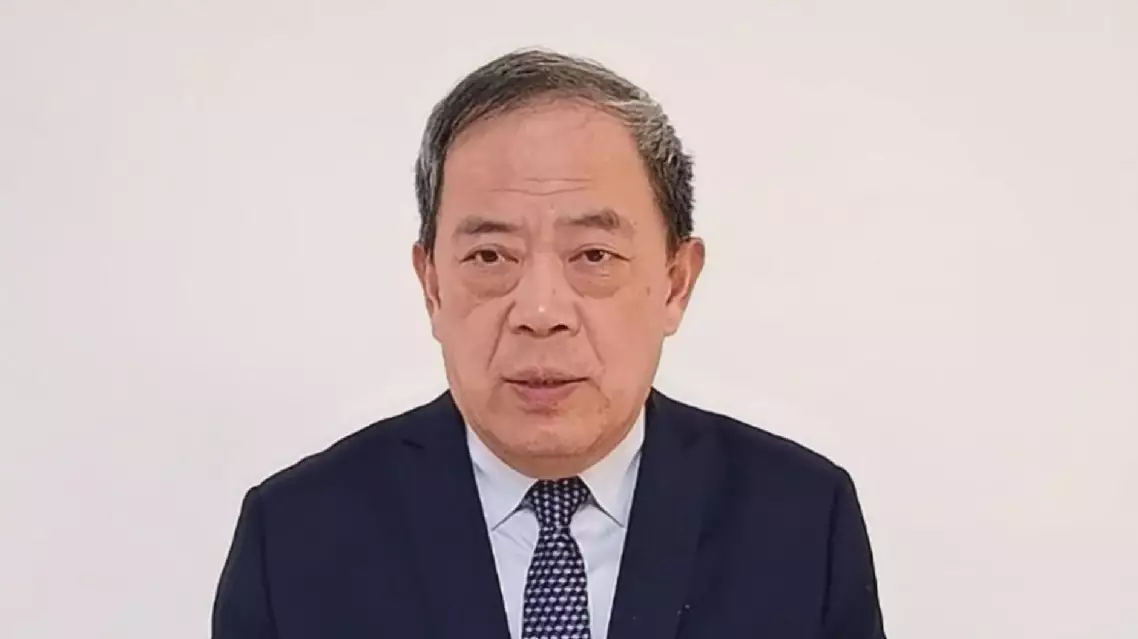
Teng Jianqun, director of the Center for Diplomatic Studies at Hunan Normal University, said in an interview with China Global Television Network (CGTN) that the aim of this operation is to take full control of Venezuela’s natural resources.
"I don't think the United States can legitimize this operation to take custody of the president of Venezuela. And also I don't think the United States can legitimize its any action in taking the oil reserves of that country. This is actually a very dangerous game played by the Trump administration. And of course, the United States would like to take full control of that country and to take full control of the natural resources, especially the large reserve of oil in Venezuela," said Teng.
Teng said Venezuela is not an isolated case but a common practice by the United States. The United States launched an invasion of Panama on Dec. 20, 1989, which continued until January 1990, with the stated objective of capturing Panamanian strongman Manuel Noriega on charges of drug trafficking and organized crime.
"We still remember the so-called sentence of the former president of Panama in the late 1980s. And this time, the president of Venezuela will be under some judicial condition (judicial proceedings) for the so-called drug trafficking and some other crimes. So I think this is not a single case for the Venezuela country, but also this is actually a practice by the United States -- to use force, to use so-called justice under law against any leaders in Latin America and the Caribbean waters," he said.
US cannot legitimize operation against Venezuela: Chinese scholar