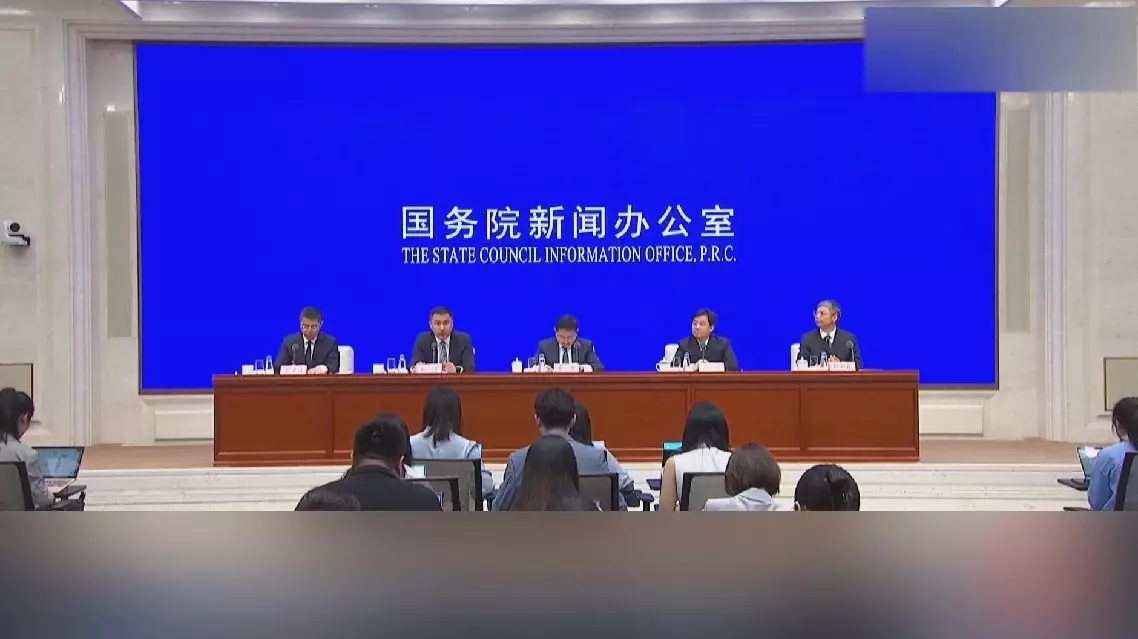
China's national-level economic and technological development zones are playing a vital role in promoting balanced regional development and boosting cross-regional cooperation, officials said at a State Council press conference on Tuesday in Beijing.
Zhu Bing, director of the Department of Foreign Investment Administration under the Ministry of Commerce, highlighted the strategic importance of these zones in spurring local economies and narrowing regional development gaps.
"Over the years, national-level economic development zones have made full use of their institutional, industrial, and talent advantages to lead regional opening up and coordinated development. They have played a significant role in serving local economic growth and fostering inter-regional collaboration. It's fair to say the results have been quite significant," said Zhu.
He outlined three key roles these development zones are playing.
"First, the national-level economic and technological development zones have used industrialization to drive urbanization, becoming the main engines of high-quality growth in their regions. While advancing their own development, they have also continued to extend their positive influence to the surrounding areas," he said.
"Second, they have strengthened cross-regional coordination, helping to facilitate the orderly transfer and rational distribution of industries. At present, China has 232 national-level economic and technological development zones across all 31 provincial-level regions on the mainland. These zones demonstrate strong complementarity in terms of industrial structure and resource endowments. We have supported the establishment of a coordinated development alliance for the national-level economic and technological development zones along the Yangtze River Economic Belt and have consistently hosted industrial transfer matchmaking events. These efforts encourage industrial parks in the eastern regions to 'make room for new industries' and support parks in central and western regions to 'build strength to attract investment,'" said Zhu.
"Thirdly, we've strengthened paired assistance between the national-level economic and technological development zones to help less-developed areas improve their development capacity. Guided by the principle of 'government guidance, market-driven cooperation,' the national-level economic and technological development zones have carried out various forms of joint construction and support for Xinjiang Uygur Autonomous Region, Xizang and other border regions. Currently, there are nearly 700 such collaborative projects underway," Zhu added.
China's national development zones drive balanced regional development, cross-regional cooperation: official