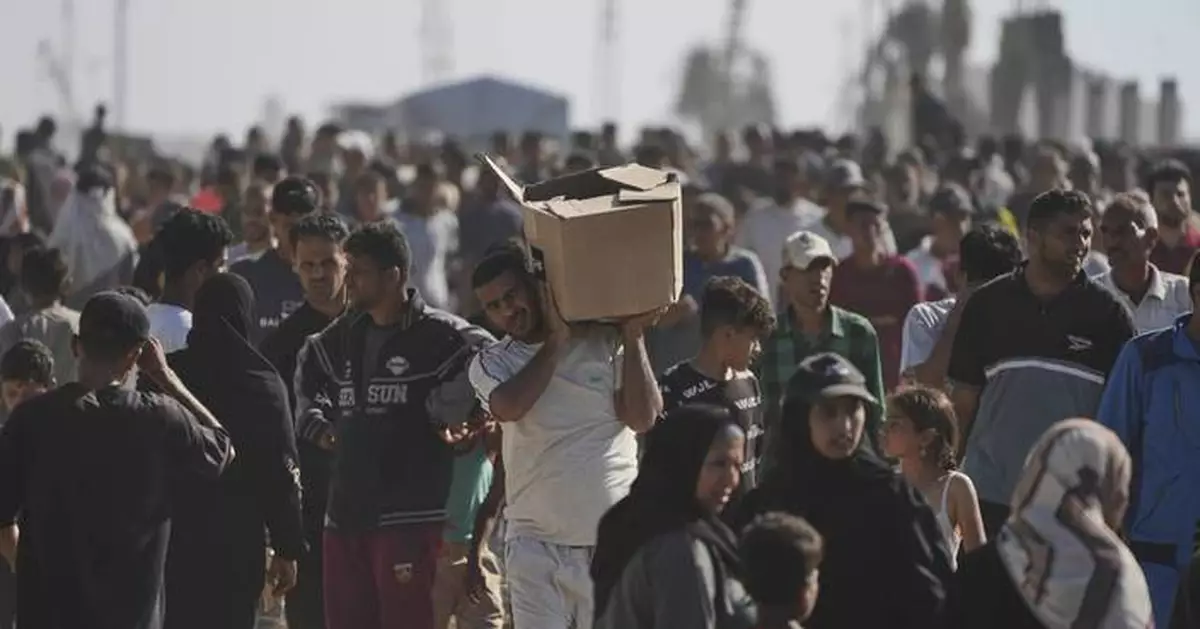
Palestinians have become increasingly desperate for food as nearly three months of Israeli border closures have pushed the Gaza Strip to the brink of famine.
Four Palestinians died Wednesday as a chaotic crush of people stormed into a U.N. World Food Program warehouse where hundreds were trying to grab food aid.
Click to Gallery
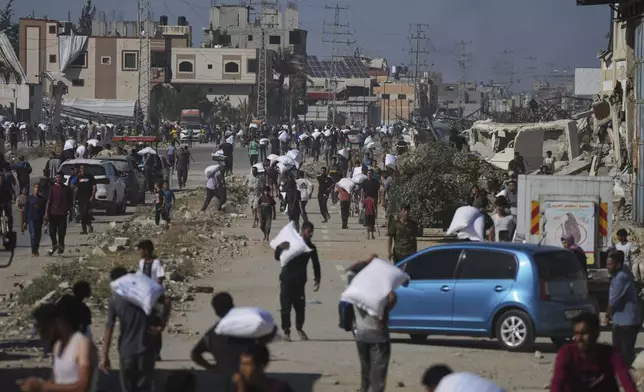
Palestinians carry bags of flour after storming a U.N. World Food Program warehouse in Zawaida, Central Gaza Strip, on Wednesday, May 28, 2025. (AP Photo/Abdel Kareem Hana)
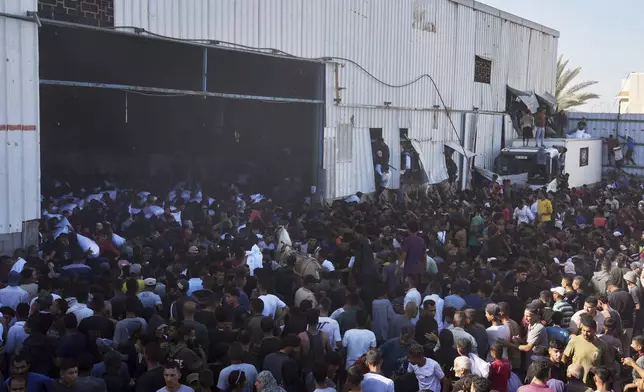
Palestinians storming a U.N. World Food Program warehouse and carry bags of flour in Zawaida, Central Gaza Strip, on Wednesday, May 28, 2025. (AP Photo/Abdel Kareem Hana)
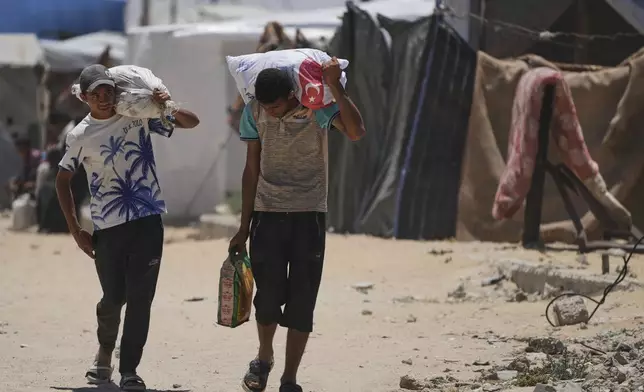
Palestinians carry food and humanitarian aid delivered by the U.S.-backed Gaza Humanitarian Foundation, after receiving the supplies in Rafah, as they arrive in Khan Younis, southern Gaza Strip, on Wednesday, May 28, 2025. (AP Photo/Abdel Kareem Hana)
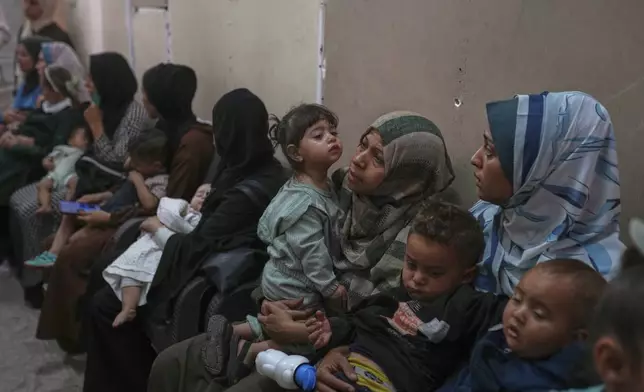
Palestinian women wait with their sick children for medical care in an overcrowded clinic in Gaza City, Wednesday, May 28, 2025. (AP Photo/Jehand Alshrafi)
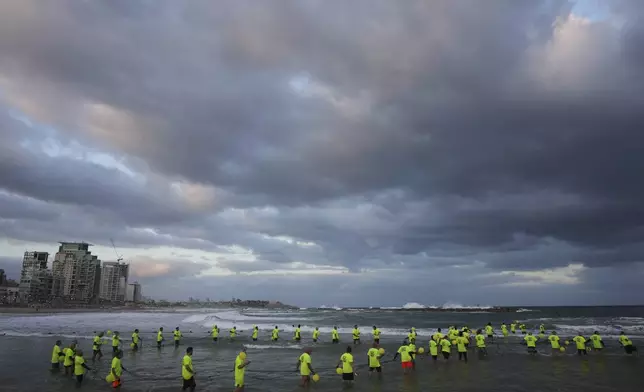
Relatives and supporters of Israelis held hostage by Hamas in Gaza release balloons to mark the 600 days of captivity, demanding their release and an end of the war in Tel Aviv, Israel, Wednesday, May 28, 2025. (AP Photo/Ariel Schalit)
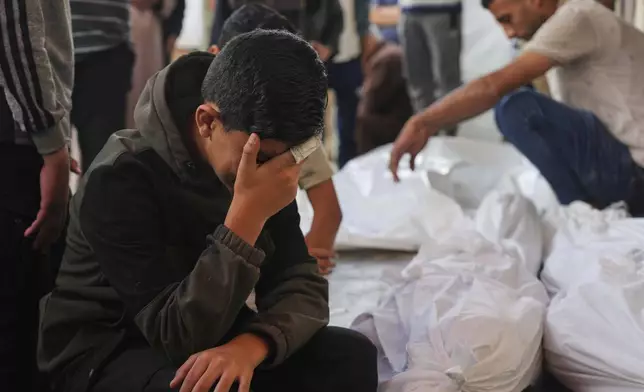
Palestinians mourn their relatives who were killed in an Israeli army airstrike on the Gaza Strip, at the Al-Aqsa Hospital in Deir al-Balah, Gaza, Wednesday, May 28, 2025. (AP Photo/Abdel Kareem Hana)
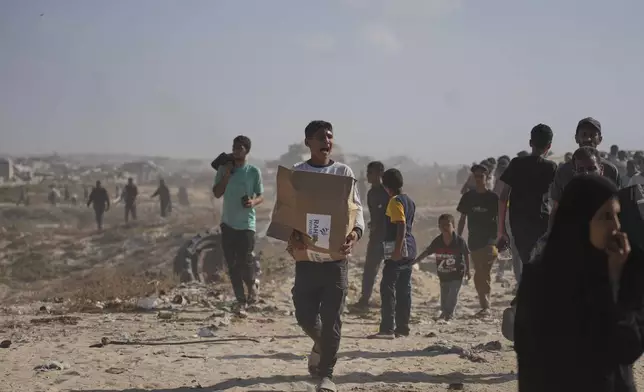
Palestinians carry boxes containing food and humanitarian aid packages delivered by the Gaza Humanitarian Foundation, a U.S.-backed organization approved by Israel, in Rafah, southern Gaza Strip, on Tuesday, May 27, 2025. (AP Photo/Abdel Kareem Hana)
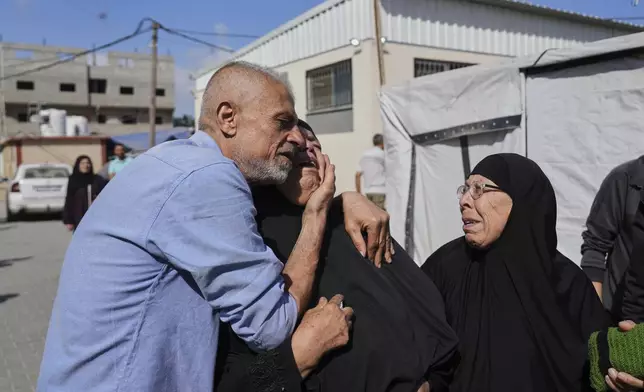
Palestinians mourn during the funeral of their relatives who were killed in an Israeli army airstrike on the Gaza Strip, at the Al-Aqsa Hospital in Deir al-Balah, Gaza, Wednesday, May 28, 2025. (AP Photo/Abdel Kareem Hana)
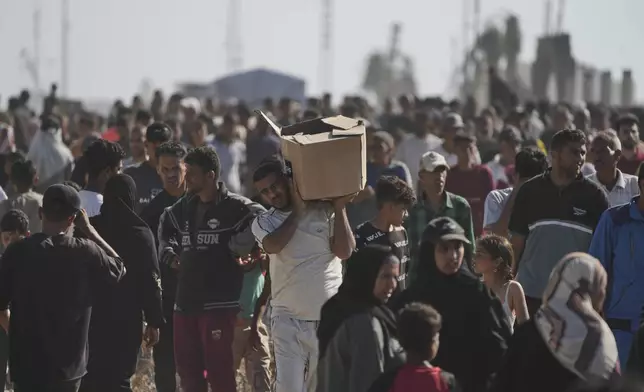
Palestinians carry boxes containing food and humanitarian aid packages delivered by the Gaza Humanitarian Foundation, a U.S.-backed organization approved by Israel, in Rafah, southern Gaza Strip, on Tuesday, May 27, 2025. (AP Photo/Abdel Kareem Hana)
The deaths came a day after a crowd was fired on while overrunning a new aid distribution site backed by Israel and the U.S., killing at least one Palestinian and wounding 48 others, Gaza’s Health Ministry said Wednesday.
It still isn’t clear if Israeli forces, private contractors or others fired. A Red Cross Field Hospital said injuries from that scene included women and children with gunshot wounds.
The U.N. and other humanitarian organizations have rejected the new system, saying it won’t be able to meet the needs of Gaza’s 2.3 million people and allows Israel to use food to control the population.
Wednesday marks 600 days since the war in Gaza began with Hamas’ Oct. 7, 2023 attack on Israel, which left around 1,200 dead. Israel’s retaliatory offensive has killed around 54,000 Palestinians, mostly women and children, according to the Gaza Health Ministry, which does not distinguish between civilians and combatants in its tally.
Here’s the latest:
More than 2 million people in Gaza face overwhelming grief, hunger and displacement while still hoping for an end to the war, which stretched into a 600th day.
Fatma Abdelaal, a displaced woman from Rafah, told The Associated Press she feels disheartened by her wartime losses, and that 600 days seem like thousands of years.
“Entire families have been erased from the civil registry. We lost our homes,” she said. “I’ve been building a house for 30 years for my children and for future generations. But it was for nothing, all has been lost.”
Majd al-Sultani, a displaced man from Rafah, said he walked 2 kilometers (1.2 miles) just to fill containers with water He says the war has destroyed the people of Gaza. Meanwhile, Wael Tabsh, a displaced man from eastern Khan Younis, urged world leaders to help end the war.
“Tears dried up in our eyes. How long will this torture last?” he said.
Riyad Mansour faced Israel’s ambassador at a U.N. Security Council meeting on Wednesday and demanded he account for Israel’s conduct during the war in Gaza.
“Is it civilized to block aid and to starve a people?” Mansour asked Danny Danon. “If this is civilized, what is barbarism?”
He spoke of the recent example of a six-year-old girl escaping the flames of a school-turned-shelter, where 36 people were killed including her mother and five siblings. And he decried the Israeli bombing of a doctor’s house that killed nine of her 10 children.
His voice quivering, he recalled “the images of mothers embracing their motionless bodies, caressing their hair, talking to them, apologizing to them.”
“Unbearable! How could anybody?” he asked, breaking into tears and putting his hand on his forehead.
After a long pause he excused himself and said, his voice still shaking, “I have grandchildren. I know what they mean to their families. … Flames and hunger are devouring Palestinian children. This is why we are so outraged.”
Israel blames Hamas for civilian deaths, saying militants operate in densely populated areas.
Palestinian civilians in Gaza who are being starved and facing famine “have lost hope,” said acting U.N. special coordinator for the Mideast Sigrid Kaag, speaking to the U.N. Security Council on Wednesday.
“Instead of saying ‘goodbye,’ Palestinians in Gaza now say, ‘see you in heaven,’” Kaag said. “Death is their companion. It’s not life, it’s not hope.”
She said the people of Gaza deserve to survive and have a future, but since the ceasefire ended in March they have constantly come under fire and are being confined to ever-shrinking spaces.
The Israeli Defense Ministry said Wednesday that its forces have been using high-powered lasers to intercept threats during the current conflicts inflaming the region, the first time it has used the technology in a war setting.
The ministry in a statement said laser prototypes intercepted “scores of enemy threats.” Video released by the ministry showed what it said was an interception by a laser. In the video, what appears to be a drone is seen catching fire. It wasn’t clear if Israel has used the lasers in the fighting in Gaza or against Hezbollah in Lebanon.
“The laser system grants Israel an additional, precise, cheap and fast interception layer that will change the rules of the game in the region,” Defense Minister Israel Katz said in a statement.
The laser technology joins other elements of Israel’s multi-layered air defense system, including the Iron Dome, David’s Sling and the Arrow. The operational laser will complement the more powerful laser technology known as Iron Beam, which is expected to be delivered to the Israeli military later this year, the ministry said.
Trump’s special envoy Steve Witkoff says the the U.S. administration is close to issuing a new “term sheet” to Israel and Hamas that would set the parameters for a temporary ceasefire.
Witkoff speaking with Trump at his side after ceremonial swearing-in of Jeanine Pirro, Trump’s interim U.S. attorney for Washington, D.C., said that the outlines of the U.S. proposal could be delivered later on Wednesday.
“I have some very good feelings about getting to a long term resolution—a temporary cease fire and a long term resolution, a peaceful resolution of that conflict,” Witkoff said.
Dr. Feroze Sidhwa, an American trauma surgeon who has been working in Gaza, described in graphic detail how Israel has “systemically dismantled” the healthcare system for Palestinians over the span of the 19-month war.
In a briefing Wednesday to the U.N. Security Council, Sidhwa urged members of the powerful body to not “claim ignorance” about the humanitarian devastation in Gaza.
“Let’s not forget, this is a man-made catastrophe. It is entirely preventable. Participating in it or not allowing it to happen is a choice,” Sidhwa said.
“This is a deliberate denial of conditions necessary for life: food, shelter, water and medicine. Preventing genocide means refusing to normalize these atrocities,” he told the Security Council.
The U.N. World Health Organization has documented around 700 attacks on health care facilities in Gaza during the war. Israel accuses Hamas of using hospitals as command centers and to hide fighters, although it has only provided evidence for some of its claims.
Hundreds of Palestinians stormed into a U.N. World Food Program warehouse in the central Gaza Strip on Wednesday in a desperate attempt to grab food aid.
Four people died in the chaos, hospital officials said.
People shouted and pushed against each other in the shadow of the cavernous warehouse’s main door, as others ripped off pieces of the metal walls in an effort to get inside. Scores of aid-seekers could be seen carrying large bags of flour as they shoved their way back out into the sunlight through throngs of people pressing to get inside. Each bag of flour weighs around 25 kilograms (55 pounds).
Danny Danon, Israel’s ambassador to the United Nations, blasted the U.N. agencies facilitating aid in Gaza, accusing the international body, without evidence, of holding up aid at border crossings.
“As we speak, there are more than 400 trucks already on the other side of the fence, waiting to be distributed, but the U.N. has failed to pick them up,” Danon told reporters Wednesday. “We opened the crossings. We provided safe routes for those truck. But the U.N. did not show up.”
U.N. spokesperson said Stephane Dujarric pushed back on the Israeli ambassador's statements. Out of 500 trucks on the Gaza side, he said the U.N. and its partners "can collect just over 200 of them, limited by insecurity and restricted access.”
About 600 trucks entered Gaza every day during a ceasefire earlier this year.
The Israeli ambassador to the U.N., Danny Danon, also denied U.N. and Gaza Health Ministry statements that Israeli forces shot at Palestinians who were trying to get aid through a new U.S.-backed mechanism Tuesday. “There were a few riots. It took the American teams sometime to take control of the situation but I can say it out loud: We didn’t shoot anyone over there.”
Danon confirmed that Israel will continue to allow the U.N. to operate aid deliveries into Gaza while the new mechanism builds out throughout the Gaza Strip.
Hundreds of Palestinians walked for nearly 10 kilometers (6 miles) through the hot sun in Gaza to reach a new Israeli and U.S.-backed aid distribution site in Rafah, only to encounter chaos and leave empty-handed or with whatever they could grab.
Some of them, visibly exhausted and distressed, spoke to The Associated Press after returning to Khan Younis. Access to the Gaza Humanitarian Foundation hub is allowed only on foot.
Osama Afifi, a displaced man originally from Rafah, said he went with his ID on Tuesday, expecting an organized aid distribution system. Instead, he found crowds pushing and shoving. He received no aid and left hungry.
“People ruined everything inside … the boxes are torn up,” said Sameh Shallouf, adding that he grabbed what remained: five bags of hummus and five kilos of rice.
One man emptied his bag on the ground with only rice and hummus, while another man carried a bag of flour, pasta, salt and coffee creamer. Some people managed to get only a bottle of cooking oil or a few cans of food.
“They should bring us aid to our area so that we can eat and drink like everyone else. ... This is not right. This is all wrong,” said Yasmin Jadaria, a displaced woman from Rafah.
The relatives of Israelis held in Gaza, along with some former hostages, pleaded for release of the remaining captives taken during Hamas’ Oct. 7, 2023 attack.
Some 58 captives remain, about a third of whom Israel believes are still alive.
“The most important thing is human life and that our citizens return home,” said Luis Har, who was help captive and rescued in an Israeli military mission last year. He spoke at a press conference in Tel Aviv marking 600 days.
Later Wednesday, the families and their supporters will hold a rally at an area that’s become known as Hostages Square to mark the milestone.
Hamas captured roughly 250 people during its 2023 attack. Most have been freed in ceasefire deals.
Prime Minister Benjamin Netanyahu says Israel killed senior Hamas leader Mohammed Sinwar, apparently confirming his death in a recent airstrike in the Gaza Strip. Speaking before parliament on Wednesday, Netanyahu included Sinwar in a list of Hamas leaders killed by Israel in the war-battered enclave.
Mohammed is the brother of Yahya Sinwar, the Hamas leader and one of the masterminds of the Oct. 7, 2023 attack, who was killed by Israeli forces last year.
As the head of Hamas’ armed wing, Mohammed Sinwar would have had the final word on any agreement to release the hostages, and his death could further complicate U.S. and Arab efforts to broker a ceasefire.
Netanyahu mentioned the killing of Sinwar in a speech before parliament in which he listed the names of other top Hamas leaders killed during the war. “We have killed ten of thousands of terrorists. We killed (Mohammed) Deif, (Ismail) Haniyeh, Yahya Sinwar and Mohammed Sinwar,” he said.
Netanyahu did not elaborate. Israeli media had reported that the younger Sinwar was the target of a May 13 strike on what the military said was a Hamas command center beneath the European Hospital in the southern Gaza city of Khan Younis, the Sinwars’ hometown. The military declined to comment on whether Sinwar had been targeted or killed.
The United Arab Emirates has summoned the Israeli ambassador on Wednesday to condemn the violence and incitement against Palestinians in Jerusalem’s Old City during an annual march marking Israel’s annexation of the eastern part of the city.
“These provocative, arbitrary practices represent dangerous incitement against Muslims, and are a flagrant violation of the sanctity of the holy city,” the UAE’s Ministry of Foreign Affairs said.
Throngs of ultranationalist Israeli Jews made their way Monday through Muslim neighborhoods of Jerusalem’s Old City dancing, banging on homes, and chanting “Death to Arabs” and singing “May your village burn.” The march often becomes a rowdy and sometimes violent procession of hardline Jews. Four years ago, it helped set off an 11-day war in Gaza.
The UAE agreed to normalize relations with Israel in a U.S.-brokered deal in 2020, the first of the so-called Abraham Accords that Israel eventually concluded with four Arab nations.
Indonesian President Prabowo Subianto praised France’s backing of a two-state solution in the Israeli–Palestinian conflict and echoed Emmanuel Macron 's calls for an immediate cessation of armed activities in Gaza as well as full humanitarian access to the enclave.
“I am aware of all the emotions raised by this war and the questions sometimes raised about the position of Europe and France,” Macron said, “And I want to say here that France does not accept double standards.”
He added that France will soon organize, with Saudi Arabia, a conference on Gaza at the U.N. in New York, to give a new impetus to the recognition of a Palestinian state and the recognition of Israel.
Indonesia has long been a strong supporter of the Palestinians and does not have formal diplomatic relations with Israel. Once the Palestinian state is recognized by Israel, “Indonesia is ready to recognize Israel,” Subianto said.
Israeli Defense Minister Israel Katz said Wednesday's strikes destroyed the last plane used by the Houthi rebels, while the rebel-run al-Masirah TV said they had targeted a plane from the country’s flagship carrier Yemenia.
The strikes came after Iran-backed Houthi rebels fired several missiles at Israel in recent days, without causing casualties.
The Houthis have targeted Israel throughout the war in Gaza in solidarity with Palestinians. The Houthi missiles have mostly been intercepted, although some have penetrated Israel’s missile defense systems, causing casualties and damage.
Israel last struck the airport in Sanaa on May 6, destroying the airport’s terminal and leaving its runway riddled with craters. Some flights resumed to Sanaa on May 17.
The distribution hub outside Gaza’s southernmost city of Rafah were chaos erupted on Tuesday was opened by the Gaza Humanitarian Foundation.
The foundation is taking over the handling of desperately needed aid under a new, U.S. and Israeli-backed system despite concerns raised about the group from the United Nations and the recent resignation of its executive director.
The U.N. and other humanitarian organizations have rejected the new system, saying it won’t be able to meet the needs of Gaza’s 2.3 million people and allows Israel to use food as a weapon to control the population. They have also warned of the risk of friction between Israeli troops and people seeking supplies.
Stephane Dujarric says the United Nations has not nothing to do with the Gaza Humanitarian Foundation’s aid distribution because its plan does not comply with U,N. humanitarian principles of neutrality, independence and impartiality in delivering aid — which apply from Gaza to Sudan to Myanmar and dozens of other countries.
Dujarric said on Tuesday that it is “an arduous process” to coordinate with Israeli authorities to get U.N. trucks to the loading area to pick up aid, and to determine if roads for the trucks to traverse are safe.
“We’re still trying — desperately trying — to deliver aid based on our system that has worked … and it’s very challenging,” he said
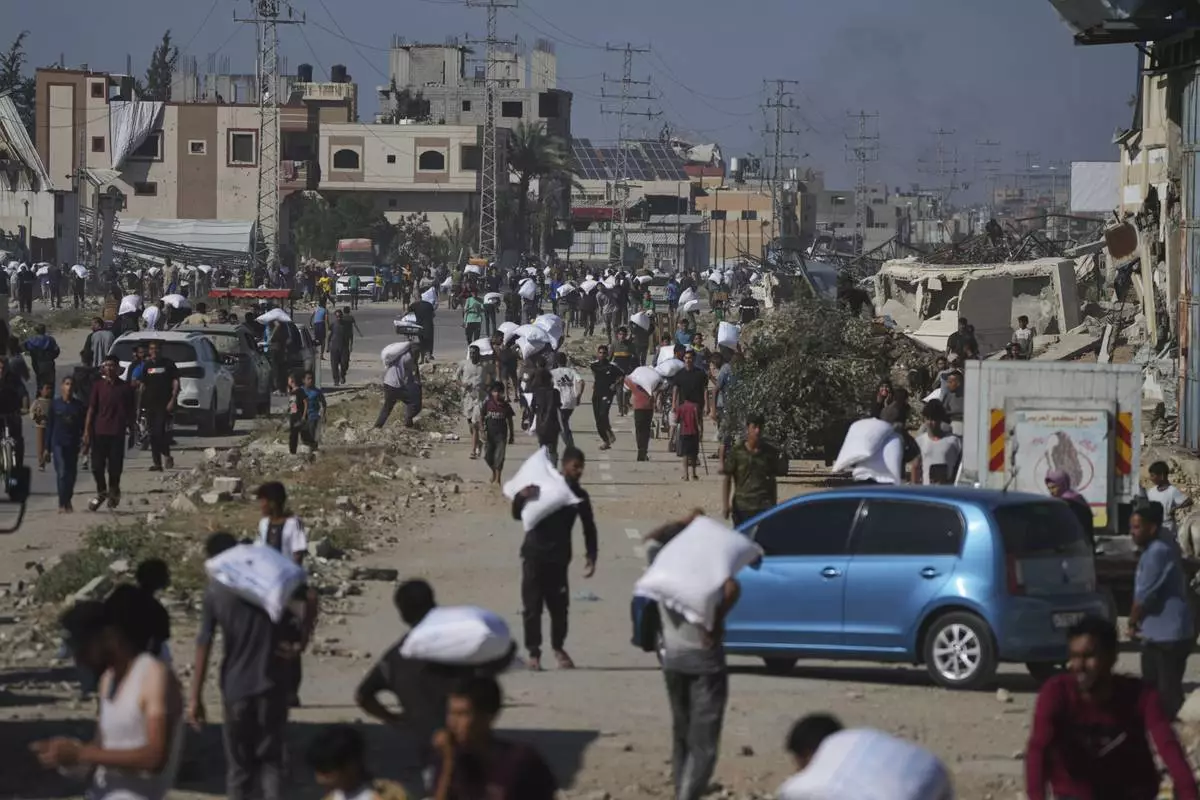
Palestinians carry bags of flour after storming a U.N. World Food Program warehouse in Zawaida, Central Gaza Strip, on Wednesday, May 28, 2025. (AP Photo/Abdel Kareem Hana)
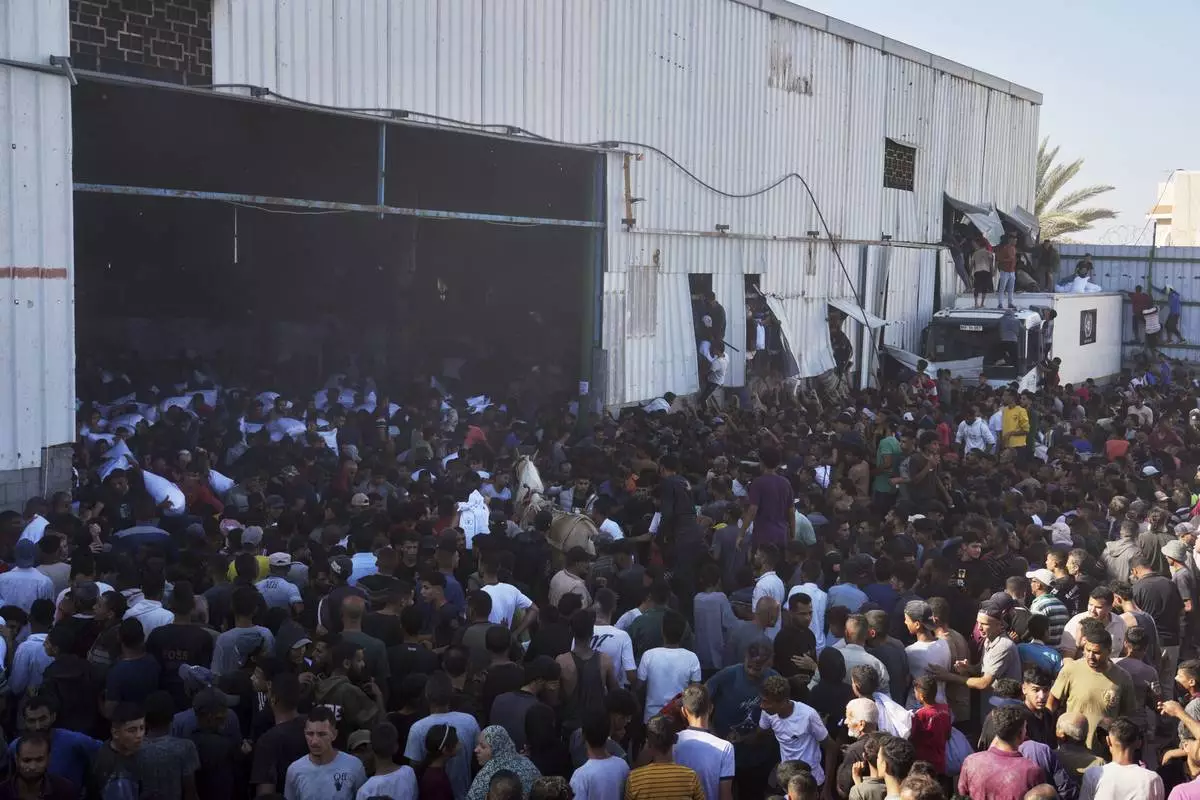
Palestinians storming a U.N. World Food Program warehouse and carry bags of flour in Zawaida, Central Gaza Strip, on Wednesday, May 28, 2025. (AP Photo/Abdel Kareem Hana)
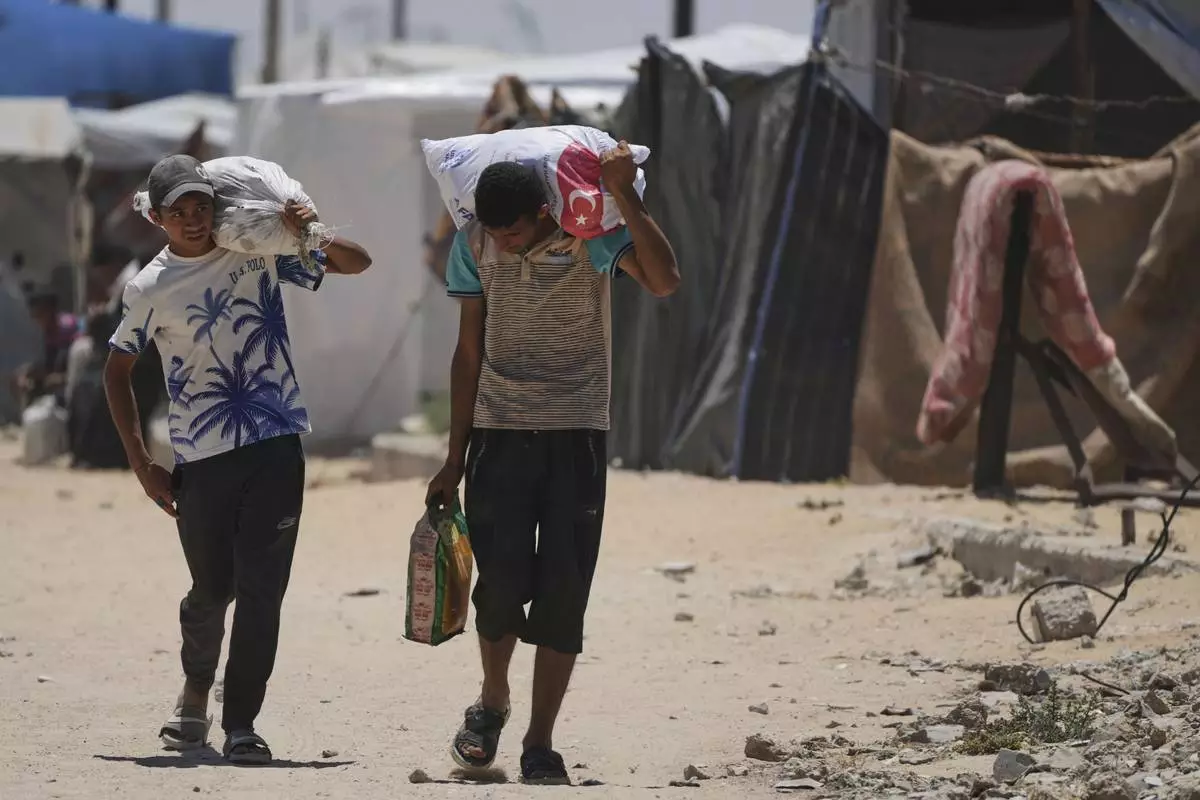
Palestinians carry food and humanitarian aid delivered by the U.S.-backed Gaza Humanitarian Foundation, after receiving the supplies in Rafah, as they arrive in Khan Younis, southern Gaza Strip, on Wednesday, May 28, 2025. (AP Photo/Abdel Kareem Hana)
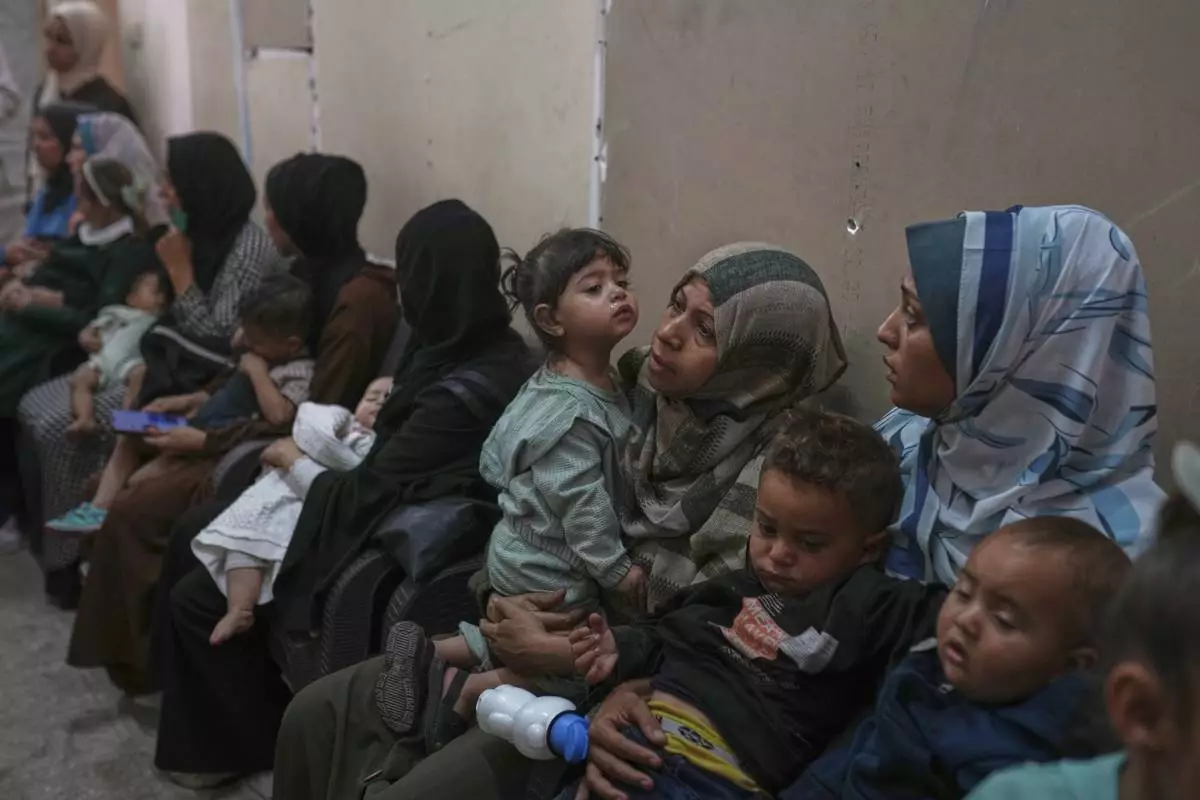
Palestinian women wait with their sick children for medical care in an overcrowded clinic in Gaza City, Wednesday, May 28, 2025. (AP Photo/Jehand Alshrafi)
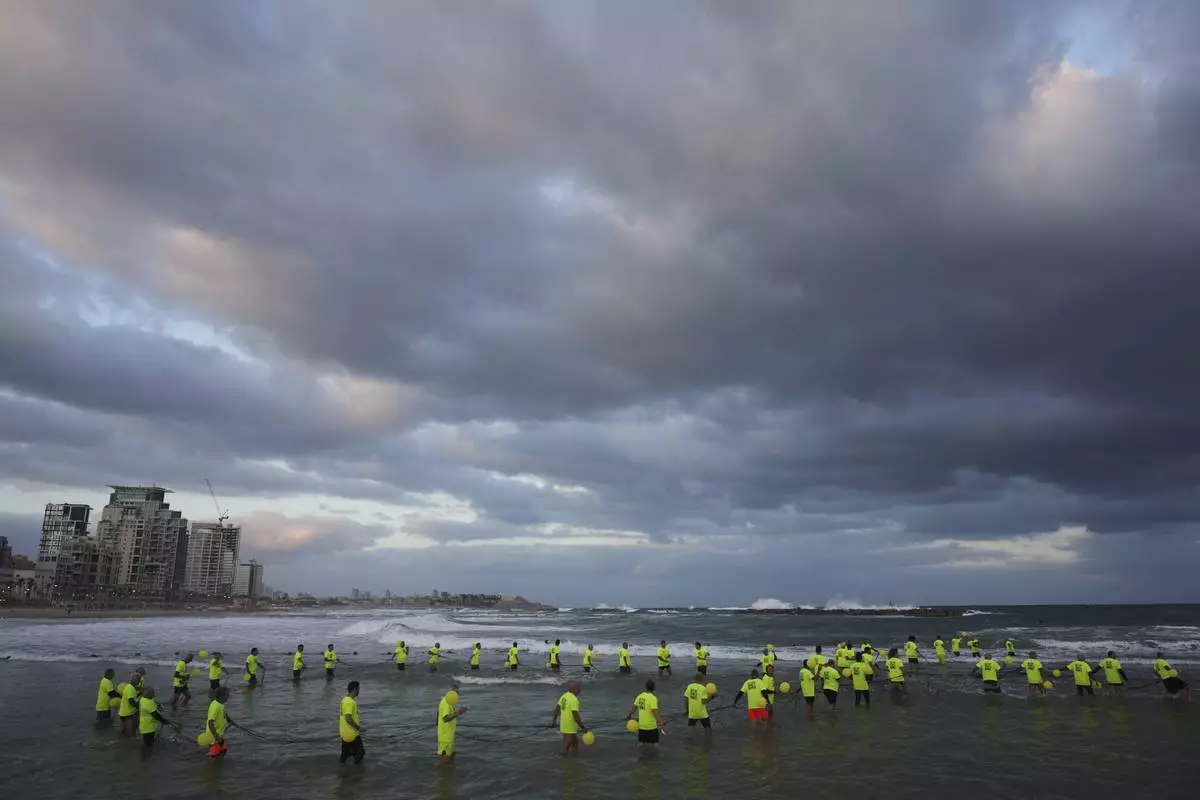
Relatives and supporters of Israelis held hostage by Hamas in Gaza release balloons to mark the 600 days of captivity, demanding their release and an end of the war in Tel Aviv, Israel, Wednesday, May 28, 2025. (AP Photo/Ariel Schalit)
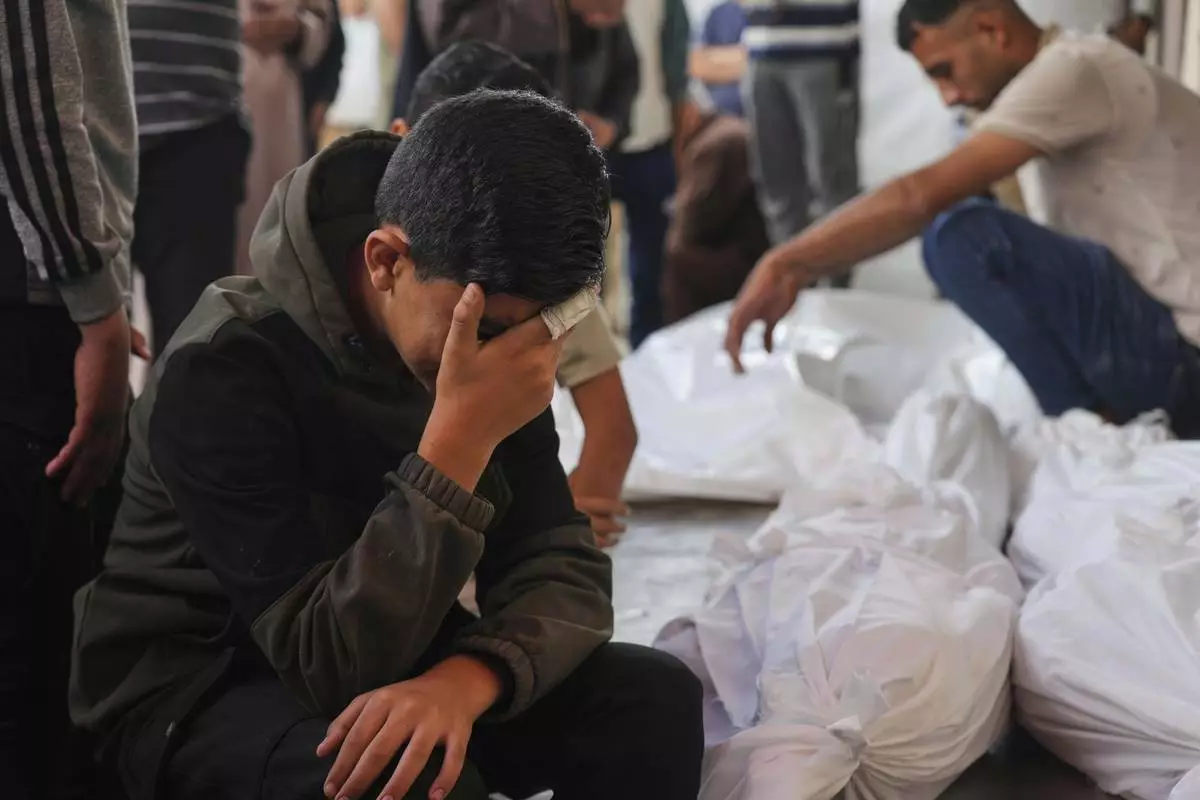
Palestinians mourn their relatives who were killed in an Israeli army airstrike on the Gaza Strip, at the Al-Aqsa Hospital in Deir al-Balah, Gaza, Wednesday, May 28, 2025. (AP Photo/Abdel Kareem Hana)
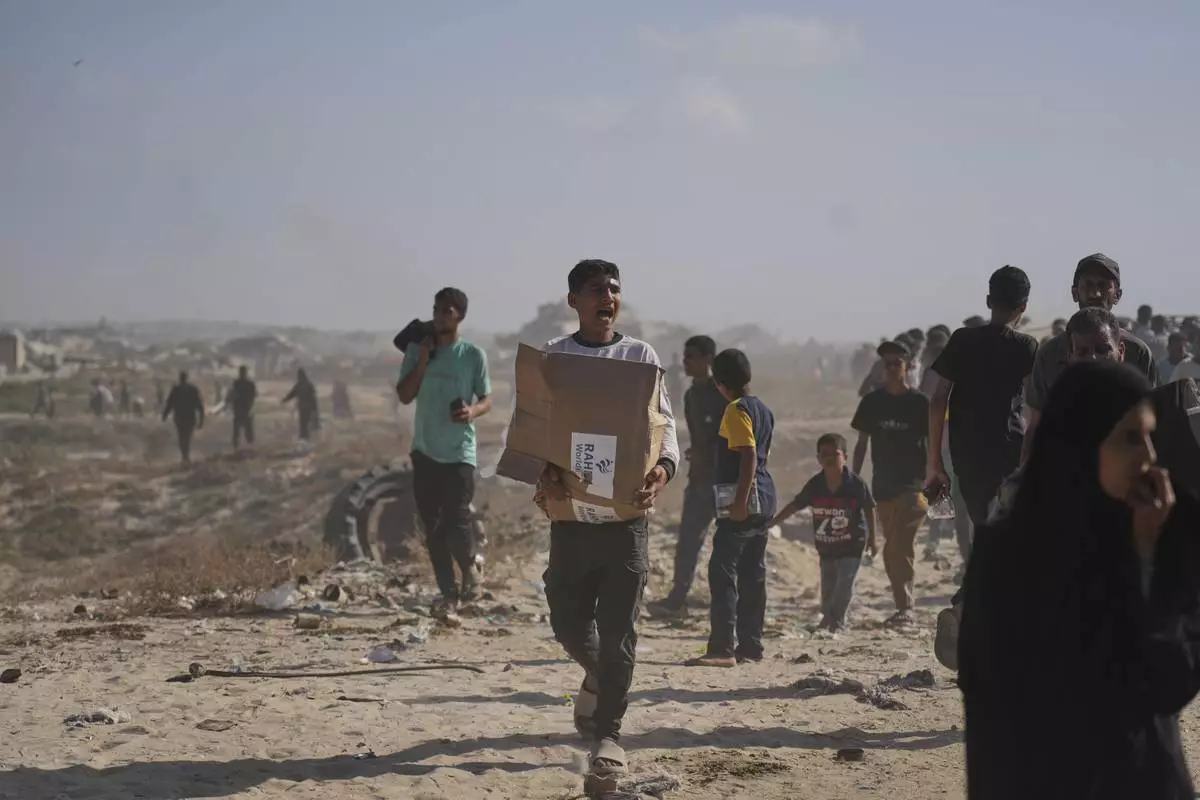
Palestinians carry boxes containing food and humanitarian aid packages delivered by the Gaza Humanitarian Foundation, a U.S.-backed organization approved by Israel, in Rafah, southern Gaza Strip, on Tuesday, May 27, 2025. (AP Photo/Abdel Kareem Hana)
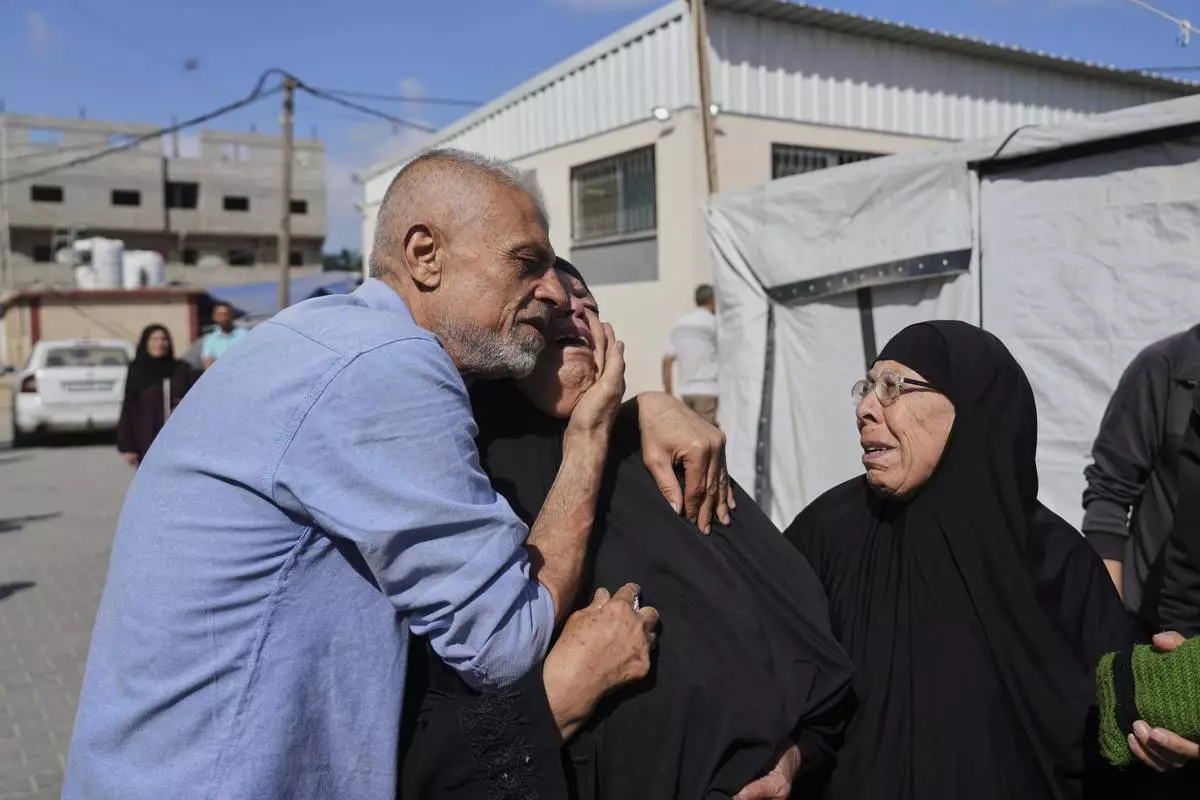
Palestinians mourn during the funeral of their relatives who were killed in an Israeli army airstrike on the Gaza Strip, at the Al-Aqsa Hospital in Deir al-Balah, Gaza, Wednesday, May 28, 2025. (AP Photo/Abdel Kareem Hana)
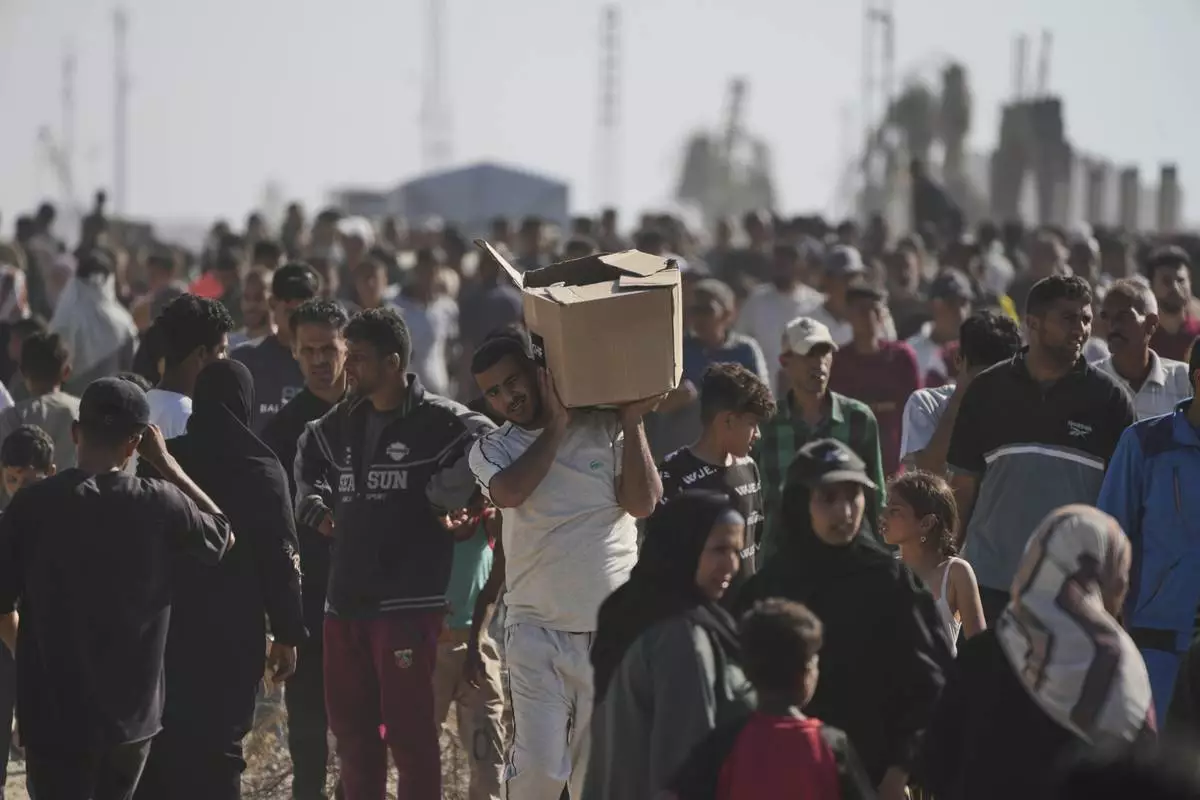
Palestinians carry boxes containing food and humanitarian aid packages delivered by the Gaza Humanitarian Foundation, a U.S.-backed organization approved by Israel, in Rafah, southern Gaza Strip, on Tuesday, May 27, 2025. (AP Photo/Abdel Kareem Hana)