Skip to Content Facebook Feature Image

Planning a wedding is stressful. Couples and vendors now have to factor in tariffs

ENT

Planning a wedding is stressful. Couples and vendors now have to factor in tariffs
ENT

ENT

Planning a wedding is stressful. Couples and vendors now have to factor in tariffs

2025-05-29 00:50 Last Updated At:01:01

NEW YORK (AP) — Krista Vasquez had her heart set on getting married in a body-hugging, halter-style gown from Spain. In April, the Atlanta paramedic learned her dream dress would cost nearly $300 more because of new U.S. tariffs on imported goods.

With little wiggle room in her timing, the bride-to-be quickly checked around for similar styles. The story was the same: any dresses from Europe would come with tariff-driven price increases ranging from $150 to $400. And that was before President Donald Trump said he would increase the tariff on goods produced in the European Union from 10% to 50%.

Vasquez, 33, went with her first choice, fearing shipping delays or additional costs like a rush fee before her October wedding if she placed an order elsewhere.

“It's already expensive enough to get married,” she said. “It just kind of made me a little sad."

Wedding cakes, decor, attire, flowers, party favors, photo and video equipment, tableware, wine and Champagne. Not many goods used in the wedding industry remain untouched by the tariffs Trump has imposed since returning to office. How much of the import taxes get passed down to consumers is up to florists, photographers, caterers and myriad other vendors and intermediaries, such as wholesalers.

Olivia Sever, a 28-year-old online content creator in San Diego, has a lot of wedding shopping ahead of her. Much of what she wants may cost more because of tariffs. An immediate concern is some of her paper goods. Her wedding planner has already flagged a 10% price increase for the menus, place cards and signage she wanted for her September celebration in Hawaii.

Sever said shifting to American goods isn't always cost-effective. For instance, flowers grown in Hawaii are in high demand, with increased prices to match, in response to 10% tariffs imposed on a large number of imports around the world. That includes flowers from Ecuador, Colombia and other countries that grow the bulk of the flowers the U.S. imports.

“There's just so many unknowns, but we have our budget and we’re trying to work within our budget,” Sever said. “If that means we can’t get these, you know, specific shell cups I want, then we just won’t get them and we’ll get something else.”

Here's a look from inside the wedding industry on tariffs.

Clients of Phoenix cake artist Armana Christianson pay roughly $750 to $800 for one of her creations. She spent two years perfecting the 16 flavor combinations she offers.

They range from simple vanilla bean, made with vanilla bean paste imported from Mexico, to dark chocolate raspberry with a whipped hazelnut ganache that's dependent on chocolates and powders from Belgium.

Not all of Christianson's cost woes are tariff-driven. The chocolate industry was already struggling because of a cocoa bean shortage.

“I'm a small business with just myself as my employee. I've seen at minimum a 20% increase in just the chocolate I use. It's a type of chocolate that I've built into my recipes. Changing brands isn't acceptable,” Christianson said.

The imported white chocolate in her white chocolate mud cake, a popular flavor, shot up from $75 or $100 per cake to $150. She used nearly 10 pounds of it in a recent order, a cake that had five tiers.

Christianson may have to come up with new recipes based on less expensive ingredients. In the meantime, she said, she's eating the cost of tariffs for clients already on her books.

“I don't have it in my contract where I can raise prices for unexpected events like this,” she said. “Unfortunately, that's something I have to add to new contracts for my future couples.”

Almost all bridal gowns are made in China or other parts of Asia — and so are many of the fabrics, buttons, zippers and other materials used, according to the National Bridal Retailers Association. Manufacturing in those countries, where labor generally costs less, has put the price of high-quality bridal gowns within reach for many American families.

Retailers and manufacturers say the U.S. lacks enough skilled labor and production of specialized materials to fully serve the market. Skilled seamstresses are hard to find and often come from older generations.

“The materials that we sell in a bridal shop include lace, beadwork, boning for the corsetry. We don’t really make stuff like that in this country. There just aren’t very many designers who create and put their whole looks together in this nation,” said Christine Greenberg, founder and co-owner of the Urban Set Bride boutique in Richmond, Virginia.

“The designs done here are normally very simple designs. You don’t see a lot of American-made gowns that have a lot of detail, a lot of embroidered lace, and that’s a really popular wedding gown style,” she said.

Many designers with gowns labeled made in the U.S. still are using imported materials, Greenberg noted.

If Trump's highest tariffs on China are reinstated after a current pause, Greenberg said her small business will pay between $85,000 and $100,000 extra in import taxes this year.

“For a small, family-owned business that only hosts one bride at a time, this will absolutely lead us and many others to close for good,” she said. “We can't buy American when the products don't exist.”

Roughly 80% of cut flowers sold in the U.S. come from other countries. And lots of quality faux flowers are made in China.

Colombia is a large supplier of roses, carnations and spray chrysanthemums. Ecuador is another major rose supplier. The Netherlands produces a huge share of tulips and other flowers. In addition, some of the cut greens used as filler in flower arrangements and bouquets in the U.S. are imported.

“If you’re talking about cars and computer chips, they’ve got inventory that’s sitting there. It’s already stateside. Our inventory turns in days and we saw the impact almost immediately,” said Joan Wyndrum, co-founder of the online floral distributor Blooms by the Box. “We’re all absorbing a little bit, but it’s inevitable that it comes out on the consumer end of it.”

Wyndrum, who works directly with wholesalers and growers, said the U.S. flower industry isn’t capable at the moment of absorbing all the production from elsewhere. She does a lot of business with U.S. suppliers, though, and sees a huge opportunity for growth stateside.

“There’s a benefit to the U.S. bride to have flowers grown here. It’s the simple reason of freshness,” she said.

Jacqueline Vizcaino is a luxury wedding planner and event designer in Atlanta. She's also national president of the Wedding Industry Professionals Association, a 3,500-member, education-focused trade group whose members include transportation and photo booth providers, makeup artists, caterers, linen distributors and planners.

Any one wedding may involve 40 or more vendors, Vizcaino said. Huge jumps in costs are already widespread due to tariffs, she said, florals and fabrics among them.

With many weddings planned up to a year or more in advance, she and others in the industry are girding for more bad news.

“We're going to see a lot of interactions that aren't so pleasant in the next eight to 12 months," she said.

Tariffs have delayed decision-making among many couples planning weddings.

“Decisions are taking double the time because of the uncertainty. People are shopping around more and wanting (vendors) to lock in at the lowest price possible,” Vizcaino said.

McKenzi Taylor, a planner who coordinates weddings in Las Vegas, San Diego and the Black Hills in South Dakota, said: “Our inquiry-to-booking window has grown from 40 days to 73. Cancellations are up so far this year, on pace to double from last year, with costs definitely being a concern for couples. My vendors are shaking in their boots.”
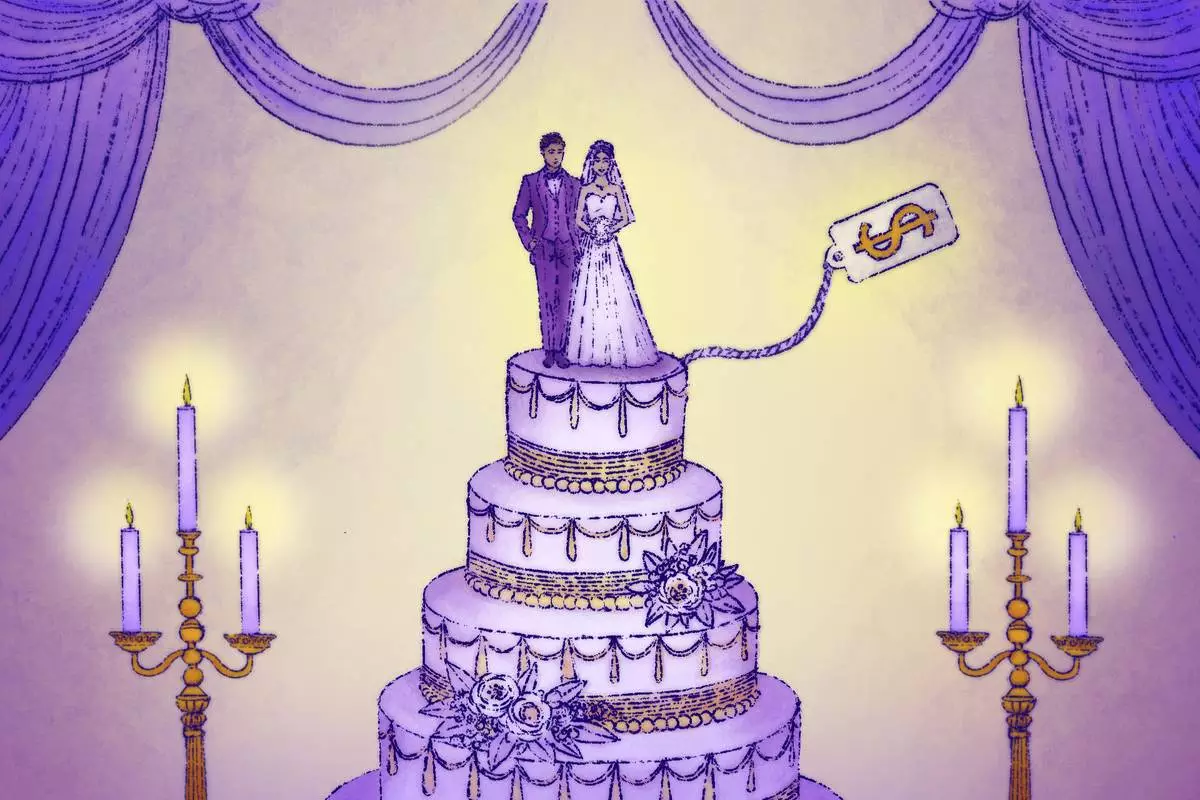
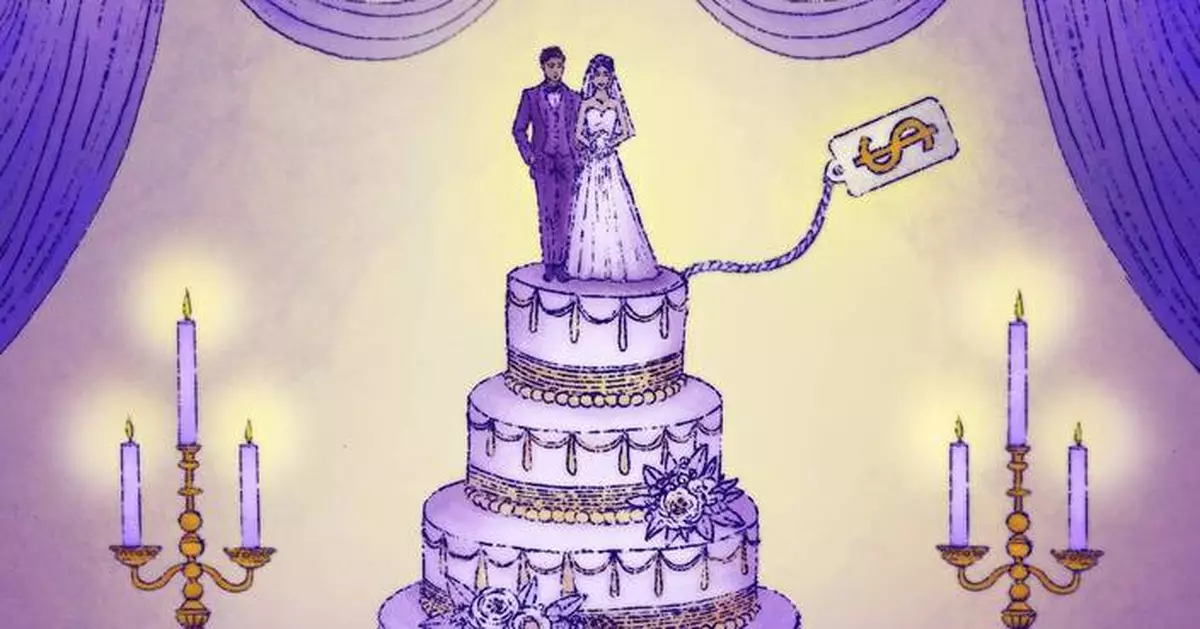
(AP Illustration / Peter Hamlin)
(AP Illustration / Peter Hamlin)

WASHINGTON (AP) — Becky Pepper-Jackson finished third in the discus throw in West Virginia last year though she was in just her first year of high school. Now a 15-year-old sophomore, Pepper-Jackson is aware that her upcoming season could be her last.

West Virginia has banned transgender girls like Pepper-Jackson from competing in girls and women's sports, and is among the more than two dozen states with similar laws. Though the West Virginia law has been blocked by lower courts, the outcome could be different at the conservative-dominated Supreme Court, which has allowed multiple restrictions on transgender people to be enforced in the past year.

The justices are hearing arguments Tuesday in two cases over whether the sports bans violate the Constitution or the landmark federal law known as Title IX that prohibits sex discrimination in education. The second case comes from Idaho, where college student Lindsay Hecox challenged that state's law.

Decisions are expected by early summer.

President Donald Trump's Republican administration has targeted transgender Americans from the first day of his second term, including ousting transgender people from the military and declaring that gender is immutable and determined at birth.

Pepper-Jackson has become the face of the nationwide battle over the participation of transgender girls in athletics that has played out at both the state and federal levels as Republicans have leveraged the issue as a fight for athletic fairness for women and girls.

“I think it’s something that needs to be done,” Pepper-Jackson said in an interview with The Associated Press that was conducted over Zoom. “It’s something I’m here to do because ... this is important to me. I know it’s important to other people. So, like, I’m here for it.”

She sat alongside her mother, Heather Jackson, on a sofa in their home just outside Bridgeport, a rural West Virginia community about 40 miles southwest of Morgantown, to talk about a legal fight that began when she was a middle schooler who finished near the back of the pack in cross-country races.

Pepper-Jackson has grown into a competitive discus and shot put thrower. In addition to the bronze medal in the discus, she finished eighth among shot putters.

She attributes her success to hard work, practicing at school and in her backyard, and lifting weights. Pepper-Jackson has been taking puberty-blocking medication and has publicly identified as a girl since she was in the third grade, though the Supreme Court's decision in June upholding state bans on gender-affirming medical treatment for minors has forced her to go out of state for care.

Her very improvement as an athlete has been cited as a reason she should not be allowed to compete against girls.

“There are immutable physical and biological characteristic differences between men and women that make men bigger, stronger, and faster than women. And if we allow biological males to play sports against biological females, those differences will erode the ability and the places for women in these sports which we have fought so hard for over the last 50 years,” West Virginia's attorney general, JB McCuskey, said in an AP interview. McCuskey said he is not aware of any other transgender athlete in the state who has competed or is trying to compete in girls or women’s sports.

Despite the small numbers of transgender athletes, the issue has taken on outsize importance. The NCAA and the U.S. Olympic and Paralympic Committees banned transgender women from women's sports after Trump signed an executive order aimed at barring their participation.

The public generally is supportive of the limits. An Associated Press-NORC Center for Public Affairs Research poll conducted in October 2025 found that about 6 in 10 U.S. adults “strongly” or “somewhat” favored requiring transgender children and teenagers to only compete on sports teams that match the sex they were assigned at birth, not the gender they identify with, while about 2 in 10 were “strongly” or “somewhat” opposed and about one-quarter did not have an opinion.

About 2.1 million adults, or 0.8%, and 724,000 people age 13 to 17, or 3.3%, identify as transgender in the U.S., according to the Williams Institute at the UCLA School of Law.

Those allied with the administration on the issue paint it in broader terms than just sports, pointing to state laws, Trump administration policies and court rulings against transgender people.

"I think there are cultural, political, legal headwinds all supporting this notion that it’s just a lie that a man can be a woman," said John Bursch, a lawyer with the conservative Christian law firm Alliance Defending Freedom that has led the legal campaign against transgender people. “And if we want a society that respects women and girls, then we need to come to terms with that truth. And the sooner that we do that, the better it will be for women everywhere, whether that be in high school sports teams, high school locker rooms and showers, abused women’s shelters, women’s prisons.”

But Heather Jackson offered different terms to describe the effort to keep her daughter off West Virginia's playing fields.

“Hatred. It’s nothing but hatred,” she said. "This community is the community du jour. We have a long history of isolating marginalized parts of the community.”

Pepper-Jackson has seen some of the uglier side of the debate on display, including when a competitor wore a T-shirt at the championship meet that said, “Men Don't Belong in Women's Sports.”

“I wish these people would educate themselves. Just so they would know that I’m just there to have a good time. That’s it. But it just, it hurts sometimes, like, it gets to me sometimes, but I try to brush it off,” she said.

One schoolmate, identified as A.C. in court papers, said Pepper-Jackson has herself used graphic language in sexually bullying her teammates.

Asked whether she said any of what is alleged, Pepper-Jackson said, “I did not. And the school ruled that there was no evidence to prove that it was true.”

The legal fight will turn on whether the Constitution's equal protection clause or the Title IX anti-discrimination law protects transgender people.

The court ruled in 2020 that workplace discrimination against transgender people is sex discrimination, but refused to extend the logic of that decision to the case over health care for transgender minors.

The court has been deluged by dueling legal briefs from Republican- and Democratic-led states, members of Congress, athletes, doctors, scientists and scholars.

The outcome also could influence separate legal efforts seeking to bar transgender athletes in states that have continued to allow them to compete.

If Pepper-Jackson is forced to stop competing, she said she will still be able to lift weights and continue playing trumpet in the school concert and jazz bands.

“It will hurt a lot, and I know it will, but that’s what I’ll have to do,” she said.

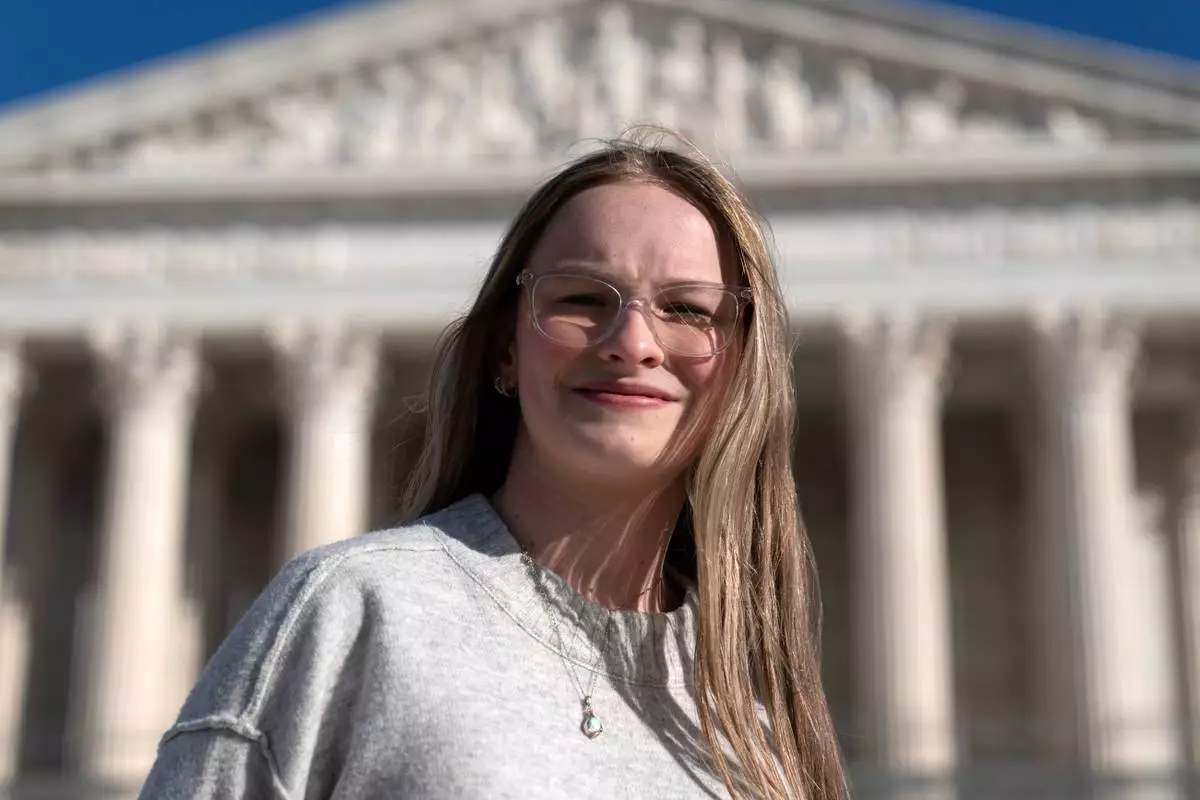
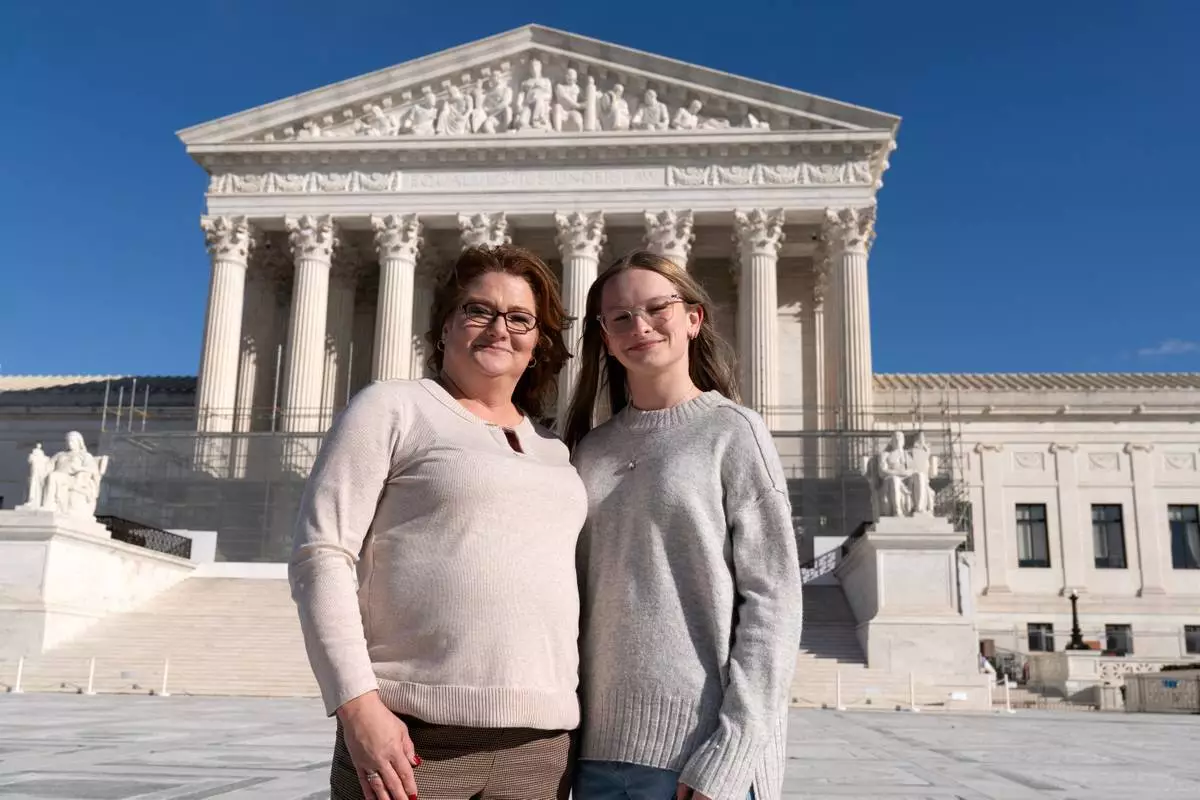
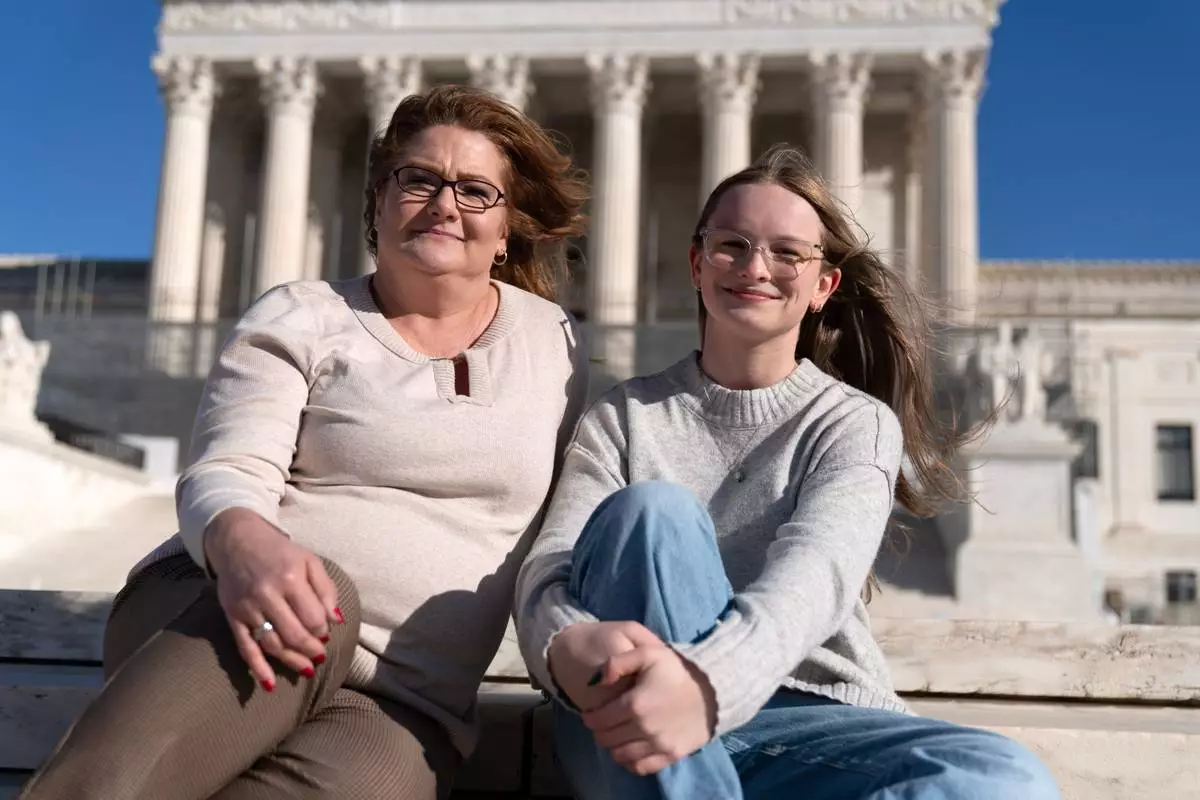
Heather Jackson, left, and Becky Pepper-Jackson pose for a photograph outside of the U.S. Supreme Court in Washington, Sunday, Jan. 11, 2026. (AP Photo/Jose Luis Magana)

Heather Jackson, left, and Becky Pepper-Jackson pose for a photograph outside of the U.S. Supreme Court in Washington, Sunday, Jan. 11, 2026. (AP Photo/Jose Luis Magana)

Heather Jackson, left, and Becky Pepper-Jackson pose for a photograph outside of the U.S. Supreme Court in Washington, Sunday, Jan. 11, 2026. (AP Photo/Jose Luis Magana)

Heather Jackson, left, and Becky Pepper-Jackson pose for a photograph outside of the U.S. Supreme Court in Washington, Sunday, Jan. 11, 2026. (AP Photo/Jose Luis Magana)

Becky Pepper-Jackson poses for a photograph outside of the U.S. Supreme Court in Washington, Sunday, Jan. 11, 2026. (AP Photo/Jose Luis Magana)

Becky Pepper-Jackson poses for a photograph outside of the U.S. Supreme Court in Washington, Sunday, Jan. 11, 2026. (AP Photo/Jose Luis Magana)

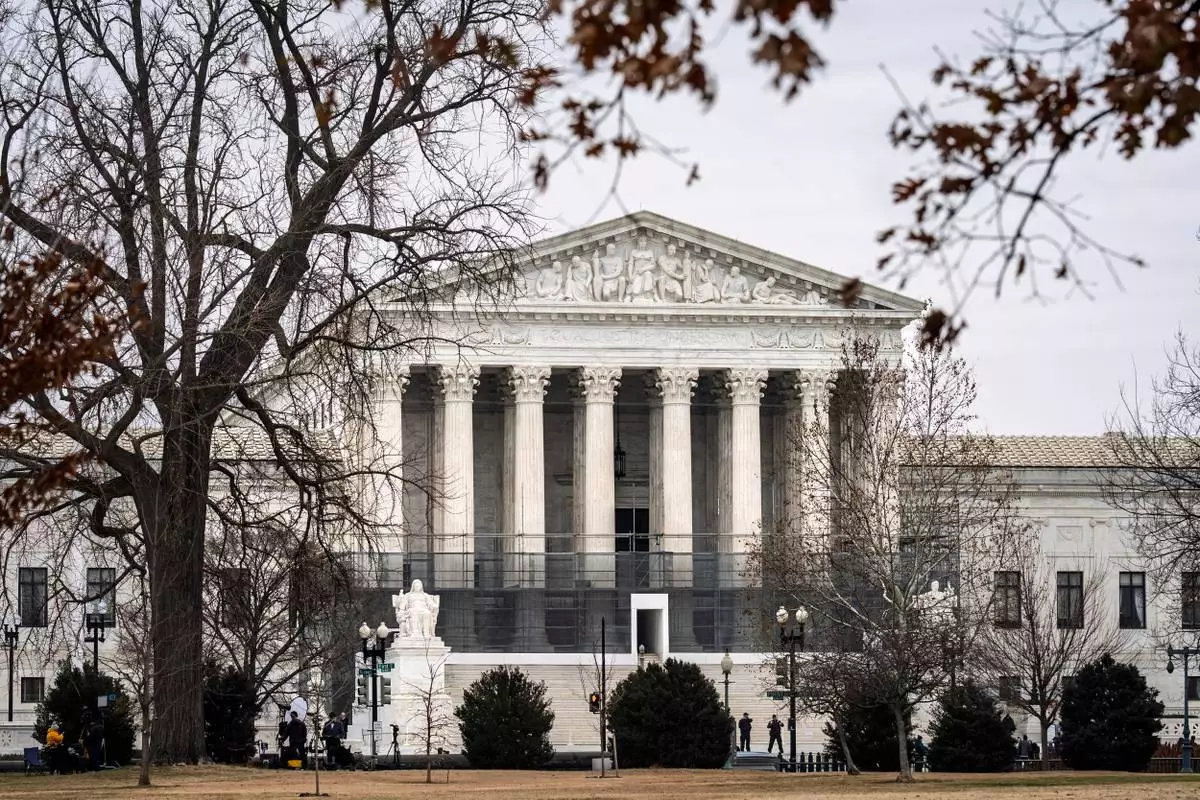
The Supreme Court stands is Washington, Friday, Jan. 9, 2026. (AP Photo/J. Scott Applewhite)

The Supreme Court stands is Washington, Friday, Jan. 9, 2026. (AP Photo/J. Scott Applewhite)

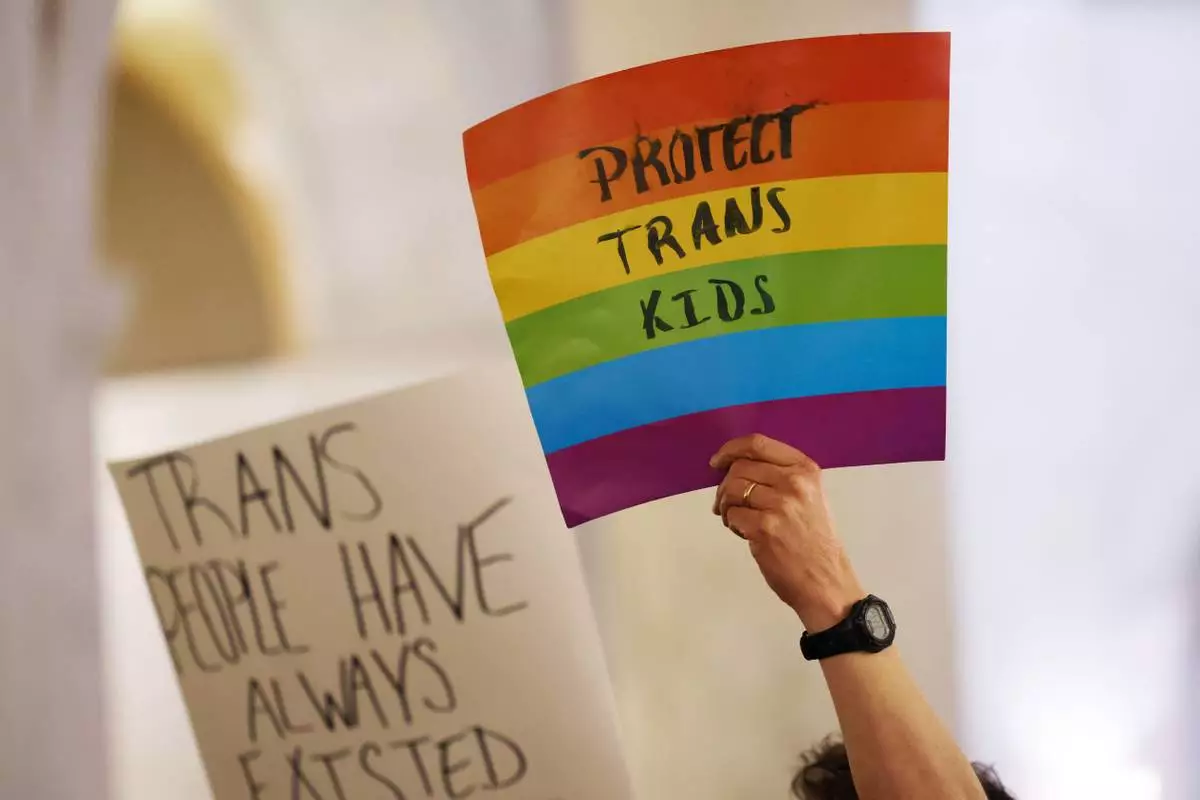
FILE - Protestors hold signs during a rally at the state capitol in Charleston, W.Va., on March 9, 2023. (AP Photo/Chris Jackson, file)

FILE - Protestors hold signs during a rally at the state capitol in Charleston, W.Va., on March 9, 2023. (AP Photo/Chris Jackson, file)

Recommended Articles