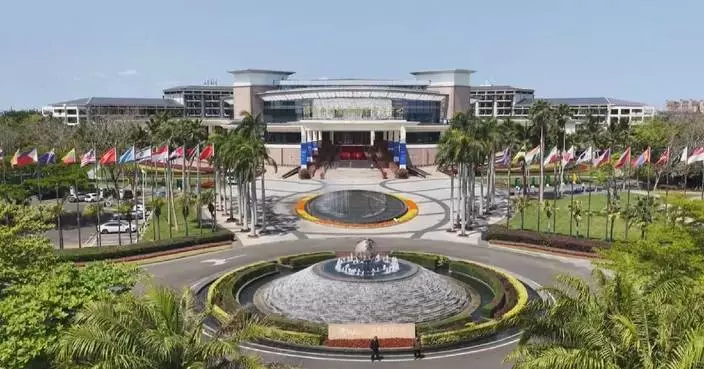
Chinese Foreign Minister Wang Yi on Wednesday met with Minister for Foreign Affairs and External Trade of the Solomon Islands Peter Shanel Agovaka on the sidelines of the Third China-Pacific Island Countries Foreign Ministers' Meeting in Xiamen City of east China's Fujian Province, reaffirming their two countries' commitment to building a community with a shared future.
Wang, also a member of the Political Bureau of the Communist Party of China Central Committee, highlighted the positive outcomes of the development of bilateral relations since the establishment of diplomatic ties between the two countries over five years ago, including deepening of political mutual trust, fruitful practical cooperation, and consistent coordination in international and regional affairs.
Wang praised the Solomon Islands as "a nation of principle, credibility and integrity," expressing China's willingness to jointly uphold multilateralism and basic norms of international relations. He expressed appreciation over the Solomon Islands' firm adherence to the one-China principle and pledged China's strengthened support for the island nation's socioeconomic development through enhanced trade, cultural exchanges and business investment.
China will support the Solomon Islands in hosting the 54th Pacific Islands Forum Leaders Meeting this year, Wang added, urging efforts from both sides to seize opportunities for elevating bilateral relations.
Agovaka acknowledged the remarkable growth in bilateral ties, expressing heartfelt gratitude for China's valuable development assistance. The Solomon Islands stands firmly with China in opposing unilateralism and protectionism practiced by the United States, he said.
Reaffirming the Solomon Islands' unwavering commitment to the one-China principle, Agovaka said this position "places us on the right side of history." He explicitly expressed opposition to Taiwan secession and separatism and voiced strong support for the Chinese government's efforts toward national reunification.
The foreign minister said his country looks forward to strengthening practical cooperation with China in education, policing, healthcare and cultural preservation, in advancing bilateral collaboration toward a shared future.
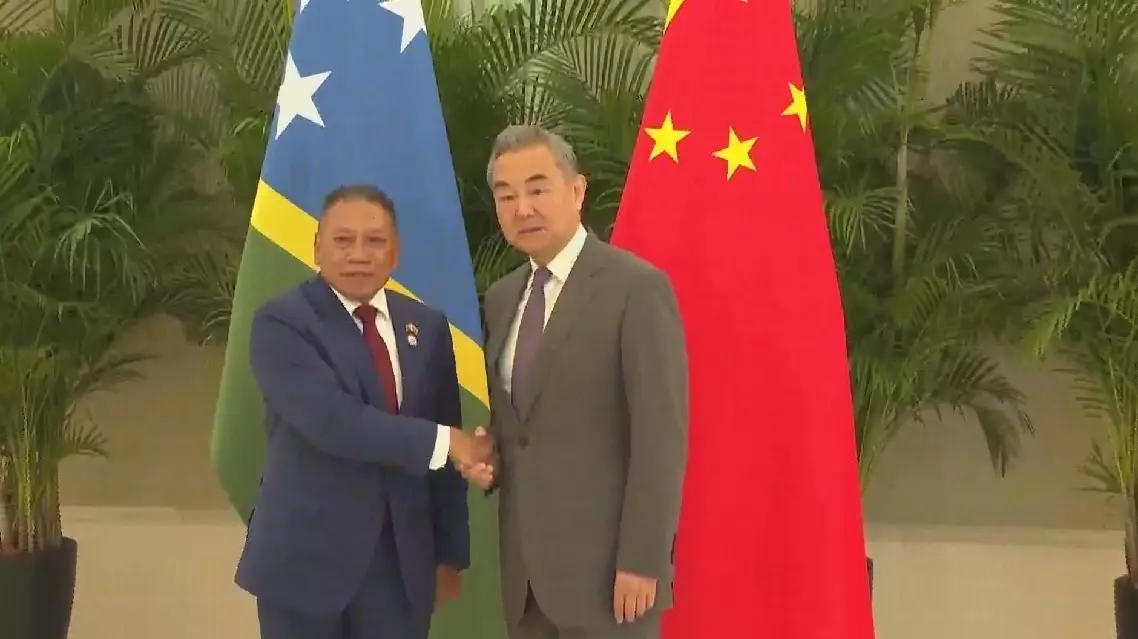
Chinese foreign minister meets counterpart of Solomon Islands on relations
A group of experts said they are expecting China's economy to post steady growth in 2026 despite an increasingly uncertain global situation that posts challenges to the country's development.
The experts made the remarks in a recent interview with China Global Television Network in south China's tech hub Shenzhen, Guangdong Province.
An official for Qianhai, a special economic zone that has become a critical growth engine for south China's Guangdong-Hong Kong-Macao Greater Bay Area city cluster, said that like other major economies around the world, China is also facing increasing challenges, but he believes the country will post steady growth in 2026.
"I mean [for] other major economies right now, they [are] kind of also facing a bit of challenges. Geopolitical risks are rising. Trade war [has] not yet completely ended. But having said that, I think [for] China, there is also a domestic-oriented economy. You know that 80 percent -- more than 80 percent -- is still domestic demand. And also we start to see some kind of, particularly in the areas like the new industries, but even in some kind of the broad-based industry, we still see the manufacturing investments keep rising despite the uncertainties, despite all these various kinds of pressures. I expect China's economy still going to remain kind of a stable piece of growth. [The growth rate of] four point five to five percent, I think, is still going to be quite achievable for the next twelve months or so," said Qu Hongbin, chief economist for Qianhai authority.
Greg Smith, chairman at AustCham South China, an institute for promoting Australia-China commercial relationship, said China's resilient partnerships with other countries around the world can help the country navigate through the uncertain global landscape.
"I think that you'd be a very brave person to bet against the Chinese economy. It's been resilient over a long period and it's gone through some fairly strong headwinds and come out with still the flag waving. Taking some of the issues that you're talking about with tariffs and the geopolitics that's in place, there's resilience in the partnership [which] is what all the countries are looking for in their trades. So the stronger relationships that you have, I think that's going to really be the bedrock to making sure that we do hit the 4.5 [growth] rate. I think all the countries around the world are looking for trusted partners to be able to work and trade with," said Smith.
Sunny Tan, chairman at the Hong Kong Productivity Council (HKPC), said he believes the rest of the world wants to be part of China's economic growth.
"I would say that China has a very, very good number -- achievable number. And I can see the big market by itself, the resilience, and also [it] is really providing a certainty in the time of uncertainty. Our country can continue to grow as planned. At the same time we can see very good interest from around the world, who wants to be part of this growth, and be wanting [who wants this growth] to be in China," Tan said.
Qin Youming, founder and CEO of Manifold Tech, a startup based in Shenzhen, said the entrepreneurs still see opportunities in globalization and companies should be quick in adapting themselves to the changing environment to survive.
"For market wise, we still see there are opportunities in globalization even though there are a lot of geopolitical matters going on. But the uniqueness of the Greater Bay Area, I think, is still unmatched, like the talents we can find here, the craftsmanship, the well experienced engineers here, is [are] still unmatched. I think even though there's uncertainty around the world, the business has to grow globally. Anyone who can adapt [themselves to] this quickly can survive," he said.
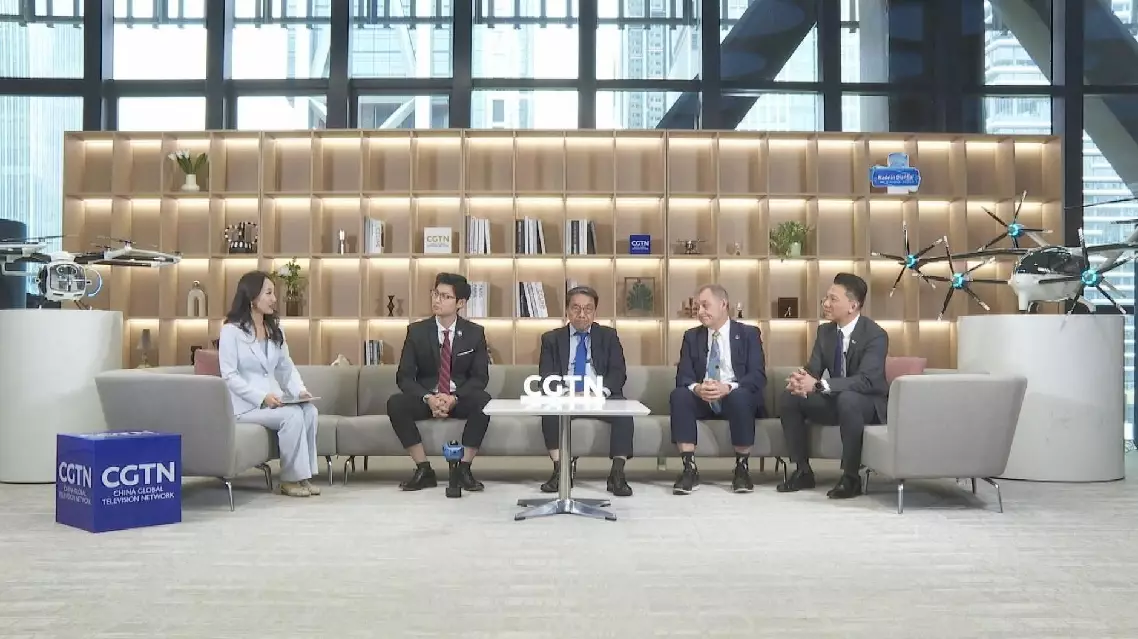
Experts expect China's economy to continue growing amid uncertainties in global landscape