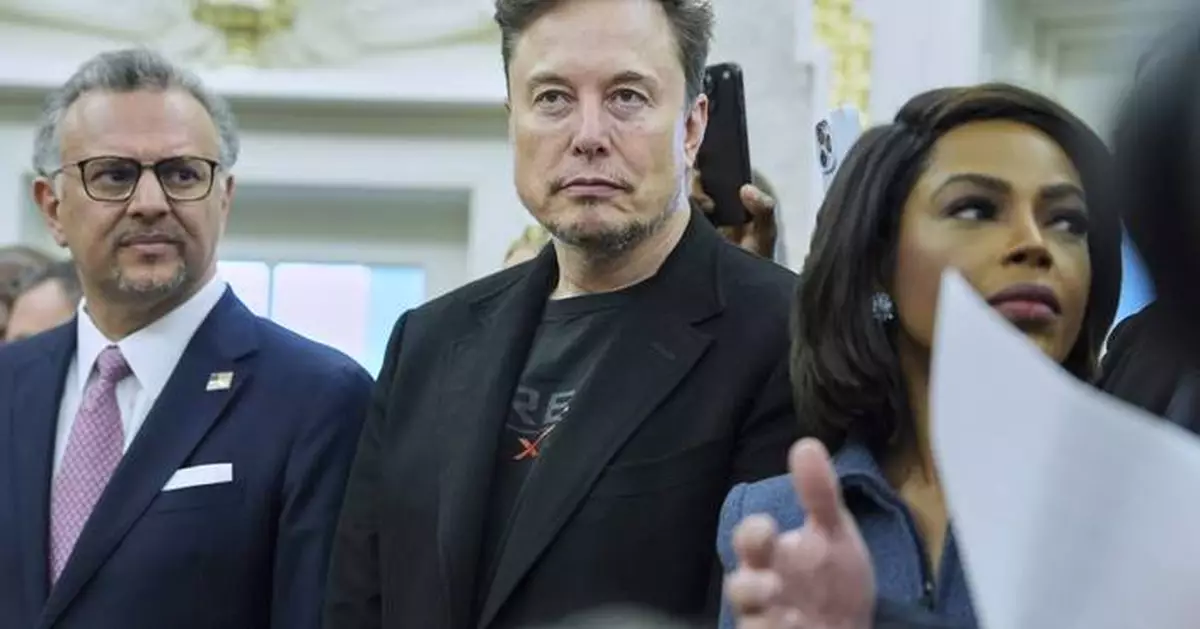
WASHINGTON (AP) — Elon Musk is leaving his government role as a top adviser to President Donald Trump after spearheading efforts to reduce and overhaul the federal bureaucracy.
His departure, announced Wednesday evening, marks the end of a turbulent chapter that included thousands of layoffs, the evisceration of government agencies and reams of litigation. Despite the upheaval, the billionaire entrepreneur struggled in the unfamiliar environment of Washington, and he accomplished far less than he hoped.
He dramatically reduced his target for cutting spending — from $2 trillion to $1 trillion to $150 billion — and increasingly expressed frustration about resistance to his goals. Sometimes he clashed with other top members of Trump's administration, who chafed at the newcomer's efforts to reshape their departments, and he faced fierce political blowback for his efforts.
Musk's role working for Trump was always intended to be temporary, and he had recently signaled that he would be shifting his attention back to running his businesses, such as the electric automaker Tesla and the rocket company SpaceX.
But administration officials were often vague about when Musk would step back from his position spearheading the Department of Government Efficiency, known as DOGE, and he abruptly revealed that he was leaving in a post on X, his social media website.
“As my scheduled time as a Special Government Employee comes to an end, I would like to thank President @realDonaldTrump for the opportunity to reduce wasteful spending,” he wrote. “The @DOGE mission will only strengthen over time as it becomes a way of life throughout the government.”
A White House official, who requested anonymity to talk about the change, confirmed Musk's departure.
Musk announced his decision one day after CBS released part of an interview in which he criticized the centerpiece of Trump’s legislative agenda by saying he was “disappointed” by what the president calls his “big beautiful bill.”
The legislation includes a mix of tax cuts and enhanced immigration enforcement. Musk described it as a “massive spending bill” that increases the federal deficit and “undermines the work” of his Department of Government Efficiency, known as DOGE.
“I think a bill can be big or it could be beautiful,” Musk said. “But I don’t know if it could be both.”
Trump, speaking in the Oval Office on Wednesday, defended his agenda by talking about the delicate politics involved with negotiating the legislation.
“I’m not happy about certain aspects of it, but I’m thrilled by other aspects of it,” he said.
Trump also suggested that more changes could be made.
“We’re going to see what happens,” he said. “It’s got a way to go.”
Republicans recently pushed the measure through the House and are debating it in the Senate.
Musk's concerns are shared by some Republican lawmakers. “I sympathize with Elon being discouraged,” said Wisconsin Sen. Ron Johnson.
Speaking at a Milwaukee Press Club event on Wednesday, Johnson added that he was “pretty confident” there was enough opposition “to slow this process down until the president, our leadership, gets serious” about reducing spending. He said there was no amount of pressure Trump could put on him to change his position.
Speaker Mike Johnson has asked senators to make as few changes to the legislation as possible, saying that House Republicans reached a “very delicate balance” that could be upended with major changes. The narrowly divided House will have to vote again on final passage once the Senate alters the bill.
On Wednesday, Johnson thanked Musk for his work and promised to pursue more spending cuts in the future, saying “the House is eager and ready to act on DOGE’s findings.”
The White House is sending some proposed rescissions, a mechanism used to cancel previously authorized spending, to Capitol Hill to solidify some of DOGE’s cuts. A spokesperson for the Office of Management and Budget said the package will include $1.1 billion from the Corporation of Public Broadcasting, which funds NPR and PBS, and $8.3 billion in foreign assistance.
Musk occasionally seemed chastened by his experience working in government.
“The federal bureaucracy situation is much worse than I realized,” he told The Washington Post. “I thought there were problems, but it sure is an uphill battle trying to improve things in D.C., to say the least.”
He also recently said that he'll reduce his political spending, because “I think I’ve done enough.”
Musk had previously been energized by the opportunity to reshape Washington. After putting at least $250 million behind Trump's candidacy, he wore campaign hats in the White House, held his own campaign rallies, and talked about excessive spending as an existential crisis. He often tended to be effusive in his praise of Trump.
“The more I’ve gotten to know President Trump, the more I like the guy,” Musk said in February. “Frankly, I love him.”
Trump repaid the favor, describing Musk as “a truly great American.” When Tesla faced declining sales, he turned the White House driveway into a makeshift showroom to illustrate his support.
It's unclear what, if any, impact that Musk's comments about the bill would have on the legislative debate, especially given his departure from the administration. During the transition period, when his influence was on the rise, he helped whip up opposition to a spending measure as the country stood on the brink of a federal government shutdown.
His latest criticism could embolden Republicans who want bigger spending cuts. Republican Utah Sen. Mike Lee reposted a Fox News story about Musk's interview while also adding his own take on the measure, saying there was “still time to fix it.”
“The Senate version will be more aggressive,” Lee said. “It can, it must, and it will be. Or it won’t pass.”
Only two Republicans — Reps. Warren Davidson of Ohio and Thomas Massie of Kentucky — voted against the bill when the House took up the measure last week.
Davidson took note of Musk’s comments on social media.
“Hopefully, the Senate will succeed with the Big Beautiful Bill where the House missed the moment,” he wrote. “Don’t hope someone else will cut deficits someday, know it has been done this Congress.”
The Congressional Budget Office, in a preliminary estimate, said the tax provisions would increase federal deficits by $3.8 trillion over the decade, while the changes to Medicaid, food stamps and other services would reduce spending by slightly more than $1 trillion over the same period.
House Republican leaders say increased economic growth would allow the bill to be deficit-neutral or deficit-reducing, but outside watchdogs are skeptical. The Committee for a Responsible Federal Budget estimates the bill would add $3 trillion to the debt, including interest, over the next decade.
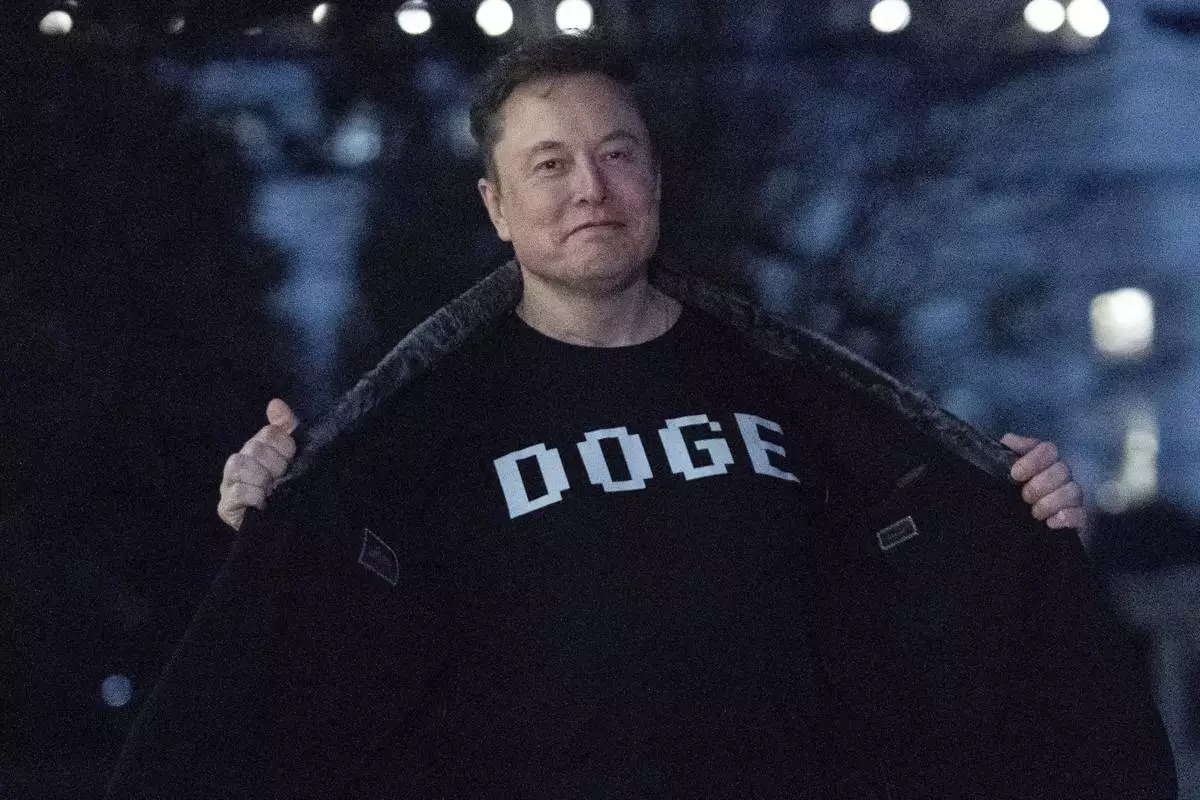
FILE - Elon Musk flashes his T-shirt that reads "DOGE" to the media as he walks on the South Lawn of the White House, in Washington, March 9, 2025. (AP Photo/Jose Luis Magana, File)
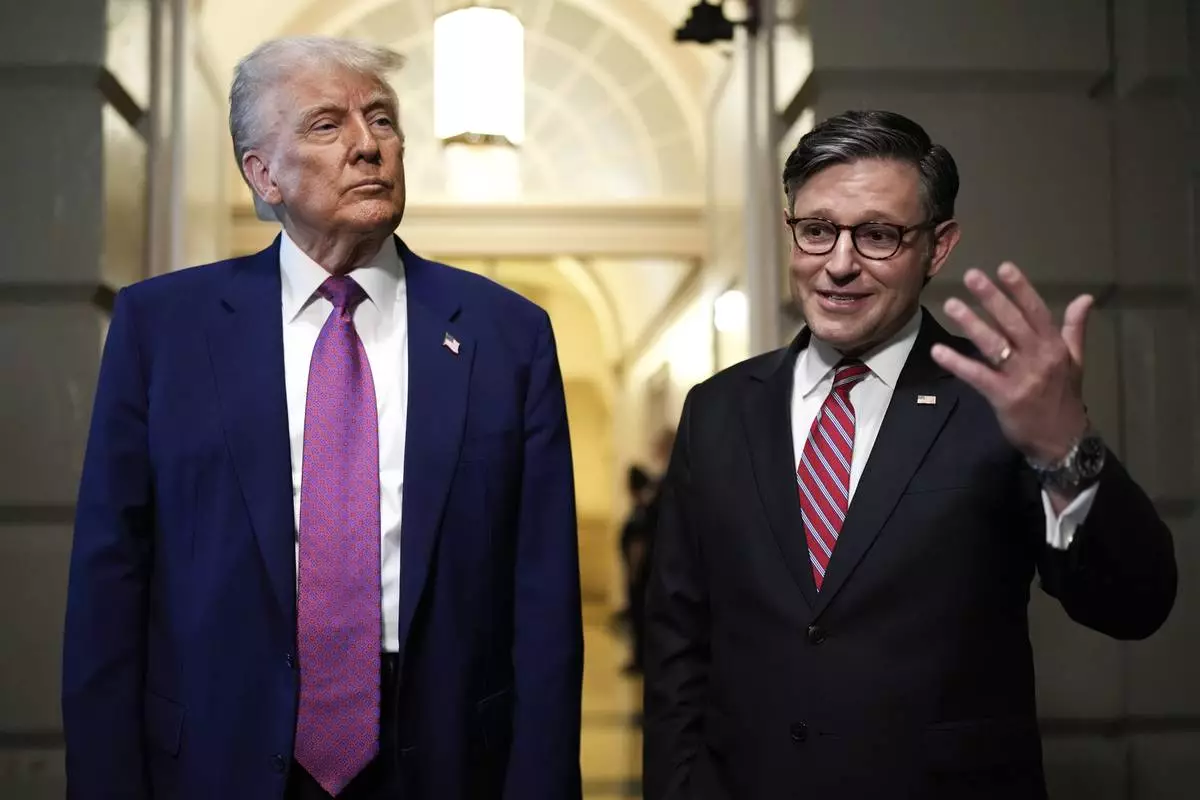
President Donald Trump and Speaker of the House Mike Johnson, R-La., speak to reporters after departing a House Republican conference meeting, Tuesday, May 20, 2025, at the U.S. Capitol in Washington. (AP Photo/Julia Demaree Nikhinson)
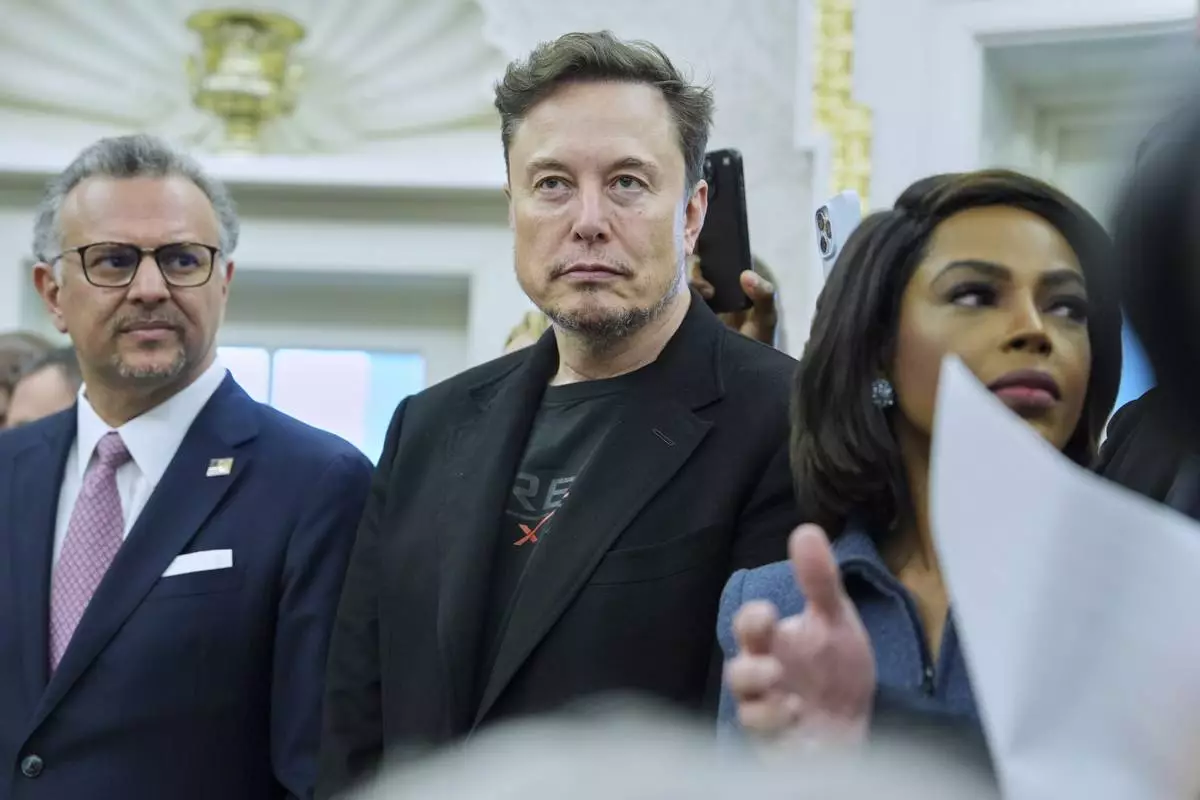
Elon Musk looks on as President Donald Trump meets South African President Cyril Ramaphosa in the Oval Office of the White House, Wednesday, May 21, 2025, in Washington. (AP Photo/Evan Vucci)