Chinese Foreign Minister Wang Yi co-chaired the Third China-Pacific Island Countries Foreign Ministers' Meeting with Kiribati's President and Foreign Minister Taneti Maamau on Wednesday in Xiamen, east China's Fujian Province.
Wang, also a member of the Political Bureau of the Communist Party of China Central Committee, said that this year marks the 50th anniversary of the beginning of diplomatic relations between China and the Pacific Island countries, and noted that China has always regarded the Pacific Island countries as its good friends, partners and brothers.
Wang said that under the strategic guidance of their leaders, the comprehensive strategic partnership between China and the Pacific Island countries has shown new vitality, achieved new accomplishments and reached a new level.
Wang made a six-point suggestion on building a China-Pacific Island countries community with a shared future: upholding mutual respect, prioritizing development cooperation, maintaining people-centered governance, promoting exchange and mutual learning, safeguarding equity and justice, and maintaining solidarity in challenging times.
Wang said that China firmly believes that peace, development, cooperation and mutual benefits are the only correct choices when faced with profound changes in the world, and the trajectory of history.
The foreign ministers from the Pacific Island countries expressed their gratitude to China for its valuable support over a long period of time. They emphasized that their cooperation with China is based on mutual respect, mutual trust, mutual understanding and sovereign equality, and that it has been the independent decision of these island countries, conforms to their own fundamental interests, and is conducive to maintaining regional peace, stability, development and prosperity.
They unanimously reaffirmed their commitment to the one-China principle, noting that they are looking forward to deepening cooperation with China on infrastructure, climate change and green development, to promoting the high-quality joint construction of the Belt and Road, and to working together to build a peaceful, prosperous Pacific region.
All parties at the meeting unanimously adopted the "Joint Statement of the Third China-Pacific Island Countries Foreign Ministers' Meeting."
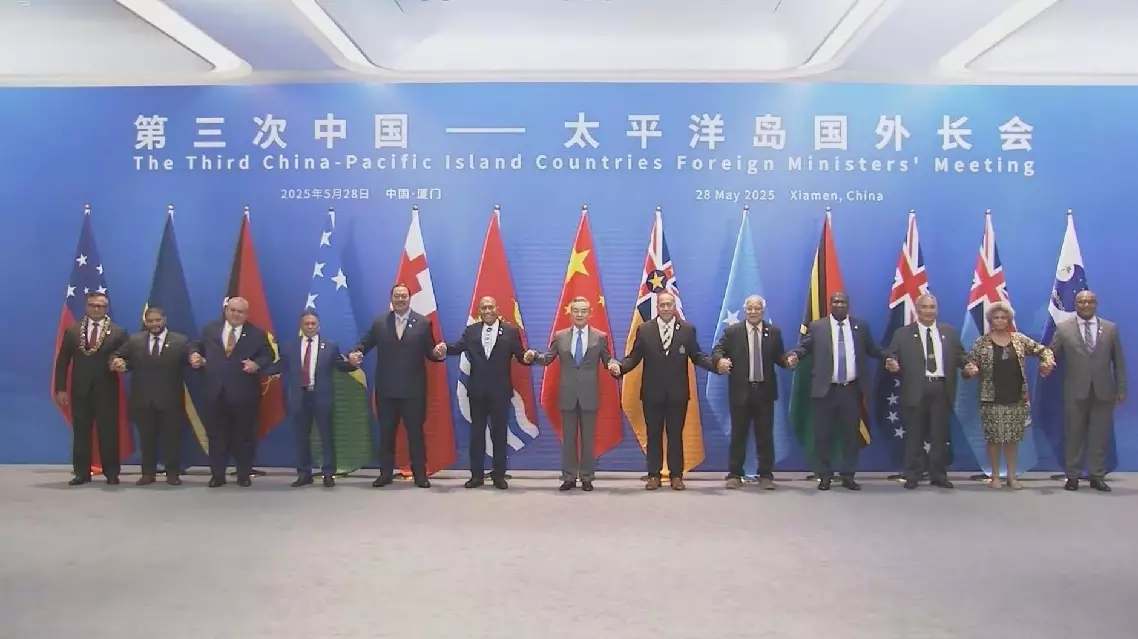
Foreign ministers from China, Pacific Island countries meet in Xiamen
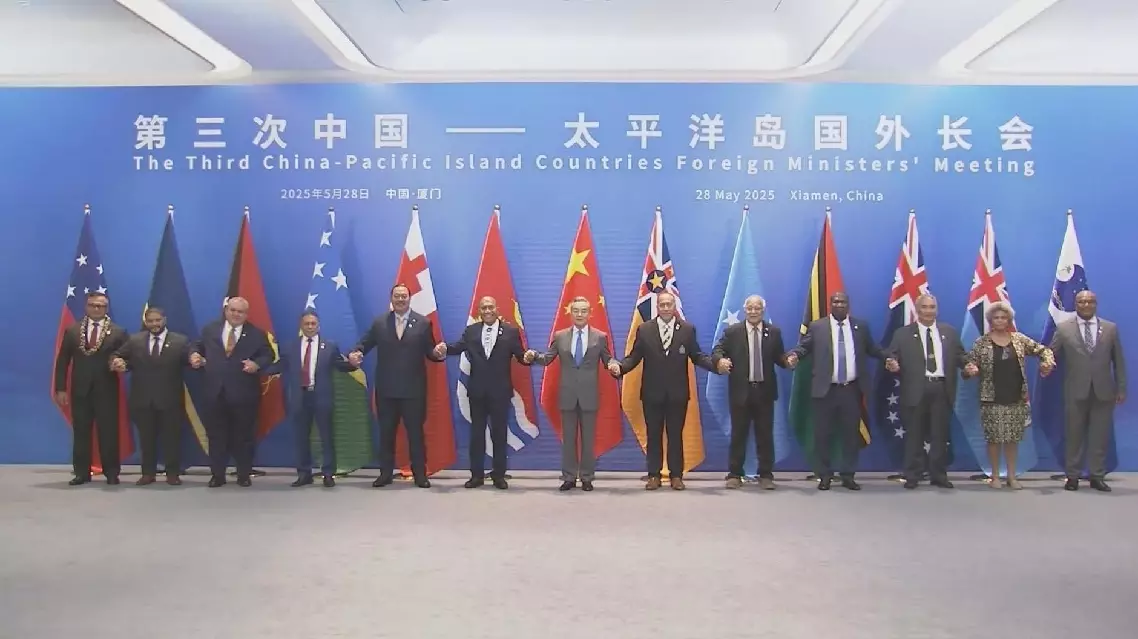
Foreign ministers from China, Pacific Island countries meet in Xiamen
China’s transport authorities mobilized rail, road, air and waterway resources on Tuesday, the final day of the five‑day May Day holiday, to manage the peak return flow as passenger volumes surged nationwide.
The national railway system expects 23 million passenger trips on the day, with operators adding 2,225 extra trains and deploying capacity on popular routes and peak hours to handle the return flow from smaller cities to major hubs.
In Zhengzhou, central China's Henan Province, 134 trains have been temporarily added for high-demand directions including the Beijing-Tianjin-Hebei region, the Yangtze River Delta, and the Guangdong-Hong Kong-Macao Greater Bay Area.
"Railway return travel peaks today. In light of short stops and high passenger volumes, we have strengthened coordination with intermediate stations and offered guidance to passengers for smooth boarding and alighting to prevent crowding and stampedes," said Ji Yudi, a conductor of China Railway Zhengzhou Group.
Regional operators in Beijing, Chengdu and other cities have also proactively coordinated with local transit authorities to extend bus and subway operating hours, increase nighttime service frequency, and boost taxi and ride-hailing availability to ensure seamless transfers for late-arriving passengers.
With respect to highways, the national highway network is projected to record approximately 61 million vehicle trips on Tuesday. The peak traffic window is between 16:00 and 18:00, with congestion and slow-moving traffic likely around major city entry and exit points, as well as airport expressways in major cities like Beijing, Shanghai, Guangzhou and Chengdu.
To ease holiday congestion, traffic police in south China's Guangdong Province have rolled out tidal lanes and flow control measures at 24 key highway sections in nine cities.
"Using a highway interconnect system, we have conducted remote flow diversion. During this morning's peak return period, traffic efficiency on the Erenhot-Guangzhou Expressway improved significantly, showing no sign of congestion," said Dai Zhouwu, a local traffic police officer.
By water, an estimated 1.035 million passenger trips are expected to be made across the country on Tuesday, marking a 1.4-percent increase year on year.
To ensure smooth strait crossing from south China's Hainan Province, the maritime authorities in Zhanjiang City, south China's Guangdong Province have urged operators to supplement fixed sailings with extra voyages and optimized crew rotations to meet surging vessel demand.
Meanwhile, China's civil aviation sector is projected to carry 2.3 million passengers on Tuesday.
The Chengdu Shuangliu International Airport, one of the country's busiest airports in southwest China's Sichuan Province, are offering free luggage pick-up and delivering services to passengers arriving from Beijing, Shanghai, Guangzhou, and Shenzhen.
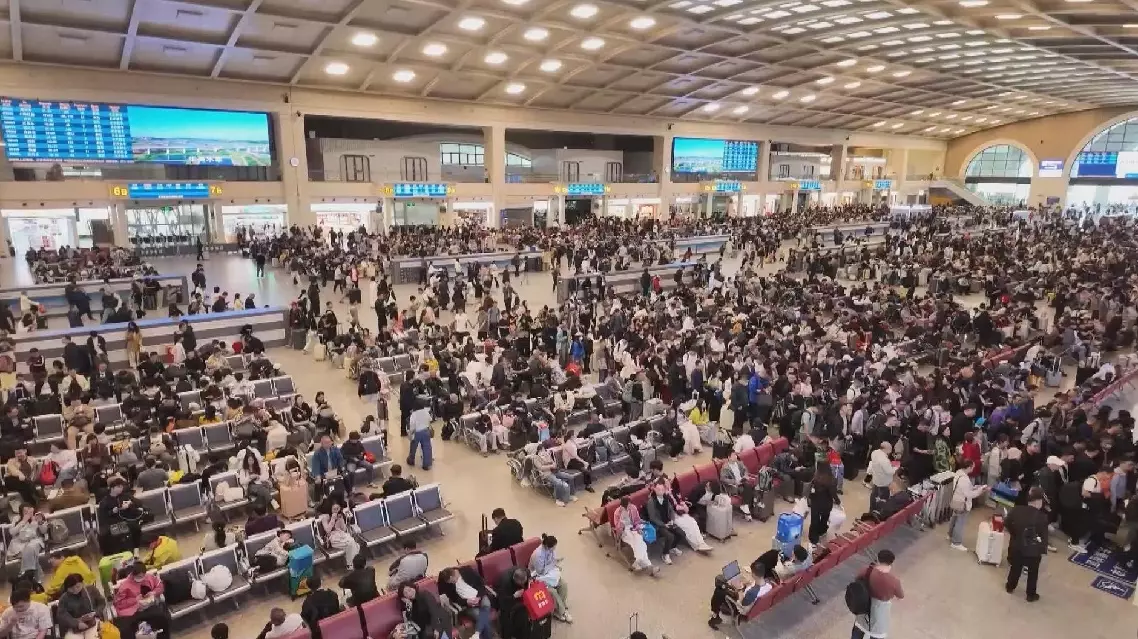
China’s transport network braces for record May Day return traffic