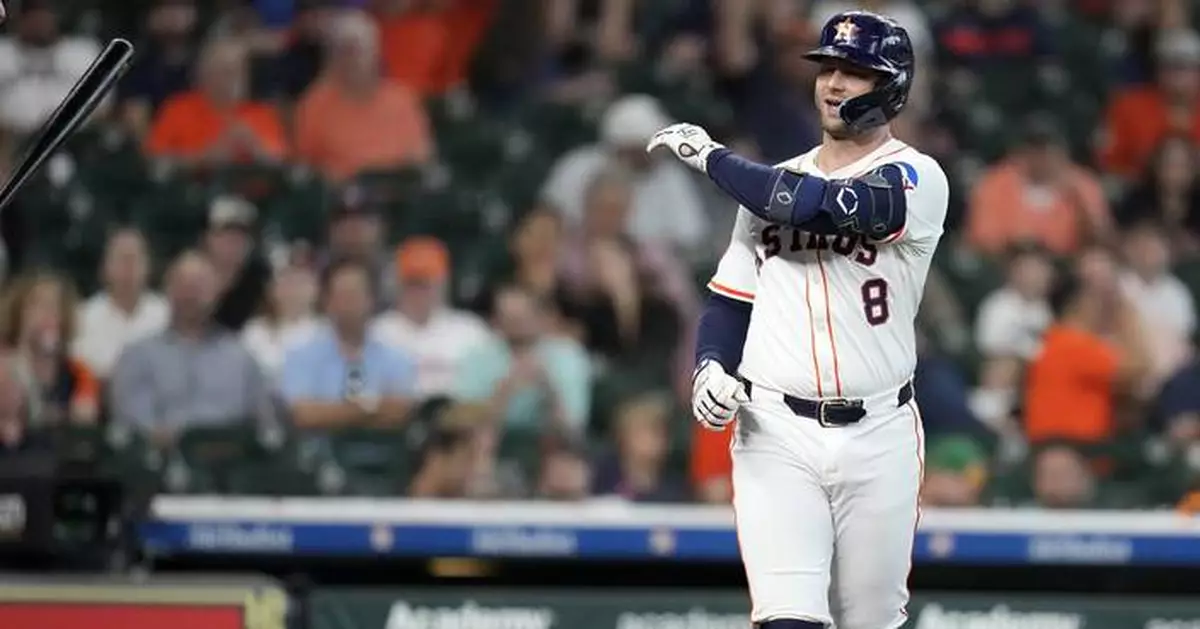
HOUSTON (AP) — Astros first baseman Christian Walker left Wednesday's game against the Athletics after being hit by a pitch on his right hand.
Manager Joe Espada said that he was hit on the top of his hand near his knuckles and that X-rays were negative.
“That's a good sign,” Espada said. “So we'll see how he feels tomorrow.”
Walker was hit by a 96 mph pitch from Luis Severino in the fourth inning. He writhed in pain for a few seconds before trotting to first base, where he was examined by a trainer.
He remained in the game and scored on a two-out single by Cam Smith.
Walker played defense in the next two innings before being replaced by pinch-hitter Mauricio Dubón in the bottom of the sixth.
“He played defense and once he came back for his at-bat, we asked him to grip a bat and he wasn't very comfortable doing that,” Espada said.
AP MLB: https://apnews.com/MLB
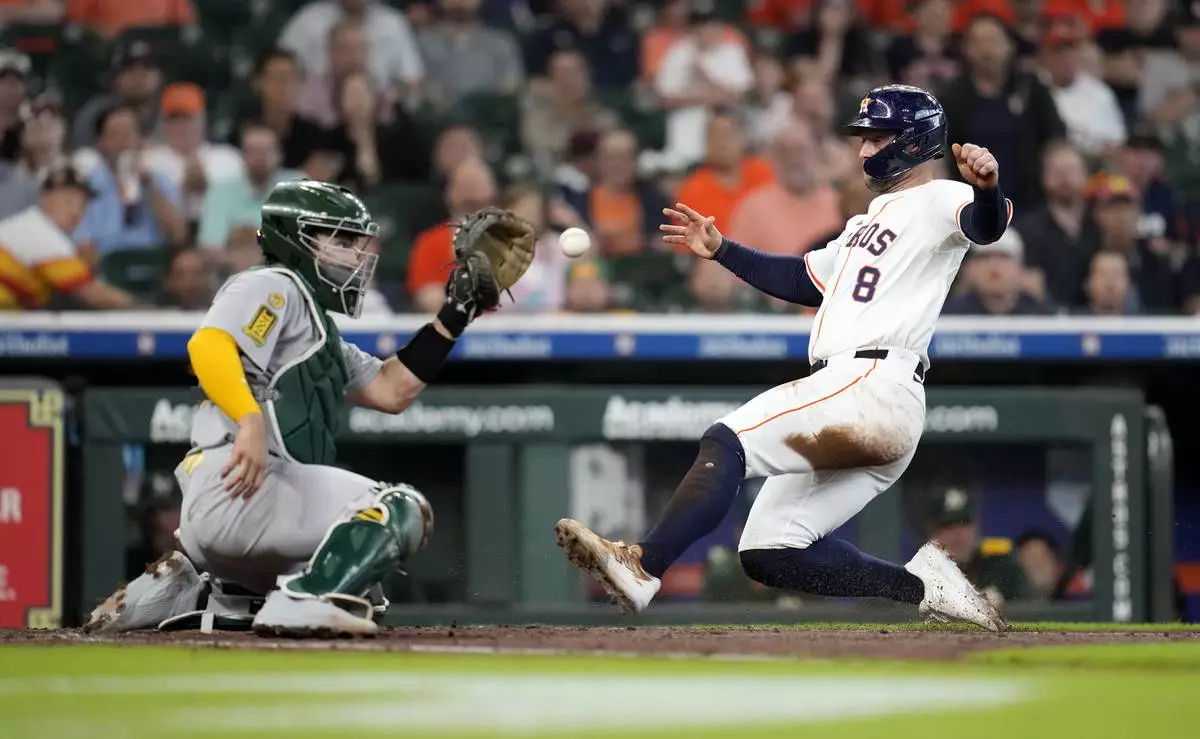
Houston Astros' Christian Walker (8) scores a run on Cam Smith's RBI single against Athletics starting pitcher Luis Severino during the fourth inning of a baseball game, Wednesday, May 28, 2025, in Houston. (AP Photo/Karen Warren)
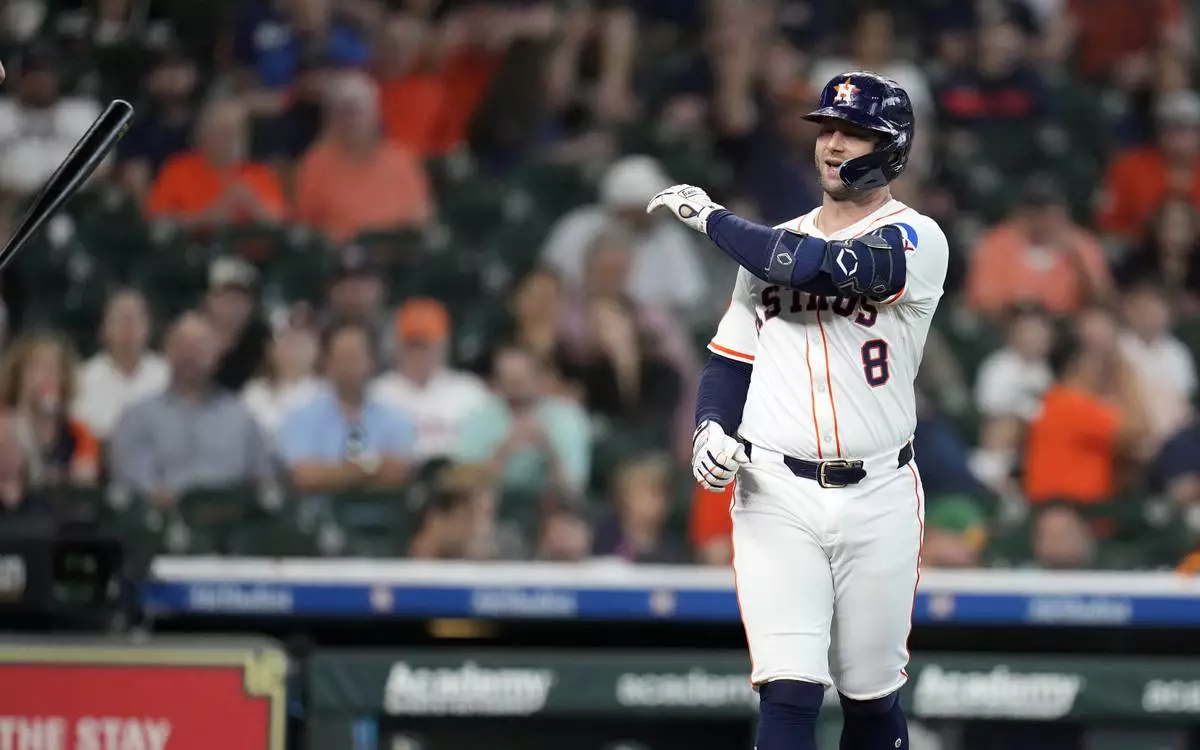
Houston Astros' Christian Walker (8) tosses the bat after being hit by a pitch from Athletics starting pitcher Luis Severino during the fourth inning of a baseball game, Wednesday, May 28, 2025, in Houston. (AP Photo/Karen Warren)
DETROIT (AP) — Sixteen states and the District of Columbia are suing the Trump administration for what they say is the unlawful withholding of over $2 billion in funding for two electric vehicle charging programs.
A federal lawsuit filed Tuesday in Seattle is the latest legal battle that Democratic-led states are pursuing over funding for EV charging infrastructure that they say was obligated to them by Congress under former President Joe Biden, but that the Department of Transportation and Federal Highway Administration are “impounding.”
“The Trump administration’s illegal attempt to stop funding for electric vehicle infrastructure must come to an end,” California Attorney General Rob Bonta said in a release. “This is just another reckless attempt that will stall the fight against air pollution and climate change, slow innovation, thwart green job creation, and leave communities without access to clean, affordable transportation."
President Donald Trump's administration has been hostile to EVs and has dismantled several Biden-era policies friendly to cleaner cars and trucks in favor of policies that align with Trump’s oil and gas industry agenda.
Transportation Department officials did not immediately respond to request for comment.
The Trump administration in February ordered states to halt spending money for EV charging that was allocated in the bipartisan infrastructure law passed under the previous administration.
Several states filed a lawsuit in May against the administration for withholding the funding from the $5 billion National Electric Vehicle Infrastructure program for a nationwide charging buildout. A federal judge later ordered the administration to release much of the funding for chargers in more than a dozen states.
Transportation Secretary Sean Duffy later issued revised guidance intended to streamline funding applications for states and make charger deployment more efficient. At least four states — Georgia, Illinois, Maryland, and Wisconsin — have announced awards under the vehicle infrastructure program, according to Loren McDonald, chief analyst at EV data firm Chargeonomics, who tracks the state awards.
Tuesday's separate lawsuit, filed in the U.S. District Court for the Western District of Washington, addresses withholding of funds for two other programs: $1.8 billion for the Charging and Fueling Infrastructure Grant program, as well as about $350 million for the Electric Vehicle Charger Reliability and Accessibility Accelerator program.
The lawsuit is led by attorneys general from California and Colorado, joined by the attorneys general of Arizona, Delaware, Illinois, Maryland, Massachusetts, Michigan, New Jersey, New York, Oregon, Rhode Island, Vermont, Washington, Wisconsin and the District of Columbia, and the governor of Pennsylvania. All are Democrats.
After returning to office in January, Trump immediately ordered an end to what he has called Biden's “EV mandate.” While Biden targeted for half of new vehicle sales in the U.S. to be electric by 2030, his policies did not force American consumers to buy EVs or automakers to sell them.
Biden did set stringent tailpipe emissions and fuel economy rules in an effort to encourage more widespread EV adoption, as the auto industry would have had to meet both sets of requirements with a greater number of EVs in their sales mix. Under the Biden administration, consumers could also receive up to $7,500 in tax incentives off the price of an EV purchase, a program that congressional Republicans ended last fall.
The Trump administration has proposed rolling back both tailpipe emissions rules and the gas mileage standards and eliminated fines to automakers for not meeting those standards.
Trump has also repeated incorrect information about the status of the federal charging programs; without all of the funds available, only a fraction of what was obligated has been spent so far.
“We had to have an electric car within a very short period of time, even though there was no way of charging them and lots of other things,” Trump said in a Dec. 3 press conference about the proposed weakened fuel economy rules. “In certain parts of the Midwest, they spent -- to build nine chargers they spent $8 billion. So, that wasn’t working out too well.”
The lawsuit comes amid those regulatory changes and as the pace of EV sales have slowed in the U.S. as mainstream buyers remain concerned about both charging availability and the price of the vehicles.
New EVs sold for an average of $58,638 last month, compared with $49,814 for a new vehicle overall, according to auto buying resource Kelley Blue Book.
Automakers, meanwhile, have responded to consumers accordingly.
Earlier this week, Ford Motor Co. announced it was pivoting away from its once-ambitious, multi-billion dollar electrification strategy in lieu of more hybrid-electric and more fuel-efficient gasoline-powered vehicles.
In the spring, Honda Motor Co. also said it would take a significant step back from its EV efforts.
Associated Press writer Matthew Daly in Washington contributed to this report.
Alexa St. John is an Associated Press climate reporter. Follow her on X: @alexa_stjohn. Reach her at ast.john@ap.org.
Read more of AP’s climate coverage.
The Associated Press’ climate and environmental coverage receives financial support from multiple private foundations. AP is solely responsible for all content. Find AP’s standards for working with philanthropies, a list of supporters and funded coverage areas at AP.org.
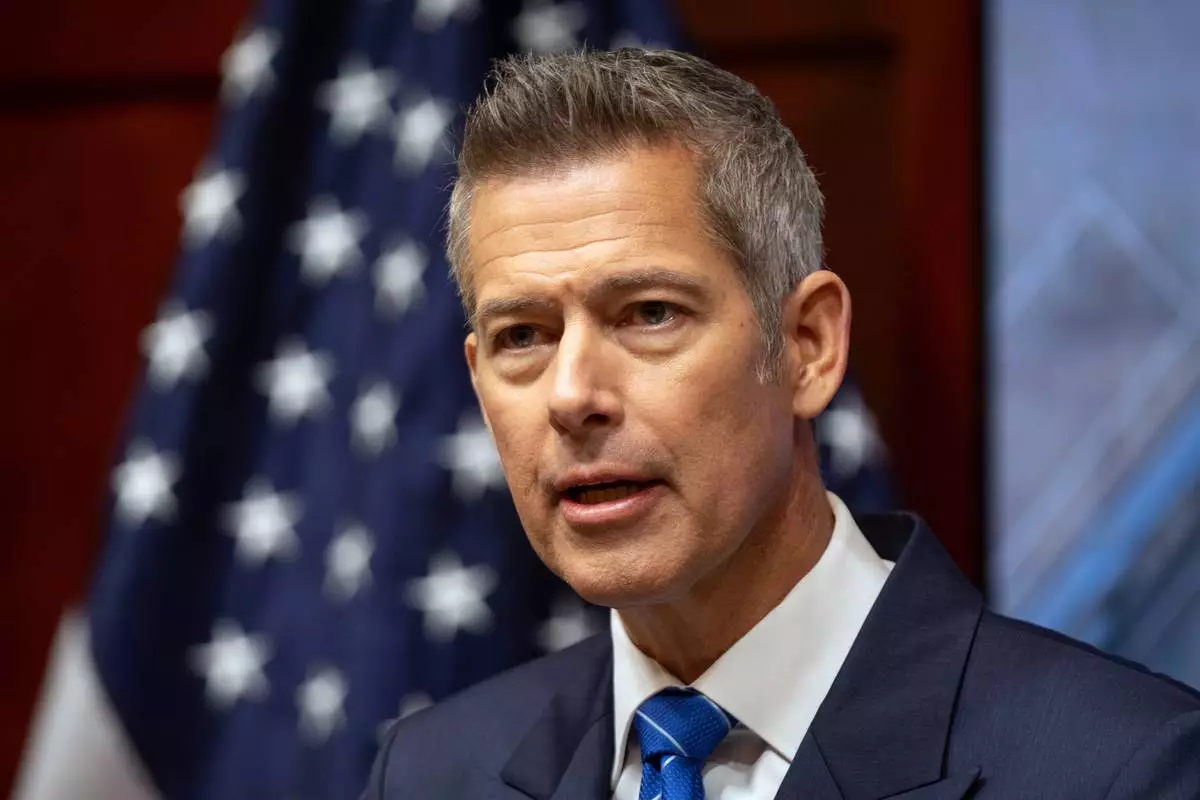
Transportation Secretary Sean Duffy speaks during a news conference at the Department of Transportation in Washington, Friday, Dec. 12, 2025. (AP Photo/Mark Schiefelbein)