KONGSBERG, Norway (AP) — In 1944, Norwegian resistance fighters in the town of Kongsberg blew up a factory making cannons for occupying Nazi German forces during World War II.
More than 80 years later, the municipality could once again be a target for sabotage and is preparing for war.
Click to Gallery
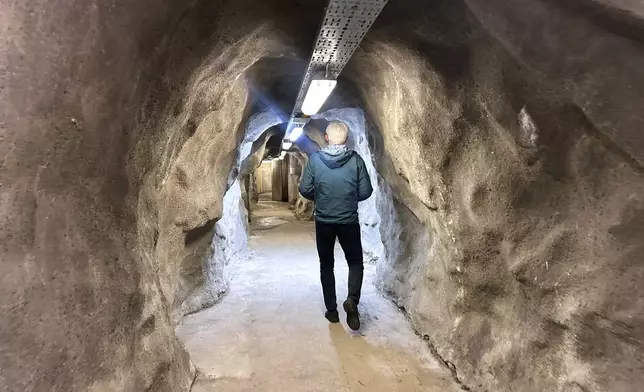
Odd John Resser, Emergency Planning Officer for the municipality, walks in the tunnel of a Cold War era underground shelter which was dusted off after Russia's invasion of Ukraine, in Kongsberg, Norway Thursday, May 8, 2025. (AP Photo/Emma Burrows)
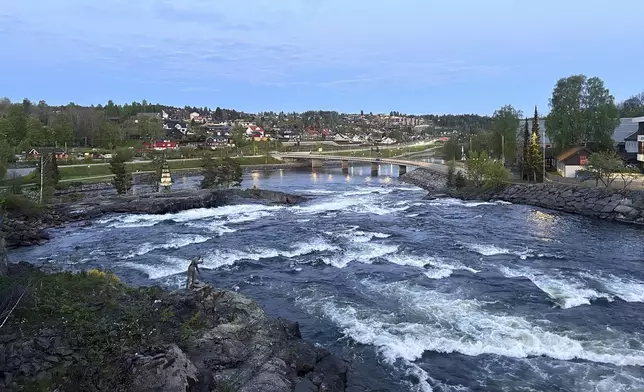
The town of Kongsberg, which is the headquarters of a defense company which makes missiles for Ukraine and is seen as a potential target for sabotage, is seen in Norway Wednesday, May 7, 2025. (AP Photo/Emma Burrows)

The above-ground entrance to a public shelter, which can fit around 450 people in case of crisis or war, is seen in Kongsberg, Norway Thursday, May 8, 2025. (AP Photo/Emma Burrows)

Odd John Resser, Emergency Planning Officer for the municipality, walks in an underground shelter which was previously used by a youth club, in Kongsberg, Norway Thursday, May 8, 2025. (AP Photo/Emma Burrows)
The local authorities have dusted off Cold War-era bomb shelters, installed a new satellite communications system and are working with the military on plans to help a deployment of Western forces in case of conflict.
“The lesson we learned from Ukraine is that everybody pitched in,” said Odd John Resser, Kongsberg’s Emergency Planning Officer, noting breweries that pivoted to making Molotov cocktails, local authorities that built schools in shelters and weapons factories which ramped up production.
Across the Nordic nations, governments are boosting defense spending, reassessing security and pushing the concept of total defense. It’s an approach which mobilizes the whole of society to defend against military and non-military threats.
As Moscow wages war in Ukraine, Western officials are accusing Russia of being behind a campaign of sabotage, arson and cyberattacks and there are jitters across the continent about whether Europe can rely on the U.S. as a partner.
The Norwegian government published its first national security strategy in May, saying the country is facing its most serious security situation since World War Two.
“After decades of peace,” it warned, “a new era has begun for Norway and for Europe."
“What is now happening in Ukraine has to be a wake-up call for all and we must strengthen our defense to prevent anything like that from happening to us,” Norway’s Prime Minister Jonas Gahr Støre told The Associated Press.
Norway announced in January that it plans to start building bomb shelters in new buildings after halting the practice in 1998.
The Swedish government appointed its first minister for civil defense in 2022, shortly after Russia invaded Ukraine. Residents aged 16 to 70 are required to serve in the event or threat of war, either in the military or helping to provide rescue, firefighting, healthcare or other services.
Finland's civil defense shelters are the envy of the Nordics and can fit around 86% of the Finnish population. One public shelter in Helsinki can fit 6,000 people, is designed to withstand the fallout from a nuclear attack and is in an almost constant state of readiness with beds and sinks tucked away behind blast doors and an underground hockey pitch.
Norway and some other Nordic nations also tell residents to have enough food and water stored for seven days.
“How would you and your nearest family manage if the electricity supply was cut off for a longer period? What would you do if the water supply failed?” the Norwegian handbook asks.
AP spoke to 11 people in Kongsberg and the majority said they had some form of supplies. While most didn’t have a stockpile for seven days – and some had nothing at all – two people said they could probably survive for more than a week.
“Russia is very close to Norway and you don’t know what’s going to happen. I would rather be prepared than not prepared,” said Katina Bakke, who works in a sports shop in Kongsberg.
Although Norwegian authorities are not expecting an imminent conflict, if war comes to Northern Europe, Kongsberg could be critical.
The municipality, 85 kilometers (52 miles) southwest of the Norwegian capital Oslo with a population of around 27,000 people, is the headquarters of the Kongsberg Group, which makes high-precision weapons currently used in Ukraine. The company opened a new factory in 2024, ramping up production of advanced missiles used by multiple European countries.
The town could also play host to troops if there is a conflict. In May, local authorities across the region met with the military to plan support for Western troops with logistics and healthcare in the event of a deployment.
“If the allies are coming to Norway, either staying, training, doing war work or in transit towards the east, we will have a big task for the whole community to support that,” Resser said.
By readying for the worst, Resser said, the municipality also prepares for other — more likely — threats such as a pandemic, extreme weather or power outages such as the one that immobilized Spain and Portugal in April.
Authorities in Kongsberg were not always so proactive but a flood in 2007 and an exercise simulating a four-day power disruption in 2016 made them realize they needed to step up.
They did a risk assessment, as obliged by law, identified more than 30 vulnerabilities and started spending money on contingency plans.
Back-up power generators were bought for the town hall, medical facilities and old people’s homes as well as a satellite link to be able to call for help. In case of a cyberattack, the local health authorities print and file critical patient data once a week.
There were teething problems — the first satellite phones purchased in 2017 could only connect from the local graveyard which was “not practical” in -20 degrees Celsius (-4 Fahrenheit) in winter, said Resser.
The second system was discovered to be broken in November last year, shortly after Donald Trump was elected for a second term as U.S. president.
Unsure of what Trump's election would mean for Norway, the local authorities chose a Norwegian satellite communications provider over an American competitor, Resser said, because the municipality wanted to make sure it had “national control” in an emergency.
The “key difference” in the resilience model used across the Nordic nations is that it “empowers” local authorities to make decisions said Martha Turnbull, Director at the European Centre of Excellence for Countering Hybrid Threats in Helsinki, Finland.
In the Nordics it’s not up to the army to bring in bottles of water in a crisis; rather, there is the “expectation” that local authorities will respond, along with civilians and businesses, Turnbull said.
Europeans elsewhere need to realize the threat from Moscow can reach “much deeper” than nations bordering Russia, said Matthew Redhead, a national security expert at the Royal United Services Institute in London.
“The threat is rising,” from Russia's campaign of vandalism, sabotage and arson across Europe and Moscow could target energy grids, internet cables and water supplies, Norway’s Defense Minister Tore O. Sandvik told AP.
“Sabotage has become one of the threats that is now on the radar to an extent that we haven’t seen probably since the Second World War” said Even Tvedt, Chief Security Officer at the Kongsberg Group.
Reeling off suspicious incidents at the company, he detailed how in 2024 an activist tried to destroy engines for fighter jets, drones were spotted over an area where it's illegal to fly and attempts were made to get through a factory perimeter.
It's not always possible to identify motivation or to say if the incidents are separate, linked or just “some kid” flying a drone, but the number of suspicious events indicates sabotage is highly possible, Tvedt said.
Moscow is ramping up its activities in Europe to a “pre-war” level, said Redhead, but away from Russia ordinary people and local authorities may be less ready for a crisis because “we don’t think we will be on the front line.”
“Freaking people out about this at some point is potentially quite necessary.”
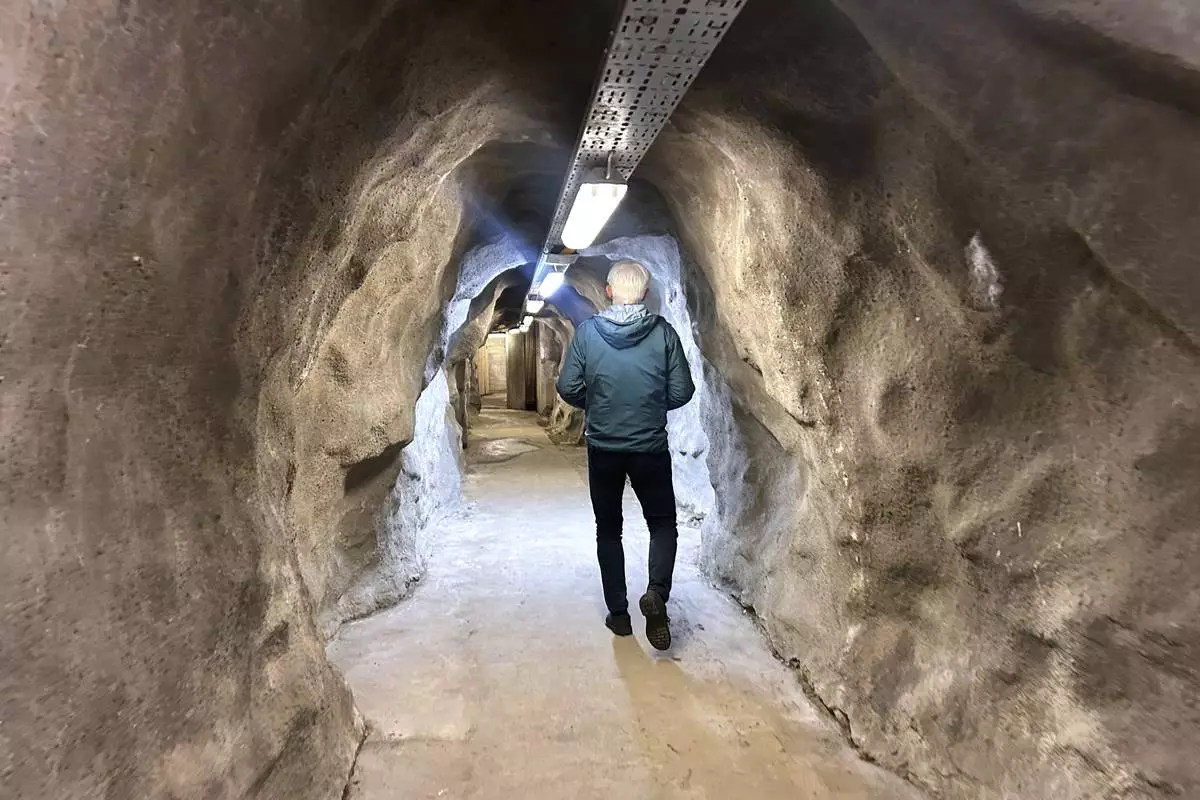
Odd John Resser, Emergency Planning Officer for the municipality, walks in the tunnel of a Cold War era underground shelter which was dusted off after Russia's invasion of Ukraine, in Kongsberg, Norway Thursday, May 8, 2025. (AP Photo/Emma Burrows)
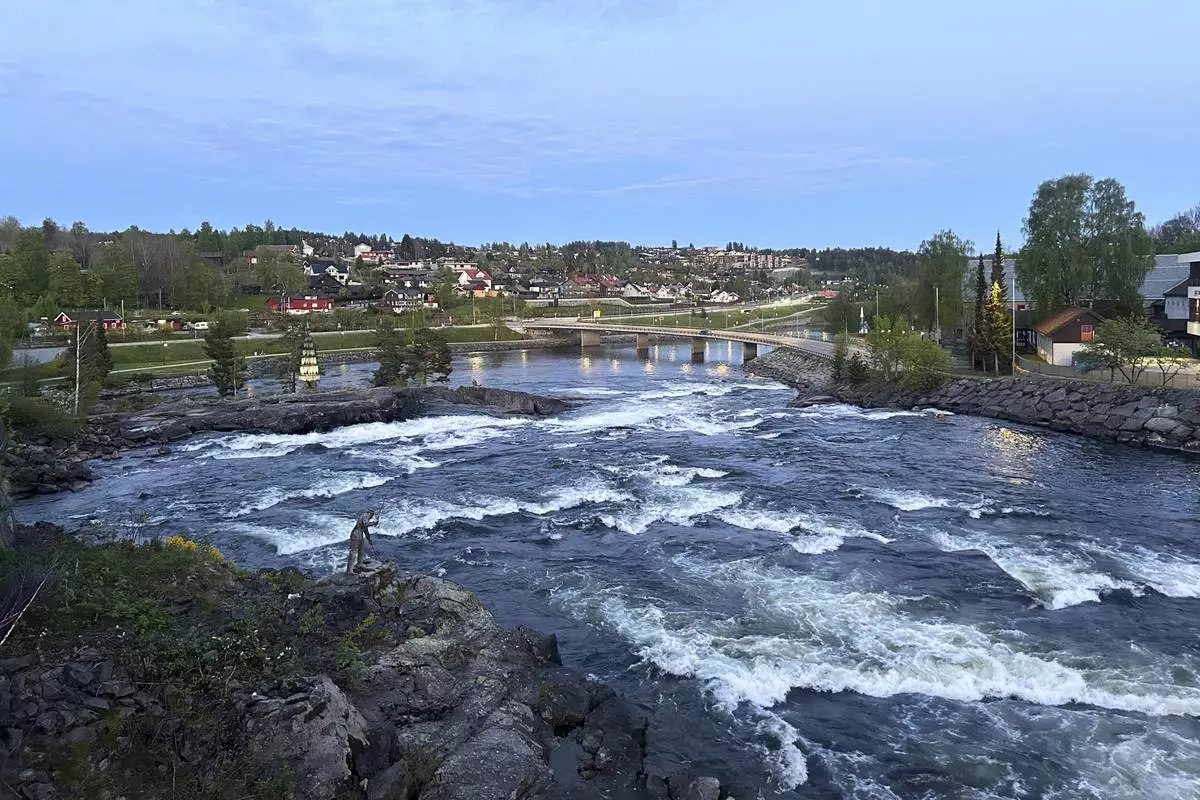
The town of Kongsberg, which is the headquarters of a defense company which makes missiles for Ukraine and is seen as a potential target for sabotage, is seen in Norway Wednesday, May 7, 2025. (AP Photo/Emma Burrows)
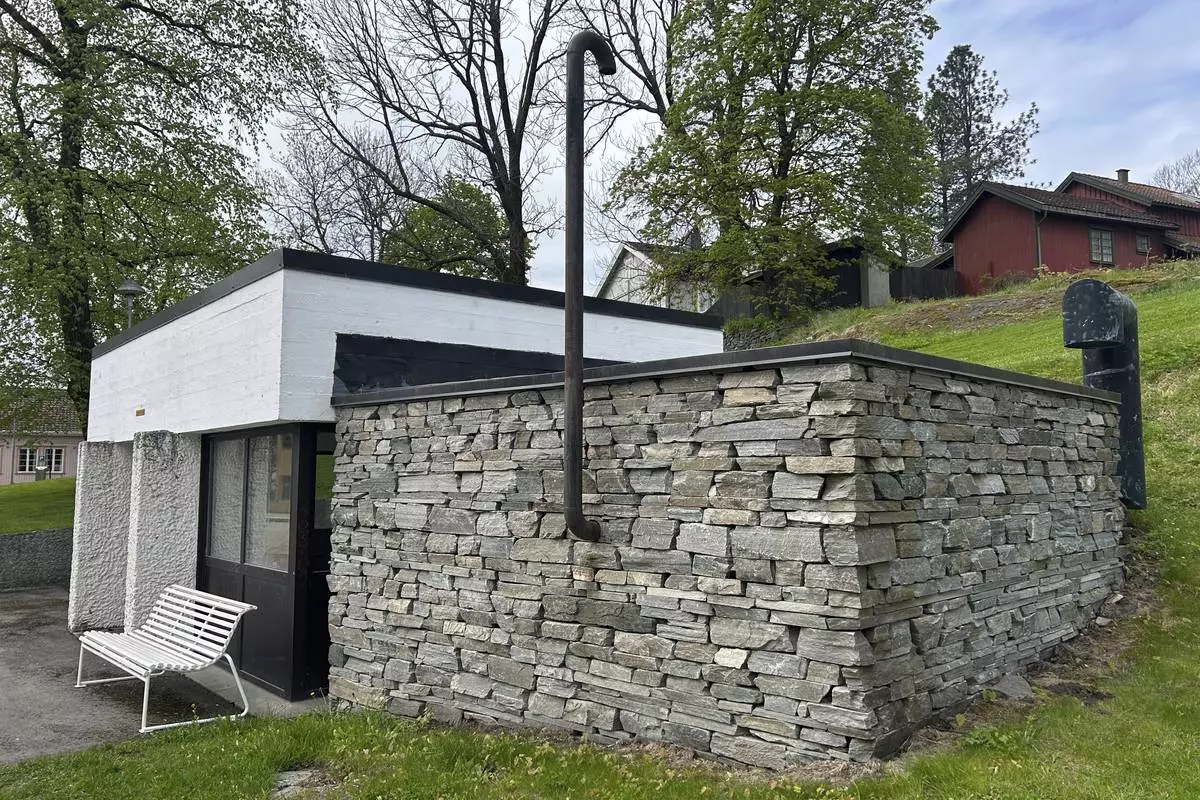
The above-ground entrance to a public shelter, which can fit around 450 people in case of crisis or war, is seen in Kongsberg, Norway Thursday, May 8, 2025. (AP Photo/Emma Burrows)

Odd John Resser, Emergency Planning Officer for the municipality, walks in an underground shelter which was previously used by a youth club, in Kongsberg, Norway Thursday, May 8, 2025. (AP Photo/Emma Burrows)