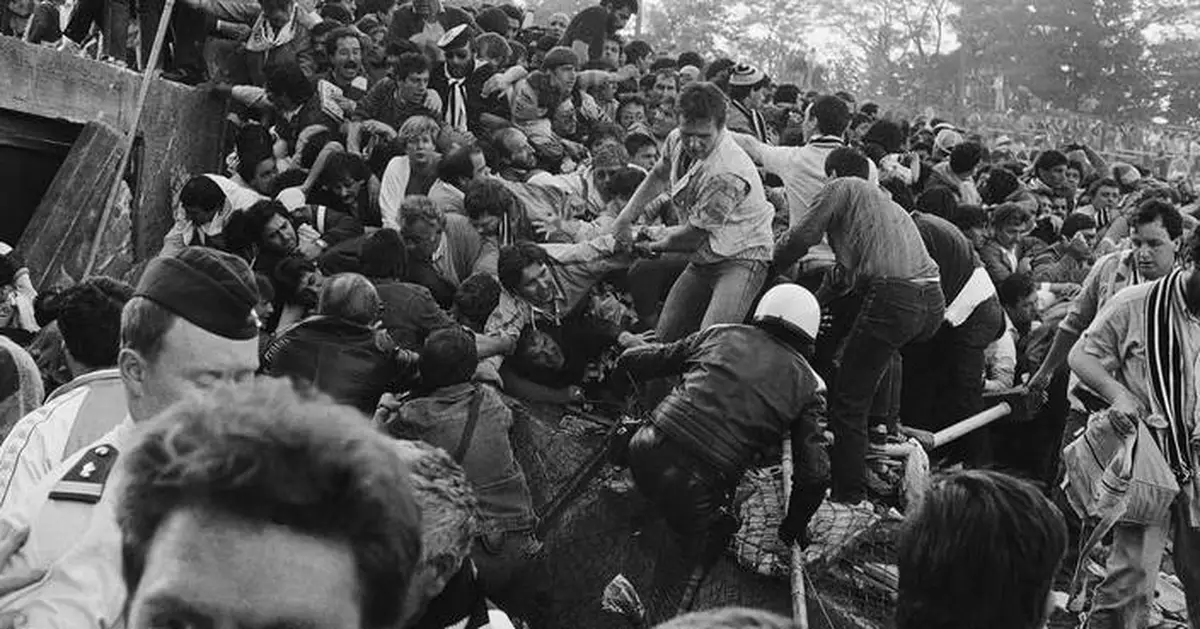
On May 29, 1985, 39 people went to the biggest club game in soccer and never returned home.
Heysel Stadium in Brussels was staging the European Cup final between Juventus and Liverpool exactly 40 years ago.
Click to Gallery
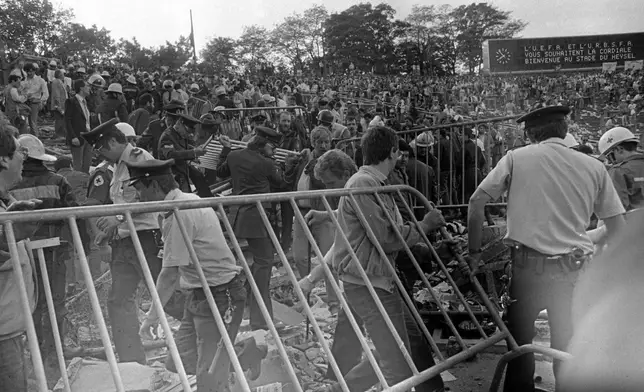
FILE - Belgian policemen and volunteers clear the scene after a disastrous clash between rival soccer fans at the European Cup Final at Heysel Stadium in Brussels, Belgium, on May 29, 1985. (AP Photo, File)
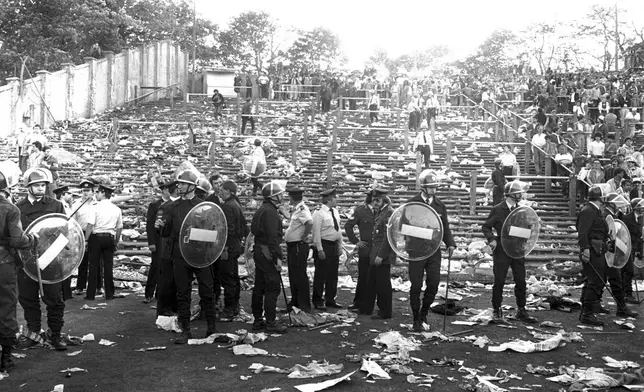
FILE - Belgian riot policemen stand with other police in a line in front of a totally littered stand after various fan groups rioted, in the Heysel Stadium in Brussels, Belgium, Wednesday, May 29, 1985. (AP Photo, File)
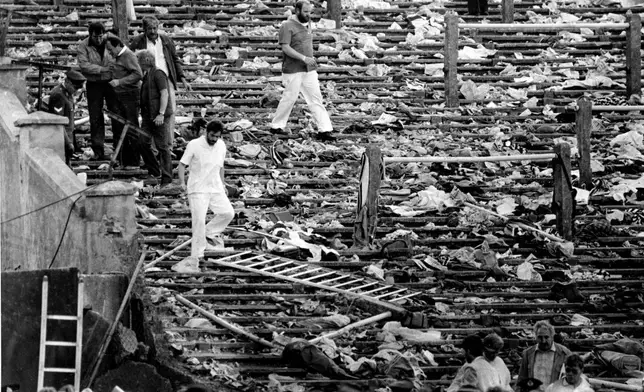
FILE - Shocked spectators walk through the personal belongings of victims littering the stands, after a disastrous clash between rival soccer fans at the European Cup Final at Heysel Stadium in Brussels, Belgium, on May 29, 1985. (AP Photo, File)
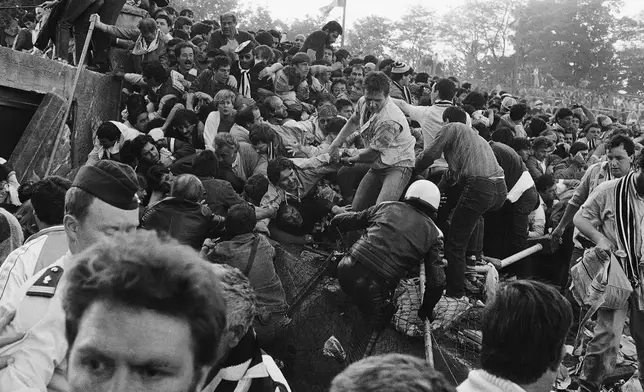
FILE - A crowd of soccer fans in the Brussels Heysel stadium, falls down in a heavy group over the broken fence just prior to the European Champion's Cup Final between Liverpool and Juventus of Turin, in Brussels, Belgium, May 29, 1985. (AP Photo/Gianni Foggia, File)
Crowd disorder culminated in a surge by Liverpool fans into an adjacent stand containing mostly Juventus supporters. In the ensuing chaos, some were trampled or suffocated to death as they tried to flee and others died when a retaining wall collapsed.
A total of 39 people — 32 from Italy, four from Belgium, two from France and one from Northern Ireland — died and around 600 were injured in events that took place in real time on international television.
On the 40th anniversary of the Heysel disaster, here’s a look at what exactly happened and the consequences of one of soccer’s darkest days.
English soccer was in a bad place in the mid-1980s, with racism and hooliganism damaging the reputation of fans in the game’s birthplace. Just two weeks before Heysel, a 15-year-old boy died during fighting at a game between Birmingham and Leeds, and a fire that ripped through a wooden stand at Bradford killed 56 people. Two months earlier, some of the worst ever rioting occurred at an FA Cup game between Luton and Millwall.
“A slum sport played in slum stadiums and increasingly watched by slum people” was how an editorial by The Sunday Times summed up the state of English soccer ahead of Heysel.
Liverpool fans might therefore have been viewed with suspicion as they poured into Brussels for the match against Juventus, but they were also suspicious themselves. A year earlier, at the 1984 European Cup final in Rome, Liverpool supporters were attacked by their Roma counterparts after the game.
“It wasn’t a case of revenge,” Tony Evans, a Liverpool fan who was at Heysel at age 24, told The Associated Press, “but rather no ultra will ever do this to me again.”
Adding to the potential for catastrophe at the 1985 final was the condition of Heysel, a 55,000-capacity structure with outdated standing-room only stands, flimsy chicken-wire fences and crumbling walls inside and outside the stadium. There were too few police officers present, and organizers arranged for there to be a section for “neutral” fans beside one of the two stands holding Liverpool supporters at one end of the ground.
Many Juve fans ended up getting tickets in the “neutral” section — and that's where the tragedy occurred.
Evans attended the match with family and friends and remembers the level of drunkenness among Liverpool fans was unlike anything he’d seen.
“People were out of control everywhere,” he told the AP. “When you got to the ground, people were kicking holes in the wall to climb in. By then, the atmosphere had deteriorated and there were wild rumors going round that Liverpool fans had been stabbed and one had been hung.”
Evans, who has written about Heysel in two books, “Far Foreign Land” and “Two Tribes,” recalls the Liverpool section being so overcrowded that fans were already spilling through a collapsed barrier into the “neutral” section.
Fans were seen throwing beer cans and chunks of concrete torn from the stands.
What ultimately set off a fatal surge by Liverpool fans, Evans said, was flares being set off.
“That seemed to spark a huge panic, a charge down the front,” he said.
Those fleeing the panic were crushed in the corner of the neutral section next to an old wall, which collapsed.
Despite the chaos, organizers decided the final should be played, believing it would prevent further disorder between fans outside the stadium. Juventus won 1-0.
Some 26 Liverpool fans were arrested and charged with manslaughter, 14 of whom were found guilty and given three-year prison sentences.
Suspended prison sentences were handed to a Belgian Football Association official and a police chief.
Heysel never hosted another major game. It was torn down in 1994 and replaced with King Baudouin Stadium.
In terms of sporting sanctions, English clubs were banned from playing in European competition for five years. Liverpool received an indefinite suspension that ultimately lasted for six years.
Heysel was “the low point for the English game” that was hated by the British government “for its internationally shaming events,” according to John Williams, an expert in the sociology of football at the University of Leicester.
Fans voted with their feet, with crowds in the English league in the 1985-86 season plummeting to around 16 million — a post-war low — when they had once been two and a half times that, Williams said.
Yet Williams said Heysel started the process of reflection among English soccer fans that something needed to change. Within a decade — and turbo-charged by another stadium tragedy when Liverpool fans were crushed at an FA Cup match at Hillsborough, leading to the death of 97 people — the English game would have all-seater stadiums, CCTV, stronger powers for the police, an alcohol ban inside grounds, a national organization of fans, the Premier League and be the envy of the rest of Europe.
“Ironically, in many ways it was England that benefitted most from Heysel in the long run, more than for the Italians and others in Europe,” Williams said.
He referred to what authorities abroad call the “English miracle — the managing of fans competently with stewards rather than police and the generally very low levels of disorder in new elite modern stadia.”
For Evans, fans took a deep breath and stepped away from “the abyss.”
“It was a natural development by the people who watched the game and realized if this sort of behavior that had characterized the first half of the 1980s continued, football would be dead within a decade,” Evans said. “Everyone says Hillsborough was the determining factor, but the reality is the tides of history had changed four years before.”
Liverpool and Juventus were unveiling memorials on Thursday in honor of the Heysel victims to mark the 40th anniversary.
For Liverpool, the occasion would be even more poignant coming just days after a minivan plowed into dozens of fans during the team’s latest Premier League victory parade.
Liverpool said its newly designed memorial at Anfield will feature "two scarves knotted together and gently tied — symbolizing the unity and solidarity between the two clubs and the bond formed through shared grief and mutual respect in the aftermath of the disaster." It will include the names of the 39 people who died.
Juventus ' memorial will be near its stadium and training complex.
AP soccer: https://apnews.com/hub/soccer
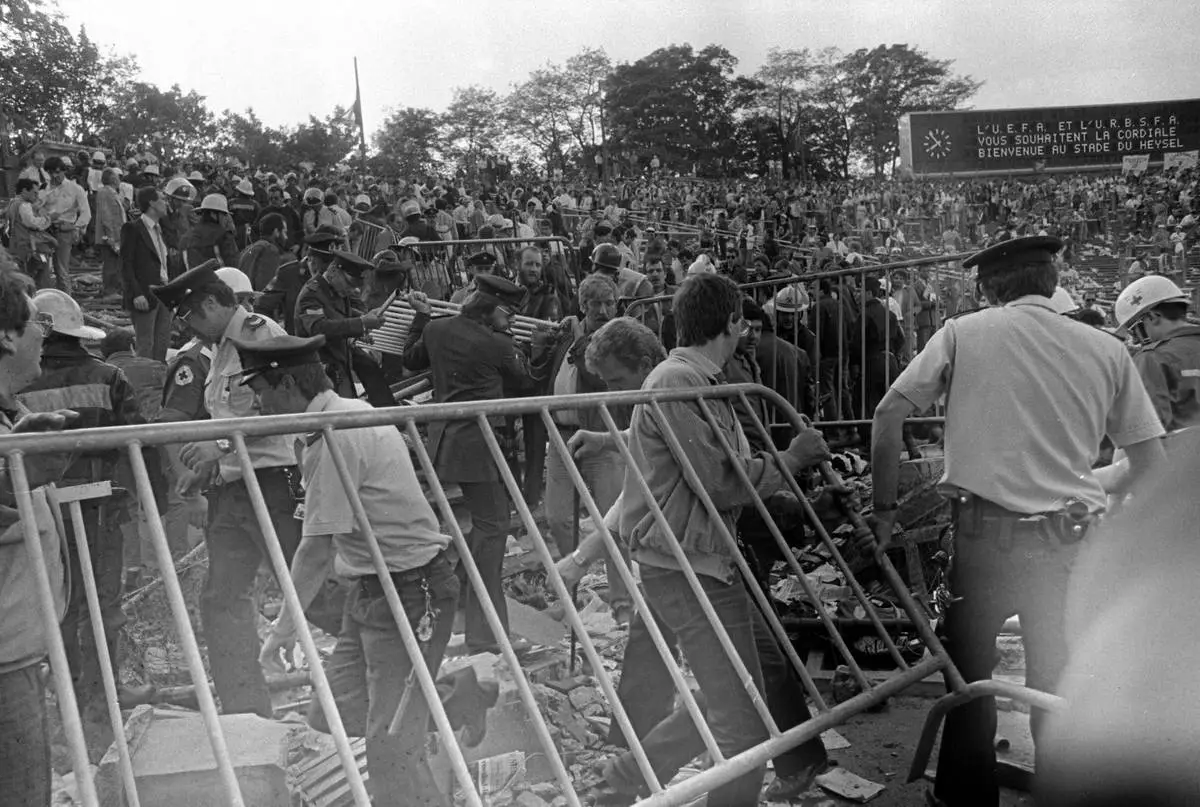
FILE - Belgian policemen and volunteers clear the scene after a disastrous clash between rival soccer fans at the European Cup Final at Heysel Stadium in Brussels, Belgium, on May 29, 1985. (AP Photo, File)
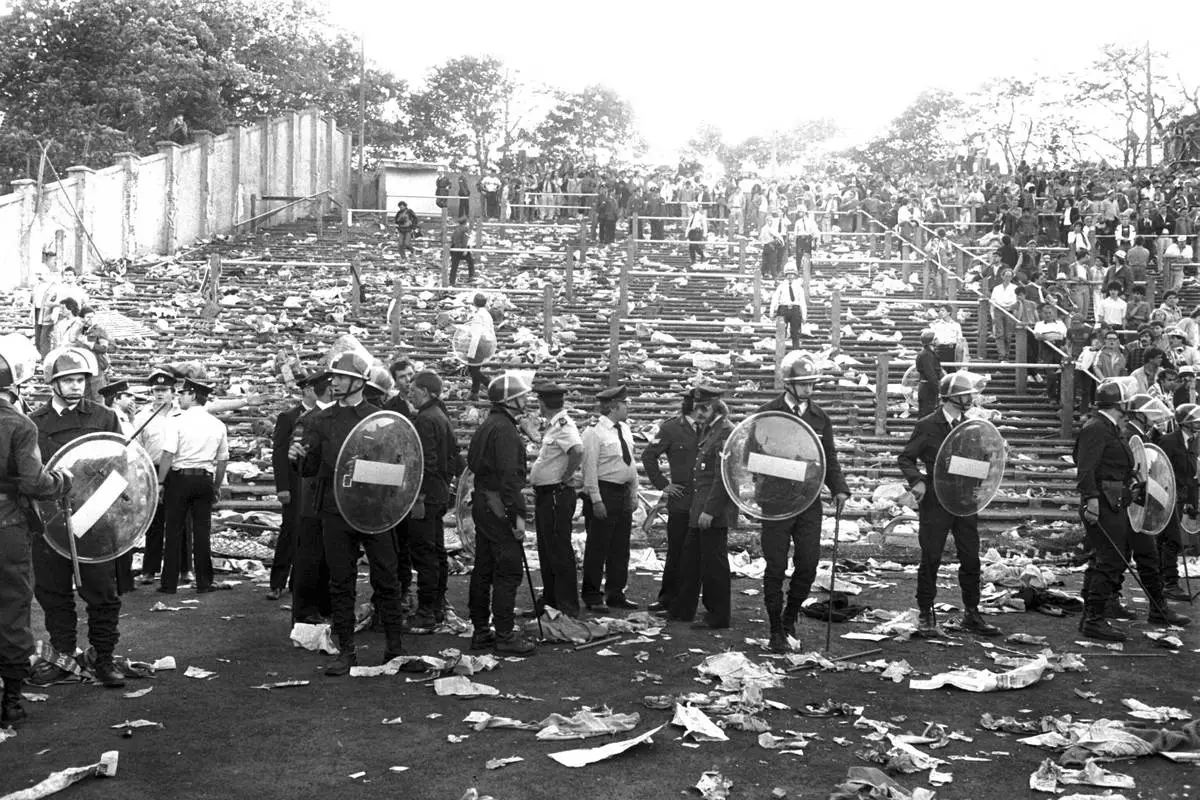
FILE - Belgian riot policemen stand with other police in a line in front of a totally littered stand after various fan groups rioted, in the Heysel Stadium in Brussels, Belgium, Wednesday, May 29, 1985. (AP Photo, File)
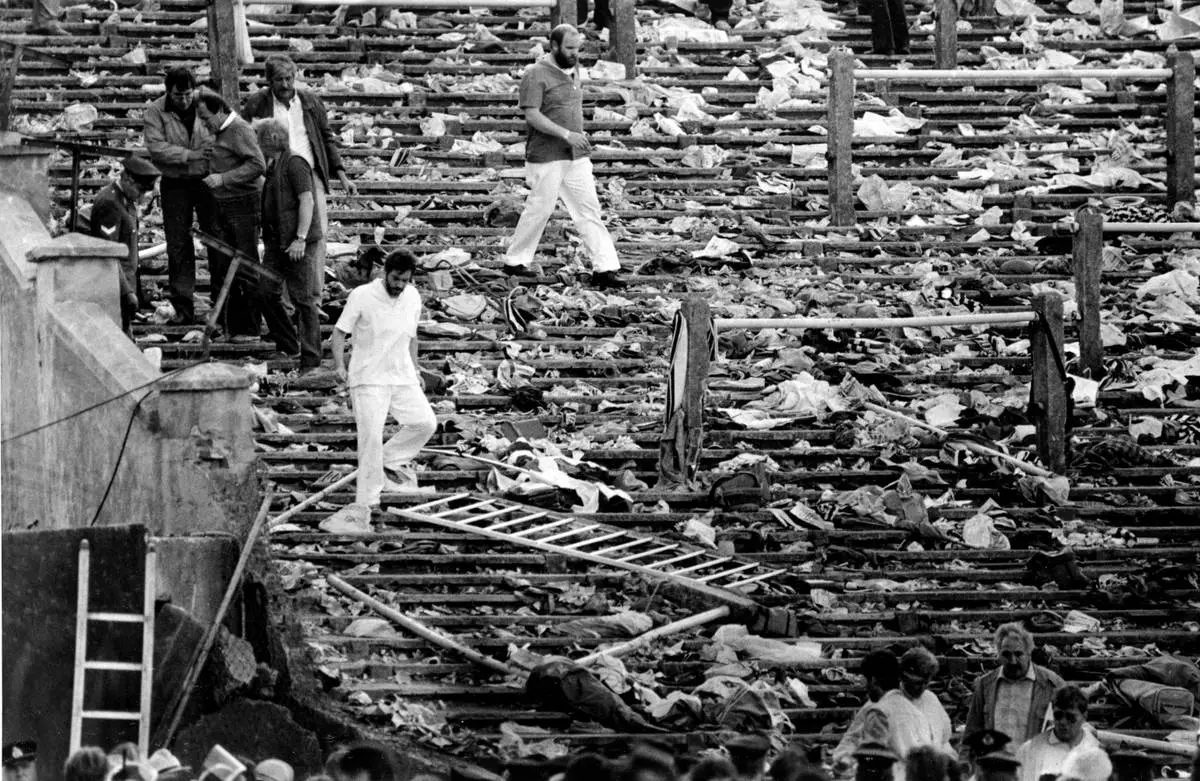
FILE - Shocked spectators walk through the personal belongings of victims littering the stands, after a disastrous clash between rival soccer fans at the European Cup Final at Heysel Stadium in Brussels, Belgium, on May 29, 1985. (AP Photo, File)
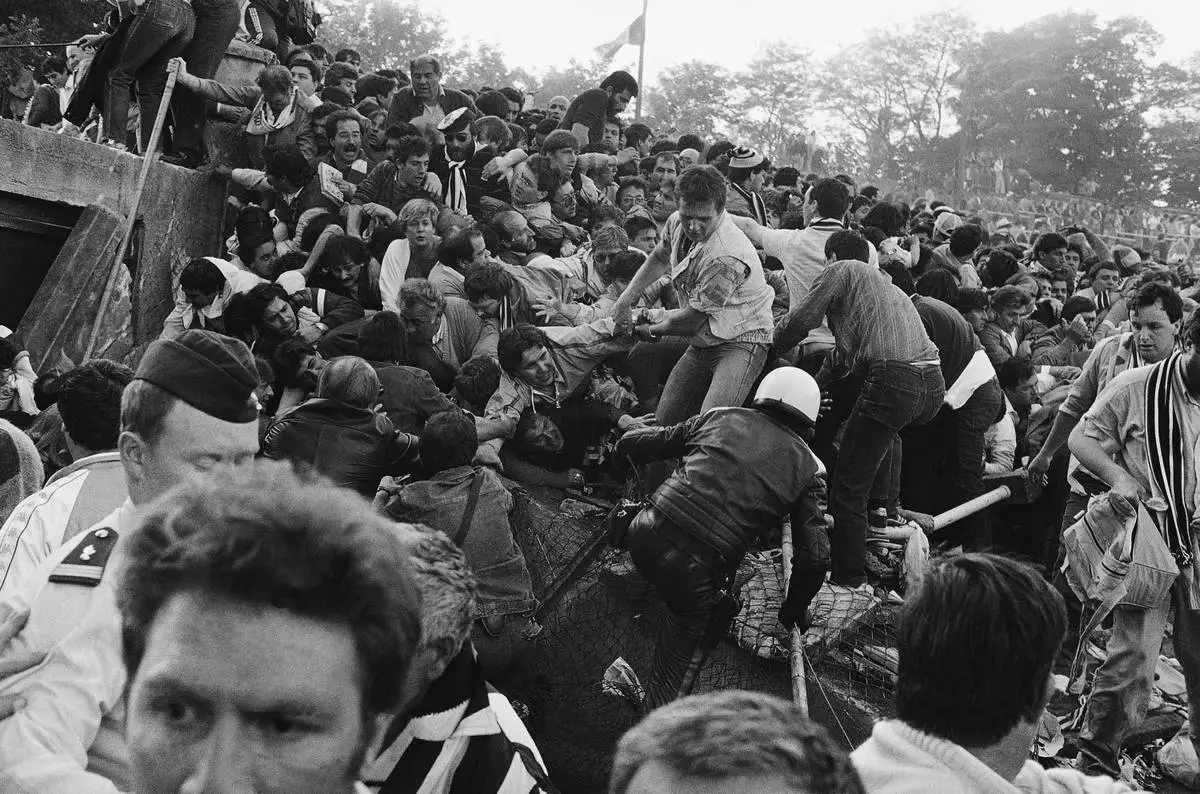
FILE - A crowd of soccer fans in the Brussels Heysel stadium, falls down in a heavy group over the broken fence just prior to the European Champion's Cup Final between Liverpool and Juventus of Turin, in Brussels, Belgium, May 29, 1985. (AP Photo/Gianni Foggia, File)