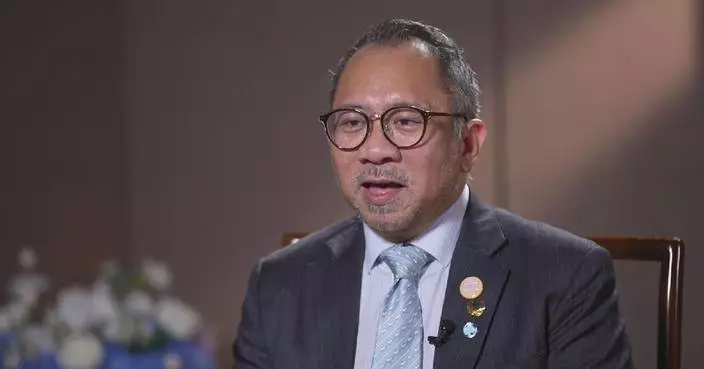
Former New Zealand Prime Minister Jenny Shipley has highlighted key milestones in her country's relationship with China, noting that these achievements demonstrate New Zealand's pioneering spirit and set a model for other countries seeking to hammer out free trade agreements (FTAs).
Shipley made the remarks in an exclusive interview released by China Media Group (CMG) on Friday.
New Zealand was the first developed country to complete negotiations with China on its accession to the World Trade Organization (WTO). It also led the way as the first country to grant China full market economy status and became the first developed nation to negotiate and finalize a bilateral free trade agreement (FTA) with China.
Reflecting on New Zealand's early diplomatic milestones with China, Shipley underscored that her country's commitment to free trade has been central to its foreign policy.
"We believe in free trade. Some of my leaders before me and myself and others genuinely felt that it was not only good for New Zealand, but it was good for the world. And when China was moving toward wanting to apply to become part of the WTO, New Zealand felt that a huge, emerging, important economy, even though at that moment, there were still many challenges that China was dealing with, that it was much better to be in the rules-based system than outside it. And so we took the decision that it was completely sensible to share our experience," she said.
Shipley, who was involved in New Zealand's early discussions with China, expressed pride in her country's pioneering role, particularly in the negotiation of the FTA between the two countries.
"When I chaired APEC in 1999, many of my visits prior to APEC included New Zealand's open commitment to supporting China's accession to the WTO. New Zealand said, look, we are complementary as economies. We produce massive amounts of food, we need your imports. Could we see if we could work out an agreement that was mutually beneficial? And also set a precedent where we both can learn. And I'm very proud to say that in retrospect, that's exactly what happened. We worked together systematically. Every now and again, we hit problems. We sat down and worked them through. China needed some time to remove all of the tariffs, but over time that's happened, and it's a very comprehensive FTA and well worth looking at for other countries, if they're looking to do it," she said.
China signed an FTA with New Zealand in April 2008, and the agreement came into force in October the same year. The two sides announced the conclusion of their three-year negotiations on the upgrade in November 2019 and signed a protocol in January 2021.
Shipley, New Zealand's first female prime minister, held office from 1997 to 1999.

Former New Zealand's PM highlights pioneering spirit in relationship with China

Former New Zealand's PM highlights pioneering spirit in relationship with China
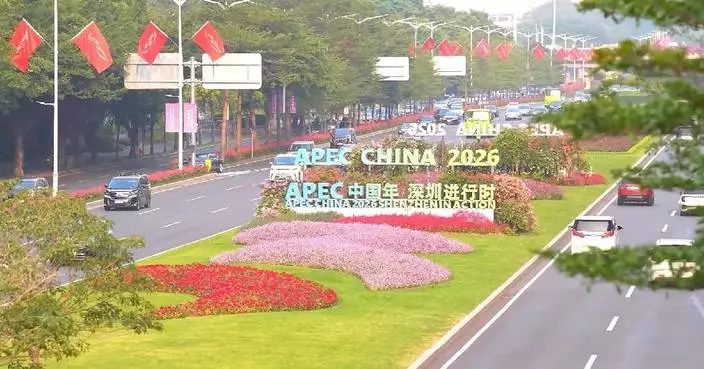
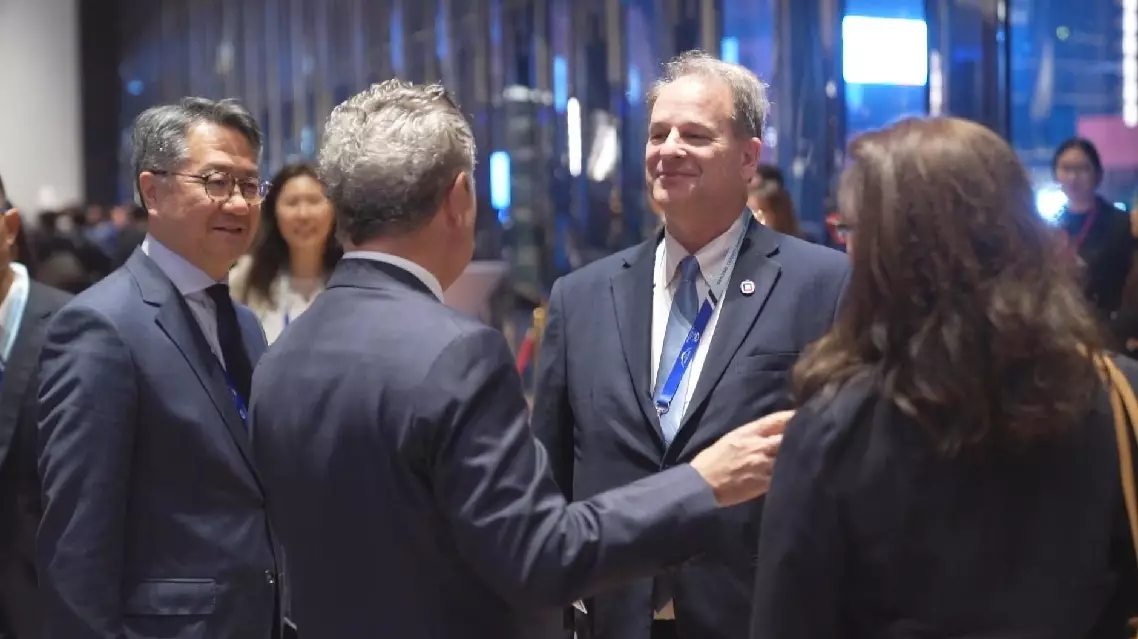
Business leaders from across the Asia-Pacific gathered in south China's Shenzhen Tuesday as the two-day 2026 Asia-Pacific Economic Cooperation (APEC) CEO Summit got underway, with many highlighting China's efforts to consistently deepen regional economic integration through pragmatic cooperation and hailing the country's commitment to open trading and high-quality development.
The two-day summit has gathered more than 2,000 political and business representatives from 21 APEC member economies and 13 non-APEC economies, with discussions set to focus on cooperation in emerging fields such as the digital economy, artificial intelligence (AI), and green and low-carbon development.
This year marks the third time China has hosted APEC following previous editions in Shanghai in 2001 and Beijing in 2014, and attendees note China's growing role as a driving force for the APEC region to advance cooperation and shared prosperity.
Many participants also say they have been impressed by what they have seen in the city of Shenzhen, which has undergone rapid development in recent decades to grow from a small fishing village into a bustling modern metropolis, with the city becoming known as a major manufacturing center before now evolving into a hub of high-tech innovation.
"We know China is a provider of manufacturing, but we also know China as a provider of innovation. We're here in Shenzhen, which is the 'Silicon Valley of China', providing so much new technology for the world. What we are looking for is for countries like China who play such an important role to really use the opportunity of APEC to lead the conversation. Global trade benefits everyone," said Robert Hillard, CEO of Deloitte Asia Pacific.
"I'm very surprised with Shenzhen and the growth that China has been doing in terms of how things are so modern and how much they develop infrastructure. I'm impressed with all your cameras here, with the little stick, which, by the way, I just bought one. And I think technology is super here in China," said Guillermo Ferreyros, Peru's representative to the APEC Business Advisory Council.
"I think China is a wonderful host. It allows for China to further expose the rapid changes, especially here in Guangdong Province that is the epicentre of innovative change and advanced manufacturing, along with a long list of leading businesses. And I think it's fantastic for them to bring people together and continue to talk. That is the most important thing that we all have to do in order to create more trade and more pragmatic outcomes," said Olivier Desmarais, Senior Vice-President of the Power Corporation of Canada.
As for this year's APEC CEO Summit, business leaders expressed hope that China's vision and proposals will once again steer the course of Asia-Pacific cooperation and pool strong synergy for regional development.
"Having that trade flow re-engage with China has been very positive for the U.S. soybean farmer. So I'm very excited for them to continue. We have other cooperators joining us actually here at APEC. The Almond Board of California is here and we hope that other cooperators will benefit from the trade. So we're very looking forward for everybody to participate and re-engage with Chinese business," said Carlos Salinas, executive director for East Asia at the U.S. Soybean Export Council.
"China is also leading on this smart manufacturing innovation as well as the green transformation. China is leading the world on this, and we are utilizing lots of these technologies in many of our factories. I'm looking forward to hear more from the leaders of the world to exchange ideas and to see the commitment that we all will try to work closely together for the whole world to be better, not just for big corporations, but I think we have to look for the SMEs as well in the region -- how they all can be embedded in our supply chains," said Saravoot Yoovidhya, CEO of the TCP group, a Thai food and beverage company.
"[It's important for] leaders from across the APEC economies to be here together and share our common agenda, and the way that China is building for the future is really inspiring, and it's an exciting opportunity for companies like Boeing to partner and share that future. I've attended APEC before, but not in Shenzhen, so for me this is a great opportunity to take," said Landon Loomis, president of Boeing China.
APEC business leaders hail China's efforts to promote cooperation, open trade across Asia-Pacific