An Emmy Award-winning writer and media content expert spoke highly of Chinese animation works that have successfully gained global traction, saying the global market can't ignore such great works from China now.
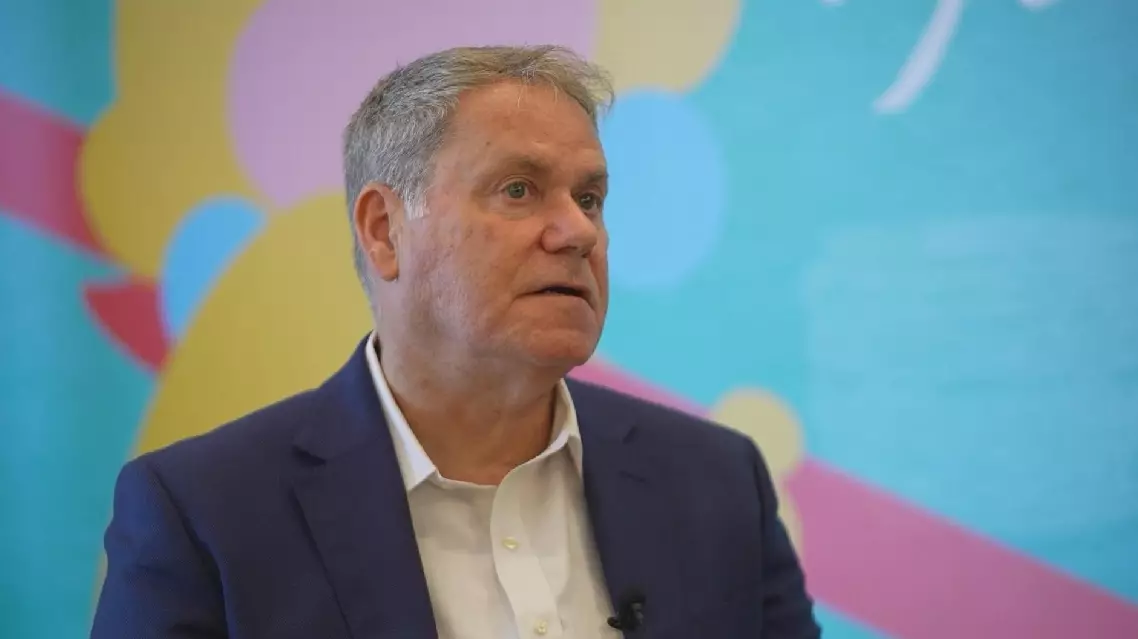
Josh Selig, an Emmy Award-winning writer and also president of China Bridge Content, a New York and Beijing-based content and consulting firm, commented at the 21st China International Cartoon and Animation Festival (CICAF), which is underway in Hangzhou, east China's Zhejiang Province.
Selig singled out particularly the Chinese game "Black Myth: Wukong" and the blockbuster "Ne Zha 2" in an interview with China Global Television Network (CGTN),
"I think the great success of Black Myth: Wu Kong, which is a game, and Ne Zha 2. I think these have really made the global market sit up straight and pay attention to what's happening in China. And they're seeing a lot of originality coming out of China. They're seeing a lot of great technology, like DeepSeek and other great AI programs. So, there is, I think, a new appreciation for what China has been doing for a long time. It's just that it wasn't really being celebrated outside of China. Now it's impossible to ignore some of the great work coming out of China," he said.
Talking of the challenges Chinese content faces in going overseas, Selig said he would like to help the Chinese companies shape their pitch in a way that the global market will respond positively to it, emphasizing the need for a show bible or a pitch bible for publicize animations and other audio-visual works around the world.
"I found over the years that many Chinese companies skip the step of a show bible or a pitch bible and they simply start production and then they finish their episodes, they try to bring them to the global market. This is a very challenging way to create and distribute content. However, if you start with a few strong global partners, that Chinese IP has a much better chance of reaching a global audience," he said.
Selig also noted that animation content for children older than preschool is in higher demand in the global market, and the business models should evolve with emerging things such as short-form videos.
"The market for preschool is less than it was 10 years ago and the demand for older kids content is higher. That's the biggest change I would say that, and probably the growth of short form videos, and children really love it, and it's a different model in terms of how you monetize that kind of thing. So, the whole industry is sort of learning about other kinds of content. In the old days, you just had to make 52 episodes that were 11 minutes long, and that was the business model. Now there is an infinite variety of business models, and they're changing every day," he said.
Selig recalled his first trip to China 30 years ago while working on the Chinese co-production of Sesame Street "Zhima Jie." He returned to China many times, developed many friendships, and even met his wife there. He has been helping put Chinese content under the global spotlight for many years.
The 21st CICAF opened on Thursday in Hangzhou and will last five days, highlighting the fusion of animation and technology, with the popular game "Black Myth: Wukong" taking center stage.
At the event, lifelike displays, themed cosplays, and immersive interactions draw large crowds. There are also cutting-edge exhibits, such as AI-generated animation, VR, and exoskeleton robots from top Chinese tech and animation firms.
China's animation works gain global traction with great stories, techs: Emmy Award winner