Pride Month kicks off with events around the world starting this weekend.
It's an annual series of parades and other gatherings to celebrate LGBTQ+ culture and rights.
Click to Gallery
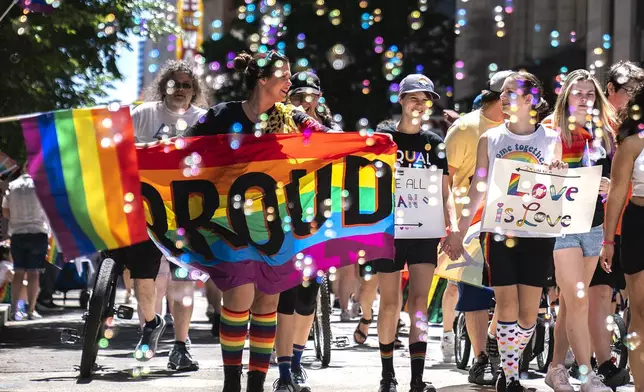
FILE - People walk in the Pittsburgh Pride Revolution March to celebrate Pride Month, June 4, 2022, in downtown Pittsburgh. (Alexandra Wimley/Pittsburgh Post-Gazette via AP, file)
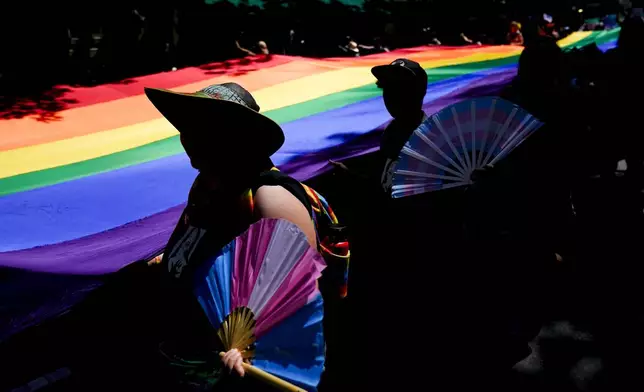
FILE - Mac Weatherill, left, and Yexara Colón Martinez, second from left, hold transgender pride fans as they help carry a large rainbow flag on their fourth anniversary during the annual Seattle Pride Parade, June 25, 2023, in Seattle. (AP Photo/Lindsey Wasson)
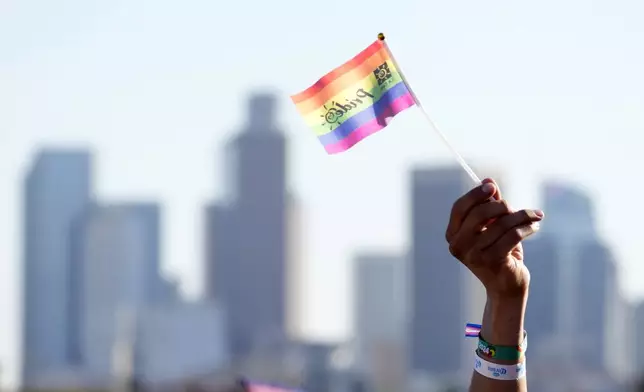
A pride flag is waved against the downtown Los Angeles skyline during the LA Pride in the Park festival at Los Angeles State Historic Park, June 8, 2024, in Los Angeles. (AP Photo/Chris Pizzello)
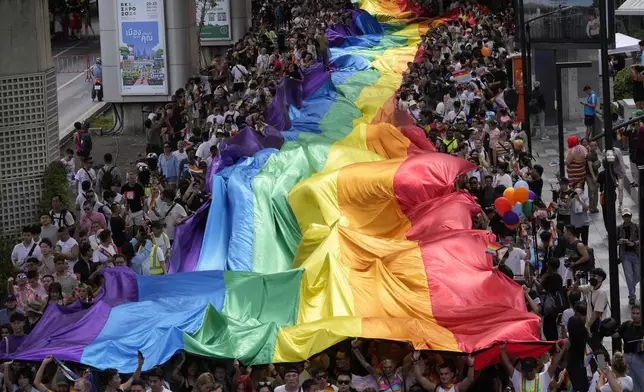
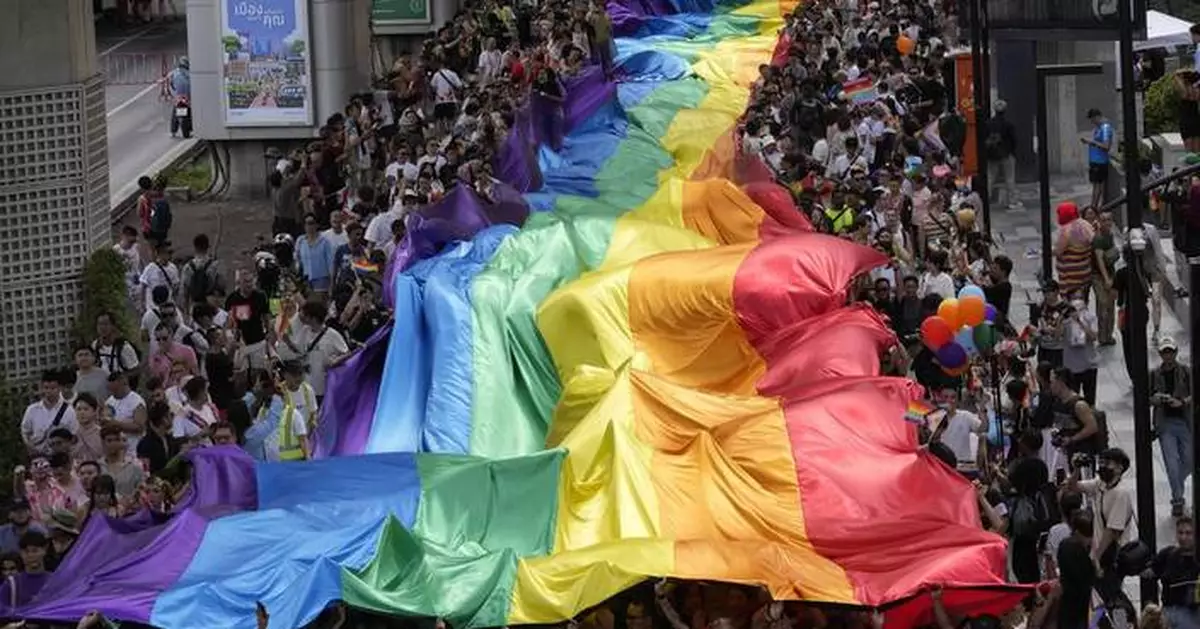
FILE - Participants hold a rainbow flag during the Pride Parade in Bangkok, Thailand, Saturday, June 1, 2024. (AP Photo/Sakchai Lalit, file)
At its heart, Pride is both a party and a protest.
In the U.S. this year, that means speaking out against a slew of policies that impose restrictions on transgender people and that try to end diversity, equity and inclusion programming in government, education and businesses.
Here's a look at the event's roots and this year's events and themes.
The monthlong global celebration began with Gay Pride Week in late June 1970, a year after the violent police raid at New York’s Stonewall Inn, a gay bar.
At a time when many LGBTQ+ people kept their identities private, the June 28, 1969, raid sparked a series of public protests and catalyzed the gay rights movement.
The first pride week featured marches in Chicago, Los Angeles, New York and San Francisco, and it has since grown to other cities. On the calendar are events in Philadelphia this weekend; New Orleans on June 14; Chicago on June 21 and 22; and New York over the weekend of June 28 and 29. Many other events in big cities and small towns are also planned.
There are pride celebrations around the world, including in Tokyo on June 8; Toronto on June 27-29; Sao Paolo on June 22; and Paris on June 28.
Some events fall outside of June, too. World Pride, a biannual event held this year in Washington, D.C., began in May and goes through June 8. Pride in London is in July; a big celebration in Rio de Janeiro is in November and Atlanta's is in October.
Former President Bill Clinton proclaimed June as Gay and Lesbian Pride Month in 1999, marking the first time a U.S. president did so.
When President Donald Trump returned to office in January, he quickly attempted to roll back LGBTQ+ rights.
He’s especially targeted transgender people with policies that halted allowing people to change the sex listed on their passport, removed transgender military troops and sought to stop using federal insurance programs to pay for gender-affirming care for transgender people under age 19, and keep transgender athletes out of girls and women's sports competitions.
All of those changes are being challenged in court.
His actions follow years of policies in Republican-controlled states that bar gender-affirming care for transgender minors and dictate which sports transgender people can play and which school and other public bathrooms they are allowed to use. The U.S. Supreme Court is expected to rule this month on whether Tennessee's ban on medical treatment is constitutional.
One of Trump’s orders called for removing references to what he and some other conservatives call “gender ideology” from government publications and websites.
A result of that: References to transgender people have been removed from government websites, including the one for the Stonewall National Monument, site of the event that inspired Pride.
About half of U.S. adults approve of how Trump is handling transgender issues, an Associated Press-NORC Center for Public Affairs Research poll found last month. About 4 in 10 voters approve of his job as president overall.
But support for his individual policies on transgender people is not uniformly strong, with a clearer consensus against policies that affect youth.
Organizers of Milwaukee's PrideFest are prepared for close to 50,000 people at the event scheduled for June 5-7.
“We’re feeling that people will be showing up, and that’s their protest,” said Wes Shaver, the president and CEO of Milwaukee Pride, Inc.
The event's theme is “Celebrating the Power of Pride” and for the first time, one of the entertainment stages one night will feature only transgender performers. Shaver said that's an intentional move in response to Trump's policies. Another night, the stage will feature only performers of color.
Jeremy Williams, the executive producer of Philly Pride 365 in Philadelphia, said he didn't expect more protest than in the past there.
“Everybody's just there to be together,” he said.
One milestone that's likely to be celebrated: This month marks the 10th anniversary of the U.S. Supreme Court's Obergefell v. Hodges ruling, which recognized same-sex marriage nationwide. It was a watershed event in establishing rights for LGBTQ+ people across the country.
About two-thirds of LGBTQ+ adults in the U.S. said the case made the nation more accepting of same-sex couples, according to a Pew Research Center poll released last week.
The poll found that LGBTQ+ people don't always feel accepted, though. About 6 in 10 said they see “a great deal” or “a fair amount” of social acceptance for those who are lesbian, gay or bisexual. But only about 1 in 10 said the same is true for nonbinary and transgender people.
Several big companies have pulled back on sponsorships for Pride events this year.
Among them: Anheuser-Busch, the St. Louis-based brewer, declined to sponsor PrideFest in its home city after three decades of support, leaving organizers $150,000 short of last year's budget, they told The Associated Press.
NYC Pride said about 20% of its corporate sponsors dropped or reduced support, including PepsiCo and Nissan. The carmaker said it was reviewing all its marketing costs.
In other cities, such as Kansas City, Missouri, pride events lost about half their budgets.
Several companies that have pulled back have not explained why to the AP. But some experts see the change as part of a broader retreat from brand activism.
Still, the groups behind many Pride events say some companies have kept contributing but have asked not to be listed publicly as sponsors.
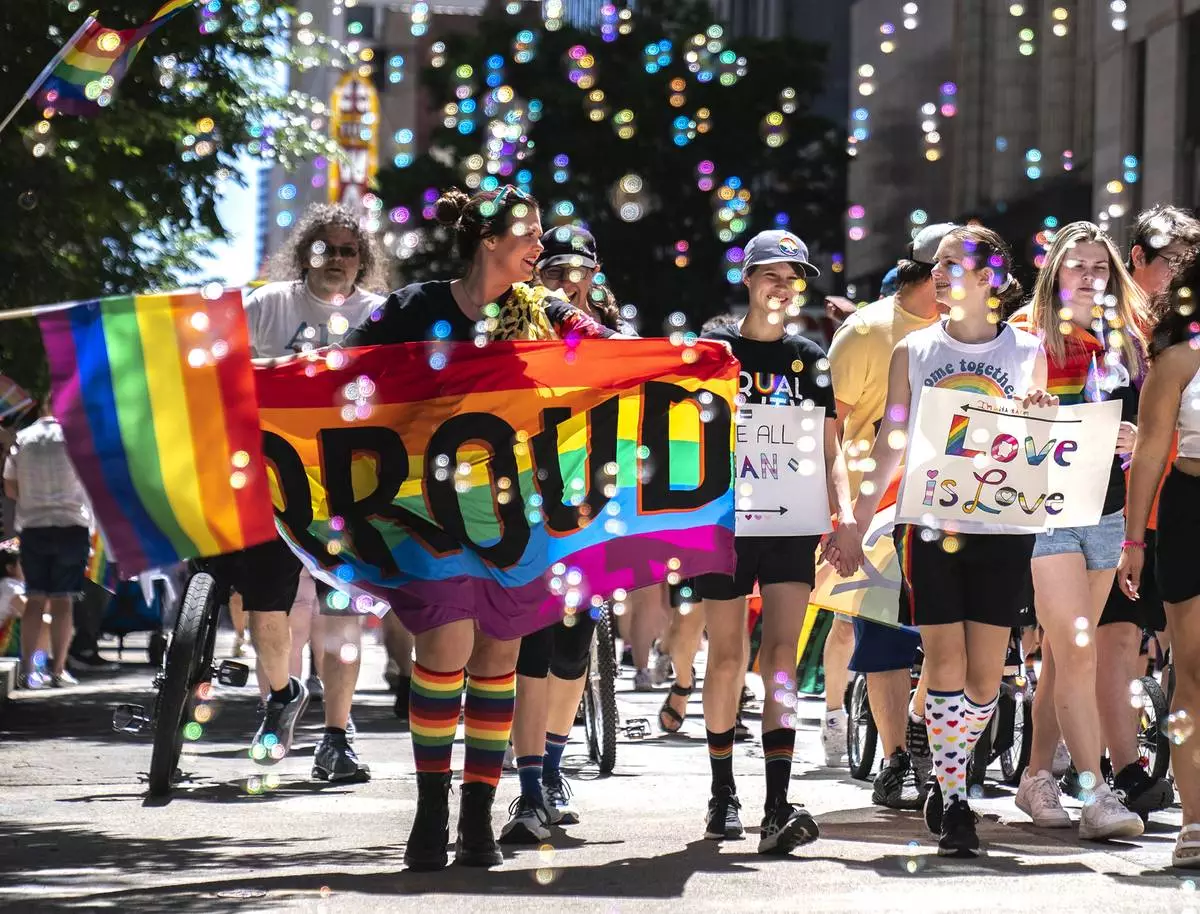
FILE - People walk in the Pittsburgh Pride Revolution March to celebrate Pride Month, June 4, 2022, in downtown Pittsburgh. (Alexandra Wimley/Pittsburgh Post-Gazette via AP, file)
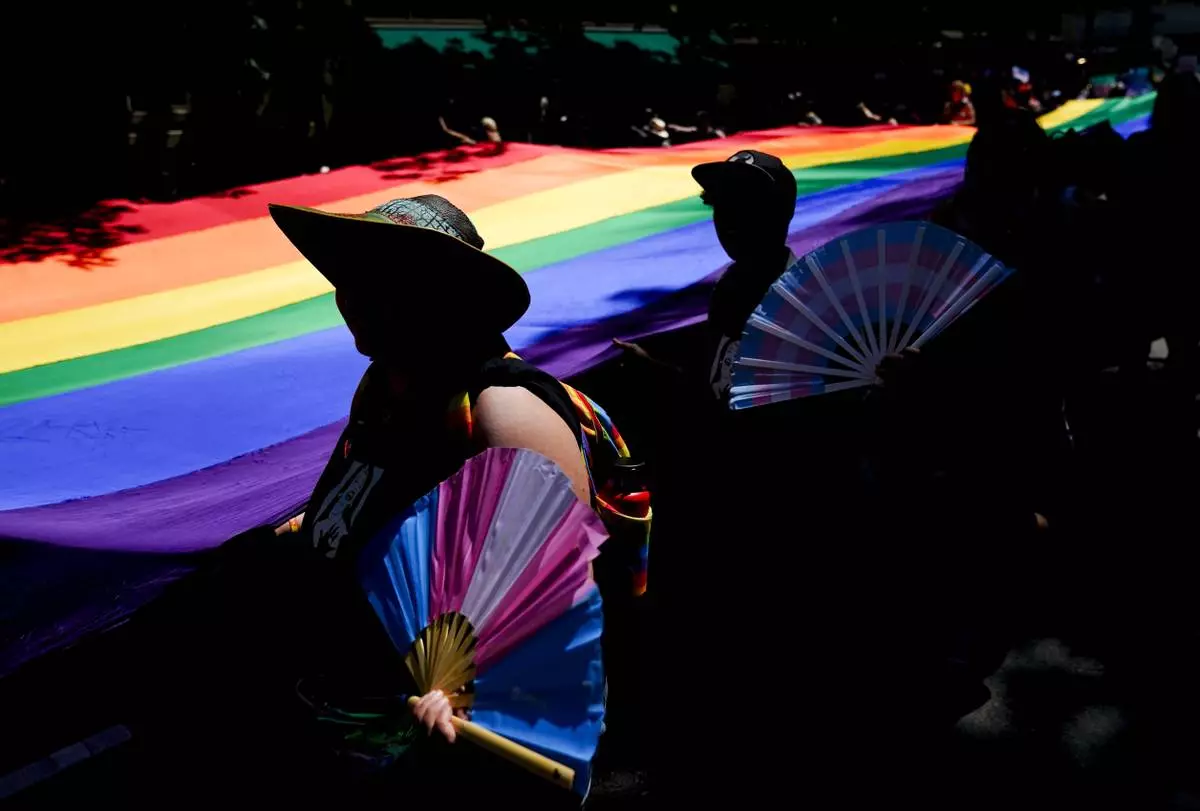
FILE - Mac Weatherill, left, and Yexara Colón Martinez, second from left, hold transgender pride fans as they help carry a large rainbow flag on their fourth anniversary during the annual Seattle Pride Parade, June 25, 2023, in Seattle. (AP Photo/Lindsey Wasson)
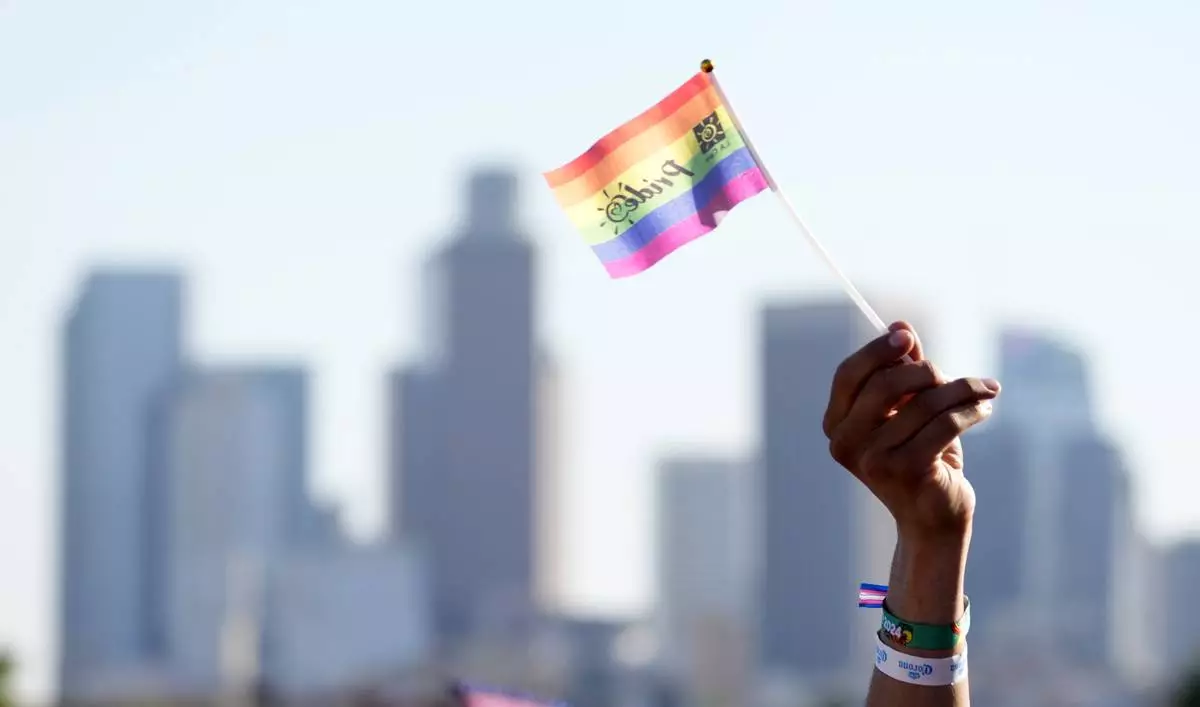
A pride flag is waved against the downtown Los Angeles skyline during the LA Pride in the Park festival at Los Angeles State Historic Park, June 8, 2024, in Los Angeles. (AP Photo/Chris Pizzello)
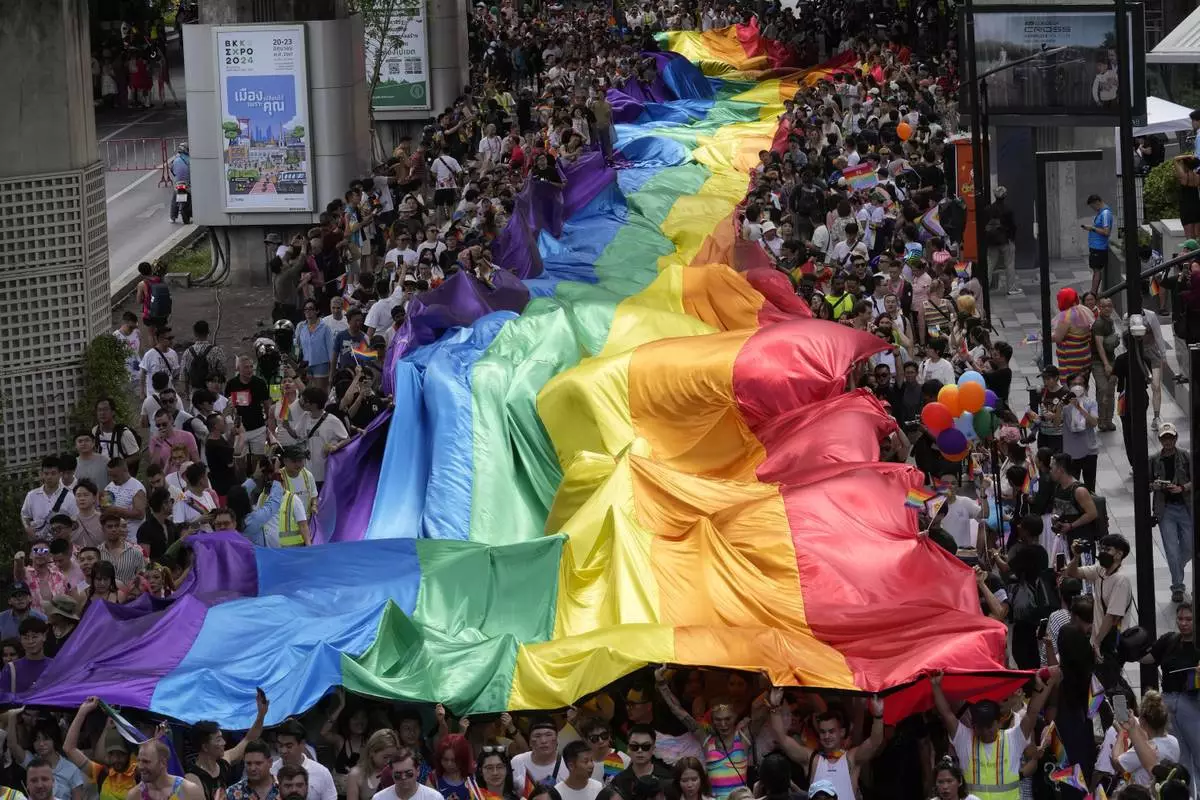
FILE - Participants hold a rainbow flag during the Pride Parade in Bangkok, Thailand, Saturday, June 1, 2024. (AP Photo/Sakchai Lalit, file)