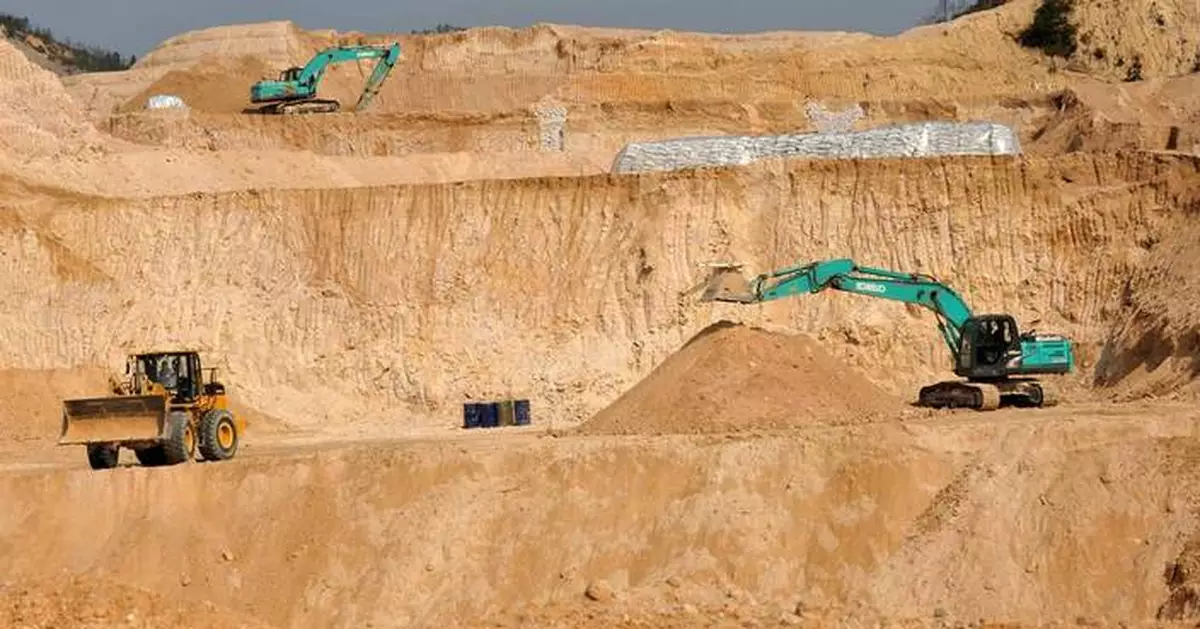
WASHINGTON (AP) — A bipartisan group of lawmakers have proposed creating a new agency with $2.5 billion to spur production of rare earths and the other critical minerals, while the Trump administration has already taken aggressive actions to break China's grip on the market for these materials that are crucial to high-tech products, including cellphones, electric vehicles, jet fighters and missiles.
It’s too early to tell how the bill, if passed, could align with the White House’s policy, but whatever the approach, the U.S. is in a crunch to drastically reduce its reliance on China, after Beijing used its dominance of the critical minerals market to gain leverage in the trade war with Washington. President Donald Trump and Chinese President Xi Jinping agreed to a one-year truce in October, by which Beijing would continue to export critical minerals while the U.S. would ease its export controls of U.S. technology on China.
The Pentagon has shelled out nearly $5 billion over the past year to help ensure its access to the materials after the trade war laid bare just how beholden the U.S. is to China, which processes more than 90% of the world's critical minerals. To break Beijing's chokehold, the U.S. government is taking equity stakes in a handful of critical mineral companies and in some cases guaranteeing the price of some commodities using an approach that seems more likely to come out of China's playbook instead of a Republican administration.
The bill that Sen. Jeanne Shaheen, D-N.H., and Sen. Todd Young, R-Ind., introduced Thursday would favor a more market-based approach by setting up the independent body charged with building a stockpile of critical minerals and related products, stabilizing prices, and encouraging domestic and allied production to help ensure stable supply not only for the military but also the broader economy and manufacturers.
Shaheen called the legislation “a historic investment” to make the U.S. economy more resilient against China’s dominance that she said has left the U.S. vulnerable to economic coercion. Young said creating the new reserve is “a much-needed, aggressive step to protect our national and economic security.”
Rep. Rob Wittman, R.-Va., introduced the House version of the bill.
When Trump imposed widespread tariffs last spring, Beijing fought back not only with tit-for-tat tariffs but severe restrictions on the export of critical minerals, forcing Washington to back down and eventually agree to the truce when the leaders met in South Korea.
On Monday, in his speech at SpaceX, Defense Secretary Pete Hegseth revealed that the Pentagon has in the past five months alone “deployed over $4.5 billion in capital commitments” to close six critical minerals deals that will “help free the United States from market manipulation.”
One of the deals involves a $150 million of preferred equity by the Pentagon in Atlantic Alumina Co. to save the country's last alumina refinery and build its first large-scale gallium production facility in Louisiana.
Last year, the Pentagon announced it would buy $400 million of preferred stock in MP Materials, which owns the country's only operational rare earths mine at Mountain Pass, California, and entered into a $1.4-billion joint partnership with ReElement Technologies Corp. to build up a domestic supply chain for rare earth magnets.
On Wednesday, Trump announced in a proclamation that the U.S. is “too reliant” on foreign-sourced critical minerals and directed his administration to negotiate better deals. He said possible remedies would include minimum import prices for certain critical minerals.
“Reshoring manufacturing that’s critical to our national and economic security is a top priority for the Trump administration,” said Kush Desai, a White House spokesperson.
The drastic move by the U.S. government to take equity stakes has prompted some analysts to observe that Washington is pivoting to some form of state capitalism to compete with Beijing.
“Despite the dangers of political interference, the strategic logic is compelling,” wrote Elly Rostoum, a senior fellow at the Washington-based research institute Center for European Policy Analysis. She suggested that the new model could be “a prudent way for the U.S. to ensure strategic autonomy and industrial sovereignty.”
Companies across the industry are welcoming the intervention from Trump's administration.
“He is playing three-dimensional chess on critical minerals like no previous president has done. It's about time too, given the military and strategic vulnerability we face by having to import so many of these fundamental building blocks of technology and national defense,” NioCorp's Chief Communications Officer Jim Sims said. That company is trying to finish raising the money it needs to build a mine in southeast Nebraska.
In addition to trying to boost domestic production, the Trump administration has sought to secure some of these crucial elements through allies. In October, Trump signed an $8.5 billion agreement with Australia to invest in mining there, and the president is now aggressively trying to take over Greenland in the hope of being able to one day extract rare earths from there.
On Monday, finance ministers from the G7 nations huddled in Washington over their vulnerability in the critical mineral supply chains.
U.S. Treasury Secretary Scott Bessent, who has led several rounds of trade negotiations with Beijing, urged attendees to increase their supply chain resiliency and thanked them for their willingness to work together “toward decisive action and lasting solutions,” according to a Treasury statement.
The bill introduced on Thursday by Shaheen and Young would encourage production with both domestic and allied producers.
Congress in the past several years has pushed for legislation to protect the U.S. military and civilian industry from Beijing's chokehold. The issue became a pressing concern every time China turned to its proven tactics of either restricting the supply or turned to dumping extra critical minerals on the market to depress prices and drive any potential competitors out of business.
The Biden administration sought to increase demand for critical minerals domestically by pushing for more electric vehicle and windmill production. But the Trump administration largely eliminated the incentives for those products and instead chose to focus on increasing critical minerals production directly.
Most of those past efforts were on a much more limited scale than what the government has done in the past year, and they were largely abandoned after China relented and eased access to critical minerals.
Funk reported from Omaha, Nebraska. AP writer Konstantin Toropin contributed to the report.

FILE - NioCorp Chief Operating Officer Scott Honan tells a group of investors about the plans for a proposed mine during a tour of the site Oct. 6, 2021, near Elk Creek in southeast Nebraska. (AP Photo/Josh Funk, File)
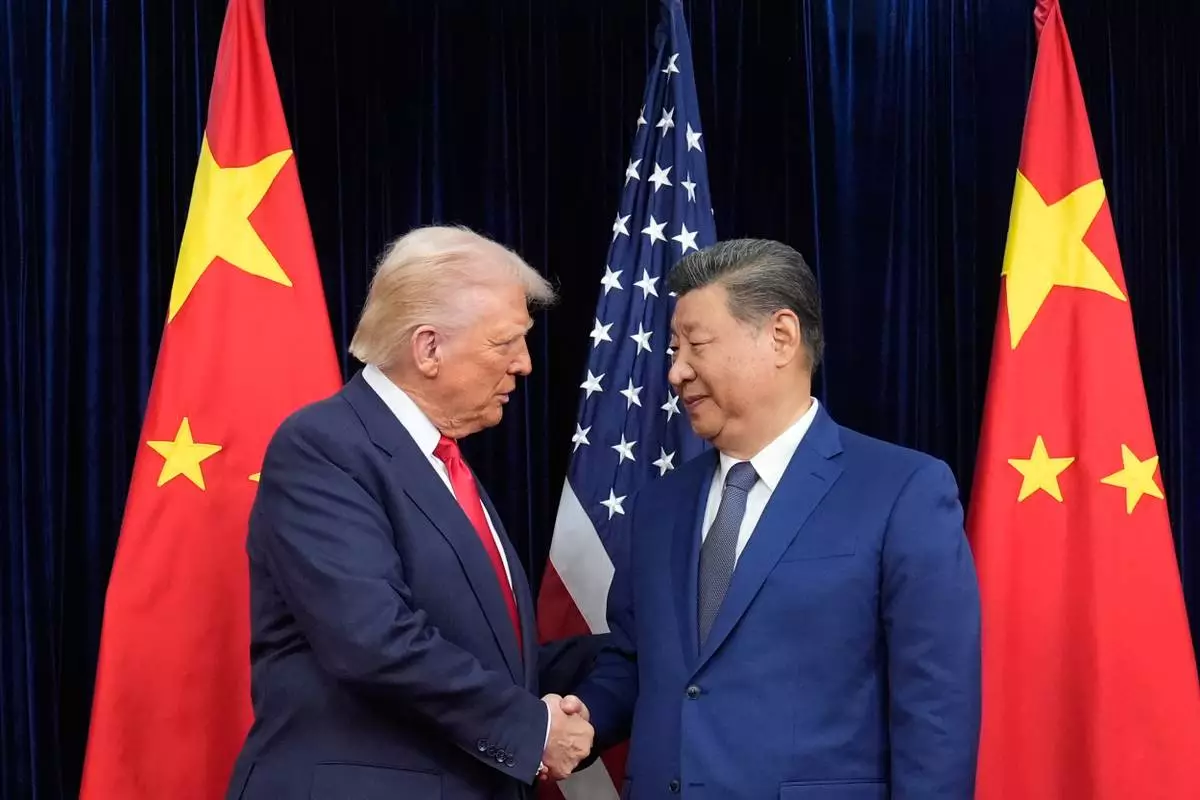
FILE - President Donald Trump, left, and Chinese President Xi Jinping, right, shake hands before their meeting at Gimhae International Airport in Busan, South Korea, Oct. 30, 2025. (AP Photo/Mark Schiefelbein, File)
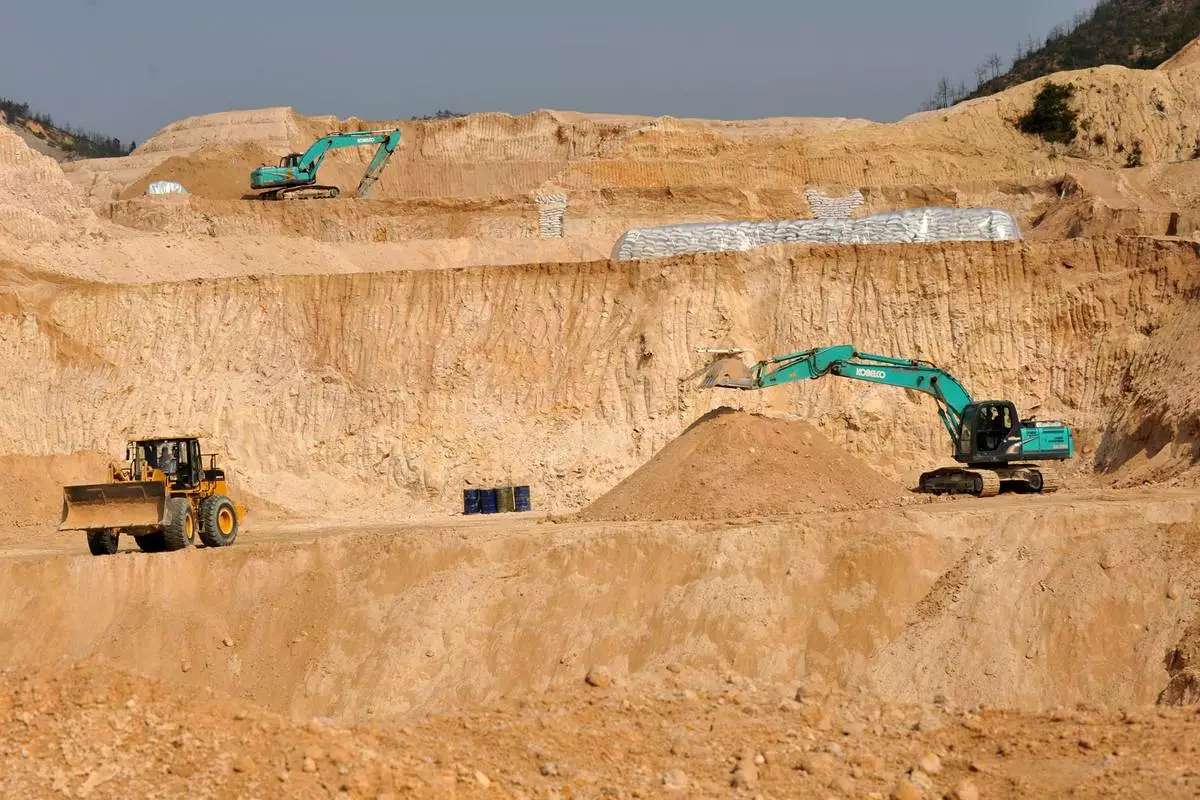
FILE - Workers use machinery to dig at a rare earth mine in Ganxian county in central China's Jiangxi province on Dec. 30, 2010. (Chinatopix via AP, File)
AUSTIN, Texas (AP) — James Talarico barely mentioned Donald Trump when he finally got to give his victory speech on Wednesday night as Democrats' nominee for U.S. Senate in Texas.
But the 36-year-old state lawmaker is now a front man for the left's opposition to Trump, not just in his own state but around the country. With his victory over U.S. Rep. Jasmine Crockett, the state lawmaker from Austin will test whether a smiling message of unity and change is enough to answer voters’ frustrations amid discord at home and now a war abroad.
“We're done being divided. We're done being played,” Talarico said, several times invoking his Christian faith and promising a “politics of love.”
“We're not just trying to win an election. We are trying to fundamentally change our politics,” he said, adding that he's “tired of being told to hate my neighbor.”
Talarico acknowledged that his immediate challenge is consolidating support from Crockett's supporters who flocked to the congresswoman's unapologetically pugilistic approach to Trump and Republicans. He told them, “I hope to earn your trust."
Crockett conceded to Talarico on Wednesday morning, saying that Texas “must remain united because this is bigger than any one person.”
Talarico also got an endorsement and a fundraising email blast from former Vice President Kamala Harris, who previously backed Crockett in the primary.
Talarico will need all the help he can get in a Republican-dominated state where Democrats have gone three decades without winning a statewide race. He will face either U.S. Sen. John Cornyn or state Attorney General Ken Paxton, who advanced to a Republican runoff on Tuesday.
Conventional political wisdom has Talarico as the stronger Democratic candidate for November, especially if Republicans nominate Paxton, a conservative firebrand who has weathered allegations of corruption and infidelity over the years.
Although Democrats are often choosing between moderate and progressive candidates in primaries, they faced a largely stylistic choice in Texas.
Talarico, 36, is a Presbyterian seminarian and rarely raises his voice. Crockett, 44, is an unapologetic political brawler who hammers Trump and other Republicans with acidic flourish.
But Talarico’s broader argument is one that he could have made regardless of whether Trump was in the White House. He regularly assails the rise in Christian nationalism. A former teacher, he advocates for public education. And he's said often, and again Wednesday, that the country’s fundamental divide is not partisan but “top vs. bottom.”
He's not running, he said, against Cornyn, Paxton or “any one politician” but against “the billionaire mega donors and their corrupt political system.”
Lea Downey Gallatin, 40, an Austin resident who met Talarico when they interned together for a congressman, described him as “a serious advocate for the disenfranchised and a serious policymaker.”
Talarico campaigned on the theory that he could pull new people into the party's tent, while Crockett promised she could increase turnout within Democrats' base.
“If you hate politics and you never voted before, you have a home in this campaign,” he said. He also reached out to erstwhile Trump voters who are “fed up with the extremism and the corruption in our government.”
In the closing stretch of the primary campaign, Talarico posed for pictures and greeted the singer of a Tejano band playing in a San Antonio neighborhood. Inside his campaign rally that day, Lori Alvarez, a 39-year-old who works for a disaster relief nonprofit, said she supported Talarico because “he really listens to what we need."
"I think he’s going to be able to make change in Washington for us,” said the married mother of three young girls.
Unofficial primary returns showed Talarico with a dominating performance around his home base of Austin, including in mostly white areas. He outpaced Crockett across much of rural and small-town Texas, including in the Rio Grande Valley, where Trump made gains in his 2024 presidential victory among Hispanic voters. Crockett was strongest in metro Houston and Dallas-Fort Worth, including areas with large concentrations of Black voters.
Crockett is Black, and Talarico is white.
A Democratic win in Texas would require stitching together that multiracial and multiethnic coalition, spanning the metro areas and heavily Latino South and West Texas, while limiting Republican margins in whiter rural counties.
In 2018, Democrat Beto O’Rourke came the closest to that mix, losing to Republican Sen. Ted Cruz by about 215,000 votes or about 2.5 percentage points. With both parties holding competitive primaries Tuesday, Democratic primary voters outnumbered Republicans by about 180,000 out of more than 4.4 million — with some ballots still being tallied.
Talarico and other Democrats say enthusiasm is on their side this year. But there were plenty of Democratic Texans who saw Crockett as their champion.
Troy Burrow, a 61-year-old Navy retiree, called her “rugged” and “the only one I see fighting for us.”
He added, “I like how she doesn’t back down from anybody.”
Burrow said some voters probably saw Talarico as more electable because he is more soft-spoken. But, he said, “We’ve got to get into the gutter with these folks, because that’s where they are.”
Talarico, meanwhile, promised to fight in his own way — again invoking his faith.
“Two thousand years ago, when the powerful few at the top hurt those at the bottom, that barefoot rabbi didn't stay in his room and pray,” Talarico said, referencing Jesus and the Biblical story of his anger in the temple. “He walked into the seat of power and flipped over the tables of injustice."
He added that "it's time to start flipping tables.”
Barrow reported from Atlanta, Figueroa from Austin, Texas, and Beaumont from San Antonio. Associated Press writer Maya Sweedler in Washington contributed to this report.
This story has corrected the last name of Texas voter Troy Burrow, from Burroughs.
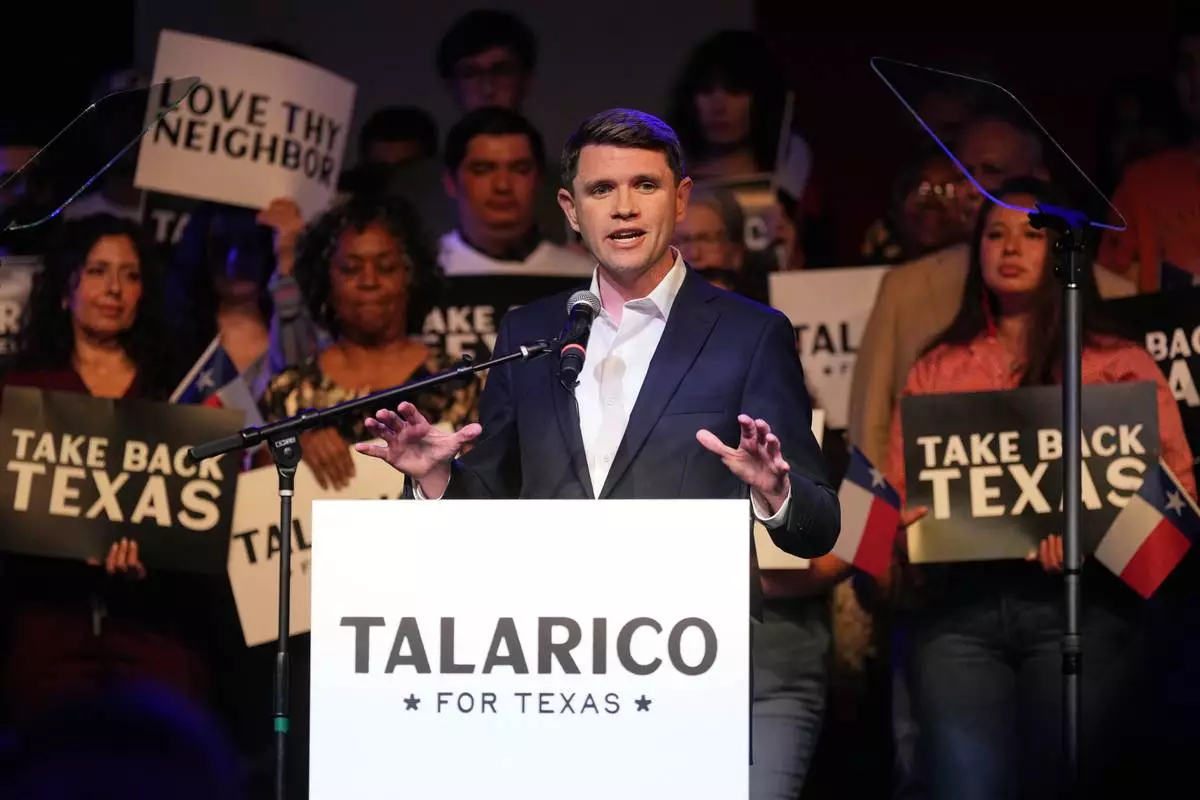
Texas Democratic Senate candidate Texas state Rep. James Talarico, D-Austin, speaks for the first time since winning the Democratic nomination in Austin, Wednesday, March 4, 2026. (AP Photo/Eric Gay)

Attendees cheer before Texas Democratic Senate candidate Texas state Rep. James Talarico, D-Austin, speaks for the first time since winning the Democratic nomination in Austin, Wednesday, March 4, 2026. (AP Photo/Eric Gay)

Texas Democratic Senate candidate Texas state Rep. James Talarico, D-Austin, waves before speaking for the first time since winning the Democratic nomination in Austin, Wednesday, March 4, 2026. (AP Photo/Eric Gay)

Supporters of Texas state Rep. James Talarico, D-Austin, a Democratic candidate for the U.S. Senate, react as results come in during a primary election watch party Tuesday, March 3, 2026, in Austin, Texas. (AP Photo/Eric Gay)
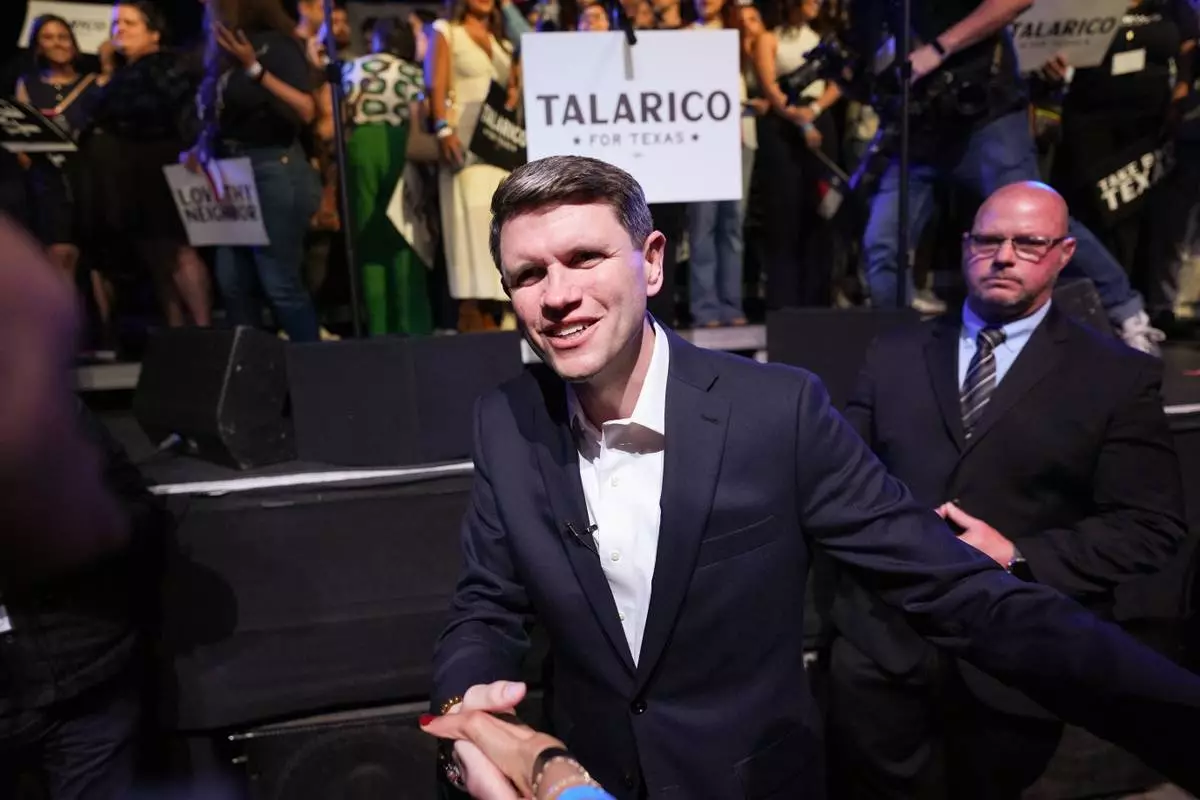
Texas state Rep. James Talarico, D-Austin, a Democratic candidate for the U.S. Senate, greets supporters at a primary election watch party Tuesday, March 3, 2026, in Austin, Texas. (AP Photo/Eric Gay)

Rep. Jasmine Crockett, D-Texas, a Democratic candidate for U.S. Senate, speaks during a primary election watch party Tuesday, March 3, 2026, in Dallas. (AP Photo/Tony Gutierrez)
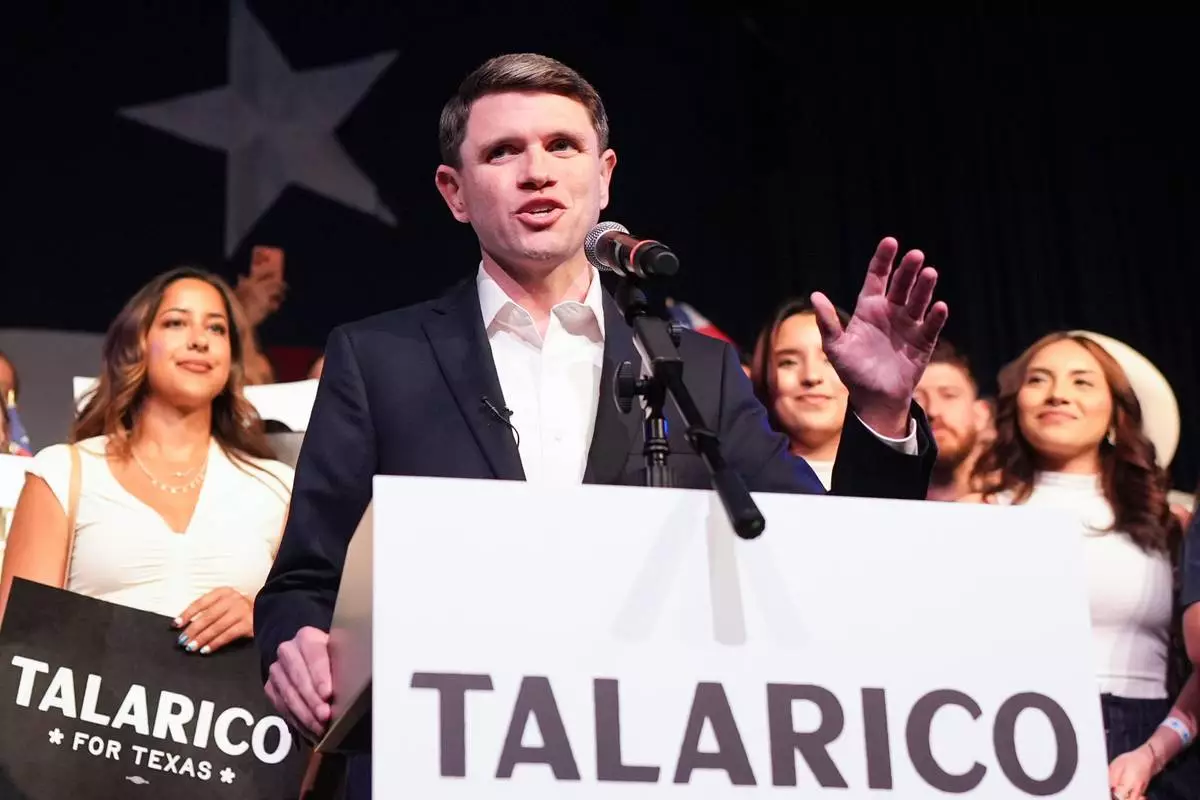
Texas state Rep. James Talarico, D-Austin, a Democratic candidate for the U.S. Senate, speaks at a primary election watch party Tuesday, March 3, 2026, in Austin, Texas. (AP Photo/Eric Gay)