JUNEAU, Alaska (AP) — The Trump administration is sending three Cabinet members to Alaska this week as it pursues oil drilling in the pristine Arctic National Wildlife Refuge and reinvigorating a natural gas project that’s languished for years.
The visit by Department of Interior Secretary Doug Burgum, Energy Secretary Chris Wright and Environmental Protection Agency Administrator Lee Zeldin comes after Trump signed an executive order earlier this year aimed at boosting oil and gas drilling, mining and logging in Alaska. It also comes amid tariff talks with Asian countries that are seen as possible leverage for the administration to secure investments in the proposed Alaska liquefied natural gas project.
Their itinerary includes a meeting Sunday with resource development groups and U.S. Sens. Dan Sullivan and Lisa Murkowski in Anchorage before heading to Utqiagvik, an Arctic town on the petroleum-rich North Slope where many Alaska Native leaders see oil development as economically vital to the region.
The federal officials also plan to visit the Prudhoe Bay oil field Monday — near the coast of the Arctic Ocean and more than 850 miles (1,368 kilometers) north of Anchorage — and speak at Republican Gov. Mike Dunleavy's annual energy conference Tuesday in Anchorage.
While it's not unusual for U.S. officials to visit Alaska during warmer weather months, Dunleavy's office said the officials' visit is significant. Dunleavy, a Trump ally, said he is thankful for an administration that “recognizes Alaska's unique value.”
Government and industry representatives from a number of Asian countries, including Japan, are expected to participate in a portion of the trip, reflecting pressure from the U.S. to invest in the pipeline — despite skepticism and opposition from environmental groups.
In Alaska, some environmentalists criticized the agenda for Dunleavy's conference. Highlighting fossil fuels alongside renewable or alternative energy make “energy sources of the past look more legitimate at a conference like this," said Andy Moderow, senior policy director with the Alaska Wilderness League.
“I think we should be looking at climate solutions that work for Alaskans, not trying to open up places that industry is taking a pass on, namely the Arctic refuge,” he said.
Trump has long taken credit for provisions of a 2017 tax law championed by Alaska's congressional delegation that called for two oil and gas lease sales in the Arctic National Wildlife Refuge's coastal plain by late 2024. The first one remains the subject of ongoing litigation, with the main bidder a state corporation that saw its seven leases later canceled by then-President Joe Biden's administration. A judge in March ruled Biden's administration overstepped, and the Interior Department, in line with Trump's executive order, is working to reinstate the leases.
There weren't any bids in the second sale, held under Biden and blasted by the state as overly restrictive.
Debate over drilling in the refuge — home to polar bears, musk ox, birds and other wildlife — has long been a flashpoint. Indigenous Gwich’in leaders consider the coastal plain sacred land, noting its importance to a caribou herd they rely upon.
Many North Slope Iñupiat leaders who support drilling in the refuge felt their voices were not heard during the Biden era. During the Trump officials' visit, they also hope to make a case for additional development in the National Petroleum Reserve-Alaska, which Trump has advocated, and for being included in planning decisions.
Nagruk Harcharek, president of Voice of the Arctic Iñupiat, an advocacy group whose members include leaders from the region, called the officials' visit “a step in the right direction.”
For years, the state has sought to develop its stores of North Slope natural gas as a way to provide affordable energy to more residents and bolster revenues via exports. But cost concerns, shifts in direction, competition from other projects and questions about economic feasibility have stymied progress. Oil companies have long reinjected gas that occurs with oil deposits on the slope to produce more oil, which remains Alaska's economic lifeblood.
The latest gas proposal calls for a roughly 810-mile (1,300-kilometer) pipeline that would carry gas from the North Slope to port and a facility that would process and export liquefied natural gas to Asian countries. In a March speech to Congress, Trump touted his ongoing support of the “gigantic natural gas pipeline." He said countries like Japan and South Korea “want to be our partner, with investments of trillions of dollars each.” No firm commitments from countries have been made.
The company advancing the project — in partnership with a state corporation — is in a stage of refining cost estimates, previously pegged at around $44 billion for the pipeline and related infrastructure, before final decisions are made on whether to move forward with the project.
While Dunleavy has likened Trump’s friendly approach to energy development as “Christmas every day,” Alaska's fortunes remain tightly linked to the volatility of oil prices, which are down sharply from a year ago, squeezing state revenues.
State lawmakers across party lines overwhelmingly passed a resolution urging Congress to provide Alaska with 90% of royalty revenues for oil and gas leases in the Arctic refuge, arguing the U.S. government reneged on past promises for such a share. The resolution also asked for that to be extended to the petroleum reserve.
Alaska’s tax structure allows companies like ConocoPhillips Alaska — which is pursuing a massive oil project known as Willow in the reserve — to write off a portion of their development costs against production taxes they incur elsewhere on the North Slope. While lawmakers widely support Willow, they also have argued a change in federal royalty share would address a hit to state revenues created by production in the reserve.
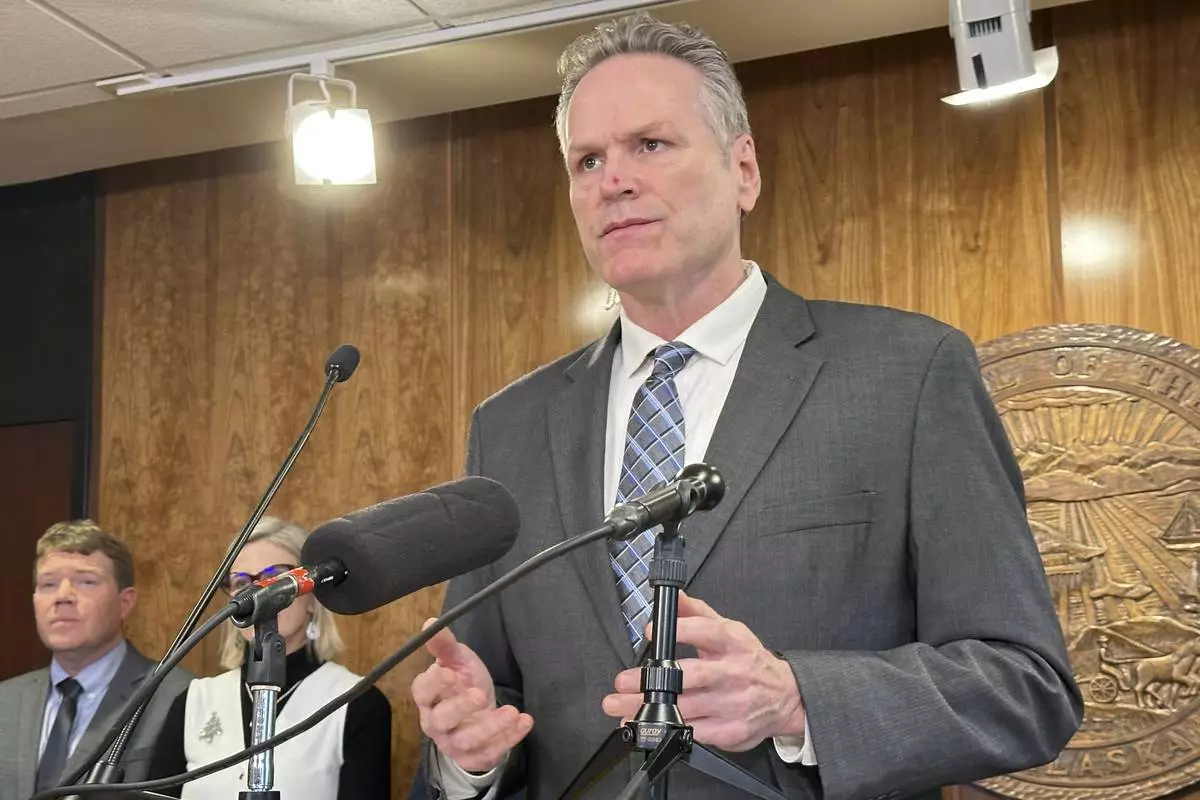
FILE - Alaska Gov. Mike Dunleavy holds a news conference on Dec. 12, 2024, in Juneau, Alaska. (AP Photo/Becky Bohrer, File)
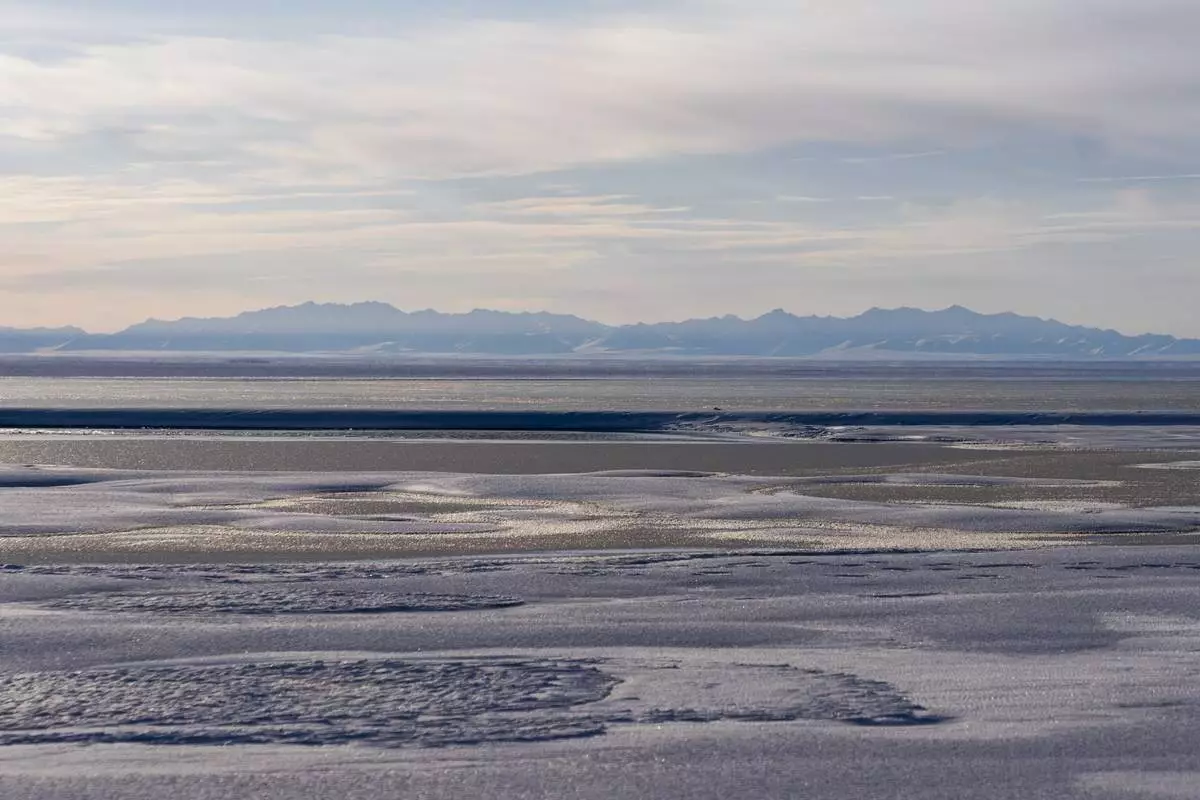
FILE - The Kaktovik Lagoon and the Brooks Range mountains of the Arctic National Wildlife Refuge are seen in Kaktovik, Alaska, Oct. 15, 2024. (AP Photo/Lindsey Wasson, File)