Skip to Content Facebook Feature Image

Newark airport runway project wraps up early, so when will flight limits ease?

News

Newark airport runway project wraps up early, so when will flight limits ease?
News

News

Newark airport runway project wraps up early, so when will flight limits ease?

2025-06-03 06:28 Last Updated At:06:30

A construction project on one of Newark Liberty International Airport's three main runways wrapped up nearly two weeks early, so the Federal Aviation Administration expects to be able to ease flight limits next week despite the ongoing shortage of air traffic controllers.

Federal Transportation Department officials said Monday that some of the runway equipment must be tested before the FAA can increase the flight limits at the second busiest airport in the New York City area. The runway began to be used for departures Monday but won't be available for arrivals until after that testing is completed early next week. Transportation Secretary Sean Duffy said that if all goes well, the runway should be certified by June 10.

Crews worked day and night to complete the $121 million construction project 13 days ahead of schedule and ease some of the problems at the airport. But Newark has also been plagued by cancellations and delays this spring because of a shortage of air traffic controllers after the FAA had technical problems that twice briefly knocked out the radar and communications at a facility in Philadelphia that directs planes in and out of the airport.

Five air traffic controllers went on 45-day trauma leaves after the first radar and communications outage at the Philadelphia facility on April 28, and another one is out on medical leave. That left the facility with only 16 certified controllers and five supervisors. Officials have said there are another 16 experienced controllers in training who should get certified sometime between now and October.

Duffy said “the problem we’re seeing with controllers — it can’t be fixed overnight. It takes time to train up on this airspace,” and Philadelphia isn't alone — there's a nationwide shortage of about 3,000 air traffic controllers.

The FAA limited the Newark airport to 28 arrivals and 28 departures an hour last month because of the construction and staff shortages. The agency has said that it expects to be able to bump up the number of flights per hour in Newark to 34 arrivals and 34 departures once the runway construction is done.

The controllers on trauma leave are scheduled to return around the middle of the month. But Duffy said the FAA has enough controllers now to handle the higher limit of 34 arrivals and departures per hour.

Before the air traffic control problems this spring, 38 or 39 flights typically took off and landed hourly at the Newark airport.

United Airlines CEO Scott Kirby said the fact that the FAA imposed firm limits on the Newark airport should significantly improve its reliability. Before these problems, airlines would routinely schedule several more flights per hour than the airport could handle during peak hours. That was a recipe for delays and cancellations.

“This agreement that the FAA drove with the airlines is really a turning point for Newark for long term,” Kirby said.

The airlines were already planning on the FAA increasing the limit to 34 arrivals and departures per hour, and the number they are selling for mid-June and thereafter already matches that limit, Kirby said.

To help get passengers through the airport while the number of flights were limited, United, which operates the most flights out of Newark, brought in bigger airplanes so they could keep passenger numbers up.

But because of all the headlines about problems, ticket sales are down, so Kirby said customers might get a deal on airfare if they are willing to fly out of Newark right now.

The FAA has said it will revisit the limits again in October because it hopes to have more controllers trained by then.

The government also upgraded the software at the air traffic control facility after a second radar outage on May 9. That helped prevent a repeat problem on May 11 when there was another problem with the lines carrying the radar signal down from New York.

Verizon has installed a new fiber optic line between Philadelphia and New York after the problems but that isn't expected to go into service until July after testing is completed.

Duffy has said that similar problems to what happened in Philadelphia could happen anywhere because the nation's air traffic control system relies on such outdated technology. So he's trying to sell Congress on his expensive plan to overhaul the nation’s air traffic control system, even as most other federal agencies face steep cuts in the House Republican budget bill.
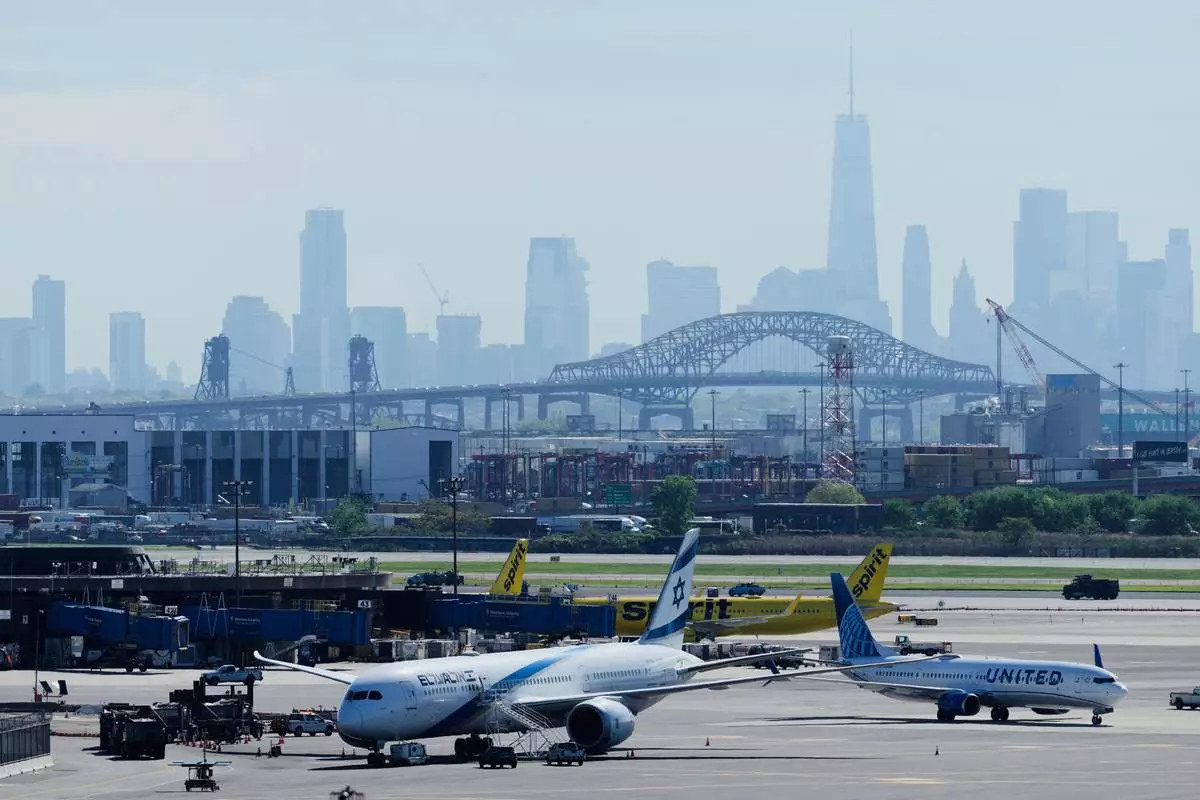
The New York City skyline is seen behind Newark Liberty International Airport in Newark, N.J., Wednesday, May 7, 2025. (AP Photo/Seth Wenig)

The New York City skyline is seen behind Newark Liberty International Airport in Newark, N.J., Wednesday, May 7, 2025. (AP Photo/Seth Wenig)

WEST PALM BEACH, Fla. (AP) — President Donald Trump said Thursday that he’d launched a “powerful and deadly" U.S. strike against Islamic State forces in Nigeria, after spending weeks accusing the West African country's government of failing to rein in the persecution of Christians.

In a Christmas night post on his social media site, Trump did not provide details or mention the extent of the damage caused. But the U.S. Africa Command said on X that strikes had been conducted “at the request of Nigerian authorities in Soboto State” and had killed "multiple ISIS terrorists.”

Trump wrote, "Tonight, at my direction as Commander in Chief, the United States launched a powerful and deadly strike against ISIS Terrorist Scum in Northwest Nigeria, who have been targeting and viciously killing, primarily, innocent Christians, at levels not seen for many years, and even Centuries!”

A Defense Department official, who insisted on animosity to discuss details not made public, said the U.S. worked with Nigeria to carry out the strikes, and that they'd been approved by that country's government.

Nigeria's Ministry of Foreign Affairs said the cooperation included exchange of intelligence and strategic coordination in ways “consistent with international law, mutual respect for sovereignty and shared commitments to regional and global security."

“Terrorist violence in any form, whether directed at Christians, Muslims or other communities, remains an affront to Nigeria's values and to international peace and security," the ministry said in a statement.

Nigeria’s government has previously said in response to Trump’s criticisms that people of many faiths, not just Christians, have suffered attacks at the hands of extremists groups.

Trump ordered the Pentagon last month to begin planning for potential military action in Nigeria to try and curb Christian persecution. The State Department recently announced it would restrict visas for Nigerians and their family members involved in mass killings and violence against Christians there.

And the U.S. recently designated Nigeria a “country of particular concern” under the International Religious Freedom Act.

“I have previously warned these Terrorists that if they did not stop the slaughtering of Christians, there would be hell to pay, and tonight, there was,” Trump wrote Thursday night. He said that U.S. defense officials had “executed numerous perfect strikes, as only the United States is capable of doing" and added that “our Country will not allow Radical Islamic Terrorism to prosper.”

In its X post, the U.S. Africa Command wrote that “lethal strikes against ISIS demonstrate the strength of our military and our commitment to eliminating terrorist threats against Americans at home and abroad.”

Nigeria’s population of 220 million is split almost equally between Christians and Muslims. The country has long faced insecurity from various fronts including the Boko Haram extremist group, which seeks to establish its radical interpretation of Islamic law and has also targeted Muslims it deems not Muslim enough.

But attacks in Nigeria often have varying motives. There are religiously motivated ones targeting both Christians and Muslims, clashes between farmers and herders over dwindling resources, communal rivalries, secessionist groups and ethnic clashes.

The U.S. security footprint has diminished in Africa, where military partnerships have either been scaled down or canceled. U.S. forces likely would have to be drawn from other parts of the world for any military intervention in Nigeria.

Trump has nonetheless kept up the pressure as Nigeria faced a series of attacks on schools and churches in violence that experts and residents say targets both Christians and Muslims.

Defense Secretary Pete Hegseth posted Thursday night on X: “The President was clear last month: the killing of innocent Christians in Nigeria (and elsewhere) must end.”

Hegseth said that U.S. military forces are “always ready, so ISIS found out tonight — on Christmas” and added, “More to come…Grateful for Nigerian government support & cooperation” before signing off, “Merry Christmas!”

Associated Press writer Konstantin Toropin contributed from Washington.

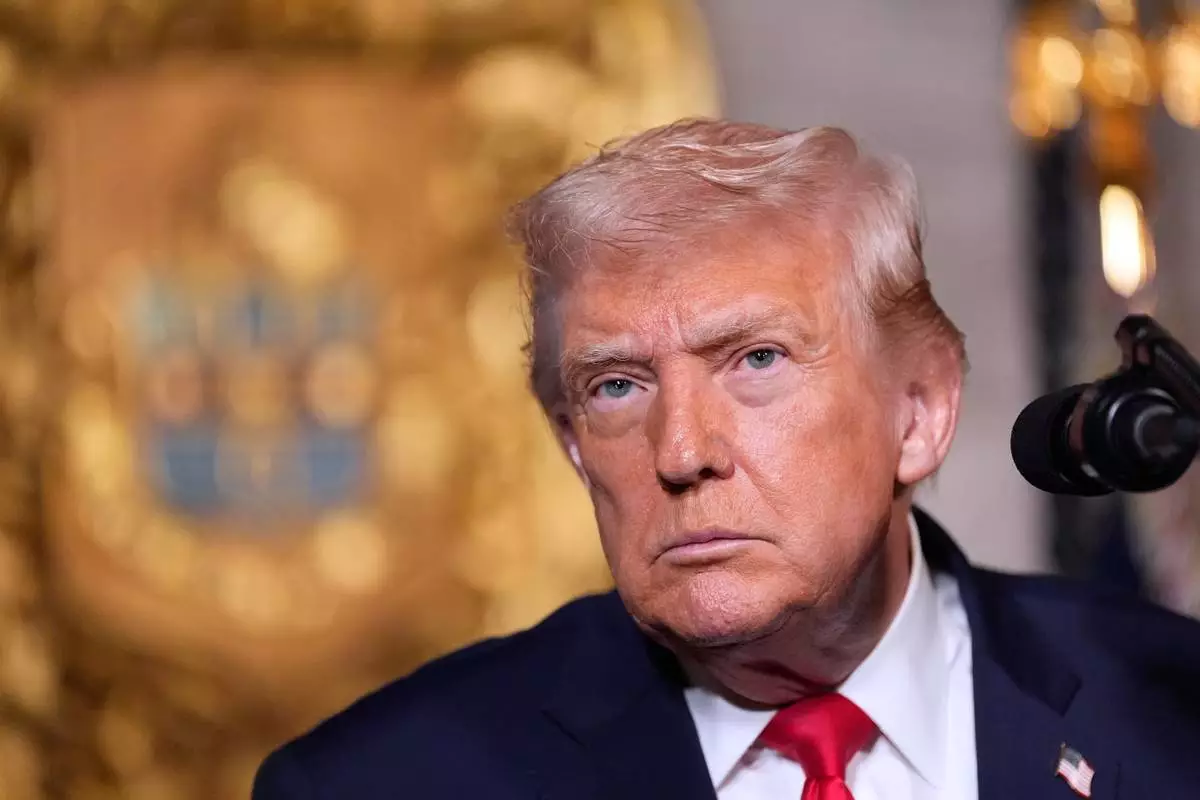
President Donald Trump speaks at his Mar-a-Lago club, Monday, Dec. 22, 2025, in Palm Beach, Fla. (AP Photo/Alex Brandon)

President Donald Trump speaks at his Mar-a-Lago club, Monday, Dec. 22, 2025, in Palm Beach, Fla. (AP Photo/Alex Brandon)

Recommended Articles